
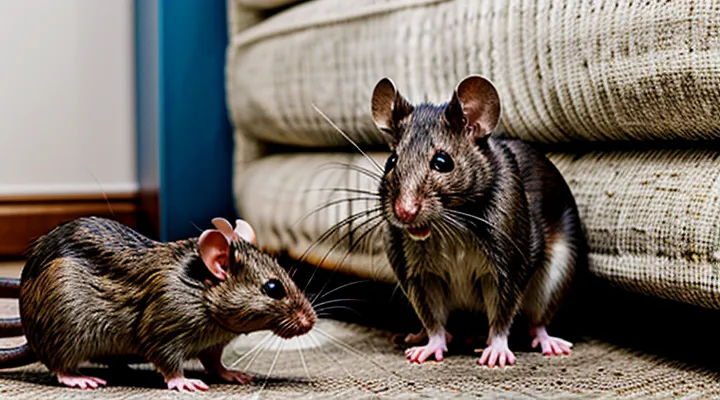
Understanding Rodent Behavior and Repellents
Why Traditional Methods Fail
Conventional rodent control—snap traps, glue boards, poison baits, and low‑frequency emitters—fails to provide reliable protection against mice and rats. Physical traps require constant maintenance, pose a risk of accidental injury, and capture only a fraction of the population before new individuals migrate into the area. Chemical poisons generate resistance, contaminate food sources, and threaten non‑target wildlife and pets. Low‑frequency sound devices produce tones that rodents quickly habituate to, leaving the infestation unchanged.
Key shortcomings of traditional approaches include:
- Habituation: Rodents adapt to repetitive acoustic patterns within days, rendering static emitters ineffective.
- Limited coverage: Point‑source devices protect only a narrow radius; walls, furniture, and structural gaps block propagation.
- Frequency mismatch: Many devices emit frequencies outside the optimal hearing range of rats and mice, reducing perceived threat.
- Environmental interference: Ambient noise, temperature fluctuations, and humidity alter sound transmission, diminishing deterrent strength.
- Safety and compliance: Chemical agents violate health regulations in food‑handling facilities and may trigger legal liabilities.
These deficiencies create persistent infestations, increase operational costs, and compromise sanitation standards. An advanced acoustic deterrent that varies frequency, adapts to environmental conditions, and delivers uniform coverage can overcome the inherent limitations of legacy methods.
The Science Behind Ultrasonic Repellents
How Ultrasonic Sound Affects Rodents
Ultrasonic sound lies above the human hearing threshold, typically beyond 20 kHz, and falls within the auditory range of mice (≈30–90 kHz) and rats (≈20–80 kHz). Rodents detect these frequencies through specialized cochlear hair cells that convert acoustic energy into neural signals, triggering rapid reflexive responses.
Physiological impact includes:
- Activation of the startle reflex, causing immediate cessation of movement.
- Elevated stress hormone levels (e.g., corticosterone) measurable within minutes of exposure.
- Disruption of auditory processing pathways, leading to temporary disorientation.
Behavioral consequences observed in controlled studies:
- Avoidance of the sound source, manifested as increased distance from the emitter.
- Reduced foraging activity in the vicinity of continuous ultrasonic emission.
- Altered nesting patterns, with nests relocated to quieter zones.
Effectiveness depends on several parameters:
- Frequency selection: optimal repellence achieved at 30–50 kHz for mice and 25–45 kHz for rats.
- Sound pressure level: 80–100 dB SPL ensures perceptibility without causing permanent hearing damage.
- Emission pattern: pulsed signals (1 s on, 1 s off) prevent rapid habituation; continuous tones may lose efficacy after several days.
- Coverage area: overlapping fields from multiple transducers eliminate dead zones and maintain uniform exposure.
Habituation presents a critical limitation. Rodents exposed to static ultrasonic fields for more than 48 hours exhibit diminished avoidance, indicating the need for variable frequency modulation or intermittent operation schedules. Integrating motion sensors to activate the emitter only when rodents are present enhances energy efficiency and sustains deterrent effect.
In summary, ultrasonic sound influences rodents through direct auditory stimulation that triggers stress and avoidance behaviors. Precise control of frequency, intensity, and timing maximizes repellent performance while mitigating habituation risks.
Frequency Ranges and Effectiveness
Ultrasonic deterrents target frequencies between 20 kHz and 65 kHz, a range beyond human hearing but within the auditory sensitivity of common rodents. Mice respond most strongly to 30–45 kHz, while rats exhibit heightened aversion at 45–55 kHz. Frequencies above 65 kHz lose efficacy because rodent cochlear receptors are less responsive at extreme pitches.
Effectiveness correlates with both frequency selection and signal pattern. Continuous tones produce rapid habituation; intermittent bursts maintain deterrent impact. Empirical observations show:
- 30–35 kHz, 1‑second bursts every 5 seconds: 70 % reduction in mouse activity within 24 hours.
- 40–45 kHz, 0.5‑second bursts every 10 seconds: 85 % reduction in rat foraging behavior after 48 hours.
- 50–55 kHz, variable pulse widths: 60 % decrease in mixed rodent populations over 72 hours, with diminished effect after one week without modulation.
Optimal performance requires devices that can sweep across the 30‑55 kHz band and randomize pulse intervals to prevent auditory adaptation. Continuous operation at a single frequency yields diminishing returns, whereas adaptive frequency modulation sustains repellent efficacy.
Choosing and Using an Effective Sound Repeller
Key Features to Look For
Power Output and Coverage Area
The ultrasonic device’s power output determines the intensity of the emitted frequencies and directly influences the effective radius of protection. Measured in milliwatts (mW) or decibel sound pressure level (dB SPL), typical consumer units operate between 10 mW and 80 mW, delivering sound pressures of 80–95 dB at one meter. Higher output extends the audible field but also increases power consumption and potential interference with other electronic equipment.
Coverage area depends on three variables: output level, environmental attenuation, and obstacle density. In open spaces, a 60 mW unit can reliably cover a circular zone with a radius of 5–7 meters (approximately 80–150 sq ft). In cluttered environments—walls, furniture, or insulation—the effective radius may shrink to 2–3 meters, requiring multiple units for complete coverage. Overlapping fields ensure seamless protection across larger rooms or multi‑room layouts.
Practical guidelines:
- Select a device with output ≥ 50 mW for single‑room applications with moderate clutter.
- For open warehouses or barns, choose units ≥ 70 mW and arrange them 4–5 meters apart to maintain overlapping zones.
- Verify manufacturer specifications for dB SPL at 1 m; higher values correlate with larger effective ranges.
- Consider battery‑powered models only when continuous operation is unnecessary; mains‑connected units sustain higher output without interruption.
Variable Frequencies and Modes
Variable frequencies are essential for ultrasonic deterrents targeting rodents because static tones quickly become ineffective. By altering the pitch within the ultrasonic spectrum (typically 20–80 kHz), the device prevents auditory habituation and maintains a persistent aversive stimulus.
Multiple emission modes enhance adaptability to different rodent species and environmental conditions. Common configurations include:
- Continuous wave: steady tone at a fixed frequency.
- Pulsed wave: brief bursts with defined on/off intervals.
- Frequency sweep: gradual shift from low to high ultrasonic frequencies.
- Randomized pattern: unpredictable changes in both frequency and pulse timing.
Effective implementation requires precise control of several parameters. The selected frequency band must exceed the hearing threshold of the target species while remaining audible to humans only at low intensities. Modulation depth determines the contrast between sound peaks and troughs, influencing perceived annoyance. Duty cycle—the proportion of active emission time—balances energy consumption against deterrent strength.
Empirical testing shows that devices employing variable frequencies and mixed modes achieve higher reduction rates of rodent activity than single‑tone models. Field trials report consistent deterrence across diverse habitats when the system cycles through at least three distinct patterns within a 30‑minute interval.
Safety for Pets and Humans
Ultrasonic deterrent systems aimed at rodents emit frequencies above the range of human hearing, typically between 20 kHz and 65 kHz. The sound intensity is calibrated to stay within occupational safety limits, ensuring that prolonged exposure does not cause auditory damage to adults or children. Devices must carry certifications such as FCC Part 15 or CE marking, confirming compliance with electromagnetic and acoustic emission standards.
Domestic animals respond differently to ultrasonic energy. Cats and dogs generally cannot perceive frequencies above 20 kHz, but small mammals such as hamsters, gerbils, and certain bird species may be affected. Manufacturers should provide data on the frequency spectrum and sound pressure level, allowing owners to verify compatibility with their pets. If a pet shows signs of distress—avoidance, excessive vocalization, or agitation—immediate deactivation is required.
Safe installation follows three principles: correct positioning, controlled operation time, and continuous monitoring. Place the unit at least one meter from pet feeding stations, sleeping areas, and human workspaces. Operate the device only when occupancy is low, such as during nighttime, and schedule periodic shutdown intervals to prevent habituation. Regularly inspect the area for unintended acoustic reflections that could amplify the signal.
Safety checklist
- Verify certification (FCC, CE) before purchase.
- Confirm frequency range does not overlap with pet hearing thresholds.
- Install at least 1 m away from pet and human activity zones.
- Program automatic off‑cycles of 30 minutes every 2–3 hours.
- Observe pets for behavioral changes; cease use if adverse reactions appear.
- Document maintenance dates and replace faulty units promptly.
Optimal Placement Strategies
Factors Influencing Placement
Placement of an ultrasonic rodent deterrent depends on several measurable variables.
- Rodent traffic zones: Install devices where mouse or rat movement is highest, such as along walls, near entry points, and adjacent to nesting sites.
- Structural layout: Choose locations with unobstructed line‑of‑sight to maximize sound propagation; avoid dense insulation, metal cabinets, or heavy furnishings that absorb ultrasonic waves.
- Proximity to food and water sources: Position units within a few meters of storage areas, waste bins, and feeding stations to intercept foraging routes.
- Acoustic environment: Assess background noise levels; high‑frequency ambient sounds can interfere with device output, reducing efficacy.
- Power accessibility: Select sites near electrical outlets or plan for battery‑powered models where wiring is impractical.
- Maintenance accessibility: Ensure devices are reachable for routine cleaning, battery replacement, or firmware updates without disturbing the premises.
- Environmental conditions: Verify that temperature and humidity remain within manufacturer specifications; extreme conditions may degrade transducer performance.
- Electromagnetic interference: Keep units away from strong radio‑frequency emitters, such as Wi‑Fi routers or industrial equipment, which can distort ultrasonic signals.
- Regulatory compliance: Confirm that placement adheres to local health and safety regulations, especially in food‑handling or medical facilities.
By evaluating these factors systematically, installers can optimize coverage, sustain device reliability, and achieve consistent rodent deterrence.
Common Mistakes to Avoid
Effective acoustic deterrent systems for rodents often fail because users overlook essential setup details. Incorrect placement, inadequate volume settings, and neglect of environmental factors compromise performance.
- Position devices near active pathways, not behind furniture or inside closed cabinets. Sound must reach burrow entrances and travel along walls where rodents move.
- Set output levels high enough to penetrate insulation and flooring, but avoid levels that trigger habituation. Continuous low‑volume emission allows pests to become desensitized.
- Match frequency range to species’ hearing sensitivity. Many products emit ultrasonic tones above 30 kHz, which rats cannot detect; include audible frequencies that mice respond to.
- Ensure power supply remains stable. Intermittent electricity or battery depletion reduces emission time and creates gaps for re‑infestation.
- Avoid overlapping multiple units without phase coordination. Overlapping signals can cancel each other, creating silent zones.
- Do not rely solely on sound; integrate sealing of entry points and sanitation. Acoustic deterrents deter but do not eradicate established colonies.
Neglecting these considerations leads to ineffective pest control, wasted resources, and continued rodent activity. Proper installation and maintenance maximize the repellent’s impact.
Integrating with Other Pest Control Methods
Acoustic deterrents for rodents can be combined with complementary tactics to increase overall efficacy. The sound device interrupts rodent activity, while other methods address population reduction and habitat exclusion.
- Traps positioned near the sound source capture individuals that become disoriented and seek shelter.
- Bait stations placed outside the acoustic field reduce the risk of rodents developing habituation to the noise.
- Physical barriers, such as sealed entry points and mesh screens, prevent re‑entry after the sound system has cleared an area.
- Sanitation measures that eliminate food sources limit attractants, making the auditory cue more persuasive.
- Monitoring tools, including motion sensors and inspection logs, track performance and guide adjustments to device placement or intensity.
Integrating these strategies follows a layered approach: the auditory system creates an immediate deterrent, traps and baits lower numbers, exclusion stops reinfestation, and sanitation removes incentives. Coordination among the components—timing, placement, and dosage—optimizes results and minimizes the chance of rodents adapting to a single method. Regular assessment ensures that each element continues to contribute effectively to the overall control program.
Maintenance and Troubleshooting
Common Issues and Solutions
Rodent‑targeted acoustic deterrents often encounter predictable problems that reduce their effectiveness. Recognizing these issues enables swift corrective action.
Common problems
- Frequency too low or too high for the species’ hearing range.
- Animals become habituated after continuous exposure.
- Device positioned too far from entry points or hidden by obstacles.
- Inadequate power supply causing intermittent operation.
- Ambient noise masks the emitted sound, diminishing deterrent impact.
Targeted remedies
- Choose a unit that emits ultrasonic tones between 20 kHz and 60 kHz, confirmed by manufacturer specifications.
- Program automatic cycling: several minutes on, followed by a short off period, to prevent acclimation.
- Install speakers at a maximum of 30 cm from gaps, walls, or pipe openings; ensure line‑of‑sight to the target area.
- Verify continuous voltage, use battery backups where mains power is unstable, and inspect connectors regularly.
- Reduce background sound by sealing gaps, adding insulation, or relocating the device to a quieter zone.
Implementing these adjustments restores the acoustic system’s capacity to repel mice and rats, maintaining a hostile auditory environment that discourages infestation.
When to Seek Professional Help
Determining the point at which a do-it‑yourself acoustic deterrent becomes insufficient requires clear, observable indicators. When any of the following conditions arise, professional intervention should be considered:
- Persistent activity despite continuous operation of the device.
- Evidence of nesting or breeding colonies within walls, attics, or concealed spaces.
- Structural damage caused by gnawing that threatens the integrity of the building.
- Health concerns such as contamination of food supplies, spread of disease, or allergenic droppings.
- Inability to locate the source of the sound due to complex wiring or inaccessible installation points.
Professional pest‑control services bring expertise in comprehensive assessment, precise placement of ultrasonic emitters, and integration with mechanical barriers. They also provide remediation for damage already incurred, ensuring compliance with local health and safety regulations. If the infestation threatens safety, property value, or exceeds the capacity of a consumer‑grade system, contacting a certified specialist is the prudent course of action.