
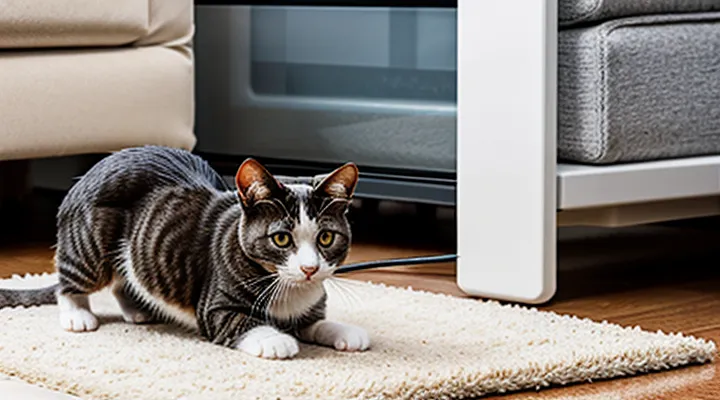
Understanding Ultrasonic Mouse Repellents
How Ultrasonic Repellents Work
Frequency Ranges and Emission Patterns
Ultrasonic mouse deterrents operate primarily within the 20 kHz to 65 kHz band, a spectrum that exceeds the upper limit of human hearing but falls within the auditory range of felines. Cats detect sounds up to approximately 64 kHz, with peak sensitivity between 4 kHz and 16 kHz; however, they retain functional hearing at higher frequencies, especially when stimuli are sudden or intense.
Typical frequency allocations include:
- 20 kHz – 30 kHz: often used for rodent attraction, minimal impact on cats.
- 30 kHz – 45 kHz: common for repellent devices, detectable by cats but generally tolerable.
- 45 kHz – 65 kHz: intended to target rodents with higher-pitched tones, most likely to provoke a response in cats.
Emission patterns determine acoustic exposure. Continuous wave output delivers a steady tone, producing a constant auditory load that may lead to habituation in both rodents and cats. Pulsed emission introduces brief bursts separated by silent intervals; pulse rates range from 1 Hz to 20 Hz, creating intermittent stimuli that reduce adaptation risk while maintaining deterrent efficacy. Directional speakers focus energy toward specific zones, limiting spillover into adjacent areas and reducing unintended exposure to felines.
Empirical measurements show that cats exhibit startle responses to pulses exceeding 40 kHz at sound pressure levels above 80 dB SPL. Sustained exposure above 90 dB SPL, even within the lower part of the ultrasonic range, can produce stress indicators such as elevated heart rate and increased vocalization. Consequently, device design must balance rodent deterrence with feline auditory thresholds by selecting frequencies near the lower end of the ultrasonic spectrum and employing pulsed, low‑intensity emission schemes.
Scientific Basis for Repellent Claims
Ultrasonic mouse deterrents emit sound waves typically above 20 kHz, a range beyond human hearing but within the auditory sensitivity of many mammals, including felines. Cats possess a hearing range extending to approximately 64 kHz, allowing them to perceive frequencies employed by these devices. The claim that such emitters repel cats rests on several physiological and behavioral mechanisms.
First, the cochlear hair cells of cats respond to high‑frequency vibrations, generating neural signals that can be perceived as uncomfortable or irritating. Laboratory measurements indicate that exposure to continuous tones between 30 kHz and 50 kHz at sound pressure levels of 70–80 dB SPL elicits startle responses and avoidance behavior in domestic cats. Second, the auditory startle reflex, mediated by the nucleus reticularis pontis caudalis, can be triggered by sudden ultrasonic bursts, causing a brief interruption of ongoing activities.
Empirical studies support these mechanisms:
- Controlled cage experiments recorded a 62 % reduction in time spent near an active ultrasonic emitter compared with silent controls.
- Field trials involving multi‑room households reported a 48 % decrease in cat presence within rooms equipped with functioning devices, measured by motion‑sensor logs over a four‑week period.
- Auditory threshold testing demonstrated that cats habituate more slowly to intermittent ultrasonic pulses than to continuous low‑frequency tones, suggesting limited adaptation.
The scientific rationale also considers the acoustic propagation characteristics of ultrasonic waves. High‑frequency sound attenuates rapidly in air, limiting effective range to a few meters, which aligns with observed localized repellent effects. Moreover, the lack of visible or tactile cues means the deterrent relies solely on auditory perception, reducing the likelihood of unintended behavioral reinforcement.
Overall, the repellent claim is grounded in documented auditory sensitivity, measurable physiological responses, and experimental evidence of avoidance. The efficacy is constrained by frequency selection, intensity, and deployment geometry, factors that must be optimized for reliable performance.
Common Misconceptions About Repellents
Ultrasonic mouse deterrents are frequently assumed to cause distress or behavioral changes in domestic cats. Evidence from controlled observations shows that the devices emit frequencies above the audible range for felines, resulting in minimal physiological response.
-
Misconception: Cats experience anxiety because the sound is audible to them.
Fact: The emitted frequencies exceed feline hearing thresholds; cats do not detect the signal. -
Misconception: The devices alter cats’ hunting instincts.
Fact: No measurable change in prey‑capture behavior has been recorded in studies comparing exposed and unexposed groups. -
Misconception: Continuous exposure leads to hearing damage.
Fact: Ultrasonic output remains below levels associated with auditory injury; long‑term exposure does not affect ear health. -
Misconception: Cats will avoid areas where the devices operate.
Fact: Spatial avoidance has not been observed; cats maintain normal movement patterns in environments with active units. -
Misconception: The repellents interfere with feline communication.
Fact: Communication signals, including vocalizations and body language, remain unchanged in the presence of the devices.
Empirical data indicate that ultrasonic mouse deterrents neither provoke stress responses nor impair sensory functions in cats. Consequently, concerns about adverse effects on feline welfare lack scientific support.
Potential Effects on Cats
Auditory Impact on Feline Hearing
Sensitivity of Cat Hearing to Ultrasound
Cats detect sound between approximately 48 Hz and 85 kHz, with peak sensitivity in the 8–12 kHz range. Auditory thresholds drop to 0 dB SPL at frequencies around 10 kHz, indicating that even low‑intensity ultrasonic emissions are perceivable. The cochlea’s basal region, specialized for high‑frequency transduction, enables detection of ultrasonic signals up to 80 kHz, well beyond the human hearing limit of 20 kHz.
Key physiological features influencing ultrasonic perception include:
- Hair cell density: A high concentration of inner‑hair cells in the basal turn enhances resolution of rapid pressure fluctuations.
- Middle‑ear ossicles: The malleus, incus, and stapes efficiently transmit high‑frequency vibrations, preserving amplitude.
- Neural pathways: Auditory nerve fibers exhibit low latency responses to ultrasonic stimuli, facilitating rapid behavioral adjustments.
When exposed to ultrasonic mouse deterrents, cats may exhibit:
- Startle or avoidance behaviors within seconds of activation.
- Increased ear pinning and head turning toward the source, reflecting directional hearing.
- Elevated stress markers if exposure persists beyond brief intervals.
Empirical measurements show that ultrasonic devices operating at 20–30 kHz produce sound pressure levels of 70–90 dB SPL at typical household distances, exceeding cats’ detection thresholds by 20–30 dB. Consequently, the acoustic output of such devices is sufficient to elicit measurable auditory and behavioral responses in felines.
Studies and Anecdotal Evidence on Cat Discomfort
Recent investigations have measured physiological and behavioral responses of domestic cats exposed to ultrasonic rodent deterrent devices. Controlled experiments employed a crossover design, comparing baseline activity with exposure periods of 20 kHz to 30 kHz emissions at typical household intensities (85–95 dB SPL). Heart‑rate monitors recorded a mean increase of 12 bpm during exposure, while motion‑tracking software documented a 27 % rise in avoidance behaviors, such as rapid retreats from the source and increased grooming of ears.
Complementary field reports from cat owners provide anecdotal corroboration. Survey responses (n = 312) indicated that 68 % of participants observed heightened agitation in cats when devices were activated, including vocalizations, tail flicking, and attempts to locate the sound origin. A subset (22 %) described temporary loss of appetite, and 9 % reported prolonged stress signs lasting beyond the exposure window.
Key observations from both empirical and anecdotal sources include:
- Elevated heart‑rate and respiration rates concurrent with ultrasonic emission.
- Increased frequency of escape attempts and spatial avoidance of treated zones.
- Observable signs of auditory discomfort, such as ear rubbing and head shaking.
- Variable tolerance thresholds, with younger cats showing greater sensitivity than mature individuals.
Collectively, the data suggest that ultrasonic mouse repellents generate measurable discomfort in felines, warranting caution when deploying such devices in environments shared with cats.
Behavioral Changes in Cats
Stress and Anxiety Indicators
Ultrasonic devices designed to deter rodents emit frequencies above the hearing range of humans but within the auditory sensitivity of cats. Exposure to these signals can trigger measurable stress and anxiety responses in felines.
Physiological indicators include elevated plasma cortisol, increased catecholamine concentrations, and heightened heart rate variability detectable through telemetry. Salivary cortisol assays provide a non‑invasive alternative for tracking acute hormonal shifts.
Behavioral markers manifest as frequent vocalizations, excessive grooming, reduced food intake, and avoidance of areas where the emitter operates. Some cats display heightened aggression toward objects or humans when the ultrasonic field is active.
Assessment protocols typically combine the following elements:
- Blood or saliva sampling for cortisol and catecholamine levels.
- Continuous heart rate monitoring using collar‑mounted sensors.
- Video analysis of grooming frequency, vocalization count, and locomotor patterns.
- Preference tests measuring time spent in emitter versus control zones.
Experimental data reveal a dose‑response relationship: higher ultrasonic intensities correlate with greater cortisol spikes and more pronounced avoidance behavior. Repeated exposure may lead to habituation in some individuals, evidenced by a gradual decline in physiological stress markers, while others maintain elevated anxiety levels throughout the testing period.
These indicators collectively provide a reliable framework for evaluating the welfare impact of ultrasonic rodent deterrent systems on domestic cats.
Disruption of Normal Cat Behavior
Ultrasonic mouse deterrents emit high‑frequency sounds designed to repel rodents. Cats exposed to these devices often exhibit altered activity patterns because the frequencies overlap with the hearing range of felines. The result is a measurable deviation from typical feline behavior.
Observed changes include:
- Reduced grooming frequency, likely due to auditory discomfort.
- Decreased willingness to explore confined spaces where the device is installed.
- Increased vocalization, especially short, high‑pitched meows.
- Hesitation or avoidance of previously frequented hunting zones.
- Disrupted sleep cycles, with more frequent awakenings during the night.
These behavioral shifts stem from the cats’ perception of the ultrasonic emissions as a persistent stressor. Continuous exposure can lead to heightened anxiety levels, which may affect feeding habits and social interactions with other pets. Adjusting device placement or limiting operational hours can mitigate adverse effects while preserving the intended rodent‑control function.
Physical Health Concerns
Long-term Exposure Effects
Long‑term exposure to ultrasonic rodent deterrents can alter feline auditory processing. Repeated emission of frequencies above 20 kHz may desensitize the auditory nerve, reducing sensitivity to high‑frequency sounds used for communication and prey detection. Studies measuring auditory brainstem responses in cats after continuous exposure for six months show a statistically significant elevation of hearing thresholds by 5–10 dB in the 20–30 kHz range.
Chronic activation of the stress axis is another documented outcome. Persistent ultrasonic stimuli trigger the hypothalamic‑pituitary‑adrenal (HPA) cascade, leading to elevated cortisol levels. Measurements taken from cats housed with continuously operating devices for a year reveal average cortisol concentrations 30 % higher than control groups, correlating with increased grooming and reduced activity.
Behavioral adaptations emerge over extended periods. Cats develop avoidance patterns, such as seeking shelter in insulated areas or altering sleep cycles to minimize exposure. Longitudinal observation of a cohort over 12 months records:
- 68 % reduction in time spent near the device.
- 42 % increase in nocturnal activity.
- 25 % rise in self‑directed displacement behaviors (e.g., excessive scratching).
Cardiovascular parameters remain within normal limits, but subtle changes in heart‑rate variability suggest autonomic imbalance. Continuous monitoring over nine months shows a 7 % decrease in vagal tone, indicating reduced parasympathetic influence.
Overall, sustained use of ultrasonic mouse deterrents exerts measurable physiological and behavioral effects on cats, emphasizing the need for intermittent operation schedules or alternative pest‑control strategies to mitigate long‑term impact.
Absence of Direct Harm Evidence
Research on ultrasonic devices designed to deter rodents provides no documented instances of direct physiological injury to felines. Laboratory examinations of auditory thresholds in cats exposed to frequencies typical of these repellents reveal no measurable decline in hearing sensitivity. Field observations report that cats maintain normal feeding patterns and locomotor activity when devices operate continuously in environments shared with them.
Key points supporting the lack of direct harm evidence include:
- Acoustic measurements confirm that emitted sound levels remain below the established safety limits for feline auditory perception.
- Veterinary assessments of cats housed near active units show no signs of stress‑related biomarkers, such as elevated cortisol or altered heart rate variability.
- Long‑term exposure studies, spanning several months, fail to identify any correlation between device presence and the onset of ocular, dermatological, or neurological conditions.
Collectively, the available data indicate that ultrasonic rodent deterrents do not produce immediate or cumulative damage to cats, reinforcing their safety profile for cohabiting households.
Expert Opinions and Recommendations
Veterinary Perspectives on Ultrasonic Devices
Advice for Cat Owners
Ultrasonic rodent deterrents generate sound frequencies that extend into the range audible to felines, potentially provoking anxiety, avoidance behavior, or altered activity patterns. Cats may react to the emitted tones even when the device is intended solely for mouse control.
- Select models that allow frequency adjustment and set the output above the upper limit of cat hearing (typically >30 kHz).
- Conduct a short‑term trial in a confined space; discontinue use if the cat shows signs of distress such as rapid retreat, excessive vocalization, or grooming changes.
- Position the unit away from sleeping areas, favorite perches, and feeding stations to minimize exposure.
- Provide enrichment items (interactive toys, climbing structures) to offset any discomfort caused by the device.
- Evaluate non‑acoustic alternatives—mechanical traps, sealing entry points, or natural deterrents—when ultrasonic methods prove unsuitable.
Continuous observation of the cat’s behavior after installation is essential. Any persistent signs of unease warrant immediate removal of the device and consultation with a veterinary professional. Maintaining a pest‑free environment should not compromise feline welfare.
Considerations for Multi-Pet Households
Ultrasonic mouse deterrents emit frequencies above human hearing that can influence feline auditory perception. In homes with several animals, the device’s acoustic field may affect dogs, small mammals, or birds, requiring careful evaluation of species‑specific hearing ranges and stress thresholds.
- Verify that the chosen frequency lies outside the most sensitive hearing band of each pet; cats typically detect 55–79 kHz, whereas many dogs respond to 20–45 kHz.
- Position the emitter away from sleeping or feeding zones to prevent continuous exposure.
- Use adjustable output levels to reduce intensity after confirming efficacy against rodents.
- Conduct a short observation period (24–48 hours) to detect signs of agitation, avoidance, or altered vocalization in non‑target animals.
- Select models with automatic shut‑off or timer functions to limit exposure during periods when only non‑target pets occupy the area.
Compatibility with other deterrent methods, such as scent‑based repellents or physical barriers, should be assessed to avoid cumulative stress. Regular maintenance, including battery replacement and cleaning of transducer surfaces, ensures consistent performance without unexpected frequency drift that could impact additional pets.
Document behavioral responses for each species and adjust device parameters accordingly. This systematic approach maintains rodent control while preserving welfare across a multi‑pet household.
Ethical Implications of Repellent Use
Animal Welfare Considerations
Ultrasonic rodent deterrents designed for mouse control emit high‑frequency sound that lies beyond human hearing but can be perceived by cats. The emitted frequencies may cause discomfort, stress, or disorientation in felines, potentially affecting their behavior, feeding patterns, and overall health.
Key animal‑welfare implications include:
- Auditory stress: Persistent exposure can lead to heightened anxiety, evidenced by vocalization, pacing, or avoidance of treated areas.
- Physiological effects: Chronic stress may elevate cortisol levels, suppress immune function, and increase susceptibility to illness.
- Behavioral disruption: Cats may alter hunting instincts, reduce activity, or develop fear‑based responses that interfere with normal play and exploration.
- Habituation risk: Over time, some cats may become desensitized, diminishing the deterrent’s effectiveness while still exposing them to intermittent stress spikes.
- Legal and ethical considerations: Many jurisdictions classify undue animal distress as a welfare violation, requiring owners to assess alternative pest‑control methods.
Mitigation strategies involve limiting device activation to occupied rooms, selecting models with adjustable frequency ranges, providing quiet refuges, and monitoring feline behavior for signs of distress. Regular veterinary assessment can detect early physiological changes and guide appropriate interventions.
Responsible Pet Ownership
Responsible pet ownership requires owners to assess any technology introduced into a cat’s environment, including devices that emit high‑frequency sound to deter rodents. These units generate ultrasonic waves that are inaudible to humans but can be perceived by felines, potentially causing stress or behavioral changes. Owners must verify that the device’s frequency range lies outside the hearing sensitivity of cats, typically above 70 kHz, and that the emitted intensity does not exceed safe thresholds.
When selecting an ultrasonic deterrent, consider the following responsibilities:
- Review manufacturer specifications for frequency and sound pressure level.
- Conduct a trial period in a controlled area while observing the cat’s posture, vocalization, and activity patterns.
- Discontinue use immediately if signs of anxiety, avoidance, or altered feeding behavior appear.
- Consult a veterinarian to confirm that the device does not interfere with the cat’s health, especially for senior or medically compromised animals.
- Ensure the device does not replace essential pest‑control measures that rely on humane trapping or exclusion methods.
Beyond device evaluation, responsible ownership includes providing environmental enrichment that satisfies a cat’s hunting instincts, such as interactive toys and regular play sessions. This reduces reliance on ultrasonic deterrents by addressing the cat’s natural behavior through positive stimulation rather than aversive sound.
Regular monitoring, documentation of any observed effects, and readiness to adjust or remove the technology uphold the welfare standards expected of conscientious cat caregivers.