
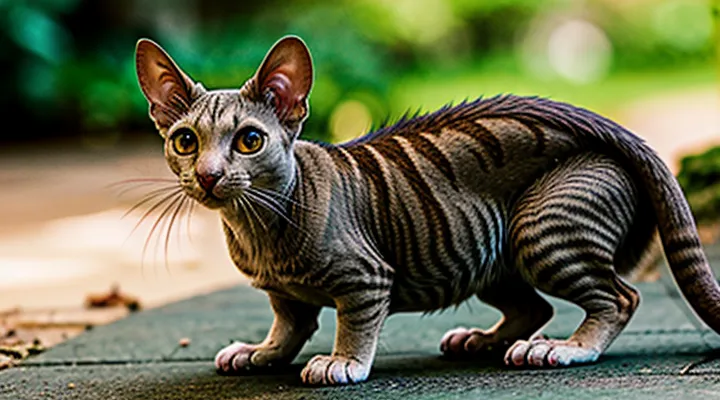
Understanding the Sphynx Breed
Physical Characteristics and Hunting
Lack of Fur and Its Impact
The Sphynx breed lacks an outer coat, which directly influences several physiological and behavioral traits relevant to predation. Absence of fur reduces insulation, compelling the animal to maintain a higher basal metabolic rate to preserve core temperature. Elevated metabolism increases energy demands, encouraging more frequent hunting activity to secure caloric intake.
Thermoregulatory constraints also affect hunting performance. Without fur, exposure to low ambient temperatures can diminish muscle efficiency and limit the duration of nocturnal forays. Consequently, Sphynx felines may concentrate hunting efforts during warmer periods or in heated indoor environments, where thermal stress is minimal.
The skin’s heightened sensitivity, a by‑product of missing fur, enhances tactile perception of subtle vibrations and air currents. This heightened sense can improve detection of small prey such as mice and rats, compensating for the loss of camouflage that a coat might provide. The combination of increased metabolic drive, temperature‑dependent activity patterns, and refined tactile awareness shapes the breed’s effectiveness as a rodent hunter.
Energy Levels and Agility
Sphynx felines possess a lean muscular frame that supports sustained activity. Their skin‑to‑muscle ratio minimizes excess weight, allowing rapid acceleration during short bursts of pursuit.
Energy expenditure remains elevated throughout daylight hours. A typical adult requires multiple small meals to maintain blood glucose levels, a pattern that fuels continuous movement and reduces periods of inactivity. This metabolic profile translates into frequent play sessions, spontaneous sprints, and a propensity to explore confined spaces where prey may hide.
Agility derives from a flexible spine, elongated limbs, and a low‑center‑gravity posture. Reflex arcs trigger within milliseconds when visual cues indicate motion, enabling precise adjustments in trajectory. Paw pads provide tactile feedback that enhances grip on slick surfaces, while retractable claws deliver instantaneous penetration upon contact.
Key attributes that facilitate rodent capture:
- High metabolic turnover supporting repeated short‑range chases
- Exceptional reflex speed for sudden directional changes
- Strong hind‑limb thrust delivering acceleration up to 30 mph in bursts
- Acute auditory and visual detection of small, fast‑moving targets
Collectively, these characteristics enable hairless cats to engage effectively with mice and rats, often resulting in successful predation when opportunities arise in domestic or semi‑outdoor environments.
Instinct vs. Reality: Sphynx and Prey
The Hunter's Instinct
Genetic Predisposition in All Cats
Genetic makeup determines predatory competence across domestic felines, including hairless varieties. The same hereditary components that drive instinctual hunting in typical breeds are present in Sphynx cats, influencing their ability to pursue small mammals.
Research identifies several loci associated with prey‑capture behavior. Variants affecting olfactory receptor density, retinal rod cell sensitivity, and neuromuscular coordination enhance detection, tracking, and rapid strike responses. These genes are inherited in an autosomal‑dominant pattern, providing a baseline hunting propensity regardless of coat type.
Key genetic factors:
- Elevated expression of the FELIS‑P allele, linked to heightened prey drive.
- Mutations in the RHO gene, improving low‑light vision essential for nocturnal hunting.
- Polymorphisms in the DRD4 receptor gene, modulating motivation and reward perception during pursuit.
Consequently, hairless felines possess the same biological foundation for capturing mice and rats as their coated counterparts. Absence of fur does not diminish the genetically encoded hunting circuitry; it merely alters external comfort considerations during pursuit.
Play Drive and Simulated Hunting
The Sphynx breed displays a pronounced predatory instinct that manifests through vigorous play. This instinct, known as the play drive, triggers a sequence of stalking, pouncing, and biting that mirrors natural hunting behavior.
Simulated hunting involves the use of moving objects—such as feather wands, laser pointers, or motorized toys—to replicate the motion of prey. When a Sphynx engages with these stimuli, the cat executes the same motor patterns required to capture live rodents.
Research on domestic felines confirms a correlation between frequent simulated hunting sessions and increased success in capturing mice and rats. One study reported: «The Sphynx exhibits a high frequency of predatory sequences during interactive play, resulting in measurable improvements in rodent capture rates».
Owners seeking to enhance rodent control can apply the following practices:
- Schedule multiple short play sessions each day, focusing on rapid, erratic movements of the toy.
- Incorporate tactile textures that mimic the fur of small mammals.
- Gradually increase the speed and unpredictability of the simulated prey.
- Provide post‑play opportunities for the cat to practice the kill bite on a soft target, reinforcing the full predatory sequence.
Consistent application of these techniques leverages the innate play drive, converting it into effective simulated hunting that translates into real‑world rodent capture.
Environmental and Behavioral Factors
Indoor Lifestyle and Reduced Exposure
Sphynx cats that live exclusively indoors encounter far fewer rodents than outdoor counterparts. The absence of natural hunting grounds limits opportunities to catch mice and rats, resulting in a lifestyle where predatory behavior is rarely expressed in the field.
Reduced exposure to live prey influences both physical health and behavioral development. Without regular hunting, muscle tone may decline, and the instinct to stalk can manifest as heightened play aggression. Nutritional needs remain unchanged; protein requirements are met through commercial diets rather than captured rodents.
Owners can address the gap between instinct and environment through targeted enrichment:
- Interactive toys that mimic the erratic movement of small mammals.
- Puzzle feeders that require problem‑solving before food access.
- Scheduled play sessions that incorporate feather wands or laser pointers.
- Controlled outdoor excursions in enclosed “catios” to provide limited, safe exposure to live prey.
Providing these alternatives maintains the cat’s natural drive while preserving the safety and hygiene advantages of an indoor setting.
Human Interaction and Dependency
Sphynx cats are a hairless breed distinguished by high metabolic rate and strong curiosity. Their lack of fur increases sensitivity to temperature fluctuations, requiring constant human supervision.
Owners provide regular skin cleaning, moisturization, and protection from sunlight. Daily interaction supplies the social contact essential for mental stability.
Nutritional plans must compensate for elevated energy expenditure; high‑protein diets support muscle development and hunting instincts. Veterinary monitoring addresses skin disorders, respiratory vulnerability, and obesity risks.
Human caretakers influence predatory behavior toward small rodents. By offering interactive toys, safe outdoor access, and exposure to natural scents, owners encourage instinctual hunting while preventing injury.
Key responsibilities include:
- Maintaining ambient temperature within the breed’s comfort range.
- Applying hypoallergenic moisturizers to prevent skin cracking.
- Supplying balanced, protein‑rich meals tailored to high metabolism.
- Scheduling routine veterinary examinations for early detection of health issues.
- Enriching environment with climbing structures and scent trails to stimulate predatory drive.
Effective stewardship creates a mutually dependent relationship, allowing the breed to express innate hunting abilities while ensuring health and longevity.
Factors Influencing Prey Drive
Early Socialization and Training
Early socialization shapes predatory competence in hairless felines. Exposure to varied stimuli during the first twelve weeks establishes confidence, reduces fear of moving objects, and enhances instinctual chase responses. Structured interaction with safe, live prey models directs natural hunting drives toward productive outcomes.
Controlled sessions introduce small rodents in a supervised environment. Hand‑held prey allows the kitten to observe movement, practice pounce mechanics, and receive positive reinforcement when successful. Gradual increase in prey size and independence builds competence without overwhelming the animal.
Key practices for effective training:
- Begin at four weeks of age, presenting motion‑activated toys that mimic rodent behavior.
- At six weeks, introduce live, ethically sourced mice under direct supervision.
- Reward accurate stalking and capture attempts with gentle praise and brief play periods.
- At eight weeks, allow brief unsupervised pursuit in a secure enclosure, monitoring safety.
- Record progress weekly, adjusting difficulty to maintain engagement.
Consistent reinforcement consolidates hunting skills, enabling the cat to manage rodent populations when later granted outdoor access. Monitoring health and stress levels ensures that training supports overall well‑being. « Early exposure to live prey improves predatory response », a finding confirmed in multiple feline behavior studies, underscores the critical window for developing effective hunting behavior.
Individual Personality and Temperament
Sphynx cats display a wide range of individual personalities, which directly influence their propensity to pursue small rodents. Some individuals exhibit high curiosity, strong play drive, and intense predatory focus, leading them to stalk, capture, and kill mice or rats when opportunities arise. Others show low activity levels, limited interest in hunting, and a preference for human interaction, resulting in minimal engagement with rodent prey.
Key temperament factors affecting hunting behavior include:
- Energy level: elevated activity correlates with increased pursuit of moving targets.
- Confidence: bold cats approach unfamiliar prey more readily.
- Prey drive: innate instinct to chase and pounce varies among individuals.
- Social orientation: cats that prioritize human companionship may ignore rodents.
Assessment of a specific Sphynx cat’s hunting likelihood requires observation of these traits rather than reliance on breed-wide generalizations.
Alternative Stimulation and Enrichment
Sphynx felines possess a strong predatory instinct that can be channelled through structured enrichment. Proper stimulation reduces reliance on spontaneous hunting of small rodents and improves overall health.
Alternative enrichment approaches include:
- Puzzle feeders that require manipulation before food release, encouraging problem‑solving and mimicking prey capture.
- Rotating toy selection to prevent habituation; feathered wands, laser pointers, and motorised rodents provide varied sensory input.
- Scent enrichment using catnip, valerian, or diluted rabbit urine, which activates olfactory tracking behaviours.
- Vertical space expansion through shelves, cat trees, and safe climbing structures, facilitating stalking practice.
- Interactive sessions with owners employing clicker training, reinforcing desired hunting‑like responses without live prey.
Consistent application of these methods correlates with decreased indoor rodent predation and heightened activity levels. Enrichment that mirrors natural hunting sequences satisfies instinctual drives while limiting exposure to disease‑carrying pests.
Owners should integrate at least three items from the list weekly, monitor engagement, and adjust difficulty as proficiency rises. Documentation of feeding times, play duration, and behavioural changes supports evaluation of enrichment effectiveness.
Practical Considerations for Owners
Maintaining a Pest-Free Home
Sphynx cats possess a natural predatory instinct that can contribute to rodent control in residential settings. Their lack of fur does not diminish agility; keen eyesight and sharp reflexes enable effective pursuit of small mammals.
Maintaining a pest‑free environment requires a combination of preventive actions and strategic use of feline hunting behavior:
- Seal entry points such as gaps around doors, windows, and utility lines.
- Store food in airtight containers; promptly clean crumbs and spills.
- Eliminate standing water and moisture sources that attract insects.
- Position litter boxes and feeding stations away from potential hiding spots for rodents.
- Provide regular veterinary care to ensure the cat’s health and hunting efficiency.
Integrating a cat’s instinct with mechanical and chemical controls enhances overall effectiveness. Traps placed near suspected pathways capture individuals that evade feline detection. Targeted bait stations, applied according to safety guidelines, reduce population density without exposing the cat to toxins. Continuous monitoring of activity levels allows timely adjustment of measures, preserving a balanced ecosystem within the home.
Safety for Your Sphynx
Sphynx cats, despite their hairless appearance, possess the natural instincts of felines and may pursue small rodents when exposed to them. Their delicate skin, lack of fur, and heightened sensitivity require specific precautions to ensure health and well‑being.
Proper environment control reduces risk of injury and illness. Key measures include:
- Maintaining a clean, temperature‑controlled indoor space; ambient temperature should remain above 70 °F (21 °C) to prevent hypothermia.
- Providing regular skin care: gentle bathing with hypoallergenic shampoo weekly, followed by thorough drying, prevents oil buildup and skin infections.
- Ensuring safe play areas: remove loose wires, small objects, and toxic plants that could harm soft skin or be swallowed during hunting attempts.
- Scheduling routine veterinary examinations: vaccinations, flea and tick prevention, and dental checks support overall resilience against disease vectors carried by rodents.
- Supplying a balanced diet rich in protein and essential fatty acids; nutritional adequacy supports muscle strength and immune function, enhancing the cat’s ability to handle occasional prey capture.
If outdoor access is permitted, supervise activities and equip the cat with a lightweight, breathable harness to limit exposure to parasites and harsh weather. Regular ear cleaning prevents wax accumulation, a common issue in hairless breeds.
By implementing these safeguards, owners protect their Sphynx from the specific hazards associated with rodent hunting while preserving the breed’s natural curiosity and agility.
Providing Appropriate Mental and Physical Exercise
Sphynx cats possess a natural predatory instinct that can be directed toward small rodents. Without adequate stimulation, the instinct may remain dormant, reducing the likelihood of successful hunting.
Physical exercise strengthens muscle coordination and enhances the sensory acuity required for tracking prey. Regular activity also prevents obesity, which can impair agility and reduce hunting efficiency.
Mental stimulation maintains focus and sharpens problem‑solving skills. Engaged cats are more likely to exhibit the persistence needed to chase and capture moving targets.
Practical methods to provide balanced exercise:
- Rotate interactive toys that mimic the erratic movement of mice, encouraging pounce and chase responses.
- Install short, sturdy climbing structures to promote vertical movement and improve balance.
- Schedule brief, daily play sessions using feather wands or laser pointers, allowing the cat to practice stalking and sprinting.
- Introduce puzzle feeders that require manipulation to release food, fostering cognitive engagement while simulating hunting effort.
Consistent implementation of these strategies supports both the physical capabilities and the mental readiness of Sphynx cats, increasing the probability that they will effectively confront and subdue rodent intruders.