
The Habitat Preferences of Rats
General Rat Species and Their Environments
Urban vs. Wild Environments
Rats thrive in environments that provide shelter, food, and water, regardless of human presence. In cities, dense infrastructure creates abundant nesting sites within walls, sewers, and basements, while constant waste streams supply high‑calorie resources. In forested areas, natural burrows, tree hollows, and fallen debris serve as refuges, and seasonal fruit, seeds, and invertebrates meet nutritional needs.
Key distinctions between urban and wild habitats include:
- Shelter type – man‑made cavities versus natural crevices and burrows.
- Food availability – processed refuse and grain stores contrasted with seasonal plant material and carrion.
- Predator pressure – domestic cats and rats’ own density in cities versus raptors, snakes, and larger mammals in forests.
- Population dynamics – rapid turnover driven by human waste in urban zones; slower growth linked to seasonal resource cycles in wild settings.
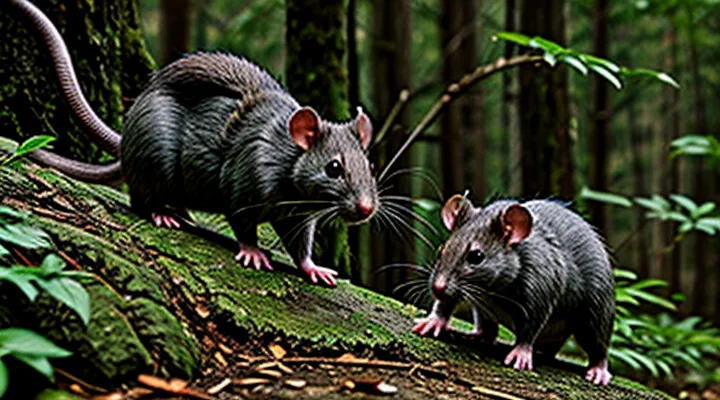
Scientific surveys confirm rat presence in temperate and tropical forests, where species such as the brown rat (Rattus norvegicus) and the black rat (Rattus rattus) occupy edge habitats, riparian zones, and disturbed patches. Their distribution expands when forest fragmentation creates corridors that connect natural areas to human settlements, allowing individuals to move between urban and wild zones. Consequently, rats are not confined to municipal environments; they also inhabit forest ecosystems, adapting to the resources and risks each setting presents.
Adaptability of Rats
Rats are capable of colonising forest ecosystems because of several physiological and behavioural characteristics.
Key adaptive features include:
- Omnivorous diet that accepts seeds, fruits, insects, carrion and human‑derived waste.
- High reproductive output; a female can produce several litters per year, each containing up to a dozen offspring.
- Efficient thermoregulation allowing survival in both temperate and subtropical forest microclimates.
- Skilled climbers and burrowers; strong forelimbs and flexible bodies enable movement through tree canopies, understory, and soil tunnels.
- Social organisation that supports cooperative foraging and predator avoidance.
These traits reduce dependence on a single habitat type and permit rats to exploit the heterogeneous resources found in woodland environments. Consequently, forested areas provide sufficient food, shelter and breeding sites for rat populations to establish and persist.
Forest Environments and Rat Presence
Species of Rats Found in Forests
Native Forest Rats
Native forest rats are a distinct group of murid rodents that occupy mature woodland ecosystems across temperate and tropical regions. These species have adapted to dense canopy cover, leaf litter, and complex vertical structures, which provide shelter and foraging opportunities not found in open habitats.
Ecological characteristics of native forest rats include:
- Preference for arboreal or semi‑arboreal activity, often nesting in tree hollows or burrows beneath decaying logs.
- Diet composed of seeds, fruits, insects, and occasional fungi, reflecting the diverse food resources of forest understories.
- Seasonal reproductive cycles that align with periods of abundant food, typically producing multiple litters per year in temperate zones and continuous breeding in tropical zones.
- Limited home ranges, often measured in hectares, which promote territoriality and reduce competition among conspecifics.
Geographic distribution varies by species. In North America, the woodland mouse (Peromyscus spp.) thrives in deciduous forests, while the southern red‑billed squirrel (Sciurus niger) occupies mixed coniferous stands. In Australasia, the native bush rat (Rattus fuscipes) is common in wet sclerophyll forests, and the New Guinea forest rat (Rattus praetor) inhabits lowland rainforests. Asian regions host the Himalayan field rat (Rattus nitidus) in montane forests and the Bornean forest rat (Rattus everetti) in primary rainforest.
Conservation status reflects habitat specificity. Species reliant on old‑growth forests are vulnerable to logging, fragmentation, and fire suppression, which reduce nesting sites and food availability. Management practices that preserve canopy continuity, maintain dead wood, and protect riparian corridors support population stability. Monitoring programs employing live trapping and genetic analysis provide data on distribution trends and inform mitigation strategies.
Introduced Species in Forest Ecosystems
Rats, particularly species such as the brown rat (Rattus norvegicus) and the black rat (Rattus rattus), have established populations in many forested regions where they were not originally present. Their spread results from human activities—transport of goods, settlement expansion, and deliberate release—allowing them to colonize habitats ranging from temperate woodlands to tropical rainforests. Once introduced, rats exploit abundant food sources, including seeds, fruits, invertebrates, and carrion, and they adapt quickly to the structural complexity of forest understories.
The presence of introduced rodents triggers several ecological changes:
- Predation on native small mammals, birds, and amphibian eggs reduces local biodiversity.
- Competition for seeds and fruits diminishes regeneration success of indigenous plant species.
- Burrowing and nesting alter soil composition, affecting nutrient cycling and microhabitat conditions.
- Carriage of pathogens increases disease risk for wildlife and, occasionally, for humans.
Management strategies focus on early detection, population control through trapping or baiting, and habitat modifications that reduce resource availability for invasive rats. Monitoring programs that track population dynamics and ecosystem responses provide data essential for evaluating intervention effectiveness.
Factors Influencing Rat Presence in Forests
Food Availability
Rats can survive in forest environments when sufficient food resources are present. Natural forest floors provide abundant organic matter, including fallen seeds, nuts, and fruit that drop from canopy trees. Decomposing leaves and mushrooms add protein and carbohydrate sources that support rodent metabolism.
Key food categories include:
- Seeds and nuts: High‑energy kernels from oak, beech, and conifer cones.
- Fruits and berries: Seasonal offerings such as raspberries, blackberries, and wild cherries.
- Invertebrates: Earthworms, beetle larvae, and other soil arthropods supply essential protein.
- Detritus: Decayed plant material and fungal mycelium serve as supplemental nutrition.
Water availability influences foraging intensity; streams, puddles, and moist leaf litter provide necessary hydration, allowing rats to exploit distant food patches. Seasonal fluctuations affect resource distribution: spring and autumn bring peak seed fall, while summer may increase fruit abundance. In periods of scarcity, rats expand their range, ingesting bark, roots, or carrion to meet caloric needs.
Overall, forest ecosystems can sustain rat populations when these food sources are consistently accessible, confirming that the presence of diverse, renewable nutrition supports rodent habitation in wooded habitats.
Shelter and Nesting Sites
Rats are common occupants of forest ecosystems, selecting shelter and nesting sites that meet requirements for protection, temperature regulation, and access to food. Typical locations include:
- Burrows excavated in soil – often 30–60 cm deep, lined with grasses and shredded plant material; provide stable microclimate and concealment from predators.
- Fallen logs and decaying stumps – natural cavities and crevices serve as temporary refuges; moisture levels remain high, supporting nest construction.
- Leaf litter and ground cover – dense layers of leaves, moss, or pine needles create insulated nests; easy to modify with additional debris.
- Tree cavities and hollow branches – accessible to arboreal rat species; offer elevation, reduced ground‑predator pressure, and ventilation.
- Anthropogenic structures at forest margins – abandoned sheds, wooden fences, or rock piles near human activity; supply readily available building material and occasional food sources.
Nesting materials are sourced locally: dried grasses, bark strips, moss, and soft fungal mycelium. Rats arrange these components to form compact, dome‑shaped nests that retain heat and resist moisture infiltration. Selection of a site balances proximity to foraging routes with concealment, ensuring survival in the variable forest environment.
Predation Pressure
Rats can establish populations in forest ecosystems, but their persistence is strongly moderated by predation pressure. Predators reduce rat numbers through direct killing, induce behavioral changes that limit foraging efficiency, and increase mortality of juveniles. These effects shape the spatial distribution of rats, confining them to areas where predator density is low or where structural complexity offers refuge.
Key forest predators influencing rat abundance include:
- Red foxes (Vulpes vulpes)
- European pine martens (Martes martes)
- Tawny owls (Strix aluco)
- Small mustelids such as weasels (Mustela spp.) and stoats (Mustela erminea)
- Raptors that hunt on the ground, for example buzzards (Buteo spp.)
Predation intensity varies with habitat characteristics. Dense understory and abundant coarse woody debris provide concealment, reducing encounter rates with visual hunters. Conversely, open canopy gaps expose rats to aerial and diurnal predators, elevating mortality. Seasonal fluctuations also affect pressure: breeding cycles of predators often align with peak rat reproductive periods, intensifying control during spring and summer.
Overall, predation pressure operates as a decisive factor determining rat occupancy of forests. Areas with high predator activity typically exhibit lower rat densities, while locations offering effective shelter and reduced predator presence support more robust rat populations.
Human Impact on Forest Habitats
Rats are present in many forest ecosystems, occupying niches that provide shelter and food. Their distribution depends on the structural integrity of the habitat and the availability of resources such as seeds, insects, and fallen fruit.
Human activities modify forest habitats in several ways:
- Clear‑cutting removes canopy cover and ground litter, reducing shelter options.
- Road construction fragments continuous forest, creating edge environments that alter microclimate.
- Agricultural expansion replaces native vegetation with monocultures, limiting natural food sources.
- Pollution introduces toxins that affect both rats and their prey.
- Logging alters tree density, affecting nesting sites and predator access.
These alterations influence rat populations. Reduced canopy and litter diminish nesting sites, while edge habitats may increase exposure to predators and competition from other rodents. Changes in food composition can shift dietary patterns, leading to higher reliance on anthropogenic waste where it is available.
Effective management requires preserving contiguous forest blocks, limiting edge creation, and monitoring rodent communities to assess ecosystem health. Restoration projects that reintroduce native understory and deadwood provide essential resources for rats and the broader food web.
The Ecological Role of Rats in Forests
Positive Impacts
Seed Dispersal
Rats are common occupants of many forest ecosystems, where their foraging behavior influences plant reproduction through seed dispersal. Individuals collect seeds from the forest floor, transport them to burrows, and either consume them or cache them for later use. Cached seeds that are not retrieved can germinate, establishing new seedlings away from the parent plant.
Mechanisms of rat‑mediated seed movement include:
- Caching: Rats bury seeds in shallow caches, creating spatially separated seed banks.
- Transport: Rodents carry seeds several meters from the source, often crossing microhabitat boundaries.
- Partial consumption: Damage to seed coats during handling can enhance germination by breaking dormancy.
- Secondary dispersal: Predators or scavengers may relocate discarded seeds, extending dispersal distances.
Empirical studies show that rat activity increases seedling density in disturbed patches, contributes to species‑specific recruitment patterns, and modifies forest composition over time. Species with hard coats or large nutrient reserves tend to survive rodent predation and benefit most from caching behavior.
Overall, rat presence in forest habitats creates a dynamic seed dispersal system that shapes regeneration processes and influences biodiversity.
Prey for Predators
Rats occupy many forest habitats, ranging from temperate woodlands to tropical rainforests. Their adaptability to ground cover, fallen logs, and dense understory enables stable populations that sustain higher trophic levels.
Predators that regularly exploit rat populations include:
- Birds of prey (e.g., owls, hawks, and eagles) that capture rats during low‑light foraging.
- Mammalian carnivores such as foxes, coyotes, and martens, which hunt rats on the forest floor.
- Reptiles, notably snakes and monitor lizards, which ambush rats in leaf litter and burrows.
- Small carnivorous mammals like weasels and feral cats that pursue rats in dense vegetation.
These predators rely on rat abundance for energy intake, reproductive success, and population regulation. Field studies consistently record rat remains in predator scats and stomach contents, confirming their significance as a food source across diverse forest ecosystems.
Negative Impacts
Predation on Native Wildlife
Rats are present in many forest ecosystems across temperate and tropical regions. Their populations frequently establish in riparian corridors, leaf litter, and abandoned burrows, where food and shelter are abundant.
Predation by rats on native wildlife manifests in several ways:
- Consumption of ground‑dwelling invertebrates, reducing prey availability for insectivorous birds and amphibians.
- Direct killing of small vertebrates such as nestling birds, reptile hatchlings, and juvenile mammals.
- Competition with native predators for shared prey, potentially displacing species that rely on the same food resources.
Evidence from field studies shows that rat predation can lower breeding success of forest‑dwelling birds, especially cavity nesters that lack defenses against mammalian intruders. In amphibian habitats, rat foraging on tadpoles and larvae has been linked to measurable declines in population recruitment. Reptile surveys indicate increased mortality of hatchlings in areas with high rat density, contributing to reduced adult abundance over time.
Management actions that limit rat access to forest interiors—such as baiting, trapping, and habitat modification—correlate with recovery of affected native species. Continuous monitoring of rat populations and predation rates is essential for evaluating the effectiveness of these interventions and for protecting biodiversity in forested landscapes.
Damage to Plant Life
Rats that occupy forest ecosystems interact directly with vegetation, often resulting in measurable harm to plant communities. Their activities affect seedlings, mature trees, and ground cover through several mechanisms.
- Gnawing on bark and roots weakens structural integrity, increasing susceptibility to disease and breakage.
- Consumption of seeds and fruits reduces recruitment rates, limiting regeneration of native species.
- Burrowing disrupts soil structure, exposing roots to desiccation and erosion while facilitating invasive plant establishment.
- Trampling of understory vegetation creates gaps that alter light regimes and microclimates, favoring opportunistic species.
- Transmission of fungal spores and bacterial pathogens via saliva and feces introduces additional stressors to plant health.
Empirical surveys in temperate and tropical forests document lower seedling density in areas with high rat density, corroborated by controlled exclusion experiments that show increased plant survival when rodents are removed. These findings indicate that rat presence exerts a consistent negative pressure on plant vitality, influencing forest composition and resilience.
Disease Transmission
Rats occupy forest ecosystems, establishing populations that interact with wildlife, humans, and domestic animals. Their presence creates pathways for pathogens to move across species boundaries, influencing disease dynamics in sylvan environments.
Key aspects of disease transmission involving forest-dwelling rats:
- Reservoir hosts: Rats harbor bacteria (e.g., Leptospira spp.), viruses (e.g., hantavirus, Lassa virus), and parasites (e.g., Trichinella spp.) that can infect other mammals and humans.
- Vector facilitation: Fleas, ticks, and mites feeding on rats acquire and disseminate pathogens such as Yersinia pestis and rickettsiae, extending reach to nearby wildlife and human settlements.
- Environmental contamination: Rat urine, feces, and saliva contaminate soil and water sources, enabling indirect transmission of leptospirosis and hantavirus pulmonary syndrome.
- Seasonal fluctuations: Reproductive peaks increase rat density, amplifying pathogen load and raising infection risk during warm, humid periods.
- Human encroachment: Logging, recreation, and residential expansion into forested areas heighten contact rates, elevating the probability of zoonotic spillover.
Effective management requires monitoring rat populations, controlling ectoparasite vectors, and limiting human exposure to contaminated resources within forest habitats.
Coexistence and Management
Monitoring Rat Populations
Monitoring rat populations provides the data needed to determine whether rodent species occupy forested habitats. Systematic surveys record abundance, distribution, and seasonal fluctuations, allowing researchers to distinguish between transient individuals and established colonies.
Effective monitoring combines several techniques:
- Live‑trap grids placed along transects to capture individuals for marking and release.
- Remote camera stations that detect nocturnal activity without human disturbance.
- Environmental DNA (eDNA) sampling of soil and water to reveal presence through genetic traces.
- Acoustic detectors that record ultrasonic vocalizations characteristic of rats.
Collected data undergo statistical analysis to estimate population density and habitat preferences. Geographic information systems (GIS) map occurrence points, highlighting corridors that connect forest interiors with adjacent agricultural or urban areas. Correlation with vegetation type, canopy cover, and food resource availability clarifies the ecological conditions that support rat settlements.
Long‑term monitoring detects trends such as expansion into previously unoccupied forest sections or contraction due to habitat alteration. Results inform management decisions, including targeted control measures or conservation strategies that consider the role of rodents in seed dispersal, disease dynamics, and food web interactions.
Conservation Efforts and Rat Control
Protecting Native Species
Rats are present in many forest ecosystems, often introduced through human activity or natural dispersal. Their presence can alter food webs, compete with indigenous rodents, and increase predation pressure on ground‑dwelling birds and insects. When non‑native rat populations expand, they may displace native species that rely on specific niches for survival.
Effective protection of indigenous fauna requires targeted actions:
- Habitat preservation – maintain contiguous forest blocks and limit fragmentation to reduce opportunities for rat colonization.
- Population control – implement humane trapping and baiting programs focused on invasive rat species while monitoring native rodent numbers.
- Biosecurity measures – enforce strict protocols for transporting goods and equipment into forested areas to prevent accidental introductions.
- Ecological monitoring – conduct regular surveys of species abundance and diversity to detect early signs of rat‑induced imbalance.
By applying these strategies, forest managers can limit the impact of rats on native wildlife and sustain ecological integrity.
Habitat Restoration
Rats are frequently recorded in temperate and tropical forest environments, where they exploit leaf litter, fallen logs, and understory vegetation for shelter and foraging. Species such as the Norway rat (Rattus norvegicus) and the black rat (Rattus rattus) have established populations in disturbed forest patches, while native rodents like the wood mouse (Apodemus sylvaticus) dominate undisturbed stands.
Habitat restoration projects alter the conditions that support rat populations. Reforestation, dead‑wood retention, and understory enrichment create microhabitats that can increase rodent abundance. Conversely, removal of invasive plant species and restoration of natural fire regimes may reduce resources favored by commensal rats.
Key restoration actions influencing rat occupancy:
- Planting native understory shrubs to increase structural diversity.
- Retaining coarse woody debris to provide nesting sites.
- Implementing controlled burns to limit dense ground cover.
- Removing anthropogenic food sources near restoration sites.
Monitoring rat presence provides a measurable response to restoration interventions. High rat densities may indicate excessive habitat simplification or unintended food subsidies, while balanced rodent communities reflect successful reestablishment of ecological complexity. Management plans should integrate rodent surveys with vegetation assessments to ensure restoration objectives are met without fostering pest outbreaks.