
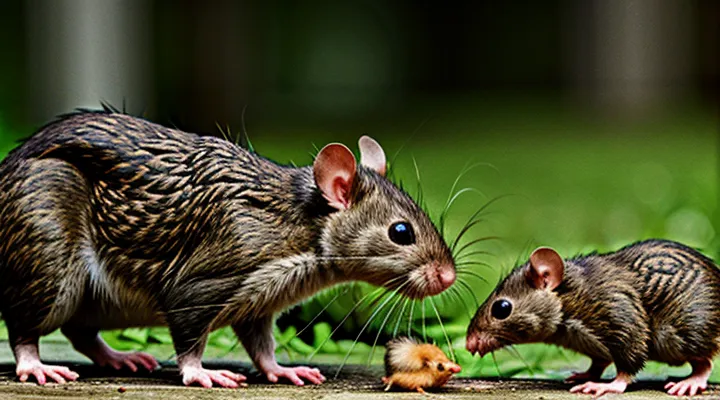
The Omnivorous Nature of Rats
General Dietary Habits of Common Rat Species
Rats exhibit omnivorous feeding strategies that vary among species but share several core patterns. Urban Norway rats (Rattus norvegicus) and roof rats (Rattus rattus) consume a mixture of plant material, discarded human food, and animal matter. Their diets typically include grains, fruits, nuts, insects, carrion, and occasional small vertebrates when available.
Key dietary components across common rat species:
- Grains and seeds: Wheat, corn, rice, and assorted cereals form the primary caloric source.
- Fruits and vegetables: Apples, berries, leafy greens, and tubers supplement carbohydrate intake.
- Invertebrates: Beetles, larvae, worms, and crustacean remnants provide protein and lipids.
- Carrion: Decomposing animal tissue supplies additional protein, especially in waste‑rich environments.
- Occasional vertebrate prey: Small birds, eggs, and amphibians are taken opportunistically, though such items represent a minor fraction of overall consumption.
Seasonal shifts influence food selection. In temperate zones, rats increase reliance on stored seeds and nuts during winter, while summer abundance of insects and fresh produce expands protein sources. In tropical regions, continuous fruit availability reduces dependence on human refuse.
Behavioral flexibility enables rats to exploit diverse habitats. In agricultural settings, they target stored grain stores; in sewers and dumpsters, they scavenge processed foods; in natural ecosystems, they forage for seeds and invertebrates. This adaptability underlies their success as pervasive commensal and wild rodents.
Nutritional Needs and Opportunistic Feeding
Rats require a balanced intake of protein, fat, carbohydrates, vitamins, and minerals to sustain rapid growth, high reproductive rates, and constant activity. Protein supplies amino acids for muscle development and immune function; fat delivers concentrated energy and supports cell membranes; carbohydrates provide readily available glucose for brain and nervous system activity; micronutrients regulate metabolic pathways and bone health.
When natural food sources become scarce, rats shift to opportunistic feeding. This behavior includes consuming eggs, nestlings, and other small vertebrates if they are accessible. Such prey offers a high‑protein, high‑fat supplement that can temporarily offset deficits in plant‑based diets.
Key nutritional components that attract rodents to animal prey:
- Protein (20–30 % of diet) – essential for tissue repair and offspring development.
- Lipids (5–10 % of diet) – source of dense caloric energy.
- Calcium and phosphorus – crucial for skeletal growth, often limited in grain diets.
- Vitamin B12 – absent in plant material, abundant in animal tissue.
The decision to attack a chick or egg depends on risk assessment, availability, and the immediate nutritional gap. In environments where insects and grains dominate, the occasional consumption of avian offspring represents a strategic, short‑term solution rather than a primary feeding habit.
Rats as Predators
Predatory Instincts in Rodents
Rodents possess innate predatory drives that manifest under specific ecological conditions. These drives are rooted in sensory acuity, rapid bite mechanics, and opportunistic foraging strategies. When small vertebrates, such as newly hatched birds, become accessible, rats can exploit them as protein sources.
Key factors influencing predatory behavior include:
- Resource scarcity – limited plant material or grain drives rodents to seek alternative nutrients.
- Habitat overlap – co‑habitation of nesting sites for poultry and rodent burrows creates contact points.
- Age and size of prey – hatchlings lack defensive feathers and mobility, making them vulnerable.
- Seasonal temperature – colder periods increase metabolic demand, prompting higher predation rates.
Observational studies confirm that brown rats (Rattus norvegicus) have been recorded killing and consuming chicks in farmyard environments. Laboratory experiments demonstrate that when presented with live hatchlings, rats exhibit stalking, capture, and mastication behaviors comparable to those directed at insects or amphibians.
Physiological adaptations supporting predation comprise strong incisors capable of piercing soft tissue, a powerful jaw closure speed exceeding 30 ms, and a digestive system able to process animal protein without prolonged adaptation. These traits, while primarily evolved for omnivorous diets, enable occasional carnivorous episodes.
Management implications are straightforward: eliminating rodent access points, securing hatchery enclosures, and maintaining low grain spillage reduce the likelihood of predatory encounters. Monitoring rodent populations during peak breeding seasons for poultry provides early warning of potential losses.
Factors Influencing Predatory Behavior
Rats demonstrate opportunistic predation when small birds, such as chicks, are accessible. Their willingness to attack depends on a combination of physiological, ecological, and social variables.
- Nutrient deficiency – lack of protein or fat triggers increased hunting of vertebrate prey.
- Resource scarcity – limited access to typical food sources forces rats to broaden their diet.
- Seasonal changes – breeding seasons of poultry raise chick availability, aligning with heightened rodent activity.
- Population density – crowded colonies intensify competition, encouraging aggressive foraging.
- Learning and experience – individuals that have previously succeeded in capturing chicks repeat the behavior.
- Hormonal fluctuations – elevated testosterone during rodent reproductive cycles correlates with more aggressive hunting.
- Habitat structure – dense litter, burrows, or cluttered coops provide concealment and ambush points.
Each factor interacts with the others, producing a dynamic risk profile for poultry. Understanding these drivers enables targeted management strategies to reduce predation incidents.
The Vulnerability of Chicks
Developmental Stages and Defenses of Young Birds
Young birds progress through distinct developmental phases that determine their vulnerability to opportunistic mammals. The earliest phase, the hatchling stage, features limited motor control, underdeveloped plumage, and reliance on parental feeding. As growth proceeds, the nestling stage introduces stronger beak function, feather emergence, and thermoregulatory capacity, yet the bird remains confined to the nest. The fledgling stage marks the acquisition of flight muscles and coordinated locomotion, reducing exposure to ground‑based predators but still exposing the bird to aerial and terrestrial threats during the learning period.
Rodent predators exhibit a preference for prey that presents minimal handling difficulty and maximal nutritional return. Hatchlings, lacking protective feathers and defensive behaviors, represent optimal targets. Nestlings, while larger, still offer limited escape options, making them attractive when nests are accessible. Fledglings, capable of brief flight, present increased risk to predators, prompting rodents to focus on unattended or abandoned nests where fledglings remain ground‑bound.
Defensive adaptations employed by young birds include:
- Camouflage plumage that blends with nest material during early stages.
- Vocal distress calls that trigger parental defense and can deter nearby mammals.
- Synchronous hatching that overwhelms predators through sheer number.
- Nest concealment achieved by strategic placement in dense vegetation or cavities.
- Parental aggression where adults physically repel intruders or mob predators.
These mechanisms evolve in direct response to the predation pressure exerted by small mammals seeking easy, nutrient‑rich meals. Understanding the interplay between avian developmental milestones and rodent foraging behavior clarifies why certain stages of bird growth are more frequently targeted.
Nesting Habits and Exposure to Predators
Rats that inhabit farmyards or backyard coops often select nesting sites that reduce contact with larger avian predators. They favor concealed burrows beneath straw, compost heaps, or dense vegetation, where visual detection by hawks or feral cats is limited. Proximity to food sources, such as spilled grain or chick feed, influences nest placement; the closer the supply, the higher the likelihood of repeated visits.
Key factors that increase chick vulnerability include:
- Nest elevation below the reach of aerial hunters but within easy access for ground‑dwelling rodents.
- Sparse bedding that offers little insulation, prompting chicks to leave the nest for warmth and exposing them to wandering rats.
- Open coop doors or gaps in wire mesh, allowing rats to enter and scout for eggs or hatchlings.
When nests are situated in open, well‑lit areas, rats encounter fewer barriers and can exploit the opportunity to prey on vulnerable chicks. Conversely, nests built inside enclosed, predator‑proof structures experience markedly lower rodent intrusion rates.
Research on rodent foraging behavior shows that rats prioritize high‑calorie, easily captured prey. Chicks confined to poorly defended nests present an attractive target, especially during early development stages when mobility is limited. Effective mitigation therefore focuses on securing nest sites, eliminating entry points, and maintaining dense cover that deters both aerial and terrestrial predators.
Documented Cases and Scientific Evidence
Studies on Rat Predation on Avian Nests
Research on rat attacks on bird nests provides quantitative insight into the frequency, conditions, and outcomes of such events. Field surveys across agricultural and natural habitats have recorded direct observations, camera‑trap footage, and nest‑failure analyses that attribute predation to rodents. Laboratory experiments complement field data by offering controlled assessments of rat willingness to consume eggs, hatchlings, and nest material.
Key findings from recent studies include:
- Rat predation accounts for 12–18 % of total nest failures in mixed‑crop regions, rising to over 25 % where rodent control is limited.
- Preference for nest contents follows a size hierarchy: unfertilized eggs are taken less often than freshly hatched chicks, which in turn are preferred over older fledglings.
- Seasonal peaks in predation correspond with rodent population surges during late summer and early autumn, aligning with grain harvest periods that increase food availability.
- Habitat complexity influences attack rates; dense ground cover and low vegetation height correlate with higher predation incidents, while elevated nest platforms reduce exposure.
- Nutritional analysis shows that rat consumption of avian protein improves growth rates in juvenile rodents, indicating a measurable energetic benefit.
Methodological approaches emphasize systematic nest monitoring, DNA barcoding of gut contents, and statistical modeling of predation risk factors. These techniques allow researchers to isolate rodent impact from other predators and to quantify the contribution of rats to avian reproductive loss. The accumulated evidence underscores the need for integrated pest management strategies that address rodent populations alongside conventional wildlife conservation measures.
Observations in Agricultural and Urban Settings
Rats are opportunistic feeders, and their interactions with young poultry have been documented in both farm environments and city landscapes. Field surveys in mixed‑crop farms reveal that rats enter coops when feed is accessible, especially during grain shortages. Video recordings show individuals capturing and consuming hatchlings, typically after the chicks have left the brooder. In urban settings, rats exploit backyard chicken runs that lack secure fencing, often targeting chicks that wander beyond protective barriers.
Key observations from agricultural sites:
- Presence of rat droppings and gnaw marks near coop entrances correlates with higher chick mortality.
- Trapped rats frequently contain partially digested chick tissue in stomach contents.
- Seasonal peaks in rat activity (late summer to early autumn) align with increased chick vulnerability due to reduced daylight and cooler temperatures.
Urban findings include:
- Rats entering unsecured poultry enclosures during nighttime, when human activity is minimal.
- Evidence of chick predation in community gardens that host small flocks, identified through forensic analysis of remains.
- Higher incidence of attacks in densely populated neighborhoods where waste management attracts large rodent populations.
Overall, the data indicate that rats will prey on chicks when environmental conditions—such as easy access to coops, abundant waste, and limited predator control—create favorable feeding opportunities. Effective mitigation requires reinforced coop structures, prompt removal of spilled feed, and regular rodent monitoring in both rural and metropolitan contexts.
Impact on Poultry Farming and Wildlife
Economic Consequences for Farmers
Rodent predation on poultry directly reduces farm income. Each chick lost represents a measurable decrease in revenue, calculated by the market price of the bird multiplied by the number of mortalities. In commercial operations, losses often exceed several hundred dollars per affected litter, while in small‑scale farms the proportional impact can reach 15–20 % of total earnings.
Key cost components include:
- Immediate product loss – market value of dead or injured chicks.
- Replacement expenses – purchase of additional breeding stock to maintain production targets.
- Veterinary interventions – treatments for secondary infections caused by rodent bites.
- Infrastructure damage – gnawed feed containers, wiring, and housing structures requiring repair or replacement.
- Increased labor – time allocated to trapping, monitoring, and cleaning contaminated areas.
Mitigation measures generate upfront expenses but often lower overall financial risk. Effective strategies comprise:
- Physical barriers – sealed coop doors, metal mesh, and concrete floors to prevent entry.
- Environmental management – regular removal of excess feed, proper waste disposal, and vegetation control around facilities.
- Integrated pest control – combination of snap traps, live‑catch devices, and targeted rodenticides, applied according to regulatory guidelines.
- Surveillance systems – motion‑activated cameras or infrared sensors to detect activity and trigger rapid response.
Cost‑benefit analyses consistently show that investment in comprehensive rodent control yields a net positive return, reducing loss rates by up to 70 % and stabilizing cash flow. Failure to address the issue can lead to long‑term profitability decline, insurance premium increases, and potential loss of market contracts due to inconsistent supply.
Ecological Effects on Bird Populations
Rats frequently prey on newly hatched birds, directly reducing chick survival rates. This predation pressure alters reproductive success within affected avian species, leading to measurable declines in local population density.
In addition to direct consumption, rats compete with wild birds for limited food resources such as seeds, insects, and grain. Competitive exclusion forces birds to shift foraging patterns, often into suboptimal habitats where exposure to predators and environmental stressors increases.
Secondary effects arise from pathogen transmission. Rats commonly carry Salmonella, avian influenza, and ectoparasites that can spread to bird colonies, elevating morbidity and mortality across multiple age classes.
Key ecological consequences include:
- Lowered fledgling output in ground‑nesting and cavity‑nesting birds.
- Displacement of breeding territories toward marginal areas with reduced food availability.
- Amplified disease incidence leading to population bottlenecks.
- Disruption of predator‑prey dynamics, as reduced bird numbers affect raptor and insectivore populations that rely on avian prey.
Long‑term monitoring of bird counts in urban, suburban, and agricultural settings demonstrates a correlation between rat abundance and negative trends in avian diversity. Management strategies that limit rodent populations—such as sanitation improvements, habitat modification, and targeted control measures—contribute to the recovery of vulnerable bird species and the stabilization of ecosystem functions.
Prevention and Mitigation Strategies
Rodent Control Methods for Poultry Protection
Effective protection of poultry from rodent predation relies on a combination of preventive, mechanical, biological, and chemical strategies. Secure housing is the first line of defense; all openings larger than 1 cm should be sealed with metal mesh or concrete, and nesting boxes must be elevated or placed on sturdy platforms. Regular inspection of the coop perimeter identifies gaps before rodents exploit them.
Mechanical controls include snap traps, live‑catch cages, and electronic devices. Snap traps positioned along walls and near feed stations deliver immediate mortality, while live‑catch cages allow relocation when removal is preferred. Electronic deterrents emit ultrasonic frequencies that discourage rodent activity without harming birds.
Biological control introduces natural predators such as barn owls, hawks, or feral cats. Installing perches and nesting boxes for raptors encourages their presence, and rotating cat access prevents habituation. These predators reduce rodent populations while providing an additional layer of security for the flock.
Habitat management reduces attractants. Store feed in sealed containers, clean spilled grain daily, and eliminate standing water. Compost piles and debris should be located at least 30 m from the coop to deny shelter and food sources.
Chemical interventions are reserved for severe infestations. Rodenticides must be applied in tamper‑proof bait stations placed outside the coop, away from birds and children. Use anticoagulant or bromethalin formulations according to label instructions, and monitor for secondary poisoning.
An integrated approach—combining exclusion, traps, predators, sanitation, and targeted chemicals—offers the most reliable protection for poultry against rodent threats. Continuous monitoring and timely adjustment of each component sustain long‑term effectiveness.
Habitat Management to Reduce Predation Risk
Effective habitat management reduces the likelihood that rodents will target young poultry. Strategies focus on altering the environment to make it less attractive or accessible to predatory rodents.
- Remove debris, excess vegetation, and stored feed that provide shelter and food sources. Regularly clear gutters, compost piles, and woodpiles within a 50‑meter radius of coops.
- Install hard‑shelled barriers such as concrete or metal edging around enclosure perimeters. Ensure gaps are no larger than 2 cm to prevent entry.
- Elevate nesting boxes and feed stations at least 30 cm above ground level, using smooth surfaces that rodents cannot climb easily.
- Apply rodent‑resistant materials to coop construction, including metal mesh with a 1 mm aperture for ventilation and steel flooring with a non‑slip coating.
- Implement controlled lighting that discourages nocturnal activity. Dim, motion‑activated lights deter rodents without stressing the birds.
Monitoring and maintenance are essential. Conduct weekly inspections for signs of burrowing, gnaw marks, or droppings. Promptly repair any structural damage and replace compromised barriers. Consistent application of these measures creates an environment where rodents find limited resources and few entry points, thereby lowering predation risk for chicks.