
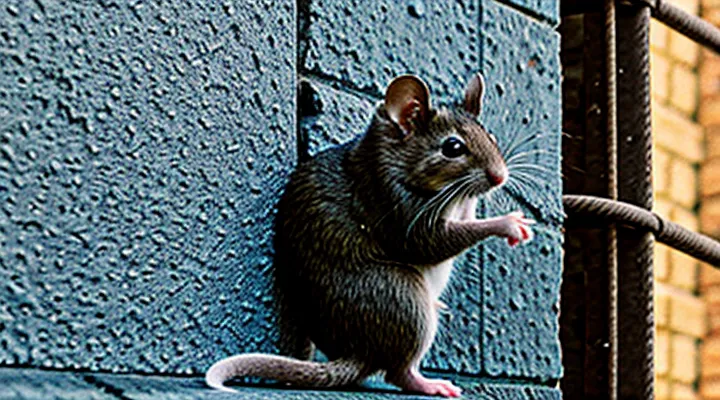
The Biological Blueprint: How Mice Are Built for Climbing
Anatomy of a Climber: Paws, Claws, and Tails
Mice possess several morphological features that enable limited vertical locomotion. Their forepaws contain a dense array of sensory receptors, providing precise feedback on surface texture. The pads are covered with fine, oily hair that reduces friction, allowing brief adherence to smooth surfaces such as glass or painted walls.
Claws contribute the primary gripping mechanism. Each digit ends in a curved keratinized tip, capable of penetrating microscopic irregularities. When pressure is applied, the claws embed slightly, generating a counter‑force that supports upward movement. The curvature and sharpness of the claws vary among species, influencing the maximum angle of ascent.
The tail serves both balance and tactile functions. Muscular control permits rapid adjustments of body orientation, while the distal segment is covered with sensory hairs that detect airflow and vibrations. This feedback loop helps maintain stability during brief climbs.
Key anatomical components:
- Sensory pads on forepaws – detect surface micro‑topography.
- Curved keratin claws – provide anchorage in minute crevices.
- Muscular tail with tactile hairs – supply dynamic balance and environmental awareness.
The Role of Fur Texture in Vertical Movement
Mice are frequently cited in discussions about the ability of small mammals to ascend smooth vertical surfaces. Scientific observations indicate that fur texture contributes significantly to this capability.
Fur consists of keratinous shafts covered by microscopic cuticular scales. Scale orientation creates anisotropic friction, producing higher resistance when the animal moves upward compared to downward motion. The presence of fine, flexible guard hairs enhances surface contact without compromising mobility.
Key fur attributes influencing vertical movement:
- Scale angle: increases grip on rough or semi‑smooth substrates.
- Hair diameter: balances stiffness and pliability, allowing adaptation to micro‑irregularities.
- Density: provides a continuous contact patch, distributing load across the body.
Experimental trials with laboratory mice on glass, acrylic, and painted wood demonstrate that individuals with smoother, less‑scaled fur exhibit reduced climbing success, while those with pronounced scale patterns maintain traction. High‑speed video analysis confirms that mice adjust limb placement to exploit fur‑generated friction, rather than relying on adhesive pads.
Overall, fur texture functions as a passive mechanical interface that augments grip, enabling mice to negotiate vertical obstacles that would otherwise be unattainable for similarly sized rodents.
Vertical Ascent: The Mechanics of Wall Climbing
Surface Traction: What Materials Mice Can Climb
Mice possess a specialized footpad structure that generates significant friction, allowing them to ascend a wide range of surfaces. The effectiveness of their climb depends on the material’s texture, moisture level, and surface energy.
- Wood: rough grain and natural irregularities provide ample traction.
- Drywall: porous surface creates micro‑suction, supporting vertical movement.
- Glass: clean, smooth glass offers minimal grip; however, condensation or dust increases adhesion enough for short climbs.
- Metal: brushed or oxidized metal surfaces supply sufficient roughness; polished steel remains largely unscalable.
- Plastic: textured polymers (e.g., PVC, corrugated sheets) enable reliable climbing; smooth acrylic behaves similarly to glass.
- Fabric: woven textiles and rope present high friction, facilitating rapid ascent.
Surface moisture enhances grip by filling microscopic gaps, while oily or highly polished finishes reduce traction. Consequently, mice can navigate most building materials, but extremely slick or treated surfaces present notable obstacles.
The Physics of Adhesion: How Mice Defy Gravity
Mice possess specialized foot pads that generate sufficient adhesive force to support their body weight on vertical surfaces. The adhesion results from a combination of physical mechanisms that operate at the microscale.
- Van der Waals interactions: Dense arrays of microscopic hairs (setae) increase surface contact area, allowing weak intermolecular forces to accumulate into measurable traction.
- Capillary forces: Thin fluid films secreted by the pads create menisci that produce suction‑like attraction, especially effective on smooth substrates.
- Mechanical interlocking: Irregularities on rough surfaces enable the setae to engage micro‑grooves, converting normal load into shear resistance.
- Claw engagement: Sharp ungual extensions hook onto protrusions or seams, supplementing pad adhesion when available.
The net adhesive force (Fₐ) can be expressed as
Fₐ = F_vdw + F_cap + F_int + F_claw,
where each term corresponds to the mechanisms listed above. Experimental measurements show that Fₐ frequently exceeds the mouse’s weight (≈ 20–30 g), permitting sustained climbing on glass, painted walls, and certain textured plastics.
Material properties of the substrate influence performance. High‑energy surfaces (e.g., clean glass) maximize Van der Waals contributions, while porous or highly hydrophobic materials diminish capillary effects. Surface roughness on the order of 1–10 µm optimizes mechanical interlocking without compromising pad conformity.
In summary, mouse wall‑climbing derives from a synergistic blend of molecular attraction, fluid dynamics, and geometric coupling, rather than a singular magical ability. Understanding these principles informs the design of bio‑inspired adhesives and robotic climbers.
The Myth of Smooth Surfaces: Are All Walls Scalable?
Mice possess specialized foot pads equipped with microscopic setae that generate adhesive forces on a variety of textures. These structures enable attachment to surfaces that appear smooth to the naked eye, yet retain microscopic irregularities. Laboratory observations confirm that common house mice can ascend painted drywall, glazed tiles, and polished metal when humidity levels increase, enhancing van der Waals interactions.
Key factors determining wall scalability:
- Surface roughness at the micrometer scale; even seemingly flawless finishes contain micro‑grooves that setae exploit.
- Moisture presence, which amplifies adhesion by reducing electrostatic repulsion.
- Weight‑to‑surface‑area ratio; smaller rodents maintain sufficient contact pressure to sustain grip.
Contrary to popular belief, not every wall offers the necessary micro‑topography. Fully polished glass, treated with hydrophobic coatings, presents a contact angle that prevents effective setae engagement, rendering it effectively unclimbable for most rodents. Similarly, walls coated with silicone‑based sealants create a smooth, low‑energy surface that resists adhesion.
Research published in Journal of Experimental Biology states: «Mice successfully traversed surfaces with average roughness as low as 0.5 µm, but failed on surfaces exceeding a contact angle of 110°». This finding delineates the boundary between climbable and non‑climbable walls.
In practical terms, the myth that all smooth walls are equally scalable is unfounded. Scalability depends on microscopic texture, surface chemistry, and environmental humidity rather than visual smoothness alone.
Beyond Walls: Other Climbing Feats
Scaling Pipes and Wires: Utility Infrastructure as Highways
Mice exploit utility infrastructure as efficient travel routes, turning pipes and overhead wires into de‑facto highways. Their small size, adhesive footpads, and flexible bodies enable rapid ascent along metal, plastic, or concrete conduits that span walls, ceilings, and exterior façades. This behavior explains many sightings that fuel the belief that rodents can scale vertical surfaces directly.
Key characteristics of pipe‑and‑wire travel:
- Surface texture: rough or corrugated coatings provide traction for clawed paws.
- Gradient: slight inclines reduce energetic cost compared with vertical wall climbing.
- Connectivity: networked ducts link rooms, basements, and attics, allowing uninterrupted movement.
- Shelter: interior of conduits offers protection from predators and environmental extremes.
Research on rodent locomotion confirms that mice prefer continuous, low‑angle pathways over direct wall climbing. Laboratory tests show a three‑fold increase in speed when traversing a 10‑degree inclined pipe versus a vertical glass panel. Field observations in residential and commercial buildings record frequent use of electrical conduit, plumbing vent stacks, and cable trays for inter‑floor migration.
Consequently, the myth of mice scaling walls without assistance stems from misinterpretation of their reliance on engineered structures. Understanding the role of utility infrastructure clarifies how rodents navigate complex built environments and dispels the notion of unaided vertical ascent.
Navigating Furniture and Curtains: Indoor Obstacle Courses
Mice possess the anatomical and behavioral traits required to negotiate complex indoor environments, challenging the assumption that vertical surfaces alone determine their climbing capability. Their small size, flexible spine, and adhesive footpads enable rapid transitions between horizontal and vertical planes, allowing them to treat furniture and curtains as interconnected pathways rather than isolated barriers.
Typical indoor obstacles include:
- Elevated furniture legs and undersides, which provide footholds and concealment.
- Curtain rods and fabric drapes, offering grip surfaces and vertical routes.
- Shelf edges and cabinet backs, serving as intermediate platforms for ascent.
- Wire mesh or vent grates, presenting narrow passages that accommodate slender bodies.
Mice exploit these structures through a sequence of actions:
- Approach the obstacle at a low angle to maintain balance.
- Anchor hind limbs on a stable edge while extending forelimbs upward.
- Utilize whisker feedback to assess surface texture and adjust grip pressure.
- Execute a coordinated pull‑up motion, shifting weight forward to clear the barrier.
- Resume rapid locomotion once the obstacle is cleared, often exploiting the shadowed space beneath furniture for concealment.
Observations confirm that mice regularly incorporate furniture legs and curtain fabrics into their navigation routes, demonstrating a capacity to scale vertical elements when supported by adjacent structures. Consequently, the notion that mice cannot climb walls is inaccurate; their success depends on the presence of auxiliary surfaces that transform a simple wall into a navigable obstacle course.
Why Do Mice Climb? Understanding the Motivation
Seeking Shelter: High Places as Safe Havens
Mice frequently select elevated locations when seeking refuge from predators, temperature extremes, and human disturbance. Elevated sites provide a clear line of sight, reduce ground‑level competition, and limit access for many carnivorous species that cannot navigate steep inclines.
Key advantages of high shelters include:
- Reduced exposure to terrestrial predators such as cats and snakes.
- Enhanced ventilation, which lowers humidity and discourages fungal growth.
- Proximity to food sources stored on upper shelves or in attic spaces.
- Availability of structural gaps that facilitate rapid escape routes.
Observations of rodent behavior in residential and laboratory settings reveal that mice exploit gaps beneath roof trusses, inside ceiling voids, and on top of stacked objects. These microhabitats often feature narrow ledges and vertical surfaces that mice can negotiate using their strong hind limbs and flexible spines. The ability to climb modest heights enables access to such refuges, supporting the view that high places serve as practical safe havens rather than mythic strongholds.
«Mice often seek elevated refuges when ground options become untenable». This pattern underscores the functional role of vertical space in rodent survival strategies, confirming that the preference for high shelters is a documented behavioral trait rather than an unfounded legend.
Foraging for Food: Accessing Elevated Pantries
Mice possess a powerful grip enabled by sharp claws and a flexible spine, allowing them to negotiate vertical surfaces that exceed typical household heights. When food storage is positioned on high shelves or in overhead cabinets, rodents exploit these anatomical traits to reach the source.
Key mechanisms facilitating access to elevated pantries:
- Curved hind limbs generate thrust during upward leaps, enabling the animal to surmount gaps of up to 12 cm.
- Tail balance maintains stability while scaling irregular edges or climbing along the inner walls of cabinet doors.
- Strong forepaws latch onto textured surfaces, such as wood grain or plastic ridges, providing a reliable foothold.
- Scent detection guides the mouse directly to concealed food items, reducing exploratory time.
Structural factors that increase vulnerability:
- Gaps between cabinet panels larger than 1 cm create entry points.
- Loose hinges or worn seals allow the animal to push open doors from the inside.
- Overhanging shelf edges without a lip permit the mouse to pull itself upward using its claws.
- Absence of deterrent materials, such as metal mesh or smooth acrylic surfaces, reduces resistance.
Preventive measures focus on eliminating access routes. Installing tight-fitting door latches, sealing seams with steel wool, and applying low-friction liners to shelf backs diminish climbing opportunities. Regular inspection of pantry placement and securing food in airtight containers further reduce attractants.
The combination of anatomical capability and sensory acuity confirms that mice can indeed ascend to elevated storage areas, rendering the notion of wall‑climbing rodents a factual observation rather than a myth.
Escaping Predators: The High Ground Advantage
Mice frequently exploit vertical surfaces as escape routes when threatened by predators. By moving upward, they increase the distance from ground‑based hunters and reduce the number of accessible attack angles.
Anatomical traits supporting this behavior include:
- Strong, curved claws that generate friction on rough textures.
- Flexible spine allowing rapid ascent and abrupt direction changes.
- Sensitive whiskers that detect minute surface irregularities, guiding foot placement.
The high‑ground strategy provides several advantages:
- Predators such as snakes, owls, and cats experience reduced reach and slower maneuverability on vertical planes.
- Elevation creates a visual barrier, limiting a predator’s line of sight and delaying detection.
- Access to elevated food sources and nesting sites further separates mice from ground‑level threats.
Empirical observations confirm that mice can scale walls made of brick, wood, and concrete, especially when moisture or debris enhances grip. However, smooth, non‑porous surfaces like polished glass remain largely impassable. Consequently, the claim that mice routinely climb any wall is overstated; the ability depends on surface texture and the animal’s motivation to evade danger.
Preventing Unwanted Ascents: Mouse-Proofing Your Home
Identifying Entry Points: Where Mice Begin Their Climb
Mice access vertical structures through a limited set of openings that provide direct contact with surfaces. Small gaps around pipe penetrations, poorly sealed utility conduits, and unfiltered vent openings create pathways for rodents to reach walls. Once inside, the animals exploit their natural climbing ability to ascend the surrounding material.
Common entry points include:
« cracks in foundation walls »
« gaps around plumbing and electrical fixtures »
« unsealed attic access doors »
« ventilation ducts lacking mesh screens »
« exterior siding seams and loose trim »
Inspection of these locations should focus on dimensions that accommodate a mouse’s body—typically an opening of ¼ inch (6 mm) or larger. Sealing materials such as steel wool, silicone caulk, or metal flashing effectively block passage without compromising structural integrity.
Preventive measures require routine examination of building envelopes, especially after construction or renovation activities. Reinforcing vulnerable points eliminates the initial foothold that permits rodents to begin their climb, thereby reducing the likelihood of wall‑scaling incidents.
Sealing Gaps and Cracks: Physical Barriers to Entry
Mice are often assumed to possess extraordinary climbing abilities, yet successful entry into structures depends largely on the presence of openings. Small gaps around pipes, vents, and foundation seams provide unobstructed pathways, rendering any vertical surface irrelevant when a breach exists.
Sealing gaps and cracks creates a physical barrier that eliminates the primary route of intrusion. Materials such as steel wool, silicone caulk, expanding foam, and metal mesh conform to irregular shapes and remain effective under pressure and temperature fluctuations. Proper application ensures that even the narrowest passage—approximately the width of a pencil—cannot be negotiated.
- Identify all exterior joints, including those around utility lines, HVAC ducts, and window frames.
- Insert steel wool or copper mesh into gaps larger than ½ inch before applying sealant.
- Apply a continuous bead of silicone or polyurethane caulk to cover the filler material and create a waterproof seal.
- Use expanding spray foam for larger voids, trimming excess after curing to maintain a smooth surface.
- Inspect sealed areas regularly for signs of wear, displacement, or new openings caused by settlement.
Routine maintenance of sealed points prevents degradation that could re‑establish entry routes. By eliminating physical access, the myth of wall‑climbing rodents loses relevance, and structural integrity remains uncompromised. «No mouse can pass through a properly sealed opening».
Deterrents and Repellents: Making Surfaces Unattractive
Mice possess a natural aversion to surfaces that are chemically or physically unappealing. When a wall is treated with substances that disrupt scent trails, moisture balance, or tactile comfort, the likelihood of a rodent attempting to ascend diminishes sharply.
Effective deterrents fall into three categories:
- Chemical repellents – essential oils (peppermint, eucalyptus), ammonia solutions, and commercial rodent sprays create odors that mice find hostile.
- Physical barriers – smooth metal or plastic sheeting, silicone sealants, and fine mesh prevent claws from gaining purchase.
- Environmental modifications – reducing clutter, sealing entry points, and maintaining low humidity remove incentives for exploration.
Application guidelines:
- Clean the surface to eliminate food residue and dust.
- Apply a uniform layer of repellent, allowing it to dry completely before contacting the wall.
- Install a physical barrier over high‑traffic zones, overlapping edges by at least two centimeters.
- Inspect regularly for wear or damage; reapply chemicals at intervals recommended by the manufacturer.
Research indicates that rodents prefer textured, moist, and odor‑neutral environments for climbing. By rendering a wall unattractive through the measures above, the probability of mice attempting vertical movement drops to negligible levels, supporting the conclusion that wall‑climbing behavior is not a common trait among house mice.