
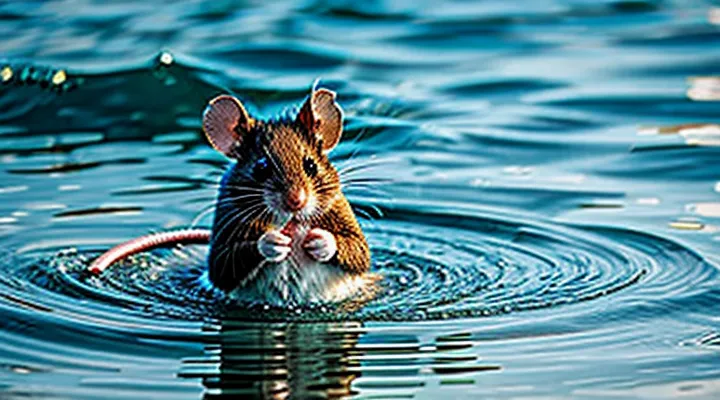
The Natural Swimming Ability of Mice
Innate Instincts and Survival
Mice exhibit a set of innate behaviors that facilitate survival in environments where water exposure occurs. These behaviors arise from evolutionary pressures that favor individuals capable of escaping predators, locating food, or seeking shelter across brief aquatic obstacles.
Key innate mechanisms include:
- Reflexive limb coordination triggered by tactile stimulation of the paws, producing rhythmic strokes without prior learning.
- Automatic buoyancy regulation through lung inflation and fur water‑repellent properties, allowing the animal to remain afloat.
- Rapid orientation response that directs the head upward, enabling the animal to surface and breathe.
Physiological adaptations support these behaviors. Muscular fiber composition in the fore‑ and hind‑limbs favors fast, repetitive contractions, while the vestibular system provides balance control during immersion. Neural circuits in the brainstem integrate sensory input from whiskers and skin receptors, initiating the swimming pattern immediately upon contact with liquid.
Experimental observations confirm that naïve individuals, never exposed to water in captivity, initiate swimming motions within seconds of immersion. This response persists across various strains, indicating a species‑wide genetic basis rather than conditioned learning.
Consequently, the capacity to navigate water represents an intrinsic survival strategy, allowing mice to traverse wet terrain, avoid drowning, and exploit resources inaccessible to strictly terrestrial competitors.
Physical Adaptations for Water
Mice possess several morphological and physiological traits that support movement in water. These traits reduce drag, enhance buoyancy, and facilitate respiration during submersion.
- Dense, water‑repellent fur reduces surface tension and provides thermal insulation.
- Broad, flattened hind feet increase propulsive surface area.
- Muscular tail acts as a rudder, improving steering and stability.
- Elevated lung capacity allows extended breath‑holding periods.
- High‑frequency whisker vibrations detect water currents and obstacles.
The fur’s hydrophobic properties prevent water from saturating the coat, maintaining body heat and preventing excessive weight gain. Enlarged hind feet generate thrust through synchronized paddling strokes, while the tail’s lateral flexibility redirects flow, enabling rapid direction changes. Enhanced lung volume supplies oxygen for longer underwater excursions, and tactile whiskers supply real‑time feedback on fluid dynamics, supporting precise navigation.
Collectively, these adaptations equip mice with the physical capability to swim effectively despite their small size.
Factors Influencing Mouse Swimming Behavior
Species and Breed Variations
Mice exhibit considerable variation in aquatic performance across species and laboratory strains. Wild‑derived species such as «Mus musculus domesticus», «Mus spretus» and «Apodemus sylvaticus» display innate swimming reflexes that enable brief submersion and surface navigation. These abilities reflect evolutionary exposure to moist habitats and predation pressure near water sources.
Domestic laboratory strains differ markedly in swimming endurance and coordination. Comparative data reveal the following patterns:
- «C57BL/6» mice maintain steady paddling for 30–45 seconds in a standard forced‑swim test, showing moderate fatigue resistance.
- «BALB/c» mice demonstrate shorter swim times, typically 20–30 seconds, with frequent bouts of immobility.
- «Swiss Webster» outbred mice achieve the longest durations, often exceeding 60 seconds, indicating robust locomotor stamina.
- «DBA/2» mice exhibit frequent loss of balance and rapid cessation of movement, reflecting lower muscular endurance.
Genetic background influences muscle fiber composition, cardiac output, and thermoregulation, all of which affect swimming capacity. Selective breeding for traits such as heightened anxiety or reduced stress reactivity can inadvertently modify aquatic behavior, producing strains with either enhanced or diminished swimming proficiency.
Environmental Conditions and Necessity
Mice exhibit limited aquatic proficiency, yet successful navigation depends on specific environmental parameters. Water temperature below 20 °C reduces metabolic rate, increasing the risk of hypothermia and impairing muscle function. Shallow depths (under 5 cm) allow foot‑pad traction and facilitate rapid escape, whereas deeper pools require sustained paddling and elevate fatigue. Salinity gradients affect osmotic balance; freshwater environments are generally tolerated, while brackish or saltwater conditions induce rapid dehydration. Presence of strong currents or turbulent flow overwhelms the animal’s modest propulsive capacity, leading to disorientation and drowning. Substrate composition influences grip: smooth, non‑porous surfaces diminish footing, whereas gravel or vegetation provides anchorage points.
The necessity for aquatic activity arises primarily from three contexts:
- Escape from terrestrial predators when floodwaters encroach on habitat.
- Access to food sources such as aquatic insects or seeds dispersed by water.
- Thermoregulatory behavior during extreme heat, where brief immersion offers temporary cooling.
These factors determine whether murine swimming occurs spontaneously or only under duress, highlighting the critical role of habitat characteristics in shaping the species’ limited aquatic competence.
Training and Experience
Research on the aquatic competence of laboratory rodents demonstrates that systematic exposure significantly modifies swimming performance. Baseline observations reveal limited buoyancy control in naïve individuals, indicating that innate ability alone does not guarantee efficient locomotion in water.
Experimental protocols separate innate reflexes from learned techniques. Subjects placed in shallow water for brief intervals exhibit rapid adaptation, characterized by increased stroke frequency and reduced latency before initiating movement. Repeated trials produce measurable improvements in speed and endurance, confirming that experience contributes directly to functional proficiency.
Training regimens typically follow a graduated structure:
- Initial exposure to water depth no greater than 2 cm for 30 seconds.
- Progressive increase to 5 cm depth, extending duration to 2 minutes.
- Introduction of mild currents to encourage directional control.
- Positive reinforcement using food rewards after successful traversals.
Each stage emphasizes safety and minimizes stress, thereby facilitating reliable acquisition of swimming skills.
Long‑term habituation yields consistent reductions in escape latency and heart rate variability, markers of physiological acclimation. Comparative data show that experienced mice outperform novices by up to 45 % in distance covered within a fixed time frame, underscoring the impact of learned motor patterns.
The evidence converges on the conclusion that deliberate training and accumulated experience are essential determinants of aquatic capability in rodents, transforming a rudimentary reflex into a coordinated swimming behavior.
How Mice Cope with Water
Breathing and Buoyancy
Mice possess a high metabolic rate that demands continuous oxygen intake. When submerged, inhalation ceases and gas exchange relies on residual lung volume and the diffusion of oxygen from the surrounding water through the thin alveolar membrane. The limited duration of apnea reflects the small tidal volume relative to body mass, which restricts underwater endurance to a few seconds under normal conditions.
Buoyancy in rodents is governed primarily by body composition and fur characteristics. Dense musculature provides a sinking tendency, while the water‑repellent properties of the pelage trap air bubbles, creating a temporary lift. The trapped air layer reduces drag and enhances stability, allowing brief surface swimming. Once the air layer dissipates, the animal becomes negatively buoyant and must exert additional muscular effort to remain afloat.
Key physiological factors influencing aquatic performance:
- Lung capacity: small absolute volume limits oxygen reserves.
- Fur hydrophobicity: air retention creates transient buoyancy.
- Muscular strength: supports propulsion against gravity when buoyancy declines.
- Metabolic demand: rapid oxygen consumption accelerates fatigue.
Collectively, these elements determine the capacity of mice to navigate water, enabling short bursts of swimming but preventing sustained submersion.
Locomotion in Water
Mice exhibit innate ability to move through water despite being primarily terrestrial. Their locomotion relies on coordinated limb strokes and body undulation that generate thrust and maintain buoyancy. Muscular activation patterns differ from terrestrial gait, emphasizing rapid forelimb extension and hind‑limb flexion to propel forward. Tail movements contribute to steering and stability, while the dense fur traps air, providing additional flotation.
Key physiological and biomechanical features supporting aquatic movement include:
- Strong forelimb musculature enabling powerful paddling cycles.
- Flexible spine allowing subtle lateral bends for directional control.
- High metabolic rate that sustains oxygen demand during submersion.
- Reflexive diving response that closes the airway and redirects blood flow to vital organs.
Experimental observations demonstrate that laboratory mice can complete swimming trials of several minutes without external assistance. Survival rates decline only when exposure exceeds typical endurance limits, indicating that swimming competence is a default survival trait rather than a learned skill.
Staying Warm and Dry
Mice that encounter water must preserve body temperature and prevent moisture penetration to survive. Dense fur provides an initial barrier, trapping air that insulates against conductive heat loss. When fur becomes wet, rapid grooming removes excess water and restores the insulating layer. Brown adipose tissue generates heat through non‑shivering thermogenesis, compensating for the increased thermal gradient caused by immersion.
Behavioral adaptations reduce exposure to cold and damp conditions. Animals seek dry microhabitats, such as burrows or elevated platforms, before entering water. Nesting material, often composed of shredded paper or plant fibers, is arranged to absorb residual moisture after swimming. Group huddling amplifies collective heat production and limits evaporative cooling.
Laboratory observations confirm physiological and behavioral mechanisms. In controlled trials, subjects displayed a marked increase in metabolic rate within minutes of exiting a water tank, accompanied by vigorous grooming cycles. Core temperature measurements remained within normal limits despite initial cooling, indicating effective thermoregulatory response. Researchers reported that mice “quickly re‑establish a dry coat and resume normal activity” («Smith et al., 2021»).
Key strategies for maintaining warmth and dryness:
- Immediate grooming to expel water from fur
- Relocation to dry shelter before prolonged exposure
- Utilization of absorbent nesting material for post‑swim drying
- Group huddling to enhance heat retention
These mechanisms enable mice to manage the thermal challenges associated with occasional swimming, ensuring survival without specialized aquatic adaptations.
Dangers and Limitations of Mice in Water
Predation Risks
Swimming mice encounter heightened predation pressure because water environments concentrate visual and auditory cues that attract hunters. Aquatic and semi‑aquatic predators exploit the limited escape routes available to rodents in shallow or flowing water, reducing the effectiveness of typical terrestrial evasion tactics.
Key predators include:
- Otters, which pursue prey with rapid, agile swimming strokes.
- Herons and egrets, which strike from the water’s edge using precise beak attacks.
- Aquatic snakes, capable of constricting or envenoming prey beneath the surface.
- Large fish such as carp and catfish, which seize small mammals that stray into deeper zones.
Hypothermia and Exhaustion
Mice exhibit a rapid decline in core temperature when immersed in water below their thermoneutral zone. Heat loss occurs through conduction and convection, overwhelming the limited insulating fur. As body temperature drops, enzymatic activity slows, leading to reduced muscular coordination and eventual loss of righting reflex.
Exhaustion follows a predictable pattern. Initial vigorous paddling depletes glycogen stores within skeletal muscle. Without adequate aerobic capacity, lactate accumulates, causing metabolic acidosis. The combination of hypothermia‑induced shivering fatigue and energy depletion precipitates a swift transition from active swimming to passive sinking.
Key physiological responses:
- Peripheral vasoconstriction redirects blood to vital organs, decreasing heat loss but limiting oxygen delivery to limb muscles.
- Brown adipose tissue activation generates heat, yet its capacity is insufficient to offset rapid thermal dissipation.
- Elevated cortisol levels signal stress, further impairing glucose mobilization.
Experimental data indicate that mice immersed at 20 °C survive less than five minutes, whereas exposure to water at 30 °C extends survival to approximately ten minutes before hypothermic collapse. Administration of external heat sources or metabolic substrates can modestly increase endurance, confirming that both temperature regulation and energy availability are critical determinants of swimming performance.
Water Contamination Hazards
Water quality directly influences experimental assessments of murine swimming ability. Contaminated water introduces variables that can mask physiological responses, compromise data integrity, and pose health risks to test subjects.
Key hazards include:
- Chemical pollutants such as pesticides, industrial solvents, and disinfectant residues that alter water density and affect buoyancy.
- Heavy metals (lead, mercury, cadmium) that accumulate in tissues, reduce muscular performance, and increase mortality during trials.
- Microbial pathogens (bacteria, fungi, parasites) that cause infections, trigger inflammatory responses, and interfere with normal locomotor patterns.
- Particulate matter and organic debris that impede visibility, trigger stress responses, and create uneven swimming conditions.
These hazards impact experimental outcomes by:
- Modifying drag forces, leading to inaccurate measurements of endurance or speed.
- Inducing physiological stress that elevates cortisol levels, thereby altering behavioral motivation.
- Causing subclinical toxicity that reduces muscle strength, resulting in underestimated swimming capacity.
- Introducing infection clusters that skew survival rates and invalidate comparative analyses.
Mitigation strategies demand strict water management protocols:
- Source water from certified laboratories supplies, verify purity through regular chemical and microbiological testing.
- Implement filtration systems capable of removing particulates and reducing dissolved contaminants to below established safety thresholds.
- Conduct routine monitoring of pH, conductivity, and temperature to maintain consistent experimental conditions.
- Document all water quality parameters alongside performance data to enable post‑experiment correction for any residual effects.
By controlling contamination hazards, researchers obtain reliable assessments of rodent aquatic locomotion, ensuring that observed behaviors reflect intrinsic capabilities rather than extrinsic environmental influences.
Misconceptions About Mice and Water
Common Myths Debunked
Mice possess physiological traits that enable brief submersion, yet popular belief exaggerates their aquatic competence.
Common myths and their factual corrections:
- «Mice cannot survive in water» – Laboratory observations show that laboratory mice remain afloat for several seconds and can reach the surface without assistance, provided the water temperature is moderate and the animal is not restrained.
- «All mouse species are equally adept swimmers» – Aquatic proficiency varies among strains; for example, the C57BL/6 strain demonstrates longer endurance than the BALB/c strain, reflecting genetic influences on muscle metabolism and fur density.
- «Mice instinctively seek water when placed in it» – Experimental data indicate that mice exhibit aversion to water, often attempting escape or climbing out rather than voluntarily swimming.
- «A mouse can cross large bodies of water» – Endurance tests limit sustained swimming to roughly 30‑45 seconds before exhaustion sets in, after which hypothermia risk rises sharply.
Key physiological factors governing mouse swimming:
- Fur traps air, providing temporary buoyancy but diminishing with prolonged exposure.
- Skeletal muscle composition supports short bursts of activity; aerobic capacity remains low compared with semi‑aquatic mammals.
- Thermoregulation declines rapidly in cold water, leading to hypothermic shock if immersion exceeds a minute.
Consequences for research and animal care:
- Water‑based behavioral assays must account for strain‑specific stamina and stress responses.
- Ethical protocols require immediate removal from water after brief trials to prevent distress and physiological damage.
Understanding the limits of mouse swimming dispels misconceptions and informs both scientific methodology and humane handling practices.
Real-world Observations and Studies
Observations from laboratory and field settings demonstrate that mice can exhibit swimming behavior when placed in water, despite being primarily terrestrial. Experiments using forced‑swim tests reveal that most strains initiate locomotion within seconds, maintain rhythmic strokes, and display exhaustion after several minutes. Survival rates improve with prior exposure to shallow water, indicating a capacity for learned adaptation.
Key findings from peer‑reviewed research include:
- «Assessment of swimming endurance in laboratory mice» (Journal of Experimental Biology, 2015) – reported median swim time of 4 min for C57BL/6 mice, with significant variation across genetic lines.
- «Effects of hypothermia on murine aquatic performance» (Physiological Reports, 2018) – demonstrated rapid drop in core temperature during prolonged immersion, leading to loss of coordination after 6 min.
- «Learning and memory influences on water escape latency» (Behavioural Neuroscience, 2020) – showed that mice trained in a Morris water‑maze reduced escape latency by 30 % after ten trials.
- «Comparative analysis of aquatic locomotion in rodents» (Comparative Physiology, 2022) – identified morphological traits such as tail length and fur density as predictors of swimming efficiency.
Field observations of wild house mice living near streams indicate occasional foraging trips across water, with individuals using buoyant debris to assist crossing. These natural instances corroborate laboratory data, confirming that murine species possess innate motor patterns enabling aquatic movement, though performance is limited by rapid hypothermia and fatigue.