
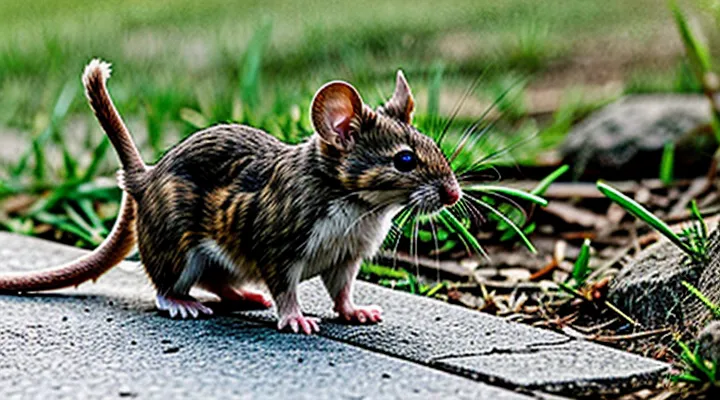
What is Rabies?
The Rabies Virus
The rabies virus belongs to the genus Lyssavirus within the family Rhabdoviridae. It is an enveloped, single‑stranded RNA virus with a bullet‑shaped morphology. The viral genome encodes five proteins: nucleoprotein, phosphoprotein, matrix protein, glycoprotein, and polymerase, each essential for replication and neuroinvasion.
Transmission occurs primarily through saliva of infected mammals, most commonly via bites. The virus enters peripheral nerves at the wound site, travels retrograde to the central nervous system, and spreads to the salivary glands, completing the infectious cycle. Rodents are rarely identified as natural reservoirs; epidemiological surveys consistently show low infection rates in mouse populations.
Key clinical features in humans and animals include:
- Prodromal phase: fever, malaise, localized paresthesia.
- Furious form: agitation, hyperactivity, hydrophobia, hypersalivation.
- Paralytic form: progressive weakness, coma, eventual death.
Diagnostic methods rely on detection of viral antigen in brain tissue (direct fluorescent antibody test) or nucleic acid amplification from saliva, cerebrospinal fluid, or skin biopsies. Post‑exposure prophylaxis combines immediate wound cleansing, administration of rabies immunoglobulin, and a series of rabies vaccine injections; this regimen prevents disease when applied promptly.
Prevention strategies focus on control of primary reservoirs (e.g., dogs, wildlife) through vaccination campaigns, public education on bite avoidance, and monitoring of stray animal populations. While mice can experimentally acquire the virus, natural infection is exceedingly uncommon, reinforcing the conclusion that they do not serve as significant vectors in rabies transmission.
Transmission Pathways
Mice are occasionally examined in rabies investigations because they share habitats with recognized reservoirs such as bats, raccoons, and foxes. Understanding how the virus could move between species clarifies why rodents are rarely implicated in human cases.
Direct transmission requires the presence of infectious saliva in a bite wound. Laboratory studies show that experimentally inoculated mice develop rabies, but natural infections are scarce because mouse bites seldom deliver sufficient viral load. Saliva contact with mucous membranes or broken skin also constitutes a potential route, yet field observations record few incidents of such exposure involving mice.
Indirect pathways involve environmental contamination. Rabies virus remains viable for a limited period in moist, cool conditions; however, the virus degrades rapidly on dry surfaces. Consequently, transmission through contaminated bedding, food, or water is theoretically possible but practically negligible, given the low viral shedding observed in infected rodents.
Key factors influencing transmission risk include:
- Reservoir proximity: High prevalence of rabies in nearby wildlife increases chance of spill‑over.
- Virus load in saliva: Sufficient titers are required for successful infection.
- Behavioral interactions: Aggressive encounters or predation elevate exposure probability.
- Environmental stability: Temperature and humidity affect viral persistence outside a host.
Overall, the primary pathway for rabies spread remains direct inoculation via bite from a confirmed reservoir species. Mice contribute minimally to the epidemiology of the disease, and documented cases of mouse‑origin transmission to humans or other animals are exceptionally rare.
The Myth of Rabies in Mice
Common Misconceptions
Mice are frequently blamed for transmitting rabies, yet scientific evidence contradicts this belief. The virus primarily circulates among carnivorous mammals such as dogs, raccoons, skunks, and bats. Rodents, including mice, rarely develop rabies and are not recognized as reservoirs.
Common misconceptions include:
- Mice bite humans and spread rabies. Biting incidents are uncommon, and documented cases of rabies transmission from mice to humans do not exist.
- All wild rodents carry the virus. Surveillance data show negligible infection rates in rodent populations.
- Rabies symptoms appear in mice as in larger mammals. When rodents are experimentally infected, the disease progresses rapidly, often resulting in death before symptoms become observable.
- Rabies vaccination is necessary for pet mice. Veterinary guidelines recommend vaccination only for species known to transmit the disease.
These myths persist because the public associates any small mammal with disease risk. Accurate risk assessment relies on epidemiological records, which consistently place mice outside the rabies transmission network.
Factors Contributing to the Myth
Misinformation about rodents and rabies persists because several distinct forces reinforce the belief that mice are common carriers.
- Popular media frequently depict mice as aggressive disease vectors. Films, cartoons, and news headlines emphasize dramatic encounters, creating a vivid but inaccurate association between the animal and viral infection.
- Scientific reports on rabies often focus on larger mammals such as raccoons, foxes, and bats. Summaries that omit explicit mention of mice leave readers to infer that all small rodents share the same risk profile.
- Historical anecdotes describe outbreaks linked to rodent infestations, without distinguishing the species responsible. Over time, the details blur, and the generic term “rodent” becomes synonymous with “rabies source.”
- Public health messaging sometimes uses broad warnings (“keep all rodents away”) to simplify advice. The lack of nuance encourages the assumption that every rodent, including house mice, poses a rabid threat.
- Visual similarity among small mammals leads to misidentification. People encountering a mouse may recall images of rabid squirrels or rats, conflating separate species and their disease risks.
These elements interact, producing a durable myth that exaggerates the role of mice in rabies transmission.
The Reality: Rabies Prevalence in Small Rodents
Low Risk for Mice and Other Small Rodents
Mice and similarly sized rodents are rarely vectors of rabies. The virus primarily circulates in large carnivores such as bats, raccoons, foxes and skunks, which maintain sufficient viral load to transmit the disease through bites. Small rodents lack the physiological capacity to sustain a rabid infection; experimental studies show that the virus does not replicate efficiently in their nervous systems, and natural cases of rabies in mice are virtually nonexistent.
Key points supporting the low risk:
- Host suitability: Rabies virus requires a specific set of receptors and a body mass that supports prolonged viral replication; mice do not meet these criteria.
- Transmission dynamics: Rabid animals typically transmit the virus via deep, penetrating wounds. Mice bite shallowly and infrequently, reducing the chance of viral entry.
- Epidemiological data: Surveillance records from health agencies worldwide report zero confirmed rabies cases in wild or laboratory mice over several decades.
Consequently, the presence of a mouse in a household or laboratory setting does not constitute a rabies hazard. Preventive measures should focus on larger wildlife known to carry the virus rather than on small rodent populations.
Why Small Rodents Are Unlikely Carriers
Small rodents rarely serve as rabies reservoirs because the virus preferentially infects carnivorous mammals with larger body mass. Rabies virus replication depends on a nervous‑system pathway that is less efficient in the compact anatomy of mice and similar species. Consequently, viral loads in rodent saliva seldom reach the threshold needed for successful transmission.
Epidemiological surveys support this biological limitation. Data from North America and Europe show fewer than 0.1 % of laboratory‑confirmed rabies cases involve mice, rats, or hamsters. In contrast, bats, raccoons, foxes and skunks account for the overwhelming majority of reported incidents. The low incidence reflects both the rarity of infection in rodents and the limited contact rodents have with humans compared with larger wildlife.
Behavioral factors further reduce risk. Mice are primarily nocturnal foragers that avoid direct confrontation, and their bite force is insufficient to cause deep tissue wounds that facilitate viral entry. When bites occur, they are typically superficial and quickly heal, minimizing the chance of virus migration along peripheral nerves.
Control measures reinforce the assessment. Routine rabies vaccination programs target species known to maintain the virus; rodents are excluded because they do not contribute to the disease cycle. Surveillance programs therefore allocate resources to high‑risk wildlife, confirming that small rodents are not significant vectors.
Key points
- Virus prefers larger carnivores; rodent nervous systems are suboptimal for replication.
- Confirmed rabies cases in mice and similar rodents are exceedingly rare.
- Limited bite depth and nocturnal behavior diminish transmission opportunities.
- Public‑health policies omit rodents from vaccination and monitoring programs.
Other Animals and Rabies Transmission
Primary Rabies Vectors
Mice are rarely implicated in rabies transmission. The disease persists mainly in mammals that maintain the virus through efficient oral‑to‑oral spread. These species act as reservoirs and are responsible for most human and domestic‑animal exposures.
Primary rabies reservoirs include:
- Bats (various insectivorous and fruit‑eating species)
- Raccoons (Procyon lotor)
- Skunks (Mephitis mephitis and related species)
- Foxes (Vulpes vulpes and related canids)
- Coyotes (Canis latrans)
- Mongooses (Herpestes spp.) in certain tropical regions
- Domestic dogs in areas where vaccination coverage is low
These animals exhibit high viral loads in saliva and frequent aggressive interactions, facilitating transmission through bites. In contrast, rodents such as mice and rats rarely develop clinical rabies and lack the behavioral patterns that sustain the virus in wildlife cycles. Reported cases of rabies in mice are exceptional and typically result from experimental infection or accidental exposure to a highly infected predator.
Consequently, public‑health measures prioritize monitoring and controlling the listed primary reservoirs, while surveillance of rodent populations remains a secondary concern.
High-Risk Animals
High‑risk mammals for rabies are those that frequently develop the disease, shed virus in saliva, and have frequent human or domestic‑animal contact. The virus persists in the nervous system of infected animals and is transmitted through bites or scratches that introduce infected saliva into tissue.
Typical high‑risk species include:
- Bats (especially insectivorous and fruit‑eating families)
- Raccoons
- Skunks
- Foxes
- Coyotes
- Feral or unvaccinated dogs
- Feral or unvaccinated cats
These animals are documented reservoirs in North America and many other regions. Their behavior, population density, and susceptibility to rabies create a consistent risk of transmission to humans and pets.
Mice do not belong to this group. Laboratory and field studies show that rodents rarely develop clinical rabies, and when infection occurs, viral loads in saliva are insufficient for efficient transmission. Consequently, mice are classified as low‑risk mammals and are excluded from routine rabies surveillance programs.
Preventive measures focus on avoiding contact with the listed high‑risk mammals, ensuring domestic‑animal vaccination, and seeking immediate medical evaluation after any bite or scratch from a potential reservoir.
What to Do After a Rodent Bite
Immediate Actions
If a mouse bite, scratch, or contact with saliva occurs, act without delay. First, wash the affected area with soap and running water for at least 30 seconds, then apply an antiseptic solution. Seek medical evaluation promptly; a healthcare professional will assess the need for post‑exposure prophylaxis based on exposure severity and local rabies risk. Provide the clinician with details about the animal’s condition, location, and any observed symptoms.
If a mouse is found dead, ill, or behaving unusually, follow these steps:
- Isolate the carcass in a sealed container; avoid direct handling.
- Contact local animal control or public‑health authorities to report the finding.
- Inform a veterinarian or wildlife specialist if the animal was a pet or captive.
- Disinfect the area where the mouse was discovered using a bleach solution (1 part bleach to 9 parts water) and allow it to air dry.
When exposure involves a household pet that has interacted with a mouse, observe the pet for signs of illness (e.g., excessive drooling, aggression, paralysis). If symptoms appear, consult a veterinarian immediately and mention the recent mouse contact.
In all scenarios, maintain up‑to‑date vaccination against rabies for humans at risk (e.g., veterinarians, pest‑control workers) and ensure domestic animals are current on their rabies immunizations.
When to Seek Medical Attention
Mice are rarely vectors for rabies, but bites or scratches from any rodent that may have been exposed to the virus require prompt evaluation. Seek medical attention immediately if any of the following conditions occur:
- A bite, scratch, or lick breaks the skin and the animal is unknown, feral, or shows abnormal behavior such as aggression or excessive salivation.
- The incident takes place in an area with documented rabies cases among wildlife, especially where rabies has been identified in raccoons, skunks, or foxes.
- The wound is deep, bleeding, or shows signs of infection (redness, swelling, pus) within 24 hours.
- The person bitten is immunocompromised, pregnant, a child, or elderly, increasing the risk of severe disease.
- The exposure occurs during a rabies outbreak or after contact with a rodent found dead or ill.
Medical assessment should include thorough wound cleaning, tetanus prophylaxis if needed, and evaluation for rabies post‑exposure prophylaxis (PEP). PEP consists of a series of rabies vaccine injections, with or without rabies immune globulin, administered according to established protocols. Delay beyond the first few days after exposure reduces the effectiveness of the vaccine and raises the probability of viral invasion of the nervous system.
If no high‑risk factors are present—such as a bite from a pet mouse vaccinated against rabies, a superficial scratch from a known healthy animal, and no local rabies activity—monitor the wound for infection and consult a healthcare provider only if symptoms develop. Nonetheless, any uncertainty about the animal’s health status or the environment justifies immediate professional evaluation.
Preventing Rabies Exposure
Vaccinating Pets
Vaccination of dogs and cats remains the most reliable safeguard against rabies, regardless of misconceptions about rodent carriers. The virus is transmitted primarily through the saliva of infected carnivores; mice rarely harbor the pathogen, and documented cases of mouse‑origin rabies are virtually nonexistent. Consequently, pet owners should focus on established preventive measures rather than on unfounded fears of rodent transmission.
Routine immunization schedules, mandated by veterinary authorities, provide continuous protection. For most animals, the protocol includes:
- An initial series of two to three doses administered at 12‑week intervals.
- A booster shot given one year after the final initial dose.
- Annual or triennial revaccination, depending on the vaccine formulation and local regulations.
Veterinarians recommend verifying vaccine validity during each veterinary visit, updating records, and ensuring that boosters are administered before expiration. Maintaining up‑to‑date immunity eliminates the need for emergency post‑exposure treatment and reduces the public health burden of rabies control programs.
In regions where wildlife rabies is endemic, additional precautions may involve:
- Restricting pet access to areas with high rodent activity.
- Monitoring for bite injuries and seeking immediate veterinary assessment.
- Using licensed rabies vaccines approved for the specific species.
These steps uphold the health of companion animals and protect human communities from a disease that remains fatal once clinical signs appear.
Avoiding Wildlife
Mice are rarely vectors of rabies; documented cases involve other carnivores such as foxes, raccoons, and bats. Nevertheless, minimizing exposure to any wild animal reduces the chance of encountering pathogens that may be present in the environment.
Avoiding wildlife limits direct contact with potentially infected saliva, blood, or tissue. Indirect exposure can occur through contaminated surfaces, food stores, or bedding. Reducing these interactions lowers the overall risk of zoonotic disease transmission, including rare rabies incidents.
Practical measures:
- Secure all food containers; use metal or heavy‑duty plastic lids.
- Store garbage in sealed bins; remove waste regularly.
- Install door sweeps and window screens to block entry.
- Seal cracks and gaps in foundations, walls, and roofs.
- Keep vegetation trimmed away from building perimeters.
- Do not feed birds, squirrels, or rodents; eliminate attractants.
- Use snap traps or live traps only when necessary; handle captured animals with gloves and disinfect equipment afterward.
- Wear protective clothing when cleaning areas where wildlife may have been present.
Implementing these steps reduces the probability of contact with rabies‑capable species and other health hazards. Consistent avoidance of wildlife supports safer living environments and protects both human health and domestic animal welfare.
Dispelling Rabies Myths
Mice are frequently mentioned in discussions about rabies transmission, yet scientific evidence does not support the notion that they serve as significant carriers. The virus primarily circulates among carnivores such as raccoons, foxes, and bats, whose biology and behavior facilitate viral maintenance and spread. Rodents lack the physiological traits that allow efficient replication of the rabies pathogen, resulting in an exceedingly low incidence of infection.
Common misconceptions often arise from anecdotal reports and media portrayals. The following points clarify the reality:
- Myth: A mouse bite can transmit rabies as readily as a dog bite.
Fact: Documented cases of rabies in mice are extremely rare; the virus does not replicate effectively in rodent tissue. - Myth: All rodents are potential rabies reservoirs.
Fact: Rabies reservoirs are limited to specific wildlife species; rodents are incidental hosts at best. - Myth: Presence of a mouse near a rabid animal automatically poses a threat.
Fact: Transmission requires direct saliva contact with a vulnerable bite wound, a scenario unlikely with mice.
Veterinary guidelines reflect this evidence by recommending post‑exposure treatment only when a mouse is proven to be infected, a circumstance seldom encountered. Public health policies therefore prioritize monitoring of recognized reservoir species rather than routine testing of rodents.