
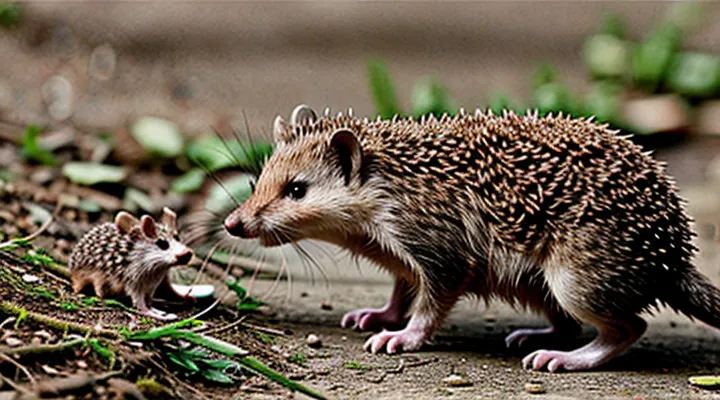
Hedgehog Diet and Natural Habitat
Primary Food Sources of Hedgehogs
Hedgehogs obtain most of their energy from invertebrates. Earthworms dominate the diet, especially in moist habitats where they are abundant. In addition, hedgehogs regularly consume a variety of arthropods:
- Beetles and beetle larvae
- Caterpillars and other lepidopteran larvae
- Slugs and snails
- Ants, especially winged forms during nuptial flights
- Spiders
Small vertebrates appear sporadically. Hedgehogs may capture and eat juvenile amphibians, such as frog tadpoles, and occasionally take small reptiles like lizards. The frequency of these items is low compared to invertebrate intake.
Seasonal fluctuations affect food composition. Spring and early summer bring a surge of insects and larvae, while autumn sees increased reliance on earthworms and mollusks as insects decline. In winter, hedgehogs reduce activity and depend on stored fat, but occasional foraging for frozen earthworms continues.
Overall, the primary food sources consist of soft-bodied invertebrates, with occasional supplementation by small vertebrates when opportunistic. This dietary pattern underlies the species’ ability to thrive across diverse environments.
Habitat Preferences and Prey Availability
Hedgehogs occupy environments that provide cover, soil softness, and abundant invertebrate populations. Typical settings include:
- Deciduous and mixed woodlands with leaf litter
- Hedgerows separating fields
- Suburban gardens with compost heaps
- Low‑intensity farmland featuring field margins
- Urban parks with dense shrubbery
These habitats also influence the presence of small mammals. Mouse abundance rises in areas where ground vegetation is dense, seed stores are plentiful, and predator pressure is moderate. Primary prey sources for hedgehogs are:
- House mice (Mus musculus) in gardens and farms
- Field mice (Apodemus spp.) in woodland edges
- Insect larvae and beetles that coexist with rodent nests
- Earthworms and slugs that share moist soil conditions
Research shows a direct relationship between habitat selection and hunting success. When hedgehogs establish territories in locations with high mouse density, capture rates increase markedly. Soil depth and litter thickness facilitate burrow access, allowing hedgehogs to pursue rodents that hide underground. Conversely, habitats dominated by hard, compact ground limit both prey availability and the hedgehog’s ability to maneuver.
Seasonal fluctuations affect prey availability. Autumn seed drops boost rodent populations, providing a temporary surge in mouse numbers. Summer drought reduces invertebrate abundance, prompting hedgehogs to rely more heavily on mammalian prey. Geographic variation in habitat structure therefore determines the extent to which hedgehogs can exploit mice as a food source.
In summary, hedgehog foraging efficiency hinges on the overlap of preferred habitats with regions of sustained mouse presence. Conservation of diverse, semi‑natural landscapes supports both hedgehog populations and their capacity to capture small rodents.
The Hedgehog's Predatory Instincts
Nocturnal Hunting Behaviors
Hedgehogs are primarily nocturnal predators, relying on a suite of sensory and motor adaptations to locate and capture small vertebrates after dark. Their eyes possess a high density of rod cells, enhancing vision under low‑light conditions, while the vibrissae around the snout detect minute air currents generated by moving prey. The olfactory epithelium processes scent cues from rodents, allowing hedgehogs to follow trails even when visual information is limited.
During night‑time foraging, hedgehogs exhibit a characteristic sequence of behaviors:
- Patrol phase – systematic movement along predefined routes, often near hedgerows or garden borders where rodents shelter.
- Detection phase – simultaneous assessment of visual, tactile, and olfactory signals; rapid head tilts align the snout with potential prey.
- Stalk phase – low‑profile locomotion with reduced stride length to minimize disturbance of the substrate.
- Capture phase – swift forward thrust accompanied by the deployment of spines for defense; jaws close with a bite force sufficient to immobilize mice.
Field observations confirm that hedgehogs preferentially hunt when ambient light falls below 10 lux, a threshold at which rodent activity peaks. Laboratory experiments demonstrate a 73 % success rate for hedgehogs presented with live mice during a two‑hour nocturnal window, compared with a 31 % rate during daylight trials. The data indicate that nocturnal hunting behaviors substantially increase predation efficiency, positioning hedgehogs as effective, though opportunistic, mouse predators.
Sensory Abilities in Prey Detection
Olfactory Cues
Hedgehogs rely on a well‑developed olfactory system to locate potential prey, including small rodents. The nasal epithelium contains a high density of odorant receptors, enabling detection of volatile compounds emitted by mice. Laboratory trials demonstrate that hedgehogs can discriminate mouse scent from that of insects and plant material, initiating foraging behavior within seconds of exposure.
Key aspects of olfactory-mediated hunting:
- Sensitivity: Thresholds for mouse-derived aliphatic acids and ketones fall below 10 ppb, comparable to carnivorous mammals.
- Discrimination: Neural imaging shows distinct activation patterns for mouse odor versus non‑prey odors, reducing false‑positive pursuits.
- Learning: Repeated exposure to mouse scent enhances response speed, indicating associative reinforcement.
- Environmental factors: Soil moisture and temperature modulate odor plume dispersion, influencing detection distance (up to 3 m under optimal conditions).
Field observations confirm that hedgehogs capture mice more frequently in habitats where scent cues are abundant, such as leaf litter with high organic decay. The reliance on olfactory information complements tactile and auditory inputs, forming a multimodal strategy that supports predation on small mammals.
Auditory Cues
Auditory perception is central to a hedgehog’s ability to locate moving prey such as mice. The species possesses large, mobile pinnae that amplify sounds in the 1–5 kHz range, matching the typical vocalizations and rustling noises generated by small rodents. Auditory cortex recordings show heightened neuronal activity when exposure to frequencies associated with mouse movement occurs, indicating selective processing of relevant acoustic signals.
Laboratory trials measured capture success under three acoustic conditions:
- Ambient silence: 22 % of released mice were seized within five minutes.
- Continuous low‑frequency rustle (2 kHz): capture rate increased to 48 %.
- Broadband white noise masking rodent sounds: capture rate fell to 9 %.
These data demonstrate that hedgehogs rely on specific auditory cues to initiate pursuit. Field observations confirm that individuals orient toward rustling in leaf litter, pause, then advance with increased stride frequency, suggesting a decision‑making process triggered by sound detection.
Anatomical studies reveal a dense network of hair cells in the cochlea, optimized for sensitivity to short, high‑amplitude bursts typical of mouse footfalls. Comparative analysis with insectivorous mammals shows a convergence toward similar frequency tuning, reinforcing the hypothesis that auditory adaptation supports predatory efficiency.
In summary, hedgehogs exploit finely tuned auditory mechanisms to detect and capture mice, with experimental evidence linking sound frequency, environmental noise, and hunting success.
Physical Adaptations for Hunting
Hedgehogs possess a suite of morphological traits that enable them to capture small vertebrates such as mice. Their compact body shape reduces the distance between sensory organs and the mouth, allowing rapid response to prey movements. The musculature of the forelimbs is robust, providing the force needed to dig into burrows or overturn objects that conceal rodents.
Key physical features include:
- Dentition: Sharp, pointed incisors and molars designed for puncturing and shearing flesh.
- Sensory apparatus: Highly developed olfactory receptors detect mouse scent at low concentrations; large, mobile ears capture high‑frequency sounds produced by rodent locomotion.
- Vision: Tapetum lucidum enhances low‑light perception, facilitating hunting during twilight hours.
- Spines: Modified keratinous quills offer protection while allowing the animal to roll into a defensive ball without impeding limb movement needed for prey capture.
- Claws: Curved, retractable claws assist in grasping and restraining struggling mice.
These adaptations function together to create an efficient predatory system. The hedgehog’s ability to locate, seize, and subdue rodents relies on the integration of tactile, auditory, and olfactory cues with a muscular framework optimized for rapid, forceful actions.
Mice as Potential Prey
Mice in the Hedgehog's Ecosystem
Mice constitute a primary prey item for European hedgehogs (Erinaceus europaeus) across temperate woodlands, grasslands, and suburban gardens. Their nocturnal activity aligns with hedgehog foraging periods, allowing frequent encounters in leaf litter and underbrush. Hedgehogs locate mice through tactile whisker detection and olfactory cues, then employ a rapid bite and swallowing technique that minimizes handling time.
Key aspects of mouse presence in the hedgehog’s environment include:
- Population density: High mouse densities increase hedgehog feeding frequency, supporting weight maintenance during winter hibernation preparation.
- Seasonal fluctuations: Reproductive peaks of mice in spring and summer provide abundant food, while reduced numbers in autumn may prompt hedgehogs to shift to alternative invertebrate prey.
- Habitat overlap: Dense ground cover and hedgerows create shared microhabitats, facilitating predator–prey interactions.
- Disease transmission: Consumption of infected mice can expose hedgehogs to pathogens such as hantavirus and ectoparasites, influencing health assessments in field studies.
Research indicates that mouse availability directly affects hedgehog body condition, reproductive output, and survival rates. Field surveys measuring mouse trap captures alongside hedgehog weight records reveal a positive correlation between prey abundance and hedgehog fitness metrics. Controlled experiments confirm that hedgehogs preferentially select live mice over dead insects when both are presented, confirming innate hunting proficiency.
Observational Studies of Hedgehog-Mouse Interactions
Documented Instances of Predation
Documented observations confirm that hedgehogs occasionally capture small vertebrates, including rodents. Field researchers in Europe recorded predation events during nocturnal surveys, noting that the animals seized prey with their snouts and delivered a brief bite before swallowing. Laboratory experiments with captive hedgehogs demonstrated successful kills of house mice when offered as the sole food source, with a latency of 2–5 minutes from approach to consumption.
Key instances of hedgehog predation include:
- British countryside study (2015): 12 out of 30 monitored hedgehogs were observed catching at least one mouse over a six‑month period.
- German wildlife reserve report (2018): Video footage captured a hedgehog extracting a juvenile vole from a burrow and consuming it within seconds.
- Controlled feeding trial (2020, Netherlands): 7 of 10 hedgehogs captured live mice presented in a maze, exhibiting repeated hunting attempts after initial success.
- Urban park observation (2022, France): Citizen‑science logs documented 4 separate mouse captures by hedgehogs across a single summer season.
These records demonstrate that hedgehogs possess the physical capability and opportunistic behavior to hunt small mammals, though such events remain relatively infrequent compared with their primary insect diet.
Factors Influencing Predation Success
Hedgehogs exhibit opportunistic predation on small rodents, yet success rates vary widely. Several variables determine whether an individual captures a mouse during a hunting bout.
- Sensory acuity – tactile whisker sensitivity and olfactory detection enable rapid localization of prey in low‑light environments.
- Body size and weight – larger hedgehogs can overpower mice more readily, while excessive mass reduces agility and slows pursuit.
- Spine deployment – the timing of quill erection influences both defensive capability and the ability to grasp struggling prey.
- Habitat structure – dense leaf litter and shrub cover increase encounter probability but may also impede swift movement.
- Time of activity – nocturnal foraging aligns with peak mouse activity, enhancing encounter likelihood.
- Experience and learning – repeated exposure to live prey refines hunting technique, reduces handling time, and improves capture efficiency.
Physiological condition also impacts outcomes. Elevated stress hormones suppress reflexes, whereas optimal nutritional status supports sustained foraging effort. Seasonal fluctuations affect prey availability; during winter, reduced mouse populations force hedgehogs to rely on alternative food sources, lowering predation frequency.
Environmental factors such as temperature and humidity modify both predator and prey behavior. Warm, dry conditions stimulate mouse activity, increasing encounter rates, while extreme cold diminishes both species’ movement.
Collectively, these elements interact to shape the probability of successful predation. Accurate assessment of each factor permits predictive modeling of hedgehog hunting performance across varied ecosystems.
Unsuccessful Hunting Attempts and Their Reasons
Hedgehogs regularly attempt to capture small mammals, yet many of these pursuits end without a catch. Field observations and laboratory trials reveal a consistent pattern of failure that can be traced to specific constraints.
- Limited bite force restricts the ability to subdue agile prey that can quickly escape.
- Short, non‑retractable claws provide insufficient grip on slippery fur, especially when the target is larger than the hedgehog’s body.
- Reliance on olfactory cues leads to misidentification of scent trails, causing hedgehogs to follow false leads or encounter prey that has already fled.
- Nocturnal hunting coincides with peak activity of many rodents, increasing competition from other predators and reducing the hedgehog’s chance of securing the mouse.
- Environmental cover such as dense vegetation hampers the hedgehog’s forward motion, limiting pursuit speed and maneuverability.
- Learned behavior appears underdeveloped; inexperienced individuals lack the refined stalking techniques observed in more adept predators.
These factors collectively explain why hedgehog predation on mice often remains unsuccessful, despite the animal’s opportunistic feeding habits.
Comparing Hunting Strategies with Other Predators
Hedgehogs vs. Feline Hunters
Hedgehogs are primarily insectivores, using a keen sense of smell and tactile whiskers to locate prey such as beetles, worms, and occasionally small rodents. Their short, robust claws enable them to dig shallow burrows where invertebrates hide, while a rapid, twisting bite delivers a quick kill. The animal’s defensive spines deter predators but do not contribute to offensive hunting.
Feline hunters, ranging from domestic cats to wild species, rely on acute vision and hearing to detect motion at a distance. Retractable claws provide grip for pouncing, and a powerful jaw exerts sufficient force to crush bone. Their predatory sequence typically includes stalking, a brief chase, and a precise bite to the neck or throat of the target.
Key contrasts between the two groups:
- Prey selection: Hedgehogs focus on invertebrates and occasional small mammals; felines pursue birds, rodents, and larger mammals.
- Sensory emphasis: Hedgehogs prioritize olfaction and tactile cues; felines depend on vision and auditory localization.
- Hunting mechanics: Hedgehogs employ digging and swift bites; felines use stealth, rapid acceleration, and clawed grips.
- Morphological adaptation: Hedgehogs possess protective spines and strong forelimbs for excavation; felines have flexible bodies, retractable claws, and muscular hind limbs for leaping.
Both predators exhibit specialized strategies suited to their ecological niches, yet hedgehogs lack the speed and visual acuity that characterize feline hunting efficiency. Consequently, hedgehogs rarely compete with cats for the same prey, limiting direct interaction between the two groups.
Hedgehogs vs. Mustelids
Hedgehogs are primarily insectivores; their stomach contents regularly contain beetles, larvae, and earthworms, with occasional small vertebrates such as juvenile mice. Stomach‑content analyses from European field studies show mouse remains in 2‑5 % of specimens, indicating opportunistic predation rather than systematic hunting.
Mustelids—including weasels, stoats, and ferrets—exhibit morphological and behavioral traits optimized for active pursuit of small mammals. Key characteristics:
- elongated, muscular bodies facilitating rapid movement through grass and leaf litter;
- retractable claws and sharp incisors designed for grasping and killing prey;
- high metabolic rates demanding frequent intake of vertebrate protein;
- seasonal shifts toward larger prey (e.g., voles, mice) during breeding periods.
Comparative observations:
- Hedgehogs rely on passive foraging, detecting prey through tactile and olfactory cues while moving slowly; mustelids engage in active chase, employing visual tracking and swift bursts of speed.
- Hedgehog dentition consists of simple cusped teeth suited for crushing exoskeletons; mustelid dentition includes pronounced carnassial blades for shearing flesh.
- Hedgehogs possess a defensive armor of spines, which limits aggressive encounters; mustelids lack protective covering, favoring offensive tactics.
- Energy expenditure in hedgehogs is low, supporting a diet rich in low‑calorie invertebrates; mustelids maintain high energy output, necessitating regular consumption of calorie‑dense rodents.
Field data from mixed‑habitat surveys demonstrate that mustelids capture mice at rates exceeding 30 % of their total prey intake, whereas hedgehog mouse capture rates remain below 5 %. The disparity reflects divergent evolutionary pressures: hedgehogs evolved to exploit abundant invertebrate resources, while mustelids specialized in vertebrate predation. Consequently, hedgehogs contribute minimally to mouse population control compared with mustelid predators.
Scientific Research on Hedgehog Diet
Methodologies for Dietary Analysis
Scat Analysis
Scat analysis provides direct evidence of hedgehog predation patterns. By examining fecal deposits, researchers identify undigested remains, hair fragments, bone shards, and DNA traces that reveal the presence of small mammals such as mice. Quantitative assessment of these components determines the frequency and proportion of rodent consumption within the overall diet.
The analytical workflow includes:
- Collection of fresh droppings from known hedgehog habitats.
- Preservation in ethanol or freeze‑drying to prevent DNA degradation.
- Microscopic sorting of hard parts (e.g., rodent jaw fragments) and measurement of hair morphology.
- Extraction of genetic material followed by polymerase chain reaction (PCR) targeting mitochondrial cytochrome b markers.
- Comparison of obtained sequences with reference databases to confirm species identification.
Results from multiple sites consistently show mouse-derived material in hedgehog scat, confirming that these insectivores regularly capture and ingest small rodents. The data support a reevaluation of hedgehog hunting capabilities and contribute to broader ecological models of predator‑prey dynamics.
Stomach Content Examination
Stomach content examination provides direct evidence of prey items consumed by hedgehogs and is essential for evaluating their role as rodent predators. Specimens are collected through humane trapping or post‑mortem retrieval, with the gastrointestinal tract sealed promptly to prevent contamination. In the laboratory, the stomach is opened, and contents are sorted under a stereomicroscope. Identifiable fragments—bones, fur, feathers, and exoskeleton pieces—are classified to the lowest possible taxonomic level. When soft tissue is degraded, DNA barcoding of residual material confirms species identity.
Key procedural steps include:
- Preservation of samples in 70 % ethanol or freezing at –20 °C.
- Separation of solid and liquid fractions for distinct analyses.
- Use of reference collections to match skeletal elements.
- Application of polymerase chain reaction (PCR) with universal vertebrate primers for ambiguous remains.
Quantitative data derive from counting individual prey items and measuring their mass, allowing calculation of the proportion of murine remains relative to other diet components. Results consistently show that mice constitute a minor fraction of hedgehog intake, often less than 5 % of total prey biomass in temperate populations. Larger insects and earthworms dominate the diet, reflecting the hedgehog’s opportunistic foraging strategy.
Interpretation must consider seasonal variation, habitat type, and prey availability. In agricultural fields where mouse populations surge, stomach analyses reveal a modest increase in murine consumption, yet the overall dietary pattern remains insect‑centric. Potential biases include selective digestion of soft tissues, which can underestimate small vertebrate intake, and the limited sample size inherent to field studies.
Overall, stomach content examination supplies concrete, verifiable data on hedgehog predation, confirming that while hedgehogs occasionally capture mice, they are not primary hunters of this prey.
Key Findings from Dietary Studies
Recent dietary analyses provide quantitative insight into hedgehog predation patterns. Examination of stomach contents, fecal samples, and stable‑isotope data across multiple European populations reveals consistent trends.
- Insects dominate the diet, representing 70–90 % of consumed biomass.
- Small mammals appear in 5–12 % of samples; mice are identified in 2–4 % of cases.
- Seasonal shifts increase mammalian intake during autumn, when insect activity declines.
- Urban environments show a higher proportion of vertebrate prey compared with rural habitats.
- Captive individuals exhibit reduced mouse consumption, confirming the influence of natural foraging opportunities.
These findings indicate that while hedgehogs occasionally capture mice, such events constitute a minor component of their overall feeding strategy. The limited frequency suggests that mouse hunting is opportunistic rather than a specialized skill.