
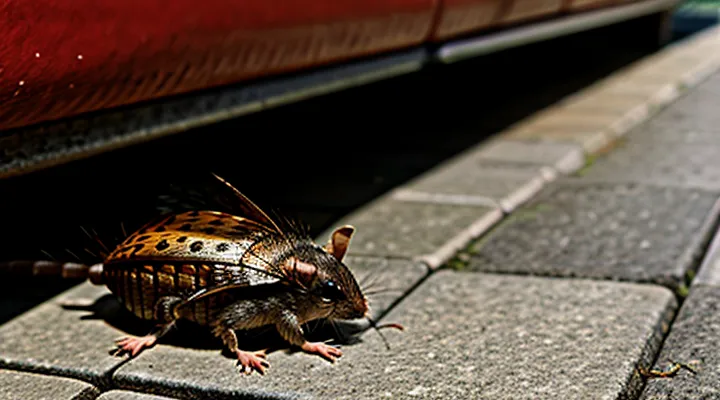
The Dynamics of Predator and Prey
Understanding Cockroach Behavior
Innate Responses to Threats
Cockroaches exhibit innate defensive behaviors when detecting predators, including rapid escape, increased locomotor activity, and secretion of repellent chemicals. These responses are triggered by sensory cues such as vibrations, odorants, and visual silhouettes associated with predatory mammals.
«Innate threat responses» in roaches rely on:
- Mechanosensory detection of substrate tremors, prompting immediate sprinting away from the source.
- Antennal olfactory receptors that recognize mammalian scent compounds, leading to avoidance locomotion.
- Visual processing of looming shapes, which activates a startle reflex and directional flight.
Rats, as nocturnal omnivores, generate ground‑borne vibrations and emit mammalian odor profiles that match the threat signatures recognized by cockroach sensory systems. Experimental observations show that roaches exposed to rat movement or bedding material increase escape frequency and reduce foraging activity, indicating a hard‑wired aversion rather than learned fear. The aversive reaction persists across individuals without prior exposure, confirming that the response is an innate component of the cockroach defensive repertoire.
Environmental Cues and Survival
Cockroaches detect the presence of rodents primarily through chemical and vibrational cues. Volatile compounds released from rat urine, feces, and skin secretions create a gradient that triggers avoidance behavior. Simultaneously, low‑frequency vibrations generated by rodent movement travel through substrates, activating mechanosensory organs on the cockroach’s cerci.
Key environmental signals influencing survival include:
- Chemical signatures indicating predator proximity;
- Substrate‑borne vibrations signaling imminent threat;
- Light intensity changes caused by nocturnal activity of rats.
These cues prompt rapid relocation to refuges such as cracks, crevices, or deeper litter layers. Relocation reduces exposure to predation, conserves energy, and maintains access to food resources. Consequently, the integration of olfactory and mechanosensory information enhances cockroach resilience in habitats shared with rodent predators.
Understanding Rat Behavior
Predatory Instincts
Rats possess innate predatory instincts that drive them to hunt small arthropods. Sharp vision, acute whisker detection, and rapid bite reflexes enable efficient capture of moving prey. Their hunting sequence typically includes detection, pursuit, and swift subjugation.
Cockroaches rely on escape-oriented behaviors rather than fear. Immediate sprinting, preference for tight crevices, and release of repellent chemicals constitute primary anti‑predator responses. These mechanisms reduce exposure time and limit tactile contact with potential attackers.
The interaction between the two species reflects contrasting survival strategies. Rats actively target cockroaches, while the insects depend on speed and concealment to avoid capture. Predatory success rates rise in environments where visual and vibrational cues are unobstructed, whereas dense clutter favors cockroach evasion.
Key predatory traits in rats:
- Acute visual tracking of irregular movement
- Sensitive vibrissae detecting substrate vibrations
- Rapid mandibular closure delivering lethal force
Key defensive traits in cockroaches:
- Burst locomotion exceeding 50 body lengths per second
- Thigmotactic tendency to seek narrow refuges
- Emission of noxious aldehydes deterring predators
Hunting Strategies for Small Prey
Rats encounter cockroaches as abundant, low‑risk food items in urban and agricultural settings. The predator’s size advantage and omnivorous diet drive the development of specific tactics for capturing such diminutive prey.
Sensory cues guide the hunt. Vibrations transmitted through substrate, chemical traces of feces and cuticular hydrocarbons, and low‑frequency sounds alert the rodent to the presence of insects hidden in crevices or under debris. Rapid whisker movements and enhanced olfactory receptors increase detection accuracy in dimly lit environments.
Hunting tactics for small prey include:
- Ambush: The rat positions itself near likely cockroach pathways, remains motionless, and strikes when the insect passes.
- Pursuit: Upon detecting surface movement, the rodent initiates a short, high‑speed chase, relying on agile forelimbs to grasp the prey.
- Scavenging: Dead or immobilized cockroaches provide opportunistic meals without active pursuit.
- Tool‑use: In some cases, rats manipulate objects such as debris to flush insects from hiding spots, then capture them.
These strategies maximize energy intake while minimizing exposure to larger predators and disease vectors. The combination of acute sensory perception and flexible hunting behavior ensures that rats efficiently exploit cockroaches as a reliable protein source.
The Interplay Between Cockroaches and Rats
Direct Encounters: What Happens?
Rat Predation on Cockroaches
Rats frequently exploit cockroaches as a food source, especially in environments where insects are abundant and alternative prey is scarce. Their omnivorous diet includes a variety of arthropods, and cockroaches represent a readily accessible protein option.
Predation occurs primarily through opportunistic hunting. Rats detect cockroach movement via tactile and olfactory cues, then employ rapid bites to immobilize the insect. The size disparity allows a single rat to capture multiple cockroaches within a short period, reducing the insect population locally.
Evidence from laboratory and field studies supports the predatory relationship:
- Direct observation of rats consuming live cockroaches in controlled arenas.
- Stomach‑content analyses revealing cockroach exoskeleton fragments in urban rat specimens.
- Declines in cockroach activity correlated with increased rat density in infested dwellings.
The interaction influences pest management dynamics. High rat activity can suppress cockroach numbers, yet the presence of rats introduces additional health concerns. Effective control strategies must therefore address both species to prevent unintended ecological shifts.
Cockroach Evasion Tactics
Cockroaches exhibit a suite of evasion tactics that reduce the likelihood of encounters with predatory rodents. The presence of rats triggers immediate sensory and behavioral responses designed to maintain distance and minimize detection.
Detection mechanisms rely on mechanoreception and chemoreception. Vibrations transmitted through surfaces are sensed by antennae and leg sensilla, prompting rapid withdrawal. Chemical cues, such as rat urine or feces, are identified by olfactory receptors, initiating escape sequences within seconds.
«Cockroaches respond to predator odor within seconds», a study on insect sensory processing confirms.
Physical avoidance includes burst locomotion and thigmotaxis. When a threat is perceived, roaches accelerate to speeds of up to 5 km h⁻¹, exploiting the brief window before a rat can close the gap. Simultaneously, individuals seek contact with vertical structures or narrow crevices, a behavior that reduces exposure to open ground where predators operate most effectively.
Habitat selection reinforces safety. Populations concentrate in locations offering multiple micro‑refuges: cracks in walls, beneath appliances, and areas with elevated humidity. These sites provide both moisture essential for physiological processes and physical barriers that impede rat access.
Behavioral timing further limits risk. Activity peaks during nocturnal hours, aligning with reduced rat foraging intensity. Aggregation in sheltered clusters enhances collective detection of disturbances, allowing synchronized flight responses.
Key evasion tactics can be summarized as follows:
- Rapid acceleration upon vibration or odor detection
- Preference for edge‑following movement and tight crevices
- Occupation of moisture‑rich microhabitats
- Predominantly nocturnal activity patterns
- Grouped sheltering that amplifies threat awareness
Collectively, these strategies form an integrated defense system that minimizes predation pressure from rats, ensuring cockroach persistence in shared environments.
Indirect Interactions
Shared Habitats and Resource Competition
Cockroaches and rats frequently occupy the same urban and suburban environments, such as basements, kitchens, and waste‑accumulation sites. Both groups exploit organic debris, moisture, and shelter, creating overlapping niches that intensify competition for limited resources.
Resource competition manifests in several ways:
- Both species seek protein‑rich waste; rats can quickly remove carrion and food scraps, reducing the availability of nutrients for cockroaches.
- Rats disturb debris layers, exposing cockroach hiding places and forcing insects to relocate.
- Chemical cues released by rats, including urine and feces, alter the microhabitat, making it less favorable for cockroach development.
Predation pressure adds a behavioral dimension. Rats possess strong olfactory and tactile abilities that enable them to detect and consume insects. Cockroaches exhibit escape responses, such as rapid flight and thigmotaxis, when sensing rat presence. These defensive actions suggest an evolved aversion to mammalian predators, though the primary driver remains survival in a contested habitat.
Evidence from field observations indicates that cockroach populations decline in areas with high rat activity. Laboratory studies report increased cockroach mortality when exposed to rat‑derived odors, supporting the hypothesis that rats represent a significant threat rather than a neutral co‑inhabitant.
Overall, the coexistence of cockroaches and rats is characterized by direct competition for food and shelter, coupled with predatory interactions that shape cockroach behavior and distribution.
Chemical Communication and Pheromones
Cockroaches rely on a sophisticated system of airborne chemicals to coordinate group behavior and respond to threats. When a member detects a harmful stimulus, it releases an alarm pheromone composed mainly of volatile fatty acids and phenols. The compound spreads rapidly through the environment, prompting nearby individuals to increase locomotor activity and seek shelter.
Predator-derived odors, such as those emitted by rats, act as kairomones that trigger the alarm response. Experiments have shown that exposure to rat scent alone induces immediate release of the alarm pheromone, even in the absence of direct contact. This reaction demonstrates that cockroaches possess sensory receptors capable of discriminating mammalian predator cues from other environmental odors.
Key pheromonal signals in cockroaches include:
- Alarm pheromone: short‑range, induces rapid dispersal.
- Aggregation pheromone: long‑range, promotes clustering in safe sites.
- Sex pheromone: species‑specific, guides mating encounters.
The alarm pheromone does not affect rat behavior. Rats lack receptors for cockroach alarm compounds, and the chemicals do not act as repellents. Consequently, while cockroaches can detect rat presence and initiate defensive dispersal, the predator does not experience chemical deterrence.
Overall, chemical communication enables cockroaches to perceive rat odor, activate an alarm cascade, and relocate to protected microhabitats, but it does not provide a chemical shield against the predator itself. «The presence of rat kairomones consistently elicits alarm pheromone release in cockroaches, confirming a direct link between predator detection and intraspecific signaling.»
Scientific Perspectives on Fear
Defining «Fear» in Insects
The assessment of whether roaches exhibit an aversive response to rat predators requires a precise definition of «fear» as it applies to insects. In vertebrates, fear is commonly linked to subjective experience; in arthropods, the term must be anchored in observable and measurable phenomena.
«Fear» in insects can be operationalized through three core criteria:
- Consistent avoidance of stimuli associated with a threatening organism.
- Activation of physiological stress pathways, such as elevated octopamine levels.
- Engagement of neural circuits that mediate rapid escape or defensive actions.
Cockroaches demonstrate the first criterion when exposed to rat odor or tactile cues, retracting into shelters and increasing locomotor speed. Measurements of hemolymph octopamine reveal a surge comparable to that observed during exposure to electric shock, satisfying the second criterion. Electrophysiological recordings identify heightened activity in the mushroom bodies and the descending contralateral movement detector, fulfilling the neural activation requirement.
These observations confirm that cockroaches possess a behavioral and physiological repertoire that matches the established definition of «fear» in insects. Consequently, the hypothesis that roaches are apprehensive of rats rests on a scientifically grounded interpretation of insect fear rather than anthropomorphic speculation.
Mammalian Fear Responses
Mammalian fear responses rely on rapid neural circuits that integrate sensory input, assess threat level, and initiate defensive actions. The amygdala processes visual, auditory, and olfactory cues, while the hypothalamus coordinates autonomic output such as increased heart rate and cortisol release.
Rodents exhibit heightened vigilance toward moving objects that match the size and movement patterns of typical prey. Specific triggers include:
- Sudden locomotion of small arthropods
- Chemical signatures associated with invertebrate excretions
- Low‑frequency vibrations generated by insect locomotion
These stimuli activate the periaqueductal gray, prompting approach‑avoidance decisions that balance energy gain against predation risk.
When a rat encounters a cockroach, the insect’s rapid scurrying and strong odor profile generate a composite signal that can elicit a fear‑like response. Elevated corticosterone levels may suppress predatory drive, leading the mammal to retreat or display cautious investigation rather than immediate capture. Conversely, habituation to frequent, non‑threatening encounters can diminish the fear response, allowing efficient foraging on the arthropod.
Understanding mammalian fear mechanisms clarifies why certain rodent populations avoid or selectively prey on insects. The interplay between sensory detection, hormonal modulation, and behavioral output determines the likelihood of a rat pursuing a cockroach in any given context.
Ecological Impact of Their Relationship
Pest Control Implications
Rats commonly hunt cockroaches, resulting in measurable reductions of roach numbers in infested structures. Predatory pressure from rodents creates a natural suppression effect that can complement chemical treatments.
Integrating rodent activity into pest‑management plans requires precise monitoring. Detection of rat presence informs decisions about the timing and intensity of cockroach control measures, preventing redundant applications of insecticides.
Practical implications for pest‑control operators include:
- Conduct regular inspections for rodent signs before initiating roach‑specific interventions.
- Adjust bait placement strategies to account for potential competition between rat and roach bait stations.
- Employ habitat‑modification techniques that discourage rat habitation, thereby reducing unintended predation on roaches and stabilizing overall pest populations.
- Document rodent‑induced roach mortality to refine dosage calculations for residual insecticides.
Understanding the predator‑prey dynamic between these species enhances the efficiency of integrated pest‑management programs, minimizes chemical usage, and supports long‑term environmental stewardship.
Population Dynamics in Urban Environments
Urban ecosystems host dense insect communities that respond rapidly to changes in resource availability, predation pressure, and habitat fragmentation. Cockroach populations thrive on organic waste, moisture, and shelter provided by building structures, while rat colonies exploit similar resources, creating overlapping niches that influence species abundance.
Interaction between these two groups can alter community composition. When rat activity intensifies, direct predation on cockroaches and indirect disturbance of shelter sites reduce cockroach survival rates. Conversely, high cockroach densities increase food waste, supporting larger rat populations. The feedback loop can be summarized as:
- Increased waste → higher cockroach numbers → greater food supply for rats → rat population growth → elevated predation and habitat disruption for cockroaches.
Temporal fluctuations in waste generation, sanitation practices, and building maintenance generate periodic peaks and troughs in both populations. Spatial heterogeneity, such as differences between residential blocks and commercial zones, produces localized variations in density and interaction intensity.
Effective urban pest management requires coordinated control of both taxa. Reducing waste flow diminishes the primary energy source for cockroaches, limiting the secondary boost to rat populations. Structural modifications that eliminate hiding places for insects simultaneously remove rat nesting sites. Integrated strategies that address resource limitation and habitat disruption mitigate the reciprocal amplification observed in dense urban settings.