
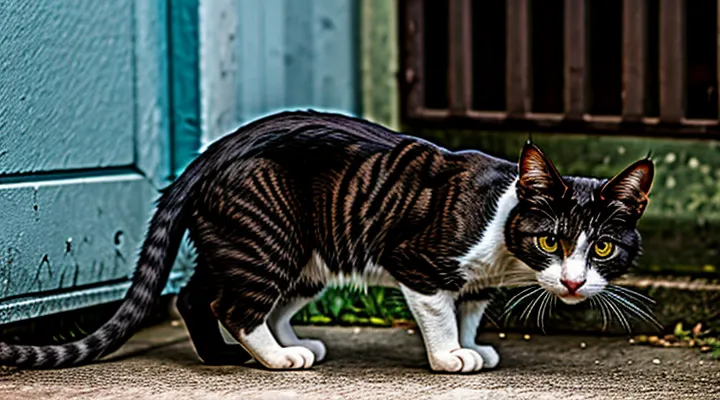
The Feline Hunter: Instincts and Evolution
Domestic Cats as Predators
Domestic cats retain the hunting instincts of their wild ancestors, relying on acute vision, auditory sensitivity, and rapid reflexes to locate and capture prey. Their predatory sequence typically includes stalking, a brief pause to assess distance, and a swift pounce that immobilizes the target with a bite to the neck or spinal region.
When the target is a rodent such as a rat, several factors influence success:
- Size disparity: adult rats often exceed the optimal prey size for a cat, increasing the risk of injury.
- Aggression level: rats possess strong incisors and defensive behaviors that can deter a cat.
- Environmental context: cluttered or confined spaces limit a cat’s ability to execute a clean ambush.
Despite these challenges, many cats succeed in killing rats, especially when the rodents are juveniles or isolated individuals. The act of killing provides nutritional benefit, though domestic cats frequently consume only a portion of the carcass, leaving the remainder uneaten.
Repeated exposure to rodent hunting sharpens a cat’s technique, leading to:
- Improved timing of the leap.
- More precise targeting of vulnerable body regions.
- Enhanced ability to disengage safely after the strike.
The predatory role of domestic cats contributes to local rodent population control, but it does not eradicate established colonies. Effective management of rat infestations therefore requires integrated measures, including sanitation, habitat modification, and, when necessary, professional pest control, with cat predation viewed as a supplementary factor rather than a primary solution.
Wild Ancestors and Prey Drive
Domestic cats trace their lineage to the African wildcat, a solitary hunter that relied on quick reflexes and acute hearing to capture small mammals. The ancestral hunting repertoire includes ambush, stalking, and rapid pounce, tactics that remain encoded in the species’ neural circuitry.
Prey drive originates from the need to secure protein in environments where rodents constitute a primary food source. This drive manifests as:
- heightened sensitivity to rustling sounds,
- precise visual tracking of erratic movement,
- instinctive bite placement on the neck to immobilize prey.
When a rat enters a cat’s territory, these inherited mechanisms trigger a sequence of behaviors: detection, assessment, and engagement. The cat’s body prepares for a burst of speed, claws extend, and the mouth aligns for a lethal bite. Success rates depend on the rat’s size, health, and defensive tactics; larger, aggressive rodents may deter attack.
Domestic cats retain the capacity to kill rats despite selective breeding for companionship. The underlying predatory impulse does not diminish with indoor living; it may redirect toward toys or small insects when actual prey are scarce. Consequently, the ancestral hunting template ensures that cats continue to view rats as viable targets, even if nutritional necessity is reduced.
Understanding this evolutionary context clarifies why cats, regardless of environment, frequently exhibit rat‑hunting behavior. The persistence of the wild ancestor’s prey drive explains the consistency of this interaction across centuries.
The Reality of Cat-Rat Encounters
Do Cats Actively Hunt Rats?
Size and Danger Considerations
Domestic cats typically weigh 3–5 kg, while brown rats average 0.2–0.5 kg. The size gap allows a cat to overpower a rat with relatively little effort, yet the disparity is not absolute; large rats can approach the upper weight range of small cats.
Risk assessment for a feline involves several variables:
- Physical defenses – Rats possess strong incisors and a muscular tail that can deliver painful bites or strikes.
- Health hazards – Rodents often carry pathogens such as leptospira, hantavirus, and parasites; a bite can transmit infection to the cat.
- Behavioral aggression – Cornered or defending offspring, rats may attack aggressively, increasing the chance of injury to the predator.
When a cat evaluates a potential rat prey, it balances the ease of capture against the probability of injury or disease exposure. Cats usually target smaller, younger rats that cannot inflict serious harm, while they avoid larger, aggressive individuals. This selective approach minimizes danger while exploiting the nutritional benefit of rodent meat.
Prey Preference and Availability
Cats exhibit selective predation based on prey size, mobility, and ease of capture. Small mammals such as rats fall within the optimal weight range for domestic and feral felines, allowing efficient handling and consumption. When rats are abundant, they become a primary component of a cat’s diet; when scarce, cats shift toward alternative prey such as birds, insects, or anthropogenic food sources.
Key factors influencing rat consumption:
- Population density – High rat numbers increase encounter frequency and reduce search effort.
- Habitat structure – Dense vegetation, cluttered alleys, and sewer systems provide concealment for rats, affecting cat success rates.
- Cat experience – Mature, outdoor-experienced cats demonstrate higher capture efficiency than juveniles or indoor-restricted individuals.
- Seasonal variation – Winter reduces rodent activity, prompting cats to rely more on stored prey or human-provided food; spring and autumn spikes in rat breeding elevate predation opportunities.
- Human activity – Waste management practices and pest-control measures directly alter rat availability, thereby shaping feline foraging patterns.
Empirical studies using scat analysis and camera traps report that rats constitute between 10 % and 40 % of prey items in urban cat populations, with the proportion rising in neighborhoods characterized by poor sanitation. In rural settings, where small mammals are less abundant, rat predation drops below 5 % of total intake.
Overall, prey preference in cats aligns with energetic optimization: rats offer a high caloric return relative to capture effort when they are readily accessible. Availability fluctuations dictate the degree to which felines rely on rats as a food source, illustrating a dynamic predator‑prey relationship shaped by environmental and anthropogenic variables.
Factors Influencing Predation
Cat’s Hunting Skills and Experience
Cats possess a suite of anatomical and behavioral adaptations that make them efficient predators of small mammals, including rats. Their muscular forelimbs generate rapid acceleration, while retractable claws provide a secure grip during the chase. Vision optimized for low‑light conditions enables detection of rodent movement at dusk, the period when rats are most active. The auditory system isolates high‑frequency rustling, allowing cats to locate prey hidden beneath debris.
Hunting proficiency develops through experience. Young felines refine motor coordination by practicing pounce techniques on moving objects, gradually improving timing and force application. Repeated encounters with rats reinforce a sequence of actions: stalking, a brief pause to assess distance, a swift leap, and a bite targeting the neck vertebrae to induce rapid incapacitation. Successful kills reinforce neural pathways, increasing the likelihood of future captures.
Key components of feline predatory skill set:
- Sensory integration – combination of night vision, acute hearing, and whisker feedback for spatial awareness.
- Motor precision – coordinated limb movement that translates into a 5‑meter/second sprint and a 0.5‑meter vertical leap.
- Bite mechanics – jaw strength of up to 70 psi, focused on the cervical spine to ensure swift death.
- Learning loop – feedback from each hunt modifies future strategy, reducing pursuit time and energy expenditure.
Domestic cats that retain access to outdoor environments often demonstrate higher capture rates than indoor‑only counterparts, indicating that environmental exposure directly influences skill retention. Studies measuring fecal DNA confirm that a substantial proportion of captured rodents are rats, confirming that feline predation contributes to controlling rodent populations in urban and suburban settings.
Rat Population and Species
Rats belong to the genus Rattus and the family Muridae, encompassing more than 60 recognized species worldwide. The most widespread species are the brown rat (Rattus norvegicus) and the black rat (Rattus rattus), together accounting for the majority of global rat populations. Both species thrive in urban, suburban, and agricultural environments, with population densities that can exceed 200 individuals per hectare in favorable habitats.
Key characteristics of major rat species:
-
Brown rat (Rattus norvegicus)
- Native to East Asia, now cosmopolitan.
- Prefers ground-level burrows, sewers, and compost piles.
- Reproductive rate: up to 10 litters per year, average litter size 6–12.
-
Black rat (Rattus rattus)
- Originated in the Indian subcontinent, spread through maritime trade.
- Arboreal tendencies, frequenting roofs and attics.
- Reproductive rate: up to 7 litters per year, average litter size 5–7.
-
Polynesian rat (Rattus exulans)
- Smallest of the three, associated with island ecosystems.
- Limited to remote islands, often impacting native bird populations.
Population dynamics are driven by food availability, shelter, climate, and predation pressure. In temperate regions, seasonal fluctuations cause peaks in spring and summer, while harsh winters suppress breeding activity. Urban areas provide year‑round resources, resulting in relatively stable high densities.
Predation by domestic and feral felines contributes to mortality rates that can reach 20–30 % of local rat populations in areas with dense cat activity. This predation pressure influences rat behavior, prompting increased nocturnality and heightened wariness of ground-level cover. Nevertheless, rats maintain robust reproductive capacity, allowing populations to recover rapidly after predation events.
Effective management of rat populations requires an understanding of species-specific ecology, reproductive potential, and the role of natural predators in regulating numbers.
Environmental Conditions
Cats hunt rats when conditions favor detection, capture, and consumption. Dense vegetation or cluttered ground cover reduces visibility, making it harder for cats to locate prey. Open spaces with low litter allow clear sightlines, increasing hunting success.
Temperature influences activity patterns. Warm periods stimulate rodent movement, providing more opportunities for cats. Cold weather suppresses rat activity, limiting encounters. Humidity affects scent dispersion; high moisture masks prey odors, decreasing cat response.
Food availability alters predatory behavior. Abundant alternative prey or human‑provided food can lower the incentive for cats to pursue rats. Scarcity of other sources heightens reliance on rodent capture.
Key environmental variables:
- Habitat openness (e.g., lawns vs. overgrown gardens)
- Seasonal temperature shifts
- Ambient humidity levels
- Presence of supplemental food sources
- Rodent population density driven by shelter availability
These factors collectively determine how frequently cats engage in rat predation.
Beyond the Hunt: Other Interactions
Coexistence and Competition
Cats and rats frequently share urban, suburban, and rural environments, creating a dynamic where both species influence each other’s population levels. Felines act as natural predators, reducing rat numbers through direct kills, while rats can exploit human refuse and shelter that are also attractive to cats. This overlap generates a constant pressure that shapes the behavior and distribution of both organisms.
Competition arises primarily from shared access to food resources and habitat space. When prey abundance declines, cats may shift hunting focus toward rats, increasing predation rates. Conversely, high rat densities can attract more cats, intensifying territorial disputes among felines. The balance between predation and competition determines whether one species dominates or both persist in the same area.
Coexistence is facilitated by several ecological mechanisms:
- Temporal separation: cats are crepuscular, often hunting at dawn and dusk, while rats are primarily nocturnal, reducing direct encounters.
- Spatial partitioning: cats prefer elevated perches and open corridors; rats occupy burrows and concealed pathways.
- Human-mediated factors: waste management, habitat modification, and the presence of feral cat colonies alter the availability of shelter and food for both species.
Understanding these interactions informs pest‑control strategies, wildlife management policies, and conservation efforts aimed at maintaining ecological equilibrium where feline predators and rodent prey can coexist without leading to the local extinction of either group.
Disease Transmission Concerns
Cats that capture and consume rats encounter a range of pathogens carried by rodents. Direct ingestion can introduce infectious agents into the feline gastrointestinal tract, while handling of live or dead prey exposes cats to external parasites.
- Leptospira spp.: bacteria transmitted through rat urine; can cause renal failure in cats.
- Salmonella enterica: common in rodent intestines; produces gastroenteritis and septicemia.
- Yersinia pestis: the plague bacterium; rare but fatal if a cat ingests an infected rat.
- Hantavirus: present in rodent tissues; may lead to respiratory distress in felines.
- Flea‑borne agents (e.g., Rickettsia typhi, Bartonella henselae): fleas from rats can transfer to cats, creating secondary infection routes.
Human health risks arise when cats shed these organisms in feces, saliva, or through ectoparasites. Zoonotic transmission may occur via accidental contact with contaminated cat waste or bites, especially in households with immunocompromised individuals.
Mitigation strategies include:
- Routine vaccination against rabies and leptospirosis where available.
- Regular deworming and flea control programs.
- Restricting outdoor access or supervising hunting activities.
- Prompt veterinary assessment after known rat ingestion; diagnostic testing for bacterial and viral agents is advisable.
- Safe disposal of carcasses; avoid allowing cats to scavenge dead rodents.
Implementing these measures reduces disease spread within feline populations and limits potential spillover to humans.
The Efficacy of Cats in Pest Control
Limitations of Feline Pest Control
Cats possess natural predatory drives, yet several factors limit their effectiveness as rat control agents.
- Individual hunting motivation varies widely; many domestic cats show little interest in rodents, preferring smaller prey such as mice or insects.
- Rat size and defensive capabilities exceed the typical bite force and agility of most house‑cat breeds, leading to frequent injury or failure to subdue the animal.
- Exposure to rodent‑borne pathogens (e.g., leptospirosis, hantavirus) poses health risks to felines, especially when bites occur.
- Urban environments restrict hunting opportunities: concrete surfaces, limited cover, and human activity reduce concealment and ambush chances.
- Human intervention—use of traps, poisons, or feeding—diminishes the incentive for cats to hunt rats.
- Legal regulations in some jurisdictions prohibit free‑roaming cats, curtailing their range and access to rodent habitats.
- Competition with other predators (e.g., feral dogs, owls) can reduce the number of rats available for a cat to encounter.
- Nutritional benefit from a rat is marginal compared with commercial feline diets; cats may not prioritize a risky kill for minimal caloric gain.
These constraints collectively explain why felines alone cannot serve as reliable rat management tools, despite occasional successful encounters.
Humane Alternatives and Integrated Approaches
Cats naturally hunt rodents, but owners seeking humane control can employ several complementary strategies.
Physical barriers such as sealed entry points and wire mesh around food storage prevent rats from entering indoor spaces. Regular sanitation removes attractants, reducing the incentive for rodents to linger.
Biological controls include introducing non‑predatory species that compete for the same resources, for example, certain bird species that deter rats without harming cats.
Chemical options consist of low‑toxicity rodenticides placed in tamper‑proof stations inaccessible to pets, ensuring safety while targeting the pest population.
Behavioral deterrents employ ultrasonic emitters or scent‑based repellents that discourage rats without inflicting pain.
An integrated approach combines these measures:
- Conduct a thorough inspection to identify entry points and food sources.
- Install physical exclusions and maintain a clean environment.
- Deploy targeted, pet‑safe rodenticides in monitored stations.
- Add compatible wildlife that naturally limits rat activity.
- Monitor rodent activity regularly and adjust tactics as needed.
Coordinating multiple methods maximizes effectiveness, minimizes reliance on feline predation, and aligns with ethical pest‑management standards.