
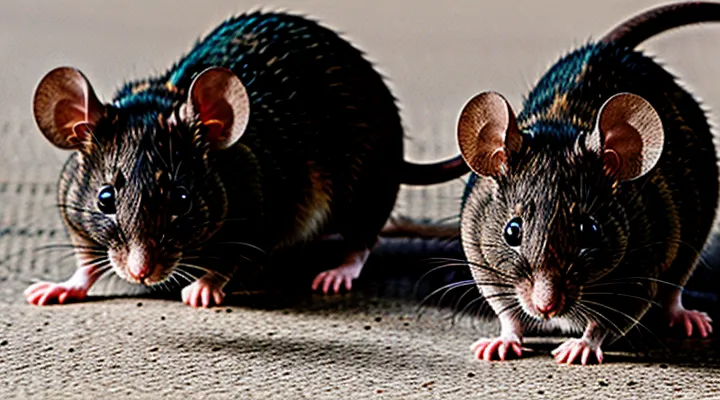
Introduction to Rodents
Shared Characteristics
Mice and rats belong to the order Rodentia and share fundamental mammalian traits. Both possess a single pair of continuously growing incisors in each jaw, requiring gnawing behavior to prevent overgrowth. Their skeletal structure includes a lightweight skull, elongated vertebral column, and a tail that aids balance and thermoregulation.
Physiologically, the two species exhibit similar metabolic rates, obligate aerobic respiration, and a comparable reproductive cycle characterized by short gestation periods and large litter sizes. Their sensory systems rely heavily on olfaction, tactile whisker input, and acute hearing, enabling effective navigation in low‑light environments.
Common ecological roles include:
- Seed dispersal and consumption of stored grains, influencing plant population dynamics.
- Serving as prey for a wide range of predators, thereby supporting trophic cascades.
- Acting as vectors for pathogens that can affect humans, livestock, and wildlife.
Genetically, mice and rats share a high degree of homology, with over 90 % of protein‑coding genes displaying conserved sequences, facilitating the use of one species as a model for the other in biomedical research. Their rapid breeding cycles and adaptability to laboratory conditions further underscore these shared attributes.
Common Misconceptions
Misconceptions about rodents often blur the distinction between mice and rats, leading to inaccurate assumptions in research, pest control, and pet ownership.
- Size implies identical behavior – Rats are larger, but their social structures, foraging strategies, and stress responses differ markedly from those of mice. Size alone does not predict aggression levels or learning capacity.
- Both species share the same diet – Rats can process a broader range of food items, including harder seeds and larger insects, whereas mice prefer finer grains and exhibit stronger aversion to coarse textures.
- Reproductive rates are equivalent – Mice reach sexual maturity within 6 weeks and can produce up to 10 litters per year; rats mature at 8–10 weeks and typically produce fewer, larger litters. The disparity influences population dynamics and experimental timelines.
- Disease transmission is identical – Certain pathogens, such as hantavirus, are primarily associated with mice, while rats are common carriers of leptospirosis and plague. Assuming uniform vector potential risks misdiagnosis and ineffective control measures.
- Laboratory models are interchangeable – Genetic manipulation techniques, neurobehavioral assays, and pharmacokinetic profiles differ between the two species; substituting one for the other can invalidate experimental results.
Clarifying these false beliefs supports accurate scientific interpretation, effective management strategies, and responsible animal care.
Biological Distinctions
Size and Morphology
Body Length and Weight
Mice and rats differ markedly in adult body length and mass, providing a reliable metric for species identification.
Adult house mice (Mus musculus) reach a head‑body length of 7–10 cm, with a tail of comparable length. Total length rarely exceeds 20 cm. Body weight ranges from 15 g to 35 g, with most individuals clustering around 20 g.
Adult Norway rats (Rattus norvegicus) exhibit a head‑body length of 18–25 cm, and a tail that adds 15–20 cm. Overall length can approach 45 cm. Body weight varies between 250 g and 500 g, commonly around 350 g.
Key size distinctions:
- Length: mice 7–10 cm (head‑body) vs. rats 18–25 cm (head‑body).
- Tail proportion: mouse tail ≈ head‑body length; rat tail ≈ 0.8 × head‑body length.
- Weight: mice 15–35 g vs. rats 250–500 g.
These quantitative parameters enable clear separation of the two rodent groups in laboratory, field, and pest‑management contexts.
Tail Characteristics
Mice possess long, slender tails that are typically hair‑covered along most of their length. The tail surface is relatively smooth, with a thin layer of fur that may be sparse toward the tip. Muscular control allows mice to use their tails for balance while navigating narrow spaces and for thermoregulation; the tail can dissipate heat through a dense network of blood vessels near the skin.
Rats have thicker, more robust tails that are largely hairless, exposing the underlying skin. The skin is covered by a series of scales, each containing a small sensory organ called a vibrissa. This scale pattern provides tactile feedback and protects the tail from injury. The rat tail also contains a more extensive vascular system, enabling efficient heat exchange and serving as a fat storage site in some species.
Key morphological contrasts:
- Length proportion: mouse tail ≈ 80‑100 % of body length; rat tail ≈ 70‑80 % of body length.
- Fur coverage: mouse tail largely furred; rat tail mostly naked with scales.
- Diameter: mouse tail ≈ 2‑3 mm; rat tail ≈ 4‑6 mm, reflecting greater musculature.
- Sensory structures: mouse tail has few mechanoreceptors; rat tail features densely packed vibrissal follicles on each scale.
These distinctions affect locomotion, environmental adaptation, and species‑specific behaviors.
Ear and Snout Features
Mice possess relatively large, rounded ears that extend laterally from the skull, providing a broad surface area for sound capture. Their ear pinnae are thin and flexible, allowing quick adjustment to varying acoustic environments. In contrast, rats have smaller, more triangular ears with a pronounced ridge along the outer edge; the reduced surface limits sensitivity to high‑frequency sounds but enhances detection of low‑frequency vibrations.
The snout of a mouse is short, narrow, and tapered, housing a compact set of incisors and a modest nasal cavity. This morphology supports precise gnawing on small seeds and efficient exploration of tight spaces. Rats feature a longer, broader snout with a pronounced rostral expansion. The enlarged nasal passage accommodates a more extensive olfactory epithelium, granting superior scent detection and facilitating the consumption of larger food items.
Key distinctions:
- Ear size: mouse – large and rounded; rat – smaller, triangular.
- Ear flexibility: mouse – highly pliable; rat – more rigid with a defined ridge.
- Snout length: mouse – short and tapered; rat – elongated and broad.
- Olfactory capacity: mouse – moderate; rat – enhanced due to larger nasal cavity.
Physiological Differences
Lifespan
Mice and rats differ markedly in average longevity, a factor that influences experimental design, pest management, and ecological impact.
In laboratory conditions, house mice (Mus musculus) typically survive 1.5–2.5 years, with some strains reaching up to 3 years under optimal care. Laboratory rats (Rattus norvegicus) usually live 2.5–3.5 years, and certain outbred lines may achieve 4 years when provided with enriched environments and strict health monitoring.
- Wild mouse: 6–12 months, limited by predation, disease, and seasonal resource scarcity.
- Wild rat: 12–24 months, extended by larger body size and broader diet, though still constrained by environmental hazards.
- Pet mouse: 2–3 years, reflecting reduced stress and consistent nutrition.
- Pet rat: 2–4 years, benefiting from similar husbandry advantages but generally outliving comparable mice.
Factors contributing to the disparity include metabolic rate, body mass, and reproductive strategy. Mice exhibit higher basal metabolic rates, accelerating cellular turnover and shortening lifespan. Rats possess greater fat reserves and more robust immune responses, supporting longer survival despite comparable exposure to pathogens.
Understanding these lifespan patterns is essential for selecting appropriate rodent models and for predicting population dynamics in natural habitats.
Reproductive Cycles
Mice reach sexual maturity at 5‑7 weeks, whereas rats mature slightly later, typically at 8‑10 weeks. The estrous cycle of the house mouse (Mus musculus) lasts 4‑5 days, comprising proestrus, estrus, metestrus, and diestrus phases of roughly 12‑14 hours each. In contrast, the Norway rat (Rattus norvegicus) exhibits a 4‑day cycle, with each phase extending 24‑36 hours.
Follicular development in mice proceeds rapidly; ovulation occurs during a brief estrus lasting 12‑14 hours, followed by a short luteal phase of 24‑36 hours before returning to estrus. Rats display a longer luteal phase of 48‑72 hours, providing a more extended period of progesterone secretion between cycles.
Key reproductive distinctions:
- Cycle length: mouse ≈ 4‑5 days; rat ≈ 4 days (overall duration similar, but phase timing differs).
- Estrus duration: mouse ≈ 12‑14 hours; rat ≈ 24‑36 hours.
- Luteal phase: mouse ≈ 24‑36 hours; rat ≈ 48‑72 hours.
- Age at first estrus: mouse 5‑7 weeks; rat 8‑10 weeks.
- Gestation: mouse ≈ 19‑21 days; rat ≈ 21‑23 days, reflecting the longer luteal activity in rats.
These parameters affect breeding schedules, experimental timing, and colony management. Understanding the precise timing of each phase enables accurate prediction of mating windows and optimal collection of embryos or tissues.
Metabolic Rates
Mice exhibit a higher basal metabolic rate than rats. On a per‑gram basis, mice consume approximately 0.15 ml O₂ g⁻¹ min⁻¹, whereas rats average around 0.10 ml O₂ g⁻¹ min⁻¹. This disparity reflects the smaller body size of mice, which necessitates greater energy expenditure to maintain core temperature.
The elevated metabolism in mice accelerates nutrient turnover. Glucose clearance rates are roughly 30 % faster in mice, and hepatic glycogen stores deplete more rapidly during fasting. Consequently, mice require more frequent feeding cycles to sustain energy balance.
Rats possess a comparatively lower metabolic demand, allowing longer intervals between meals and greater capacity for fat storage. Their respiratory quotient (RQ) stabilizes near 0.85 during mixed‑diet intake, while mice often display RQ values fluctuating between 0.9 and 1.0, indicating a higher reliance on carbohydrate oxidation.
Key physiological implications:
- Thermoregulation: Mice generate heat at a faster rate, leading to higher surface temperature gradients.
- Drug metabolism: Enzymatic clearance in mice proceeds 1.5–2 times faster, influencing dosage calculations.
- Lifespan considerations: The accelerated metabolic pace contributes to the shorter average lifespan of mice relative to rats.
Understanding these metabolic distinctions is essential for experimental design, particularly when selecting rodent models for studies involving energy balance, pharmacokinetics, or thermoregulation.
Behavioral Traits
Social Structures
Mice and rats exhibit distinct social organizations that reflect their divergent evolutionary strategies.
Mice typically form small, loosely structured groups. Individuals maintain separate territories that overlap only at feeding sites. Social interactions are brief, centered on mating and competition for resources. Dominance is expressed through occasional aggressive encounters, but hierarchical order remains fluid and short‑lived.
Rats develop larger, stable colonies with well‑defined dominance hierarchies. A single dominant male and one or more dominant females usually control access to nesting sites and food caches. Subordinate members engage in frequent affiliative behaviors such as allogrooming, which reinforces social bonds and reduces tension within the group. Hierarchical positions are maintained through ritualized aggression and scent marking, providing a predictable social framework.
Key contrasts in social structure:
- Group size: mice ≈ few individuals; rats ≈ dozens to hundreds.
- Hierarchy: mice ≈ fluid, weakly defined; rats ≈ stable, strict ranking.
- Affiliative behavior: mice ≈ minimal; rats ≈ regular allogrooming and cooperative nesting.
- Territory use: mice ≈ individual territories with limited overlap; rats ≈ shared burrow systems with clear communal zones.
These differences influence reproductive success, disease transmission, and response to environmental stressors, underscoring the importance of social organization in the biological divergence of the two species.
Activity Patterns
Mice and rats exhibit distinct daily activity cycles that reflect their ecological niches and predator avoidance strategies. Laboratory observations and field studies show that mice are primarily nocturnal, entering the active phase shortly after sunset and maintaining high locomotor activity throughout the night. Their peak foraging bouts occur in the early to mid‑night hours, followed by a brief rest period before dawn.
Rats display a more flexible pattern, combining nocturnal and crepuscular activity. While they are active during the dark phase, many populations increase movement at twilight, especially during the early evening. This bimodal schedule allows rats to exploit food sources that become available at dusk while still avoiding peak predator activity.
Key distinctions in activity patterns:
- Onset of activity: mice commence activity immediately after dark onset; rats often delay until the first hour of darkness or early evening.
- Peak intensity: mice maintain a single, sustained peak; rats exhibit two peaks—one at dusk and another during the middle of the night.
- Rest intervals: mice experience a relatively short daytime rest; rats incorporate intermittent rest periods within the night, leading to fragmented activity.
- Environmental responsiveness: mice’s activity is tightly linked to light levels; rats adjust more readily to temperature and food availability cues.
Feeding Habits
Mice and rats exhibit distinct feeding patterns that reflect their differing ecological niches and physiological requirements.
Mice preferentially consume small seeds, grains, and soft plant material. Their dentition is adapted for gnawing fine textures, and they frequently harvest food from the ground surface. Mice store excess provisions in hidden caches, a behavior linked to their limited body reserves and high metabolic turnover.
Rats favor a broader spectrum of foods, including larger seeds, nuts, fruits, insects, and anthropogenic waste. Their robust incisors enable processing of tougher substances, while their larger stomach capacity allows consumption of substantial meals. Rats often exploit communal feeding sites and can dominate food resources through aggressive displacement of conspecifics and other species.
Key distinctions in feeding habits:
- Diet breadth: Mice – narrow, plant‑based; Rats – wide, omnivorous.
- Foraging range: Mice – limited to immediate vicinity; Rats – extensive, covering several meters from a nest.
- Food storage: Mice – frequent caching; Rats – minimal hoarding, reliance on continuous intake.
- Water consumption: Mice – obtain moisture primarily from food; Rats – seek free water sources regularly.
These differences influence laboratory husbandry, pest management, and ecological impact assessments.
Genetic and Evolutionary Divergence
Phylogenetic Relationship
Mice and rats are members of the Muridae family, yet they occupy separate genera—Mus for mice and Rattus for rats. Both genera fall within the subfamily Murinae, which groups together the “true” mice and rats, but molecular analyses consistently place them on distinct branches of the murine phylogenetic tree.
Genetic studies indicate that the lineages diverged approximately 12–14 million years ago. Evidence from mitochondrial cytochrome b, nuclear ribosomal RNA, and whole‑genome sequencing supports this split, showing higher sequence similarity within each genus than between them. The divergence predates the radiation of many other murine species, establishing mice and rats as sister clades rather than direct ancestors of one another.
Key phylogenetic characteristics:
- Taxonomic rank: Family Muridae → Subfamily Murinae → Genera Mus and Rattus
- Divergence time: ~12–14 Mya, based on calibrated molecular clocks
- Genomic distance: ~10 % nucleotide divergence in mitochondrial genomes; greater disparity in autosomal loci
- Evolutionary pattern: Parallel adaptation to human‑associated habitats, but independent evolutionary trajectories
These points clarify the evolutionary relationship, confirming that mice and rats share a common murine ancestor yet have followed separate phylogenetic paths for millions of years.
Chromosomal Differences
Mice (Mus musculus) possess a diploid chromosome complement of 40 (20 pairs), whereas rats (Rattus norvegicus) have 42 (21 pairs). This difference originates from an additional autosomal pair in rats, which is absent in the mouse karyotype.
- The mouse X chromosome is larger than the rat X, while the Y chromosomes are comparable in size but differ in heterochromatic content.
- Mouse chromosomes display a higher frequency of subtelomeric and pericentromeric heterochromatin blocks, whereas rat chromosomes exhibit more extensive euchromatic regions.
- Comparative genome maps reveal that roughly 85 % of mouse and rat genes are syntenic, yet the order of many conserved blocks is rearranged, reflecting distinct evolutionary chromosomal fusions and fissions.
- The total physical length of the mouse genome is approximately 2.7 Gb, slightly shorter than the rat genome at about 2.9 Gb; the difference stems from variations in intergenic space and repetitive element density.
- Recombination rates per megabase are higher in mice, leading to a more compact genetic map relative to rats, which possess longer linkage blocks.
These chromosomal characteristics underpin divergent phenotypic traits, influence breeding strategies, and shape the interpretation of genetic experiments across the two rodent models.
Ecological Niche and Habitat
Preferred Environments
Mice and rats occupy distinct niches that reflect their physiological and behavioral adaptations.
Mice prefer enclosed, low‑profile habitats where they can exploit small crevices and dense cover. Typical settings include:
- Ground‑level burrows in grasslands or agricultural fields.
- Interior spaces of human structures such as wall voids, attic insulation, and storage cabinets.
- Dense vegetation or leaf litter that offers protection from predators and extreme weather.
Rats favor larger, more open environments that accommodate their greater body size and stronger swimming ability. Common locations are:
- Subterranean tunnels and sewers that provide water access and extensive networks for movement.
- Outdoor sites with abundant food sources, such as garbage dumps, compost piles, and grain storage facilities.
- Elevated structures like basements, crawl spaces, and outdoor burrows near water bodies.
These preferences stem from differences in social organization, foraging strategies, and tolerance to environmental stressors, creating clear separation in the habitats each species dominates.
Dietary Preferences
Mice and rats exhibit distinct dietary habits that reflect their differing metabolic requirements and foraging behaviors.
- Food size and texture: Mice prefer small, soft particles such as finely milled grains, seeds, and powdered laboratory chow; rats favor larger, coarser items including whole grains, nuts, and chunks of fruit.
- Protein sources: Mice obtain most protein from insects, larvae, and high‑protein laboratory diets; rats rely more on vertebrate carrion, larger insects, and protein‑rich plant material.
- Water consumption: Mice drink proportionally less water, obtaining moisture from moist foods; rats consume greater volumes of free water, especially in arid environments.
- Tasting range: Mice show heightened sensitivity to bitter compounds, avoiding many toxic plant alkaloids; rats possess broader taste tolerance, allowing ingestion of a wider variety of human‑derived waste.
- Feeding time: Mice are strictly nocturnal feeders, concentrating activity during the early night; rats extend feeding into twilight periods, displaying flexible diel patterns.
These dietary distinctions contribute to divergent habitat use, disease vector potential, and experimental handling considerations.
Impact on Ecosystems
Mice and rats differ in size, reproductive rate, foraging behavior, and habitat preference, creating divergent pressures on plant communities, soil structure, and predator populations. Smaller body mass and higher litter frequencies enable mice to exploit transient seed caches, accelerating seed predation and reducing plant recruitment in grasslands. Larger rats consume greater quantities of fruits and tubers, often dispersing seeds over longer distances, which can promote forest regeneration but also facilitate the spread of invasive plant species.
- Soil disturbance: Burrowing activity of mice produces fine, shallow tunnels that increase aeration and promote microbial turnover, whereas rats create deeper, more extensive burrows that alter moisture gradients and can undermine root systems.
- Predator dynamics: High mouse densities support populations of small carnivores such as weasels, while rat abundance sustains larger predators, including owls and foxes, shifting energy flow through trophic levels.
- Disease vectors: Distinct grooming habits and colony structures affect pathogen transmission; rats often harbor fleas and hantavirus strains with higher zoonotic potential, influencing disease ecology in both wildlife and human communities.
Overall, the biological distinctions between these rodents generate separate ecological footprints, shaping vegetation patterns, soil health, and food‑web interactions in ways that reflect each species’ physiological and behavioral traits.
Research and Medical Applications
Model Organisms in Science
Mice and rats are the most widely employed vertebrate model organisms in biomedical research because they combine genetic tractability with a short generation time. Their utility stems from distinct biological attributes that influence experimental design, data interpretation, and translational relevance.
Mice (Mus musculus) exhibit a body mass of 20‑30 g, a lifespan of 2‑3 years, and reach sexual maturity at 6‑8 weeks. Their genome is fully sequenced, and a large repository of inbred strains, knockout lines, and transgenic models facilitates precise manipulation of specific genes. Reproductive output averages 5‑8 pups per litter, allowing rapid expansion of experimental cohorts.
Rats (Rattus norvegicus) weigh 250‑300 g, live 2‑3 years, and mature sexually at 10‑12 weeks. Their larger size simplifies surgical procedures, physiological recordings, and pharmacokinetic studies. The genome is also sequenced, and recent advances have produced CRISPR‑edited and conditional alleles comparable to those available for mice. Litters contain 6‑12 offspring, providing sufficient numbers for behavioral and toxicological assays.
Key biological distinctions relevant to their role as model organisms:
- Size and organ accessibility: Rat anatomy permits direct instrumentation of cardiovascular, respiratory, and neurological structures; mouse size limits invasive techniques but enables high‑throughput screening.
- Reproductive cycle: Mice breed faster, shortening the time required to generate multi‑generational lines; rats’ longer gestation supports studies of developmental timing and maternal effects.
- Metabolic rate: Higher in mice, influencing drug metabolism and dosage calculations; rats display metabolic profiles closer to humans for certain compounds.
- Behavioral repertoire: Rats demonstrate more complex social interactions and cognition, advantageous for learning, memory, and addiction research; mice excel in rapid genetic screens and disease modeling.
- Genetic resources: Both species benefit from extensive databases, but mouse resources are more mature, offering a broader array of disease‑specific models.
Selection between these rodents depends on the specific biological question, technical requirements, and translational goals. Understanding their intrinsic differences ensures appropriate model choice and enhances the reliability of experimental outcomes.
Differences in Disease Susceptibility
Mice and rats differ markedly in their vulnerability to specific pathogens, metabolic conditions, and tumor types, reflecting divergent immune system architecture and genetic background.
-
Pathogen susceptibility – Mice are highly prone to infections by Listeria monocytogenes and certain strains of Salmonella, whereas rats display relative resistance to these bacteria but are more susceptible to Leptospira and Streptobacillus species. Viral tropism also varies: murine models readily support mouse hepatitis virus, while rats are preferred hosts for rat virus and Seoul hantavirus.
-
Metabolic disease – Mouse strains such as C57BL/6 develop diet‑induced obesity and type‑2 diabetes with greater consistency than most rat strains, which require more extreme dietary manipulation to exhibit comparable phenotypes. Conversely, rats are more prone to spontaneous hypertension and associated renal pathology.
-
Neoplastic propensity – Spontaneous tumor incidence in mice centers on lymphomas and hepatocellular carcinoma, whereas rats more frequently develop pituitary adenomas and mammary fibroadenomas. Chemically induced carcinogenesis also shows species‑specific patterns; for example, dimethylbenzanthracene yields higher mammary tumor rates in rats than in mice.
These distinctions arise from differences in major histocompatibility complex alleles, cytokine signaling pathways, and baseline metabolic rates, making each rodent species a uniquely valuable model for particular disease investigations.
Pharmaceutical Testing Considerations
Pharmaceutical studies must align animal models with the specific physiological traits of the test compound. Mice and rats differ in body mass, metabolic rate, and organ size, influencing dose scaling and absorption kinetics. Selecting the appropriate rodent requires evaluation of these biological variables to ensure translational relevance.
Key considerations include:
- Dose calculation – Smaller body weight and higher basal metabolism in mice demand proportionally higher per‑kilogram doses than rats.
- Pharmacokinetic profiling – Faster gastric emptying and hepatic clearance in mice shorten half‑life, while rats provide extended exposure windows.
- Toxicology endpoints – Organ‑specific toxicity may manifest differently; for example, renal lesions appear more frequently in rats, whereas hepatic enzyme induction is common in mice.
- Reproductive toxicity – Shorter gestation and litter size in mice limit statistical power for multigenerational studies, whereas rats allow larger cohort sizes.
- Immunogenic response – Distinct immune cell populations affect antibody production and cytokine profiles, impacting biologic drug assessment.
- Behavioral assays – Greater exploratory activity in rats facilitates neurobehavioral testing, while mice are preferred for genetic manipulation and disease‑model fidelity.
- Regulatory acceptance – Agencies often require data from both species for comprehensive safety evaluation; understanding species‑specific variance streamlines study design.
Integrating these factors into protocol development reduces variability, optimizes resource allocation, and strengthens the predictive value of preclinical results.
Conclusionary Remarks
The mouse and the rat, despite sharing the order Rodentia, exhibit distinct biological characteristics that influence their use in research, pest control, and ecological studies.
Key distinctions include:
- Body size: Mice average 15–25 g, rats 250–500 g, affecting metabolic rates and housing requirements.
- Reproductive capacity: Mice reach sexual maturity at 5–6 weeks and can produce up to 10 litters annually; rats mature at 8–10 weeks with 6–8 litters per year.
- Lifespan: Laboratory mice live 1.5–3 years, whereas rats survive 2–4 years under comparable conditions.
- Social structure: Mice form flexible, often solitary colonies; rats develop stable hierarchies with pronounced dominance interactions.
- Sensory specialization: Rats possess superior olfactory discrimination and tactile acuity via larger whisker arrays; mice rely more on auditory cues for communication.
- Genomic resources: The mouse genome is extensively annotated, supporting widespread transgenic techniques; rat genomic data have expanded but remain less comprehensive.
- Disease modeling: Mice dominate studies of immunology and genetics; rats provide advantages in cardiovascular, neurological, and behavioral investigations due to larger organ size and more complex cognition.
These biological variables dictate the selection of each species for specific scientific objectives and inform management strategies in agricultural and urban environments.