
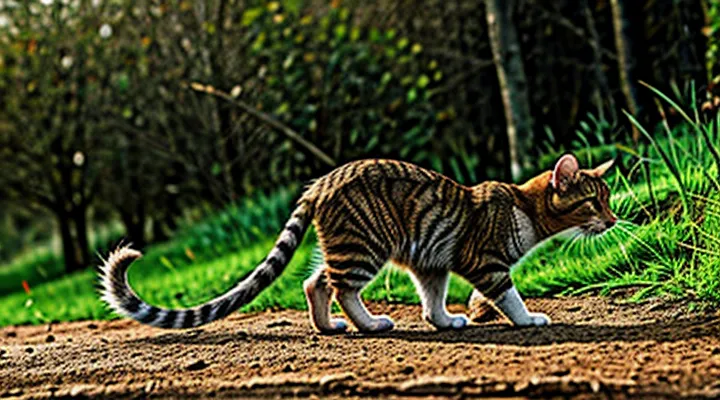
The Instinctive Hunter
Evolutionary Roots of Feline Predation
Ancestral Traits and Domestication
Cats retain a suite of ancestral characteristics that enable efficient rodent capture. Sharp retractable claws, a flexible spine, and a well‑developed vestibular system combine to produce rapid acceleration, precise aerial maneuvers, and sustained balance during pursuit. These traits evolved in wild ancestors that relied on small mammals for survival and persist in modern felines regardless of environment.
Domestication has modified, but not eliminated, these predatory mechanisms. Selective breeding for temperament and companionship reduced aggression toward humans while preserving hunting drive. Genetic studies show that alleles linked to prey‑tracking behavior remain highly conserved across domestic breeds, indicating that domestication reshaped expression rather than removed the underlying circuitry.
Key ancestral and domesticated features influencing mouse predation include:
- Sensory acuity: High‑frequency hearing and binocular vision detect minute movements.
- Motor coordination: Muscular control of forelimbs enables swift pounce and grip.
- Behavioral patterns: Stalk‑and‑pounce sequence, triggered by innate stimulus‑response loops.
- Physiological adaptation: Elevated adrenaline release supports short bursts of intense activity.
Understanding these conserved and altered traits clarifies why cats continue to exert effective pressure on rodent populations, despite centuries of cohabitation with humans. The interplay of inherited anatomy, neural circuits, and selective breeding sustains their role as natural mouse predators.
The Role of Prey in Feline Survival
Feline predation on small rodents supplies the primary source of calories, protein, and essential micronutrients required for metabolic maintenance. Each captured mouse delivers a balanced package of amino acids, taurine, and fatty acids that cannot be replicated fully by commercial diets.
The intake of live prey directly influences physiological parameters. High‑quality protein supports muscle mass, while the rich supply of vitamins A and D sustains ocular health and calcium regulation. Regular consumption of prey bolsters immune responsiveness, reducing the incidence of opportunistic infections. Reproductive output correlates with prey abundance; litters born to mothers with consistent access to rodents exhibit higher birth weights and improved neonatal survival.
Hunting behavior reinforces neural circuits governing coordination, reflex speed, and sensory acuity. Engaging in capture sequences sharpens motor skills, maintaining the cat’s capacity to respond to environmental challenges. The act of pursuit also mitigates chronic stress markers, promoting overall well‑being.
Prey availability shapes population structure. In ecosystems where rodent densities decline, feline mortality rates rise, and territorial ranges expand as individuals search for food. Conversely, stable prey populations sustain higher cat densities and facilitate the persistence of breeding pairs.
Key contributions of prey to feline survival:
- Provision of complete protein and essential amino acids
- Supply of taurine, a nutrient absent in many plant‑based feeds
- Delivery of fat‑soluble vitamins critical for vision and bone health
- Enhancement of immune function through diverse micronutrients
- Stimulation of hunting instincts that preserve physical and mental fitness
- Regulation of reproductive success via consistent energy intake
- Influence on population dynamics through resource‐driven mortality and dispersal patterns
Sensory Arsenal of a Mouse Hunter
Vision and Night Hunting
Cats rely on a visual system optimized for low‑light hunting. The retina contains a high density of rods, which detect faint illumination and motion. A reflective layer behind the retina, the tapetum lucidum, redirects light back through photoreceptors, effectively doubling the amount of available photons. This adaptation enables cats to discern prey silhouettes against dim backgrounds.
Binocular overlap provides depth perception essential for judging the distance to a moving mouse. Each eye captures a slightly different view; the brain merges these images to calculate spatial relationships with millimeter accuracy. The narrow field of view is compensated by rapid head movements that sweep the environment, ensuring continuous visual coverage.
Night hunting strategies derive directly from these visual traits:
- Motion sensitivity: Cats detect speed and direction changes as small as a few centimeters per second, triggering pursuit reflexes.
- Contrast enhancement: The visual cortex emphasizes edges and outlines, allowing identification of a mouse’s body shape against cluttered substrates.
- Temporal resolution: High flicker fusion rates permit detection of rapid limb movements, preventing prey escape during brief pauses.
- Whisker integration: Tactile input synchronizes with visual cues, refining target localization when illumination is insufficient for pure sight.
Together, these features form a cohesive system that permits cats to locate, track, and capture rodents effectively during nocturnal hours.
Auditory Acuity and Echolocation
Cats rely on a highly developed auditory system to locate and capture rodents. The ear’s mobile pinna captures sound from a wide azimuth, directing it toward the tympanic membrane with millisecond precision. This mechanical advantage enables rapid assessment of prey movement in cluttered environments.
Auditory sensitivity spans 48 kHz to 85 kHz, exceeding the upper limit of most mouse vocalizations (approximately 70 kHz). Peak sensitivity occurs between 8 kHz and 32 kHz, matching the frequency band of typical rodent footfalls and rustling. The cochlea contains an expanded basal region, providing dense hair‑cell arrays that resolve fine frequency differences.
Temporal resolution allows discrimination of inter‑click intervals as short as 0.5 ms, supporting accurate calculation of prey distance through sound‑arrival time differences. Binaural cues—interaural time and level differences—are processed in the superior olivary complex, yielding angular localization errors under 5°. This precision guides the cat’s pounce trajectory.
Although cats do not generate echolocation clicks, they exploit acoustic reflections. Studies show felines can infer object proximity by analyzing the amplitude decay and spectral coloration of echoes from their own vocalizations. This passive echo processing complements direct sound detection, enhancing depth perception when visual cues are limited.
Key auditory characteristics supporting predation:
- Frequency range covering mouse ultrasonic calls
- High cochlear hair‑cell density for fine spectral discrimination
- Sub‑millisecond temporal acuity for rapid distance estimation
- Binaural processing yielding precise angular localization
- Ability to interpret reverberant cues for depth assessment
Olfaction and Scent Tracking
Cats rely on a highly developed olfactory system to locate and pursue rodent prey. The nasal cavity contains millions of olfactory receptors that detect volatile compounds released by mice, such as urine pheromones and skin secretions. These chemicals generate a concentration gradient that the cat can follow, even in low‑light conditions where visual cues are limited.
Scent tracking proceeds through a sequence of neural events. First, odorant molecules bind to receptors in the main olfactory epithelium, triggering action potentials that travel to the olfactory bulb. Parallel input arrives from the vomeronasal organ, which specializes in detecting non‑volatile pheromonal cues. The combined signals are integrated in the amygdala and piriform cortex, producing a spatial map of the scent source. Motor circuits then translate this map into directed movement, allowing the cat to adjust its path while maintaining a steady sniffing rhythm.
Key physiological components that enable effective tracking include:
- High receptor density, providing sensitivity to concentrations as low as parts per billion.
- Rapid renewal of olfactory receptor neurons, ensuring sustained performance during prolonged hunts.
- Robust connectivity between olfactory centers and the hippocampal formation, supporting memory of specific mouse odor signatures.
These mechanisms allow felines to detect, localize, and intercept mice with precision, demonstrating the critical function of olfaction in natural predation.
The Hunt: A Step-by-Step Analysis
Stalking and Ambush Tactics
Stealth and Patience
Feline predation on rodents depends on two tightly coordinated behaviors: stealth and patience. Cats minimize visual and auditory cues while positioning themselves to intercept prey, then sustain a prolonged stillness until the mouse approaches within striking distance.
Stealth is achieved through several physiological and behavioral adaptations:
- Dilated pupils expand visual range in dim environments.
- Muscular control allows silent footfalls and precise limb placement.
- Flexible spine permits low, crouched postures that reduce silhouette visibility.
- Vibrissae detect subtle air currents, alerting the cat to nearby movement.
Patience manifests as controlled temporal dynamics of the hunt:
- Extended stalking phases can last several minutes, preventing premature detection.
- Energy expenditure remains low while the cat remains motionless, preserving strength for the final pounce.
- Timing of the attack aligns with the mouse’s predictable escape routes, increasing capture probability.
The integration of these tactics yields high success rates in natural predation scenarios, confirming that mastery of concealment and measured waiting are essential components of effective feline hunting.
Body Language During the Stalk
Cats rely on a precise set of visual and tactile cues while they close in on a mouse. The initial phase of the stalk involves a low, crouched posture that minimizes the animal’s silhouette against the substrate. Hind legs flex, allowing rapid acceleration when the strike occurs. Front limbs remain extended but relaxed, ready to deliver a swift bite.
Ear orientation provides information about auditory focus. Ears swivel forward and flatten against the head as the cat locks onto the prey’s rustling sounds. This adjustment reduces wind resistance and signals heightened concentration.
Whiskers extend outward and align with the anticipated path of the mouse. The tactile hairs detect minute changes in airflow and surface texture, helping the cat gauge distance and trajectory without visual confirmation.
The tail acts as a counterbalance. During the approach, the tail is held low and may twitch slightly, indicating the cat’s assessment of the prey’s escape routes. A steady, horizontal tail signals confidence; a rapid flick suggests uncertainty or a change in strategy.
Eye dilation accompanies the stalk. Pupils enlarge to maximize light intake, enhancing depth perception. A focused, unblinking stare fixes the mouse’s position, while slight head movements maintain alignment as the target shifts.
A concise checklist of observable body language during the stalk:
- Crouched body, hind legs flexed
- Ears forward, flattened
- Whiskers forward, spread wide
- Tail low, occasional twitch
- Pupils dilated, steady gaze
These elements combine to create a coordinated predatory sequence that maximizes the cat’s chances of capturing a mouse.
The Kill: Technique and Efficiency
The Neck Bite
Cats capture mice primarily through a rapid, precise bite to the cervical region. The bite targets the spinal cord and major blood vessels, producing immediate incapacitation. Muscular contraction of the cat’s jaw generates forces exceeding 30 psi, sufficient to fracture vertebrae or sever the carotid arteries. The bite is delivered from a short distance, often after a brief chase or ambush, minimizing the prey’s chance to escape.
Key physiological effects of the neck bite include:
- Disruption of the mouse’s central nervous system, leading to loss of motor control within milliseconds.
- Rapid blood loss from severed carotid or jugular vessels, causing hypovolemic shock.
- Compression of the trachea, preventing respiration and accelerating unconsciousness.
The technique reflects innate predatory instincts encoded in the feline brain. Neural pathways trigger a stereotyped sequence: detection, stalk, pounce, and a pinpoint bite to the neck. This sequence maximizes energy efficiency, allowing the cat to subdue multiple prey with minimal exertion.
Observations of domestic and wild felids confirm that the neck bite remains the most reliable method for killing small rodents, ensuring swift termination and reducing the risk of injury to the predator.
Play and Practice
Domestic and wild felines develop hunting proficiency through a structured sequence of activities that resemble both play and rehearsal. Young cats engage in mock attacks on moving objects, such as toys or small moving shadows, to refine motor coordination, depth perception, and timing. This repetitive behavior establishes neural pathways that later support successful capture of prey.
Key elements of the development process include:
- Object manipulation: Swatting, batting, and carrying small items strengthens forelimb muscles and improves grip.
- Pounce timing: Repeated leaps toward stationary or slowly moving targets calibrate the cat’s ability to judge distance and speed.
- Stalk simulation: Low‑profile movement along surfaces enhances stealth and reduces detection by potential victims.
- Capture execution: Securing a target with claws and teeth in controlled settings reinforces bite force and restraint techniques.
Adult felines retain these practices by intermittently engaging with artificial stimuli—feather wands, laser pointers, or puzzle feeders. Such sessions sustain the precision of strike mechanics and prevent atrophy of predatory reflexes. Moreover, the integration of play into daily routines provides a low‑risk environment for skill maintenance, ensuring that when a real mouse appears, the cat can respond with the efficiency honed through years of practiced rehearsal.
Factors Influencing Hunting Success
Environmental Conditions
Cats rely on specific environmental factors to locate, pursue, and capture rodents. Ambient temperature influences mouse activity cycles; cooler periods reduce nocturnal foraging, while moderate warmth extends movement, increasing encounter rates. Light intensity determines hunting success: low‑light conditions enhance feline stealth, whereas bright daylight diminishes concealment and slows attack speed.
Habitat structure shapes predator‑prey dynamics. Dense ground cover, such as tall grasses or leaf litter, offers mice shelter, forcing cats to adjust stalking techniques or seek open corridors. Conversely, sparse vegetation provides clear sightlines, allowing rapid detection and interception. Soil composition affects burrow stability; loose, well‑drained soils facilitate mouse tunnels, granting refuge from surface predators.
Weather patterns modify both species’ behavior. Precipitation reduces mouse foraging time, limiting exposure, while dry spells promote increased activity and surface travel. Wind speed alters scent dispersion; strong breezes disperse feline pheromones, reducing tracking efficiency, whereas calm air preserves scent trails and improves pursuit accuracy.
Key environmental variables:
- Temperature range (10‑25 °C optimal for mouse movement)
- Light level (dusk to low‑light conditions)
- Vegetation density (low to moderate cover)
- Soil texture (compact, well‑drained)
- Precipitation frequency (dry periods favor hunting)
- Wind velocity (below 5 km/h optimal for scent tracking)
Cat's Age and Experience
Cats demonstrate distinct hunting capabilities that correlate directly with age and accumulated experience. Kittens possess innate predatory instincts but lack the motor coordination and strength required for consistent mouse capture. Their early attempts are characterized by brief chases, frequent misses, and limited stamina.
From the juvenile stage onward, observational learning and repetitive practice refine technique. Cats that have observed adult hunting behavior develop enhanced timing, precise paw placement, and efficient stalking patterns. Sensory acuity—visual contrast detection, auditory localization, and whisker sensitivity—reaches optimal levels in fully mature individuals, enabling rapid assessment of mouse movement and escape routes. Muscular development at this stage supports powerful, controlled pounces and sustained pursuit when necessary.
In senior cats, gradual decline in vision, hearing, and muscle mass reduces hunting efficiency. Nevertheless, long‑term experience can partially offset physical deterioration, allowing older felines to employ strategic ambushes and conserve energy during captures.
- Kitten (0–6 months): strong instinct, limited coordination, short chase duration.
- Juvenile (6–12 months): rapid skill acquisition, improving accuracy, increasing stamina.
- Adult (1–8 years): peak sensory function, maximal strength, refined technique, consistent success rate.
- Senior (8+ years): decreasing physical performance, reliance on learned strategies, reduced capture frequency.
Age‑related physiological changes and the depth of experiential learning together determine a cat’s overall proficiency in mouse predation.
Prey Availability
Prey availability determines the frequency and success of feline predation on small rodents. Population density of mice fluctuates with seasonal breeding cycles, resource abundance, and mortality rates. High reproductive output during spring and summer expands the pool of potential targets, while harsh winter conditions and limited shelter reduce numbers.
Environmental factors shape accessibility of rodents. Dense ground cover and complex burrow systems provide refuge, decreasing encounter rates. Open fields and low vegetation expose mice, increasing susceptibility to cat attacks. Human-altered habitats, such as grain storage facilities, concentrate prey, creating hotspots for predation.
Resource competition influences mouse numbers. Abundant food sources—seeds, insects, and waste—support larger populations, whereas scarcity leads to reduced body condition and lower survival. Predation pressure itself can regulate prey density; intense hunting reduces local mouse abundance, prompting cats to expand their foraging range.
Key determinants of prey availability can be summarized:
- Seasonal reproductive peaks
- Habitat structure (cover vs. openness)
- Food resource abundance
- Human-generated aggregations
- Intraspecific competition among rodents
- Feedback from predation intensity
Understanding these variables allows accurate prediction of cat hunting patterns and informs management strategies aimed at balancing predator and prey dynamics.
Ecological Impact and Human Interaction
Population Control of Rodents
Natural Pest Management
Domestic and feral felines reduce rodent populations by instinctive hunting behavior. Their predatory activity targets mice that damage stored food, contaminate surfaces, and transmit pathogens. By allowing cats to roam in appropriate environments, property owners can lower reliance on chemical rodenticides and mechanical traps.
Benefits of feline‑based pest control include:
- Immediate reduction of active mouse presence.
- Decreased risk of secondary poisoning in non‑target wildlife.
- Minimal maintenance compared to bait stations.
- Natural integration into existing household ecosystems.
Effective implementation requires:
- Ensuring cats are healthy, vaccinated, and spayed/neutered to prevent overpopulation.
- Providing safe outdoor access while protecting vulnerable wildlife such as birds.
- Monitoring mouse activity to assess impact and adjust management practices.
- Complementing feline predation with sanitation measures, such as sealing entry points and eliminating food sources.
When combined with proper sanitation, feline predation offers a sustainable, low‑cost method for controlling mouse infestations. The approach aligns with integrated pest management principles, emphasizing biological control and reduced chemical usage.
Potential for Overpopulation
Feline predation on rodents suppresses mouse numbers, yet insufficient hunting pressure allows rapid population expansion. High reproductive capacity combined with abundant resources creates conditions where mouse densities exceed ecological thresholds.
Factors contributing to unchecked growth include:
- Low predator density in suburban and indoor environments
- Continuous access to food waste and stored grains
- Warm microclimates that shorten breeding cycles
- Reduced mortality from disease and parasitism
Elevated mouse abundance raises the risk of agricultural loss, increases pathogen reservoirs, and disrupts native species competition. Effective management requires monitoring predator‑prey ratios, controlling food sources, and, when necessary, implementing targeted population control measures.
Risks and Benefits for Domestic Cats
Health Implications of Consuming Prey
Felines that capture rodents obtain a diet rich in animal protein, essential amino acids, and micronutrients such as taurine, vitamin A, and iron. These nutrients support ocular health, cardiac function, and overall muscle maintenance.
Consuming uncooked prey introduces health hazards. Primary concerns include:
- Parasitic infections (e.g., Toxoplasma gondii, tapeworms, roundworms) that can affect both the predator and secondary hosts.
- Bacterial pathogens such as Salmonella, Campylobacter, and Escherichia coli, which may cause gastrointestinal distress.
- Exposure to rodent-borne toxins, including anticoagulant rodenticides and environmental contaminants accumulated in prey tissue.
Mitigation strategies focus on reducing pathogen load while preserving nutritional value. Freezing prey at –20 °C for a minimum of 48 hours eliminates most parasites. Thorough cooking to an internal temperature of 74 °C destroys bacterial agents and deactivates many toxins. Regular veterinary deworming and health monitoring further lower infection risk.
When prey is processed safely, the dietary benefits of natural predation can complement commercial feline nutrition, providing a biologically appropriate source of protein and bioavailable nutrients.
Exercise and Mental Stimulation
Cats rely on physical activity and cognitive challenges to maintain the hunting skills that enable them to capture rodents. Regular movement supports muscle tone, joint health, and cardiovascular function, while problem‑solving tasks preserve the neural pathways engaged during chase and capture.
Structured play sessions replicate the sequence of stalking, pouncing, and biting. Effective techniques include:
- Dragging feather‑tipped wands across the floor to stimulate pursuit.
- Tossing small, crinkled toys that mimic the erratic motion of prey.
- Using laser pointers to encourage rapid sprints and abrupt stops.
Environmental enrichment deepens mental engagement. Strategies involve:
- Installing climbing shelves at varying heights to promote vertical navigation.
- Placing puzzle feeders that require manipulation to release food, mirroring the effort needed to extract a mouse from a burrow.
- Rotating a selection of textured balls and silicone tubes to prevent habituation.
These interventions align with the cat’s innate predatory sequence, ensuring that both body and mind remain conditioned for effective rodent control. Consistent application yields measurable improvements in agility, focus, and success rates during spontaneous hunting episodes.
Mitigation and Responsible Pet Ownership
Discouraging Predation
Cats instinctively chase rodents, a behavior that contributes to natural population control. When this activity conflicts with human interests, owners and managers employ specific tactics to reduce predation without compromising animal welfare.
Feeding practices that satisfy feline hunger diminish the drive to hunt. Providing multiple small meals throughout the day maintains satiety and lowers the incentive to pursue prey. High‑protein diets that mimic the nutritional profile of captured rodents further reduce the need for supplemental hunting.
Physical barriers prevent access to potential prey. Installing window screens, securing basement openings, and using cat‑proof fences around gardens eliminate direct contact points. Indoor environments equipped with climbing structures and interactive toys channel predatory instincts toward acceptable outlets.
Behavioral modification techniques reinforce non‑predatory actions. Clicker training paired with rewards for ignored mouse movements conditions cats to disengage from chase sequences. Consistent reinforcement over several weeks yields measurable decreases in pursuit behavior.
Environmental deterrents limit successful captures. Motion‑activated sprays, ultrasonic devices, and scent‑based repellents placed near typical hunting zones create aversive stimuli that discourage pursuit. Rotating deterrent types prevents habituation.
Monitoring tools assess the effectiveness of interventions. Motion‑sensing cameras and weekly logs of observed hunting incidents provide data for adjusting strategies. When reductions exceed 70 % of baseline activity, the approach is deemed successful and may be replicated in similar settings.
Collectively, these measures balance feline predatory drives with the goal of preserving rodent populations and reducing unintended ecological impacts.
Providing Alternatives
Cats possess innate predatory instincts that drive them to pursue small mammals. When domestic cats are allowed to act on these instincts, they often capture mice, which can affect local ecosystems and raise concerns for pet owners. Providing alternatives reduces reliance on natural hunting while satisfying the cat’s behavioral needs.
- Offer interactive toys that mimic prey movement, such as feather wands, laser pointers, or motorized mice. Frequent play sessions redirect hunting drive toward controlled objects.
- Install puzzle feeders that require manipulation to release food. The effort involved engages problem‑solving skills and mimics the chase‑capture sequence.
- Create vertical and horizontal enrichment zones using shelves, cat trees, and climbing structures. Elevated pathways encourage stalking behavior without exposing live prey.
- Use scent‑based deterrents, such as citrus or feline‑safe herb sprays, in areas where mice are present. The odors discourage cats from entering zones where they might encounter rodents.
- Implement scheduled, high‑protein meals that meet dietary requirements. Adequate nutrition diminishes the urgency to hunt for sustenance.
- Employ humane mouse control methods, including live traps or exclusion devices, to manage rodent populations without involving the cat.
Each alternative addresses a specific facet of the cat’s predatory sequence—stalk, chase, capture, and consumption—while preserving wildlife and maintaining indoor safety.