
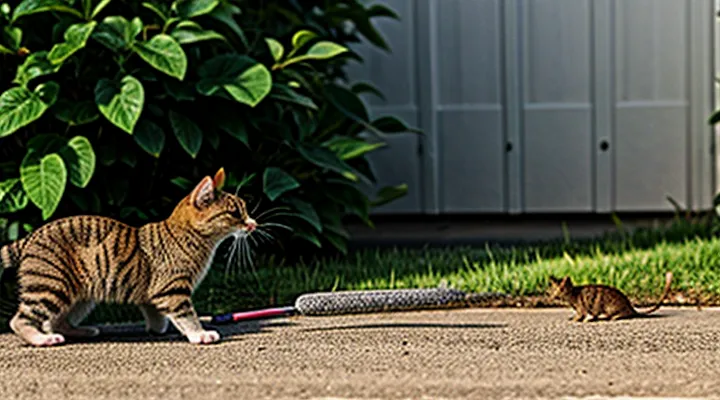
Understanding Feline Hunting Instincts
The Evolutionary Roots of Hunting
Domestication vs. Wild Instincts
Domestic cats retain the predatory sequence observed in their wild ancestors: stalk, pounce, bite, and kill. This pattern emerges even when a feline receives regular meals, indicating that hunting is an ingrained motor program rather than a response to hunger alone.
- Sensory triggers: Sharp hearing and low‑light vision prompt a rapid orienting response. Domestic cats display the same ear rotation and pupil dilation as feral counterparts when a rodent moves nearby.
- Motor execution: Muscular coordination for a burst of speed and a precise fore‑paw strike is identical across breeds and feral populations.
- Reward circuitry: Successful capture activates dopamine pathways, reinforcing the behavior irrespective of nutritional need.
Domestication modifies the context in which these instincts are expressed. Human‑provided food reduces the frequency of hunting episodes, yet the underlying neural circuitry remains intact. Socialization can diminish aggression toward prey, leading some pets to bat at a mouse without delivering a lethal bite. In contrast, wild felids rely on regular kills for sustenance, exhibiting higher kill rates and less tolerance for missed attempts.
Environmental enrichment that mimics natural hunting scenarios—such as moving toys or puzzle feeders—stimulates the innate sequence and supports physical health. Conversely, environments lacking such stimuli may cause redirected aggression or behavioral disorders, underscoring the persistence of wild instincts despite domestication.
The Prey Drive
The prey drive is an innate motivational system that compels felines to pursue and capture moving objects. It originates in the hypothalamus and is amplified by dopamine release when the animal perceives a potential target. Visual motion, auditory cues, and tactile feedback converge on this circuit, generating the urge to initiate a hunting sequence.
Neural processing follows a predictable pattern: sensory detection triggers the amygdala, which evaluates threat level; the basal ganglia coordinate motor planning; the brainstem executes rapid muscle activation. Hormonal fluctuations, particularly elevated adrenaline and oxytocin during successful capture, reinforce the behavior through positive feedback loops.
Typical hunting progression includes:
- Detection of prey movement
- Stealthy approach while maintaining low body posture
- Sudden acceleration toward the target
- Precise paw strike or bite to immobilize
- Final subjugation and consumption
Experience reshapes the prey drive. Repeated exposure to live or simulated prey can sharpen timing and accuracy, whereas prolonged indoor confinement may attenuate the response. Selective breeding for reduced predatory intensity produces domestic lines with muted drive, yet the underlying circuitry remains present.
For caretakers, providing interactive toys that mimic prey motion sustains the drive without endangering wildlife. Structured play sessions that replicate the stages above satisfy the cat’s instinctual needs and reduce unwanted hunting of actual rodents.
Stages of the Hunt
Stalking and Ambush Tactics
Sensory Cues: Sight, Sound, Smell
Cats depend on three primary sensory channels to locate and capture a mouse. Visual input provides the initial detection of movement; a mouse’s rapid, irregular motion against a static background triggers the feline’s pursuit reflex. The cat’s binocular field offers depth perception, allowing precise calculation of distance and timing for the final pounce.
Auditory cues complement sight. The high‑frequency rustle of fur and the soft footfalls of a mouse generate sound waves within the cat’s hearing range of up to 64 kHz. These vibrations travel farther than visual cues in low‑light conditions, guiding the predator toward the prey’s location even when it remains partially concealed.
Olfactory information refines the hunt. Mice emit a distinct combination of urine, pheromones, and body odor that registers in the cat’s highly developed vomeronasal organ. The scent trail persists in the environment, enabling the cat to track the prey’s recent movements and anticipate escape routes.
- Sight: detects motion, assesses distance, initiates chase.
- Sound: captures high‑frequency rustles, aids navigation in dim light.
- Smell: identifies chemical signature, supports tracking and prediction.
Body Language of a Hunter
The cat’s pursuit of a mouse relies on a precise set of visual and muscular signals that convey intent, readiness, and execution. Observers can decode these signals to understand each phase of the hunt.
- Ears flattened forward or slightly rotated indicate acute auditory focus and alignment with the target’s location.
- Tail held low, gently twitching, signals controlled tension, ready to balance rapid acceleration.
- Body lowered with forelegs bent creates a spring‑loaded stance, storing kinetic energy for the forthcoming lunge.
- Pupils dilated to a maximum, allowing maximal light intake for depth perception.
- Whiskers splayed outward detect subtle air currents generated by the mouse’s movement.
During the stalk, the cat maintains a steady gaze, minimizing head movements to reduce visual disturbance. The neck muscles contract subtly, stabilizing the head while the spine arches, preparing the hind limbs for explosive propulsion. Once within striking distance, the forelimbs extend outward, claws unsheathed, while the hind legs generate thrust, translating stored energy into forward momentum.
After capture, the cat’s posture shifts: the tail rises, ears rotate backward, and the body relaxes as the prey is secured. These post‑capture adjustments serve to signal cessation of aggressive intent and transition to consumption behavior.
The Pounce and Capture
Precision and Agility
Cats capture rodents with a combination of precise targeting and rapid, coordinated movement. Sensory input from whiskers, ears, and eyes identifies the mouse’s position within centimeters. Muscular control fine‑tunes the trajectory of each paw, allowing the predator to adjust mid‑air if the prey shifts.
The hunting sequence relies on three physiological mechanisms:
- Spatial resolution: Visual acuity and depth perception calculate distance and angle, producing a lock‑on point for the strike.
- Muscle elasticity: Hind‑leg tendons store energy during the crouch, releasing it in a burst that propels the body forward.
- Neuromuscular timing: Motor neurons fire in a staggered pattern, synchronizing forelimb extension with hind‑leg thrust to ensure contact at the exact moment of impact.
During the final pounce, the cat’s tail acts as a gyroscopic stabilizer, preventing rotation and maintaining a straight line toward the target. The claws close with millisecond latency, delivering a grip that immobilizes the mouse before it can react.
Overall, precision and agility form an integrated system that maximizes capture efficiency, minimizes energy expenditure, and reduces the likelihood of escape.
The Killing Bite
The killing bite is the final phase of a cat’s predatory sequence. After securing the mouse with fore‑paws, the animal positions its head to deliver a precise bite that disables the prey instantly. The bite targets the cervical vertebrae or the base of the skull, where a single pressure from the elongated canines can fracture the spinal cord or crush the trachea. This placement ensures rapid loss of neural control and immediate cessation of breathing.
Jaw mechanics provide the necessary force. Although domestic cats generate a bite force of roughly 20 N, the narrow contact area of the canines concentrates pressure enough to puncture bone and soft tissue. The mandibular muscles contract in a swift, reflexive motion, delivering a high‑velocity strike that minimizes struggle time.
Physiological effects follow instantly. Disruption of the spinal cord halts motor function; damage to the trachea or major blood vessels induces swift hypoxia and hemorrhage. The combined impact results in death within seconds, preventing the mouse from escaping or inflicting injury on the predator.
Key characteristics of the killing bite:
- Location: cervical vertebrae, base of skull, or trachea
- Tool: elongated upper canines, reinforced by mandibular incisors for grip
- Force: concentrated pressure exceeding 200 kg cm⁻² at the point of contact
- Timing: executed within 0.1–0.3 seconds after prey immobilization
- Outcome: immediate loss of neural control and rapid onset of fatal hypoxia
Variations appear among felid species. Larger wild cats may employ a more powerful bite, capable of crushing larger vertebrae, while smaller domestic cats rely on precise placement and the mouse’s fragile anatomy. Regardless of size, the killing bite remains the decisive action that converts a captured mouse into a finished meal.
The Post-Hunt Ritual
Playing with Prey
Why Cats Play with Their Catch
Cats frequently manipulate a captured mouse before delivering the final bite. This behavior appears in both domestic and feral individuals, indicating a deep evolutionary root.
The act serves several functional purposes. First, the cat tests the prey’s vitality, ensuring it is not already dead and therefore safe to eat. Second, the rapid movements stimulate the cat’s sensory receptors, releasing dopamine that reinforces hunting skill. Third, the repeated striking and tossing allow the cat to practice precise bite placement, a skill essential for dispatching larger or more dangerous prey. Fourth, the display of the catch can deter competitors, signaling ownership of the resource.
Key factors underlying this conduct include:
- Instinctual predatory sequence – a fixed action pattern triggered by movement.
- Motor skill refinement – repetitive motions sharpen coordination and bite accuracy.
- Neurological reward – tactile feedback activates reward pathways, encouraging repeated hunting attempts.
- Resource protection – visual exhibition discourages other predators from approaching.
Understanding these mechanisms clarifies why cats often appear to “play” with their prey rather than consume it immediately. The behavior maximizes hunting efficiency, reinforces neural pathways, and secures the food source.
The Role of Instinct in Play
Instinct drives the spontaneous actions that kittens exhibit during play, mirroring the sequence used when capturing prey. When a young cat engages with a toy or a moving object, the same neural pathways that trigger a hunt are activated, producing rapid shifts between attention, stalking, and pounce.
The play pattern follows a predictable chain:
- Visual fixation on the target
- Low‑body crouch and subtle forward movements
- Sudden acceleration toward the object
- Contact with claws and bite, followed by a brief release
Each element reflects a component of the predatory cycle, allowing the animal to rehearse motor skills without the risk of injury.
Developmentally, instinctual play intensifies between four and twelve weeks of age, when neural circuits governing motor coordination and sensory integration mature. Adult cats retain the behavior, but frequency declines as the need for practice diminishes.
Neurochemical studies show that dopamine release spikes during these rapid bouts, reinforcing the behavior and strengthening synaptic connections in the basal ganglia. The resulting feedback loop ensures that the cat’s hunting repertoire remains sharp, even when actual prey encounters are rare.
Consumption or Presentation
Eating the Prey
The domestic cat secures the mouse with a bite to the neck or back of the skull, delivering a rapid, lethal strike that prevents injury and immobilizes the prey. Immediate consumption follows the kill, reducing the risk of loss to scavengers or the cat’s own movement.
During ingestion, the cat aligns the mouse’s body lengthwise with its own oral cavity, positioning the head first to facilitate swallowing. The cat’s sharp incisors grip the neck, while the carnassial teeth shear meat from the carcass. Saliva, containing enzymes such as lysozyme, begins the digestive process, breaking down bacterial cell walls and softening tissue.
The cat’s stomach secretes hydrochloric acid and pepsin, creating an environment that denatures proteins and kills residual pathogens. Nutrient absorption proceeds in the small intestine, where pancreatic enzymes and bile further digest fats, carbohydrates, and proteins for rapid energy replenishment.
Key steps in the consumption process:
- Bite to terminate the mouse and secure it.
- Head‑first alignment for efficient swallowing.
- Use of incisors and carnassial teeth to separate flesh.
- Salivary enzyme action during mastication.
- Gastric acid and pepsin digestion in the stomach.
- Enzymatic breakdown and nutrient uptake in the intestine.
Bringing Gifts to Owners
Cats hunt by instinct, employing swift acceleration, precise paw strikes, and coordinated bite to subdue small vertebrates. The predatory sequence includes detection, stalking, pounce, and capture, each phase governed by innate neural circuits.
After a successful capture, many domestic felines transport the prey to the human household. This behavior serves multiple functions:
- Demonstrates competence in providing resources.
- Reinforces social bonds through shared food.
- Allows the cat to practice hunting skills in a safe environment.
- Communicates status within the domestic hierarchy.
The act of delivering a captured mouse reflects the animal’s assessment of the owner as a caretaker capable of receiving and processing the offering. Observations show that cats preferentially bring prey when owners are present, indicating a deliberate intention rather than accidental displacement.
Understanding this gift‑giving pattern clarifies the link between innate hunting mechanisms and the domesticated cat’s adaptive social behavior.
Factors Influencing Hunting Behavior
Environmental Impact
Urban vs. Rural Hunting
Cats hunting mice display distinct patterns depending on the environment in which they operate. In densely populated areas, felines rely heavily on human‑provided food sources, yet retain instinctual drive to stalk and capture small rodents. Their success rates are moderated by limited access to natural cover and the prevalence of obstacles such as traffic and waste containers. Consequently, urban hunters exhibit the following characteristics:
- Preference for concealed microhabitats (under furniture, behind appliances, within clutter).
- Shorter pursuit distances; attacks often occur within a few meters of detection.
- Increased reliance on auditory cues due to reduced vegetation.
- Higher incidence of opportunistic captures near refuse sites where rodents congregate.
Rural settings present abundant vegetation, open fields, and barn structures that furnish extensive ambush points. Cats in these locales demonstrate:
- Utilization of tall grass, hedgerows, and farm outbuildings for stealth approaches.
- Extended chase sequences, sometimes exceeding ten meters.
- Greater dependence on visual tracking, aided by clear sightlines.
- Consistent prey intake that supplements or replaces supplemental feeding by owners.
Both environments compel cats to adapt their predatory tactics, yet the core sequence—stalk, pounce, bite, and kill—remains constant. The contrast lies in how habitat features shape the duration of each phase and the frequency of successful captures.
Availability of Prey
Prey availability directly influences the success rate of feline hunting episodes. When rodents are abundant, cats complete capture sequences quickly; when populations decline, the same behaviors require longer pursuit and greater energy expenditure.
Factors that determine the presence of suitable prey include:
- Habitat complexity, which provides shelter and foraging opportunities for small mammals.
- Seasonal fluctuations in rodent reproductive cycles, affecting population density.
- Climate conditions that alter activity patterns of both predator and prey.
- Human interventions such as pest control measures or urban development that reduce or fragment prey habitats.
Reduced prey density prompts cats to modify their approach. Observations show increased patrol distances, heightened reliance on auditory cues, and occasional expansion of diet to include insects or birds. These adjustments maintain caloric intake but often lower capture efficiency.
Overall, the amount of accessible prey serves as a primary driver of hunting dynamics, shaping search behavior, effort allocation, and dietary breadth in domestic and wild felines.
Individual Cat Differences
Breed Predispositions
Domestic cats retain a natural predatory instinct that manifests in the pursuit and capture of small rodents. Genetic lineage and breed standards shape the intensity of this behavior, producing noticeable differences among populations.
- Abyssinian – high energy, sharp reflexes, frequent engagement with moving prey.
- Bengal – strong chase drive, muscular build, excels at rapid bursts.
- Siberian – robust hindquarters, persistent stalking, effective in varied terrain.
- Maine Coon – large size, powerful forepaws, capable of subduing larger rodents.
- American Shorthair – historically bred for pest control, consistent success in indoor environments.
- Oriental – slender body, quick acceleration, excels at aerial captures.
Breed predispositions arise from selective breeding that accentuates traits such as muscle development, sensory acuity, and behavioral temperament. Genes influencing dopamine pathways and visual processing correlate with heightened prey motivation. Morphological features—long hind limbs, retractable claws, acute hearing—enhance the ability to detect, chase, and immobilize small mammals.
Owners seeking reliable rodent management should prioritize breeds listed above, provide enrichment that channels hunting instincts, and recognize that individual variation may modify breed‑average performance.
Early Life Experiences
Early life experiences lay the foundation for a cat’s instinctive pursuit of small rodents. Kittens observe their mother’s capture techniques, copying bite placement, paw positioning, and timing. This observational learning occurs during the first weeks after birth, when neural pathways for motor coordination are most plastic.
Play behavior reinforces hunting skills. Rough-and-tumble bouts among littermates generate repeated practice of stalking, pouncing, and claw extension. Each successful capture of a toy or moving object strengthens synaptic connections in the visual‑motor circuit, increasing reaction speed and precision.
Environmental exposure shapes sensory acuity. Kittens raised in settings with audible rustling or visible movement of insects develop heightened auditory and visual discrimination. Early encounters with live prey, even brief, calibrate whisker feedback and depth perception essential for calculating strike distance.
Key factors influencing the emergence of predatory competence include:
- Maternal demonstration of capture technique
- Sibling play that mimics hunting sequences
- Access to moving stimuli that trigger reflexive response
- Gradual introduction of live prey under safe conditions
Collectively, these experiences program the cat’s ability to locate, stalk, and seize a mouse with efficiency typical of adult felines.
The Impact on Ecosystems
Feral Cat Populations
Effects on Wildlife
Domestic cats, whether free‑roaming or feral, exert measurable pressure on wildlife populations through routine predation. Each successful capture removes an individual from local ecosystems, altering community composition.
- Small mammals experience elevated mortality rates, reducing reproductive output and population stability.
- Ground‑nesting birds lose eggs and fledglings, decreasing recruitment success.
- Reptiles and amphibians encounter direct loss, especially in habitats where cats hunt near water sources.
These losses propagate beyond immediate victims. Reduced prey abundance can shift predator‑prey dynamics, prompting increases in alternative predators that may further affect vulnerable species. Disease transmission pathways also change; cats can carry parasites that spread to native fauna, amplifying health risks.
Endangered and threatened species are disproportionately affected because their limited numbers provide little buffer against additional predation. In regions where cats overlap with rare ground‑nesting birds, breeding success declines sharply, accelerating local extirpation risk.
Overall, cat hunting behavior contributes to biodiversity decline, disrupts trophic interactions, and introduces disease vectors, underscoring the need for targeted management strategies.
Mitigation Strategies
Domestic cats display a predatory sequence that frequently ends with the capture of small rodents. This natural drive can lead to unintended consequences for local ecosystems and for the health of both animals and humans.
Mitigation measures focus on reducing successful hunts while preserving the cat’s welfare. Effective actions include:
- Keeping the cat indoors or providing a secure outdoor enclosure (catio) to eliminate contact with wild prey.
- Attaching a lightweight bell or a vibration‑producing collar to disrupt the cat’s stealth during the approach phase.
- Enriching the indoor environment with toys, climbing structures, and interactive play sessions to satisfy hunting instincts without live prey.
- Scheduling regular, protein‑rich meals to diminish the motivation to seek additional food sources.
- Applying humane deterrents such as motion‑activated sprinklers or scent barriers around areas where mice are present.
- Educating owners about the ecological impact of predation and promoting responsible pet ownership practices.
- Selecting breeding lines with documented lower prey drive for households concerned about wildlife interaction.
Implementing a combination of these strategies reduces the frequency of successful rodent captures, supports biodiversity, and maintains the cat’s physical and mental health.
Responsible Cat Ownership
Managing Hunting Behavior
Enrichment and Play
Enrichment and play provide structured outlets for the predatory sequence that domestic cats express when they pursue prey. By presenting stimuli that trigger stalking, pouncing, and capture, owners can satisfy innate drives while preventing destructive behavior.
Practical enrichment items include:
- Wand toys with feather or fabric attachments that move erratically, encouraging a chase‑and‑pounce response.
- Puzzle feeders that require manipulation before food release, mimicking the effort needed to secure a catch.
- Automated rolling devices that simulate the erratic motion of small mammals, prompting a timed ambush.
Play sessions should follow the natural hunting phases: observe, stalk, accelerate, seize, and release. Short, frequent bouts (5–10 minutes) align with a cat’s attention span and prevent fatigue. Incorporating auditory cues, such as rustling paper or crinkling foil, adds a sensory dimension comparable to the sounds of a fleeing mouse.
Consistent rotation of toys and devices prevents habituation, ensuring each interaction remains challenging. Monitoring the cat’s body language—focused ears, dilated pupils, low crouch—confirms engagement with the simulated prey. When the sequence concludes, allowing a gentle bite or claw release reinforces the satisfaction derived from a successful hunt without causing injury.
Overall, targeted enrichment and structured play translate the cat’s instinctual hunting pattern into safe, repeatable activities that sustain physical health and mental acuity.
Bell Collars and Other Deterrents
Bell collars are designed to emit a continuous sound that alerts potential prey to a cat’s approach. The acoustic cue triggers a startle response in rodents, reducing the likelihood of a successful capture. Studies show that collars producing frequencies between 500 Hz and 2 kHz are most effective because they fall within the hearing range of common mice while remaining audible to owners. Proper fit prevents the collar from slipping or causing discomfort, which maintains consistent sound emission during typical hunting activity.
Other deterrents complement acoustic devices by targeting different sensory channels.
- Motion‑activated spray dispensers release a brief burst of citronella when a cat’s movement is detected, creating an aversive stimulus without harming the animal.
- Taste‑based repellents applied to the cat’s paws or fur contain bitter agents that discourage pawing and stalking behaviors.
- Environmental enrichment such as puzzle feeders and interactive toys redirects predatory instincts toward controlled play, lowering the frequency of outdoor pursuits.
Combining a bell collar with at least one additional deterrent yields a layered defense that significantly diminishes a cat’s success rate when hunting rodents. Regular assessment of collar integrity and deterrent effectiveness ensures sustained performance over time.