
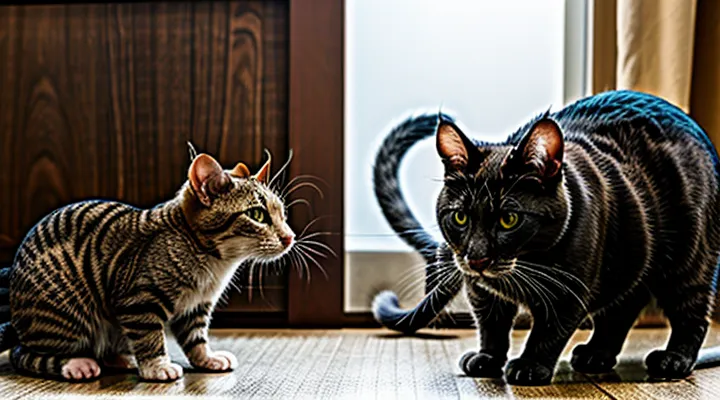
The Ancient Antagonism
Historical Roots of the Conflict
Evolutionary Drivers of Prey-Predator Dynamics
The evolutionary interaction between small carnivores and commensal rodents exemplifies a classic predator‑prey system. Continuous reciprocal selection pressures generate measurable changes in morphology, physiology, and behavior for both parties.
Key drivers of this dynamic include:
- Morphological specialization – Sharp retractable claws, enhanced jaw musculature, and streamlined body plans in predators contrast with agile hind‑limb development and flexible skeletal structures in prey.
- Sensory adaptation – Predators evolve acute low‑light vision and whisker‑based spatial detection; prey enhance auditory thresholds and olfactory discrimination to locate threats earlier.
- Reproductive strategy – High fecundity and rapid maturation in rodents offset elevated mortality, while predators adjust litter size and breeding intervals to align with prey population cycles.
- Behavioral tactics – Ambush and pursuit techniques evolve alongside evasive maneuvers such as erratic locomotion, burrowing, and social vigilance in prey groups.
- Ecological pressure – Fluctuations in habitat resources, urbanization, and seasonal changes alter encounter rates, prompting adaptive shifts in foraging range and shelter use.
- Genetic variability – Mutations affecting coat coloration, toxin resistance, or muscle fiber composition provide selective advantages that propagate through successive generations.
These mechanisms operate simultaneously, producing a tightly coupled evolutionary feedback loop. Predators refine hunting efficiency as prey develop countermeasures; prey survival strategies intensify as predation intensity rises. The resulting coevolutionary trajectory maintains the stability of the system while allowing periodic bursts of change driven by environmental perturbations or novel genetic introductions.
Domestication's Impact on the Rivalry
Domestication has altered the innate antagonism between felines and rodents, shifting the relationship from wild predation to a managed coexistence. Human environments provide shelter, food, and protection that reduce the frequency of direct encounters. Selective breeding of cats for reduced hunting drive and of rats for tameness further weakens instinctive aggression.
Key consequences of domestication include:
- Decreased reliance on hunting for sustenance, limiting opportunities for predatory behavior.
- Spatial segregation within households; cats occupy elevated perches, while rats inhabit concealed niches, reducing direct contact.
- Human intervention that rewards or discourages specific actions, such as rewarding cats for catching pests or preventing rats from accessing food stores.
- Genetic adaptations that modify stress responses, making both species more tolerant of each other's presence.
These factors collectively transform the traditional predator‑prey dynamic into a controlled interaction shaped by human preferences and environmental constraints.
Cultural and Mythological Depictions
Folklore and Fables: Cats and Rats in Storytelling
The enduring antagonism between feline and rodent figures appears across cultures, shaping moral and social lessons through narrative tradition. In ancient Egyptian lore, the cat deity Bastet protects granaries from vermin, symbolizing order versus chaos. Classical Greek fables, such as Aesop’s “The Cat and the Mice,” depict the predator’s cunning as a warning against complacency. Asian folklore presents parallel motifs: Japanese tales feature the mischievous rat “Nezumi” outwitting the palace cat, reinforcing the value of intelligence over brute force, while Chinese stories often cast the cat as a guardian of rice stores, illustrating vigilance.
Key functions of these stories include:
- Illustrating hierarchical relationships within communities.
- Conveying cautionary advice about hubris and complacency.
- Reinforcing cultural attitudes toward pest control and domestic harmony.
- Providing a vehicle for humor and satire through role reversal.
Literary collections preserve these narratives, for example:
- “The Little Red Cat” (Russian folk tradition) – a cat’s failed attempt to catch a clever rat, ending in mutual respect.
- “The Rat’s Wedding” (Indian oral tale) – a rat’s clever escape from a cat’s trap, highlighting wit as survival.
- “The Cat’s Tail” (European medieval fable) – a moral about the consequences of greed when a cat overreaches.
Across epochs, the cat‑rat dynamic serves as a versatile allegory, enabling storytellers to explore power, strategy, and ethical conduct without explicit didactic language. The recurring pattern underscores a universal recognition of the predator‑prey relationship as a fertile source for cultural expression.
Symbolism and Archetypes in Various Cultures
The enduring image of a cat confronting a rat embodies a universal opposition between predator and prey, order and disruption, and the triumph of vigilance over opportunism.
In ancient Egyptian belief, the domestic cat represented divine protection, its image linked to the goddess Bastet. Rats appeared in agricultural texts as vermin threatening grain stores, reinforcing the cat’s role as guardian of sustenance.
Chinese folklore assigns the cat the function of night‑time sentinel, capable of warding off mischievous rodents that embody deceit. The rat, celebrated in the zodiac, symbolizes resourcefulness and survival, creating a duality of caution and cleverness.
Medieval European bestiaries portray the cat as a symbol of disciplined hunting, while the rat signifies filth and disease. The contrast served moral instruction, illustrating the consequences of negligence versus the virtues of disciplined pursuit.
Native American traditions often cast the rat as a trickster figure, capable of outwitting larger animals. The cat, when present, assumes the role of a protective spirit, maintaining balance within the community’s natural order.
Across these cultures, recurring archetypal patterns emerge:
- Predator versus underdog: the cat as the active force, the rat as the reactive survivor.
- Order versus chaos: feline vigilance restores stability, rodent intrusion signals disorder.
- Moral duality: disciplined pursuit contrasted with cunning adaptability.
These symbols persist because they translate a concrete ecological interaction into a flexible framework for expressing power dynamics, ethical lessons, and cultural identity.
Biological and Behavioral Aspects
Feline Predatory Instincts
Hunting Techniques and Adaptations
Felines rely on ambush, stealth, and rapid acceleration to capture rodents. Muscular hind limbs generate bursts of speed exceeding 30 mph, allowing the predator to close distances in fractions of a second. Retractable claws provide a secure grip on slippery prey, while sharp incisors deliver a lethal bite to the neck. Vision adapted for low‑light conditions enables detection of movement at distances up to 30 feet, supporting night‑time hunting.
Rats counter these attacks with a suite of defensive behaviors and physiological traits. Flexible bodies permit swift navigation through narrow openings inaccessible to larger predators. Highly developed whiskers detect air currents and vibrations, alerting the animal to approaching threats. Rapid reproductive cycles ensure population resilience despite frequent losses. Reflexive escape responses, such as erratic zig‑zag runs and sudden jumps, reduce capture probability.
Key tactics observed in the predator‑prey interaction include:
- Feline stalking: crouched posture, slow advance, tail balance for precise positioning.
- Rapid pounce: conversion of stored muscular energy into forward thrust, targeting the prey’s mid‑section.
- Rat evasive maneuvers: sudden direction changes, utilization of vertical space, and immediate retreat into burrows.
- Sensory adaptation: cats prioritize visual acuity; rats prioritize tactile and auditory cues for early threat detection.
These complementary strategies illustrate a continuous evolutionary arms race, where each species refines its methods to maintain advantage within the same ecological niche.
The Role of Scent and Sound in Detection
Cats detect rats primarily through two sensory channels: olfaction and audition. The feline olfactory system registers volatile compounds emitted by rodents, such as urine, feces, and glandular secretions. These chemicals generate concentration gradients that guide predators toward prey, even in cluttered environments where visual cues are limited. Auditory perception complements scent detection; cats are attuned to high‑frequency sounds produced by rat movements, including footfalls and gnawing. Their cochlear architecture amplifies frequencies above 2 kHz, allowing identification of prey activity concealed beneath foliage or debris.
Key characteristics of each channel include:
- Olfactory specificity: Receptors differentiate between species‑specific metabolites, enabling discrimination of rats from other small mammals.
- Spatial resolution: Airflow patterns create directional cues that inform pursuit trajectories.
- Acoustic sensitivity: Thresholds as low as 20 dB SPL for ultrasonic components facilitate early warning of hidden rodents.
- Temporal integration: Continuous monitoring of scent intensity and sound rhythm allows cats to adjust stalking behavior in real time.
Interaction between scent and sound enhances detection reliability. When olfactory signals weaken, auditory input compensates, and vice versa, creating a redundant system that reduces missed encounters. Empirical observations confirm that felines exhibit higher capture success rates when both modalities are simultaneously active.
Rodent Survival Strategies
Evasion Tactics and Defensive Behaviors
The predator‑prey relationship between felines and rodents drives a constant cycle of attack and avoidance. Rats rely on rapid locomotion, flexible bodies, and environmental exploitation to escape detection.
- Sudden directional changes disrupt pursuit paths.
- Burrowing creates immediate physical barriers.
- Scent suppression through grooming reduces olfactory cues.
- Nocturnal activity aligns with lower visibility periods.
- Group vigilance alerts individuals to approaching danger.
Cats counter with specialized hunting adaptations that enhance capture efficiency.
- Low‑frequency hearing isolates rustling sounds.
- Whisker sensitivity detects airflow disturbances near prey.
- Tapetum lucidum amplifies low‑light vision for dusk and night hunts.
- Stealthy crouch and silent tread minimize auditory warnings.
- Precise forelimb extension delivers rapid, directed strikes.
Both species exhibit an evolutionary arms race: rat evasion tactics prompt refinements in feline detection, while feline hunting strategies stimulate further rat defensive innovations. The result is a dynamic equilibrium where each adaptation influences the other's survival strategies.
Reproductive Rates and Population Dynamics
The reproductive capacity of domestic and wild felids contrasts sharply with that of common rats, shaping their population trajectories. Female cats reach sexual maturity between five and twelve months, produce one to three litters per year, and each litter contains two to six kittens. Gestation lasts approximately sixty‑nine days, and maternal care extends several weeks, resulting in a relatively low intrinsic growth rate. In contrast, rats attain sexual maturity at 5‑6 weeks, generate up to twelve litters annually, and each litter averages six to twelve pups. Gestation lasts twenty‑three days, and offspring become independent within three weeks, supporting a high intrinsic growth potential.
Population dynamics emerge from the interaction of these reproductive parameters with mortality factors and environmental limits. Key influences include:
- Birth rate: high for rats, moderate for cats.
- Juvenile survival: lower in rats due to predation and disease; higher in cats owing to parental investment.
- Adult mortality: elevated in cats from hunting risks and disease; moderate in rats from competition and environmental stress.
- Carrying capacity: constrained for cats by territory size and prey availability; broader for rats because of their adaptability to diverse habitats.
The predator‑prey relationship drives cyclical fluctuations. Rat abundance peaks provide increased food resources, allowing cat populations to expand modestly. Elevated cat numbers impose heightened predation pressure, suppressing rat growth and eventually leading to a decline in feline reproduction due to reduced prey. This feedback loop stabilizes both species around their respective ecological niches, with the magnitude of each cycle dictated by the disparity in reproductive rates and survival probabilities.
Shared Habitats and Resource Competition
Urban Environments as Battlegrounds
Urban settings transform the classic predator‑prey relationship between felines and rodents into a complex arena of competition. Concrete structures provide rats with extensive tunnel networks, while elevated ledges and balconies offer cats unobstructed hunting platforms. Waste collection points generate abundant food sources, intensifying encounters.
Key factors shaping this battleground include:
- Spatial fragmentation – narrow alleys restrict feline movement, forcing cats to rely on stealth and vertical access.
- Resource concentration – trash bins and sewer openings concentrate prey, prompting heightened predatory activity.
- Human activity cycles – nocturnal waste disposal aligns with rat foraging peaks, extending the window for cat raids.
Adaptations arise on both sides. Rats develop heightened scent avoidance, increased burrowing speed, and cooperative scouting groups. Cats refine low‑light vision, silent locomotion, and opportunistic ambush tactics. The resulting dynamic influences urban pest control, public health, and wildlife management strategies, requiring coordinated monitoring of habitat modifications, waste handling protocols, and humane deterrent measures.
Impact on Ecosystems and Human Health
The predatory relationship between domestic or feral felines and rodent species shapes community structure by regulating prey abundance, influencing vegetation through altered herbivory pressure, and triggering trophic cascades that affect invertebrate and bird populations. Reduced rodent numbers often translate into lower seed predation, enhanced plant recruitment, and modified nutrient cycling in urban and peri‑urban ecosystems.
Rodent control by cats modifies pathogen dynamics relevant to human health. By decreasing populations of disease‑carrying rats, feline predation can lower incidences of leptospirosis, hantavirus, and plague. Conversely, cats may serve as reservoirs for zoonotic agents such as Toxoplasma gondii, facilitating transmission to humans through environmental contamination or direct contact.
Key impacts:
- Suppression of rodent densities → diminished crop loss and infrastructure damage.
- Altered predator‑prey balance → shifts in biodiversity and ecosystem resilience.
- Reduced exposure to rodent‑borne pathogens → measurable decline in certain infectious disease rates.
- Potential increase in feline‑associated zoonoses → heightened public health monitoring requirements.
Modern Perspectives on the Interaction
Pest Control and Human Intervention
Cats as Biological Control Agents
Domestic cats (Felis catus) serve as vertebrate predators that directly reduce rodent numbers through hunting. Their predatory behavior aligns with the natural predator‑prey relationship between felines and rats, providing an immediate mortality factor for urban and agricultural rodent populations.
Field observations and controlled experiments demonstrate that cat presence can lower rat density by 20‑50 % in confined environments. Effectiveness depends on factors such as cat density, hunting proficiency, availability of alternative prey, and habitat complexity. High‑traffic areas with abundant shelter for rats diminish predation efficiency, while open spaces with limited hiding places enhance it.
Ecological assessment must address non‑target impacts. Free‑roaming cats may affect bird and small‑mammal communities, and uncontrolled populations can lead to disease transmission. Welfare considerations require regular health monitoring, neutering, and shelter provision to prevent overpopulation and ensure humane treatment.
Implementation guidelines:
- Deploy a minimum of one cat per 0.5 ha in targeted zones; adjust density based on observed rat activity.
- Combine feline predation with structural rodent control (sealing entry points, waste management) to prevent reinfestation.
- Conduct periodic population surveys to evaluate predation impact and adjust cat numbers accordingly.
- Enforce a neutering program to limit cat population growth and reduce ecological disturbance.
- Provide veterinary care and shelter to maintain cat health and hunting efficiency.
Ethical Considerations in Pest Management
The long‑standing predator‑prey interaction between felines and rodents provides a natural framework for examining humane pest control. When humans intervene, the ethical dimension extends beyond efficacy, requiring balance between animal welfare, ecological impact, and public health.
Key ethical considerations include:
- Non‑lethal alternatives – traps that capture without injury, exclusion techniques, and habitat modification reduce suffering while maintaining control.
- Proportionality – the level of intervention must match the severity of infestation; excessive measures breach moral standards.
- Species‑specific treatment – methods appropriate for rats may not suit cats or other wildlife; indiscriminate approaches violate respect for biodiversity.
- Transparency and accountability – practitioners should document actions, justify choices, and allow independent review.
- Regulatory compliance – adherence to local animal‑protection laws ensures that practices meet established ethical benchmarks.
Implementing these principles requires rigorous assessment of each situation, selection of the least harmful method, and ongoing monitoring to prevent unintended consequences. Ethical pest management aligns humane treatment with effective population control, preserving the natural balance while protecting human interests.
Coexistence and Unusual Alliances
Documented Cases of Interspecies Relationships
Documented observations demonstrate that feline‑rodent interactions can extend beyond simple predation. Laboratory experiments have recorded rats trained to retrieve small objects for domestic cats, receiving food rewards for successful deliveries. In urban environments, feral cat colonies sometimes share territory with dense rat populations; abundant refuse supplies both species, and predation rates decline as cats focus on easier prey, allowing a stable coexistence. Controlled rearing of kittens alongside rat pups yields mutual tolerance; kittens display grooming behavior toward rats, and rats accept the presence of cats without fleeing. Field studies note rats occupying areas marked by cat scent, using the odor as a deterrent against larger predators such as birds of prey, thereby reducing their own mortality risk.
Key documented cases include:
- Laboratory cooperative retrieval tasks between rats and cats.
- Co‑habitation in waste‑rich urban settings resulting in reduced predation.
- Early‑life socialization producing mutual tolerance in domestic environments.
- Utilization of cat scent marks by rats as anti‑predator strategy.
These records illustrate behavioral flexibility that challenges the conventional view of an immutable predator‑prey relationship between felines and rodents.
The Role of Environment and Individual Personalities
Environmental conditions determine the frequency and intensity of encounters between felines and rodents. Urban settings provide abundant waste and hiding places, increasing contact rates, while rural habitats offer open spaces that favor visual detection. Seasonal temperature shifts affect metabolic demands, prompting cats to hunt more aggressively during colder periods and rats to seek shelter, altering spatial overlap.
Individual behavioral tendencies shape how each species exploits these conditions. Cats exhibiting high boldness patrol larger territories and initiate pursuit earlier, whereas timid individuals restrict activity to familiar zones. Among rats, elevated curiosity drives exploration of novel structures, raising exposure risk, while pronounced wariness leads to reliance on underground burrows and reduced foraging range.
The interaction of habitat and temperament produces predictable patterns:
- High‑resource, cluttered environments + bold predators → frequent, rapid predation events.
- Sparse, open areas + cautious predators → limited encounters, prolonged chase durations.
- Complex structures + inquisitive prey → increased detection, but also elevated escape opportunities through multiple exits.
- Uniform habitats + wary prey → reduced predation, as both parties avoid unfamiliar zones.
Understanding these dynamics enables targeted management strategies, such as modifying urban waste disposal to lower attractants or designing rodent‑proof barriers that exploit predator caution, thereby influencing the natural antagonism between the two species.
Scientific Research and Future Implications
Behavioral Studies and Ecological Research
Research on the interaction between domestic and wild felids and rodent species concentrates on predator‑prey mechanisms, risk assessment, and habitat overlap. Field observations and laboratory experiments provide complementary data that clarify how each species influences the other’s survival strategies.
Behavioral investigations employ motion‑triggered cameras, radio telemetry, and controlled enclosure trials. Results reveal consistent patterns: felids initiate pursuit when visual cues indicate rodent movement; rodents respond with rapid zig‑zag escape routes and increased vigilance in cluttered environments. These findings support models of adaptive foraging and evasion that can be quantified across population densities.
Ecological surveys map the spatial distribution of both taxa in urban, suburban, and agricultural settings. Data show that feline hunting pressure reduces rodent activity near human dwellings, while abundant rodent populations attract higher cat densities, creating feedback loops that affect community composition. Seasonal variations in prey availability correspond with shifts in feline ranging behavior and reproductive timing.
Key observations from recent studies:
- Felids adjust stalking speed according to substrate hardness.
- Rodents emit ultrasonic alarm calls when a predator is detected within 5 m.
- Mixed‑species habitats with dense ground cover lower predation success rates by up to 30 %.
- Urban green corridors serve as critical transit routes for both predators and prey, influencing gene flow and disease transmission.
Understanding and Managing Wildlife Interactions
Effective wildlife interaction management begins with accurate species identification and behavior analysis. Cats exhibit territorial hunting patterns that target small mammals, while rats display nocturnal foraging and avoidance strategies. Understanding these complementary cycles enables prediction of encounter frequency and spatial overlap.
Data collection should focus on:
- Direct observation of predation events during peak activity periods.
- Camera traps positioned at known travel corridors.
- Scat analysis to confirm diet composition.
- Habitat mapping to locate shelter and food sources for both parties.
Management interventions rely on altering environmental conditions to reduce conflict. Removing attractants such as unsecured waste diminishes rat populations, thereby lowering predation pressure on cats. Providing alternative prey or enrichment for felines redirects hunting instincts away from vulnerable rodent habitats. Structural modifications, including sealing entry points and installing deterrent barriers, limit access to nesting sites.
Monitoring outcomes involves periodic population surveys, assessment of injury rates, and evaluation of ecosystem balance. Adjustments to control measures are made based on quantitative feedback, ensuring sustainable coexistence between predator and prey species.