
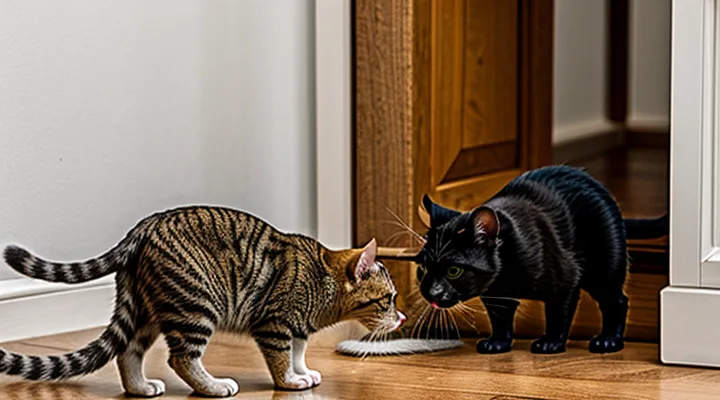
The Predatory Instinct: Cats and Rodents
Natural Behaviors and Their Manifestations
Cats display innate predatory sequences that emerge when a rodent is present in a household. The sequence begins with heightened visual focus, progresses to low‑frequency tail flicks, and culminates in a rapid pounce. Scent detection activates the cat’s hunting circuitry, prompting the use of whisker‑mediated distance gauging. Once the prey is captured, the cat typically engages in a brief bite and a series of bites to immobilize the target, followed by a grooming routine that reinforces the behavior as a success feedback loop.
Rats exhibit instinctual foraging and escape strategies that become evident in a domestic environment. When a potential threat approaches, the animal initiates a rapid retreat to concealed areas, utilizes flexible body posture to squeeze through narrow openings, and emits ultrasonic alarm calls. Exploratory activity includes nocturnal chewing of household objects, which serves both dental maintenance and environmental assessment. Social dynamics among multiple rats involve hierarchical scent marking, achieved by depositing urine and glandular secretions along preferred pathways.
The interaction of these species produces observable outcomes:
- Cats may stalk near baseboards, pause at entry points, and launch at moving shadows.
- Rats respond by increasing nest construction in inaccessible crevices, reinforcing walls with shredded material.
- Prolonged cohabitation can lead to habituation, where the cat’s predatory drive diminishes and the rat’s avoidance patterns become routine.
- Both animals alter the household’s micro‑environment: cats generate scratched surfaces, while rats leave gnawed edges and droppings.
Understanding these natural behaviors provides a basis for managing coexistence, such as locating safe refuges for rodents and providing appropriate outlets for feline predation, thereby reducing unwanted conflicts.
The "Prey Drive" in Domestic Cats
Domestic cats possess an innate hunting instinct that drives them to pursue, stalk, and capture small vertebrates. This instinct, commonly termed the prey drive, originates in the brain’s limbic system and is reinforced by dopamine release during successful predation. The drive manifests in a sequence of behaviors: visual fixation, low‑to‑ground locomotion, rapid pounce, and claw‑to‑mouth capture.
- Sensory cues: movement, high‑frequency sounds, and scent signatures trigger the neural circuitry that initiates hunting.
- Motor patterns: flexible spine, retractable claws, and powerful hind‑limb extension enable swift acceleration and precise targeting.
- Reward feedback: post‑capture consumption or play produces a neurochemical reward that strengthens the behavior.
When a rat occupies a domestic environment, the cat’s prey drive often results in direct confrontation. Cats may:
- Detect the rodent through auditory or olfactory signals.
- Engage in a chase that exploits the cat’s agility and the rat’s evasive maneuvers.
- Employ bite and claw techniques designed to immobilize the prey.
The intensity of the prey drive varies among individuals, influenced by breed genetics, early socialization, and prior hunting experience. Owners can modulate this instinct without suppressing it by providing alternative outlets such as interactive toys, puzzle feeders, and scheduled play sessions that mimic hunting sequences. These interventions reduce the likelihood of accidental injury to resident rodents while preserving the cat’s natural behavior.
Understanding the physiological basis and observable expressions of the prey drive allows caretakers to predict and manage cat‑rat interactions, ensuring coexistence within the same household.
The Reality of Coexistence: Domestic Settings
Scenarios of Encounter
A domestic cat may encounter a house rat under a variety of conditions that shape their immediate behavior and long‑term coexistence.
- Accidental crossing in a confined space, such as a kitchen counter, often triggers a brief chase that ends when the rat finds a narrow escape route.
- Territorial intrusion, where the rat enters the cat’s established sleeping area, typically results in heightened aggression from the cat and defensive retreat by the rat.
- Shared resource competition, for example both species seeking the same food source, leads to repeated confrontations that can condition either animal to avoid the contested zone.
- Predator‑prey dynamic, observed when the cat actively stalks the rat, may culminate in capture if the rat lacks sufficient shelter options.
- Stress‑induced avoidance, occurring after a previous hostile encounter, causes the rat to remain hidden and the cat to lose interest in further pursuit.
Each scenario influences the likelihood of sustained cohabitation. In environments where escape routes and safe hiding places are abundant, rats often survive repeated encounters, prompting cats to adjust hunting frequency. Conversely, limited refuge and constant exposure increase the probability of successful predation, ultimately reducing rat presence within the household.
Observed Interactions: From Aggression to Indifference
Domestic cohabitation of felines and rodents yields a spectrum of observable behaviors. Direct confrontations manifest as rapid lunges, claw extensions, and vocalizations that peak in intensity when a rat enters a cat’s perceived territory. These aggressive episodes often end with the rat fleeing, the cat maintaining a dominant posture, or, in rare cases, the cat capturing the prey.
When initial aggression subsides, a pattern of avoidance emerges. Both species display heightened vigilance: the cat watches from a distance, the rat retreats to concealed areas such as wall voids or insulated corners. Body language includes lowered ears for the cat and flattened bodies for the rat, each minimizing exposure while remaining alert to potential threats.
Extended coexistence can lead to mutual indifference. Observations show cats ignoring stationary rats, and rats resuming routine activities—gnawing, nesting, foraging—without interruption. This equilibrium typically follows repeated, non‑lethal encounters that condition both animals to recognize the other as a non‑predatory presence.
Key variables influencing the transition from aggression to indifference:
- Prior exposure of the cat to live rodents
- Availability of escape routes and hiding spots for the rat
- Frequency of interaction within a confined environment
- Individual temperament of each animal
- Presence of alternative food sources reducing predatory drive
Understanding these factors enables owners to anticipate behavioral shifts and manage shared spaces safely.
Factors Influencing Outcomes
Individual Personalities of Animals
Individual animals display distinct personality profiles that shape their behavior toward other species sharing a home environment.
Cats exhibit a range of traits, including:
- Boldness, measured by willingness to explore unfamiliar areas.
- Sociability, reflected in frequency of direct contact with humans or other animals.
- Territoriality, expressed through marking and defense of preferred zones.
- Predatory drive, evident in response to moving prey‑like stimuli.
Rats also present identifiable personality dimensions:
- Curiosity, shown by investigation of new objects.
- Boldness, assessed by approach distance to potential threats.
- Neophobia, the tendency to avoid novel situations.
- Social hierarchy, indicated by dominance interactions within groups.
When a cat’s boldness aligns with a rat’s cautiousness, the cat may observe the rodent without initiating chase, reducing conflict. A highly sociable cat paired with an inquisitive rat often results in mutual tolerance, as both seek interaction. Conversely, a territorial cat combined with a bold rat can provoke aggressive encounters, while a shy cat paired with a timid rat typically leads to mutual avoidance and separate use of space.
Empirical observations from multi‑species household studies reveal that personality compatibility predicts coexistence success more reliably than species identity alone. Pairings where both individuals score low on aggression and high on curiosity demonstrate the longest periods of peaceful cohabitation.
Owners seeking harmonious cohabitation should assess individual temperament through standardized behavioral tests, then introduce animals gradually, monitoring reactions to adjust environmental resources such as hiding places, elevated perches, and separate feeding stations. Tailoring the living arrangement to the specific personality profiles of each animal increases the likelihood of stable, low‑stress interaction.
Early Socialization and Exposure
Early socialization establishes predictable behavior patterns that enable cats and rats to coexist safely. Exposure to the other species during the neonatal and juvenile phases reduces fear responses and encourages appropriate communication signals.
The sensitive window for cats spans the first twelve weeks of life; for rats, it extends to the third week after birth. Introducing controlled sensory cues—visual, olfactory, and auditory—within these periods conditions both animals to recognize the presence of the other as non‑threatening.
Practical protocol:
- Place a scent‑neutral barrier (e.g., a mesh screen) between the cat and the rat’s enclosure for three days, allowing each animal to observe the other without physical contact.
- Rotate the barrier so the cat views the rat’s habitat from multiple angles, reinforcing visual familiarity.
- Conduct brief, supervised interactions lasting no longer than two minutes, gradually increasing duration as stress indicators (elevated vocalization, rapid breathing) diminish.
- Reward calm behavior with species‑appropriate treats immediately after each session to reinforce positive associations.
- Maintain separate feeding stations and litter areas to prevent resource competition.
Consistent application of this regimen yields reduced predatory impulses in cats and lowered flight responses in rats, resulting in a stable household environment where both species can share space without chronic stress.
Environmental Factors: Space and Resources
The spatial layout of a household determines how a cat and a rat encounter each other. Narrow corridors and cluttered furniture create blind spots where a rat can hide, while open rooms allow a cat to patrol and detect movement more efficiently. Vertical space, such as shelves and cat trees, expands the three‑dimensional arena, giving the cat additional observation points and reducing the rat’s ability to occupy the same level undetected.
Resource distribution influences the frequency and intensity of encounters. When food sources are concentrated in a single area, both species are drawn to that point, increasing direct competition. Dispersing pet food, securing waste containers, and limiting accessible crumbs reduce overlap in foraging zones. Water availability follows the same pattern; isolated water dishes lower the chance that a rat will approach a cat’s territory.
Key environmental variables:
- Territorial size – larger, uncluttered zones favor cat detection, smaller niches protect rat shelter.
- Vertical access – elevated platforms expand cat surveillance, limit rat movement.
- Food placement – centralized feeding elevates encounter risk; scattered, sealed provisions diminish it.
- Waste management – sealed bins and regular cleaning remove attractants for rats, decreasing their presence near cat activity areas.
Potential Risks and Dangers
Physical Harm to Both Species
Physical encounters between domestic felines and rodents often result in injuries that affect both animals. Cats may inflict bite wounds, claw scratches, or broken bones when chasing or catching a rat. Such trauma can lead to infection, hemorrhage, or long‑term musculoskeletal damage. Conversely, rats possess sharp incisors capable of penetrating feline skin, causing puncture wounds that may introduce pathogens or damage soft tissue.
Common injury mechanisms include:
- Bite trauma: deep lacerations, tissue loss, risk of bacterial infection.
- Claw damage: puncture wounds, joint dislocation, hemorrhagic shock.
- Dental injury: rat incisors can sever tendons or sever arteries.
- Secondary effects: stress‑induced ulcers, immune suppression, reduced mobility.
Both species are vulnerable to secondary complications. Open wounds provide entry points for Staphylococcus, Pasteurella, or Leptospira bacteria, which can spread systemically. Untreated injuries may progress to sepsis, organ failure, or death. Pain and immobility often lead to reduced feeding, weight loss, and weakened resistance to other diseases.
Preventive measures focus on environmental management. Secure food storage eliminates attractants, reducing encounter frequency. Physical barriers, such as sealed trash containers and reinforced walls, limit rat access to feline spaces. Regular veterinary examinations detect early signs of trauma, allowing prompt treatment and minimizing long‑term harm.
Disease Transmission
Cats and rats sharing a domestic environment create a conduit for several zoonotic agents. Veterinary research confirms that close proximity increases the probability of pathogen exchange through direct contact, shared bedding, and contamination of food or water sources.
Common diseases transmitted between these species include:
- Salmonella spp. – shed in feces, survives on surfaces, infects both hosts when ingested.
- Toxoplasma gondii – cats act as definitive hosts; rats become intermediate hosts, facilitating the parasite’s lifecycle.
- Pasteurella multocida – colonizes the oral cavity of cats, can be transferred to rats via bite wounds.
- Leptospira interrogans – excreted in urine, contaminates moist areas, poses a risk to both animals and humans.
Transmission pathways are:
- Fecal–oral route – accidental ingestion of contaminated litter or food.
- Bite or scratch injuries – direct inoculation of bacterial agents.
- Environmental contamination – urine or droppings deposited on floors, furniture, or feeding dishes.
Preventive strategies rely on rigorous hygiene and separation protocols:
- Maintain distinct feeding stations and water bowls for each species.
- Clean litter boxes daily with a disinfectant effective against Gram‑negative bacteria and protozoa.
- Conduct regular veterinary examinations, including fecal analysis and serological testing for Toxoplasma antibodies.
- Implement pest‑control measures to limit rat populations within the household.
Monitoring health indicators—such as changes in appetite, activity level, or respiratory symptoms—enables early detection of infection. Prompt veterinary intervention reduces morbidity and prevents further spread to other occupants.
Stress and Behavioral Issues
Cats and rats sharing a household can experience heightened stress, which often manifests as changes in activity patterns, aggression, or avoidance behaviors. Stressors include territorial disputes, unpredictable movements, and competition for resources such as food or shelter. When a cat perceives a rat as prey, the rat may exhibit heightened vigilance, trembling, or attempts to hide, while the cat may display increased stalking, vocalizations, or restless pacing.
Key behavioral indicators of stress:
- Repetitive grooming or self‑mutilation in either animal.
- Sudden aggression toward objects or humans.
- Reduced appetite or excessive scavenging.
- Withdrawal to secluded areas, refusal to use litter boxes or feeding stations.
Effective management strategies:
- Separate living zones using barriers or pet‑proof enclosures to limit direct contact while allowing sensory exposure.
- Provide multiple, elevated perches for the cat and secure tunnels or hideouts for the rat to establish distinct safe zones.
- Introduce scent cues gradually; exchange bedding or use cloth strips to familiarize both species with each other's odor without visual confrontation.
- Maintain consistent feeding schedules, placing food far apart to prevent competition.
- Monitor interactions closely for signs of escalation; intervene with distraction techniques such as toys or gentle redirects.
Preventive measures focus on early habituation, environmental enrichment, and clear resource partitioning, reducing the likelihood of chronic stress and associated behavioral problems. Regular veterinary checks ensure that stress‑related health issues are identified and treated promptly.
Strategies for Safe Management
Preventing Direct Contact
Cats and rats rarely share the same space without supervision. Direct encounters can result in injury to either animal, stress, or the spread of parasites. Managing the environment eliminates unnecessary risk and promotes the health of both species.
Physical barriers provide the most reliable separation. Install sturdy mesh screens on windows and vents, use pet‑safe gates to restrict access to rooms where rodents are housed, and keep food containers sealed to prevent scent trails that attract cats. Regularly inspect barriers for gaps or wear, repairing any damage immediately.
Behavioral controls complement structural measures. Train the cat to respond to commands such as “stay” or “leave,” and reward compliance with treats. Provide the cat with elevated perches and enrichment toys away from the rat’s enclosure to satisfy hunting instincts without direct contact. For the rat, maintain a secure cage with a lockable door and ensure the cage is placed out of the cat’s line of sight.
Monitoring and maintenance complete the prevention strategy. Conduct daily visual checks of both habitats, clean surfaces to remove scent residues, and rotate enrichment items to keep the animals occupied. Document any incidents promptly and adjust the barrier or training protocol accordingly.
Creating Separate Spaces
Creating distinct areas for a cat and a rat reduces stress and prevents accidental injuries. Separate zones should be designed with species‑specific needs in mind, providing each animal with safe refuge and enrichment.
- Physical barriers: Install solid, tall partitions or mesh cages that prevent direct contact while allowing visual cues. Ensure openings are small enough to stop a cat from reaching through.
- Vertical space: Provide a climbing structure for the cat, such as shelves or a cat tree, positioned away from the rat’s habitat. Rats benefit from elevated hideouts; place these on the opposite side of the room to avoid overlap.
- Dedicated feeding stations: Place food bowls in isolated corners, away from each other’s scent trails, to discourage competition and reduce the risk of contamination.
- Noise and vibration control: Use soft flooring or rugs under the rat’s enclosure to dampen sounds generated by the cat’s movement, which can startle the rodent.
Safety checks must be routine. Verify that all barriers remain intact, that no cords or small objects are within reach of the rat, and that the cat cannot access the enclosure’s interior. Regular cleaning of each area prevents scent transfer that could trigger aggressive or predatory behavior.
By adhering to these spatial guidelines, owners establish a harmonious environment that respects the natural instincts of both species while maintaining overall household safety.
Supervised Interactions: When and How
Supervised interactions between a feline and a rodent in a household setting require clear criteria for timing and methodology.
Supervision is essential during the initial encounter, when the cat’s hunting instinct is untested, and when either animal shows signs of stress, injury, or illness. It is also mandatory if the cat has a history of aggressive predation, if the rat is newly introduced to the environment, or if the home contains objects that could be used as weapons or hiding places.
Effective supervision follows a structured protocol:
- Separate zones: Provide each animal with a secure, escape‑proof area before any face‑to‑face exposure.
- Physical barrier: Use a sturdy mesh or transparent enclosure to allow visual contact while preventing contact.
- Brief sessions: Limit each interaction to 5–10 minutes, extending duration only after consistent calm behavior is observed.
- Behavioral cues: Monitor ear position, tail movement, and vocalizations; pause the session if the cat’s pupils dilate sharply or the rat freezes.
- Positive reinforcement: Reward the cat for calm observation with treats; reinforce the rat’s retreat to a safe zone with food.
- Emergency plan: Keep a rescue tool (e.g., a towel) ready to separate the animals instantly if aggression escalates.
Documentation of each session—time, duration, observed behaviors, and any interventions—supports ongoing assessment and adjustment of the supervision schedule. Consistent application of these guidelines reduces risk and promotes harmonious cohabitation.
Training and Behavioral Modification
Desensitization Techniques for Cats
Desensitization prepares a cat to remain calm around a pet rat, reducing instinctual chase responses and preventing stress for both animals. The process relies on controlled exposure, positive reinforcement, and gradual escalation of sensory cues.
Begin with scent exchange. Place a cloth that has absorbed the rat’s odor in the cat’s sleeping area for several minutes, then remove it. Reward the cat with a treat immediately after it shows no aggressive reaction. Repeat the scent swap daily, alternating locations, until the cat accepts the foreign smell without agitation.
Next, introduce visual contact at a safe distance. Secure the rat’s enclosure behind clear, sturdy bars and position it several meters from the cat’s favorite perch. Observe the cat’s behavior for signs of fixation or lunging. If the cat remains relaxed, provide a high‑value treat and praise. Reduce the distance by 10‑15 % each session, maintaining the reward pattern. Stop progress if the cat exhibits heightened arousal; return to the previous distance and reinforce calm behavior before proceeding.
Incorporate auditory habituation by playing recorded sounds of the rat’s movement at low volume while the cat rests. Increase volume incrementally only after the cat shows indifference. Pair each sound session with a feeding routine to associate the noise with positive outcomes.
Finally, conduct supervised, brief interactions. Open the cage briefly while the cat is on a leash or confined to a separate room. Allow the cat to sniff the rat’s enclosure without direct contact. Reward calm sniffing with a treat. Gradually extend the interaction time, always ending the session before any predatory impulse emerges.
Key points for successful desensitization:
- Consistency: conduct sessions daily, at the same time of day.
- Duration: keep each exposure short (2–5 minutes) to prevent fatigue.
- Reinforcement: use the cat’s preferred food or play as immediate reward.
- Observation: monitor body language; ears back, tail twitching, or dilated pupils indicate stress and require a step back.
When the cat reliably displays relaxed behavior during all phases, the household can safely accommodate both species, minimizing conflict and supporting harmonious cohabitation.
Enrichment for Both Species
Providing appropriate enrichment for a domestic cat and a pet rat enhances welfare, reduces stress, and promotes healthy interaction. Successful enrichment must address the distinct sensory and behavioral needs of each species while ensuring safety in shared spaces.
Key considerations include:
- Physical separation of high‑risk zones; cats require elevated perches, while rats need secure tunnels and hideouts.
- Species‑specific toys that stimulate natural predatory or foraging instincts without encouraging aggression.
- Scheduled play sessions that allow supervised observation, giving the cat mental stimulation and the rat controlled exposure.
- Environmental complexity such as climbing structures for the cat and multi‑level mazes for the rat, placed in adjacent but isolated areas.
Implementing these measures creates a balanced habitat where both animals receive mental and physical challenges, supporting coexistence in a household setting.
The Role of Positive Reinforcement
Positive reinforcement provides a reliable method for shaping cat behavior toward cohabiting with a rat. By delivering a desirable stimulus immediately after a target action, the animal learns to associate that action with a reward, increasing the likelihood of repetition.
In practice, trainers pair calm proximity to the rodent with food treats or praise. The sequence must be consistent: the cat approaches, remains still for a set interval, then receives the reward. Repetition across short sessions builds a predictable pattern, encouraging the cat to view the rat’s presence as non‑threatening.
Effective techniques include:
- Treat delivery: small, high‑value morsels given the moment the cat observes the rat without aggressive posture.
- Clicker signaling: a distinct sound marks the exact instant of appropriate behavior, followed by a treat.
- Gradual exposure: start with the rat in a secure carrier, then progress to supervised free movement as the cat’s tolerance improves.
Measured outcomes demonstrate reduced vocalization, lowered heart‑rate variability, and fewer chase attempts. Over weeks, the cat’s response shifts from instinctual predation to neutral or even inquisitive interaction, allowing both species to share the same household safely.
Ethical Considerations of Keeping Diverse Species
Animal Welfare and Quality of Life
Cats and rats sharing a household require distinct environmental provisions to maintain health and behavioral balance. Cats need vertical spaces, scratching posts, and regular veterinary checks to prevent stress‑induced illnesses. Rats require enrichment items such as tunnels, chew toys, and safe nesting material, along with routine health assessments.
Both species benefit from separate zones that prevent direct predatory encounters while allowing sensory interaction. A secure cage for the rat, positioned out of the cat’s reach, reduces anxiety and supports natural foraging behavior. The cat’s area should include elevated perches that keep it out of the rat’s line of sight, minimizing visual stimulation that could trigger chase instincts.
Key welfare considerations include:
- Daily monitoring of body condition scores for each animal.
- Provision of species‑specific diets meeting nutritional standards.
- Regular cleaning schedules to prevent pathogen buildup.
- Observation of behavior patterns to identify signs of stress, such as excessive grooming in cats or reduced activity in rats.
Adhering to these guidelines sustains a high quality of life for both animals, ensuring coexistence without compromising health or welfare.
The Responsibilities of Pet Owners
Pet owners who keep both a feline and a rodent must manage two distinct biological needs while preventing predatory conflict.
- Secure housing: Provide a lockable cage for the rodent and a separate, escape‑proof area for the cat. Ensure cages are positioned out of the cat’s reach and that doors cannot be opened by the cat’s paws.
- Health monitoring: Conduct regular veterinary examinations for each species. Record vaccinations, parasite treatments, and any signs of stress or injury.
- Environmental enrichment: Supply climbing structures, scratching posts, and interactive toys for the cat; offer tunnels, wheels, and chew items for the rodent. Enrichment reduces boredom‑driven aggression.
- Supervised interaction: Allow visual contact only under direct supervision. Use a transparent barrier to let the animals observe each other without physical contact.
- Hygiene separation: Clean the rodent’s enclosure with species‑specific disinfectants. Avoid using the same cleaning tools for the cat’s litter box to prevent cross‑contamination.
- Emergency preparedness: Keep a first‑aid kit tailored to both animals. Know the location of the nearest emergency veterinary clinic for each species.
Compliance with these measures protects the welfare of both pets and maintains a stable household environment.
Case Studies and Anecdotal Evidence
Successful Coexistences
Cats and rats can share a household when specific conditions are met. Success depends on species temperament, environmental design, and consistent management.
Key factors for harmonious living:
- Separate feeding stations prevent competition and reduce stress.
- Elevated safe zones allow the cat to observe without direct contact, while the rat retains access to tunnels and hideouts.
- Gradual, supervised introductions using a secure barrier help both animals recognize each other’s presence without risk.
- Monitoring body language identifies early signs of aggression, enabling timely intervention.
Effective coexistence also requires routine health checks. Regular veterinary examinations ensure that neither animal carries parasites or diseases that could affect the other. Vaccination schedules for the cat and proper hygiene for the rat’s cage reduce cross‑species health threats.
When these practices are applied consistently, cats and rats can occupy the same residence without incident, demonstrating that interspecies companionship is achievable with deliberate planning and vigilant oversight.
Challenging Scenarios and Lessons Learned
Living with a cat and a rat in the same household creates a distinctive set of challenges that test instinct, territory, and health management. When a predator and a prey animal share confined spaces, owners must anticipate conflict triggers, monitor stress indicators, and implement preventive measures.
Typical problematic situations include:
- Unexpected hunting behavior – A cat may chase or attempt to capture the rat during play, leading to injury or death.
- Territorial overlap – Both animals may claim the same hiding spots, causing confrontations over limited resources.
- Health risks – Parasites, bacterial infections, or stress‑related illnesses can spread between species if hygiene is neglected.
- Noise and agitation – High‑energy pursuits generate loud disturbances that affect household tranquility.
From repeated exposure to these scenarios, several practical lessons emerge:
- Physical separation – Provide secure, species‑specific enclosures that prevent direct contact while allowing visual interaction through mesh barriers.
- Environmental enrichment – Offer species‑appropriate toys and climbing structures to channel natural behaviors away from each other.
- Routine health checks – Schedule regular veterinary examinations for both animals to detect early signs of disease or stress.
- Gradual acclimatization – Introduce the animals slowly, using scent exchange and supervised short sessions to reduce fear responses.
- Consistent feeding schedules – Separate feeding areas eliminate competition and reduce aggression linked to food scarcity.
Applying these measures reduces the likelihood of violent encounters, supports the well‑being of both pets, and enables a harmonious multi‑species residence.