
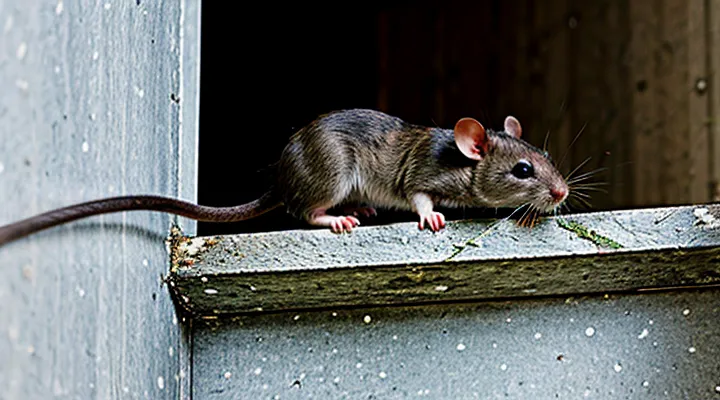
Understanding Rat Anatomy and Agility
Claws and Paws: Nature's Climbing Tools
Rats possess specialized anatomy that enables them to ascend vertical surfaces commonly found in residential environments. Their forepaws and hind paws are equipped with sharp, curved claws that embed into microscopic fissures, rough textures, and adhesive residues on walls. The claws act as anchoring points, allowing the animal to pull its body upward with each step.
The pads of a rat’s paws contain a dense array of sensory receptors and a flexible, rubbery surface. This combination provides friction against smooth finishes and enhances grip on slippery materials. The pads also adjust shape under load, distributing pressure to maintain contact without slipping.
Key characteristics that facilitate wall climbing include:
- Curved keratinized claws, up to 2 mm in length, capable of penetrating minute surface irregularities.
- Highly mobile digit joints that permit rapid repositioning during ascent.
- Muscular forelimbs generating force equivalent to 30 % of body weight, supporting vertical propulsion.
- Sensitive paw pads delivering tactile feedback for micro‑adjustments in grip.
Collectively, these adaptations allow rats to traverse painted drywall, plaster, and even smooth painted wood, confirming that their natural climbing tools are sufficient for navigating interior walls.
Tail: A Balancer and Gripper
Rats navigate vertical surfaces by exploiting the multifunctional design of their tails. The tail serves simultaneously as a counter‑balance and a tactile organ that enhances grip.
The balancing function relies on the tail’s mass and flexibility. When a rat ascends a wall, the tail extends opposite the direction of motion, shifting the center of gravity toward the substrate. This adjustment reduces the torque that would otherwise tip the animal backward, allowing precise placement of fore‑ and hind‑limbs on narrow ledges.
The gripping function derives from the tail’s sensory receptors and fine muscular control. Specialized mechanoreceptors detect surface texture, while the musculature adjusts tail curvature to press against irregularities. This pressure creates frictional contact that supplements the claws, especially on smooth or moist walls where claw adhesion alone is insufficient.
Key aspects of the tail’s contribution:
- Mass distribution: Provides dynamic stabilization during rapid climbs.
- Sensory feedback: Supplies real‑time information about surface conditions.
- Muscular articulation: Enables curvature adjustments for optimal friction.
- Friction augmentation: Complements claw grip on low‑traction surfaces.
Together, these mechanisms enable rats to ascend vertical walls within residential environments, overcoming obstacles that would impede less adapted rodents.
Vertical Movement: Can They Really Climb Walls?
Types of Surfaces Rats Can Ascend
Rats are capable of navigating a wide range of interior materials, exploiting claw traction, body tension, and occasional adhesion from saliva. Their ability to scale vertical surfaces depends on texture, moisture, and structural integrity.
- Painted drywall and plaster: Rougher finishes provide micro‑grooves for claws; smooth finishes reduce grip but rats can still ascend by creating temporary footholds.
- Brick and masonry: Porous mortar joints serve as natural holds; even sealed brick offers enough irregularities for claw engagement.
- Concrete and cement blocks: Textured surfaces allow traction; polished concrete diminishes climbing efficiency but does not eliminate it.
- Wooden panels and framing: Grain direction and surface wear create bite‑size ledges; varnished or lacquered wood reduces friction but remains climbable.
- Metal studs and conduit: Rats grasp edges and seams; uncoated metal with rust or corrosion offers superior grip compared to polished steel.
- Glass and acrylic panels: Smooth, non‑porous surfaces lack footholds; rats may use adjacent frames or adhesive residue to cross short spans.
- Vinyl flooring and laminate: Surface seams and expansion joints serve as climbing points; fully seamless flooring limits upward movement.
- Carpet and fabric upholstery: Fibrous texture supplies abundant grip; rats can pull themselves upward by anchoring claws in loops or pile.
Surface moisture, accumulated dust, and recent damage improve traction, while freshly painted or sealed areas present the greatest resistance. Understanding these material characteristics informs effective prevention and control strategies in residential environments.
Factors Influencing Climbing Success
Rats achieve vertical movement on interior walls through a combination of physical and environmental variables. Their ability to scale surfaces depends on texture, moisture, and structural features that provide footholds or grip.
- Rough plaster, brick, or exposed wooden studs create irregularities that engage the rats’ claws and pads.
- Smooth paint, polished drywall, or laminated panels reduce friction, limiting traction.
- Damp or humid conditions soften material fibers, increasing surface roughness and enhancing grip.
- Gaps, cracks, and utilities conduits act as natural ladders, allowing rats to bypass otherwise smooth sections.
- Vertical shafts such as pipe chases or vent openings provide continuous pathways that facilitate ascent.
Biological factors also affect climbing performance. Younger, lighter rats exert less force on footholds, improving balance on marginal surfaces. Larger, mature individuals generate greater downward pressure, which can be advantageous on rough textures but may cause slipping on slick areas. Species differences matter; roof‑rats (Rattus rattus) possess longer tails and more dexterous hind limbs, granting superior climbing ability compared to Norway rats (Rattus norvegicus).
Motivation influences effort. Access to food, nesting material, or escape routes triggers increased climbing activity. Conversely, low incentive reduces attempts, even when suitable surfaces exist. Ambient temperature plays a role: colder environments lower muscle efficiency, diminishing grip strength, while moderate warmth supports sustained exertion.
Scent trails left by conspecifics create behavioral pathways. Rats often follow established routes, using previous marks to locate viable climbing routes. Lighting conditions have minimal impact; rats rely primarily on tactile feedback and whisker sensing rather than visual cues.
In summary, successful vertical navigation inside a residence results from the interaction of surface characteristics, structural openings, rat physiology, and motivational drivers. Adjusting these variables—such as sealing cracks, smoothing surfaces, and eliminating attractants—reduces the likelihood of rats achieving wall ascent.
Why Rats Climb in Homes
Accessing Food Sources
Rats routinely exploit vertical surfaces inside homes to reach food that would otherwise be out of reach. Their ability to scale walls enables direct access to pantry shelves, countertop crumbs, and storage containers positioned above ground level.
The species relies on several physical traits: sharp, retractable claws that embed in plaster or wood, powerful hind‑leg muscles that generate lift, and a flexible spine that allows rapid adjustments while climbing. These adaptations permit sustained ascent on smooth or rough surfaces, eliminating the need for ground‑level pathways.
Typical routes to nourishment include:
- Climbing along interior walls to reach upper cabinets and pantry shelves.
- Scaling the exterior of the building, then entering through gaps around windows, vents, or roof eaves to reach interior food zones.
- Using utility conduits and pipe shafts as vertical highways that lead to kitchen appliances and storage areas.
Effective control focuses on eliminating the vertical advantage. Seal cracks and gaps larger than ¼ inch, install metal flashing around vent openings, and store dry goods in airtight containers. Regularly clean surfaces to remove residual crumbs, and employ traps or bait stations at points where rats transition from wall to floor. By removing both the physical routes and the attractants, homeowners can significantly reduce the likelihood that rats will use wall climbing to obtain food.
Seeking Shelter and Nesting Sites
Rats enter residential structures primarily to find secure shelter and appropriate nesting sites. Their small size and flexible bodies allow them to exploit gaps, cracks, and vertical surfaces that most homeowners consider impassable. When a wall presents a reachable ledge, a pipe, or a rough texture, a rat can ascend it, reach upper floor cavities, and locate concealed spaces such as insulation, attics, or wall voids.
Preferred nesting locations share several attributes:
- Seclusion: Areas hidden from human activity, such as behind appliances, inside wall cavities, or under floorboards.
- Warmth: Environments that retain heat, including HVAC ducts, pipe chases, and insulated roofs.
- Protection from predators: Locations with limited exposure to cats, birds, or traps, often deep within structural voids.
- Availability of building material: Loose insulation, shredded paper, or fabric that can be fashioned into nests.
Rats use their climbing ability to reach these sites by gripping rough surfaces, climbing along utility lines, or traversing vertical gaps between drywall panels. Once inside, they construct nests from shredded material, reinforcing them with saliva to improve cohesion. The nests serve as breeding grounds, food storage, and resting places, supporting colony growth.
Signs of active shelter-seeking behavior include gnaw marks on vertical wood or plastic components, droppings concentrated near entry points, and shredded insulation within wall cavities. Identifying and sealing entry routes—such as gaps around pipes, vents, and baseboards—reduces the likelihood that rats will exploit wall surfaces to reach desirable nesting zones.
Escaping Predators
Rats routinely exploit vertical surfaces inside residential structures to evade predators. Their ability to scale walls provides a rapid escape route when threatened by cats, snakes, or human intervention.
Key anatomical features support this behavior:
- Curved, sharp claws that embed in porous materials.
- Highly flexible forelimbs allowing a wide grip span.
- Muscular tail that balances body weight during ascent.
- Sensory whiskers that detect surface texture and orientation.
When a predator appears, rats follow a predictable sequence:
- Detect motion or scent through whisker and auditory cues.
- Identify the nearest vertical plane with sufficient texture.
- Accelerate toward the base of the wall, launching with a powerful forelimb thrust.
- Maintain continuous contact with the surface, using alternating paw placements to climb upward.
- Reach a safe height, then retreat laterally along the ceiling or into concealed cavities.
Environmental conditions that enhance climbing efficiency include:
- Rough plaster, textured paint, or exposed brick that offers micro‑grooves for claw insertion.
- Insulation batts and wiring conduits that create continuous vertical pathways.
- Gaps around doorframes or window sills that allow initial access to the wall surface.
Effective pest‑management strategies must disrupt these escape routes. Seal cracks, install smooth trim at potential climb points, and eliminate exposed wiring or insulation that serve as ladders. Applying non‑toxic repellents to vertical surfaces can deter rats from using walls as escape pathways, reducing the likelihood of predator‑driven movement within the home.
Evidence of Rat Climbing
Droppings and Smudge Marks
Rats that navigate vertical surfaces leave distinctive evidence that can be identified without visual confirmation of the climb itself. Fresh droppings appear as small, dark pellets, typically ¼‑inch long, with a tapered shape and a glossy exterior. When rats travel up walls, the pellets often accumulate on vertical ledges, behind appliances, or on the lower edge of ceilings, creating a pattern that differs from floor‑level deposits. The presence of droppings on walls indicates that the rodents have accessed those surfaces and moved upward.
Smudge marks accompany droppings as a secondary indicator. These marks consist of oily residue and rust‑colored streaks left by the rat’s fur and paws. On smooth paint or wallpaper, smudges appear as faint, irregular lines that follow the animal’s path. On textured surfaces, the marks may be more pronounced, forming a faint trail that outlines the route taken. Consistent smudge patterns on vertical planes suggest repeated climbing activity.
Key observations for diagnosing wall climbing:
- Droppings on vertical surfaces, especially near entry points.
- Smudge trails aligned with potential escape routes.
- Accumulation of both signs in concealed areas such as attic corners or behind cabinetry.
Chewing Marks at Height
Chewing marks found several feet above floor level provide direct evidence that rats are capable of scaling interior walls. Rodents possess strong incisors and a flexible spine, allowing them to grip rough surfaces, pull themselves upward, and gnaw on materials such as plaster, wood, or wiring. When marks appear on baseboards, crown molding, or the underside of ceiling fixtures, they indicate repeated ascent rather than accidental contact.
Typical characteristics of high‑position chewing include:
- Parallel or intersecting grooves matching the size of a rat’s front teeth
- Fresh, reddish‑brown residue from saliva and tissue fluids
- Damage to insulation or electrical conduits located near the mark
- Presence of droppings or urine stains directly below the affected area
These signs, combined with nocturnal activity patterns, confirm that rats can navigate vertical structures inside a dwelling and use elevated routes to reach food, shelter, or nesting sites.
Sounds from Above
Rats often navigate vertical surfaces by using their sharp claws and adhesive pads. When they move along a wall, the contact generates vibrations that travel through the structure and emerge as faint creaks, scraping noises, or intermittent thuds. These sounds typically originate from the point where the animal’s claws engage drywall seams, wooden studs, or insulation layers.
- Scraping of claws against plaster or drywall produces high‑frequency squeaks, most noticeable in quiet rooms.
- Light impacts on ceiling joists create low‑frequency thumps that echo through adjacent rooms.
- Shifts in insulation material generate soft rustling sounds, especially when rats reposition themselves while climbing.
The intensity and pattern of these auditory cues can help occupants differentiate rodent activity from other household noises. Continuous, rhythmic scraping often indicates a rat is ascending or descending a wall, whereas sporadic thumps suggest brief contact with structural elements such as beams or pipes.
Detecting these acoustic signatures early allows for targeted inspection of wall cavities, attic spaces, and ceiling voids. By focusing on areas where the sounds are strongest, homeowners can locate entry points, assess the extent of infestation, and implement appropriate control measures without unnecessary disruption to the building’s interior.
Preventing Rat Wall Climbing
Sealing Entry Points
Sealing potential entry points is the most effective barrier against rodents attempting to scale interior walls. Identify all openings larger than a quarter‑inch, including gaps around pipes, vents, utility conduits, and foundation cracks. Inspect the exterior envelope, attic, and crawl spaces for any breach that could provide a foothold for a climbing rat.
Use durable, non‑chewable materials to close each opening. Recommended options include:
- Steel wool tightly packed into gaps, covered with caulk or expanding foam.
- Sheet metal flashing or hardware cloth (¼‑inch mesh) secured with screws or staples.
- Silicone or polyurethane sealant applied to seams around windows, doors, and baseboards.
- Concrete patch or mortar for larger cracks in foundations or masonry.
Apply sealants after cleaning surfaces of debris, dust, and insulation remnants. Ensure the sealant adheres by drying the area and, when necessary, priming with a bonding agent. For high‑traffic zones, install metal flashing over the sealant to resist gnawing.
Conduct a follow‑up inspection monthly, focusing on areas exposed to moisture or temperature fluctuations, which can cause sealant shrinkage. Replace any compromised material promptly to maintain an unbroken defensive layer. Continuous maintenance eliminates the footholds that enable rodents to ascend walls and infiltrate living spaces.
Eliminating Climbing Aids
Rats exploit any protrusion that offers grip, such as wires, pipe fittings, and uneven wall surfaces. Removing these aids eliminates the primary pathways for vertical movement.
- Seal gaps around electrical conduits and plumbing with metal flashing or cement‑based sealant.
- Trim or cover exposed nails, screws, and staples; replace them with smooth, recessed fixtures.
- Install smooth wall panels or paint surfaces with high‑gloss, non‑porous paint to reduce friction.
- Remove or relocate indoor plant pots, shelves, and furniture that create ladders of debris.
- Attach low‑profile, metal mesh around vent openings; secure mesh with rust‑resistant staples.
Additional measures include regular inspection of attic and crawl‑space joists for loose boards or insulation that can serve as temporary rungs. Replacing loose insulation with rigid foam board eliminates footholds. Maintaining a clutter‑free environment prevents rats from assembling makeshift ladders from stored items. Consistent application of these strategies deprives rats of the structural features they need to ascend walls, effectively preventing vertical intrusion.
Professional Pest Control Interventions
Rats readily scale interior walls, exploiting vertical surfaces to reach food, nesting sites, and water sources. Professional pest‑control teams address this behavior through a systematic, evidence‑based approach.
First, a qualified technician conducts a thorough inspection. The assessment identifies:
- Evidence of gnaw marks, droppings, and urine stains on walls and ceilings.
- Structural gaps, utility penetrations, and poorly sealed vents that serve as climbing routes.
- Points where insulation or wiring provides footholds.
After documentation, the technician implements exclusion measures. All identified openings are sealed with steel wool, cement, or approved rodent‑proof mesh. Surface treatments, such as silicone‑based repellents, are applied to vertical pathways to deter adhesion.
Baiting and trapping follow exclusion. Integrated bait stations, positioned at safe distances from children and pets, contain anticoagulant or non‑anticoagulant formulations regulated by local authorities. Snap traps or electronic devices are placed along known travel corridors, especially near wall baseboards and corners where rats initiate ascent.
When infestation severity exceeds threshold levels, targeted rodenticides may be employed. Certified applicators apply low‑toxicity, rodent‑specific products in concealed locations to minimize non‑target exposure. All chemical interventions comply with safety data sheets and environmental regulations.
Finally, a monitoring protocol ensures long‑term control. Technicians schedule periodic inspections, replace depleted bait, and verify the integrity of exclusion barriers. Digital tracking systems record activity, enabling rapid response to any resurgence.
Through inspection, exclusion, targeted baiting, regulated chemical use, and ongoing monitoring, professional pest‑control services effectively prevent rats from exploiting wall surfaces within residential environments.