
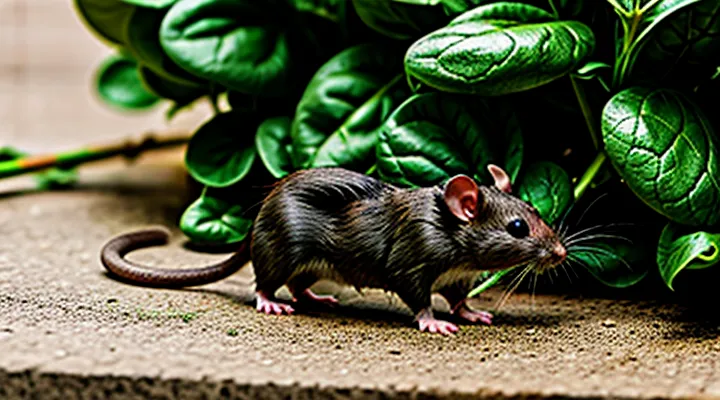
The Nutritional Value of Spinach for Rats
Vitamins and Minerals
Spinach offers a dense source of vitamins and minerals that can complement a rat’s diet, but its inclusion requires careful balancing.
Rats obtain essential nutrients from spinach such as:
- Vitamin A (β‑carotene) – supports vision and immune function.
- Vitamin K1 – contributes to normal blood clotting.
- Vitamin C – acts as an antioxidant; rodents synthesize it, so dietary supply is supplemental.
- B‑vitamins (B6, folate) – involved in metabolism and red blood cell formation.
- Iron – required for hemoglobin synthesis.
- Calcium – necessary for bone development.
- Magnesium and potassium – regulate muscle and nerve activity.
Potential concerns arise from the plant’s composition. Oxalic acid binds calcium and iron, decreasing their absorption and possibly promoting kidney stone formation when consumed in excess. The high vitamin K content may interfere with anticoagulant therapy in laboratory settings. Additionally, the fiber level is modest; reliance on spinach alone does not meet the roughage needs of a typical rat.
Practical guidance:
- Offer spinach as an occasional supplement, not a staple.
- Limit portions to 5–10 % of total daily food weight.
- Pair with a calcium‑rich diet to offset oxalate effects, or provide alternative leafy greens with lower oxalate content.
- Monitor body condition and urinary health; adjust intake if signs of mineral imbalance appear.
When integrated judiciously, spinach contributes valuable micronutrients without compromising overall nutritional balance.
Fiber Content
Spinach provides a notable amount of dietary fiber, which influences gastrointestinal function in rodents. Raw spinach contains approximately 2.2 g of fiber per 100 g, composed of roughly 0.7 g soluble and 1.5 g insoluble fiber. Rats require fiber to maintain gut motility and to support a healthy microbiome; typical laboratory diets include 3–5 % total fiber by weight.
Key considerations for including spinach in a rat’s diet:
- Fiber quantity – A single serving of 10 g fresh spinach supplies about 0.22 g fiber, representing a modest increase relative to standard chow.
- Soluble vs. insoluble balance – Soluble fiber can aid in nutrient absorption, while insoluble fiber promotes bulk formation and regular bowel movements.
- Potential excess – Overfeeding leafy greens may raise overall fiber intake beyond recommended levels, leading to softer stools or reduced nutrient absorption.
- Nutrient interactions – High fiber can bind minerals such as calcium and iron, slightly lowering their bioavailability from the same meal.
For optimal health, spinach should complement, not replace, the primary feed. Incorporating 5–10 g of fresh spinach several times per week supplies beneficial fiber without exceeding dietary limits. Monitoring stool consistency and body weight helps confirm that fiber intake remains appropriate.
Antioxidants
Spinach is a rich source of antioxidant compounds that can influence rat metabolism when included in their diet. Primary antioxidants present in spinach include:
- Vitamin C, which scavenges free radicals and supports immune function.
- Vitamin E (tocopherols), protecting cellular membranes from oxidative damage.
- Carotenoids such as β‑carotene and lutein, serving as precursors to vitamin A and reducing lipid peroxidation.
- Polyphenols (flavonoids, phenolic acids), modulating enzyme activity involved in oxidative stress pathways.
In laboratory studies, dietary inclusion of spinach at 5–10 % of total feed has been shown to elevate plasma antioxidant capacity in rats, decrease markers of oxidative stress in liver tissue, and improve recovery from induced oxidative insults. Excessive intake may lead to antinutritional effects, notably oxalate accumulation, which can precipitate renal calculi. Therefore, supplementation should be balanced with calcium‑rich components or limited to moderate levels to mitigate oxalate risk.
When formulating rat chow, consider the following guidelines:
- Limit spinach proportion to ≤10 % of total dry matter.
- Pair with calcium sources (e.g., dairy calcium, limestone) to counteract oxalate absorption.
- Monitor renal function markers (blood urea nitrogen, creatinine) during prolonged feeding trials.
- Rotate spinach with other leafy vegetables to provide a broader antioxidant spectrum and prevent nutrient imbalances.
Overall, antioxidants from spinach can enhance oxidative resilience in rats, provided that dosage and dietary balance are carefully managed.
Potential Risks and Concerns
Oxalic Acid Content
Oxalic acid is the principal antinutrient in spinach. Fresh leaves contain approximately 0.5 %–1.5 % oxalic acid by fresh weight, which rises to 2 %–5 % when the material is dried. The compound forms insoluble calcium oxalate crystals that can reduce calcium absorption and precipitate in the urinary tract.
In rodents, dietary oxalic acid becomes hazardous when intake exceeds the renal clearance capacity. Studies on laboratory rats show that a diet supplying more than 0.2 % oxalic acid (dry matter basis) leads to measurable hyperoxaluria and occasional calcium oxalate deposits in the kidneys. Mortality rises sharply when the concentration reaches 0.5 % or higher.
Practical guidelines for including spinach in rat feed:
- Limit fresh spinach to no more than 5 % of the total daily food mass. This keeps oxalic acid exposure below 0.05 % of the diet, well under the threshold associated with renal pathology.
- Prefer cooked spinach; boiling for 5 minutes reduces oxalic acid by 30 %–50 % through leaching into the cooking water.
- Ensure a calcium‑rich diet (e.g., fortified pellets or supplemental calcium carbonate) to counteract calcium binding by residual oxalate.
- Monitor urine for crystal formation in long‑term feeding trials; discontinue spinach if crystals appear.
When these measures are applied, spinach can be offered as an occasional source of vitamins and fiber without imposing the risks associated with its oxalic acid content.
Impact on Calcium Absorption
Feeding spinach to laboratory rats introduces high levels of oxalic acid, which binds calcium in the intestinal lumen and reduces its solubility. The resulting calcium‑oxalate complexes are poorly absorbed, leading to measurable decreases in serum calcium concentrations.
Research on rodent nutrition demonstrates several mechanisms by which spinach influences calcium uptake:
- Oxalate chelation limits passive diffusion of calcium across enterocytes.
- Phytate content competes with calcium for transport proteins, further lowering absorption efficiency.
- Vitamin K present in spinach enhances osteocalcin activation, which may offset some loss of calcium by improving bone incorporation, but does not increase intestinal uptake.
- High fiber reduces transit time, decreasing the window for calcium absorption.
Empirical data show that rats receiving a diet with 10 % fresh spinach exhibit a 15‑20 % reduction in apparent calcium absorption compared with a control group on a low‑oxalate diet. Supplementation with calcium carbonate or a low‑oxalate calcium source restores serum levels to baseline, confirming the inhibitory effect of spinach’s oxalates.
In summary, inclusion of spinach in rat feed compromises calcium bioavailability through oxalate and phytate interactions, necessitating dietary adjustments or supplemental calcium to maintain mineral balance.
Symptoms of Overconsumption
Feeding spinach to rats introduces high levels of oxalates, nitrate, and fiber, which can become harmful when intake exceeds physiological limits. Acute excess may manifest as digestive upset, while chronic overconsumption affects metabolic and renal functions.
- Diarrhea or soft stools, often accompanied by mucus
- Abdominal cramping and reduced appetite
- Rapid weight loss despite continued feeding
- Increased thirst and frequent urination, indicating possible kidney strain
- Lethargy or reduced activity levels
- Signs of anemia such as pale mucous membranes, linked to oxalate‑induced mineral depletion
- Respiratory distress in severe cases, stemming from electrolyte imbalance
Monitoring portion size and frequency prevents these adverse effects and supports overall health when spinach is included in a rat’s diet.
Guidelines for Feeding Spinach to Rats
Recommended Portions
Spinach can be part of a rat’s diet, but the amount must be limited to avoid excess oxalic acid and potential nutrient imbalance.
- Adult rats (150–250 g): 1 – 2 g fresh spinach per day (approximately one tablespoon, finely chopped).
- Juvenile rats (under 100 g): 0.5 – 1 g fresh spinach per day (about half a tablespoon).
Fresh spinach should be introduced gradually, starting with the lower end of the range and observing the animal’s stool and overall health.
Feeding frequency should not exceed three times per week. On non‑spinach days, provide a balanced mix of standard rodent pellets, fresh water, and occasional fruit or vegetable treats.
If spinach is offered as a frozen or cooked product, adjust portions downward by 30 % to account for reduced water content and increased concentration of nutrients.
Regular veterinary check‑ups are essential to confirm that the chosen portion sizes support healthy growth and prevent mineral deficiencies.
Frequency of Feeding
Veterinary guidelines allow spinach as an occasional component of a rat’s diet, but it should not be offered daily. Spinach contains oxalic acid and high levels of calcium, which can interfere with mineral balance if consumed in excess.
Recommended feeding frequency
- One small portion (approximately 5–10 g fresh weight) once or twice a week.
- Rotate with other leafy greens such as kale, romaine lettuce, or dandelion leaves to provide variety.
- Adjust portion size for young or small rats; larger adults may tolerate the upper limit.
Factors influencing frequency
- Health status: rats with kidney issues or urinary tract problems require stricter limitation.
- Overall diet composition: a balanced mix of commercial pellets, protein sources, and fresh vegetables reduces the need for frequent spinach servings.
- Individual tolerance: monitor for signs of digestive upset, such as loose stools or reduced appetite, after each spinach feeding.
Signs of overfeeding
- Persistent watery feces.
- Decreased water consumption.
- Visible calcium deposits in the urinary tract (detected by a veterinarian).
If any adverse symptoms appear, suspend spinach for at least two weeks and consult a veterinary professional. Regularly varying the vegetable selection and adhering to the weekly limit maintains nutritional balance while allowing rats to enjoy spinach safely.
Preparation Methods
When incorporating spinach into a rat’s diet, preparation must eliminate contaminants and balance nutritional content.
First, wash the leaves thoroughly under running water to remove soil, pesticides, and microorganisms. Rinse several times, then pat dry with a clean cloth or paper towel.
Second, consider thermal treatment. Brief blanching (1–2 minutes in boiling water) deactivates oxalic acid and reduces potential gastrointestinal irritation. Immediately transfer the leaves to an ice bath to halt cooking, then drain excess moisture.
Third, adjust texture for easy consumption. Chop or shred the spinach into bite‑size pieces no larger than ½ cm. Fine chopping facilitates mixing with standard pellets or mash and prevents choking.
Fourth, integrate with the regular feed. Combine the prepared spinach with a measured portion of commercial rat food, ensuring that leafy greens do not exceed 10 % of total daily intake. This proportion maintains a balanced diet while providing vitamins and minerals.
Fifth, store leftovers safely. Place any unused spinach in an airtight container, refrigerate at 1–4 °C, and use within 24 hours. For longer preservation, freeze in single‑serve portions; thaw before serving and discard any leftovers.
Preparation options
- Raw wash → dry → chop → mix with pellets.
- Blanch → ice bath → drain → shred → combine with mash.
- Freeze in small bags → thaw → serve as a cold treat.
Each method preserves nutritional value while minimizing risks associated with raw leafy greens. Proper preparation ensures that spinach can be a safe, supplemental component of a rat’s diet.
Alternative Leafy Greens for Rats
Kale
Kale provides a high‑protein, vitamin‑rich option for laboratory or pet rats. The leaf contains calcium, vitamin K, vitamin C, and beta‑carotene, nutrients that support bone development and antioxidant defenses. Compared with spinach, kale offers a lower oxalate content, reducing the risk of calcium‑oxalate crystal formation in the urinary tract.
Feeding recommendations:
- Offer fresh kale in small, bite‑size pieces.
- Limit portion to no more than 5 % of the daily diet by weight.
- Introduce gradually to monitor for digestive upset.
- Rinse thoroughly to remove pesticide residues.
Potential concerns:
- High fiber may cause loose stools if over‑fed.
- Excess vitamin K can interfere with anticoagulant therapy in research animals.
- Some rats may develop a preference for sweeter greens, leading to reduced intake of balanced pellets.
When evaluating whether rats can safely consume spinach, kale serves as a comparable, lower‑oxalate alternative that meets similar nutritional goals while mitigating specific health risks.
Arugula
Arugula (Eruca sativa) supplies rats with vitamins A, C, and K, as well as calcium, potassium, and dietary fiber. The leaf’s bitter glucosinolates are present in low concentrations, which most laboratory‑bred rats tolerate without adverse effects. Its moisture content helps maintain hydration when offered fresh.
Feeding arugula safely requires attention to quantity, preparation, and frequency:
- Offer washed, fresh leaves in small pieces; remove any wilted or discolored portions.
- Limit portions to 5–10 % of the daily diet by weight, ensuring the primary feed remains a balanced grain‑based formulation.
- Introduce gradually, monitoring for changes in stool consistency or appetite.
- Provide arugula no more than three times per week to avoid excessive fiber or glucosinolate buildup.
Potential concerns include oxalic acid, which can contribute to calcium oxalate formation if consumed in large amounts. Regular veterinary health checks and rotating leafy greens reduce the risk of mineral imbalance while enriching the rat’s diet with varied phytochemicals.
Romaine Lettuce
Romaine lettuce provides a low‑calorie source of fiber, vitamins A, K, and C, and minerals such as potassium and folate. Its crisp texture encourages chewing, which supports dental health in rodents.
When evaluating leafy greens for rats, the nutrient profile of romaine complements the dietary needs of these animals. Compared with spinach, romaine contains less oxalic acid, reducing the risk of mineral absorption interference. The lower nitrate concentration also makes it a safer regular supplement.
Feeding guidelines for laboratory or pet rats typically recommend:
- Fresh romaine lettuce, washed thoroughly.
- Portion size limited to 1–2 small leaves per 100 g body weight per day.
- Introduction gradually to monitor for digestive upset.
- Removal of wilted or damaged portions to prevent bacterial growth.
Regular inclusion of romaine lettuce, alongside a balanced commercial rodent diet, can enhance overall nutrition while avoiding the potential complications associated with high‑oxalate greens.