
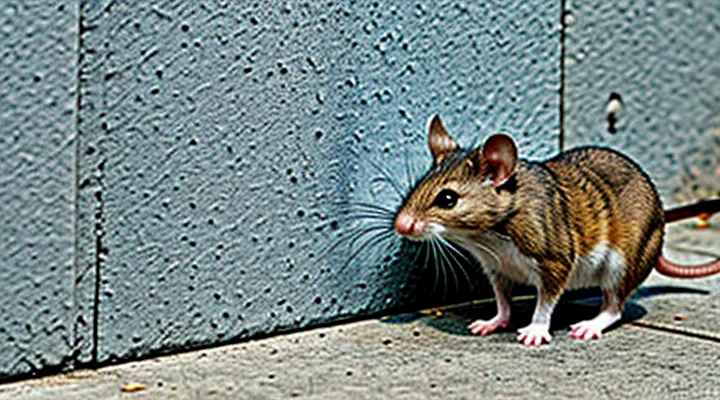
Understanding Mouse Anatomy and Physiology
«Skeletal Structure and Flexibility»
Mice achieve vertical locomotion through a combination of lightweight bone architecture and highly mobile joints. Their axial skeleton consists of elongated vertebrae with reduced ossification, allowing slight bending without compromising structural integrity. The cervical and thoracic regions possess enlarged intervertebral discs that absorb impact forces while the lumbar vertebrae retain a pronounced curvature, facilitating rapid adjustments during ascent.
Key skeletal adaptations include:
- Forelimb scapular girdle: Broad, flat scapulae provide extensive surface area for muscle attachment, enhancing grip strength on textured surfaces.
- Humerus and radius: Short, robust humeri with a pronounced deltoid tuberosity enable powerful forelimb retraction; the radius rotates freely, allowing pronation and supination essential for claw placement.
- Carpal and digital bones: Compact carpal structures support flexible wrist articulation; elongated distal phalanges terminate in sharp, curved claws that embed into fissures.
- Pelvic and hindlimb elements: Reduced pelvic width reduces body mass; elongated metatarsals increase stride length, contributing to momentum generation during vertical climbs.
The mouse’s skeletal flexibility is complemented by a high proportion of collagen fibers in tendons, which store elastic energy and release it during rapid limb extension. This arrangement minimizes skeletal strain while maximizing the force transmitted to the substrate, enabling mice to sustain motion on steep or inverted planes.
«Muscle Strength and Coordination»
Mice achieve wall locomotion through a combination of muscular power and precise neuromuscular timing. The forelimb flexors, particularly the brachialis and pronator teres, generate the initial traction needed to lift the body away from the surface. Simultaneously, the extensors of the hind limbs—gastrocnemius and soleus—push against the wall, creating a reaction force that propels the animal upward. This force balance relies on rapid contraction cycles that exceed 30 Hz, a rate supported by the high proportion of fast‑twitch fibers in rodent skeletal muscle.
Coordination is governed by spinal central pattern generators (CPGs) that synchronize limb movements without conscious input. Sensory feedback from mechanoreceptors in the pads and whiskers informs the CPGs about surface texture and inclination, allowing instant adjustment of stride length and limb placement. The vestibular system contributes by stabilizing the head and aligning the body’s axis with the wall, preventing loss of balance during rapid direction changes.
Key muscular and neural components involved in wall‑running:
- Forelimb flexors (brachialis, pronator teres) – generate traction.
- Hind‑limb extensors (gastrocnemius, soleus) – provide propulsion.
- Fast‑twitch fiber composition – enables high contraction frequency.
- Spinal central pattern generators – coordinate rhythmic limb cycles.
- Mechanoreceptive pads and whisker follicles – deliver surface feedback.
- Vestibular nuclei – maintain orientation and balance.
The integration of these elements produces the force vectors and timing required for mice to ascend vertical surfaces, demonstrating that muscle strength and coordination are sufficient for wall locomotion without auxiliary structures such as adhesive pads.
How Mice Navigate Vertical Surfaces
«Claw and Paw Adaptations»
Mice can cling to vertical surfaces thanks to specialized claw and paw structures. Their forepaws and hindpaws end in sharp, curved keratinous claws that penetrate microscopic irregularities in the substrate, creating mechanical interlocks that resist gravity. The curvature angle typically ranges from 30° to 45°, optimizing the balance between penetration depth and release force during rapid movement.
The paw pads consist of dense, low‑elasticity epidermal tissue backed by a thick, collagen‑rich dermal layer. This composition distributes load evenly across the contact area, reducing stress concentrations that could cause slippage. Embedded sweat glands secrete a thin moisture film, increasing surface tension and enhancing adhesion on smooth surfaces such as glass or painted walls.
Integration of these features enables mice to generate sufficient frictional force to support locomotion on vertical planes. The following adaptations contribute directly to wall‑running capability:
- Curved, sharply pointed claws that engage surface micro‑features.
- Hardened, low‑elasticity pads that spread weight and maintain contact.
- Moisture‑producing glands that create a thin adhesive film.
- Musculature capable of rapid, coordinated claw retraction and extension.
The combined effect of claw penetration, pad cushioning, and micro‑adhesion allows mice to ascend and traverse walls with agility comparable to that observed on horizontal ground.
«Surface Adhesion Mechanisms»
Mice are capable of moving on vertical surfaces because their footpads employ several distinct adhesion strategies. The primary mechanisms include:
- Setal arrays: Dense micro‑hair structures increase contact area, allowing molecular attractions to act over a larger surface.
- Van der Waals forces: Intermolecular interactions between the setae and the substrate generate sufficient adhesion to support the animal’s weight.
- Capillary adhesion: Thin fluid films secreted by the pads create menisci that enhance grip through surface tension.
- Electrostatic attraction: Charge differences between the pad surface and certain materials contribute additional holding force.
- Micro‑texture conformity: The flexible pad surface adapts to microscopic irregularities, maximizing real contact.
These mechanisms operate synergistically. Setal arrays provide the geometric framework, while Van der Waals forces supply the baseline adhesion. Capillary and electrostatic effects become significant on moist or conductive substrates, respectively. Conformity to surface roughness ensures that the theoretical adhesion limits are approached in practice.
Biomechanical studies show that mice can modulate pad pressure and angle to optimize each mechanism for the encountered material. When the substrate is smooth, Van der Waals forces dominate; on textured or wet surfaces, capillary adhesion and pad deformation increase the overall grip. The integration of these physical principles explains the observed ability of mice to ascend walls and ceilings without external aids.
«Balance and Proprioception»
Balance and proprioceptive feedback are the primary physiological mechanisms that allow rodents to navigate vertical surfaces. The vestibular apparatus detects head orientation relative to gravity, providing rapid corrective signals that stabilize the body during inverted locomotion.
Proprioceptors in muscles, tendons, and joints transmit real‑time information about limb position and load. This input enables precise adjustment of paw placement, grip force, and joint angles required to maintain adhesion to a wall.
Additional sensory structures contribute to spatial awareness:
- Whisker receptors map surface texture and distance, allowing mice to anticipate irregularities.
- Tail mechanoreceptors sense body rotation, supporting rapid reorientation when balance is challenged.
- Cutaneous receptors in the paw pads detect shear forces, triggering reflexive muscle activation that reinforces grip.
The central nervous system integrates vestibular, proprioceptive, and tactile signals to generate coordinated motor patterns. This integration produces the seamless, high‑frequency stepping observed when mice run upside down, confirming that balance and proprioception are indispensable for vertical locomotion.
Factors Influencing Wall-Running Ability
«Surface Texture and Material»
The ability of a rodent to traverse vertical planes depends largely on the interaction between its footpads and the surface’s texture and composition. Rough, high‑friction materials such as untreated wood, concrete, or sandpaper provide sufficient grip for the animal’s claws and adhesive pads, allowing sustained upward movement. Smooth, low‑friction surfaces—glass, polished metal, or glossy plastic—offer minimal resistance, causing the mouse to slip unless additional forces (e.g., suction or specialized setae) are present.
Key factors influencing traction include:
- Surface roughness – measured in micrometers; values above 10 µm typically generate enough micro‑asperities for claw interlocking.
- Coefficient of friction (COF) – static COF greater than 0.3 supports initial grip; dynamic COF above 0.2 maintains motion.
- Material compliance – softer substrates deform under load, increasing contact area and enhancing adhesion.
- Surface contamination – dust, oil, or moisture can alter COF dramatically, either improving grip (wet cloth) or reducing it (oil film).
Experimental data show that mice can ascend vertical wooden planks with a static COF of 0.35, but fail on acrylic sheets with COF of 0.12 under identical conditions. When a textured polymer coating raises the COF to 0.28, successful climbing is restored, confirming the decisive role of surface engineering.
Design implications for laboratory enclosures, pest‑control barriers, and biomimetic robots require careful selection of material and finish. Prioritizing high‑friction, roughened surfaces ensures reliable vertical locomotion for small mammals, while smooth finishes effectively inhibit it.
«Angle and Inclination of the Surface»
Mice rely on a combination of claw curvature, fur friction, and rapid limb placement to negotiate surfaces that deviate from the horizontal. The angle at which a surface becomes prohibitive is determined by the balance between gravitational torque and the normal and shear forces generated by the animal’s footpads. When the inclination exceeds the point where the mouse can generate sufficient upward reaction force, slippage occurs and forward progress ceases.
Experimental observations identify three critical inclination ranges:
- 0°–30° – locomotion identical to flat ground; grip forces comfortably exceed gravitational demand.
- 30°–45° – increased muscular effort; claw engagement and fur‑to‑surface friction maintain traction, but fatigue rises sharply.
- >45° – traction insufficient for sustained ascent; mice typically abort the climb or resort to brief, unstable hops.
Surface texture modifies these limits. Rough, porous materials raise the effective friction coefficient, allowing mice to approach steeper angles, whereas smooth, low‑friction surfaces reduce the maximum sustainable inclination to below 30°. Consequently, the angle and inclination of a wall are primary determinants of whether a mouse can maintain continuous upward movement.
«Mouse Species and Size»
Mice encompass a broad taxonomic group in which body dimensions vary from the diminutive pygmy mouse (≈ 5 cm total length, 2–3 g) to the larger deer mouse (≈ 10 cm, 12–20 g). Species most frequently encountered in domestic and laboratory settings include:
- House mouse (Mus musculus) – 7–9 cm, 15–30 g.
- White‑footed mouse (Peromyscus leucopus) – 8–10 cm, 12–25 g.
- Harvest mouse (Micromys minutus) – 5–6 cm, 3–6 g.
- Deermouse (Peromyscus maniculatus) – 9–10 cm, 15–30 g.
Size directly affects locomotor mechanics on vertical surfaces. Smaller individuals possess lower body mass, reducing the gravitational load that adhesive footpads must counteract. The proportionally larger footpad surface area relative to mass in species such as the harvest mouse enhances van der Waals and capillary forces, facilitating adhesion to smooth substrates. Conversely, larger mice rely more on claw interlocking with surface irregularities; their increased weight demands greater frictional resistance, limiting performance on smooth walls.
Morphological adaptations—dense setae on the plantar surface, flexible ankle joints, and retractable claws—are conserved across species but scale with body dimensions. In species where mass exceeds the threshold for effective adhesive force, wall‑running becomes sporadic and dependent on textured or porous surfaces. In contrast, the smallest mice can maintain continuous contact with vertical planes, exploiting micro‑structures to generate sufficient traction.
Overall, mouse species exhibit a continuum of size‑dependent capabilities: the lighter, more compact forms possess the physiological advantage required for sustained wall traversal, while heavier species achieve limited vertical movement only when surface conditions provide mechanical footholds.
«Environmental Conditions»
Mice can traverse vertical surfaces only when environmental parameters support adhesive or climbing mechanisms. Surface roughness, moisture level, temperature, and ambient lighting directly affect the ability of a mouse’s pads and claws to generate sufficient friction.
Key conditions influencing vertical locomotion:
- Surface texture: Rough or porous materials provide micro‑grip points; smooth surfaces reduce traction.
- Humidity: Moderate moisture enhances pad adhesion; excessive dryness or saturation impairs grip.
- Temperature: Ambient ranges between 20 °C and 30 °C maintain optimal muscle performance and skin pliability.
- Lighting: Low‑intensity illumination reduces visual stress, allowing focus on tactile cues.
- Air currents: Minimal airflow prevents destabilizing forces on small bodies.
When these factors align, mice exhibit brief wall‑running episodes; deviation from any condition markedly lowers performance.
Distinguishing Fact from Fiction
«Common Misconceptions About Mouse Agility»
Mice display remarkable locomotor abilities, yet several widely held beliefs about their agility are inaccurate. Their capacity to navigate vertical surfaces stems from a combination of anatomical adaptations and behavioral strategies, not from supernatural climbing powers.
Common misconceptions include:
- Mice can adhere to any smooth wall – adhesion relies on micro‑spines on the foot pads and on surface texture; smooth, non‑porous materials dramatically reduce traction.
- Their tails function as a primary grip – the tail provides balance and occasional anchorage, but the main climbing force originates from hind‑foot musculature and forelimb coordination.
- All mouse species scale vertical surfaces equally – species adapted to arboreal habitats possess longer limbs and more pronounced toe pads, whereas laboratory strains exhibit limited vertical performance.
- Climbing speed matches ground sprinting – vertical locomotion demands slower, deliberate movements to maintain stability and conserve energy.
- Mice can ascend indefinitely without rest – fatigue sets in after brief periods; sustained climbing requires intermittent pauses and occasional foothold repositioning.
«Scientific Evidence vs. Anecdotal Observations»
Mice possess a quadrupedal gait optimized for horizontal locomotion, yet occasional reports describe individuals scaling vertical surfaces. Scientific investigations address this claim with controlled experiments that measure grip strength, claw morphology, and surface friction. High‑speed video analysis of laboratory mice on glass, plastic, and textured walls shows that traction is generated primarily by claw interlocking with microscopic irregularities; adhesion pads are absent. Measured maximum incline angles range from 30° to 45°, with performance dropping sharply on smooth, low‑friction materials. Electromyographic data reveal rapid muscle activation patterns that compensate for reduced support, but the energy cost rises dramatically compared with level walking.
Anecdotal accounts originate from pet owners observing mice climbing cage walls, from field biologists noting brief ascents on bark, and from laboratory staff describing temporary wall contact during exploratory behavior. These observations often lack quantifiable parameters such as angle, surface texture, or duration, and they rely on visual impression rather than systematic measurement. Personal bias, lighting conditions, and selective reporting can amplify the perceived frequency of successful wall runs.
Key distinctions between empirical data and informal reports include:
- Measurement rigor – experiments employ calibrated inclinometers and force sensors; anecdotes provide no numerical evidence.
- Reproducibility – controlled trials can be repeated across laboratories; individual sightings cannot be independently verified.
- Environmental control – research isolates variables (surface roughness, humidity); real‑world observations involve uncontrolled factors.
Current consensus, grounded in peer‑reviewed literature, indicates that mice can negotiate modestly inclined, textured surfaces but lack the physiological adaptations required for sustained vertical climbing on smooth walls. Anecdotal evidence, while suggestive of occasional success under favorable conditions, does not overturn the limitations documented by systematic study.
Practical Implications for Pest Control
«Identifying Entry Points»
Mice exploit tiny openings to access vertical surfaces, so pinpointing these gaps is essential for preventing unwanted climbing. Inspection should begin at the building’s perimeter, focusing on areas where walls meet foundations, roofs, or utilities.
- Gaps around pipe penetrations, typically ¼‑inch or larger, provide direct routes.
- Cracks in mortar or plaster, especially near corners, create hidden pathways.
- Openings around vents, HVAC ducts, and exhaust fans often lack proper sealing.
- Gaps beneath doors or windows, including weather‑stripping defects, allow entry at ground level.
- Openings at attic or crawl‑space access points, such as loose insulation or damaged flashing, serve as vertical conduits.
Effective identification relies on systematic visual surveys, tactile probing with a flashlight‑equipped rod, and the use of non‑contact infrared cameras to reveal heat signatures of rodent activity. Seal identified openings with steel wool, caulking, or metal flashing to deny mice the means to reach walls and climb them. Continuous monitoring of suspect sites ensures that newly formed gaps are addressed promptly.
«Effective Exclusion Strategies»
Mice exploit structural gaps, utility penetrations, and surface irregularities to reach elevated areas. Preventing such access requires a systematic approach that eliminates entry points, reinforces barriers, and reduces attractants.
Physical barriers form the core of any exclusion program. Seal openings larger than ¼ inch with steel wool, copper mesh, or cementitious caulk. Install metal flashing around soffits, eaves, and vent openings; silicone sealants cannot withstand gnawing pressure. Replace deteriorated siding, roof tiles, and gutter brackets that create footholds. Fit tight-fitting, lidded containers to all trash receptacles and store feed in sealed metal bins.
Habitat modification reduces the incentive for mice to explore walls. Keep storage areas free of clutter, remove debris that shelters rodents, and maintain a clean floor surface. Trim vegetation within two feet of the building envelope; overhanging branches provide bridges to upper levels. Ensure drainage systems function properly to avoid moisture accumulation that softens building materials.
Monitoring and maintenance sustain exclusion effectiveness. Conduct quarterly inspections of sealant integrity, flashing attachment, and interior wall cavities. Use motion-activated cameras or tracking stations to verify the absence of activity in previously compromised zones. Promptly repair any damage detected during inspections.
The combined application of barrier installation, habitat reduction, and ongoing surveillance creates a robust defense against mice attempting to navigate vertical surfaces.
«Designing Mouse-Proof Barriers»
Mice possess a strong grip thanks to sharp claws and flexible bodies, allowing them to scale many vertical surfaces. Effective mouse‑proof barriers must therefore eliminate the features that facilitate climbing and seal all potential entry points.
Material selection is critical. Smooth, non‑porous surfaces such as stainless steel, tempered glass, or high‑density polyethylene provide little traction for a rodent’s claws. When metal is used, a minimum thickness of 1 mm prevents deformation under pressure, maintaining a uniformly flat plane.
Structural design should incorporate the following elements:
- Overhangs: a minimum 2‑inch horizontal lip extending outward from the top edge creates a physical barrier that mice cannot negotiate.
- Seamless joints: welded or bonded connections remove gaps; where welding is impractical, silicone‑based sealants rated for rodent resistance fill any crevice.
- Tapered edges: a gradual inward taper reduces the angle at which a mouse can gain purchase, directing it away from the surface.
- Surface finish: a finish rating of 0.5 mil or smoother eliminates micro‑abrasions that could serve as footholds.
- Barrier height: vertical sections exceeding 12 inches, combined with the overhang, significantly reduce climb attempts.
Installation guidelines reinforce durability. All seams and joints must be inspected after initial placement and re‑sealed within 24 hours to accommodate material settling. Regular maintenance includes visual checks for wear, especially at corners where rodents may concentrate force.
By integrating these specifications, designers create barriers that neutralize the climbing ability of mice, preventing access to walls, ceilings, and other vertical structures.