
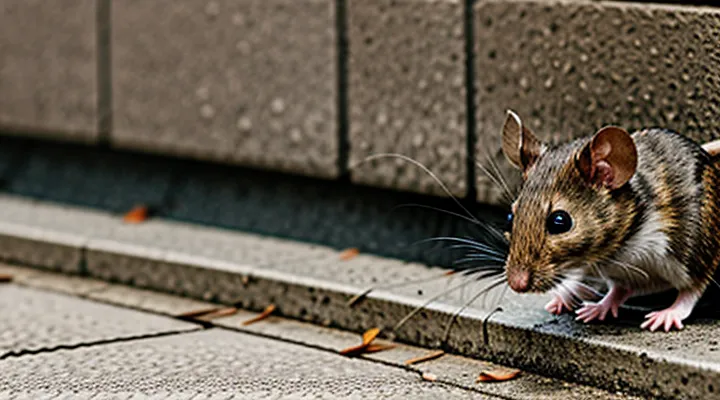
The Phenomenon of Wall-Crawling in Rodents
The Mechanics of Mouse Locomotion
Anatomical Adaptations for Climbing
Mice possess several anatomical features that enable limited vertical locomotion. The forelimb musculature is highly developed, providing the force needed to grasp irregular surfaces. Muscles such as the flexor digitorum profundus generate strong claw flexion, allowing the animal to embed its nails into crevices.
Paw morphology contributes to grip. The pads contain dense keratinized skin that reduces slippage, while the claws are sharply curved and retractable, enhancing penetration into textured substrates. The skeletal structure of the forelimb includes elongated metacarpals, increasing reach and leverage during climbing.
The tail functions as a dynamic stabilizer. Muscular control of the tail permits rapid adjustments of the center of mass, preventing loss of balance on steep inclines. Vertebral flexibility, particularly in the lumbar region, allows the spine to elongate and contract, facilitating the extension of the body along vertical planes.
Sensory systems support navigation on walls. Vibrissae detect minute surface irregularities, guiding precise placement of claws and paws. Proprioceptive feedback from joint receptors informs the animal of limb position, enabling coordinated movements.
Key adaptations can be summarized:
- Strong forelimb muscles for claw-driven grip
- Curved, retractable claws with keratinized pads
- Elongated metacarpals for increased reach
- Flexible tail for balance control
- Highly mobile lumbar vertebrae for body extension
- Sensitive vibrissae and proprioceptive mechanisms for surface assessment
These traits collectively allow mice to ascend vertical or near‑vertical structures, though the absence of specialized adhesive pads limits their ability to crawl on perfectly smooth walls.
Biomechanical Principles of Adhesion
Mice possess specialized foot structures that combine mechanical grip and surface adhesion. The adhesive performance of these structures derives from several biomechanical principles.
- Van der Waals interactions between microscopic keratinous projections and substrate molecules generate attractive forces at the nanometer scale.
- Capillary forces arise when a thin liquid film bridges the contact area, increasing effective adhesion through surface tension.
- Elastic deformation of soft pad tissues allows conformity to irregular surfaces, maximizing contact area and distributing load.
- Interlocking of claw tips with surface asperities provides a mechanical anchoring mechanism independent of molecular adhesion.
The integration of these mechanisms enables mice to negotiate vertical and inverted surfaces. Setal arrays on the ventral pads produce dense contact points, while retractable claws supplement adhesion on rough textures. The combined effect permits sustained locomotion on walls, though performance varies with substrate roughness, humidity, and the animal’s speed.
Environmental Factors and Climbing Ability
Surface Texture and Material
Impact of Roughness
Surface roughness directly influences a mouse’s ability to maintain traction on vertical substrates. Microscopic protuberances increase the number of contact points between the animal’s pads and the wall, thereby enhancing frictional forces that oppose gravity. Rough textures also allow the tiny claws and adhesive pads to interlock with irregularities, reducing slip during rapid movements.
Key effects of increased roughness include:
- Greater shear resistance, measured by higher coefficients of static friction in laboratory trials.
- Improved grip stability, demonstrated by longer sustained climbs on textured panels compared to smooth glass.
- Reduced reliance on specialized toe pads, as mechanical interlocking compensates for limited adhesive secretion.
Conversely, smooth surfaces limit contact area, forcing mice to depend primarily on the secretion of a viscous fluid from their foot pads. This fluid generates capillary adhesion, which is markedly weaker than the mechanical locking achieved on rough terrain. Experiments using interchangeable panels confirm that even minimal roughness—on the order of tens of micrometers—significantly raises the maximum climbable angle.
Overall, the presence of surface irregularities provides a mechanical advantage that enables mice to ascend walls that would otherwise be prohibitive. Understanding this relationship informs the design of pest‑control barriers and contributes to biomechanical models of small‑mammal locomotion.
Role of Porosity
Porosity of wall materials directly affects a mouse’s ability to generate sufficient friction for vertical movement. Low‑density substrates contain interconnected voids that allow the animal’s claws to interlock with the surface, increasing grip. High‑density, non‑porous materials provide a smooth plane that reduces contact area, limiting traction.
Key mechanisms related to porosity include:
- Micro‑cavities: Tiny channels create anchoring points for claw tips, distributing load across multiple contact sites.
- Surface roughness: Porous structures often exhibit irregular topography, enhancing mechanical interlocking.
- Moisture retention: Porous media can hold a thin film of moisture, improving adhesion through capillary forces.
Conversely, materials such as polished metal or glazed ceramic lack these features, resulting in negligible friction and preventing sustained climbing. Understanding the interaction between claw morphology and substrate porosity clarifies why mice can ascend certain walls while failing on others.
Angle and Gradient of Surfaces
Vertical Ascent Challenges
Mice confront several biomechanical obstacles when attempting to move upward on vertical substrates. Their small body mass reduces the gravitational load, yet the ratio of weight to adhesive surface area remains a limiting factor. Effective adhesion depends on the interaction between foot pad secretions and surface micro‑topography; smooth or low‑energy materials diminish capillary forces, reducing grip. Claw curvature and length provide mechanical anchorage, but insufficient curvature on flat walls prevents reliable penetration into microscopic irregularities. Muscular power output must overcome both gravity and frictional resistance; the limited force generated by forelimb muscles restricts sustained climbing speed. Sensory feedback loops coordinate limb placement and pressure modulation; delayed or inaccurate signals increase slip risk on steep inclines.
Key challenges include:
- Surface roughness incompatibility with pad adhesion mechanisms.
- Insufficient claw engagement on smooth planes.
- Limited forelimb force relative to body weight.
- Reduced tactile precision on vertical orientation.
Research indicates that rodents compensate for these constraints by selecting textured surfaces, employing rapid paw adjustments, and utilizing tail balance to shift the center of mass. One study reported «mice achieve successful ascent on surfaces with a roughness average of 10 µm, whereas smooth acrylic yields a 70 % failure rate». Understanding these parameters clarifies the conditions under which small mammals can effectively navigate vertical environments.
Overhangs and Ceilings
Mice encounter overhangs and ceilings when navigating built environments. The angle of a surface determines whether the animal relies on claw grip, pad adhesion, or friction generated by body weight. Ceiling contact eliminates the need for vertical traction, allowing movement with minimal muscular effort.
Adhesion mechanisms include:
- Curved claws that interlock with microscopic surface irregularities;
- Specialized pads that secrete a thin fluid film, increasing shear resistance;
- Fur and body hairs that generate static friction on textured substrates;
- Hydrostatic pressure in the foot pads that enhances grip under humid conditions.
Surface characteristics influence performance. Rough or porous ceilings provide anchoring points for claws, while smooth, glossy surfaces reduce available friction. The presence of a ledge or lip at the edge of an overhang offers a transitional zone where mice can re‑orient their bodies and shift from vertical to horizontal locomotion. Environmental factors such as humidity and temperature modify the viscosity of pad secretions, thereby affecting adhesion strength.
Experimental observations confirm that mice can traverse ceilings when the combined effect of claw interlocking, pad adhesion, and friction exceeds the gravitational component acting on the body. Overhangs that exceed a critical angle without supportive texture impede movement, whereas modestly inclined ceilings with adequate roughness permit rapid, sustained travel.
Species-Specific Differences
House Mice («Mus musculus») Capabilities
Agility and Balance
Mice demonstrate exceptional agility, enabling rapid changes in direction while navigating complex environments. Their skeletal structure combines lightweight bones with powerful hind‑limb muscles, producing high acceleration and deceleration rates. This muscular arrangement supports swift vertical movements, as each hind foot can generate forces exceeding body weight, propelling the animal upward on inclined or smooth surfaces.
Balance relies on an integrated vestibular system and proprioceptive feedback from limb joints. The inner ear detects angular acceleration, providing real‑time orientation data that the brain uses to adjust posture. Simultaneously, stretch receptors in muscles and tendons relay limb position, allowing continuous micro‑corrections during ascent. The combined sensory input maintains a stable center of mass even when the support plane is perpendicular to gravity.
Key physiological features that facilitate wall climbing include:
- Strong, flexible forelimbs equipped with sharp claws that embed into microscopic surface irregularities.
- Hind‑limb tendons capable of storing elastic energy, reducing muscular fatigue during prolonged climbs.
- Tail acting as a counterbalance, shifting weight distribution to counteract torque generated by gravity.
- High‑density fur providing frictional resistance, especially on rough textures.
Experimental observations confirm that mice can ascend vertical glass panels when a minimal texture is present, indicating reliance on claw grip rather than adhesive pads. On perfectly smooth surfaces, ascent success drops dramatically, highlighting the importance of tactile interaction for both grip and balance. The interplay of agility and balance therefore determines the limits of vertical locomotion in these rodents.
Strength-to-Weight Ratio
Mice exhibit a high «strength-to-weight ratio», meaning the force their muscles can generate exceeds the gravitational load imposed by their low body mass. This ratio reaches values comparable to those of small birds, allowing rapid acceleration and sustained adhesion on vertical surfaces.
The ratio results from several physiological factors: muscle fiber density, proportionally large limb muscles, and a skeletal structure optimized for leverage. When a mouse presses its paws against a wall, the generated force easily overcomes its weight, creating sufficient normal force for the microscopic setae on its footpads to engage surface irregularities.
Consequently, the combination of a superior «strength-to-weight ratio» and specialized foot morphology enables mice to ascend walls without external assistance. This mechanical advantage explains observed climbing behavior in laboratory and field observations.
Other Rodent Species and Their Climbing Prowess
Rats («Rattus norvegicus»)
Rats (Rattus norvegicus) share several morphological traits with mice that affect their ability to negotiate vertical surfaces. Their hind limbs possess strong flexor muscles, and the plantar surfaces contain dense pads of keratinized skin that increase friction. Unlike many insects, rats lack specialized adhesive structures such as setae; therefore, climbing relies on a combination of grip strength, body weight distribution, and micro‑texture of the substrate.
Key factors influencing wall‑crawling performance in rats:
- Muscle strength: hind‑limb extensors generate forces sufficient to support a body mass of up to 300 g on inclines approaching 90° when surface roughness offers adequate traction.
- Pad morphology: the ventral pads contain numerous sweat glands that secrete a thin moist film, enhancing contact with porous or slightly damp materials.
- Tail usage: the tail functions as a counterbalance, allowing fine adjustments of the centre of gravity during ascent or descent.
- Sensory feedback: whisker and paw receptors provide rapid tactile information, enabling swift modifications of grip pressure.
Experimental observations show that rats can ascend smooth vertical glass only for short distances, typically less than 10 cm, before slipping. On rougher surfaces such as brick, concrete, or textured wood, sustained climbing up to 1 m is routinely recorded. The presence of small protrusions or irregularities dramatically improves performance, as the pads can interlock with micro‑features.
Comparative analysis with mice indicates that the smaller body mass of mice reduces the required adhesive force, allowing them to cling to smoother surfaces for longer periods. Rats compensate for greater mass with stronger musculature and more pronounced tail stabilization, but they remain limited on perfectly smooth substrates.
In summary, rats are capable of climbing walls when the surface provides sufficient texture or moisture to generate friction. Their climbing ability does not match that of species equipped with true adhesive pads, yet it is adequate for navigating many vertical environments encountered in urban and laboratory settings.
Voles («Microtus spp.»)
Voles (genus Microtus) belong to the family Cricetidae, are small herbivorous rodents, and share many anatomical features with house mice. Their body length ranges from 8 to 12 cm, and they possess sharp, curved claws adapted for digging and grasping vegetation.
Climbing ability depends on surface texture, claw morphology, and the presence of adhesive pads. Voles lack the expanded digital pads found in some arboreal rodents; instead, their paws consist of a compact arrangement of small, ungual claws. This structure provides sufficient traction on rough substrates such as soil, roots, and bark, allowing voles to ascend vertical stems and low‑angled surfaces.
Experiments with smooth vertical panels (glass, acrylic) show that voles cannot generate enough friction to support their body weight. Observations indicate the following limitations:
- Absence of lamellar pads or setae eliminates adhesive forces on smooth surfaces.
- Claw curvature creates a point contact that slips when the substrate offers minimal texture.
- Muscular strength relative to body mass is adequate for climbing irregular terrain but insufficient for sustained vertical ascent on polished walls.
Consequently, voles are capable of scaling natural, uneven surfaces but do not possess the physiological adaptations required for crawling on featureless vertical walls. Their climbing behavior remains confined to environments where texture provides mechanical grip.
Implications for Pest Control
Entry Points and Access
Identifying Vulnerable Areas
Identifying the locations where mice are most likely to gain a foothold on vertical surfaces is essential for accurate risk assessment.
Surface characteristics that favor adhesion include rough textures, porous materials, and moisture‑laden finishes. Rough brick, unfinished wood, and damp drywall provide micro‑grooves that increase friction, allowing rodents to generate sufficient grip for upward movement.
Structural discontinuities such as cracks, joint seams, pipe sleeves, and utility openings create pathways that bypass smooth surfaces. These gaps often expose underlying materials with higher roughness, effectively serving as launch points for climbing activity.
Environmental factors amplify vulnerability. Elevated humidity softens porous substrates, while temperature differentials generate condensation on interior walls, both enhancing surface tackiness. Areas near kitchens, bathrooms, and basements experience the greatest fluctuation, increasing the likelihood of successful wall traversal.
Mitigation measures focus on eliminating or reinforcing identified weak points:
- Seal cracks and seams with elastomeric caulk or cement‑based filler.
- Apply smooth, non‑porous coatings (e.g., polyurethane paint) to exposed wall sections.
- Install metal or plastic flashing around pipe penetrations to create a continuous barrier.
- Reduce indoor humidity through ventilation or dehumidification to limit surface moisture.
- Conduct regular inspections of high‑risk zones and repair emerging defects promptly.
Targeted attention to these vulnerable areas reduces the probability of mice exploiting wall surfaces for movement and habitation.
Preventing Vertical Intrusion
Mice possess sharp claws, flexible limbs, and a lightweight body that allow them to grip irregular surfaces. Rough textures, such as brick, concrete, or unfinished wood, provide sufficient footholds for repeated upward movement. Smooth, non‑porous materials reduce friction and limit the animal’s ability to generate traction, decreasing the likelihood of vertical travel.
Environmental factors influence the propensity for upward intrusion. Moisture on walls softens porous surfaces, enhancing grip. Accumulated debris creates micro‑ridges that serve as additional footholds. Nighttime activity peaks when illumination is low, prompting rodents to explore concealed routes.
Effective measures to deter rodents from ascending walls include:
- Seal cracks and gaps larger than ¼ inch with steel‑wool filler and silicone sealant.
- Apply smooth, non‑adhesive coatings (e.g., epoxy paint) to exterior and interior vertical surfaces.
- Install metal flashing or sheathing at the base of walls to interrupt climbing paths.
- Maintain a dry environment; eliminate standing water and fix leaks promptly.
- Remove debris, vegetation, and stored materials that create footholds near building foundations.
Regular inspection of building envelopes, combined with the listed barriers, constitutes a comprehensive approach to «Preventing Vertical Intrusion».
Efficacy of Barriers and Repellents
Physical Obstacles
Mice possess remarkable agility, yet several physical barriers limit their ability to move on vertical planes. Their small body mass reduces the gravitational load, but adhesion depends on foot morphology and surface characteristics.
The primary obstacles include:
- Surface roughness – smooth, non‑porous materials provide insufficient micro‑structures for the tiny claws to gain purchase.
- Material hardness – hard substrates such as glass or polished metal resist deformation, preventing the pads from conforming to the surface.
- Moisture level – dry conditions diminish the capillary forces that enhance grip, while excessive wetness can cause slippage.
- Angle of inclination – beyond a critical slope, the component of gravitational force exceeds the frictional force generated by the pads.
Mice foot pads contain a dense array of setae that generate van der Waals forces on textured surfaces. When the substrate lacks microscopic irregularities, the cumulative adhesive force drops below the threshold required to counteract gravity. Consequently, vertical movement is feasible on rough fabrics, wood grain, or untreated stone, but not on polished surfaces.
Experimental observations confirm that mice readily ascend walls covered with fine sandpaper or carpet fibers, whereas they fail to climb glass panes even when motivated by food. The disparity illustrates how physical obstacles—surface texture, hardness, moisture, and inclination—directly govern the feasibility of wall‑crawling in rodents.
Chemical Deterrents
Mice possess adhesive pads and claws that enable limited vertical movement, yet their ability to scale smooth walls remains constrained by surface texture and moisture. Chemical deterrents target this limitation by altering the environment in ways that reduce adhesion, increase aversion, or induce physiological effects that diminish climbing performance.
Commonly employed chemical strategies include:
- Repellent sprays containing menthol, peppermint oil, or capsaicin. The strong odor and irritant properties trigger sensory receptors, prompting avoidance of treated surfaces and disrupting exploratory behavior.
- Taste‑aversion agents such as bitterants (e.g., denatonium benzoate). When applied to walls, these compounds create an unpleasant gustatory cue that discourages rodents from contacting the substrate.
- Rodenticidal dusts composed of anticoagulants (warfarin, bromadiolone) or neurotoxins (bromethalin). Contact with treated areas leads to systemic poisoning, reducing overall mobility and the likelihood of wall traversal.
- Surface‑coating chemicals like silicone‑based repellents. These create a low‑friction barrier that diminishes the effectiveness of mouse footpads, making vertical ascent mechanically difficult.
Effectiveness depends on concentration, persistence, and environmental conditions. Volatile oils degrade rapidly under high temperature or humidity, requiring reapplication every few weeks. Dust formulations maintain potency longer but pose secondary risks to non‑target species. Silicone coatings provide durable physical deterrence but may alter wall aesthetics.
Integrating chemical deterrents with physical barriers—such as sealing cracks and installing mesh screens—offers a comprehensive approach. By reducing both the sensory attraction to vertical surfaces and the mechanical capacity for adhesion, chemical agents contribute significantly to preventing rodents from climbing walls.