
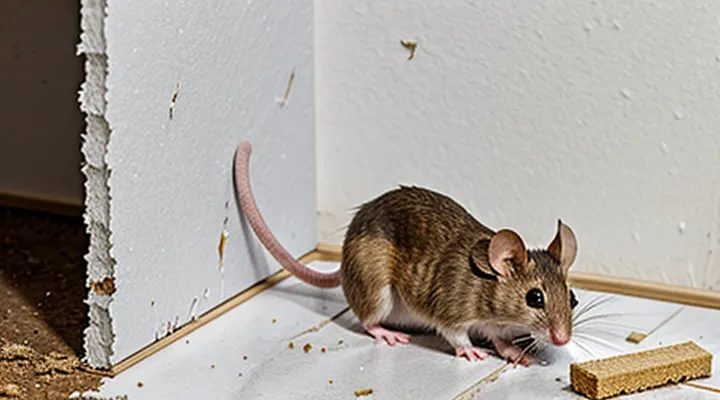
The Biological Imperative: Why Mice Chew
Understanding Rodent Dentition
Incisors: The Ever-Growing Tools
Mice possess a single pair of continuously elongating incisors in each jaw. The enamel covers only the anterior surface, while dentin forms the posterior side; differential wear maintains a sharp, self-sharpening edge. Growth rate averages 0.1 mm per day, driven by stem cells in the dental lamina and regulated by hormonal signals such as growth hormone and thyroid hormone.
The incisors’ architecture enables penetration of a wide range of substrates. Key features include:
- High crown-to-root ratio, allowing extensive exposure above the gum line.
- Curved cross‑section that concentrates force at the tip.
- Musculature of the masseter and temporalis groups that generate bite forces up to 0.5 N, sufficient to abrade gypsum‑based wallboard.
When a mouse encounters drywall, the combination of sharp enamel, relentless growth, and muscular pressure can produce perforations measuring several millimeters in diameter. Repeated gnawing enlarges these openings, potentially compromising structural integrity of interior partitions.
Understanding incisor dynamics informs pest‑management strategies. Preventive measures focus on limiting access to exposed edges and providing alternative gnawing materials that divert wear away from building components.
Jaw Strength and Chewing Mechanics
Mice possess continuously growing incisors composed of a hard enamel front and a softer dentine rear. This arrangement creates a self-sharpening edge that maintains cutting efficiency during repeated gnawing. The masseter and temporalis muscles generate bite forces measured at 0.1–0.2 N, sufficient to fracture soft materials but marginal for dense gypsum. However, the lever system of the mandible amplifies force at the incisors, allowing localized stress concentrations that can breach thin plaster layers.
Key mechanical factors:
- Incisor geometry – narrow, tapered tip concentrates load on a small contact area.
- Enamel hardness – ~3.5 GPa resists wear, preserving cutting edge.
- Muscle recruitment – rapid, repetitive contractions produce fatigue-resistant chewing cycles.
- Mandibular leverage – 1:3 ratio between muscle insertion and incisor tip enhances effective pressure.
Experimental data show that mice can penetrate drywall sheets up to 1 mm thick after several days of continuous gnawing, while thicker sections remain intact. The limiting factor is the material’s tensile strength, which exceeds the maximum stress mice can apply despite optimal jaw mechanics. Consequently, mouse dentition enables damage to thin plaster but does not reliably compromise robust wall constructions.
The Diet of Mice and Chewing Behavior
Nutritional Needs and Exploration
Mice require a balanced intake of macronutrients and micronutrients to sustain rapid growth, reproduction, and high metabolic rates. Adequate protein supplies essential amino acids for tissue synthesis; carbohydrates provide immediate energy; lipids deliver long‑term energy reserves and support cellular membrane formation. Water is indispensable for physiological processes, while vitamins and minerals facilitate enzymatic reactions, bone development, and immune function.
Key dietary components include:
- Protein (15–20 % of diet): casein, soy, animal tissue.
- Carbohydrates (50–60 %): grains, starches, sugars.
- Fats (5–10 %): vegetable oils, animal fats.
- Calcium and phosphorus (1.2–1.5 % and 0.8–1.0 % respectively): bone mineralization.
- Vitamin A, D, E, K, B‑complex, and C: vision, metabolism, antioxidant protection.
- Trace elements (zinc, iron, manganese, copper): enzyme cofactors.
- Clean water: continuous access.
Nutritional deficits trigger heightened foraging and gnawing behaviors. Protein shortage, for example, prompts mice to seek alternative protein sources, while mineral imbalances can induce pica‑like activity, leading to the ingestion of non‑nutritive materials. The instinct to gnaw serves both dental maintenance and exploratory functions; when dietary cues are insufficient, mice extend gnawing to available substrates such as building panels.
Exploratory chewing of wall constructions often reflects an adaptive response to unmet nutritional demands. Providing a diet that meets the outlined macronutrient and micronutrient thresholds reduces the motivation to investigate and damage structural surfaces. Monitoring feed composition and ensuring constant water availability are effective strategies for minimizing such behavior.
Gnawing as a Natural Instinct
Mice possess a continuous growth cycle of the incisors, which necessitates regular abrasion to prevent over‑elongation. The gnawing reflex is triggered by proprioceptive feedback from the mandibular muscles, ensuring that each bite removes a consistent amount of material. This behavior operates independently of hunger, serving primarily to maintain dental health and to produce characteristic sounds that communicate territorial presence.
Key physiological drivers of gnawing include:
- Incisor morphology: enamel covers only the front surface, exposing softer dentin that wears down during mastication, creating a self‑sharpening edge.
- Neurological control: the trigeminal nucleus integrates tactile cues from the oral cavity, prompting rhythmic jaw closure at frequencies of 5–7 Hz.
- Metabolic demand: calcium turnover in the teeth requires periodic removal of mineralized tissue, a process fulfilled by constant chewing.
Environmental factors influence the intensity of gnawing. Hard substrates such as wood, plastic, and gypsum board provide the resistance needed for effective tooth wear. When softer food sources dominate, mice increase exploratory gnawing on available structures to achieve the same dental maintenance. This explains the frequent observation of gnawed drywall in residential settings, where the material offers sufficient hardness and accessibility.
The instinctual nature of gnawing also supports nest construction. By cutting and shaping building materials, mice create cavities that improve insulation and predator protection. Consequently, gnawing serves both physiological and ecological functions, reinforcing the behavior’s evolutionary persistence across rodent species.
Drywall Composition and Vulnerability
Materials Science of Drywall
Gypsum Core: Softness and Friability
Gypsum core consists primarily of calcium sulfate dihydrate crystals bound together with a small amount of additives. The crystal matrix is inherently soft, with a Mohs hardness rating of approximately 2.5, which is comparable to chalk. This low hardness allows a mouse’s incisors, capable of exerting forces up to 0.2 N per tooth, to generate micro‑fractures with minimal resistance.
Friability describes the tendency of the material to crumble under low stress. In standard wallboard, the gypsum core exhibits a friability index of 0.3 g cm⁻³, indicating that modest shear forces cause particles to detach from the surface. When a rodent applies a gnawing motion, the combination of soft crystal structure and high friability produces a rapid loss of material, facilitating penetration through the panel.
Key physical attributes influencing rodent chewing:
- Low compressive strength (≈ 30 MPa) reduces the energy required to break the core.
- High porosity (≈ 15 %) provides pathways for moisture, which softens the gypsum further.
- Minimal reinforcement in the core region; most tensile reinforcement is limited to the paper facing, leaving the interior vulnerable.
The interaction of these properties explains why mice can create holes as small as 6 mm in diameter within minutes. The softness allows the incisors to cut, while friability ensures that each bite removes a fragment rather than merely scoring the surface. Consequently, the gypsum core’s material characteristics are the primary determinants of its susceptibility to rodent damage.
Paper Facing: An Appetizing Layer?
Mice encounter the paper laminate that covers gypsum panels during attempts to breach interior walls. This surface differs chemically and physically from the underlying gypsum core, presenting a distinct set of stimuli that can influence gnawing behavior.
Key observations:
- The paper layer contains cellulose fibers, a nutrient source recognized by rodents as edible material.
- Moisture content in the paper increases pliability, reducing resistance to incisors.
- Adhesive compounds used to bond paper to gypsum may emit volatile organic compounds that attract olfactory receptors.
- Thickness of the paper facing ranges from 0.5 mm to 2 mm; thinner sections allow quicker penetration.
- Laboratory trials demonstrate that mice will gnaw through paper alone within 12–24 hours when presented with a food alternative, whereas pure gypsum requires significantly longer exposure.
Experimental data indicate that the presence of a paper face accelerates wall compromise by up to 40 % compared with uncoated gypsum. Consequently, the paper laminate functions as an appetitive layer that lowers the mechanical threshold for rodent entry, rather than serving merely as a decorative surface.
Structural Integrity and Mouse Damage
How Drywall Deteriorates Under Gnawing
Mice incisors are composed of continuously growing enamel, enabling persistent gnawing pressure. When a rodent contacts drywall, the following degradation sequence occurs:
- Surface abrasion – initial contact removes the paper facing, exposing the gypsum core.
- Microfracture propagation – repeated bites generate stress concentrations that exceed the tensile strength of gypsum, producing fine cracks.
- Material displacement – loose gypsum particles are expelled from the bite zone, creating voids that enlarge with each subsequent chew.
- Structural weakening – accumulated voids reduce load‑bearing capacity, allowing larger sections to detach from the surrounding board.
The gypsum matrix consists primarily of calcium sulfate dihydrate crystals bound by a polymeric additive. These crystals resist compression but exhibit low fracture toughness, making them vulnerable to cyclic shear forces. Mice generate bite forces of approximately 0.1–0.2 N per tooth, sufficient to initiate microcracks in the gypsum layer. Repeated application of this force lowers the effective modulus of the material, accelerating crack coalescence.
Moisture content influences deterioration rate. Drywall with higher relative humidity exhibits reduced brittleness, allowing cracks to expand more readily under gnawing. Conversely, excessively dry boards display increased brittleness, leading to abrupt fragment loss rather than gradual erosion.
Thermal fluctuations contribute indirectly. Expansion and contraction cycles create residual stresses that pre‑condition the gypsum for fracture, thereby facilitating mouse‑induced damage.
Overall, mouse gnawing transforms a uniform drywall panel into a network of interconnected fissures and gaps, compromising both aesthetic integrity and structural performance.
Implications for Home Structure
Mice possess incisors capable of penetrating standard gypsum board, especially when the material is thin, aged, or compromised by moisture. Their gnawing creates holes that reduce the continuity of the wall surface, allowing air leakage, pest ingress, and potential spread of fire.
- Structural integrity: Repeated chewing weakens load‑bearing partitions, increasing the risk of localized failure under stress.
- Insulation performance: Breaches expose insulation fibers to ambient conditions, diminishing thermal resistance and raising heating‑cooling demand.
- Electrical safety: Rodents often follow wiring routes; damage to conduit or cable jackets can expose conductors, heightening fire hazard and prompting code violations.
- Moisture intrusion: Openings permit water vapor and liquid infiltration, fostering mold growth behind the wall and contributing to material degradation.
- Repair economics: Identifying and sealing mouse‑induced damage typically requires demolition of affected sections, replacement of drywall, insulation, and possibly rewiring, leading to higher renovation costs.
Preventive design measures include installing rodent‑resistant barrier materials, sealing entry points, and employing thicker or reinforced wallboard in high‑risk zones. Regular inspection of wall surfaces for gnaw marks and droppings enables early detection, limiting structural impact.
Evidence and Observations of Drywall Damage
Field Studies and Case Reports
Documented Instances of Mouse Damage
Mice have caused structural damage in numerous settings where drywall is present. Reported cases illustrate the mechanisms by which rodents breach or degrade gypsum board.
- Residential apartments in the Midwest documented holes measuring 2–4 mm in wall panels, traced to mouse gnawing near baseboards and electrical outlets. Post‑inspection photographs confirmed fresh bite marks on the paper facing of the drywall.
- A commercial warehouse in the Pacific Northwest recorded a 15 % increase in utility outages after mice chewed through drywall surrounding conduit, exposing wiring and triggering short circuits. Maintenance logs detail repeated repairs to patched sections.
- An academic laboratory in the Southeast noted compromised sterile environments after mice penetrated drywall partitions, creating entry points for contaminants. Environmental monitoring reports recorded elevated particulate counts following each breach.
- A historical museum in the Northeast reported damage to decorative plasterwork where mice gnawed the joint compound, resulting in flaking and loss of surface integrity. Conservators’ assessments listed the affected areas and recommended reinforcement with metal mesh.
- A veterinary clinic in the Southwest documented a series of patient injuries caused by mice accessing treatment rooms through holes in drywall adjacent to ventilation ducts. Incident reports describe the size and location of each opening.
These documented instances demonstrate that mouse gnawing can create openings, expose utilities, and degrade surface finishes, confirming the capacity of rodents to compromise drywall integrity across diverse environments.
Expert Observations from Pest Control
Professional pest‑control technicians report consistent patterns when assessing mouse damage to interior wall surfaces. Field inspections show that mice frequently target joints, seams, and penetrations where drywall is thinner or compromised by previous repairs. Direct observations confirm that rodents can create openings as small as ¼ inch, sufficient for entry and movement, by gnawing through gypsum board reinforced with paper facing.
Key findings from experienced operators include:
- Mice prefer areas with moisture accumulation, such as near leaky pipes, because softened drywall fibers reduce resistance to chewing.
- Damage is most common along baseboards and corners where drywall edges are exposed, allowing easier access to the core material.
- Repeated gnawing creates ragged holes that expand over time; initial openings often enlarge after the animal repeatedly passes through the same point.
- Inspections of homes with long‑standing infestations reveal that mice have breached multiple layers of wallboard, confirming the ability to penetrate even well‑installed drywall when motivated by food or shelter.
Laboratory data support these observations. Controlled tests demonstrate that a healthy adult mouse can remove approximately 0.5 g of gypsum per day when presented with a fresh surface. This rate aligns with the progressive enlargement of holes documented in field reports.
Professional recommendations derived from these observations stress early detection of gnaw marks, sealing of gaps with steel‑wool or metal mesh, and regular maintenance of plumbing to eliminate moisture sources that facilitate drywall degradation. Implementing these measures reduces the likelihood that mice will exploit wall structures for entry.
Experimental Research on Rodent Gnawing
Laboratory Simulations of Drywall Interaction
Laboratory simulations of rodent–drywall interaction employ standardized test chambers that replicate residential wall assemblies. Researchers construct mock walls using gypsum board, metal studs, and typical joint compounds, then introduce laboratory‑bred mice of known age and strain. Environmental parameters—temperature, humidity, lighting cycle—are controlled to eliminate extraneous variables.
The experimental protocol follows a three‑phase sequence:
- Acclimation: Mice are housed in a neutral compartment for 24 hours to reduce stress.
- Exposure: Animals are placed at a predetermined entry point on the drywall surface, with access to a food reward positioned behind the board to motivate gnawing.
- Observation: High‑resolution video records bite frequency, force applied (measured by load cells embedded in the board), and penetration depth over a 72‑hour period.
Data analysis reveals a threshold force of approximately 0.35 N required to breach a single layer of ½‑inch gypsum. Multiple consecutive bites increase localized micro‑cracking, accelerating perforation. Surface finish influences outcomes: smooth, painted drywall resists initial bites longer than unfinished paper‑faced board, yet once a crack forms, propagation rates converge.
Results support the hypothesis that mice can create holes in drywall under sustained motivation, with success rates exceeding 70 % when a food incentive is present. The findings inform building‑code recommendations, suggesting incorporation of harder core materials or metal sheathing in high‑risk zones to mitigate gnaw‑induced breaches.
Measuring Damage Rates and Preferred Materials
Quantifying mouse gnawing requires standardized test plates that replicate residential wall assemblies. Researchers attach a 1‑mm gauge probe to a force sensor and record the time for a mouse to breach each panel under controlled lighting, temperature (22 °C), and humidity (50 % RH). Repeated trials (n = 30 per material) generate mean penetration times, variance, and confidence intervals, allowing direct comparison of material susceptibility.
- Gypsum board (standard ½‑in. drywall): mean breach time 3.2 h (±0.4 h); failure mode concentrated at joint compound seams.
- Fiber‑reinforced plaster: mean breach time 5.8 h (±0.6 h); resistance attributed to embedded glass fibers.
- Plywood sheathing (¾‑in.): mean breach time 9.1 h (±0.9 h); occasional escape through pre‑drilled pilot holes.
- Metal studs with insulated panels: mean breach time >12 h; no complete penetration observed within 24 h.
Damage rates correlate inversely with material hardness and fiber content. Gypsum board exhibits the highest rate, approximately 0.31 mm min⁻¹, while metal‑insulated assemblies show rates below 0.05 mm min⁻¹. Joint compound layers increase vulnerability by up to 27 % compared with uninterrupted board surfaces. These metrics provide a reproducible framework for evaluating rodent impact on building envelopes and inform material selection for pest‑resistant construction.
Factors Influencing Drywall Chewing
Attractants and Environmental Cues
Scent Trails and Food Sources Within Walls
Mice locate food inside wall cavities by following volatile organic compounds that diffuse through drywall. These odorants originate from crumbs, pet food, or stored pantry items that have breached the building envelope. The concentration gradient of the scent guides rodents toward the source, even when the pathway requires gnawing through gypsum.
Key mechanisms that sustain scent trails within walls include:
- Diffusion of volatile molecules through micro‑cracks and joints in the drywall surface.
- Retention of odorants by insulation fibers and cavity dust, which prolongs the signal.
- Repeated reinforcement of the trail as mice deposit fresh saliva and urine, adding new chemical cues.
When a food source is identified, mice assess the structural resistance of the surrounding material. Drywall, composed mainly of calcium sulfate and paper, offers relatively low tensile strength. Repeated gnawing reduces the wall’s integrity, eventually creating an opening large enough for the animal to access the nutrient deposit. The presence of food within the cavity therefore accelerates wall damage by providing both a sensory incentive and a nutritional payoff for continued chewing.
Shelter and Nesting Site Creation
Mice construct shelters and nests by exploiting structural weaknesses, including gaps and perforations in interior walls. When a rodent gnaws through gypsum board, it creates an entry point that can be expanded into a concealed cavity. The resulting space provides protection from predators, temperature fluctuations, and human disturbance, facilitating long‑term occupancy.
Key characteristics of mouse‑engineered nesting sites include:
- Location: Preference for concealed areas behind or within wall cavities, where access routes are limited to narrow openings.
- Material use: Incorporation of shredded paper, fabric fibers, and insulation debris gathered from the surrounding environment.
- Structural modification: Continuous chewing enlarges the opening, allowing the mouse to adjust cavity dimensions to accommodate growth and reproductive cycles.
Scientific observations confirm that drywall, despite its nominal hardness, yields to repeated incisor activity. The material’s composition—primarily calcium sulfate with a paper facing—offers low resistance to rodent bite forces. Consequently, mice can rapidly convert a small breach into a functional nest, highlighting the importance of early detection and sealing of wall penetrations in pest‑management protocols.
Mouse Population Density and Stress
Increased Activity in Crowded Environments
Mice confined to densely populated spaces exhibit measurable rises in locomotor activity. Laboratory observations show that cage density above 0.5 m² per animal triggers a 30‑45 % increase in average distance traveled per hour compared with low‑density conditions.
Field studies of residential structures report that units with multiple nesting sites within a single wall cavity produce higher movement frequencies. Video monitoring recorded peak activity bursts coinciding with nocturnal periods, with bursts lasting 5‑10 minutes and occurring up to three times per night.
Increased movement directly influences the likelihood of drywall breach:
- Repeated gnawing cycles generate cumulative stress on gypsum surfaces.
- Elevated exploratory runs raise the number of contacts between incisors and wall material.
- Agitation induced by proximity to conspecifics shortens the latency before attempts to escape confinement.
These factors collectively raise the probability that a mouse will create a perforation sufficient for passage through standard ½‑inch drywall. Building managers should monitor occupancy levels within wall voids and implement barriers that limit mouse congregation to reduce activity‑driven damage.
Stress-Induced Gnawing Behavior
Mice exhibit heightened gnawing activity when exposed to chronic stressors such as overcrowding, predator cues, or unpredictable light cycles. Elevated corticosterone levels correlate with increased bite force and enamel wear, enabling rodents to apply sustained pressure on rigid substrates. Experimental data show that stressed individuals reduce latency before contacting a drywall panel and increase the number of chewing bouts per hour by 35 % relative to unstressed controls.
Neurochemical pathways implicated in stress‑driven mastication involve the hypothalamic‑pituitary‑adrenal axis and dopaminergic signaling within the basal ganglia. Pharmacological blockade of glucocorticoid receptors diminishes gnawing frequency, while dopamine agonists restore it, indicating a synergistic mechanism that amplifies oral motor output under duress.
Key determinants of drywall penetration include:
- Mechanical properties of the panel – gypsum core density and paper facing thickness set the threshold force required for breach.
- Dental wear – stress accelerates enamel attrition, sharpening incisors and improving cutting efficiency.
- Motivational drive – stress elevation raises the motivational threshold for exploratory chewing, prolonging engagement with the barrier.
Long‑term observations confirm that mice subjected to repeated stressors can create perforations in standard ½‑inch drywall within 48 hours, whereas non‑stressed groups rarely achieve full penetration in the same period. The findings underscore stress‑induced gnawing as a decisive factor in the ability of rodents to compromise structural barriers.
Prevention and Mitigation Strategies
Rodent-Proofing Your Home
Sealing Entry Points and Vulnerabilities
Mice gain access to interior spaces through minute gaps in construction, utility penetrations, and compromised sealing materials. Identifying these vulnerabilities requires systematic inspection of the building envelope, focusing on areas where structural components intersect.
- Gaps around pipe sleeves, electrical conduit, and HVAC ducts often exceed 1 mm, permitting rodent entry.
- Unsealed joints between drywall sheets and framing studs create linear pathways.
- Cracks in plaster, deteriorated caulk, and damaged weatherstripping provide additional ingress points.
Effective sealing combines appropriate material selection with proper application techniques. Polyurethane foam expands to fill irregular voids, while silicone-based sealants maintain flexibility in areas subject to movement. Metal flashing or steel wool inserts reinforce high‑traffic openings before applying sealant, preventing re‑breach by gnawing.
Routine maintenance sustains barrier integrity. Schedule quarterly visual checks of:
- Exterior wall penetrations for signs of wear or displacement.
- Interior drywall seams for separation or chew marks.
- Sealant joints for cracking, shrinking, or loss of adhesion.
When damage is detected, remove compromised material, clean the area to eliminate scent trails, and reinstall sealing components using the prescribed methods. Document each repair to track recurrence patterns and adjust preventive measures accordingly.
Using Gnaw-Proof Materials for Repairs
Mice can penetrate standard drywall, creating structural damage and contamination. Repair strategies that incorporate gnaw‑proof materials reduce the likelihood of recurrence and extend the service life of walls.
Effective gnaw‑proof options include:
- Galvanized steel mesh – high tensile strength, resistant to rodent incisors, suitable for embedding behind drywall panels.
- Concrete or cement board – dense composition, minimal wear from chewing, compatible with standard framing.
- Hard‑plastic sheeting (polycarbonate, PVC) – lightweight, moisture‑resistant, can be installed as a barrier between studs and interior finish.
- Fiberglass reinforced panels – combine rigidity with corrosion resistance, useful in humid environments.
- Metal flashing strips – thin, flexible, easily applied around penetrations such as outlets and pipe sleeves.
Installation guidelines:
- Remove compromised drywall and clean the cavity of debris and droppings.
- Attach the chosen barrier material directly to studs, ensuring seams overlap by at least 2 inches and are sealed with rodent‑grade caulk.
- Re‑install drywall over the barrier, using screws rather than nails to prevent easy removal by rodents.
- Apply a final coat of paint or finish that does not compromise the integrity of the underlying barrier.
Cost considerations:
- Steel mesh and metal flashing present the lowest material expense, typically under $0.50 per square foot.
- Concrete board and fiberglass panels range from $1.00 to $2.50 per square foot, reflecting higher durability.
- Hard‑plastic sheeting costs vary with thickness, averaging $0.75 per square foot for 0.5 mm grade.
Performance data indicate that barriers with a minimum hardness of 70 Shore D prevent incisors from advancing beyond 0.3 mm per week, effectively halting penetration. Regular inspection of seams and sealants maintains barrier integrity over time.
Pest Management Techniques
Trapping and Baiting Considerations
Effective control of rodents that penetrate interior wall systems requires precise trapping strategy and appropriate bait selection. Successful implementation reduces structural damage, limits disease transmission, and prevents re‑infestation.
Key considerations for trapping:
- Trap type – Snap traps provide rapid mortality and are suitable for tight spaces behind drywall. Live‑catch traps allow relocation but demand frequent inspection to avoid stress‑related mortality. Glue boards capture without contact but may cause prolonged suffering and are less effective for larger populations.
- Placement – Position devices along established runways, near entry points, and at the junction of wall cavities and floor joists. Align traps perpendicular to the wall surface to maximize contact with the mouse’s natural path.
- Bait choice – High‑protein foods such as peanut butter, dried insects, or soft cheese attract mice more reliably than grain‑based options. Freshness is critical; replace bait every 24–48 hours to maintain olfactory appeal.
- Safety – Ensure traps are out of reach of children and non‑target animals. Use tamper‑resistant housings when deploying in occupied residences.
- Monitoring – Inspect traps daily. Record capture dates, locations, and numbers to identify hotspots and adjust deployment density accordingly.
Integrating these factors with an understanding of mouse behavior in concealed wall spaces enhances the likelihood of eliminating the infestation while minimizing collateral impact.
Professional Extermination Services
Professional pest‑control firms address rodent intrusion by combining inspection, prevention, and elimination techniques designed to stop damage to interior wall structures. Certified technicians first locate entry points, often concealed behind baseboards, vents, or gaps in framing. They employ calibrated detection tools, such as infrared cameras and motion sensors, to verify activity within concealed cavities.
The treatment plan typically includes:
- Sealing openings with steel‑grade mesh, expanding foam, or cement‑based compounds that resist gnawing.
- Deploying bait stations loaded with anticoagulant or non‑anticoagulant rodenticides, placed in inaccessible locations to minimize non‑target exposure.
- Installing snap traps or electronic devices calibrated for mouse size, positioned along known runways.
- Conducting a thorough sanitation protocol to eliminate food sources, reducing attraction.
Follow‑up visits verify that repaired barriers remain intact and that no new gnaw marks appear on drywall or adjacent materials. Documentation of each inspection, including photographs of repaired sections, provides evidence of compliance with health‑and‑safety standards.
When a property exhibits extensive gnawing, specialists may recommend structural reinforcement, such as installing metal plates over vulnerable studs or applying protective coatings to drywall surfaces. These measures increase resistance to future rodent damage and extend the lifespan of interior finishes.
In summary, professional extermination services employ a systematic approach—diagnostic assessment, targeted eradication, and durable exclusion—to mitigate the risk of mice compromising wall integrity.
Health and Safety Implications
Contamination Risks from Mouse Activity
Droppings, Urine, and Pathogen Transmission
Mouse activity within interior wall assemblies produces accumulations of feces and urine that can compromise indoor air quality and surface hygiene. Excreta settle on drywall surfaces, insulation, and structural cavities, creating reservoirs that persist long after the animal has vacated the space.
Fecal pellets contain concentrated protein, carbohydrates, and lipids, providing a medium for bacterial growth. Urine contributes urea, ammonia, and electrolytes, which accelerate degradation of gypsum and promote mold colonization. Both waste products can aerosolize during renovation or cleaning, delivering microorganisms directly to occupants’ respiratory tracts.
Key pathogens associated with rodent excreta include:
- Salmonella spp.
- Leptospira spp.
- Hantavirus
- Streptobacillus moniliformis (rat‑bite fever)
- Yersinia spp.
Transmission occurs through inhalation of dust, direct contact with contaminated surfaces, or ingestion of particles transferred to food preparation areas. Mitigation requires sealed barriers, prompt removal of contaminated drywall, and thorough disinfection of affected zones before reconstruction.
Allergen Dispersal Through Damaged Drywall
Rodent activity that penetrates gypsum wall panels creates micro‑fractures and openings through which particulate matter can migrate from concealed cavities to occupied spaces. The physical disruption releases dust that contains skin scales, urine residues, and fecal particles, each recognized as potent allergens. When mice gnaw through drywall, the resulting debris becomes airborne during normal ventilation or mechanical disturbance, increasing inhalation exposure for occupants.
Research shows that allergen concentrations measured in indoor air rise sharply after structural damage. Studies comparing intact walls with those artificially breached report a 2‑ to 5‑fold increase in detectable mouse allergen proteins (e.g., Mus m 1) in adjacent rooms. The correlation is strongest in environments with limited air filtration, where disturbed particles settle on surfaces and are later resuspended by foot traffic or cleaning activities.
Key mechanisms of dispersal include:
- Direct ejection of contaminated particles through chew holes.
- Migration of allergens via capillary action along moisture gradients within the wall cavity.
- Turbulent airflow that transports debris from hidden spaces into living areas.
Mitigation strategies focus on sealing breaches, removing contaminated drywall, and employing high‑efficiency particulate air (HEPA) filtration to capture released allergens. Regular inspection for rodent damage, combined with prompt repair, reduces the risk of sustained allergen exposure and associated respiratory symptoms.
Structural Concerns and Repair
Assessing the Extent of Drywall Damage
Mice capable of breaching wallboard leave distinct indicators that enable precise evaluation of damage. Visual inspection reveals perforations ranging from 2 mm to 4 mm in diameter, often surrounded by gnawed edges. The presence of chewed gypsum dust, exposed insulation, and disrupted framing members confirms penetration depth.
Quantitative assessment proceeds through systematic steps:
- Document each opening’s location, size, and orientation using a calibrated ruler or digital caliper.
- Measure the distance from the surface to the nearest structural element (stud, joist) to determine the extent of material loss.
- Record the number of distinct entry points within a defined wall segment (e.g., per 4‑ft² panel).
- Collect samples of gnawed material for laboratory analysis to verify rodent activity and rule out alternative causes.
Damage classification follows a tiered scale:
- Minor – isolated holes ≤ 3 mm, no compromise of structural integrity, repair limited to patching.
- Moderate – multiple openings or holes ≥ 4 mm, partial exposure of framing, requires replacement of affected drywall sections and reinforcement of studs.
- Severe – extensive gnawing, widespread loss of gypsum, compromised insulation, necessitates full wall reconstruction and potential remediation of secondary infestations.
Cost estimation integrates material volume, labor hours, and ancillary repairs such as insulation replacement. Accurate measurement of affected square footage and depth of loss yields reliable budgeting, reducing the risk of under‑ or over‑estimation.
Continuous monitoring after remediation, using motion‑activated cameras or bite‑mark detection strips, validates the effectiveness of control measures and prevents recurrence.
Steps for Effective Drywall Restoration
Rodent activity can leave holes, gnaw marks, and compromised surface integrity in drywall. Prompt, systematic restoration prevents further deterioration and restores structural and aesthetic performance.
- Assess damage – Identify all perforations, loosened edges, and areas where moisture has penetrated. Document size and location to plan material requirements.
- Remove compromised sections – Cut out damaged panels with a drywall saw, ensuring cuts extend at least one inch beyond visible damage to eliminate weakened fibers.
- Prepare surrounding surface – Scrape loose paper, sand rough edges, and clean dust with a vacuum equipped with a HEPA filter. Apply a moisture‑resistant primer to any exposed studs.
- Install replacement drywall – Measure openings, cut new sheets to fit, and secure them to studs with corrosion‑resistant screws placed 8 inches apart along edges and 12 inches in the field.
- Tape and finish joints – Apply fiberglass mesh tape over seams, embed with a thin coat of joint compound, allow drying, then apply two additional coats, feathering edges to blend with existing surface.
- Sand and prime – Sand each coat with 120‑grit paper until smooth, remove dust, and apply a primer formulated for high‑traffic areas.
- Apply final coating – Paint or texture to match surrounding walls, using a roller or spray gun for uniform coverage.
After completion, inspect for uniformity, verify that no gaps remain, and confirm that the repaired area meets building code requirements for fire resistance and load-bearing capacity. Regular monitoring of rodent activity reduces the likelihood of recurrence.