
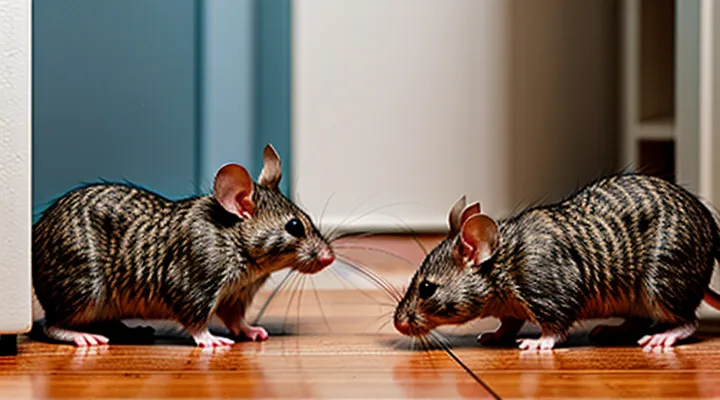
Understanding Mice and Rats
Biological Differences
Size and Appearance
Mice and rats differ markedly in body dimensions, influencing how they occupy shared space. An adult house mouse (Mus musculus) typically measures 2.5–4 cm in body length, with a tail of equal length, and weighs 10–25 g. A common Norway rat (Rattus norvegicus) ranges from 20–25 cm in body length, tail 18–22 cm, and mass 250–500 g. The disparity creates distinct spatial niches: mice navigate narrow crevices and low‑profile zones, while rats dominate larger burrows and open areas.
Physical characteristics further separate the species. Mice possess a slender, streamlined silhouette, fine fur, and a pointed snout. Their ears are proportionally large, and whiskers are short. Rats exhibit a robust build, coarse fur, a blunt muzzle, and relatively smaller ears compared to head size. Tail morphology also varies: mouse tails are thin, hairless, and flexible; rat tails are thicker, scaly, and less pliable.
These size and appearance traits affect interaction dynamics. Mice can retreat into gaps inaccessible to rats, reducing direct confrontations. Conversely, rats’ greater mass enables them to dominate feeding stations and block mouse pathways. Understanding these physical distinctions is essential when evaluating the feasibility of housing both rodents in a single room.
Social Structures
Mice and rats each maintain distinct social hierarchies that shape interactions in confined spaces. Mice form small, fluid groups dominated by a single dominant individual; subordinates tolerate proximity but avoid direct competition for resources. Rats, by contrast, develop larger colonies with a clear linear dominance order, where each member knows its rank relative to others. These differing structures influence the likelihood of peaceful cohabitation.
Key factors derived from social organization:
- Territory allocation: mice defend limited nesting zones, while rats patrol broader areas. Overlapping territories increase the probability of encounters.
- Resource sharing: mice exhibit rapid, opportunistic feeding, whereas rats prioritize hoarding and controlled access, which can provoke aggression from mice seeking immediate food.
- Communication methods: mice rely on ultrasonic vocalizations and scent marking to convey status; rats employ a richer repertoire of vocal and olfactory signals, often perceived as more intimidating by mice.
When both species occupy the same room, the rat hierarchy typically overrides mouse group dynamics. Dominant rats may suppress mouse activity, leading to stress‑induced weight loss or displacement of mice from preferred nesting sites. Conversely, if mice outnumber rats, they may exploit gaps in the rat’s territorial coverage, but the overall stability remains fragile.
Successful cohabitation requires management of social pressures:
- Provide multiple, insulated nesting compartments to respect each species’ territorial preferences.
- Ensure abundant, evenly distributed food sources to reduce competition.
- Maintain separate enrichment items (e.g., tunnels for mice, climbing structures for rats) to limit direct confrontations.
Understanding the inherent social structures of these rodents clarifies why uncontrolled mixing often results in dominance hierarchies that favor rats, and highlights the environmental modifications necessary to sustain a balanced shared environment.
Diet and Habits
Mice and rats can occupy the same enclosure only when their nutritional requirements and daily routines are carefully managed. Both species are omnivorous, but their preferences diverge enough to create competition if food is not allocated properly.
- Mice favor high‑carbohydrate seeds, grains, and small insects; they thrive on a diet that includes rolled oats, wheat bran, and occasional mealworms.
- Rats prefer protein‑rich foods such as cooked meat, fish, eggs, and larger insect larvae; they also accept grains and fruits but require more substantial protein sources to maintain muscle mass.
- Both accept fresh vegetables, but rats will consume larger portions of leafy greens, while mice take only small bites.
Habits that affect co‑habitation include activity cycles and territorial behavior. Mice are primarily nocturnal and exhibit rapid, exploratory movements, often using narrow gaps and climbing surfaces. Rats are also nocturnal but display stronger dominance in open spaces and may defend feeding stations aggressively. Providing separate feeding stations, distinct nesting materials, and multiple climbing structures reduces direct competition. Continuous monitoring for signs of aggression, such as biting or prolonged chasing, is essential to maintain a stable shared environment.
The Dynamics of Coexistence
Interspecies Competition
Food and Water Resources
Mice and rats sharing a confined space must access food and water without triggering aggressive competition or health hazards. Both species are omnivorous, but rats consume larger portions and can dominate a limited supply, forcing mice to forage at the periphery where contamination risk rises. To mitigate this, provide separate feeding stations that are physically inaccessible to the other species; metal or heavy‑base dispensers prevent displacement by the larger animal. Position water bottles at opposite ends of the enclosure, using sipper tubes that require bite pressure compatible with each rodent’s size, thereby reducing monopolization.
Key considerations for resource management:
- Portion control – allocate calories based on species weight: approximately 3–4 g of dry food per mouse and 15–20 g per rat daily.
- Diet composition – include high‑protein pellets for rats and lower‑fat crumble for mice; avoid mixed batches that encourage selective overconsumption.
- Sanitation – clean feeding trays and water bottles twice daily; replace bedding beneath stations to prevent mold and bacterial growth.
- Storage – keep bulk feed in airtight containers separate from the enclosure to limit scent diffusion, which can provoke territorial behavior.
Implementing these measures sustains adequate nutrition for both rodents while minimizing conflict and disease transmission, thereby supporting stable cohabitation in a single room.
Shelter and Territory
Mice and rats each require distinct shelter structures that reflect their natural nesting habits. Mice prefer small, insulated nests built from shredded paper, cotton, or soft vegetation, typically located near walls or in concealed corners. Rats, being larger, construct more robust burrows or platform nests using sturdier materials such as wood shavings, cardboard, and plastic tubes. Providing separate nesting zones within the same enclosure reduces competition for shelter and prevents one species from monopolizing the limited space.
Territorial behavior in both species is driven by scent marking and visual cues. Mice establish territories as small as a few square centimeters, defended through urine and glandular secretions. Rats claim larger areas, often delineated by gnaw marks and droppings. Overlapping territories can trigger aggression, especially when resources are scarce. To mitigate conflict, the enclosure should contain:
- Multiple, clearly defined nesting sites for each species, positioned at opposite ends.
- Sufficient bedding depth (at least 2 inches) to allow independent burrow construction.
- Distinct feeding stations to avoid direct competition for food.
- Vertical elements such as climbing ropes or platforms that give rats exclusive use while leaving ground-level hiding spots for mice.
Environmental enrichment that satisfies species-specific exploratory needs—such as tunnels for mice and chew toys for rats—further reduces territorial disputes. Maintaining consistent temperature, humidity, and lighting across the enclosure ensures that neither species perceives the environment as hostile, supporting stable cohabitation.
Predatory-Prey Relationships
Rat Predation on Mice
Rats are opportunistic predators; when a mouse is present, a rat may attack to obtain food, eliminate competition, or assert dominance. Predation occurs most frequently under conditions of limited resources, high population density, and confined spaces that force direct contact. Adult Norway rats (Rattus norvegicus) and roof rats (Rattus rattus) have been documented killing and consuming house mice (Mus musculus) in laboratory and field studies. The behavior includes stalking, rapid pounce, and bite to the neck, often followed by consumption of the carcass.
Key factors influencing predation risk:
- Resource scarcity – food or shelter shortages increase aggressive foraging.
- Space restriction – small enclosures prevent avoidance and heighten encounters.
- Age and size disparity – larger, mature rats overpower smaller, juvenile mice.
- Territorial pressure – established rat colonies defend territory against intruding mice.
Effective mitigation requires separating the species or modifying the environment to reduce contact. Strategies include:
- Providing ample, species‑specific nesting material and food stations placed at opposite ends of the room.
- Installing physical barriers such as wire mesh partitions that prevent direct interaction while allowing ventilation.
- Monitoring population numbers to avoid overcrowding; remove excess rodents promptly.
- Employing trap‑free exclusion methods for rats, such as sealing entry points, to eliminate the predator presence.
When these measures are implemented, the likelihood of rat‑initiated predation on mice declines dramatically, allowing both species to occupy the same area without lethal conflict.
Risk Factors for Mice
When a single enclosure houses both mice and rats, the presence of mice introduces specific risk factors that can compromise the health of both species and the stability of the environment.
- High reproductive rate: Mice can produce several litters per year, leading to rapid population growth that overwhelms limited resources and increases competition with rats.
- Aggressive territorial behavior: Male mice often defend confined spaces aggressively, which can provoke fights with rats and result in injuries.
- Disease transmission: Mice are carriers of pathogens such as Salmonella, Leptospira, and hantavirus; close proximity facilitates cross‑species spread.
- Food hoarding and contamination: Mice store food in hidden caches, attracting rats and encouraging the proliferation of mold and parasites.
- Waste accumulation: Small droppings and urine create ammonia‑rich conditions that irritate respiratory systems and promote bacterial growth.
- Structural damage: Gnawing behavior weakens cage components, creating entry points for pests and compromising sanitation.
Understanding and mitigating these factors—through strict population control, regular health monitoring, rigorous sanitation, and robust enclosure design—reduces the likelihood of conflict and disease, allowing mice and rats to share a room more safely.
Practical Implications for Infestations
Identifying an Infestation
Signs of Mice
Mice leave distinctive evidence that confirms their presence in a shared environment. Their droppings are small, about ¼ inch long, dark‑brown to black, and have a pointed tip. Fresh droppings are soft; older ones become hard and crumbly.
Chewed materials reveal activity: gnaw marks on wiring, furniture legs, food packaging, and plastic edges appear as clean, parallel cuts roughly the size of a pencil lead.
Tracks appear in dusty or powdery surfaces. Footprints show four toes on the front feet and five on the hind, forming a V‑shaped pattern with a stride of 1–2 inches.
Nests consist of shredded paper, fabric, insulation, or dried plant matter, compacted into hidden corners, behind appliances, or within wall cavities.
Odor intensifies as population grows; a musky, ammonia‑like scent signals urine accumulation.
Audible cues include scratching sounds in walls or ceilings, especially at night when mice are most active.
These indicators enable accurate assessment of mouse activity before evaluating whether rodents can coexist in a single room.
Signs of Rats
Rats reveal their presence through distinct physical and auditory cues that can be identified quickly.
- Dark, cylindrical droppings about ½‑inch long, often found near food sources, along walls, or in hidden corners.
- Gnaw marks on wood, plastic, or wiring, typically ¼‑inch wide with fresh, clean cuts.
- Parallel track marks in dusty or soft surfaces, displaying a four‑toed front foot and a longer hind foot.
- Small, shallow burrows or tunnels in insulation, stored materials, or beneath flooring.
- Nests constructed from shredded paper, fabric, or insulation, frequently located in concealed areas such as behind appliances or in wall voids.
- Persistent scratching or scurrying sounds, especially at night, indicating movement through concealed pathways.
- Strong, musky odor emanating from urine or gland secretions, detectable near nesting sites or feeding stations.
- Visible live or dead rats, or sightings of tail or fur remnants.
Each sign confirms rat activity and signals the need for immediate control measures before coexistence with mice becomes compromised.
Mixed Infestations
Mixed infestations of mice and rats present distinct challenges compared to single‑species problems. Both rodents occupy similar niches, yet their interactions shape population dynamics, health risks, and control measures.
Mice (Mus musculus) are agile, reproduce rapidly, and prefer smaller openings. Rats (Rattus spp.) are larger, more aggressive, and capable of exploiting broader food sources. When both species occupy the same room, competition for resources intensifies. Rats often dominate feeding sites, forcing mice into peripheral areas where they may hide in wall voids or ceiling spaces. This displacement can increase the likelihood of mice contaminating hard‑to‑reach locations, while rats may cause structural damage through gnawing.
Key implications of a dual infestation include:
- Disease transmission: Each species carries pathogens such as hantavirus (mice) and leptospirosis (rats); co‑presence raises the probability of cross‑contamination.
- Food spoilage: Rats consume larger quantities of stored goods, whereas mice infiltrate sealed packages, leading to compounded losses.
- Structural impact: Rats’ strong gnawing can breach insulation and wiring; mice’s nesting behavior adds insulation debris and urine stains in concealed cavities.
- Control complexity: Bait stations calibrated for rats may be ineffective for mice, and vice versa; traps sized for one species may miss the other, requiring a combined approach.
Effective management of mixed infestations relies on integrated pest‑management (IPM) principles:
- Inspection: Identify entry points, food sources, and signs of activity for both species.
- Exclusion: Seal gaps larger than ¼ inch for mice and larger than ½ inch for rats; install metal flashing where needed.
- Sanitation: Remove accessible food, water, and clutter; store supplies in rodent‑proof containers.
- Monitoring: Deploy a mix of snap traps, live traps, and electronic devices calibrated for size ranges of both rodents.
- Baiting: Use dual‑action baits containing anticoagulants safe for rats and secondary baits for mice; rotate active ingredients to prevent resistance.
- Professional intervention: Engage licensed exterminators when infestations exceed moderate levels or when structural damage is evident.
Understanding the behavioral hierarchy and overlapping risks enables precise, cost‑effective resolution of rooms harboring both mice and rats.
Control and Eradication Strategies
Why Coexistence is Undesirable
Mice and rats share similar ecological niches, yet their simultaneous presence in a confined space creates several problems.
- Direct aggression leads to injuries; rats commonly dominate and may kill or wound mice.
- Competition for food and shelter reduces the survival rate of the smaller species, causing malnutrition and increased mortality.
- Overlapping waste accumulates rapidly, raising the risk of bacterial and viral contamination that can affect both animals and humans.
- Stress levels rise for both groups, suppressing immune function and accelerating disease spread.
- Uncontrolled breeding multiplies population density, overwhelming cleaning efforts and amplifying the issues above.
These factors make cohabitation undesirable for effective pest management and public health.
Separate Trapping Methods
Mice and rats occupying the same enclosure require distinct capture strategies because their size, behavior, and tolerance to bait differ markedly.
Snap traps sized for mice feature a lightweight spring mechanism and a narrow trigger plate. Effective placement targets wall seams, behind appliances, and along concealed pathways. Peanut butter, dried fruit, or soft cheese provide optimal attraction. Live‑catch cages for mice use a single‑entry portal and a mesh interior; they must be checked frequently to prevent stress‑induced mortality.
Rat traps demand greater force and larger trigger platforms. Heavy‑duty snap traps incorporate reinforced steel bars and a broad trigger area to accommodate the animal’s weight. Electric rat stations deliver a rapid, humane kill through a high‑voltage circuit; they require a power source and regular cleaning. Bait options include dried meat, fish oil, or commercial rodent attractants, applied in quantities sufficient to entice a larger rodent.
Rodenticides must be species‑specific. Anticoagulant pellets formulated for rats contain higher active ingredient concentrations than those intended for mice. Placement in tamper‑resistant bait stations prevents accidental exposure of non‑target animals. Monitoring dosage and adhering to label instructions reduce the risk of resistance development.
An integrated control program combines mechanical and chemical measures. Deploy mouse‑specific snap or live traps along interior walls while positioning rat traps near entry points, waste areas, and food storage zones. Conduct weekly inspections, replace bait, and adjust trap locations based on activity patterns. Segregating trap types minimizes competition for bait and enhances overall capture efficiency.
Professional Pest Control Considerations
Mice and rats rarely share a confined environment without competition for food, shelter, and nesting sites. Their overlapping diets and territorial instincts increase aggression, accelerate stress‑induced disease transmission, and raise the likelihood of structural damage.
Professional pest‑control practitioners must evaluate the situation with a systematic approach:
- Conduct a thorough inspection to identify species, entry points, and activity signs such as droppings, gnaw marks, and burrows.
- Implement exclusion measures: seal gaps larger than ¼ inch, install door sweeps, and repair damaged ventilation screens.
- Apply sanitation protocols: eliminate food residues, store feed in sealed containers, and maintain regular waste removal.
- Deploy targeted trapping: use species‑specific live‑catch or kill traps placed along established runways, resetting devices daily to prevent secondary infestations.
- Consider chemical interventions only after exclusion and trapping have reduced population density; select rodenticides approved for indoor use, follow label directions, and secure bait stations to prevent non‑target exposure.
- Establish a monitoring schedule: inspect traps, replace baits, and re‑evaluate exclusion integrity at weekly intervals for the first month, then monthly thereafter.
- Document all actions, comply with local health regulations, and provide client education on preventive practices.
Integrating these steps reduces the risk of cohabitation, minimizes health hazards, and supports long‑term control of both rodent species.
Preventing Future Infestations
Rodent-Proofing Your Home
Sealing Entry Points
Mice and rats will exploit any opening larger than a quarter‑inch, so eliminating such passages is the most reliable method for preventing both species from occupying a shared space.
Identify and repair all potential routes, including gaps around utility lines, vent covers, and foundation cracks. Use steel wool, copper mesh, or silicone‑based sealants for small holes; apply hardware cloth or metal flashing for larger breaches. Install door sweeps and weatherstripping on all exterior doors, and verify that window screens are intact and tightly fitted.
- Inspect the perimeter weekly for new cracks or wear.
- Apply expanding foam sealant to gaps less than ½ in before covering with metal mesh.
- Replace damaged vent covers with rodent‑proof models.
- Seal gaps around pipe penetrations with cement‑based mortar.
Routine verification of sealed areas prevents re‑entry, ensuring that the environment remains inhospitable to both rodents. Continuous monitoring and prompt repair of any damage maintain the integrity of the barrier.
Eliminating Food Sources
Effective control of rodents in a shared environment hinges on removing all accessible nutrition. Without a reliable food supply, both mice and rats will seek alternative habitats, reducing the likelihood of simultaneous occupancy.
- Store dry goods in airtight containers; metal or heavy‑plastic bins prevent gnawing.
- Clean up crumbs and spills immediately; use a damp cloth rather than sweeping to capture particles.
- Seal garbage cans with tight‑locking lids; empty them daily to avoid buildup.
- Eliminate pet food leftovers; feed pets in designated areas and remove dishes after each meal.
- Inspect and repair structural gaps around doors, windows, and utility openings; rodents exploit even ¼‑inch openings to reach stored food.
Regular inspection of storage areas and prompt removal of any accidental food deposits sustain an environment that discourages both species from cohabiting.
Reducing Harborage Areas
Reducing harborage areas is a primary strategy for managing the presence of both mice and rats in a shared indoor environment. Harborage refers to locations where rodents can hide, nest, and reproduce without disturbance. Limiting these sites directly lowers population growth and competition between the two species.
Effective reduction involves several practical steps:
- Seal all gaps larger than ¼ inch in walls, floors, and ceilings with steel wool, caulk, or metal flashing. Rodents can exploit even small openings to move between rooms.
- Remove clutter such as cardboard boxes, stacks of paper, and unused equipment. These items provide cover and insulation for nests.
- Store food in airtight containers and keep countertops clear. Residual crumbs and open packaging attract rodents and support their activities.
- Maintain regular cleaning schedules that eliminate droppings, urine stains, and spilled liquids. Moisture and waste create favorable micro‑environments for nesting.
- Repair damaged flooring, roofing, and plumbing fixtures promptly. Structural defects generate voids that serve as permanent shelters.
Each measure targets a specific type of harborage, decreasing the overall suitability of the room for rodent habitation. By systematically eliminating hiding places, the likelihood of mice and rats cohabiting without escalating conflict diminishes, supporting a more controlled and hygienic indoor setting.
Maintaining Hygiene
Proper Waste Management
Proper waste handling directly influences the ability of mice and rats to share a confined space. Food remnants, droppings, and decomposing material create strong attractants that increase competition for resources and elevate the risk of disease transmission. By eliminating these cues, owners reduce aggression triggers and promote a more stable coexistence.
Effective waste management requires consistent actions:
- Store all feed in airtight containers made of metal or thick plastic.
- Remove leftover food and packaging from the enclosure daily.
- Dispose of used bedding, nest material, and droppings in sealed bags before taking them to an external trash bin.
- Clean spills immediately with a mild, non‑toxic disinfectant that does not leave strong odors.
- Replace water sources regularly and keep containers free of debris.
Routine sanitation reinforces a predictable environment. Regularly scheduled cleaning intervals prevent the buildup of odor and humidity, both of which encourage territorial disputes among rodents. Maintaining a low‑odor, low‑food‑availability setting limits the incentive for one species to dominate the other.
Monitoring waste levels supports early detection of problems. Sudden increases in discarded material may indicate overpopulation, illness, or inadequate feeding practices. Prompt adjustments to feeding schedules, enclosure size, or waste removal frequency mitigate these issues before they disrupt the shared habitat.
Regular Cleaning Practices
Regular cleaning directly influences the likelihood that mice and rats will share a single enclosure. Persistent removal of food residues deprives both species of readily available nutrition, reducing attraction to the area. Frequent disposal of waste prevents accumulation of organic matter that serves as a breeding substrate. Sanitizing surfaces with appropriate disinfectants eliminates scent markings and pathogens, discouraging territorial overlap.
- Sweep and vacuum floors daily to eliminate crumbs and droppings.
- Empty trash containers at least once every 24 hours; use sealed liners.
- Clean feeding stations after each use; replace bedding with fresh material weekly.
- Wipe all surfaces with a rodent‑safe sanitizer, focusing on corners and hidden crevices.
- Control humidity by ventilating the room and using dehumidifiers when needed.
Consistent execution of these practices maintains an environment that is unattractive to both rodents, thereby minimizing the chance of simultaneous occupancy.