
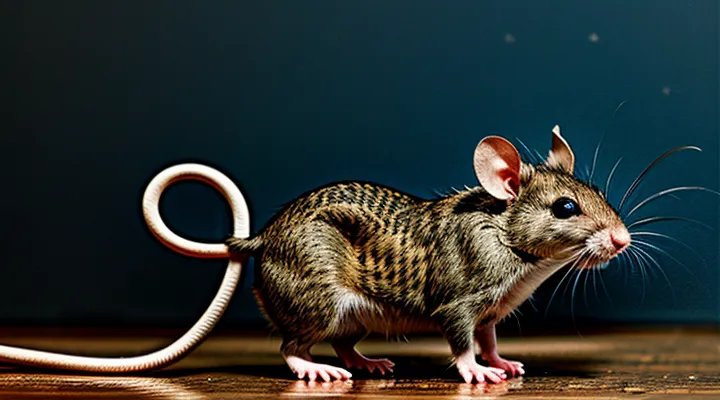
Understanding Rodent Taxonomy
The Biological Classification of Rats and Mice
Defining «Rattus»
Rattus is a genus of rodents belonging to the family Muridae, subfamily Murinae. It includes several species commonly known as rats, the most widespread being Rattus rattus (black rat) and Rattus norvegicus (brown rat). Members of this genus share the following characteristics:
- Body length 15–30 cm, tail length equal to or longer than the body.
- Robust skull with a pronounced braincase and large incisors.
- Coarse fur, typically brown, black, or gray.
- High reproductive capacity; females produce up to 12 offspring per litter.
- Omnivorous diet, capable of exploiting human‑associated environments.
- Genome size approximately 2.75 Gb, containing about 23,000 protein‑coding genes.
Taxonomically, Rattus differs from the genus Mus, which comprises true mice. Mus species are smaller (body length 6–10 cm), possess a more delicate skull, and have a genome of roughly 2.5 Gb. Genetic divergence between the two genera exceeds 10 million years, establishing reproductive isolation; hybridization does not occur under natural conditions.
Consequently, a rat cannot biologically transform into a mouse. The distinction rests on separate evolutionary lineages, distinct chromosomal structures, and species‑specific developmental pathways. Any apparent resemblance results from convergent adaptation to similar habitats rather than a capacity for inter‑genus conversion.
Defining «Mus»
The genus Mus comprises the small rodents commonly known as mice. These mammals belong to the family Muridae, subfamily Murinae, and are distinct from rats, which are classified in the genus Rattus. Mus species share a set of morphological, genetic, and ecological traits that separate them from other murids.
- Body length typically 6–10 cm, tail length comparable to or slightly longer than the body.
- Skull architecture: rounded cranium, relatively short rostrum, and large auditory bullae.
- Dental formula: 1/1 incisors, 0/0 canines, 0/0 premolars, 3/3 molars (total 16 teeth).
- Chromosome number: most common laboratory mouse (Mus musculus) has 2n = 40.
- Reproductive cycle: gestation 19–21 days, litter size 4–12 offspring, rapid sexual maturity.
Genetic analyses place Mus within a clade separate from Rattus, confirming divergent evolutionary pathways. Comparative genomics reveal differences in gene families related to metabolism, sensory perception, and developmental regulation. These distinctions underlie the physiological incompatibility of a rat undergoing a transformation into a mouse; the two genera retain separate species concepts, reproductive barriers, and developmental programs that prevent such a conversion.
Key Anatomical and Physiological Differences
Size and Body Proportions
Rats and mice share a common family but differ markedly in size and body proportions, a distinction that precludes any natural transformation from one species to the other. Adult rats typically weigh 200–500 g, with body lengths of 20–25 cm (excluding the tail). In contrast, adult mice average 15–30 g and measure 7–10 cm in body length. Tail length scales similarly, with rat tails reaching 15–20 cm and mouse tails 5–10 cm.
These dimensions reflect divergent growth patterns governed by distinct genetic pathways. Genes controlling somatic growth, such as Igf1 and Ghr, exhibit species‑specific expression levels that establish the adult size ceiling for each rodent. Alterations in these pathways can produce size variants within a species but cannot override the species‑defining developmental program that separates rats from mice.
Body proportion ratios further differentiate the two. Rats possess a broader skull, larger molar surface area, and more robust limb musculature, adaptations linked to their omnivorous diet and burrowing behavior. Mice display a narrower skull, smaller incisors, and proportionally longer hind limbs, supporting agility and rapid reproduction. Morphometric studies consistently show non‑overlapping confidence intervals for cranial and limb measurements between the two taxa.
Consequently, the size and proportional framework of each species is fixed by evolutionary and genetic constraints. No known mechanism allows a rat to shrink or reshape its anatomy to assume the mouse phenotype without extensive genetic engineering, which would effectively create a new organism rather than a natural conversion.
Cranial and Dental Structures
Rats and mice belong to the family Muridae but exhibit distinct cranial and dental morphologies that prevent one species from transforming into the other. The skull of a rat is larger, with a broader rostrum and more robust zygomatic arches, supporting stronger jaw muscles. In contrast, a mouse skull is smaller, with a slender rostrum and reduced cranial mass, reflecting its lighter body plan.
Dental differences reinforce the separation. Both taxa possess ever‑growing incisors, yet rat incisors display a thicker enamel layer on the labial surface and a flatter occlusal plane, suited for gnawing tougher materials. Mouse incisors are finer, with a sharper edge and a more pronounced curvature, facilitating precise seed handling. Molar patterns also diverge: rats have larger, more complex molar crowns with additional cusps, while mice exhibit simpler, fewer‑cusp molars.
These anatomical distinctions arise from divergent evolutionary pressures and genetic regulation of craniofacial development. Genes such as Bmp4 and Shh modulate skull shape and tooth size; variations in their expression produce the observed species‑specific traits. Consequently, a rat cannot biologically convert into a mouse because the underlying developmental program fixes cranial and dental architecture early in embryogenesis.
Key comparative points:
- Skull size: rat > mouse; broader rostrum, stronger zygomatics.
- Incisor enamel: rat thicker, flatter; mouse thinner, sharper.
- Molar complexity: rat more cusps; mouse fewer cusps.
- Genetic control: differential Bmp4/Shh pathways dictate morphology.
Genetic Disparity
Rats and mice belong to separate species within the rodent family, each possessing a distinct genetic architecture that prevents any natural conversion from one to the other. The disparity is evident at multiple genomic levels.
- Chromosome count: rats have 42 autosomes plus sex chromosomes, whereas mice have 40 autosomes plus sex chromosomes.
- Genome size: the rat genome comprises approximately 2.75 gigabases, while the mouse genome contains about 2.70 gigabases, yet the organization of coding regions differs markedly.
- Gene families: immune‑related loci, olfactory receptor clusters, and metabolic enzymes show species‑specific expansions and deletions.
These differences shape developmental programs. Gene regulatory networks governing embryogenesis, organogenesis, and neurodevelopment rely on species‑specific enhancer elements and transcription factor binding sites. Alterations in such networks produce the characteristic size, dentition, and reproductive traits of each animal. Consequently, a rat cannot spontaneously acquire mouse morphology or physiology.
Experimental manipulation can introduce individual mouse genes into rat embryos, producing isolated phenotypic changes. However, replacing the entire suite of mouse‑specific genes would require comprehensive genome editing, a process that creates a chimeric organism rather than a true mouse. The genetic barrier therefore defines the limits of interspecies transformation.
The Biological Impossibility of Interspecies Transformation
Evolutionary Divergence
Shared Ancestry, Separate Paths
Rats and mice belong to the family Muridae, sharing a common rodent ancestor that lived roughly 12–15 million years ago. Genetic analyses reveal that both groups retain many orthologous genes, indicating a conserved core genome inherited from that ancestor. Comparative sequencing shows that approximately 85 % of protein‑coding regions are identical between the two species, reflecting their shared evolutionary heritage.
Despite this genetic overlap, rats (genus Rattus) and mice (genus Mus) diverged early in murid evolution and have followed distinct adaptive trajectories. Key differences include:
- Body size: rats average 250–300 g, mice average 15–30 g, a disparity driven by divergent ecological niches.
- Reproductive strategy: rats produce fewer, larger litters; mice produce many small litters, reflecting different life‑history strategies.
- Habitat preference: rats favor sewers, grain stores, and larger burrows; mice occupy fields, grasslands, and indoor spaces, leading to separate behavioral adaptations.
- Metabolic rate: mice exhibit higher basal metabolic rates, correlating with their smaller size and faster growth cycles.
These divergent traits result from separate selective pressures after the split from their common ancestor. Consequently, a rat cannot biologically transform into a mouse; the two lineages maintain distinct morphological, physiological, and genetic identities despite their shared ancestry.
Speciation Events
Speciation describes the process by which a single ancestral population splits into two or more genetically distinct lineages that no longer interbreed. In rodents, the divergence of rats and mice illustrates how reproductive barriers develop over evolutionary time.
- Allopatric isolation: geographic separation prevents gene flow, allowing independent mutation accumulation.
- Sympatric divergence: ecological specialization within the same area creates assortative mating.
- Parapatric gradients: adjacent populations experience differing selective pressures along a cline.
- Peripatric events: small peripheral groups undergo rapid drift and selection, accelerating divergence.
Genetic differentiation proceeds through mutation, recombination, and natural selection. Accumulated incompatibilities—such as chromosomal rearrangements, divergent regulatory networks, and gametic incompatibility—establish reproductive isolation. Empirical studies of Muridae phylogeny show that rat and mouse lineages diverged approximately 12–15 million years ago, with an average nucleotide substitution rate of ~2 × 10⁻⁹ per site per year. This magnitude of change far exceeds the short-term mutational input of a single organism.
Consequently, a rat cannot transform into a mouse within an individual's lifespan. The transition requires the gradual fixation of numerous genetic alterations across many generations, accompanied by the emergence of barriers that prevent interbreeding. Without such long-term population-level processes, the two taxa remain distinct despite superficial morphological similarities.
Thus, speciation events provide the scientific framework that explains why the conversion of one rodent species into another is impossible on a personal scale, reaffirming that interspecific change operates only through extended evolutionary mechanisms.
Genetic Barriers to Transformation
Chromosomal Incompatibility
Rats and mice belong to distinct species whose genomes differ in chromosome number, structure, and gene content. A rat possesses 42 autosomes and two sex chromosomes, whereas a laboratory mouse carries 40 autosomes plus sex chromosomes. The disparity in chromosome count alone prevents the formation of a viable meiotic complement when genetic material from one species is introduced into the other.
Chromosomal incompatibility produces several immediate effects:
- Misaligned pairing during meiosis leads to nondisjunction and aneuploid gametes.
- Gene dosage imbalances disrupt regulatory networks essential for embryonic development.
- Incompatible centromere and telomere sequences hinder chromosome segregation.
- Hybrid embryos arrest at early stages, and any surviving offspring exhibit severe sterility.
These mechanisms operate independently of environmental factors and are rooted in the fundamental architecture of the genome. Consequently, a rat cannot be converted into a mouse through natural or experimental genetic manipulation that relies solely on chromosome-level changes. The species barrier imposed by chromosomal incompatibility remains insurmountable under current biological understanding.
Gene Expression and Regulatory Networks
Rats and mice belong to separate species within the Muridae family, each characterized by a distinct genomic architecture. Comparative genomic analyses reveal that approximately 10 % of protein‑coding genes differ between the two, and many of these genes are involved in morphological development, metabolism, and sensory perception. The divergent phenotypes arise not only from sequence variation but also from the organization of gene regulatory networks that orchestrate tissue‑specific expression during embryogenesis.
Gene expression patterns in rat and mouse embryos diverge at critical developmental checkpoints. For instance, transcription factors such as Hox clusters, Sox family members, and Pitx genes exhibit species‑specific temporal activation, leading to differences in limb length, craniofacial structure, and dentition. These transcriptional programs are reinforced by enhancers that have evolved distinct binding affinities, creating feedback loops that stabilize species‑typical morphogenesis.
Regulatory networks governing cell fate decisions rely on:
- Chromatin accessibility landscapes shaped by species‑specific histone modifications.
- Non‑coding RNAs that modulate messenger RNA stability in a lineage‑dependent manner.
- Signal transduction pathways (e.g., Wnt, BMP, FGF) whose downstream effectors show altered expression thresholds.
Manipulating these networks through CRISPR‑based genome editing can induce localized phenotypic changes, yet comprehensive conversion of a rat into a mouse would require simultaneous reprogramming of thousands of regulatory elements. Current technology permits the alteration of individual traits but does not support wholesale redesign of the entire regulatory architecture.
Consequently, from a molecular perspective, a rat cannot be transformed into a mouse by adjusting a few genes. The species distinction is maintained by an intricate, interdependent web of gene expression controls that collectively define organismal identity.
Environmental and Developmental Constraints
Phenotypic Stability
Phenotypic stability refers to the resistance of an organism’s observable traits to change despite fluctuations in the environment or minor genetic variations. In mammals, the stability of body size, dentition, and skeletal morphology is governed by tightly regulated developmental pathways that maintain species‑specific characteristics.
Rats and mice belong to distinct taxonomic groups within the family Muridae. Their genomes differ by millions of base pairs, leading to divergent regulatory networks that dictate growth rates, metabolic processes, and reproductive strategies. The phenotypic distinction between the two species persists because developmental genes—such as Hox clusters and growth factor receptors—are expressed in species‑specific patterns that cannot be altered by external conditions alone.
Key factors that enforce phenotypic stability include:
- Conserved gene regulatory circuits that limit variation in organ size and shape.
- Epigenetic mechanisms that preserve lineage‑specific expression profiles across cell divisions.
- Selection pressures that eliminate individuals deviating from the established phenotype, reinforcing species integrity.
Consequently, a rat cannot spontaneously acquire the phenotype of a mouse. Achieving such a transformation would require comprehensive genome editing to replace multiple developmental genes, followed by re‑establishment of the appropriate epigenetic landscape—processes far beyond natural phenotypic plasticity.
No Known Mechanisms for Such Change
Rats and mice belong to distinct species within the family Muridae, each defined by a stable genome, reproductive isolation, and characteristic morphology. No biological process documented in vertebrate development permits a mature rat to convert into a mouse. The genetic code of a rat encodes proteins and regulatory networks specific to its species; altering this code would require complete genome replacement, a procedure not achievable in living organisms.
Key points supporting the absence of a transformation mechanism:
- Species are maintained by reproductive barriers; interbreeding between rats and mice does not produce viable offspring, preventing gene flow that could blur species boundaries.
- Developmental pathways are fixed after embryogenesis; adult somatic cells lack the plasticity needed to reprogram into a different organism’s body plan.
- No natural or induced phenomenon, such as transdifferentiation or induced pluripotent stem cell therapy, has demonstrated conversion of one mammalian species into another.
Consequently, current scientific evidence confirms that a rat cannot become a mouse through any known natural or experimental process.
Common Misconceptions and Popular Culture
Myths and Folklore
Myths about rodents often blur the distinction between rats and mice, portraying them as interchangeable or capable of transforming into one another. In medieval European tales, a household rat could become a mouse to escape a curse, while Japanese folklore describes a “kusa‑nezumi” that changes size to evade hunters. Indigenous stories from North America sometimes feature a trickster mouse that adopts rat characteristics to gain strength, reinforcing the idea of fluid identity among small mammals.
These narratives persist because both animals share nocturnal habits, similar diets, and frequent co‑habitation with humans, creating a cultural perception of equivalence. The stories also serve symbolic purposes: rats represent plague or betrayal, whereas mice embody modesty or cleverness, allowing storytellers to manipulate traits through imagined transformation.
Scientifically, rats (genus Rattus) and mice (genus Mus) belong to separate evolutionary lineages within the family Muridae. Genetic analysis shows divergence over 12 million years, resulting in distinct chromosome numbers (rats 42, mice 40) and divergent reproductive mechanisms. Morphological differences—body size, skull shape, dental patterns—are fixed at birth and cannot be altered by environmental factors. No known biological process enables a mature rat to revert to a mouse form; metamorphosis exists only in insects and amphibians, not in placental mammals.
Common folklore motifs include:
- Shape‑shifting rodent to escape danger.
- Transformation as punishment for hubris.
- Size alteration to fulfill a moral lesson.
Each motif reflects cultural values rather than empirical evidence. Scientific data consistently refutes the possibility of inter‑species metamorphosis, confirming that the myths are symbolic narratives rather than descriptions of biological reality.
Distinguishing Young Rats from Adult Mice
Observational Cues
Rats and mice belong to distinct species within the family Muridae, and their identification relies on a set of observable characteristics. Researchers use these cues to differentiate individuals and to evaluate any claim of inter‑species transformation.
- Body length: rats typically exceed 20 cm, while mice remain under 10 cm.
- Tail proportion: rat tails are shorter relative to body size (≈ 50‑70 %); mouse tails approach or surpass body length.
- Ear size: rat ears are proportionally smaller; mouse ears are large relative to head width.
- Whisker length: rat whiskers extend beyond the snout; mouse whiskers are shorter.
- Skull morphology: rat skulls display a broader rostrum and larger infraorbital foramen; mouse skulls are more delicate with a narrower rostrum.
- Dental pattern: both have incisors, but rat molar rows are larger and more complex.
- Fur coloration: rats often show coarse, darker pelage; mice display finer, lighter coats with distinct markings.
- Reproductive timing: rats reach sexual maturity at 5‑6 weeks, mice at 4‑5 weeks, influencing breeding cycles.
- Activity rhythm: rats are primarily nocturnal with longer foraging bouts; mice exhibit brief, frequent nocturnal activity.
- Scent profile: volatile compounds detected by gas chromatography differ between the two, providing chemical signatures for species identification.
Visual assessment, high‑resolution photography, and morphometric analysis enable rapid classification. When combined with genetic testing, these observational cues confirm species boundaries and refute the notion that a rat can metamorphose into a mouse.
Behavioral Differences
Rats and mice exhibit distinct behavioral repertoires that reflect divergent ecological niches and neurobiological architectures.
-
Exploratory activity: Rats display prolonged, systematic exploration of novel environments, often using tactile whisker scanning and sustained locomotion. Mice tend toward rapid, intermittent forays, showing higher frequency of rearing but shorter overall travel distances.
-
Social interaction: In laboratory settings, rats form stable hierarchies with clear dominance-subordination relationships, maintaining consistent affiliative behaviors such as grooming. Mice establish loose, fluid groupings; aggression peaks during brief territorial contests, and social bonds are less enduring.
-
Learning strategies: Rats excel in tasks requiring gradual acquisition of complex sequences, such as maze navigation with delayed reinforcement. Mice favor immediate, stimulus‑response learning, demonstrating faster acquisition in operant conditioning when rewards are proximal.
-
Stress response: Physiological measurements reveal that rats exhibit a muted corticosterone surge during acute stress, correlating with resilient coping behaviors. Mice show sharper hormonal spikes, accompanied by heightened thigmotaxis and freezing.
-
Foraging patterns: Rats preferentially exploit abundant, predictable food sources, employing spatial memory to revisit caches. Mice adopt opportunistic foraging, rapidly sampling multiple patches and relying on olfactory cues for short‑term decisions.
These behavioral distinctions arise from species‑specific genetic expression, brain circuitry, and sensory weighting. Consequently, the notion of a rat biologically converting into a mouse lacks empirical support; the two taxa retain separate adaptive profiles that govern their actions across environments.
Scientific Consensus and Research
Modern Genetic Studies
Modern genetic research provides a clear framework for evaluating the feasibility of converting a rat into a mouse. Comparative genomics reveals that the two species share roughly 90 % of their protein‑coding DNA, yet the regulatory networks governing development diverge significantly. High‑resolution chromosome mapping shows distinct arrangements of conserved syntenic blocks, indicating that large‑scale genome architecture cannot be rearranged without disrupting essential developmental cues.
Key observations from recent studies include:
- CRISPR‑based editing can replace individual rat genes with mouse orthologs, restoring specific phenotypic traits such as coat color or olfactory receptor profiles.
- Epigenetic reprogramming of rat embryonic stem cells using mouse transcription factor cocktails yields cells that express mouse‑like markers but retain rat‑specific chromatin signatures.
- Whole‑genome substitution experiments, in which the rat genome is progressively replaced by mouse sequences, encounter lethal barriers after a limited number of swaps, reflecting incompatibilities in non‑coding regulatory elements.
These findings converge on a consensus: while targeted gene replacement can mimic isolated mouse characteristics, the comprehensive transformation of a rat into a functional mouse remains unattainable with current technology. The primary obstacle lies in the intricate interplay of non‑coding DNA, three‑dimensional genome organization, and species‑specific epigenetic landscapes that govern organismal identity.
Evolutionary Biology Perspectives
Rats and mice belong to separate species within the family Muridae, each representing a distinct evolutionary lineage that diverged millions of years ago. Genetic analyses reveal that the two taxa differ by tens of millions of nucleotide substitutions across their genomes, a magnitude far exceeding the variation observed within a single species. Consequently, the probability of a rat spontaneously acquiring the complete set of mouse‑specific alleles through natural processes is effectively zero.
Speciation mechanisms clarify why one species cannot simply become another:
- Reproductive isolation: Rats and mice do not interbreed in the wild; hybrid offspring, when produced experimentally, are sterile or inviable, indicating strong post‑zygotic barriers.
- Genomic incompatibility: Divergent regulatory networks control development, metabolism, and behavior; swapping a few genes does not reconstruct the entire phenotype of the other species.
- Adaptive divergence: Each lineage evolved specialized traits—such as dentition, skull morphology, and olfactory receptors—tailored to distinct ecological niches, reinforcing separation.
Evolutionary theory predicts that a transformation from rat to mouse would require a complete reversal of millions of years of accumulated mutations, selection pressures, and genetic drift. No known mechanism—mutation, gene flow, or epigenetic modification—can compress this timescale into a single organism’s lifespan. The only realistic pathway for a rat to acquire mouse‑like characteristics involves artificial genetic engineering, which still demands extensive genome editing and does not constitute a natural evolutionary transition.
In summary, from an evolutionary biology standpoint, a rat cannot turn into a mouse. The two organisms are products of long‑term divergent evolution, fixed by reproductive barriers, extensive genomic differences, and distinct adaptive histories.
The Importance of Accurate Terminology
Accurate terminology is a prerequisite for meaningful discussion of whether a rat can become a mouse. The question hinges on precise definitions of “rat,” “mouse,” and “species transformation,” and any ambiguity obscures the biological reality.
Rats and mice belong to distinct taxonomic groups within the family Muridae. Species classification relies on genetic markers, reproductive isolation, and consistent morphological traits such as skull shape, dentition pattern, and body size. When these criteria are applied, the two organisms are unequivocally separate entities; a rat cannot genetically or developmentally convert into a mouse.
Mislabeling or conflating the terms in scientific literature leads to several adverse outcomes:
- Data sets become incompatible, hampering meta‑analyses.
- Experimental protocols may be improperly designed, producing invalid results.
- Communication with peers and the public loses clarity, increasing the risk of misinformation.
- Regulatory decisions based on flawed terminology may affect animal welfare policies.
Ensuring that each term reflects its accepted scientific meaning preserves the integrity of research, facilitates replication, and supports reliable translation of findings into applied contexts.