
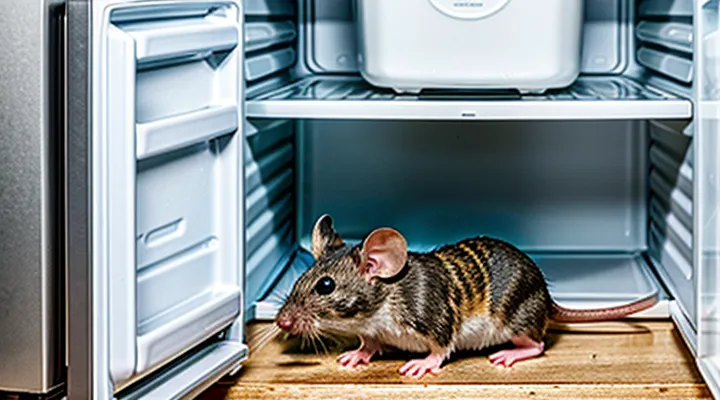
Understanding Mouse Behavior and Refrigerators
Mouse Anatomy and Flexibility
How Small Can a Mouse Squeeze Through?
Mice can pass through openings as small as ¼ inch (6 mm) in diameter. Their skulls are the widest part of the body, and the flexible spine allows the rest of the body to compress further.
Key measurements:
- Head width: 0.22–0.30 in (5.5–7.6 mm)
- Body depth (at rest): 0.30–0.35 in (7.6–9 mm)
- Fully compressed depth: approximately 0.25 in (6.4 mm)
Factors influencing squeeze capability:
- Age: juveniles may fit through gaps 0.20 in (5 mm) wide.
- Species: house mice (Mus musculus) are smaller than field mice.
- Health: well‑nourished individuals have slightly larger dimensions.
Practical implication: any gap larger than ¼ inch in a refrigerator door seal, vent, or wiring opening can admit a mouse. Sealing with material that leaves no opening greater than 0.2 in (5 mm) effectively blocks entry.
Do Mice Have Bones or Cartilage?
Mice are vertebrate mammals, so their bodies are supported by a complete bony skeleton. The skeleton consists of a skull, vertebral column, rib cage, limbs, and pelvis, all formed from calcified bone tissue. In addition to bone, cartilage is present at joint surfaces, in the nasal septum, and as growth plates that allow bone lengthening during development. The combination of rigid bones and flexible cartilage gives mice the structural integrity needed for rapid movement while preserving the ability to squeeze through narrow openings, such as gaps around refrigerator doors.
Key points about mouse skeletal composition:
- Bones provide the primary framework and protect internal organs.
- Hyaline cartilage covers articular surfaces, reducing friction during limb motion.
- Fibrocartilage reinforces intervertebral discs and the meniscus in the knee.
- Cartilaginous growth plates remain active until adulthood, influencing size and agility.
Understanding that mice possess both bone and cartilage clarifies how they can navigate confined spaces and why they are capable of entering household appliances.
Common Entry Points in Refrigerators
Gaps in Door Seals
Mice exploit any opening larger than a few millimeters; gaps in refrigerator door seals constitute a primary pathway. When the seal compresses unevenly or detaches, a space as small as 0.25 in (6 mm) can accommodate an adult mouse, allowing it to crawl inside, reach food, and contaminate the interior.
-
Typical gap dimensions that permit entry
- 0.20 in (5 mm) or greater at the upper edge of the seal
- 0.15 in (4 mm) at the lower hinge side when the seal is worn
- 0.10 in (2.5 mm) at the corner where the seal meets the frame, if the seal is cracked
-
Common locations where gaps appear
• Upper perimeter where the seal contacts the freezer compartment
• Lower hinge region after repeated opening cycles
• Corners and seams where the seal meets the door latch -
Inspection procedure
- Close the door and run a thin credit‑card or ruler along the entire seal; any resistance less than 0.25 in indicates a potential entry point.
- Observe for visible cracks, compression loss, or misalignment.
- Perform a visual check under bright light for gaps at the corners and hinge area.
-
Sealing solutions
• Replace damaged gasket with a manufacturer‑specified replacement.
• Apply a thin bead of silicone caulk to minor cracks, ensuring full cure before re‑closing.
• Install a magnetic strip over the seal edge to improve compression and eliminate micro‑gaps.
Regular maintenance of door seals eliminates the most reliable route for rodents, reducing the risk of contamination inside the refrigerator.
Holes for Water Lines and Electrical Cords
Holes created for water supply lines and electrical cords are among the most frequent openings through which rodents can access a refrigerator compartment. These penetrations often lack the sealing required to block small mammals, allowing a mouse to slip inside while searching for food or shelter.
Proper sealing of these apertures reduces the likelihood of intrusion. Effective methods include:
- Installing rubber grommets that fit snugly around the pipe or cord, compressing to close gaps.
- Applying silicone-based sealant around the perimeter of the opening before attaching the appliance.
- Using metal or plastic collars with threaded clamps to tighten around the conduit and create a barrier.
When retrofitting an existing refrigerator, inspect each entry point for wear or damage. Replace cracked grommets and reapply sealant if the material shows signs of deterioration. For new installations, select connectors rated for rodent resistance and verify that the manufacturer’s instructions specify a tight fit.
Regular maintenance checks should focus on:
- Visual examination of all water line and power cord openings for gaps.
- Testing the integrity of sealing materials by probing with a thin object; any movement indicates a potential breach.
- Reapplying sealant or swapping out compromised grommets promptly.
By addressing water line and electrical cord holes with the measures outlined above, the risk of a mouse entering the refrigerator is substantially minimized.
Vents and Drains
Refrigerator vents and defrost drains are the only openings that connect the appliance’s interior to the surrounding environment. Vents allow air circulation for temperature regulation, while the drain carries excess moisture from the freezer to a pan underneath the unit. Both openings are typically sized between ¼ and ½ inch, a dimension that matches the body width of a common house mouse.
The vent grille is usually located on the back or side of the cabinet. Its mesh may be coarse enough for a mouse to squeeze through, especially if the surrounding seal is compromised by wear or damage. The defrost drain is a narrow tube that runs from the freezer compartment to the evaporator pan. If the tube is not sealed at the entry point, a mouse can follow the moisture path into the freezer.
Because these passages are essential for appliance function, sealing them requires solutions that preserve airflow and drainage while blocking rodent ingress. Effective measures include:
- Installing stainless‑steel mesh (¼‑inch aperture) over vent openings.
- Applying rodent‑resistant silicone caulk around vent frames and drain entry points.
- Regularly inspecting the drain tube for gaps, cracks, or debris that could create a foothold.
- Positioning the refrigerator away from walls to maintain a clear clearance for vent airflow.
Maintaining tight, screened vents and intact drains reduces the likelihood that a mouse can navigate into the refrigerator’s interior.
Factors Attracting Mice to Refrigerators
Food Smells and Spills
Mice are drawn to refrigerators primarily by the scent of unattended food. Strong aromas from cheese, meat, or sugary items can travel through the door seal, creating a chemical trail that guides rodents inside. Even low‑intensity odors released by partially opened containers are sufficient to trigger a foraging response.
When food spills occur inside the appliance, the risk increases dramatically. Liquid residues coat shelves and walls, providing both a scent source and a moist environment that supports bacterial growth. Mice can detect these cues from several feet away, prompting them to explore entry points such as gaps around the door gasket or ventilation ducts.
Effective mitigation focuses on eliminating olfactory signals and removing moisture:
- Wipe down interior surfaces with a mild detergent after each use.
- Store perishable items in airtight containers.
- Inspect and replace worn door seals to maintain a continuous barrier.
- Clean drip trays and remove condensation promptly.
- Dispose of spoiled food in sealed bags before discarding.
Regular inspection of the fridge’s exterior for small openings, combined with diligent cleaning, reduces the likelihood that a rodent will consider the appliance a viable food source.
Warmth from the Compressor
The compressor is the refrigerator’s mechanical heart, converting electrical energy into mechanical motion to circulate refrigerant. During this process it expels heat that must be rejected to the surrounding environment, typically through coils mounted on the back or bottom of the unit. Consequently, the surface of the compressor and adjacent metal become noticeably warmer than the interior compartment.
Heat generated by the compressor does not remain confined to the exterior. Conduction through the cabinet walls creates a temperature gradient, with the area directly opposite the compressor often a few degrees warmer than the cold chamber. This localized warmth is detectable with a fingertip and can persist while the compressor cycles.
Mice are attracted to stable, insulated spaces that provide shelter and a moderate temperature. A slight elevation above freezing may reduce the energy cost of maintaining body heat, making the warm zone near the compressor a potential micro‑habitat. However, the interior of the refrigerator remains well below the mouse’s preferred range; the overall cold environment outweighs the minor heat leak.
Key considerations regarding compressor warmth and rodent intrusion:
- The warm spot is limited to the cabinet wall adjacent to the compressor; it does not raise the temperature of the storage compartment.
- Mice may explore the exterior of the appliance, seeking cracks or gaps near the compressor where heat is present.
- Proper sealing of openings, especially around the compressor housing, eliminates the entry point regardless of temperature differentials.
- Routine cleaning of the compressor area removes debris that could serve as nesting material, reducing attraction.
In summary, the compressor’s heat creates a localized warm surface but does not significantly alter the fridge’s internal climate. Preventing mouse entry depends on sealing gaps and maintaining a clean exterior rather than managing the modest warmth produced by the compressor.
Hiding Spots
Mice exploit small openings and concealed areas to reach the interior of a refrigerator. Common hiding spots include:
- Gaps between the floor and the refrigerator base, often less than a quarter‑inch wide.
- Space behind the appliance where the back panel meets the wall, especially if the seal is damaged.
- Openings in the vent or ductwork that connect the kitchen to adjacent rooms.
- Insulation cavities around the refrigerator’s side panels, which can conceal entry points.
- Loose wire conduits or cable bundles that run through the cabinet space.
These locations provide darkness, protection from predators, and proximity to food sources. Regular inspection of seams, seals, and ventilation shafts reduces the likelihood of mouse intrusion. Sealing identified gaps with steel wool, caulk, or metal flashing creates a barrier that mice cannot penetrate. Monitoring with traps or motion‑activated cameras in identified hiding spots helps confirm the effectiveness of preventive measures.
Preventing Mice from Entering Your Refrigerator
Sealing Entry Points
Caulking Gaps and Cracks
Mice can exploit tiny openings around a refrigerator, and sealing those passages is one of the most reliable defenses. Caulting gaps and cracks eliminates the pathways that rodents use to enter the appliance cavity, reducing the risk of contamination and damage.
Effective sealing requires selecting a sealant that remains flexible at low temperatures and adheres to metal, plastic, and rubber surfaces. Silicone‑based caulk offers long‑term elasticity, while acrylic caulk provides easy cleanup for interior‑visible areas. Apply the product in a continuous bead, pressing it into the joint to fill the space completely, then smooth the surface to ensure a tight seal.
Key considerations for successful application:
- Identify all potential entry points: seams between the fridge cabinet and floor, gaps around water lines, and openings behind the compressor.
- Clean each area with a solvent or mild detergent to remove dust, grease, and residue.
- Use a caulking gun to dispense a uniform bead, avoiding excess that could crack as the refrigerator expands and contracts.
- Allow the sealant to cure according to the manufacturer’s instructions before re‑installing panels or moving the unit.
Regular inspection of sealed joints is advisable. Look for signs of shrinkage, cracking, or detachment, especially after temperature fluctuations or heavy use. Promptly re‑apply caulk to maintain an airtight barrier and keep rodents out of the refrigerator interior.
Using Steel Wool for Larger Holes
Steel wool provides a practical barrier when sealing larger openings that could allow rodents to enter a refrigerator. The dense, interwoven fibers create a physical obstruction that mice cannot easily chew through, and the metallic composition resists corrosion from moisture inside the appliance.
- Choose steel wool with a gauge of 00 or finer for holes up to one inch in diameter.
- Insert the wool tightly into the gap, ensuring no gaps remain between the material and surrounding surfaces.
- Secure the wool with a layer of expanding foam or silicone sealant to prevent displacement over time.
- Inspect the seal periodically for signs of rust or deterioration, and replace the wool if degradation is observed.
Applying steel wool in this manner reduces the likelihood of rodents infiltrating the cooling compartment, thereby maintaining food safety and appliance integrity.
Installing Pest-Proof Vents
Installing pest‑proof vents is a practical solution for preventing rodents from entering a refrigerator cavity. Proper vent design blocks small entry points while maintaining necessary airflow for temperature regulation.
Select vent components that meet the following criteria:
- Mesh size no larger than ¼ inch to exclude juvenile mice.
- Corrosion‑resistant material, such as stainless steel, to withstand condensation.
- Secure mounting hardware compatible with existing cabinet structures.
Installation steps:
- Shut off power to the refrigerator and disconnect it from the wall outlet.
- Locate the vent opening on the back or side panel, typically 2–4 inches in diameter.
- Measure the opening and cut the vent frame to fit, allowing a 1‑mm clearance for sealing.
- Attach the mesh using self‑tapping screws, ensuring the surface is flush with the cabinet.
- Apply a silicone sealant around the perimeter to eliminate gaps.
- Reconnect power and verify that the appliance operates within normal temperature ranges.
Regular inspection is essential. Check the mesh for tears, corrosion, or displacement at least quarterly. Replace damaged sections promptly to maintain barrier integrity.
Integrating pest‑proof vents reduces the likelihood of mice exploiting ventilation pathways, thereby protecting food safety and appliance performance.
Food Storage and Hygiene
Storing Food in Airtight Containers
Storing food in airtight containers reduces the likelihood that a mouse will reach edible items inside a refrigerator. A sealed lid creates a physical barrier that prevents rodents from chewing through packaging or accessing loose items left on shelves.
Airtight containers provide several practical advantages:
- Prevent contamination from mouse droppings or urine.
- Limit odor transfer that could attract rodents.
- Preserve freshness and extend shelf life by limiting exposure to air.
- Simplify cleaning by containing spills within a single vessel.
When selecting containers, prioritize materials that resist gnawing, such as heavy‑gauge plastic or glass with silicone seals. Ensure the closure mechanism clicks securely and that the rim is free of gaps. Regularly inspect lids for wear, and replace any compromised units promptly.
In addition to container choice, maintain a tidy interior. Remove expired foods, wipe shelves after each use, and avoid leaving uncovered items. These practices complement the protective function of airtight storage and minimize the incentive for a mouse to explore the refrigerator interior.
Regularly Cleaning Spills and Crumbs
Regular cleaning of spills and crumbs inside a refrigerator reduces the attraction for rodents. Food residues emit odors that guide mice toward potential entry points; removing them eliminates the scent trail.
Effective cleaning routine:
- Wipe interior shelves and walls after each use of wet items.
- Dispose of crumbs from drawers and door bins daily.
- Use a mild detergent or a vinegar‑water solution to dissolve sticky residues.
- Dry surfaces thoroughly to prevent moisture buildup.
Consistent removal of debris also lowers the risk of contamination, preserving food quality and extending appliance lifespan. Implementing these steps creates an environment that deters mice from exploring the compartment.
Disposing of Trash Properly
Mice often infiltrate refrigerators while searching for discarded food. Improper trash handling creates odors and easy access points that attract rodents to kitchen appliances.
- Store waste in containers with tight‑fitting lids.
- Empty bins daily or whenever they become full.
- Position trash cans away from refrigerator doors and countertops.
- Separate organic material for composting in sealed units.
- Clean bin interiors regularly with disinfectant.
Sealed containers block scent diffusion, eliminating a primary lure for mice. Prompt removal of waste prevents accumulation that could be chewed through packaging or gaps in the fridge seal. Regular cleaning removes residue that might otherwise serve as a food source.
Adopting these practices reduces rodent activity around refrigeration units, safeguards stored food, and maintains overall kitchen hygiene.
Deterrents and Traps
Natural Mouse Repellents
Mice can reach the interior of a refrigerator through gaps in door seals, vent openings, or damaged flooring. Preventing entry relies on discouraging rodents before they locate a path. Natural repellents offer a chemical‑free alternative that does not jeopardize food safety.
- Peppermint oil – strong scent overwhelms mouse olfactory receptors; apply a few drops on cotton balls and place them near seals and vents.
- Clove oil – contains eugenol, a compound mice avoid; soak small cloth pieces and position them in corners of the appliance cavity.
- Ammonia – vapor mimics predator urine; place an open container of diluted solution on the floor beneath the refrigerator.
- Cedar shavings – emit volatile oils that repel; spread a thin layer around the base and behind the unit.
- Dryer sheets – scented fabric releases chemicals that deter rodents; tuck sheets between door gaskets and insulation.
Application requires regular renewal. Peppermint and clove oils lose potency after 48 hours; replace cotton balls or cloths accordingly. Ammonia solutions should be refreshed weekly to maintain vapor concentration. Cedar shavings and dryer sheets should be inspected for moisture and replaced when odor diminishes.
Effectiveness depends on sealing all potential entry points. Combine repellents with mechanical barriers: repair door gaskets, install door sweeps, and eliminate food residues that attract mice. Monitoring traps near the refrigerator can confirm whether the natural deterrents are reducing activity.
Using natural repellents reduces reliance on toxic poisons, protects stored food, and aligns with household safety standards while limiting rodent intrusion into refrigeration units.
Humane Traps
Mice can infiltrate refrigerator compartments, contaminating food and causing damage. Preventive action often includes the use of humane traps, which capture rodents alive without inflicting injury.
Humane traps fall into three primary categories:
- Live‑catch cages – metal or plastic enclosures with a trigger mechanism that closes a door when the mouse enters.
- Bucket‑style traps – a ramp leads to a bucket; the mouse falls in and cannot escape.
- Multi‑catch traps – devices equipped with several entry points, allowing repeated captures before removal.
When selecting a trap, consider size, material durability, and ease of cleaning. Place traps along walls, near suspected entry points, and behind appliances where mice travel. Bait with high‑protein foods such as peanut butter or dried fruit; limit bait quantity to avoid spillage.
After capture, relocate the mouse at least two miles from the residence, preferably in a wooded area with natural cover. Release the animal promptly, release it upright, and close the trap to prevent escape. Clean the trap with mild detergent and disinfectant before reuse to eliminate scent trails that could deter future captures.
Professional Pest Control
Mice can breach refrigerator seals, contaminate food, and cause damage. Professional pest‑control operators assess entry points, recommend exclusion measures, and apply targeted treatments to eliminate infestations.
-
Do mice fit through refrigerator gaps?
Standard door seals leave openings as small as ¼ in.; mouse bodies compress to ¾ in., allowing access. -
What attracts rodents to the appliance?
Warm interiors, moisture, and food residues create a favorable micro‑environment. -
How can an exterminator prevent entry?
Seal gaps with steel‑wool and silicone, install door sweeps, and maintain a clean perimeter free of crumbs and spills. -
Which control methods are most effective?
Integrated approaches combine snap traps, bait stations placed outside the kitchen, and, when necessary, low‑toxicity rodenticides applied by certified technicians. -
When should a homeowner call a professional?
Evidence of droppings, gnaw marks, or repeated trap failures indicates a population beyond DIY control.
Professional services verify structural integrity, monitor activity with tracking powders, and provide follow‑up inspections to confirm eradication. Prompt intervention protects food safety and prevents costly equipment repair.
What to Do If You Find a Mouse in Your Refrigerator
Safety Precautions
Handling Food Contaminated by Mice
Mice can infiltrate a refrigerator, exposing stored food to contamination. When evidence of rodent activity appears—chewed packaging, droppings, gnaw marks—immediate action prevents health risks.
First, remove all items from the appliance. Discard any product that shows signs of contact with rodents, including opened containers, soft foods, and items with visible stains. For sealed packages, examine the exterior; if the seal is intact and no droppings are present, the product may be salvaged after thorough cleaning.
Second, clean the interior. Use a solution of hot water and detergent, scrub shelves, drawers, and walls. Follow with a disinfectant approved for food‑contact surfaces, allowing the recommended dwell time before rinsing. Dry completely to discourage further rodent visits.
Third, locate and seal entry points. Inspect the surrounding area for gaps around the door seal, floor vents, and utility lines. Apply steel wool, silicone caulk, or metal mesh to block access. Install a tight‑fitting door gasket if the existing seal is damaged.
Fourth, implement ongoing control measures. Place snap traps or electronic bait stations near suspected pathways, monitoring and replenishing as needed. Maintain a clean kitchen environment: store food in sealed containers, eliminate crumbs, and manage waste in sealed bins.
Finally, document the incident. Record the date, affected items, and corrective steps taken. This log assists in identifying patterns and informs future preventative strategies.
Adhering to these procedures minimizes the likelihood of foodborne illness and restores the refrigerator to a safe storage condition.
Disinfecting Affected Areas
When a mouse has entered a refrigerator, any surfaces it contacts require thorough disinfection to prevent bacterial contamination and foodborne illness. Begin by removing all food items, discarding any that show signs of chew marks or droppings. Place untouched packages in a sealed bag for later evaluation.
Next, unplug the appliance and allow the interior to reach room temperature. This prevents condensation that could spread pathogens during cleaning. Use a disposable cloth or paper towel to collect visible debris, then dispose of it in a sealed bag.
Apply a food‑safe sanitizer—such as a 200 ppm chlorine solution or an EPA‑approved quaternary ammonium product—directly to walls, shelves, drawers, and door seals. Ensure the sanitizer remains on each surface for the manufacturer‑specified dwell time, typically one to three minutes. After the contact period, wipe the area with a clean, damp cloth to remove residue.
Finally, rinse all removable components (shelves, bins) with hot water, dry them with a clean towel, and reinstall them. Allow the refrigerator to run for at least two hours before restocking food, confirming that the temperature returns to safe levels (≤ 40 °F / 4 °C).
Key steps for effective disinfection:
- Remove and assess all food items.
- Unplug and let the interior warm.
- Collect and discard visible contaminants.
- Apply a food‑safe sanitizer, observe dwell time.
- Rinse, dry, and reassemble interior parts.
- Verify proper cooling before reuse.
Removing the Mouse
Luring the Mouse Out
When a mouse becomes trapped inside a refrigerator, prompt removal prevents stress to the animal and avoids contamination of stored food. The most reliable way to coax the rodent out is to create an attractive pathway that leads directly to an exit.
- Place a small amount of high‑fat bait—such as peanut butter, cheese, or sunflower seeds—on a piece of cardboard at the bottom of the fridge. The scent draws the mouse toward the opening.
- Position a short, smooth ramp made from a thin wood plank or sturdy cardboard that connects the fridge shelf to the door frame. Ensure the ramp is stable and angled gently enough for the mouse to climb without slipping.
- Set a live‑catch trap just outside the fridge door. Use the same bait to lure the mouse into the trap as it emerges, allowing safe relocation.
- Keep the interior lights off and the surrounding area dim. Mice prefer darkness; a low‑light environment encourages movement toward the brighter exit.
If the mouse does not respond within 30 minutes, repeat the bait placement and verify that the ramp is free of obstacles. After the mouse exits, clean the interior with a mild disinfectant and inspect for any damage to seals that could allow future entry.
Using Traps Safely
Mice can infiltrate kitchen appliances, including refrigerators, when gaps or damaged seals provide access. When a rodent is discovered inside a fridge, immediate containment and removal are necessary to prevent contamination. The most reliable method involves traps, but safety considerations must precede deployment.
First, select a trap type that matches the environment. Snap traps offer rapid kill with minimal exposure to chemicals, while live‑catch traps allow relocation if humane handling is required. Avoid glue boards in food‑storage areas because residue can transfer to surfaces and compromise hygiene.
Second, position traps away from food items and shelving. Place them along walls, near entry points, or behind drawers where mice travel. Secure the trap to prevent displacement when the refrigerator door is opened.
Third, use protective equipment during installation. Wear disposable gloves to avoid direct contact with rodent blood or urine. Dispose of used gloves and any contaminated materials in sealed bags before discarding.
Fourth, inspect traps regularly. Check for captured rodents at least once daily; delayed removal increases the risk of odor, bacterial growth, and secondary infestation. When a mouse is caught, seal it in a biohazard‑grade bag, label the bag, and follow local regulations for disposal.
Fifth, sanitize the refrigerator after removal. Remove all food, clean shelves with a solution of 1 part bleach to 9 parts water, rinse, and allow to air dry. Re‑seal any gaps or damaged gaskets to eliminate future entry points.
Safety checklist for trap use in refrigerator contexts:
- Choose appropriate trap (snap or live‑catch).
- Position traps away from consumables.
- Wear disposable gloves during setup and removal.
- Check traps daily; handle captures with sealed bags.
- Disinfect interior surfaces after each incident.
- Repair seals and gaps promptly.
Adhering to these procedures minimizes health hazards, preserves food safety, and effectively eliminates the rodent threat inside refrigeration units.
Preventing Future Infestations
Identifying the Source of the Infestation
Mice reach refrigerators through gaps that connect the kitchen floor, walls, or ceiling to the appliance cavity. Identifying the entry point begins with a systematic inspection of the surrounding environment.
- Examine the floor beneath the refrigerator for gnaw marks, droppings, or shredded material. Concentrate on seams between tiles, carpet edges, and baseboard joints.
- Inspect the back and sides of the unit for cracks, holes, or loose panels. Pay special attention to cable entry points, ventilation grills, and water lines.
- Trace any visible pathways from the pantry, garbage area, or nearby cabinets to the fridge. Look for signs of rodent activity such as urine stains or nesting material.
- Check adjacent walls and ceilings for structural damage. Small openings around pipes, wires, or HVAC ducts often serve as conduits.
After locating potential breaches, seal them with steel wool, copper mesh, or silicone caulk. Replace damaged panels and ensure the refrigerator sits on a level surface that does not create gaps at the base. Finally, set up monitoring devices—such as snap traps or motion-activated cameras—near the identified zones to confirm that the source has been eliminated.
Implementing Long-Term Prevention Strategies
Effective long‑term prevention of rodents entering a refrigerator relies on a systematic approach that addresses entry points, attractants, and monitoring.
First, eliminate all possible gaps. Inspect door seals, back panels, and floor joints. Use steel‑wool or copper mesh to fill holes larger than ¼ inch, then seal with silicone or expanding foam. Replace worn gaskets to maintain a continuous barrier.
Second, control food sources. Store items in airtight containers, clean spills promptly, and dispose of expired products. Keep the kitchen and pantry free of crumbs and standing water, as moisture encourages mouse activity.
Third, manage the surrounding environment. Maintain a tidy exterior by trimming vegetation, removing debris, and storing firewood away from the house. Install door sweeps on exterior doors to prevent rodents from following foot traffic.
Fourth, implement continuous monitoring. Place snap traps or live‑catch traps in concealed locations near the refrigerator. Check traps weekly and record findings to identify patterns. Consider electronic monitoring devices that alert when activity is detected.
Fifth, schedule regular inspections. Conduct a quarterly audit of seals, traps, and sanitation practices. Adjust measures based on inspection results to prevent complacency.
Key components of a sustainable prevention plan:
- Seal all structural openings with appropriate materials.
- Store food in sealed, rodent‑proof containers.
- Maintain a clean, dry environment both inside and outside the home.
- Deploy traps and monitoring tools with a defined inspection schedule.
- Perform routine audits and update preventive actions as needed.
Consistent application of these steps reduces the likelihood of mice infiltrating refrigeration units and minimizes the need for reactive pest control.