
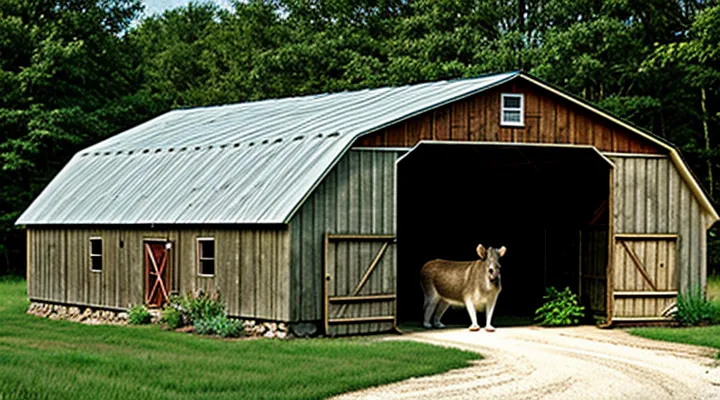
Understanding the Barn Rat
General Characteristics
The barn rat (Rattus norvegicus) commonly occupies structures built for agricultural or storage purposes. Its presence is closely linked to human‑made environments that provide shelter, warmth, and readily available food.
Key habitat attributes include:
- Building type: barns, sheds, grain silos, and livestock housing; structures with open eaves or gaps in walls.
- Construction material: wood, corrugated metal, and concrete; materials that retain heat and allow nesting within crevices.
- Moisture level: moderate humidity; damp areas near water troughs, feed bins, or waste pits support nesting material and food preservation.
- Temperature range: tolerates 5 °C to 30 °C; prefers interiors where temperature fluctuations are buffered by insulation.
- Food sources: stored grains, animal feed, discarded produce, and organic waste; abundant in locations with regular human activity.
- Predator protection: elevated platforms, concealed burrows, and access to tight openings reduce exposure to cats, birds of prey, and domestic dogs.
These characteristics define the environmental conditions that enable the barn rat to thrive in proximity to human operations.
Behavioral Adaptations
Barn rats (Rattus norvegicus) occupy structures where food, shelter, and water are abundant, such as barns, granaries, and agricultural outbuildings. Their survival depends on exploiting these resources while minimizing exposure to predators and human disturbance.
Key behavioral adaptations that align with these habitat characteristics include:
- Opportunistic foraging – individuals quickly locate and consume spilled grain, stored feed, and organic waste, adjusting diet composition according to seasonal availability.
- Burrow and nest construction – rats excavate shallow tunnels beneath floorboards and piles of straw, creating insulated chambers that maintain stable temperature and humidity.
- Nocturnal activity patterns – peak movement occurs during low-light periods, reducing encounters with diurnal predators and human activity.
- Social hierarchy – dominant rats control prime nesting sites and food caches, while subordinate members assist in grooming and sentinel duties, enhancing group cohesion.
- Rapid reproductive cycles – breeding peaks align with periods of abundant feed storage, ensuring offspring have immediate access to nourishment.
These behaviors collectively enable barn rats to thrive in human-modified environments, exploiting resource-rich structures while mitigating risks associated with dense habitation.
Preferred Barn Habitats
Structural Elements
Walls and Foundations
Barn rats exploit structural elements that provide shelter, access, and protection from predators. Walls and foundations constitute the primary interface between the building envelope and the interior environment, influencing rat occupancy through material composition, integrity, and microclimate conditions.
Walls constructed from wood, metal siding, or masonry often contain seams, joints, and penetrations for utilities. Degraded plaster, loose sheathing, and unsealed gaps create entry points and interior voids that retain heat and moisture. Insulation placed within wall cavities can become a food source when contaminated, while poorly attached cladding permits easy burrowing. Regular inspection of wall surfaces should focus on:
- Visible cracks larger than ¼ inch
- Unsealed gaps around pipes, wiring, and vents
- Deteriorated siding or plaster
- Evidence of nesting material or droppings in cavities
Foundations provide a stable base but also present opportunities for rat habitation when moisture accumulates or structural defects exist. Concrete slabs, crawl spaces, and basement walls that are cracked, uneven, or exposed to water infiltration create humid microhabitats conducive to rat activity. Effective control of foundation-related risks includes:
- Sealing cracks and joints with appropriate hydraulic cement
- Installing vapor barriers to prevent moisture migration
- Maintaining proper grading and drainage away from the building perimeter
- Ensuring crawl‑space vents are screened and that access doors close tightly
By addressing wall and foundation vulnerabilities—specifically sealing openings, repairing structural damage, and managing moisture—property managers reduce the suitability of these features for barn rat colonization.
Attics and Lofts
Attics and lofts provide barn rats with environments that satisfy their need for shelter, food access, and protection from predators. These spaces are typically isolated from human traffic, maintain stable temperatures, and contain abundant structural gaps that facilitate nesting and movement. The combination of low light, limited disturbance, and proximity to stored grain or other feed supplies makes these upper-level areas especially attractive to the species.
Key characteristics of attics and lofts that support barn rat occupancy include:
- Numerous entry points such as roof vents, eaves, and damaged siding that allow easy ingress.
- Warm, dry microclimates that reduce energy expenditure for thermoregulation.
- Structural voids in insulation, joists, and beams that serve as nesting sites.
- Direct access to stored agricultural products, providing a reliable food source.
- Minimal predator presence due to elevation and restricted human activity.
Effective management of these habitats requires sealing openings, maintaining structural integrity, and eliminating food residues that could sustain populations.
Floors and Basements
Barn rats frequently occupy interior surfaces of agricultural structures, especially floorboards and subterranean levels. These environments provide stable temperatures, reduced exposure to predators, and easy access to stored feed. The rats exploit gaps between floor joists, cracks in concrete, and ventilation openings to move between rooms and reach food sources.
Key characteristics of floor and basement habitats include:
- Structural gaps: Joist spaces, loose planks, and perimeter seams allow entry and concealment.
- Moisture levels: Basements retain higher humidity, supporting the rats’ need for water and facilitating nesting material preservation.
- Temperature moderation: Subterranean spaces maintain relatively constant warmth, reducing energy expenditure for thermoregulation.
- Proximity to supplies: Direct adjacency to grain bins, feed troughs, and waste piles shortens foraging routes.
Management strategies focus on eliminating entry points, sealing cracks, and maintaining dry conditions. Regular inspection of floor integrity and basement drainage reduces habitat suitability and limits population growth.
Food Sources
Stored Grains and Feeds
Stored grains and animal feeds constitute a primary attractant for barn rats, providing a reliable energy source that sustains reproductive cycles and population growth. The high caloric density of cereals, legumes, and mixed rations supports rapid weight gain and increased litter size, directly influencing colony expansion within agricultural structures.
Key characteristics of stored provisions that enhance suitability for rodent occupation include:
- Accessibility – Open containers, cracked sacks, and loose bulk piles allow easy entry and foraging.
- Moisture content – Grain moisture between 12 % and 14 % prevents desiccation while avoiding spoilage, creating an optimal feeding environment.
- Nutrient balance – Presence of protein‑rich feedstuffs (e.g., soy meal, fish meal) supplements carbohydrate intake, promoting fertility.
- Temperature stability – Indoor storage maintains temperatures conducive to year‑round activity, eliminating seasonal constraints.
Effective control measures focus on eliminating these habitat elements: seal all entry points, employ rodent‑proof containers, implement regular inventory rotation, and maintain cleanliness to remove spillage. By reducing the availability and quality of stored commodities, the habitat becomes inhospitable, limiting barn rat survival and reproductive success.
Animal Waste
Barn rats thrive in structures where organic residues accumulate. Waste generated by livestock, feed spillage, and discarded bedding creates a micro‑environment that satisfies the species’ nutritional and shelter requirements.
Typical waste in agricultural buildings includes:
- Manure and urine, rich in nitrogen and moisture.
- Uneaten grain, hay, and silage fragments providing carbohydrates and protein.
- Soiled bedding and straw, offering nesting material and insulation.
- Spilled liquids, such as milk or water, that maintain humidity levels.
These resources allow rats to locate food with minimal foraging effort, construct nests from fibrous debris, and sustain a suitable microclimate. Moisture from liquid waste raises ambient humidity, reducing desiccation risk and supporting pathogen growth that may further attract rodents.
Effective waste control measures focus on removal, containment, and environmental modification:
- Collect and store manure in sealed containers; relocate to designated pits.
- Install splash guards and drip trays to capture liquid spills; clean regularly.
- Use sealed feed bins; sweep floor surfaces daily to eliminate grain residues.
- Replace soiled bedding promptly; employ washable, non‑absorbent flooring where feasible.
- Implement routine inspections to identify and address waste buildup before it becomes a habitat feature for rats.
Other Organic Debris
Other organic debris in barn environments includes residual plant material, feed spillage, straw, hay fragments, rotted grain, and animal manure. These elements accumulate in corners, under equipment, and within storage bays, creating a heterogeneous substrate that barn rats readily exploit.
Typical components:
- Straw and hay pieces
- Spilled grain and feed pellets
- Decaying plant matter
- Manure and bedding residues
- Fallen leaves or twigs introduced with feed
The debris serves several functions for the species. It offers concealment from predators, allowing movement along low‑visibility pathways. Loose fibers act as nesting material, enabling rapid construction of insulated chambers. Nutrient‑rich remnants provide supplemental food, especially during periods of low external availability. Moisture retained within decomposing matter moderates microclimatic conditions, supporting thermoregulation and reducing desiccation risk.
Management practices that reduce the presence of such debris—regular cleaning, sealed storage containers, and prompt removal of spilled feed—directly limit shelter and food sources, thereby decreasing population density and breeding success.
Water Access
Leaks and Condensation
Leaks and condensation create micro‑environments that attract barn rats. Moisture accumulation softens building materials, allowing easier gnawing and nesting. Standing water provides a reliable source of drinking fluid, reducing the need for rats to travel far from the structure.
Key effects of water intrusion include:
- Damp insulation and wood become susceptible to fungal growth, which supplies additional food resources.
- Condensed droplets on metal surfaces generate rust, weakening structural integrity and creating entry points.
- Persistent wet spots encourage the formation of burrows and tunnels, offering shelter from predators and temperature extremes.
Management strategies focus on eliminating moisture sources. Seal roof seams, repair plumbing leaks, and install proper ventilation to reduce humidity. Regular inspection of high‑risk areas—such as animal pens, feed storage, and manure pits—prevents the development of condensation‑prone zones that support rat populations.
Animal Water Troughs
Animal water troughs constitute a primary element of the micro‑environment where barn rats live. They supply the only reliable source of liquid nutrition in many agricultural structures, directly influencing the distribution and activity of the species.
Typical troughs are constructed from galvanized steel, heavy‑duty plastic, or concrete. Dimensions range from 30 cm to 150 cm in length, with depths of 5 cm to 15 cm, allowing multiple individuals to drink simultaneously. Placement is usually at floor level near feed storage, under cover to protect from precipitation, and adjacent to drainage channels that prevent water stagnation.
Access to water determines several aspects of rat ecology: it supports higher local densities, encourages nocturnal foraging routes that converge on the trough, and reduces the need for long‑range movement in search of moisture. Consequently, troughs shape the spatial pattern of burrows and nesting sites within the building.
Effective management focuses on limiting unintentional rat use while maintaining livestock needs. Recommendations include:
- Installing smooth‑surface lids that lock securely.
- Positioning troughs on metal or concrete pads to eliminate gaps.
- Implementing a routine cleaning schedule to remove spillage and biofilm.
- Adding sloped runoff that directs excess water away from walls and corners.
By controlling these variables, operators can reduce the attractiveness of water troughs to barn rats without compromising animal welfare.
Shelter and Nesting Sites
Clutter and Debris
Clutter and debris create essential micro‑habitats for barn rats, providing shelter, nesting material, and concealment from predators. Accumulated items such as straw, wood shavings, cardboard, and broken feed bags form a complex matrix of voids and tunnels that rats exploit for movement and resting sites. The irregular surface of debris reduces exposure to light and airflow, stabilizing temperature and humidity levels favorable for breeding and survival.
Key functions of clutter and debris include:
- Nesting substrate – soft, fibrous materials enable rapid construction of insulated nests.
- Food reservoirs – trapped grains, seeds, and insects within debris supply opportunistic foraging.
- Predator avoidance – dense piles obstruct visual detection and limit predator access.
- Pathway creation – gaps between objects serve as concealed routes linking feeding zones and nesting chambers.
Effective management of these elements requires regular removal of accumulated waste, sealing of storage areas, and maintenance of clean floor surfaces. Reducing clutter diminishes the availability of concealed refuges, directly lowering the suitability of the environment for barn rats and limiting population growth.
Hay and Straw Bales
Hay and straw bales provide essential structural elements for barn rats seeking shelter and resources. The dense, fibrous composition creates insulated cavities where individuals can construct nests, maintain body temperature, and reduce exposure to wind and precipitation. The material’s softness allows easy manipulation, enabling rats to shape compacted layers that fit their body size and support offspring development.
Key functions of bales include:
- Nest construction – fibers interlock to form stable, yet flexible, chambers that protect young from predators and environmental stress.
- Food source – occasional ingestion of hay or straw supplies limited nutrients, especially during periods when primary feed is scarce.
- Pathway formation – stacked bales generate elevated walkways, allowing rats to move across the barn interior while avoiding ground-level hazards.
- Moisture regulation – the porous nature of the material absorbs excess humidity, helping to keep nesting sites dry and less attractive to parasites.
Placement of bales influences their utility. Bales stored near feeding troughs or water lines increase accessibility to supplemental food and water, while those positioned against walls create concealed entry points for burrowing. Regular rotation and inspection of bales prevent accumulation of waste and reduce the risk of disease transmission within rat colonies.
Overall, hay and straw bales serve as multifunctional assets in the architecture of barn rat habitats, offering protection, nourishment, and mobility within the agricultural environment.
Abandoned Equipment
Abandoned equipment left in agricultural buildings forms a network of niches that directly influences the distribution and behavior of the barn‑dwelling rat. The presence of rusted machinery, discarded crates, and obsolete feeding devices creates a heterogeneous environment that the species exploits for shelter, foraging, and thermoregulation.
- Complex geometry of metal frames and pipework provides concealed entry points and nesting cavities.
- Accumulated debris within equipment interiors retains moisture and organic matter, supporting insects and mold that serve as secondary food sources.
- Elevated platforms and stacked components offer escape routes from ground predators and facilitate quick movement across the structure.
- Heat‑absorbing surfaces of metal parts maintain higher temperatures during cold periods, reducing the energetic cost of maintaining body heat.
- Areas shielded from direct sunlight or wind protect rats from harsh weather, enhancing survival rates.
The interaction between these structural attributes and rat ecology intensifies population density in barns where equipment is left unattended. Management strategies that prioritize removal or repurposing of obsolete machinery reduce available refuges, thereby limiting habitat suitability for the species. Regular inspection and systematic clearance of disused apparatus are essential components of effective rodent control in agricultural settings.
Environmental Factors
Temperature and Humidity
Barn rats thrive in environments where temperature and humidity remain within narrow limits. Optimal ambient temperature ranges from 15 °C to 25 °C (59 °F–77 °F). Within this band, metabolic efficiency is maximized, allowing sustained foraging and reproductive activity. Temperatures below 10 °C (50 °F) increase energy expenditure for thermoregulation, leading to reduced activity and higher mortality. Conversely, temperatures above 30 °C (86 °F) accelerate dehydration risk and can suppress breeding cycles.
Humidity exerts a parallel influence. Relative humidity between 50 % and 70 % supports healthy fur condition, skin integrity, and respiratory function. Lower humidity (<40 %) accelerates water loss through the integument, prompting increased water‑seeking behavior and potential population decline. Higher humidity (>80 %) fosters mold growth and ectoparasite proliferation, which can weaken individuals and elevate disease transmission.
Key interactions between temperature and humidity include:
- Thermoregulation: Warm, humid conditions reduce evaporative cooling efficiency, compelling rats to seek cooler microhabitats.
- Reproductive output: Stable moderate temperature combined with optimal humidity correlates with larger litter sizes and shorter gestation intervals.
- Survival: Extreme fluctuations in either variable elevate stress hormones, impair immune response, and increase predation susceptibility.
Effective management of barn rat populations should therefore consider environmental modifications that disrupt these preferred ranges, such as improving ventilation to lower humidity and introducing shade structures to prevent overheating.
Light Conditions
Barn rats (Rattus norvegicus) thrive in environments where illumination supports foraging, predator avoidance, and thermoregulation. Their preferred habitats exhibit moderate to low light levels, typically ranging from 5 to 30 lux. Such illumination permits visual navigation while limiting exposure to diurnal predators.
Key light‑related habitat parameters include:
- Ambient intensity: 5–30 lux during active periods.
- Light source type: natural daylight filtered through structural gaps or artificial lighting with low flicker frequency.
- Photoperiod consistency: stable day–night cycles, with minimal abrupt changes, to synchronize circadian rhythms.
- Shadow availability: dense structural elements that create refuges from direct light.
Adaptations to these conditions involve heightened tactile and olfactory senses, enabling activity in dim settings where visual cues are limited. Consequently, habitat selection prioritizes structures that attenuate brightness and provide intermittent shading.
Predator Avoidance
Human Activity
Human activities shape the structural and micro‑environmental conditions that barn rats exploit for shelter, foraging, and reproduction. Construction of agricultural buildings, storage facilities, and livestock pens creates abundant, sheltered spaces with warm temperatures and low predation risk. Waste management practices affect the availability of food residues and nesting material, directly influencing population density and distribution.
Key ways human activity modifies habitat features include:
- Installation of ventilation ducts, gaps in siding, and roof eaves that provide entry points and hidden roosting sites.
- Accumulation of organic waste, grain spillage, and compost heaps that supply high‑energy food sources.
- Regular cleaning or removal of debris that reduces nesting material and forces rats to seek alternative structures.
- Use of pesticide applications that alter predator–prey dynamics and may temporarily suppress competing species.
- Seasonal adjustments in building occupancy, such as heating during winter, which maintain favorable thermal conditions for rats.
Understanding these interactions enables targeted management strategies, such as sealing structural openings, implementing strict waste containment, and scheduling habitat‑disruptive activities to limit rat colonization.
Natural Predators
Barn rats inhabit structures where food, shelter, and moisture are abundant, creating conditions that attract a range of native predators. These predators help regulate rat populations and influence the selection of nesting sites.
- Red-tailed hawks and other raptors hunt rats from perches near barns, exploiting open sky and high visibility.
- Great horned owls operate at night, using silent flight to capture rats emerging from burrows or lofts.
- Domestic cats, frequently present in farmsteads, seize rats that wander into stored grain areas.
- Foxes and coyotes patrol fields surrounding barns, preying on rats that travel between structures and open ground.
- Snakes such as rat snakes and gopher snakes locate rats within wall cavities and stored feed piles, using constriction to subdue prey.
Predator presence shapes rat behavior: individuals tend to locate nests deeper within walls, limit activity during peak hunting times, and favor locations with limited line‑of‑sight. Understanding these dynamics assists in designing barn environments that enhance natural control, such as maintaining perching sites for raptors and limiting concealment opportunities for rodents.