
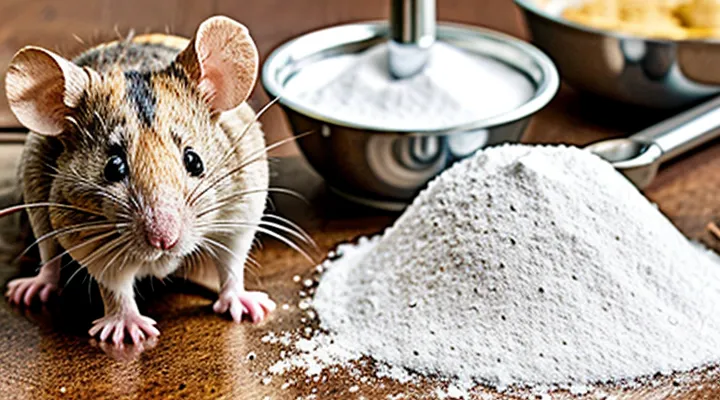
Baking Soda as a Mouse Control: The Popular Belief
The Theory Behind Baking Soda for Mouse Control
How Baking Soda Allegedly Affects Mice
Baking soda (sodium bicarbonate) is frequently cited as a rodent deterrent based on the premise that it interferes with the digestive system of mice. The claim rests on two principal mechanisms: ingestion‑induced gas formation and disruption of acid‑base balance. When a mouse consumes the powder, the alkaline compound reacts with stomach acids, producing carbon dioxide gas that may cause abdominal distension. Proponents argue that repeated exposure leads to discomfort, reduced appetite, and eventual mortality.
Scientific scrutiny reveals several limitations. First, the amount of baking soda required to generate lethal gas exceeds what a typical mouse would voluntarily ingest; the compound is not palatable and is often avoided when alternative food sources are available. Second, the buffering capacity of gastric secretions can neutralize moderate quantities of sodium bicarbonate without causing severe physiological stress. Laboratory studies on rodents indicate that oral doses far above the levels achievable in a household setting are necessary to produce measurable toxic effects.
Additional considerations involve the indirect impact on the environment. Baking soda does not repel mice through scent or taste, so it fails to create a barrier that discourages entry. Moreover, the powder can attract insects or cause moisture‑related damage to stored goods, potentially creating secondary problems for homeowners.
In summary, the alleged effect of baking soda on mice consists of:
- Gas production from acid‑base reaction in the stomach
- Potential discomfort from abdominal distension
- Theoretical toxicity at doses far exceeding realistic exposure
Empirical evidence does not support the efficacy of baking soda as a reliable mouse control method. Effective management typically relies on exclusion techniques, sanitation, and proven bait or trapping solutions.
Scientific Evidence and Expert Opinions
Studies and Research on Baking Soda and Rodents
Veterinary Perspectives on Baking Soda's Efficacy
Veterinarians assess sodium bicarbonate’s role in rodent deterrence by examining toxicological data, field observations, and comparative efficacy with established control agents. Laboratory studies show that ingestion of pure baking soda produces only mild gastrointestinal irritation in rodents, insufficient to cause mortality at doses commonly encountered in household applications. Consequently, the substance lacks the acute lethality required for reliable population reduction.
Clinical reports from small‑animal practices reveal occasional cases of mice found dead after exposure to high concentrations of sodium bicarbonate mixed with other irritants, but these outcomes are not reproducible under standard conditions. The primary effect observed is a short‑term aversion response, where rodents avoid areas treated with the powder due to its texture and odor. This behavioral deterrence does not translate into sustained control in infestations.
Veterinary consensus highlights several considerations:
- Safety for non‑target species: Baking soda poses minimal risk to pets and humans when used in typical household quantities, but excessive application can irritate mucous membranes and cause respiratory discomfort in sensitive animals.
- Environmental impact: As a biodegradable compound, it does not accumulate in soil or water, offering an advantage over chemical rodenticides that persist and bioaccumulate.
- Regulatory status: Sodium bicarbonate is not classified as a pesticide; therefore, it is not subject to the efficacy testing required for approved rodent control products.
- Cost and accessibility: Readily available and inexpensive, it appeals to owners seeking low‑cost alternatives, yet the lack of proven lethality reduces cost‑effectiveness for large infestations.
Veterinarians recommend integrating baking soda only as a supplementary measure within a comprehensive integrated pest management (IPM) program. Effective IPM combines exclusion techniques, sanitation, trapping, and, when necessary, professionally approved rodenticides. Relying solely on sodium bicarbonate is unlikely to achieve meaningful reductions in mouse populations and may provide a false sense of control.
Potential Dangers and Ineffectiveness
Risks of Relying on Unproven Methods
Baking soda is frequently promoted online as a simple, non‑chemical way to eliminate house mice. The allure of an inexpensive household ingredient can lead homeowners to adopt the practice without scientific validation. Reliance on such unproven methods carries several concrete risks.
- False sense of control – Expecting rapid mortality may delay the implementation of proven traps or professional extermination, allowing infestations to expand.
- Ineffective dosage – Concentrations required to affect rodents are not established; insufficient amounts produce no impact, while excessive quantities can create hazardous residues.
- Health hazards – Inhalation of fine powder or accidental ingestion by children and pets can cause respiratory irritation or gastrointestinal distress.
- Property damage – Accumulated powder may attract moisture, leading to corrosion of metal fixtures or staining of fabrics.
- Regulatory non‑compliance – Pest‑management regulations often require documented efficacy; using an unverified approach may violate local health codes.
- Resource waste – Money and effort spent on repeated applications reduce funds available for certified control solutions.
Scientific literature on sodium bicarbonate’s toxicity to rodents remains limited. Studies that do exist focus on laboratory settings with controlled exposure, not the variable conditions of a typical residence. Consequently, the method lacks reproducible results and cannot be relied upon as a primary control strategy.
Adopting evidence‑based practices—such as snap traps, live‑capture devices, or licensed rodenticides—provides measurable outcomes and aligns with safety standards. When untested alternatives are introduced, they should complement, not replace, established methods, and their effectiveness must be verified through documented observation.
Alternative and Proven Mouse Control Strategies
Effective and Humane Trapping Methods
Effective and humane trapping methods focus on capturing rodents without causing unnecessary suffering and on preventing future infestations. Live‑catch traps, constructed of wire mesh or plastic, allow capture of a single mouse. The animal can be released at least one mile from the residence, reducing the chance of return. Snap traps equipped with a calibrated spring deliver an instantaneous kill, minimizing pain when properly positioned and maintained. Multi‑capture traps hold several mice in a single device, limiting repeated handling and disposal effort.
Key considerations for selecting a method include:
- Target specificity: Design that captures only mice, avoiding accidental injury to non‑target species.
- Bait effectiveness: Use high‑protein attractants such as peanut butter or commercial rodent lures; synthetic powders like baking soda lack proven attractant properties.
- Placement strategy: Position traps along walls, behind appliances, and near known gnaw marks; mice travel close to baseboards.
- Sanitation: Clean traps after each use to prevent disease transmission and maintain bait potency.
- Legal compliance: Follow local wildlife regulations regarding release distances and trap types.
When evaluating the claim that a common household powder can eliminate mice, scientific studies show no lethal effect on rodents at typical household concentrations. The powder does not act as a poison nor as a deterrent. Consequently, reliance on such substances offers no measurable benefit compared to the proven mechanical solutions outlined above. Integrating proper trap selection, strategic placement, and rigorous hygiene provides a reliable, humane approach to mouse management.
Professional Pest Control Solutions
When to Call a Professional Exterminator
Baking‑soda treatments may reduce a few occasional intruders, but they rarely eradicate a growing mouse population. When the problem extends beyond isolated sightings, professional intervention becomes necessary.
Signs that indicate a qualified exterminator should be contacted include:
- Repeated droppings in multiple rooms or throughout the building.
- Damage to wiring, insulation, or stored food supplies.
- Evidence of nesting material in concealed locations.
- Lack of success after at least two weeks of consistent DIY measures.
Regulatory requirements also dictate professional involvement in certain settings. Commercial kitchens, hospitals, and schools must comply with health‑code standards that forbid unverified home remedies. A licensed pest‑control provider can document compliance and certify the premises.
Finally, consider the risk of secondary infestations. Mice reproduce quickly; a small colony can expand to dozens within a month. If population estimates exceed ten individuals, or if attempts to use baking soda have failed to produce a noticeable decline, the most reliable and time‑efficient solution is to engage a certified exterminator. Their expertise ensures proper bait placement, monitoring, and safe disposal, preventing further damage and protecting occupants’ health.
Prevention is Key: Mouse-Proofing Your Home
Sealing Entry Points
Sealing entry points is the most reliable component of any rodent‑prevention plan, regardless of the popularity of baking‑soda claims. Mice exploit gaps as small as a quarter of an inch; eliminating these openings removes the primary incentive to invade a building.
- Inspect exterior walls, foundations, and utility openings for cracks, holes, or deteriorated caulking.
- Apply steel wool or copper mesh to gaps before sealing with silicone or expanding foam; rodents cannot gnaw through metal.
- Install door sweeps and weather‑stripping on all exterior doors; verify that thresholds sit flush with the floor.
- Repair damaged screens, vent covers, and chimney flues; use fine‑mesh hardware cloth where ventilation is required.
- Seal gaps around plumbing, electrical conduits, and HVAC ducts with appropriate sealants rated for pest control.
By systematically blocking access, the need for chemical or household‑product deterrents diminishes. Even if baking soda were to affect mouse behavior, its impact would be negligible compared with the physical barrier created by a properly sealed environment. Consequently, thorough exclusion remains the cornerstone of effective mouse management.
Food Storage and Sanitation Practices
Proper food storage directly influences rodent presence. Containers that seal tightly, materials that resist chewing, and placement away from walls limit access points. When food is stored in airtight, rodent‑proof containers, the incentive for mice to explore a kitchen diminishes sharply.
Sanitation practices complement storage measures. Removing crumbs, wiping spills immediately, and regularly cleaning under appliances eliminate food traces that attract rodents. Waste should be deposited in bins with secure lids and removed frequently to prevent odor buildup.
Evaluation of baking soda as a rodent deterrent must consider these fundamentals. The compound does not possess toxic properties that kill mice; its primary effect is limited to causing mild gastrointestinal discomfort if ingested in large quantities. In environments where food is sealed and surfaces are clean, mice have little reason to encounter baking soda, rendering the method ineffective as a stand‑alone control strategy.
Key actions for reducing mouse activity:
- Store dry goods in polymer or metal containers with snap‑tight lids.
- Keep pantry shelves organized; avoid over‑stacking that creates hidden gaps.
- Clean counters and floors after each meal preparation.
- Sweep under refrigerators and stoves weekly.
- Use trash cans with tight‑fitting lids; empty them at least once daily.
Implementing these practices creates conditions where chemical deterrents, including baking soda, provide no additional benefit. Effective mouse control relies on eliminating food sources through disciplined storage and rigorous sanitation.