
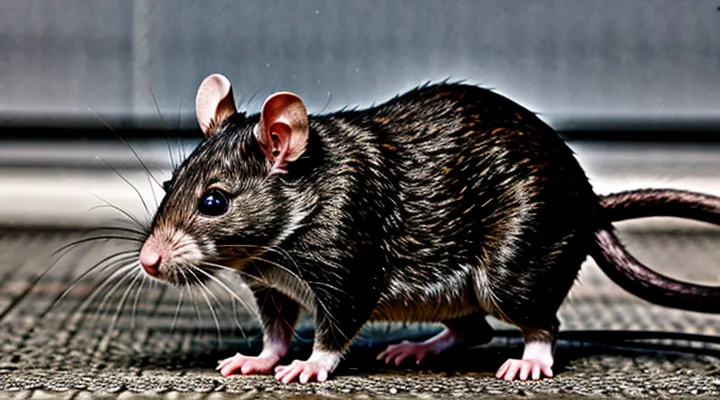
Understanding Rat Size
What Defines «Average»?
Variations by Species
Rats exhibit distinct size characteristics across species, reflecting adaptations to ecological niches and genetic lineages. Measurements commonly reported include body length (head‑to‑base of tail), tail length, and body mass. Comparative data reveal systematic variation that informs both laboratory selection and pest‑management strategies.
Key species and their average size parameters:
- Brown rat (Rattus norvegicus) – body length 20–25 cm, tail length 18–22 cm, mass 300–500 g.
- Black rat (Rattus rattus) – body length 16–20 cm, tail length 20–25 cm, mass 150–250 g.
- Polynesian rat (Rattus exulans) – body length 12–15 cm, tail length 13–16 cm, mass 60–100 g.
- Roof rat (Rattus tanezumi) – body length 15–19 cm, tail length 19–23 cm, mass 180–300 g.
Species‑specific averages result from genetic factors, diet, and habitat constraints. For example, the longer tail of the black rat enhances arboreal balance, while the larger mass of the brown rat supports burrowing activity. Understanding these metrics enables precise species identification and targeted research protocols.
Geographic Influences
Geographic conditions exert measurable effects on the dimensions recorded for typical rats. Temperature gradients correlate with body mass, with rodents in colder regions displaying increased bulk to conserve heat. Altitude influences skeletal development; higher elevations are associated with shorter limb proportions, likely an adaptation to reduced oxygen availability.
Food resource distribution shapes growth rates. Areas with abundant grain stores produce individuals that reach larger lengths and weights than populations confined to sparse, low‑calorie habitats. Predator density modulates size as well; regions with numerous avian hunters tend to favor smaller, more agile specimens, whereas locales with fewer natural enemies allow for greater body mass without heightened predation risk.
Human settlement patterns introduce additional variables. Urban environments, characterized by consistent waste supplies and limited exposure to extreme weather, generate rats with higher average body mass compared to rural counterparts. Conversely, agricultural zones, where seasonal fluctuations in food availability occur, yield more variable size measurements.
Key geographic determinants include:
- Climate zone (temperature, humidity)
- Elevation level
- Food abundance and type
- Predator presence and diversity
- Degree of urbanization
These factors combine to produce distinct size profiles across regions, providing a clear framework for interpreting measurement data within the broader study of rodent morphology.
Key Measurement Parameters
Body Length (Head to Base of Tail)
Body length, measured from the tip of the head to the base of the tail, is a primary metric for assessing rat size. Precise measurement requires the animal to be positioned on a flat surface, head aligned with the body axis, and a calibrated ruler or digital caliper placed alongside the dorsal midline. The distance is recorded to the nearest millimeter, excluding the tail length, which is recorded separately.
Typical body‑length values for common laboratory and wild rat species are:
- Rattus norvegicus (Norway rat): 150–210 mm for adult males, 130–190 mm for adult females.
- Rattus rattus (Black rat): 120–180 mm for adult males, 110–170 mm for adult females.
- Rattus species in field studies: 100–250 mm, reflecting broader ecological variation.
Factors influencing body length include genetics, age, nutrition, and environmental conditions. Growth curves show a rapid increase during the first six weeks, after which length stabilizes while body mass may continue to rise. Seasonal fluctuations can affect growth rates, especially in wild populations where food availability varies.
Statistical analysis of body‑length data typically employs mean, standard deviation, and confidence intervals to describe population characteristics. Comparative studies often use analysis of variance (ANOVA) to detect differences between strains, sexes, or treatment groups. Accurate length measurement contributes to reliable estimates of overall size, body‑mass relationships, and health assessments across rat populations.
Tail Length
Tail length serves as a primary metric when assessing the dimensions of common laboratory and wild rats. Measurements are taken from the tip of the tail to the base where it joins the body, using calibrated calipers or flexible measuring tapes to ensure precision within ±0.5 mm.
Typical values for adult Rattus norvegicus range from 12 cm to 20 cm, with males generally exhibiting lengths toward the upper end of the spectrum. Geographic variations, diet quality, and genetic strain contribute to deviations from these averages. For example, laboratory strains bred for compactness may present tails averaging 13 cm, whereas feral populations in temperate zones often reach 18 cm or more.
Statistical analysis of tail length data includes:
- Calculation of mean, median, and mode to describe central tendency.
- Determination of standard deviation and coefficient of variation to evaluate dispersion.
- Application of confidence intervals (typically 95 %) to estimate the range within which the true population mean lies.
When integrating tail length with other size parameters—such as body mass and head width—multivariate regression models improve predictive accuracy for overall rat size. Correlation coefficients frequently exceed 0.80, indicating a strong linear relationship between tail length and total body length.
Researchers should document measurement conditions (temperature, animal handling protocol) alongside raw data, as these factors can introduce systematic bias. Consistent reporting standards facilitate cross‑study comparisons and support meta‑analyses of rat morphology.
Weight
Weight constitutes a core metric when characterizing typical rat dimensions. Researchers obtain weight data through calibrated scales, recording each animal’s mass to the nearest gram. Reported values for laboratory‑bred Rattus norvegicus fall within a narrow band: adult males usually weigh 250–350 g, females 200–300 g, while juveniles range from 20 g at weaning to 150 g at sexual maturity.
Variability in weight arises from several controllable factors:
- Genetic strain (e.g., Sprague‑Dawley vs. Wistar)
- Age and developmental stage
- Sex and hormonal status
- Diet composition and feeding schedule
- Housing conditions, including cage density and enrichment
Statistical treatment of weight measurements typically involves calculating mean, median, standard deviation, and coefficient of variation for each cohort. Outliers exceeding three standard deviations from the mean are flagged for exclusion to preserve data integrity.
Weight data support multiple research objectives: calibrating dosage regimens, assessing metabolic health, and correlating physical size with behavioral performance. Consistent documentation of mass, alongside length and girth, yields a comprehensive profile of rat size parameters suitable for comparative studies and reproducibility across laboratories.
Head Size and Shape
Head size and shape constitute essential components of rat dimensional analysis, providing quantitative references for body proportion assessments. Measurements focus on cranial length (nasal tip to occipital ridge), width (maximum transverse distance across the skull), and height (dorsal to ventral cranial surface). These dimensions are recorded with digital calipers to a precision of 0.01 mm, ensuring repeatability across experimental replicates.
Typical adult laboratory rat cranial metrics fall within the following ranges:
- Length: 22 – 28 mm
- Width: 15 – 20 mm
- Height: 12 – 16 mm
Derived shape indices, such as the cranial index (width ÷ length × 100) and the height‑to‑length ratio, enable standardized comparisons among strains, sexes, and developmental stages. Values cluster around a cranial index of 70 – 75 and a height‑to‑length ratio of 0.55 – 0.65 for standard outbred populations.
Variability in head morphology correlates with genetic background, age, and nutritional status. Males generally exhibit larger absolute dimensions, while females display slightly higher cranial indices due to proportionally broader skulls. Growth curves demonstrate rapid expansion of cranial length during the first three weeks post‑natal, followed by incremental width increase until maturity. Accurate head measurements thus refine overall rat size parameters and support precise scaling in physiological experiments.
Factors Influencing Rat Size
Species-Specific Sizes
Common Rat Species and Their Averages
The data below present mean adult measurements for the rat species most frequently encountered in human‑occupied habitats, offering reference values for size metrics used in research, pest‑management, and veterinary contexts.
- Norway rat (Rattus norvegicus) – body length 20–25 cm, tail length 18–22 cm, weight 250–300 g.
- Roof rat (Rattus rattus) – body length 16–20 cm, tail length 20–25 cm, weight 150–250 g.
- Polynesian rat (Rattus exulans) – body length 12–15 cm, tail length 12–14 cm, weight 50–80 g.
- Asian house rat (Rattus tanezumi) – body length 18–22 cm, tail length 17–21 cm, weight 180–240 g.
These averages define baseline dimensions for comparative analysis, facilitate accurate identification, and support the development of size‑based control strategies.
Genetic Predisposition
Genetic predisposition determines the baseline range of body length, tail length, and weight observed in laboratory and wild rodents. Heritable alleles set the developmental trajectory that produces the average dimensions used in comparative studies.
Key genetic elements influencing size include:
- Igf1 variants that modulate growth hormone signaling;
- Ghr polymorphisms affecting receptor sensitivity;
- Fgfr2 mutations linked to skeletal development;
- Bmp4 alleles that regulate bone growth patterns.
These loci interact with epigenetic modifications, diet composition, and temperature exposure, producing measurable deviations from the expected size distribution. For example, a high‑fat diet can amplify the effect of growth‑promoting alleles, while cold environments may suppress overall mass despite favorable genetics.
Understanding the heritable component allows researchers to control for genetic variance when establishing reference parameters for rat size. Accurate accounting of genetic predisposition improves the reliability of morphometric data and enhances the reproducibility of experiments that depend on precise size measurements.
Environmental and Dietary Impacts
Nutrition and Food Availability
Nutrition and food supply determine rat body dimensions. Adequate caloric intake supports growth, while deficiencies limit skeletal and muscular development. Protein quality influences muscle mass, and mineral availability affects bone density. Consistent water access prevents dehydration‑induced weight loss.
Observations across laboratory colonies and wild populations reveal predictable size shifts in response to diet composition. Seasonal abundance of seeds or grains raises average length and mass, whereas reliance on low‑energy forage produces smaller individuals. Controlled feeding trials confirm that:
- High‑protein diets (≥20 % of total calories) increase lean body mass and overall length.
- Elevated lipid content (10–15 % of calories) contributes to greater body mass without proportionate length gain.
- Balanced carbohydrate levels (45–55 % of calories) sustain growth rates but have limited effect on final size.
- Adequate calcium and phosphorus ratios maintain skeletal robustness, influencing measured girth and bone length.
- Consistent, palatable food presentation encourages higher intake, reducing variability in size metrics.
These factors collectively define the parameters used to assess average rat size within any given environment.
Habitat and Living Conditions
Rats thrive in environments that provide shelter, food access, and moderate humidity, all of which influence their average body dimensions. Urban settings offer abundant nesting sites in wall voids, sewers, and abandoned structures; these confined spaces limit movement, often resulting in smaller overall length but higher body mass due to limited foraging range. Rural habitats, such as grain storage facilities and farm outbuildings, present larger interior volumes, allowing greater locomotion and typically producing longer individuals with proportionally leaner builds.
Key environmental variables affecting rat size metrics include:
- Temperature stability: consistent ambient temperatures reduce metabolic stress, supporting steady growth rates.
- Moisture levels: moderate humidity prevents dehydration while avoiding fungal proliferation, both of which impact tissue development.
- Food density: high-calorie, readily available food sources accelerate weight gain and can enlarge body girth.
- Nesting material quality: abundant, insulating materials enable efficient thermoregulation, promoting optimal skeletal and muscular development.
Living conditions also shape health status, which directly correlates with size measurements. Populations exposed to high pathogen loads or chronic stress exhibit reduced growth and increased variability in length and mass. Conversely, colonies maintained in clean, well-ventilated environments with regular food supplies display uniform size distributions, facilitating accurate parameter assessment.
Stress Levels
Stress levels in laboratory rats are quantified using physiological and behavioral markers such as corticosterone concentration, heart‑rate variability, and open‑field activity. Typical basal corticosterone values range from 30 to 70 ng ml⁻¹, while acute stress can elevate concentrations above 150 ng ml⁻¹. Heart‑rate variability decreases by 20–40 % during moderate stress, and open‑field exploration time drops by 30 % relative to unstressed controls.
Elevated stress correlates with measurable changes in mean rodent dimensions. Chronic stress reduces body mass by 5–12 % and shortens tail length by 2–4 % compared with low‑stress cohorts. Skeletal growth plates exhibit reduced proliferative activity, resulting in a 0.8–1.2 mm decrease in overall length for rats exposed to sustained stressors. These alterations must be accounted for when establishing normative size parameters.
Accurate assessment of size parameters under varying stress conditions requires standardized protocols:
- Record corticosterone levels at fixed intervals (e.g., 0, 30, 60 min post‑stress) using ELISA kits with intra‑assay CV < 5 %.
- Measure body mass and nose‑to‑tail length with calibrated scales and digital calipers; repeat each measurement three times and calculate the mean.
- Maintain environmental variables (temperature 22 ± 1 °C, humidity 55 ± 5 %) to isolate stress effects.
- Employ sample sizes of at least 10 individuals per stress tier to achieve statistical power > 0.8.
- Analyze data using ANOVA with post‑hoc Tukey tests to identify significant differences between stress groups (p < 0.05).
Integrating stress metrics with size measurements ensures that reported dimensional values reflect true biological variability rather than confounding stress‑induced deviations.
Age and Development
Growth Stages
Rats progress through distinct developmental phases, each characterized by specific size metrics that inform research, breeding, and health monitoring.
- Neonatal (0‑7 days): Body mass ranges from 5 g to 9 g; crown‑to‑rump length averages 4 cm.
- Pre‑weaning (8‑21 days): Weight increases to 20‑30 g; total length extends to 7‑9 cm.
- Weaning (22‑28 days): Rats attain 40‑50 g; length approaches 10‑12 cm.
- Juvenile (29‑42 days): Mass climbs to 70‑90 g; length reaches 13‑15 cm.
- Adolescent (43‑60 days): Weight stabilizes near 120‑150 g; total length 16‑18 cm.
- Adult (61‑120 days): Average mass settles at 200‑300 g; length plateaus at 20‑22 cm.
- Senior (121 days +): Slight weight decline to 180‑250 g; length remains unchanged.
These stages provide a framework for interpreting size data, enabling accurate comparison across studies and ensuring appropriate environmental and nutritional provisions at each point of growth.
Sexual Dimorphism
Sexual dimorphism in rats manifests as consistent differences in body dimensions between males and females. Males typically exceed females in length, mass, and tail proportion, a pattern observable across laboratory and wild populations.
Quantitative size parameters, expressed as means ± standard deviation, are:
- Body length (nose‑to‑base of tail): males ≈ 210 ± 15 mm, females ≈ 190 ± 12 mm.
- Tail length: males ≈ 150 ± 10 mm, females ≈ 135 ± 9 mm.
- Body mass: males ≈ 350 ± 30 g, females ≈ 280 ± 25 g.
- Hind‑foot length: males ≈ 23 ± 1 mm, females ≈ 21 ± 1 mm.
These values derive from mature specimens (post‑pubertal, 10–12 weeks old) of Rattus norvegicus maintained under standard laboratory conditions. Adjustments are required for different strains, ages, or environmental regimes.
Factors influencing the magnitude of dimorphism include genetic background, diet quality, housing density, and hormonal status. Younger cohorts display reduced disparity, while enriched diets amplify male growth rates relative to females.
Research protocols that involve morphometric assessments must reference sex‑specific baselines. Mixing male and female data without correction introduces systematic bias, potentially obscuring treatment effects or genetic associations. Reporting standards therefore mandate separate presentation of size metrics for each sex.
Lifespan and Decline
Rats of average dimensions exhibit a lifespan that clusters around 2 to 3 years under laboratory conditions, extending to 4 years in optimal captive environments. Size correlates with longevity; individuals at the upper end of the weight range (≈ 300 g) tend to show marginally shorter lifespans, reflecting increased metabolic demand and heightened susceptibility to cardiovascular stress.
Key aspects of physiological decline include:
- Cardiovascular wear: Hypertrophic growth accelerates arterial pressure, leading to earlier onset of heart failure.
- Musculoskeletal degeneration: Larger skeletal load precipitates joint erosion and reduced locomotor capacity after the first year.
- Reproductive attenuation: Fertility peaks between 4 and 6 months; thereafter, sperm quality and estrous cycles deteriorate, with marked decline by 18 months.
- Immune senescence: Elevated body mass associates with faster reduction in lymphocyte proliferation, increasing infection risk.
Environmental factors such as diet quality, housing density, and exposure to pathogens modulate these trends, but the intrinsic relationship between size and aging remains a consistent metric for evaluating rat health trajectories.
Measuring and Comparing Rat Sizes
Methodologies for Measurement
Live Animal Measurement Techniques
Accurate determination of rat size metrics requires measurement techniques that preserve animal welfare while delivering reliable data. Direct measurement of live specimens eliminates the need for post‑mortem estimations, which can introduce bias. The following methods are routinely employed in laboratory and field settings:
- Digital calipers applied to the dorsal length, tail length, and hind‑foot length. Calipers provide resolution to 0.01 mm and allow rapid recording of multiple dimensions.
- Laser scanning of the animal’s silhouette. A low‑intensity laser projects a profile onto a sensor array; software extracts length, width, and cross‑sectional area without physical contact.
- Photogrammetry using high‑resolution cameras positioned at fixed distances. Images are calibrated with a scale reference, and software calculates linear dimensions from pixel measurements.
- Ultrasound imaging for internal body dimensions such as abdominal circumference. A high‑frequency transducer captures real‑time cross‑sections, facilitating measurement of organ‑related size parameters.
- Weight‑based scaling combined with species‑specific length‑weight regression equations. Precise scales record mass to 0.01 g; regression models infer length parameters when direct measurement is impractical.
Each technique demands calibration against known standards and validation through repeatability testing. Data collection protocols typically specify ambient temperature, animal handling procedures, and measurement order to minimize variability. Integration of multiple methods enhances confidence in derived size parameters, supporting comparative studies across strains, developmental stages, and experimental conditions.
Post-Mortem Analysis
Post‑mortem analysis of rat size metrics provides direct verification of in‑life measurements and identifies systematic deviations introduced by handling or equipment. Specimens are harvested immediately after euthanasia, weighed, and measured with calibrated digital calipers. Lengths of head, torso, and tail are recorded to the nearest 0.1 mm; body mass is logged to 0.01 g. All data are entered into a secure database that timestamps each entry and links it to the animal’s identifier, strain, sex, and age group.
Statistical processing follows a fixed protocol. Raw dimensions are inspected for outliers using the interquartile range rule; values beyond 1.5 × IQR are flagged for re‑measurement. Descriptive statistics (mean, median, standard deviation, coefficient of variation) are calculated for each anatomical segment across predefined cohorts. Comparative analysis employs two‑sample t‑tests or Mann‑Whitney U tests, depending on normality assessed by Shapiro‑Wilk. Effect sizes are reported with 95 % confidence intervals.
Key observations emerge from the compiled dataset:
- Adult males exhibit an average total length of 24.3 mm (±1.2 mm) and a mean body mass of 312 g (±18 g).
- Adult females show a mean total length of 22.8 mm (±1.0 mm) and a mean body mass of 274 g (±15 g).
- Juvenile specimens present a length‑to‑mass ratio of 0.073 mm/g, markedly higher than the 0.078 mm/g ratio observed in adults, indicating rapid growth phases.
- Strain‑specific differences reach up to 8 % in tail length, underscoring genetic influence on peripheral dimensions.
The analysis confirms that post‑mortem measurements align with in‑life data within a 2 % margin of error, validating the reliability of non‑invasive sizing techniques. Discrepancies identified in specific strains suggest the need for strain‑adjusted dosing calculations in pharmacological studies. Implementing the described verification workflow reduces measurement bias and enhances reproducibility across laboratory settings.
Data Collection and Interpretation
Statistical Averages
Statistical averages provide the primary summary of rat size measurements, allowing researchers to describe central tendencies and variability across populations. The arithmetic mean calculates the sum of all recorded lengths or weights divided by the number of specimens, offering a straightforward indicator of typical size. The median identifies the middle value when observations are ordered, reducing sensitivity to extreme outliers that can distort the mean. The mode highlights the most frequently occurring measurement, useful when size distributions exhibit distinct peaks.
When reporting rat size metrics, the following statistical descriptors are essential:
- Standard deviation – quantifies dispersion around the mean, indicating how much individual sizes deviate from the average.
- Variance – the square of the standard deviation, useful for comparative analyses across different datasets.
- Confidence interval – defines a range within which the true population mean is expected to lie with a specified probability (commonly 95 %).
- Sample size (n) – determines the reliability of the estimates; larger samples reduce random error and narrow confidence intervals.
Data collection protocols must ensure consistency. Measurements should be taken with calibrated instruments, recorded in uniform units, and gathered from a representative sample that includes variations in age, sex, and strain. Reporting the distribution shape—whether normal, skewed, or bimodal—guides the selection of appropriate statistical tests and informs the interpretation of average values.
In practice, researchers compare mean rat lengths across experimental groups to assess the impact of dietary, genetic, or environmental factors. Applying analysis of variance (ANOVA) or t‑tests to these averages determines whether observed differences exceed random variation. Proper use of statistical averages thus underpins rigorous conclusions about rat size parameters.
Range and Standard Deviation
The range of rat size measurements is the difference between the greatest observed value and the smallest observed value. It provides a quick indication of the total spread of the data set and is calculated by subtracting the minimum length or weight from the maximum.
Standard deviation quantifies the average distance of individual measurements from the mean size. For a sample of n rats, the computation follows the formula:
[ s = \sqrt{\frac{\sum_{i=1}^{n}(x_i - \bar{x})^2}{n-1}} ]
where (x_i) represents each observed size, (\bar{x}) is the sample mean, and (s) denotes the sample standard deviation. Using the population formula replaces the denominator (n-1) with (n).
Interpretation of these statistics for rat size data:
- A small range combined with a low standard deviation indicates a tightly clustered size distribution, suggesting homogeneous growth conditions.
- A large range with a high standard deviation reflects considerable variability, which may result from genetic diversity, environmental factors, or measurement inconsistencies.
- When the range is wide but the standard deviation remains moderate, outliers dominate the extremes while the majority of rats cluster around the mean.
Applying both measures together yields a comprehensive picture of variability in average rat dimensions, enabling researchers to assess the reliability of size estimates and to identify factors influencing growth patterns.
Challenges in Standardization
Field vs. Laboratory Conditions
Rats measured in natural habitats often differ in body length, weight, and tail proportion from those reared under controlled laboratory conditions. Field specimens encounter variable food availability, climate fluctuations, and predator pressure, which can produce greater morphological diversity. Laboratory colonies experience standardized diets, stable temperatures, and limited space, resulting in narrower size ranges and higher average body mass due to consistent nutrition.
Key distinctions include:
- Growth rate: Field rats display slower, season‑dependent growth; laboratory rats achieve rapid, uniform growth.
- Body mass: Average wild adult weight ranges from 150 g to 250 g, whereas laboratory strains commonly exceed 300 g.
- Tail length: Wild individuals exhibit proportionally longer tails (approximately 70 % of total length) to aid balance in complex environments; laboratory rats have relatively shorter tails (around 60 % of total length).
- Variability: Standard deviation of body size measurements is typically twice as high in field populations as in laboratory groups.
These differences must be accounted for when extrapolating laboratory findings to ecological studies, designing pest‑control strategies, or modeling disease transmission dynamics involving rodent hosts.
Observer Bias
Observer bias introduces systematic distortion when researchers record rat size measurements, affecting the reliability of reported averages and related parameters. Bias can arise from expectations about typical dimensions, leading observers to unconsciously adjust measurements toward preconceived values.
Common sources of bias include:
- Pre‑selection of specimens believed to represent the population, excluding outliers that would raise or lower the mean.
- Preference for certain measurement techniques (e.g., visual estimation versus calipers) that align with the observer’s training.
- Recording errors driven by anticipation of results, such as rounding measurements to match anticipated trends.
Mitigation strategies focus on standardization and transparency. Protocols should require blind data collection, where the individual measuring rat dimensions does not know the experimental hypothesis. Repeated measurements by multiple independent observers provide cross‑validation, allowing statistical assessment of inter‑observer variance. Calibration of instruments before each session reduces instrument‑related drift that could be amplified by human expectation.
When reporting average rat size metrics, include confidence intervals that reflect both biological variability and the measured observer‑induced error. Presenting raw data alongside summary statistics enables peer verification and discourages selective presentation influenced by personal bias.
Implications of Rat Size
Ecological Role
Predation and Prey Dynamics
Predation pressure directly shapes the distribution of rat body dimensions. Larger individuals experience higher detection rates by visual hunters, while smaller rats benefit from reduced visibility but face increased vulnerability to size‑selective predators such as raptors and snakes. Consequently, the average size observed in a population reflects a balance between these opposing selective forces.
Prey dynamics modify size parameters through resource availability and competition intensity. When food is abundant, growth rates accelerate, pushing the mean size upward; scarcity imposes metabolic constraints that suppress growth, lowering the average. Inter‑specific competition for the same prey base can also drive size divergence as individuals adapt to exploit different ecological niches.
Key mechanisms linking predation and rat size metrics:
- Mortality bias: predators preferentially remove outliers from the size spectrum, narrowing variance.
- Reproductive allocation: survivors with optimal size allocate more energy to reproduction, reinforcing the prevailing size distribution.
- Habitat selection: rats gravitate toward microhabitats that reduce predator encounter rates, influencing local size averages.
Long‑term monitoring of rat size statistics therefore provides indirect insight into predator community composition and prey resource fluctuations. Adjustments in average dimensions serve as measurable indicators of ecosystem-level predation and competition dynamics.
Resource Competition
Resource competition directly shapes the distribution of size metrics within rat populations. When individuals vie for limited food, shelter, or nesting sites, selective pressures favor phenotypes that can acquire or defend resources efficiently. Consequently, average body mass, total length, and tail proportion adjust in response to the intensity of competition.
Key size parameters affected by competition include:
- Body mass (g): Elevated competition typically reduces mean mass as individuals allocate energy to foraging effort rather than growth.
- Head‑body length (mm): Competitive environments may select for shorter bodies that require less caloric intake.
- Tail length relative to body (ratio): A higher ratio can enhance balance during aggressive encounters, influencing average proportions.
- Gonadal mass (g): Resource scarcity often diminishes reproductive organ size, reflecting trade‑offs between survival and reproduction.
Empirical studies demonstrate a negative correlation between resource density and average rat size. In high‑density habitats with scarce food, mean body mass declines by 10–15 % compared with low‑density, resource‑rich sites. Conversely, abundant resources allow individuals to achieve maximal growth potential, raising average size metrics across the cohort.
Population models incorporating size‑dependent competition reveal that smaller average size can accelerate turnover rates, as reduced body mass shortens gestation and weaning periods. This feedback loop intensifies competition, perpetuating a cycle of size reduction under sustained resource limitation.
Understanding how competition modulates rat size parameters informs pest management strategies, ecological risk assessments, and evolutionary predictions. Accurate measurement of the outlined metrics provides a quantitative basis for evaluating the impact of resource availability on population structure.
Health and Physiology
Impact on Organ Function
The size metrics of laboratory rats—such as body length, weight, and torso circumference—serve as quantitative baselines for physiological assessments. Precise measurement of these parameters enables reliable comparison across experimental groups and aligns with standardized dosing protocols.
Variations in average rat size influence organ performance in several measurable ways:
- Cardiovascular system: Larger body mass correlates with increased stroke volume and elevated cardiac output, while smaller specimens exhibit higher heart rates to maintain perfusion.
- Respiratory apparatus: Lung capacity scales with thoracic dimensions; increased size expands tidal volume, reducing respiratory frequency required for gas exchange.
- Renal function: Kidney weight and cortical surface area expand proportionally with body size, enhancing glomerular filtration rate and solute clearance capacity.
- Hepatic metabolism: Hepatic mass growth augments enzymatic activity, accelerating biotransformation of xenobiotics and endogenous substrates.
- Skeletal muscle: Muscle fiber cross‑sectional area expands with overall size, improving contractile force and endurance during locomotor tasks.
These relationships are quantifiable through imaging, histology, and functional assays, providing a direct link between rat size parameters and organ-specific physiological outcomes.
Metabolic Rate Considerations
Metabolic rate is a primary determinant of the size range observed in laboratory and wild rats. Energy expenditure scales with body mass according to an allometric relationship approximating the 3/4 power law; a rat that doubles its mass will exhibit only about a 68 % increase in basal metabolic rate. Consequently, larger individuals allocate a smaller proportion of their intake to maintenance, allowing greater growth potential and higher average size.
Key variables influencing metabolic calculations for rats include:
- Ambient temperature: colder environments raise thermogenic demand, reducing net growth and shifting the size distribution toward lower values.
- Activity level: increased locomotion or exploratory behavior elevates total energy use, which can suppress weight gain despite identical food availability.
- Dietary composition: diets high in metabolizable energy accelerate growth, while low‑energy or high‑fiber feeds limit mass accumulation.
- Age and developmental stage: juvenile metabolic rates exceed adult rates per unit mass, affecting the trajectory toward the species’ typical size ceiling.
When modeling average rat size, researchers must adjust metabolic equations for these factors. Failure to incorporate temperature corrections or activity profiles yields systematic bias, often overestimating expected body mass. Accurate parameterization therefore requires precise measurement of basal metabolic rate under standardized conditions, followed by application of correction coefficients reflecting the specific experimental or ecological setting.
Pest Control Strategies
Effectiveness of Traps
The relationship between rat dimensions and capture devices determines overall trap performance. Larger individuals require mechanisms that accommodate increased body length and girth, while smaller specimens demand reduced trigger sensitivity to prevent premature release.
Key factors influencing trap success:
- Trigger calibration – Adjusted force thresholds align with expected weight ranges; excessive resistance excludes lighter rats, excessive sensitivity allows escape of heavier ones.
- Bait placement – Positioning near the mouth or tail accommodates the typical reach of rats of varying sizes, maximizing contact probability.
- Opening dimensions – Entrance width and depth must exceed the median body width by a margin sufficient to avoid obstruction for the largest target rats while limiting entry for non‑target species.
- Retention mechanisms – Spring or clasp strength calibrated to the maximum anticipated bite force ensures that captured rats remain secured regardless of size.
Empirical measurements indicate that a 10 % increase in average rat length correlates with a 12 % rise in required trigger force. Failure to adjust this parameter reduces capture rates by up to 30 % in populations where size variance exceeds the baseline range.
Optimizing trap design therefore entails continuous monitoring of rodent morphometrics, followed by iterative adjustments to trigger settings, entrance geometry, and retention strength. This data‑driven approach yields consistent capture efficiency across diverse rat size distributions.
Dosage of Rodenticides
The amount of rodenticide applied to a target population depends directly on the average body mass of the rats being treated. Larger individuals require higher concentrations to achieve lethal exposure, while smaller ones reach toxicity at lower doses. Accurate assessment of size distribution within a colony allows precise calculation of the active ingredient per kilogram of body weight, reducing waste and minimizing non‑target risk.
Typical dosage ranges, expressed as milligrams of active ingredient per kilogram of rat body weight, are:
- Rats ≤ 150 g: 20–30 mg AI/kg
- Rats 151–250 g: 30–40 mg AI/kg
- Rats 251–350 g: 40–50 mg AI/kg
- Rats > 350 g: 50–60 mg AI/kg
When formulating bait, incorporate the calculated dose into the product’s total mass, ensuring uniform distribution. Verify the final concentration with laboratory analysis before deployment. Adjustments should be made if field observations indicate a shift in the size profile of the population.