
Understanding Mammals
Key Characteristics of Mammals
Warm-Bloodedness
Rats belong to the class Mammalia, a group distinguished by endothermy, the ability to maintain a stable internal temperature independent of ambient conditions. This physiological trait, commonly described as warm‑bloodedness, relies on metabolic heat production and regulatory mechanisms such as shivering, non‑shivering thermogenesis, and vasomotor control.
Key aspects of rat endothermy include:
- High basal metabolic rate that generates sufficient heat to sustain core temperatures around 37 °C.
- Presence of brown adipose tissue, rich in mitochondria, which oxidizes fatty acids to produce heat without muscular activity.
- Thermoregulatory behavior, such as nesting and huddling, that complements physiological processes.
These characteristics enable rats to occupy diverse environments, from temperate urban settings to arid deserts, by adjusting metabolic output and employing behavioral strategies. The combination of metabolic heat generation and precise temperature regulation confirms that rats are warm‑blooded mammals.
Hair or Fur
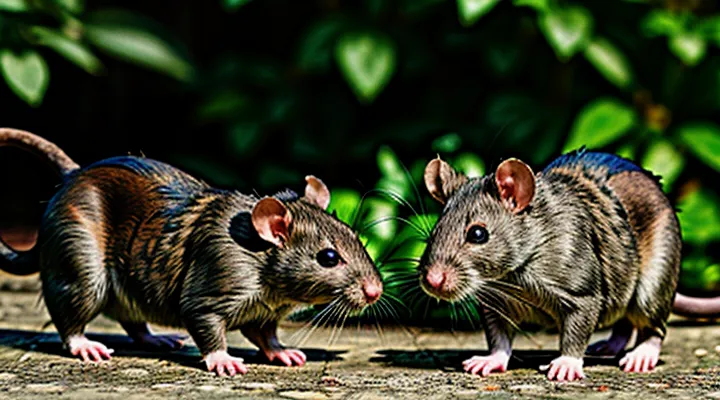
Rats belong to the class Mammalia, a group defined by the presence of true hair. The integumentary covering of a rat consists of fine, dense hair that functions as insulation, sensory input, and protection against abrasion.
Key characteristics of rat hair:
- Composed of keratinized filaments arising from follicles embedded in the dermis.
- Exhibits a layered structure: cuticle, cortex, and medulla, identical to hair in other mammals.
- Grows continuously, with each follicle producing a single shaft that may be shed and replaced.
- Displays pigmentation patterns that vary among species and individuals, providing camouflage and social signaling.
The hair of rats differs from what is commonly termed “fur” in larger mammals only in scale; both terms describe the same keratinous structure. In rodents, the hair is typically shorter and more pliable, allowing the animal to navigate tight spaces while maintaining thermal regulation.
Because hair is a defining mammalian trait, the presence of this keratinous covering confirms that rats meet the principal criterion for classification within the mammalian lineage.
Live Birth
Live birth, or viviparity, describes the development of offspring inside the mother's body until they are ready to survive independently. This reproductive mode distinguishes mammals from oviparous vertebrates that lay eggs.
Rats reproduce through viviparity. Female rats carry embryos for approximately 21–23 days, after which they give birth to litters ranging from 5 to 12 pups. The newborns are fully formed, possess hair, and can thermoregulate within hours. Their development relies on a placenta that supplies nutrients and oxygen, a hallmark of mammalian gestation.
The presence of live birth, together with hair, mammary glands, and three‑middle‑ear bones, confirms that rats belong to the class Mammalia. These traits collectively satisfy the diagnostic criteria used to classify an animal as a mammal.
Milk Production
Rats belong to the class Mammalia, a taxonomic group defined by the presence of mammary glands and the production of milk to feed young. Female rats develop functional mammary tissue shortly after mating, initiating lactation when pups are born.
During lactation, rat mammary glands secrete a nutrient‑rich fluid composed primarily of proteins, lipids, carbohydrates, and immunoglobulins. The secretion follows a predictable schedule: colostrum appears within the first 24 hours, providing high concentrations of antibodies; mature milk replaces colostrum by day 3 and supports rapid pup growth until weaning at approximately 21 days of age.
Key characteristics of rat milk:
- Protein content: 10–12 % of total solids, rich in casein and whey fractions.
- Lipid content: 15–18 % of total solids, predominantly triglycerides with essential fatty acids.
- Carbohydrate content: 5–7 % of total solids, mainly lactose.
- Immunoglobulin concentration: high in early milk, declines as pups develop their own immune system.
The lactational cycle is regulated by prolactin and oxytocin, hormones that stimulate milk synthesis and ejection. Pup suckling triggers neuroendocrine reflexes, maintaining hormone release and ensuring continuous milk supply.
Research on rat milk informs comparative mammalian physiology, nutritional requirements for laboratory rodents, and the development of artificial formulas for neonatal care. Understanding rat lactation reinforces the classification of rats as mammals and illustrates the functional traits that define the group.
Four-Chambered Heart
Rats belong to the class Mammalia, a group distinguished by a set of physiological traits that separate them from reptiles, birds, and fish. One defining characteristic is the presence of a complete, four‑chambered heart, which separates oxygenated and deoxygenated blood efficiently and supports a high metabolic rate.
The rat heart consists of two atria and two ventricles. The left atrium receives oxygen‑rich blood from the lungs and passes it to the left ventricle, which pumps it into the systemic circulation. The right atrium collects deoxygenated blood from the body and transfers it to the right ventricle, which delivers it to the lungs. This arrangement mirrors the cardiac structure found in other mammals such as humans, dogs, and primates, and differs from the single or partially divided hearts of non‑mammalian vertebrates.
The four‑chambered heart, together with other mammalian features—hair, mammary glands, and a neocortex—confirms the classification of rats as mammals.
- Two atria and two ventricles
- Complete separation of pulmonary and systemic circuits
- High cardiac output supporting endothermy
- Alignment with mammalian circulatory anatomy
These points provide unequivocal evidence that rats possess the cardiac architecture required for mammalian physiology.
The Biological Classification of Rats
Kingdom, Phylum, Class
Rats belong to the animal kingdom, possess a vertebrate structure, and exhibit the defining characteristics of mammals. Their taxonomic placement is:
- Kingdom: Animalia – multicellular organisms that consume organic material for energy.
- Phylum: Chordata – animals with a notochord, dorsal nerve cord, and, in most cases, a vertebral column.
- Class: Mammalia – vertebrates with hair, three middle ear bones, and mammary glands that produce milk for offspring.
These three hierarchical levels confirm that rats are classified as mammals, sharing the core physiological traits of the class Mammalia.
Order: Rodentia
Rats belong to the class Mammalia, which distinguishes them from reptiles, birds, and fish by the presence of mammary glands, hair, and three middle ear bones. Within Mammalia, rats are placed in the order Rodentia, the largest mammalian order in terms of species diversity.
Rodentia is defined by several anatomical and physiological traits:
- A single pair of continuously growing incisors in each jaw, protected by a hard enamel front and softer dentine behind, requiring constant gnawing to maintain length.
- A diastema, or gap, between the incisors and the cheek teeth, allowing efficient processing of a wide range of plant material.
- A relatively short gestation period and large litter sizes, facilitating rapid population growth.
- Predominantly herbivorous or omnivorous diets, with many species exhibiting opportunistic feeding behaviors.
Rats are members of the family Muridae, the most extensive family within Rodentia, and are classified under the genus Rattus. This taxonomic placement confirms that rats share all fundamental mammalian characteristics while also exhibiting the distinctive features of rodents. Consequently, rats are unequivocally mammals, residing in the order Rodentia.
Family: Muridae
Rats belong to the family Muridae, a taxonomic group within the class Mammalia. This classification confirms that rats possess the defining characteristics of mammals: hair, three‑middle ear bones, a neocortex, and mammary glands that produce milk for offspring.
Key attributes of the Muridae family include:
- Placement in the order Rodentia, the largest mammalian order.
- Over 700 species distributed worldwide, encompassing mice, rats, gerbils and related rodents.
- Dental formula I 1/1 C 0/0 P 0/0 M 3/3, adapted for gnawing.
- Predominantly nocturnal behavior and high reproductive rates.
- Adaptability to diverse habitats, from forests to urban environments.
Because Muridae is a family of mammals, any species classified within it—rats among them—are unequivocally mammals.
Confirming Rat Mammalian Status
Evidence from Physical Traits
Hair and Fur
Rats belong to the class Mammalia, a classification confirmed by the presence of a true hair coat. The integumentary system of rats consists of keratinized filaments that grow from follicles embedded in the dermis. These filaments are commonly referred to as fur, although the term “hair” is technically accurate for all mammals.
The coat is composed of two principal fiber types. Guard hairs form the outer layer, providing abrasion resistance and weather protection. An underlying undercoat of finer, shorter hairs supplies thermal insulation. Follicles produce a continuous cycle of growth, shedding, and renewal, ensuring that the coat adapts to seasonal temperature changes.
Functions of rat hair and fur include:
- Thermoregulation through retention of body heat.
- Sensory input via vibrissae (whiskers) that detect tactile stimuli.
- Physical barrier against parasites and environmental contaminants.
- Camouflage achieved by pigment variations that match habitat backgrounds.
Compared with other mammals, rat fur displays a relatively high density of guard hairs and a shorter overall length, reflecting their burrowing and nocturnal lifestyle. Coloration ranges from brown to gray, with occasional albino morphs lacking pigment entirely.
The existence of a keratinized hair coat, organized into guard and undercoat layers, satisfies a defining mammalian characteristic, reinforcing the classification of rats as mammals.
Mammary Glands
Mammary glands are defining features of the class Mammalia. They are specialized skin appendages that develop during puberty and produce milk to nourish offspring. In rodents, including the common laboratory rat, the glands are organized in pairs along the ventral surface, usually numbering five to six pairs depending on the strain.
Key anatomical and functional traits of rat mammary glands:
- Simple tubular epithelium lined ducts that converge into a single lactiferous sinus per gland.
- Alveolar structures surrounded by myoepithelial cells that contract during milk ejection.
- Hormone‑driven development: estrogen initiates ductal growth, while prolactin stimulates alveolar differentiation and lactogenesis.
- Seasonal variation: gland size and secretory activity increase during the breeding season, aligning with reproductive cycles.
The presence, structure, and hormonal regulation of these glands confirm that rats belong to the mammalian lineage, as such glands are absent in non‑mammalian vertebrates.
Specialized Teeth
Rats belong to the class Mammalia, a group defined by characteristic anatomical features such as hair, mammary glands, and a specific dental arrangement. Their dentition illustrates these mammalian traits through highly specialized teeth.
The primary incisors are large, continuously growing, and possess enamel only on the front surface. This asymmetrical enamel distribution creates a self‑sharpening edge that enables efficient gnawing of hard materials. The incisors’ rootless structure allows perpetual eruption, compensating for constant wear.
Posterior teeth consist of a single pair of premolars and three pairs of molars on each side of the jaw. These cheek teeth are brachydont, with low crowns and complex occlusal surfaces designed for grinding seeds, grains, and other plant matter. The enamel‑dentine junction in molars is uniform, providing durability during mastication.
Key functional adaptations include:
- Self‑sharpening incisors: enamel on the labial side, dentine on the lingual side.
- Continuous eruption: rootless incisors maintain length despite abrasion.
- Cheek teeth morphology: low crowns, cusped occlusal patterns for effective grinding.
- Muscle attachment: enlarged masseter muscles support powerful bite forces.
These dental specializations support the rat’s omnivorous diet and reinforce its classification within the mammalian lineage.
Evidence from Physiology and Reproduction
Internal Temperature Regulation
Rats belong to the order Rodentia, a group of placental mammals characterized by the presence of hair, mammary glands, and a vertebrate body plan. As mammals, rats maintain a relatively constant internal temperature despite fluctuations in ambient conditions.
Thermoregulation in rats relies on several physiological processes. Basal metabolic activity generates heat continuously; the rate of metabolism increases when external temperatures drop. Brown adipose tissue, rich in mitochondria, produces heat through non‑shivering thermogenesis mediated by uncoupling protein 1. When metabolic heat is insufficient, skeletal muscle contractions generate additional warmth via shivering. Peripheral vasoconstriction reduces blood flow to the skin, limiting heat loss.
Behavioral strategies complement physiological mechanisms. Rats construct insulated nests from shredded material, creating microenvironments with reduced thermal gradients. Group huddling conserves heat through shared body warmth. Individuals also seek elevated ambient temperatures by occupying sunlit surfaces or warm objects within their habitat.
Because rats exhibit both physiological and behavioral temperature control comparable to other mammals, they serve as a standard model for studying mammalian thermoregulation. Experimental data derived from rat studies inform understanding of human heat balance, metabolic disorders, and the impact of environmental stressors on homeostasis.
Gestation and Live Birth
Rats belong to the class Mammalia, a group defined by internal fertilization, a defined gestation period, and the birth of live young. The reproductive biology of rats provides clear evidence of these mammalian characteristics.
The gestation interval for the common laboratory rat (Rattus norvegicus) averages 21‑23 days. Gestation length is consistent across strains, with minor variations caused by environmental temperature and maternal nutrition. Embryonic development proceeds rapidly; by day 14 the fetus exhibits differentiated organ systems, and by day 20 the limbs and sensory structures are fully formed.
At parturition, rats deliver fully formed offspring that rely on maternal milk for nourishment. The newborns possess a well‑developed integument, functional olfactory receptors, and an open mouth capable of nursing within hours of birth. The presence of mammary glands and the production of colostrum are essential for the survival of the litter.
Key reproductive parameters:
- Gestation length: 21‑23 days
- Average litter size: 6‑12 pups
- Birth weight: 5‑7 g per pup
- Neonatal reflexes (e.g., rooting, suckling) appear within the first 24 hours
- Weaning age: 21‑28 days, after which juveniles transition to solid food
These data confirm that rats reproduce through a relatively short gestation followed by live birth, fulfilling the defining criteria of mammals.
Parental Care
Rats belong to the class Mammalia, characterized by hair, three‑middle‑ear bones, and lactation. Their mammalian status is confirmed by genetic, anatomical, and reproductive traits shared with other members of the group.
Parental care in rats demonstrates typical mammalian investment. Females construct nests, produce milk, and maintain constant contact with offspring until weaning. Males may assist by guarding the nest and providing food resources, although their involvement varies among species and environmental conditions.
Key aspects of rat parental behavior include:
- Nest building using soft materials for thermal regulation.
- Frequent grooming of pups to stimulate circulation and eliminate waste.
- Milk secretion rich in antibodies, delivering passive immunity.
- Pup retrieval and repositioning to ensure uniform warmth.
- Gradual reduction of maternal contact as juveniles approach independence.
Common Misconceptions
Rats vs. Reptiles
Rats belong to the class Mammalia, a group defined by the presence of hair, three‑middle ear bones, and mammary glands that produce milk for offspring. Their bodies maintain a constant internal temperature through metabolic heat generation, a characteristic of endothermy. In contrast, reptiles are ectothermic reptiles, relying on external sources of heat to regulate body temperature and lacking mammary tissue.
Key biological distinctions include:
- Skin covering: Rats have fur; reptiles have scales.
- Thermoregulation: Rats are warm‑blooded; reptiles are cold‑blooded.
- Reproductive strategy: Rats give birth to live young and nurse them; most reptiles lay eggs and do not provide parental nourishment after laying.
- Respiratory anatomy: Rats possess a diaphragm that separates the thoracic and abdominal cavities; reptiles breathe using a simple rib‑based system without a diaphragm.
- Skeletal features: Rats have a single occipital condyle connecting skull to spine; reptiles typically have multiple occipital condyles.
These differences confirm that rats are mammals, whereas reptiles represent a separate vertebrate class with distinct anatomical and physiological traits.
Rats vs. Insects
Rats belong to the class Mammalia, characterized by hair, three‑middle ear bones, and live birth. Insects are members of the phylum Arthropoda, defined by exoskeletons, segmented bodies, and compound eyes. This taxonomic distinction determines fundamental biological processes.
Mammalian traits in rats include:
- Endothermy with regulated body temperature.
- Presence of mammary glands that produce milk for offspring.
- Development of a neocortex enabling complex behavior.
Insect characteristics contrast sharply:
- Ectothermy, temperature dependent on environment.
- Egg laying without parental nourishment.
- Exoskeleton composed of chitin, requiring molting for growth.
Reproductive strategies differ. Rats have relatively few, well‑developed young per gestation, each receiving prolonged maternal care. Insects often produce large clutches of eggs, with minimal or no parental involvement after oviposition.
Respiratory systems also diverge. Rats use a diaphragm-driven lung system, allowing efficient oxygen exchange. Insects rely on a tracheal network delivering air directly to tissues through spiracles.
These anatomical and physiological differences confirm that rats are mammals, while insects occupy a separate, invertebrate classification.
Ecological Role and Significance
Adaptability and Distribution
Rats belong to the class Mammalia, sharing defining characteristics such as hair, three‑middle ear bones, and live birth. Their status as mammals underpins the biological mechanisms that enable rapid adaptation to diverse environments.
Adaptability
- High reproductive rate produces multiple litters annually, allowing swift population recovery.
- Omnivorous diet accepts seeds, insects, waste, and carrion, reducing dependence on specific food sources.
- Flexible dentition continuously grows, accommodating varied textures and preventing wear.
- Burrowing and climbing abilities permit exploitation of subterranean, arboreal, and urban niches.
Distribution
- Native to Asia, rats have expanded to all continents except Antarctica.
- Established populations thrive in temperate forests, arid deserts, tropical rainforests, and human‑altered habitats such as cities and farms.
- Transportation of goods and ships facilitates accidental introductions, reinforcing global presence.
- Climate tolerance ranges from subzero winter temperatures to tropical heat, supporting survival across latitude gradients.
Impact on Ecosystems
Rats belong to the class Mammalia, order Rodentia, and possess defining mammalian traits such as hair, mammary glands, and internal temperature regulation.
Their omnivorous diet links them to multiple trophic levels. By consuming seeds, fruits, insects, and carrion, rats influence plant regeneration, seed predation, and nutrient recycling.
Predators—including owls, hawks, snakes, and carnivorous mammals—rely on rats as a consistent food source, shaping predator population dynamics and spatial distribution.
Burrowing activity alters soil architecture, enhancing aeration, water infiltration, and mixing of organic material, which in turn affects plant root environments and microbial communities.
Pathogen transmission by rats can modify health status of wildlife and human populations, leading to shifts in community composition and disease-mediated mortality.
Rapid reproductive cycles generate population surges that may intensify competition with native small mammals, depress vegetation through overgrazing, and increase agricultural damage.
Key ecological impacts of rats include:
- Seed predation and dispersal modulation
- Support of predator food webs
- Soil structure modification via burrowing
- Vectoring of zoonotic diseases
- Competitive pressure on sympatric species during population peaks