
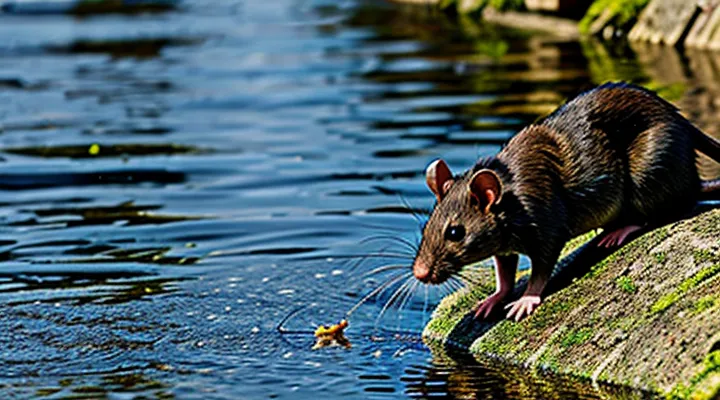
Natural Habitat and Water Exposure
Water Sources in the Wild
Rats encounter a variety of natural water sources while foraging in outdoor habitats. These environments shape their behavior toward moisture and affect their willingness to enter or avoid water.
- Running streams – provide continuous flow, high oxygen levels, and cooler temperatures; rats often use banks for drinking but rarely submerge.
- Ponds and small lakes – offer stagnant water with abundant vegetation; rats may explore shallow margins for food but generally stay above the surface.
- Rain‑filled depressions – temporary pools formed after precipitation; rats may drink opportunistically but limited depth reduces risk of immersion.
- Groundwater seeps – moist soil zones where water emerges near the surface; rats exploit these areas for hydration without entering open water.
- Snowmelt channels – seasonal runoff that creates shallow streams; rats use them as travel corridors, maintaining contact with dry ground.
In the wild, rats display a pragmatic approach: they seek hydration from accessible sources while minimizing exposure to deep or turbulent water. Their strong sense of smell and tactile whiskers help locate safe drinking spots, and their agile body allows quick retreat to solid ground. Consequently, natural water bodies do not inherently deter rats, but the depth, flow, and visibility of water influence the likelihood of immersion.
Urban Environments and Water Proximity
Rats inhabiting cities encounter water sources more frequently than their rural counterparts. Sewer tunnels, storm drains, and flooded streets provide constant moisture, yet the animals demonstrate a pragmatic relationship with these environments rather than outright avoidance.
- Rats can swim short distances, typically up to 30 feet, using their tail for balance.
- They prefer shallow, flowing water that offers escape routes from predators.
- Deep, stagnant pools trigger hesitation, especially when visibility is limited.
Urban structures influence rat behavior around water. Concrete channels create predictable currents, allowing rats to navigate with minimal effort. Conversely, irregular debris and sudden depth changes increase perceived risk, prompting the animals to seek alternative routes or remain on dry surfaces.
Studies measuring stress hormones show elevated levels when rats are forced into unfamiliar deep water, indicating a physiological response to perceived threat. However, when water is part of their regular habitat—such as in drainage systems—hormone levels remain comparable to those observed in dry zones, suggesting acclimatization.
Overall, city-dwelling rats exhibit selective aversion: they avoid deep, opaque water but readily exploit shallow, accessible streams for foraging, movement, and shelter. Their interaction with urban water bodies reflects adaptive risk assessment rather than a universal fear.
Do Rats Fear Water? Dispelling Myths
Understanding Rat Behavior
Rats display a complex relationship with water that reflects their evolutionary adaptations and environmental experiences. In natural habitats, many species encounter moist soils, streams, and flood‑prone areas, prompting the development of swimming ability and a tolerance for brief immersion. Laboratory studies confirm that brown rats (Rattus norvegicus) can swim for extended periods and often use water to escape predators or explore new territories.
Key behavioral factors influencing water interaction include:
- Habitat exposure: Rats raised in dry, urban settings show heightened avoidance of water sources compared to those from semiaquatic environments.
- Predation risk: Water can serve as a refuge from terrestrial predators, reducing the perceived threat and encouraging entry.
- Stress response: Acute exposure to cold or deep water triggers elevated cortisol levels, indicating discomfort but not outright fear.
- Learning: Repeated positive experiences, such as successful foraging across a shallow stream, diminish avoidance behavior.
Experimental observations reveal that when presented with a shallow, clean water container, most rats will investigate, paddle, and sometimes ingest the liquid. Deep or turbulent water elicits hesitation, increased grooming, and a tendency to retreat, suggesting a calibrated risk assessment rather than an innate phobia.
Overall, rat behavior toward water is conditional. Species possess the physiological capacity for swimming, yet individual responses vary according to prior exposure, environmental context, and perceived danger. Understanding these nuances informs pest management strategies, laboratory animal welfare, and ecological research involving rodent populations.
Instinct vs. Fear
Rats possess a strong innate ability to navigate water. Muscular coordination, buoyancy control, and a natural tendency to seek escape routes enable rapid swimming across shallow and deep environments. Laboratory observations confirm that even newborn pups can paddle without prior training, demonstrating that aquatic locomotion is embedded in their genetic makeup.
The instinct to swim coexists with a separate emotional response: fear. Fear emerges when water presents a sudden threat, unfamiliar temperature, or confinement that limits escape. This reaction is not universal; it varies according to:
- Prior exposure to water sources
- Presence of predators or stressors nearby
- Individual health and age
When rats encounter water in a safe, controlled setting, instinct dominates and they move confidently. In contrast, abrupt immersion, cold temperatures, or restricted space trigger heightened cortisol levels, increased heart rate, and avoidance behaviors, indicating fear overrides the swimming instinct.
Research distinguishes between innate swimming competence and learned aversion. Conditioning experiments show that rats exposed repeatedly to non‑harmful water lose fear responses, while those subjected to negative experiences retain avoidance. Thus, the balance between instinct and fear depends on both genetic predisposition and environmental history.
Understanding this balance clarifies why some rats readily cross flooded areas while others avoid water entirely. The interaction of hard‑wired locomotor skills with situational anxiety determines each animal’s behavior when confronted with aquatic environments.
Rats as Swimmers
Aquatic Adaptations
Rats possess several physiological and behavioral traits that influence their interaction with aquatic environments. Their fur, dense and water‑repellent, reduces surface wetness, allowing brief immersion without rapid heat loss. Muscular hind limbs generate strong propulsion, enabling efficient swimming strokes. The diaphragm and intercostal muscles coordinate breathing during submersion, supporting oxygen exchange for short dives.
Key adaptations that facilitate water exposure include:
- Nasal valve control – the ability to close nostrils while submerged prevents water ingress.
- Tail flexibility – a laterally flattened tail functions as a rudder, enhancing maneuverability.
- Enhanced tactile whiskers – vibrissae detect water currents, aiding navigation in low‑visibility conditions.
- Metabolic adjustment – a shift toward anaerobic metabolism during prolonged swimming conserves oxygen stores.
These characteristics explain why rats can navigate water despite a general tendency to avoid it. The avoidance stems from innate risk assessment rather than physiological incapacity; the adaptations listed above provide the necessary tools for survival when immersion occurs.
Swimming Prowess and Endurance
Rats demonstrate strong swimming capabilities despite a natural aversion to immersion. Muscular structure, webbed hind feet, and a streamlined torso enable rapid propulsion. Laboratory observations record average swim speeds of 1.5 m s⁻¹, comparable to small mammals of similar size. Reflexive paddling and coordinated limb movements sustain buoyancy without external assistance.
Endurance tests reveal consistent performance across species:
- Norway rats (Rattus norvegicus) maintain continuous swimming for 15–20 minutes before fatigue signs appear.
- Roof rats (Rattus rattus) exhibit slightly shorter durations, averaging 10–12 minutes.
- Young specimens (< 8 weeks) show reduced stamina, typically 5–7 minutes, while mature adults exceed 20 minutes under controlled conditions.
Physiological assessments attribute endurance to high aerobic capacity, efficient oxygen extraction, and a rapid heart rate response that supports sustained muscle activity. Adaptations such as a high proportion of slow‑twitch fibers and an effective thermoregulatory system further enhance prolonged aquatic exertion.
Survival Mechanisms in Water
Rats demonstrate several physiological and behavioral adaptations that enable survival when they encounter water, despite a general tendency to avoid submersion. Their bodies are equipped to maintain buoyancy, regulate temperature, and navigate aquatic environments.
Key mechanisms include:
- Fur structure: Dense undercoat traps air, providing insulation and limited flotation.
- Tail morphology: Muscular tail functions as a rudder, enhancing steering and stability during swimming.
- Respiratory control: Rats can voluntarily hold their breath for up to 30 seconds, allowing brief immersion without panic.
- Metabolic shift: Elevated anaerobic glycolysis supplies energy when oxygen intake is restricted.
- Behavioral response: Immediate retreat to shallow or vegetated margins reduces exposure to deep water.
These adaptations collectively reduce the risk of drowning and help rats exploit water sources for foraging or escape routes. The presence of such mechanisms explains why fear of water does not translate into an inability to survive in it.
Water as a Threat or Nuisance
Drowning Risks
Rats possess limited buoyancy and lack specialized water‑proof fur, making submersion hazardous. Their small body mass combined with a high surface‑to‑volume ratio accelerates heat loss, leading to rapid hypothermia. When trapped in standing water, the animal’s instinctive attempts to escape often result in exhaustion, decreasing the likelihood of reaching dry ground before loss of consciousness.
Key factors that increase the probability of drowning in rodents include:
- Shallow, stagnant pools where escape routes are obstructed by debris or dense vegetation.
- Rapidly flowing water that overwhelms the animal’s ability to grip surfaces.
- Cold temperatures that impair muscular function and reduce stamina.
- Confinement in narrow channels that prevent the rat from turning or climbing out.
Preventive measures focus on eliminating unintended water accumulations, sealing entry points to basements and crawl spaces, and maintaining proper drainage. Regular inspection of indoor and outdoor environments reduces the chance that a rat will encounter conditions conducive to submersion, thereby mitigating the inherent drowning risk.
Extreme Weather Conditions
Rats typically avoid immersion, yet extreme weather forces encounters with water that test this instinct.
Heavy rainfall and flash floods create temporary waterways and saturated ground. Rats respond by seeking higher ground, using elevated burrows or climbing structures to escape rising levels. When escape routes are limited, some individuals enter floating debris, demonstrating limited tolerance for brief submersion.
Prolonged drought reduces available drinking sources, prompting rats to travel farther in search of moisture. This increased movement raises the likelihood of crossing shallow streams or irrigation channels, where the risk of accidental drowning grows.
Freezing temperatures solidify surface water, forming ice that can support rat weight. Rats exploit ice as a bridge between shelters, but sudden thaw can break the surface, leading to immersion. Conversely, extreme heat accelerates evaporation, concentrating water in small pools that become traps for inexperienced juveniles.
Understanding how severe precipitation, drought, and temperature extremes alter rat behavior informs pest‑management strategies. Monitoring flood‑prone zones, ensuring dry refuges during drought, and inspecting ice‑covered areas after cold spells reduce accidental losses and limit population spread.
Unpleasant Experiences with Water
Rats exhibit a pronounced aversion to water when they encounter conditions that threaten survival or comfort. Direct exposure to cold, turbulent, or deep water creates immediate distress, prompting rapid escape attempts.
- Sudden immersion in cold water triggers shivering and loss of muscular coordination.
- Forced submersion in deep containers induces panic, leading to frantic surface‑seeking behavior.
- Unpredictable splashing or ripples cause heightened alertness and attempts to flee the source.
- Prolonged exposure to standing water results in skin maceration and increased susceptibility to infection.
Physiological measurements confirm elevated cortisol and adrenaline levels during these episodes, indicating acute stress. Respiratory rate accelerates, and body temperature drops as thermoregulatory mechanisms fail. Neural recordings show heightened activity in the amygdala and hypothalamus, regions associated with fear and survival responses.
Experimental water‑maze tests demonstrate that rats increase latency before entering water, display erratic swimming patterns, and often abandon the task after brief exposure. Repeated negative experiences reinforce avoidance, shaping long‑term behavioral patterns that limit interaction with aqueous environments.
Impact of Water on Rat Control
Ineffectiveness of Water-Based Deterrents
Rats possess strong swimming abilities and can cross bodies of water up to several meters deep without difficulty. Their bodies are adapted for buoyancy, and they can hold their breath for up to three minutes, allowing them to navigate flooded areas, gutters, and drainage pipes. Consequently, water does not act as a reliable barrier.
Common water‑based deterrent methods—sprinklers, moisture‑saturated pads, and liquid repellents—fail for several reasons:
- Rats quickly acclimate to wet surfaces; repeated exposure reduces any initial aversion.
- Moist environments often provide shelter and food sources, encouraging rather than discouraging activity.
- Water can be redirected through cracks, gaps, or elevated pathways, bypassing the deterrent entirely.
- Chemical repellents diluted in water lose potency when evaporated or absorbed by surrounding materials.
Field observations confirm that rats routinely exploit water features to access structures, using pipes, sewers, and even shallow puddles as routes. Effective control therefore requires physical exclusion, sealing entry points, and habitat modification rather than reliance on water alone.
Trapping Strategies Near Water Sources
Rats display limited aversion to moisture, yet they typically avoid deep or fast‑flowing water because it hampers locomotion and increases predation risk. Near ponds, streams, or drainage basins, individuals often forage along the edge where shelter and food are abundant while remaining capable of rapid retreat onto dry ground. Understanding this behavior informs effective trapping near water sources.
Effective trapping in such environments relies on positioning, bait selection, and device adaptation:
- Place snap or live‑catch traps within 30 cm of the waterline, aligning the entrance toward the dry bank to exploit the rat’s tendency to stay on solid ground.
- Use moisture‑resistant bait (e.g., dried grains, peanut butter) that does not dissolve; supplement with a small amount of wet food to attract rats accustomed to foraging near water.
- Employ waterproof trap housings or seal seams with silicone to prevent damage from splashes or humidity.
- Install multiple traps in a staggered line parallel to the shoreline, spacing them 1–2 m apart to cover the typical foraging corridor.
- Check and reset traps at least twice daily to maintain efficacy and reduce loss of captured rodents due to exposure.
Monitoring signs such as gnaw marks on banks, droppings, or burrow entrances helps refine placement. Adjusting trap height to 5–10 cm above the ground accommodates the rat’s low profile and minimizes water contact. Combining these tactics maximizes capture rates while respecting the limited water tolerance exhibited by the species.
Different Rat Species and Water
Norway Rats and Their Affinity for Water
Norway rats (Rattus norvegicus) are semiaquatic mammals that frequently exploit wet environments for foraging, nesting, and escape routes. Their physiological adaptations—dense fur, high body fat, and a waterproof respiratory system—enable prolonged exposure to water without loss of thermoregulation.
Behavioral observations confirm that these rodents actively seek water sources such as sewers, drainage ditches, and riverbanks. When confronted with a water barrier, they display the following responses:
- Immediate assessment of depth and flow speed.
- Rapid entry if the surface is shallow or the current is moderate.
- Use of swimming strokes comparable to small mammals, maintaining a horizontal body orientation.
- Preference for routes that lead to food or shelter, even when alternative dry paths exist.
Laboratory experiments demonstrate that Norway rats can swim for several minutes, covering distances up to 30 meters before fatigue sets in. Their survival rate in controlled flooding scenarios exceeds 80 percent, indicating a low aversion to immersion.
In urban ecosystems, the species’ tolerance for moisture contributes to population resilience. Access to water bodies facilitates dispersal, reduces predation pressure, and expands the range of exploitable resources, reinforcing the species’ status as a successful commensal organism.
Roof Rats and Their Preferences
Roof rats (Rattus rattus) inhabit elevated structures such as attics, eaves, and roof spaces. Their anatomy—long tail, strong hind limbs, and excellent climbing ability—makes vertical movement more efficient than horizontal travel across the ground. Consequently, they select habitats that minimize contact with open water.
These rodents exhibit a clear preference for dry environments. Moisture increases the risk of fungal growth and reduces the stability of nesting materials. Roof rats therefore favor:
- Solid insulation or shredded paper for nests, kept away from damp surfaces.
- Gaps and cracks near roof tiles, where condensation is limited.
- Food sources stored in sealed containers rather than wet waste.
While capable of swimming, roof rats rarely enter pools, gutters, or rain gutters unless forced by extreme scarcity of shelter or food. Their avoidance of water is not an innate fear but a behavioral adaptation that reduces exposure to predators and disease vectors commonly found in aquatic settings.
When assessing infestation risk, focus on eliminating high, dry entry points, sealing cracks above the eave line, and maintaining low humidity in roof cavities. These measures align with the rats’ natural inclination toward elevated, moisture‑free habitats.
The Role of Scent and Moisture
Scent Trails and Navigation
Rats depend on olfactory cues to navigate complex environments. Individual rodents deposit urine, feces, and glandular secretions that create a persistent chemical map. This map enables rapid route selection, territory recognition, and predator avoidance.
Scent trails consist of volatile and non‑volatile compounds. Volatile molecules disperse quickly, providing immediate directional information, while non‑volatile residues cling to surfaces, offering long‑term markers. Rats detect these signals with a highly developed nasal epithelium and a vomeronasal organ capable of discriminating minute concentration gradients.
Water surfaces disrupt both volatile diffusion and non‑volatile residue adhesion. When a trail contacts liquid, volatile cues dilute, and solid deposits dissolve or are washed away. Consequently, rats encounter gaps in their chemical map, leading to hesitation or detour behavior. Experiments show increased latency and reduced crossing frequency in mazes where water interrupts scent lines.
The degradation of olfactory pathways by water explains why many rats display reluctance to enter or cross pools, even when alternative routes exist. Their avoidance reflects a strategy to preserve navigational reliability rather than an innate fear of the liquid itself.
Hygiene and Grooming in Relation to Water
Rats exhibit strong instinctual responses to moisture, often avoiding submersion despite their capacity for self‑cleaning. Their grooming behavior relies primarily on dry or minimally damp surfaces, which aligns with the species’ evolutionary preference for environments where water exposure is limited.
Grooming serves several physiological functions: removal of parasites, distribution of natural oils, and maintenance of fur integrity. These processes occur without direct contact with standing water, allowing rats to preserve coat condition while minimizing risk of hypothermia or loss of body heat.
- Licking and nibbling remove debris and ectoparasites.
- Cheek pouches transport grooming material to inaccessible areas.
- Self‑rubbing against solid objects spreads sebaceous secretions.
- Brief exposure to damp surfaces aids in loosening stubborn particles, but prolonged immersion is avoided.
The relationship between hygiene and water reflects a balance: rats exploit minimal moisture to enhance cleaning efficiency yet retain an innate aversion to extensive wetness. This strategy optimizes health while respecting the animal’s behavioral constraints.