
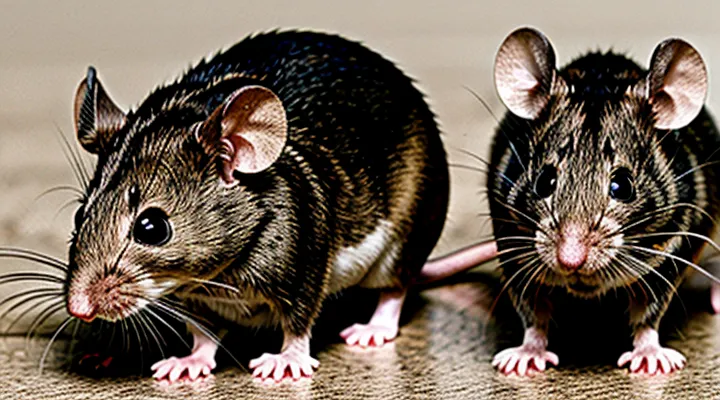
The Historical Context of Mouse‑Human Interactions
Early Encounters and Coexistence
Early records of mouse–human interaction appear in archaeological sites where commensal rodents are found alongside grain storage facilities dating to the Neolithic period. Skeletal remains and coprolites indicate that rodents exploited human‑produced food stores, establishing a recurring pattern of opportunistic contact that preceded intentional domestication.
Laboratory environments introduced a systematic dimension to coexistence. The first controlled breeding programs, initiated in the late 19th century, created genetically uniform mouse strains for biomedical research. These colonies required standardized housing, nutrition, and health monitoring, forming a mutual dependency: researchers relied on predictable animal models, while mice depended on human‑provided care.
Key milestones in early mouse–human coexistence:
- Neolithic grain storage – rodents accessed surplus cereals, prompting early pest management practices.
- Ancient Egyptian depictions – murals illustrate mice as household pests, reflecting awareness of their presence.
- 19th‑century laboratory breeding – establishment of inbred strains such as the “Swiss” mouse, enabling reproducible experiments.
- Early 20th‑century pet trade – commercial breeding for companionship introduced mice into domestic settings beyond research facilities.
These developments illustrate a transition from incidental cohabitation to deliberate, structured relationships that shaped both scientific methodology and cultural attitudes toward rodents.
The Dawn of Domestication and Pest Control
Agricultural Revolution and Increased Contact
The transition to systematic grain cultivation created abundant, predictable food sources that supported larger mouse populations. Stored cereals offered high‑calorie diets, reducing seasonal mortality and enabling rapid reproductive cycles. Consequently, mouse densities rose near human settlements, altering the spatial dynamics of coexistence.
Closer proximity intensified direct encounters. Humans adopted measures such as traps, poisons, and structural barriers to protect harvests, while mice developed behavioral adaptations to evade control methods. These interactions facilitated the exchange of pathogens, with rodents serving as vectors for diseases that could spread to humans and livestock. Simultaneously, some cultures began to incorporate mice into ritual or symbolic practices, reflecting a growing awareness of their ecological significance.
Key outcomes of the agricultural shift and heightened contact include:
- Expansion of rodent populations in agrarian zones.
- Development of human pest‑management technologies.
- Increased incidence of zoonotic disease transmission.
- Emergence of cultural representations of mice in human societies.
Early Attempts at Extermination
Early efforts to eliminate mice emerged from agricultural concerns, public‑health threats, and competition for stored food. In medieval Europe, grain merchants employed simple traps—pitfall devices, spring‑loaded snares, and sticky substances—to capture rodents before infestations spread. These methods relied on mechanical capture rather than chemical intervention, reflecting limited technological resources.
The 19th century introduced chemical approaches. Copper sulfate, arsenic compounds, and later, chlorinated hydrocarbons such as DDT, were dispersed in barns and warehouses. Application protocols emphasized broad coverage to ensure contact with hidden populations. While mortality rates increased, non‑target species suffered collateral damage, and residues entered the food chain.
Industrialization prompted large‑scale extermination programs. Municipal authorities deployed rodenticide stations in urban districts, integrating bait stations with standardized concentrations of anticoagulants (e.g., warfarin). Records show systematic placement at sewer junctions, subway tunnels, and waste‑handling facilities. Monitoring indicated short‑term reductions, yet resistance emerged as genetic mutations conferred survival advantages.
Key characteristics of early extermination attempts include:
- Mechanical traps: low cost, limited reach, high labor input.
- Early chemical agents: high toxicity, environmental persistence, lack of specificity.
- Institutional baiting: standardized dosage, expanded coverage, emergence of resistance.
These historical practices shaped contemporary strategies, highlighting the trade‑off between immediate population control and long‑term ecological impact.
The Mouse as a Model Organism in Research
Genetic Similarities and Experimental Utility
Mice share a high degree of genetic correspondence with humans, providing a biologically relevant platform for translational research. Approximately 85 % of protein‑coding genes are orthologous, and many fundamental pathways—cell cycle regulation, apoptosis, immune signaling—remain conserved across the two species.
- Gene orthology: over 20 000 murine genes have direct human counterparts.
- Conserved regulatory elements: promoters and enhancers exhibit similar transcription factor binding patterns.
- Shared metabolic and developmental pathways: glycolysis, mitochondrial function, and embryogenesis display near‑identical gene networks.
- Comparable epigenetic landscapes: DNA methylation and histone modification profiles align in key tissues.
These genetic parallels translate into practical experimental advantages. Mouse models enable precise manipulation of disease‑relevant genes, allowing assessment of pathogenic mechanisms and therapeutic interventions under controlled conditions.
- Knock‑in/knock‑out technologies reveal gene function and phenotype relationships directly applicable to human pathology.
- Humanized mouse strains express specific human genes or immune components, facilitating evaluation of biologics and vaccine candidates.
- In vivo pharmacokinetic and toxicity studies exploit murine physiology to predict human drug responses.
- Longitudinal studies of disease progression benefit from the mouse’s short lifespan and reproducible breeding, accelerating data acquisition.
Overall, the extensive genetic overlap equips researchers with a robust, predictive system for investigating human health and disease.
Key Contributions to Medical Science
Cancer Research
Cancer investigation depends on systematic comparison of murine and human physiology to identify mechanisms that drive tumor development and response to therapy. Researchers align genetic alterations, signaling pathways, and microenvironmental factors observed in mouse models with those documented in patient samples, creating a framework for predicting clinical outcomes.
Genetically engineered mice reproduce oncogenic mutations found in humans, allowing controlled assessment of tumor initiation, progression, and metastasis. Patient‑derived xenografts transplant human tumor fragments into immunodeficient mice, preserving heterogeneity and enabling drug efficacy testing under in vivo conditions. These approaches generate quantitative data that bridge preclinical experiments and clinical trials.
Translational fidelity encounters obstacles such as species‑specific immune regulation, differences in metabolism, and divergent tumor microenvironments. Quantitative modeling and cross‑species bioinformatics pipelines quantify these disparities, guiding the selection of models that most closely mimic human disease phenotypes.
Recent methodological advances enhance cross‑species relevance:
- CRISPR‑based editing introduces precise human oncogenic variants into mouse genomes, reducing background variability.
- Humanized mouse strains incorporate functional human immune components, improving immunotherapy assessment.
- Integrated organoid‑mouse platforms combine three‑dimensional human tissue cultures with in vivo validation, refining drug screening pipelines.
Collectively, these strategies refine the interpretation of mouse‑human comparative data, accelerating the identification of therapeutic targets and the development of precision oncology interventions.
Neuroscience
Neuroscience provides the mechanistic foundation for interpreting behavioral parallels between rodents and humans. By mapping conserved neural circuits, researchers can infer how genetic and environmental factors shape cognition across species.
Comparative neuroanatomy reveals homologous structures such as the prefrontal cortex, hippocampus, and basal ganglia. These regions exhibit similar synaptic organization, firing patterns, and plasticity mechanisms, allowing direct translation of rodent electrophysiological data to human contexts.
Key experimental approaches include:
- In vivo calcium imaging to monitor population activity during task performance.
- Optogenetic modulation of defined neuronal ensembles to test causal relationships.
- Single‑cell transcriptomics for cross‑species profiling of cell‑type identity.
- High‑resolution diffusion MRI to reconstruct white‑matter pathways comparable to tract tracing in mice.
Integration of these methods clarifies how alterations in circuit dynamics contribute to neuropsychiatric phenotypes, supporting the development of therapeutic strategies that leverage mouse models for human benefit.
Drug Development
Drug development relies heavily on translational models that bridge the physiological gap between laboratory rodents and patients. Comparative studies of murine and human biology provide quantitative benchmarks for efficacy, toxicity, and pharmacokinetic parameters, allowing researchers to predict clinical outcomes with greater precision.
Key aspects of integrating mouse‑human comparative data into drug pipelines include:
- Validation of target engagement by measuring identical biomarkers in both species.
- Adjustment of dosing regimens based on allometric scaling factors derived from cross‑species metabolic rates.
- Identification of species‑specific adverse events through parallel safety assessments, reducing late‑stage trial failures.
- Utilization of genetically engineered mouse strains that replicate human disease alleles, enhancing relevance of preclinical efficacy signals.
By systematically incorporating these comparative metrics, development programs achieve more reliable risk assessments, shorten timelines, and allocate resources toward candidates with demonstrable translational potential.
Ethical Considerations in Animal Research
Ethical scrutiny of animal research underpins the credibility of studies that compare murine and human biology. Researchers must demonstrate that the scientific objectives cannot be achieved through alternative methods, thereby justifying the involvement of live animals. Institutional review boards evaluate protocols for compliance with established welfare standards, ensuring that each procedure aligns with the principle of minimizing harm.
Key components of ethical assessment include:
- Justification of species selection – selection of mice should be based on clear relevance to human physiological pathways, not convenience alone.
- Application of the 3Rs – replacement of animal models where possible, reduction of the number of subjects through robust experimental design, and refinement of procedures to lessen pain and distress.
- Transparent reporting – detailed documentation of animal numbers, housing conditions, and humane endpoints enables reproducibility and external evaluation.
- Regulatory adherence – compliance with national and international guidelines, such as the Guide for the Care and Use of Laboratory Animals and the EU Directive 2010/63/EU, provides a legal framework for responsible conduct.
Evaluating the moral status of mice involves balancing scientific benefit against the capacity for suffering. Welfare metrics—body weight, behavior, physiological stress markers—must be continuously monitored, and analgesia or anesthesia applied whenever invasive techniques are employed. Endpoints are defined to prevent unnecessary prolongation of distress, and humane euthanasia is performed according to accepted standards.
The ethical landscape also addresses data integrity. Bias introduced by inadequate animal care compromises translational validity, potentially inflating perceived relevance to human health. Consequently, rigorous ethical oversight functions as a safeguard, ensuring that comparative mouse‑human investigations produce reliable, humane, and socially acceptable outcomes.
Mice in Popular Culture and Symbolism
Cultural Representations and Archetypes
The Mouse as a Trickster
The mouse functions as a trickster within the dynamic between rodents and people, embodying subversion, adaptability, and indirect influence. Its small size masks a capacity for strategic deception: navigating human environments, exploiting gaps in infrastructure, and manipulating resources without direct confrontation. This behavior shapes perceptions of mice, prompting cultural narratives that emphasize cunning over brute strength.
Key characteristics of the mouse as a trickster include:
- Stealthy infiltration – entry through minute openings that larger organisms cannot exploit.
- Resource appropriation – diversion of food supplies by hoarding or contaminating, forcing human response.
- Behavioral mimicry – imitation of harmless activities to avoid detection while pursuing hidden objectives.
- Rapid reproduction – exponential population growth that overwhelms control measures, creating a perception of unstoppable cunning.
These traits generate a feedback loop: human attempts to control mice provoke more sophisticated evasion tactics, reinforcing the mouse’s reputation as a crafty intermediary. The pattern illustrates how a seemingly insignificant species can exert disproportionate influence on human practices, policies, and mythologies.
The Mouse as a Victim
Mice experience systematic harm when interacting with humans across multiple domains. Experimental laboratories subject them to invasive procedures, pharmacological testing, and genetic manipulation, often without analgesic protocols. Urban environments expose mice to rodenticides, traps, and habitat destruction, resulting in acute mortality and chronic stress. Disease transmission places mice as carriers of pathogens that affect human populations, while simultaneously exposing them to antimicrobial agents that alter their microbiota.
Key forms of victimization include:
- Surgical and physiological interventions in research settings.
- Exposure to toxic chemicals and mechanical capture devices.
- Forced displacement from natural habitats due to urban development.
- Involuntary infection cycles involving zoonotic agents.
These pressures shape ethical guidelines, regulatory frameworks, and public health strategies. Recognizing mice as recipients of adverse treatment informs humane experimental design, promotes development of non‑lethal pest management, and supports surveillance programs aimed at reducing pathogen spillover.
Psychological Impact of Mice on Humans
Research on the interaction between rodents and people identifies several consistent psychological effects that mice exert on human subjects. Empirical data demonstrate that exposure to mice can trigger measurable stress responses, alter mood states, and influence cognitive performance.
Key findings include:
- Activation of the sympathetic nervous system, reflected in increased heart rate and cortisol levels, when participants encounter live mice or realistic mouse imagery.
- Reduction in self‑reported anxiety scores after controlled exposure sessions, suggesting a habituation effect for individuals with mild phobias.
- Enhancement of problem‑solving speed in tasks following brief interaction with mice, attributed to heightened arousal and attentional focus.
Neuroimaging studies reveal that visual or tactile contact with mice engages brain regions associated with fear processing, such as the amygdala, as well as areas linked to reward and curiosity, including the ventral striatum. This dual activation pattern explains why some individuals experience discomfort while others report fascination.
Long‑term observational data indicate that regular, low‑intensity exposure to laboratory mice can diminish overall fear sensitivity and improve coping mechanisms in occupational settings where rodents are present. Conversely, persistent aversion without desensitization training correlates with elevated chronic stress markers and reduced occupational satisfaction.
Modern Perspectives on Mouse-Human Dynamics
Urbanization and Habitat Overlap
Urban expansion compresses natural environments, forcing mice and humans into shared spaces. The reduction of green corridors concentrates rodent populations near residential zones, increasing the frequency of direct encounters.
Key consequences of habitat overlap include:
- Elevated risk of zoonotic disease transmission as pathogens move between mouse reservoirs and human hosts.
- Altered foraging behavior in mice, with increased reliance on anthropogenic food sources that support higher population densities.
- Greater economic impact from property damage and pest control expenses due to intensified infestations.
Research on mouse–human interactions demonstrates that landscape fragmentation intensifies contact rates. Quantitative models show a positive correlation between the proportion of impervious surface within a 500‑meter radius and the incidence of rodent‑related health complaints. Mitigation strategies focus on preserving peri‑urban vegetative buffers, implementing integrated pest management, and redesigning waste disposal systems to reduce attractants.
Effective urban planning must incorporate ecological data to predict overlap zones. Mapping rodent habitat suitability alongside human demographic layers enables targeted interventions, thereby limiting the negative outcomes of cohabitation.
Ecological Roles and Ecosystem Services
The examination of interactions between mice and humans reveals how each participant influences ecosystem functions and the services derived from them.
Mice contribute to ecosystem dynamics through multiple mechanisms. They consume seeds and vegetation, thereby regulating plant community composition. Their foraging behavior facilitates seed dispersal and creates microsites for germination. Burrowing activity promotes soil aeration, enhances water infiltration, and accelerates organic matter decomposition. As a primary prey item, mice sustain populations of raptors, snakes, and small carnivores. Their capacity to host pathogens creates pathways for disease transmission that affect wildlife and human health.
Human activities modify these processes in several ways. Agricultural practices alter habitat availability, influencing mouse density and distribution. Waste management and sanitation reduce resource subsidies that sustain commensal mouse populations. Targeted pest‑control measures directly suppress mouse numbers, affecting predator food sources and seed predation rates. Scientific research on mouse biology informs biomedical advances and improves disease‑monitoring frameworks. Cultural perceptions of mice shape conservation policies and public health strategies.
The interplay between mouse populations and human interventions reshapes the delivery of ecosystem services:
- Provisioning services: mouse‑derived protein in some cultural contexts; human‑produced food crops affected by mouse herbivory.
- Regulating services: pest suppression by predators that rely on mice; disease regulation through monitoring of mouse‑borne pathogens.
- Supporting services: soil structure improvement from mouse burrowing; nutrient cycling accelerated by mouse waste.
- Cultural services: educational value of mouse models; aesthetic and symbolic roles in folklore and media.
Understanding these linkages clarifies how alterations in mouse abundance or human land‑use practices cascade through ecological networks, ultimately influencing the quantity and quality of services that sustain both natural and human systems.
Future Directions in Coexistence and Management
Future research must align with the evolving complexity of mouse‑human interactions, emphasizing strategies that sustain ecological balance while protecting public health. Current data reveal increasing overlap between urban habitats and rodent populations, demanding coordinated management frameworks that integrate surveillance, control, and community education.
Advances in genetic engineering provide tools for targeted population modulation. Gene‑drive systems, when coupled with rigorous risk assessment, could reduce disease‑carrying capacity without disrupting non‑target species. Parallel development of biodegradable baits and automated trap networks will enhance precision in field applications.
Policy initiatives should incorporate adaptive governance models. Regulatory bodies must establish criteria for rapid response to emerging zoonotic threats, while fostering cross‑disciplinary collaboration among ecologists, epidemiologists, and urban planners. Funding mechanisms ought to prioritize longitudinal studies that quantify long‑term outcomes of intervention protocols.
Key directions for future coexistence and management:
- Deploy CRISPR‑based gene‑drive trials under controlled, monitored conditions.
- Scale up sensor‑driven monitoring platforms for real‑time population mapping.
- Integrate community‑led education programs that address hygiene, waste management, and safe rodent handling.
- Develop standardized metrics for evaluating ecological impact and public‑health efficacy of control measures.
- Establish international data‑sharing consortia to track pathogen emergence linked to rodent vectors.