
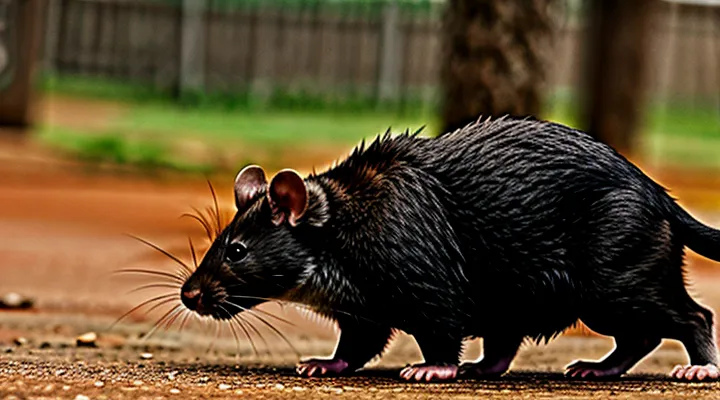
What Makes Them Unique?
Physical Characteristics
The African giant rat, a seldom‑seen rodent, exhibits distinctive morphology that sets it apart from other murids.
- Body length ranges from 45 cm to 60 cm, with the tail adding an additional 30 cm to 45 cm.
- Adult weight typically falls between 1.2 kg and 2.5 kg, making it one of the largest extant rat species.
- Dense fur covers the dorsal surface, presenting a coarse, dark‑brown to black coloration; the ventral side is lighter, often gray‑white.
- The tail is sparsely haired, cylindrical, and exhibits a uniform brown hue, providing balance during arboreal activity.
- Ears are proportionally large, rounded, and covered with fine hair, enhancing auditory perception in dense forest habitats.
- Eyes are relatively small, positioned laterally, offering a wide field of view while limiting depth perception.
- Dentition includes robust incisors with a pronounced orange‑yellow enamel coating, adapted for gnawing tough plant material and occasional carrion.
- Limbs are muscular, with forefeet bearing five digits and hind feet possessing four, each equipped with sharp, curved claws for climbing and digging.
Overall, the species’ size, fur texture, tail structure, and dental adaptations reflect an evolutionary response to a nocturnal, omnivorous lifestyle in African forest ecosystems.
Habitat and Distribution
The African giant rat occupies moist, forest‑edge habitats where dense understory provides cover and abundant food resources. It prefers low‑to‑mid elevation zones (200–1,500 m) with annual precipitation exceeding 1,200 mm. Burrowing activity occurs in soft, loamy soils, while occasional foraging takes place in adjacent savanna mosaics and cultivated fields adjacent to natural vegetation.
Its range is confined to a narrow band of East‑Central Africa. Documented occurrences include:
- Kenya (Western highlands)
- Tanzania (Southern highlands and coastal forests)
- Uganda (Western and central forest blocks)
- Rwanda and Burundi (mountainous forest corridors)
- Democratic Republic of the Congo (Eastern rainforest fragments)
Populations are isolated by agricultural expansion and habitat degradation, resulting in a fragmented distribution pattern that limits gene flow between subpopulations. Protected areas such as the Kibale National Park (Uganda) and Nyungwe Forest Reserve (Rwanda) host the most stable groups.
Behavior and Ecology
Diet and Foraging
The African giant rat, an uncommon rodent of sub‑Saharan savannas, exhibits an opportunistic omnivorous diet. Primary food sources include:
- Mature seeds of grasses and legumes
- Fallen fruits such as figs and marula
- Invertebrates, especially beetles, termites and orthopterans
- Small vertebrates, chiefly lizards and juvenile rodents, consumed sporadically
Seasonal shifts alter intake composition; during the dry season, the species relies more heavily on stored seeds and insect larvae, while the wet season expands fruit consumption. Foraging occurs chiefly at night, when reduced predation risk coincides with peak activity of many prey items.
The rat employs tactile whiskers and acute olfaction to locate concealed food. Memory of productive foraging sites enables repeated visits to productive microhabitats. When abundant resources are discovered, individuals cache seeds in shallow burrows, supporting survival during periods of scarcity. This caching behavior also contributes to seed dispersal, influencing plant community dynamics.
Water acquisition is achieved through moisture-rich foods and occasional drinking from temporary pools. The animal’s digestive tract processes high‑fiber plant material efficiently, extracting nutrients while tolerating occasional ingestion of toxic plant secondary compounds via selective feeding.
Social Structure
The African giant rat exhibits a complex social organization that balances cooperation and competition within localized colonies. Individuals occupy a hierarchical system dominated by a breeding pair, which maintains exclusive reproductive rights and oversees group cohesion. Subordinate adults assist in foraging, nest construction, and predator vigilance, reinforcing the pair’s authority through submissive post‑uring and scent marking.
Colony size typically ranges from five to twelve members, fluctuating with resource availability and seasonal conditions. Juveniles remain within the natal burrow until reaching sexual maturity, at which point they may disperse to establish new colonies or assume subordinate roles in the existing group. Dispersal is mediated by vocalizations and olfactory cues that signal readiness to leave and reduce inbreeding risk.
Communication relies on a repertoire of acoustic signals, tactile grooming, and pheromone secretion. Alarm calls trigger coordinated escape behavior, while low‑frequency chirps facilitate long‑distance contact between adjacent colonies. Grooming exchanges reinforce affiliative bonds and transmit health‑related information, contributing to group stability.
Reproductive dynamics are characterized by:
- Monogamous pairing of the dominant male and female.
- Seasonal breeding peaks aligning with rainfall cycles.
- Litter sizes of two to four offspring, with both parents participating in nest defense and offspring provisioning.
- Delayed implantation in females, extending gestation to synchronize birth with optimal environmental conditions.
Territorial boundaries are demarcated by scent‑marked latrines and external burrow entrances. Overlap between neighboring colonies is minimal, and incursions are met with aggressive displays that preserve resource zones and reduce conflict. This structured social framework enables the species to exploit heterogeneous habitats while maintaining genetic diversity and resilience against predation pressures.
Reproductive Habits
The African giant rat, an uncommon rodent native to West African rainforests, exhibits a distinct reproductive cycle adapted to its seasonal environment. Breeding peaks during the early rainy season, when food abundance supports the energetic demands of mating and gestation.
Males establish temporary territories and emit ultrasonic vocalizations to attract females. Courtship involves brief tactile stimulation followed by a single copulatory event that can last up to three minutes. Females display estrus cycles of approximately 21 days, synchronized with the onset of rainfall.
Gestation lasts 28–30 days, after which litters of 2–5 offspring are born. Neonates are altricial, weighing 30–45 g, and are blind at birth. The mother provides exclusive care for the first three weeks, supplying milk rich in protein and lipids. Pups achieve weaning at around 30 days and reach sexual maturity at 8–10 months.
Key reproductive parameters:
- Breeding season: early to mid‑rainy period
- Estrus cycle length: ~21 days
- Gestation period: 28–30 days
- Litter size: 2–5 pups
- Weaning age: ~30 days
- Age at sexual maturity: 8–10 months
Population density influences reproductive output; individuals in high‑quality habitats produce larger litters and display higher breeding frequencies. Male dispersal after mating reduces inbreeding risk, while females exhibit site fidelity to natal burrows for subsequent breeding cycles.
Conservation Status and Threats
Habitat Loss and Fragmentation
The African giant rat, a seldom‑encountered rodent native to tropical forest zones of West and Central Africa, depends on extensive, undisturbed understory and leaf‑litter habitats for foraging, nesting, and predator avoidance.
Habitat loss results from several human activities:
- Commercial logging that removes canopy cover and alters microclimate.
- Expansion of subsistence and cash‑crop agriculture, converting forest to open fields.
- Urban sprawl and infrastructure projects that clear land for housing and roads.
These pressures fragment the remaining forest into isolated patches. Consequences for the species include:
- Reduced gene flow between subpopulations, leading to inbreeding depression.
- Limited access to essential resources, forcing individuals into suboptimal edge environments.
- Increased mortality due to exposure to predators and human disturbance in narrow corridors.
Effective mitigation requires preserving large tracts of continuous forest, establishing ecological corridors to reconnect fragments, and implementing systematic population monitoring to assess genetic health and occupancy trends.
Hunting and Poaching
The large African rodent, confined to limited forest patches in West and Central Africa, exists in low numbers and occupies a narrow ecological niche. Its survival is jeopardized by direct extraction for food, traditional medicine, and the pet trade. Hunters employ snares, pit traps, and firearms, targeting adult individuals during the rainy season when activity peaks. Harvest rates often exceed natural reproduction, leading to measurable declines in local populations.
Illegal capture intensifies pressure on the species. Poachers transport live specimens to urban markets, where they fetch high prices as exotic pets. The trade network relies on covert routes, minimal documentation, and rapid turnover, increasing mortality through stress and inadequate care. Evidence from seizure records indicates a steady rise in the volume of specimens intercepted over the past decade.
Consequences of sustained exploitation include:
- Reduction of breeding pairs below viable thresholds.
- Disruption of seed‑dispersal functions performed by the rodent.
- Heightened vulnerability to habitat fragmentation.
Effective mitigation requires coordinated law‑enforcement action, stringent monitoring of market transactions, and community outreach that promotes alternative livelihoods. Conservation agencies must prioritize rapid response teams to intercept illegal shipments and implement education programs that clarify the species’ ecological importance.
Disease and Predation
The African giant rat confronts a limited set of pathogens that can reduce population viability. Documented infections include:
- Leptospira spp., causing renal impairment and hemorrhagic fever.
- Salmonella enterica, leading to gastroenteritis and septicemia.
- Hantavirus strains, associated with pulmonary syndrome and high mortality.
- Parasitic nematodes such as Strongyloides spp., inducing anemia and weight loss.
- Dermatophytic fungi, resulting in skin lesions and secondary bacterial invasion.
Predation pressure derives from a diverse assemblage of carnivores and opportunistic hunters. Principal predators are:
- African crowned eagle (Stephanoaetus coronatus), capable of seizing adult individuals in flight.
- African wild cat (Felis lybica), targeting juveniles and weakened rats.
- Large snakes, notably the Gaboon viper (Bitis gabonica), employing ambush tactics.
- Small carnivores, including mongooses and genets, which exploit burrow entrances.
- Human hunters, attracted by the species’ size and meat value, contributing to mortality through trapping and shooting.
Disease incidence and predator encounters interact to shape survival rates, influencing reproductive output and dispersal patterns across the species’ range. Effective conservation measures must address both pathogen monitoring and mitigation of hunting pressure to sustain viable populations.
Role in Ecosystems
Seed Dispersal
The African giant rat, a rarely documented rodent inhabiting West‑Central African rainforests, interacts directly with forest regeneration through the movement of viable seeds. Individuals collect fallen fruits, transport them to burrow chambers, and cache portions of the edible pulp while retaining intact seeds. This behavior results in the relocation of seeds away from parent trees, reducing density‑dependent mortality and exposing seedlings to novel microhabitats.
Key aspects of the species’ seed‑dispersal function include:
- Caching behavior: Rats store seeds in underground caches, some of which remain unretrieved, providing protected germination sites.
- Selective transport: Preference for large, nutrient‑rich fruits leads to dispersal of seeds that are otherwise limited by gravity or wind.
- Temporal spread: Repeated foraging over weeks extends the dispersal window, allowing seeds to encounter varying seasonal conditions.
Empirical observations indicate that seedlings emerging from rat‑cached seeds exhibit higher survival rates compared to those directly beneath parent canopies. The rodent’s activity thus enhances plant diversity and contributes to the structural complexity of its native ecosystem.
Pest Control
The giant African rodent, a seldom‑seen mammal confined to limited forest patches, occasionally ventures into agricultural fields, generating conflicts with farmers who view the animal as a crop‑damage agent. Effective management must reconcile the need to protect livelihoods with the imperative to preserve a vulnerable taxon.
Its nocturnal foraging, strong gnawing ability, and adaptability to disturbed habitats increase the likelihood of crop intrusion. These traits dictate that control measures target both the animal’s access points and its attraction to cultivated plants.
Recommended integrated pest‑management actions:
- Install reinforced, buried fencing around field perimeters to block burrow entry.
- Deploy non‑lethal deterrents such as ultrasonic emitters and motion‑activated lights that exploit the species’ sensitivity to sound and sudden illumination.
- Apply habitat modification by removing fallen fruit and seed debris that serve as food sources, thereby reducing draw.
- Conduct targeted trapping using live‑capture cages baited with native fruits; captured individuals should be relocated to protected reserves following veterinary assessment.
- Implement community education programs to train farmers in early‑warning signs and proper device maintenance.
Continuous monitoring of population trends and damage reports enables adjustment of tactics, ensuring that suppression efforts do not inadvertently threaten the species’ long‑term survival.
Food Source
The giant African rodent, a sizable and rarely observed mammal, constitutes a significant nutritional resource within its native ecosystems. Its substantial body mass and high protein content render it a valuable prey item for a range of carnivorous species.
Predators that regularly exploit this rodent include:
- Large felids such as leopards and African wildcats
- Raptors like martial eagles and bateleurs
- Small to medium-sized carnivores, including genets and African civets
- Indigenous snakes, notably African rock pythons
Human populations residing near the species’ habitats occasionally harvest the animal for sustenance. Traditional hunting methods involve traps and snares, followed by roasting or stewing to preserve nutrient integrity. The meat provides essential amino acids and micronutrients, contributing to dietary diversity where alternative protein sources are limited.
Seasonal fluctuations affect availability. During the rainy season, increased vegetation supports higher rodent reproduction rates, leading to greater predator reliance. Conversely, dry periods reduce population density, prompting predators to shift to alternative prey.
Overall, the rodent functions as a pivotal element in trophic dynamics, supporting both wildlife and human dietary needs across its range.
Interactions with Humans
Detection of Landmines and Tuberculosis
The giant African rodent, recognized for its size and rarity, possesses a highly developed olfactory system that can be harnessed for two critical security and health applications.
Research demonstrates that individual animals can be conditioned to alert handlers to the presence of explosive compounds embedded in landmines. Training protocols involve repeated exposure to minute quantities of TNT vapor, resulting in consistent behavioral responses that indicate detection. Field trials report detection rates exceeding 90 % at depths of up to 15 cm, with false‑positive incidents below 5 %. The species’ natural foraging behavior, combined with its ability to navigate rugged terrain, makes it a practical alternative to mechanical sensors in conflict‑affected regions.
Parallel studies reveal the same olfactory sensitivity enables identification of Mycobacterium tuberculosis biomarkers in human breath samples. Laboratory assays show that trained rodents discriminate between infected and non‑infected individuals with sensitivity of 92 % and specificity of 88 %. The method reduces analysis time to under three minutes per subject, offering a rapid screening tool for low‑resource settings.
Key advantages of employing this rodent for both tasks include:
- Low maintenance and breeding costs compared with electronic detection devices.
- Minimal training duration, typically three weeks for landmine detection and two weeks for tuberculosis screening.
- Capability to operate in diverse environmental conditions without reliance on power infrastructure.
Integration of the species into detection programs requires strict adherence to wildlife welfare standards, controlled breeding facilities, and certification of handlers. When implemented responsibly, the animal’s innate scent discrimination provides an effective, scalable solution for mitigating explosive hazards and improving early tuberculosis diagnosis.
Pet Trade Concerns
The African giant rat, a rodent with limited distribution, attracts interest from exotic‑pet enthusiasts despite its protected status. Demand for live specimens fuels illegal capture, undermining conservation efforts and exposing animals to severe stress.
Key concerns associated with the pet trade include:
- Unsustainable harvesting – removal of individuals from wild populations accelerates decline.
- Animal welfare – inadequate housing, nutrition, and veterinary care lead to high mortality.
- Disease transmission – close contact with humans raises the risk of zoonotic pathogens.
- Ecological disruption – removal of seed‑dispersing individuals affects forest regeneration.
Regulatory frameworks exist in several range countries, prohibiting export without permits and imposing penalties for illicit trade. Effective enforcement requires coordinated monitoring, public education on the species’ rarity, and promotion of captive‑breeding programs that meet strict welfare standards. Adoption of these measures can reduce market pressure while supporting conservation objectives.
Cultural Significance
The African giant rat, a seldom‑encountered rodent native to West and Central Africa, holds distinct cultural value among several ethnic groups. Oral traditions in Nigeria and Cameroon portray the animal as a symbol of resilience, linking its size and nocturnal habits to community endurance during hardship. Elders recount stories in which the rat appears as a messenger in mythic narratives, reinforcing moral lessons about resourcefulness and caution.
Traditional medicine practitioners incorporate the rat’s meat, bones, and fur into remedies for ailments such as fever and joint pain. The species’ distinctive pelage is fashioned into ceremonial ornaments, signifying status and ancestral connection during rites of passage. In agricultural communities, the presence of the animal in fields is interpreted as an omen of soil fertility, prompting specific planting rituals.
Artistic expressions reflect this significance:
- Carvings of the rodent appear on wooden masks used in masquerade festivals.
- Textile patterns feature stylized silhouettes, denoting protection against predators.
- Musical compositions reference the animal’s call, embedding it in rhythmic structures.
These cultural practices demonstrate how the species transcends biological rarity, embedding itself in the social fabric of the regions it inhabits.