
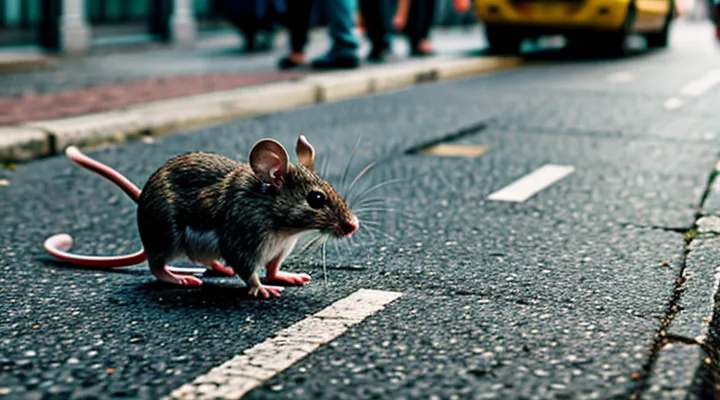
«The Urban Ecosystem and Its Rodent Residents»
«Why Mice Thrive in Human Environments»
«Food Availability and Scarcity»
Mice venture onto sidewalks primarily when their usual food sources become insufficient. Urban environments present gaps in natural foraging areas, and rodents respond by seeking alternative supplies in human‑occupied spaces.
Factors that drive this behavior include:
- Seasonal depletion of seeds, insects, and plant matter in parks and gardens.
- Reduced waste management efficiency, leading to temporary scarcity of discarded food near homes.
- Construction or renovation that disrupts access to stored grain or compost piles.
- Weather extremes that limit outdoor foraging opportunities, pushing mice toward sheltered streets.
When these conditions converge, mice increase activity near streetlights, curbside trash cans, and outdoor dining areas. Their presence indicates a direct link between local food availability and the likelihood of observing rodents in public thoroughfares.
«Shelter and Hiding Spots»
Mice appear on sidewalks because urban environments provide numerous shelters that protect them from predators and harsh weather. These refuges are often located close to human activity, increasing the chance of accidental encounters.
Common shelter types include:
- Cracks in pavement or between paving stones where a mouse can wedge itself.
- Burrows beneath garden beds, flower pots, or compost piles that extend upward to the surface.
- Gaps under building foundations, utility boxes, or drainage grates offering concealed passageways.
- Overhead structures such as eaves, awnings, and low fences that create shadowed niches.
- Loose debris, cardboard boxes, and discarded packaging that serve as temporary hideouts.
Each of these locations offers protection while remaining accessible to food sources like spilled grain, garbage, or insect prey. When a mouse moves between shelters in search of sustenance, it may cross a street, resulting in a brief sighting. The proximity of shelters to traffic routes, combined with nocturnal foraging habits, explains why observers sometimes spot a mouse traversing an urban roadway.
«Predator-Prey Dynamics in Cities»
Urban streets sometimes host mice because the environment supplies food, shelter, and limited competition. Predator‑prey interactions shape these populations directly. When predators such as feral cats, barn owls, red‑tailed hawks, and certain snake species are present, mouse numbers decline due to increased mortality. Conversely, reduced predator activity—caused by habitat loss, human deterrence, or control measures—allows mouse populations to rise, making sightings more frequent.
Key factors influencing predator‑prey dynamics in cities:
- Food sources: discarded waste and grain spillage sustain mice; abundant food reduces predator reliance on hunting.
- Shelter: cracks, debris, and underground utilities provide nesting sites for both mice and small predators.
- Predator density: higher numbers of cats or birds of prey increase predation pressure, lowering mouse visibility.
- Human intervention: rodent control programs diminish mouse numbers but may also remove prey for predators, altering the balance.
- Fragmentation: built‑up areas isolate predator habitats, limiting their movement and reducing encounters with mice.
The interaction creates a feedback loop: increased mouse activity attracts opportunistic predators, which in turn suppress mouse presence, leading to temporary fluctuations in sightings. Understanding these dynamics clarifies why urban residents occasionally encounter mice on sidewalks and streets.
«Factors Driving Mice Out of Hiding»
«Seasonal and Environmental Influences»
«Cold Weather and Seeking Warmth»
Mice are ectothermic mammals that depend on external heat sources to maintain body temperature. When ambient temperature drops below the comfort range for a typical house mouse (approximately 10–20 °C), the animal increases its activity to locate shelter that offers higher thermal conditions. Outdoor structures such as building foundations, utility vaults, and insulated crawl spaces retain heat from indoor environments, making them attractive targets during cold spells.
Key drivers of street‑level rodent activity in winter:
- Loss of nest insulation in burrows exposed to frost, prompting relocation.
- Reduced availability of natural food sources, leading mice to forage near human waste and illuminated areas.
- Heat radiated from pavement cracks and underground utilities, which provide temporary warmth.
The combination of these factors pushes mice onto sidewalks, driveways, and other exposed surfaces where they search for entry points into heated buildings. Once a viable opening is identified, the mouse may remain in the vicinity, increasing the likelihood of human observation.
«Heavy Rains and Flooding»
Heavy rain events raise water levels in sewers, basements, and low‑lying fields where rodents normally nest. When drainage capacity is exceeded, water infiltrates burrows and forces mice to abandon underground shelters.
The sudden loss of dry refuge compels mice to seek higher ground. Streets provide immediate, dry surfaces, especially along curbs and sidewalks where runoff accumulates less than in depressions. As a result, mice become visible to pedestrians who would otherwise encounter them only inside buildings or gardens.
Key outcomes of intense precipitation include:
- Rapid saturation of soil and litter, eliminating cover that rodents use for foraging and concealment.
- Overflow of storm drains, creating temporary channels that guide mice toward open pavement.
- Disruption of food stores in attics and crawl spaces, prompting movement toward street‑level garbage bins.
These dynamics explain the occasional appearance of mice on city streets following severe rainstorms. The phenomenon reflects a direct response to habitat loss and the search for safe, dry routes during flood conditions.
«Construction and Habitat Disruption»
Construction activities regularly alter the physical environment that supports rodent populations. When buildings are erected, sidewalks are widened, or underground utilities are replaced, soil is excavated and vegetation is removed. These actions eliminate natural shelters such as burrows, dense ground cover, and debris piles that mice rely on for nesting and foraging. Displaced individuals seek alternative refuge, often finding it in the gaps between pavement slabs, beneath trash containers, or inside abandoned construction sites that are temporarily unsecured.
The disturbance of food sources also contributes to street sightings. Construction sites generate waste—food scraps, grain bags, and organic debris—that attracts mice. Simultaneously, the removal of natural foraging grounds forces rodents to explore human‑filled environments. The combination of accessible shelter and abundant food creates a corridor that leads mice from the construction perimeter onto adjacent sidewalks and streets.
Key mechanisms linking building projects to increased street activity include:
- Habitat loss: demolition and excavation eradicate established nesting sites.
- Resource concentration: waste accumulation provides high‑density food supplies.
- Barrier breach: temporary openings in walls, fences, and drainage systems allow movement into public spaces.
- Reduced predator presence: construction zones often lack typical urban predators, decreasing mortality risk for displaced mice.
Mitigation measures—such as sealing entry points, promptly removing waste, and restoring vegetation after project completion—reduce the likelihood that rodents will migrate onto public thoroughfares. Implementing these practices limits the visibility of mice in street environments that would otherwise result from construction‑induced habitat disruption.
«Human Activity and Disturbance»
«Trash Collection and Street Cleaning»
Mice appear on sidewalks primarily because waste management practices create accessible food sources and shelter. When trash bins overflow or are left open, discarded food attracts rodents, allowing them to forage in public spaces. Inadequate scheduling of collection services prolongs the presence of refuse, giving mice time to establish routes along the street.
Effective street cleaning reduces rodent sightings by removing debris that can serve as nesting material. Regular sweeping eliminates leaf litter, cardboard, and other organic matter that mice use for cover. Prompt removal of spilled food and prompt disposal of litter prevent the formation of foraging hotspots.
Key actions that limit mouse activity on streets:
- Timely emptying of public trash containers before they reach capacity.
- Securing lids on bins to block entry.
- Daily sweeping of sidewalks and curbs to eliminate potential nesting substrates.
- Immediate cleanup of food spillage from vending stalls, markets, and restaurants.
- Coordinated inspection of alleyways to identify and seal entry points for rodents.
By maintaining strict waste collection schedules and rigorous street‑cleaning protocols, municipalities reduce the likelihood that mice will venture onto pedestrian pathways.
«Pest Control Efforts»
Mice appear on sidewalks and roadways when municipal pest control measures fail to keep populations below visible levels. Ineffective waste collection, gaps in sewer maintenance, and insufficient baiting programs create corridors that guide rodents from sewers and alleys onto public walkways.
Targeted pest control programs reduce this exposure through three primary actions:
- Sanitation enforcement – regular removal of food waste, mandatory sealing of trash containers, and prompt street cleaning eliminate attractants.
- Infrastructure repair – sealing cracks in sidewalks, repairing damaged storm drains, and installing rodent‑proof grates block migration routes.
- Population suppression – strategically placed bait stations, electronic traps, and licensed exterminator interventions lower breeding success in urban zones.
Cities that integrate these components report measurable declines in rodent sightings. Data from municipal health departments show a 30‑45 % reduction in street mouse reports after implementing coordinated sanitation audits and infrastructure upgrades.
Continuous monitoring, rapid response to breach reports, and public education about proper waste disposal sustain the effectiveness of these efforts. Failure to maintain any element of the program allows mice to reappear on streets, reinforcing the link between control measures and observable rodent activity.
«Unexpected Encounters»
Mice appear on sidewalks when conditions push them out of hidden shelters and into open areas. Urban landscapes provide abundant food waste, shelter gaps, and predictable pathways that attract rodents seeking resources.
Key drivers of these sightings include:
- Food availability – unsecured trash cans, spilled groceries, and outdoor dining create constant foraging opportunities.
- Habitat disturbance – construction, demolition, or seasonal flooding displaces burrows and forces relocation.
- Lighting and temperature – warm pavement and artificial illumination extend activity periods after dusk.
- Predator pressure – increased presence of cats, birds of prey, or human disturbance drives mice toward less exposed routes.
- Population pressure – high reproductive rates raise competition, prompting individuals to explore new foraging corridors.
Understanding these factors clarifies why a mouse may cross a pedestrian path during a routine walk. The convergence of human waste management practices, infrastructure changes, and environmental cues creates predictable moments when rodents become visible in public spaces.
«Common Mouse Species in Urban Areas»
«House Mice Characteristics»
House mice (Mus musculus) are small rodents, typically 6–10 cm in body length, with a tail of similar size. Their fur ranges from light brown to gray, often with a paler belly. Sharp incisors grow continuously, enabling gnawing of a wide variety of materials.
Key biological traits include:
- Rapid reproduction: a female can produce 5–10 litters per year, each containing 5–8 offspring.
- Short gestation: 19–21 days, leading to quick population turnover.
- Omnivorous diet: grains, seeds, insects, and human food waste.
- High adaptability: capable of nesting in walls, attics, basements, and outdoor debris.
- Strong scent marking: urine and glandular secretions define territories and attract mates.
These attributes allow mice to exploit urban environments. When natural food sources decline or building entry points widen, individuals venture onto sidewalks and streets in search of scraps, dropped produce, or open containers. Nighttime activity peaks as artificial lighting reduces predation risk, increasing the likelihood of sightings.
Understanding these characteristics clarifies why house mice occasionally appear in public thoroughfares, especially near restaurants, markets, and residential waste bins. Their presence reflects a direct response to resource availability and habitat disruption.
«Deer Mice and Their Adaptations»
Deer mice (Peromyscus maniculatus) frequently appear on sidewalks and roads because their adaptations enable them to exploit urban edges. Their small size, agile climbing ability, and nocturnal activity allow them to move quickly between vegetation, garden beds, and drainage ditches that intersect streets. When daylight fades, these rodents emerge to forage for seeds, insects, and discarded food, often crossing paved surfaces to reach new foraging sites.
Key adaptations that increase the likelihood of street sightings include:
- Highly flexible hind limbs – generate powerful jumps that clear gaps up to a foot wide, permitting rapid crossing of curbs and road margins.
- Acute hearing and whisker sensitivity – detect approaching vehicles and predators, prompting swift, straight-line retreats onto hard ground where movement is more visible.
- Efficient water conservation – permit survival in dry, heat‑absorbed pavement areas where other small mammals might succumb to dehydration.
- Omnivorous diet – includes human‑derived waste; garbage bins and litter provide reliable food sources near streets, drawing individuals into traffic zones.
Urban landscaping often creates fragmented habitats that connect natural cover with built environments. Deer mice exploit these corridors, using their keen spatial memory to navigate between shelter and food. Consequently, occasional observations of mice on the street reflect a combination of morphological traits, behavioral flexibility, and the altered structure of human‑dominated landscapes.
«Other Rodent Species Often Mistaken for Mice»
Urban sidewalks and alleys occasionally host small, scurrying mammals that many observers label as “mice.” In reality, several rodent species share the size and coloration of the common house mouse, leading to frequent misidentification.
The most frequently confused species include:
- Norway rat (Rattus norvegicus) juveniles – Young rats possess a slender body, pinkish‑gray fur, and a relatively short tail, matching the silhouette of a mouse until they mature.
- Roof rat (Rattus rattus) subadults – Early‑stage roof rats display a sleek coat and a tail length comparable to body size, traits that overlap with larger mouse varieties.
- Deermouse (Peromyscus maniculatus) – Native to many regions, this rodent presents a larger ears and a bicolored tail, yet its overall dimensions often resemble those of a house mouse.
- Harvest mouse (Micromys minutus) – Although smaller than typical mice, its agile movements and brown fur cause casual observers to group it with common mice.
- Vole species (Microtus spp.) – Voles have a stockier build and shorter tails, but in low‑light conditions their silhouette can be mistaken for a mouse.
Distinguishing features such as ear size, tail length, body proportions, and habitat preferences provide reliable criteria for accurate identification. Recognizing these differences clarifies why urban residents sometimes encounter creatures they assume are mice, while the actual animal may belong to another rodent group.
«Coexisting with Urban Wildlife»
«Preventative Measures for Homeowners»
«Securing Food Sources»
Mice appear on sidewalks when urban environments provide easily reachable nutrition. Human activity creates conditions that allow rodents to locate and transport food without entering buildings.
Typical sources that attract mice to street-level locations include:
- Uncovered trash bins or overflowing containers that expose scraps.
- Food waste scattered by pedestrians, such as discarded fruit skins or wrappers.
- Outdoor pet feeding stations left unattended overnight.
- Spilled groceries or market produce left on sidewalks.
- Compost piles or organic material stored near curbside collection points.
These opportunities reduce the energy required for foraging, prompting mice to exploit them directly on the street. When natural food supplies diminish—due to seasonal changes or competition—rodents shift focus to anthropogenic sources, increasing their visibility in public spaces.
Effective mitigation involves securing waste containers with tight-fitting lids, promptly cleaning up food debris, and limiting outdoor feeding of pets. By eliminating readily available nutrients, the incentive for mice to venture onto pedestrian pathways diminishes.
«Sealing Entry Points»
Mice appear on sidewalks when they leave hiding places in search of food, water, or new routes. Openings in foundations, walls, doors, and utility penetrations provide the paths they exploit.
Sealing these openings eliminates the primary avenue for rodents to move from concealed areas to public walkways, directly reducing the frequency of sightings.
Key actions for effective sealing:
- Inspect the building perimeter for cracks larger than ¼ inch.
- Close gaps around doors and windows with weather‑stripping or foam sealant.
- Fit metal flashing over vent openings and chimney flues.
- Pack foundation fissures with expanding polyurethane foam or cement mortar.
- Cover utility entry points (pipes, cables) with steel wool and silicone caulk.
Select durable, weather‑resistant materials such as stainless‑steel mesh, silicone, and cement‑based sealants. Reapply sealants annually or after severe weather to maintain integrity.
Consistent application of these measures blocks rodent ingress, limiting their ability to emerge onto streets and decreasing public encounters.
«Public Health Considerations»
«Potential Disease Transmission»
Mice observed on sidewalks often originate from nearby sewers, dumpsters, or vacant buildings. These rodents commonly carry pathogens that can transfer to humans through direct contact, contaminated surfaces, or vectors such as fleas and ticks.
- Bacterial agents: Salmonella spp., Leptospira interrogans, and Streptobacillus moniliformis can be shed in urine, feces, or saliva, contaminating public walkways and food sources.
- Viral agents: Hantavirus and lymphocytic choriomeningitis virus survive in rodent excreta and become airborne when dried particles are disturbed.
- Parasitic agents: Toxoplasma gondii cysts may be present in mouse tissue, while ectoparasites can transport Lyme‑disease‑causing Borrelia burgdorferi.
Transmission pathways include:
- Inhalation of aerosolized particles from dried droppings.
- Contact with contaminated surfaces followed by hand‑to‑mouth transfer.
- Bites or scratches inflicted during attempts to capture or kill the animal.
- Indirect exposure via insects that feed on rodents and later bite humans.
Public health implications are significant in densely populated areas where waste management is inadequate. Surveillance data link spikes in rodent sightings to increased reports of leptospirosis and hantavirus pulmonary syndrome. Municipal authorities mitigate risk by enforcing sanitary codes, sealing entry points to underground infrastructure, and conducting regular pest‑control operations.
Individuals can reduce exposure by:
- Wearing gloves when handling debris that may contain rodent waste.
- Washing hands thoroughly after outdoor activities.
- Reporting persistent mouse activity to local health departments for targeted intervention.
«Understanding Mouse Behavior»
Mice venture onto sidewalks and roadways primarily when natural habitats become unsuitable or when food sources are abundant in human‑occupied areas. Habitat loss, caused by construction, demolition, or seasonal changes, forces individuals to seek shelter in cracks, utility holes, and under debris along streets. Simultaneously, discarded waste, open garbage containers, and exposed pet food present reliable nutrition, encouraging repeated forays into public spaces.
Understanding mouse behavior clarifies these patterns:
- Nocturnal foraging: Activity peaks after dark, aligning with reduced human traffic and lower predation risk.
- Scavenging adaptability: Mice exploit a wide range of food items, from grain residues to sugary crumbs, allowing survival in diverse environments.
- Territorial movement: Young adults disperse to establish new territories, often crossing paved surfaces to locate suitable nesting sites.
- Risk assessment: Individuals evaluate exposure to predators and traffic; those with higher boldness thresholds are more likely to appear on streets.
The combination of habitat pressure, readily available food, and innate exploratory tendencies explains why a mouse may occasionally be observed navigating urban thoroughfares.