
Ultrasonic Communication: Beyond Human Hearing
High-Frequency Signals and Their Detection
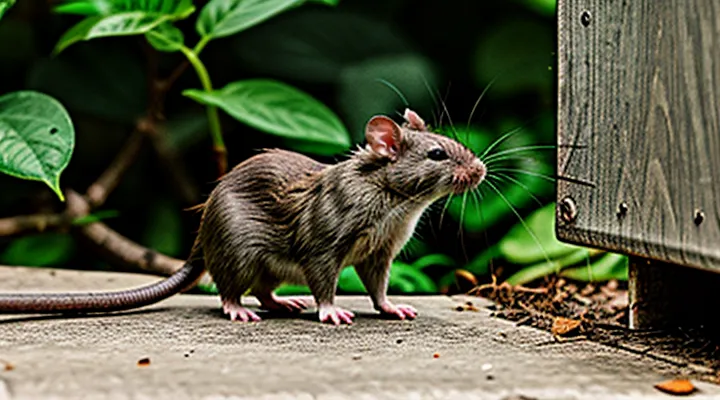
Rats emit ultrasonic vocalizations that exceed the audible range of humans, typically between 20 kHz and 80 kHz. These emissions constitute high‑frequency signals whose physical characteristics differ from lower‑frequency sounds in wavelength, attenuation, and directional propagation.
High‑frequency signals possess short wavelengths, leading to rapid energy loss in air and increased susceptibility to scattering by obstacles. Consequently, reliable measurement requires equipment capable of capturing frequencies well above the standard audio band.
Detection of ultrasonic rat vocalizations relies on several core technologies:
- Ultrasonic microphones: Piezoelectric or condenser transducers with flat response up to 100 kHz.
- High‑speed analog‑to‑digital converters: Sampling rates of at least 200 kHz to satisfy the Nyquist criterion for 80 kHz signals.
- Signal amplification: Low‑noise preamplifiers tuned to the ultrasonic band to preserve signal integrity.
- Spectrographic analysis: Real‑time Fast Fourier Transform (FFT) displays that resolve frequency, duration, and intensity of each chirp.
- Acoustic isolation chambers: Controlled environments that minimize external noise and reverberation.
Processing pipelines include band‑pass filtering (e.g., 20–100 kHz) to exclude sub‑ultrasonic components, noise reduction via adaptive algorithms, and quantitative extraction of parameters such as peak frequency, call duration, and harmonic structure. These metrics enable correlation of vocal patterns with behavioral states, neurological activity, and pharmacological interventions.
Accurate capture and analysis of ultrasonic signals provide essential data for experiments investigating the neural mechanisms underlying rat communication, stress responses, and disease models. Advanced detection systems thus form a critical infrastructure for any scientific inquiry into rodent ultrasonic behavior.
Historical Context of Rat Bioacoustics
Early naturalists recorded audible squeaks from laboratory rats in the 1800s, noting that the sounds increased during handling and confinement. These anecdotal reports formed the first empirical basis for rat vocal research.
In the 1920s and 1930s, physiologists applied rudimentary electrophysiological techniques to measure respiratory patterns that accompanied vocal emissions. The correlation between lung pressure changes and audible chirps was established, confirming a physiological substrate for the behavior.
The 1950s brought the discovery of ultrasonic components in rodent communication. Researchers using heterodyne receivers detected frequencies above 20 kHz, revealing that rats emit high‑frequency chirps during social encounters and predator avoidance. This finding expanded the scope of bioacoustic inquiry beyond the audible range.
Advances in transducer technology during the 1970s and 1980s enabled systematic recording of ultrasonic calls. Portable ultrasonic microphones and spectrum analyzers allowed precise characterization of chirp duration, frequency modulation, and temporal patterns. Data collected in this period identified species‑specific call types linked to aggression, mating, and distress.
Since the early 2000s, interdisciplinary studies have integrated neuroimaging, genetics, and behavioral assays to map the neural circuitry governing chirp production. High‑speed video combined with ultrasonic recordings has clarified the role of the periaqueductal gray and amygdala in modulating call intensity and timing. Comparative analyses across laboratory strains have highlighted genetic influences on acoustic signatures.
Key historical milestones:
- 19th‑century naturalist observations of audible squeaks.
- 1920s–1930s electrophysiological correlation of respiration and sound.
- 1950s identification of ultrasonic chirps with heterodyne receivers.
- 1970s–1980s deployment of ultrasonic microphones and spectrum analysis.
- 2000s onward integration of neurobiology, genetics, and high‑resolution acoustic monitoring.
Mechanisms of Chirp Production
Vocal Cord Dynamics and Respiration
Rats emit chirps through a rapid, cyclical closure of the vocal folds driven by precise laryngeal muscle activation. The cricothyroid and thyroarytenoid muscles adjust tension, allowing the membranous portion of the folds to vibrate at frequencies between 20 and 100 kHz. Subglottic pressure, generated by the diaphragm and external intercostal muscles, supplies the airflow necessary for each oscillation cycle.
During chirping, the respiratory system operates in a burst mode. The diaphragm contracts sharply, increasing intrathoracic volume and lowering airway pressure. Simultaneously, the sternocostal intercostals contract to stabilize the thoracic cage, ensuring a consistent pressure gradient across the glottis. After each sound pulse, the expiratory muscles relax briefly, permitting a rapid reversal of airflow that prepares the next burst.
Coordination between the respiratory drive and laryngeal motor pattern is mediated by brainstem nuclei, chiefly the nucleus ambiguus and the parabrachial complex. These centers synchronize motor neuron firing to maintain the exact timing required for high‑frequency chirps.
Key physiological elements involved in chirp production:
- High‑tension adjustment of the vocal folds via cricothyroid activation
- Rapid modulation of subglottic pressure by diaphragm bursts
- Precise timing of sternocostal intercostal contraction and relaxation
- Brainstem-mediated synchronization of respiratory and laryngeal circuits
The interplay of these mechanisms enables rats to generate brief, ultrasonic chirps used for alarm signaling and social communication.
Neurobiological Underpinnings of Sound Generation
Rats emit chirping sounds primarily through a specialized vocal motor circuit that integrates sensory feedback, limbic modulation, and brain‑stem control. The periaqueductal gray (PAG) initiates vocalization by transmitting excitatory signals to the nucleus ambiguus, which governs laryngeal muscle contraction. Simultaneously, the parabrachial nucleus relays respiratory timing cues, ensuring the chirp’s rapid onset and brief duration. Auditory cortical areas, particularly the primary auditory cortex, process self‑generated sounds, providing real‑time feedback that fine‑tunes frequency and amplitude.
Neurotransmitter systems shape the chirp’s emotional context. Dopaminergic projections from the ventral tegmental area modulate reward‑related vocal output, while serotonergic inputs from the raphe nuclei influence arousal levels and affect the chirp’s intensity. The amygdala contributes affective valence, linking stress or excitement to the likelihood of sound production.
Genetic expression patterns affect the development of the vocal circuitry. Mutations in the Foxp2 gene alter connectivity between the PAG and motor nuclei, resulting in reduced chirp frequency. Developmental studies show that early auditory exposure calibrates the timing of the PAG‑nucleus ambiguus pathway, enhancing acoustic precision.
Key neural components involved in rat chirping:
- Periaqueductal gray – initiates vocal command.
- Nucleus ambiguus – controls laryngeal muscles.
- Parabrachial nucleus – synchronizes respiration.
- Primary auditory cortex – processes feedback.
- Ventral tegmental area – dopaminergic modulation.
- Raphe nuclei – serotonergic regulation.
- Amygdala – emotional gating.
- Foxp2‑dependent pathways – genetic shaping of circuitry.
Experimental lesions of the PAG abolish chirping, confirming its central role. Pharmacological blockade of dopamine receptors reduces chirp occurrence during social encounters, highlighting neurotransmitter influence. Electrophysiological recordings demonstrate phase‑locked firing of nucleus ambiguus neurons with each chirp burst, linking motor output to acoustic structure.
Overall, rat chirping emerges from an integrated neurobiological network that converts emotional and sensory states into precise ultrasonic vocalizations.
Functions of Rat Chirping
Social Cohesion and Group Dynamics
Rats emit high‑frequency chirps primarily during close‑range interactions, a behavior that directly influences the stability of their social units. The acoustic signal is produced when individuals encounter one another in confined spaces, such as tunnels or nest chambers, and it serves to synchronize activity patterns among group members.
- Chirps align locomotor rhythms, reducing temporal gaps between movements.
- The sound reinforces recognition of familiar conspecifics, limiting intrusion by outsiders.
- Emission of chirps during mild agitation signals a non‑threatening intent, preventing escalation into aggression.
Within hierarchical structures, dominant rats use chirps to affirm status, while subordinates respond with softer variants that convey submission. This bidirectional exchange regulates access to resources and maintains orderly distribution of duties, such as grooming and food retrieval. The vocalization also functions as an early warning system; subtle changes in chirp frequency or duration alert the colony to the presence of predators or environmental disturbances, prompting coordinated retreat or defensive posturing.
Experimental observations reveal that groups deprived of chirping cues exhibit increased latency in re‑establishing cohesion after a disruptive event, accompanied by heightened aggression and reduced grooming frequency. Conversely, reinstating chirp playback restores typical interaction patterns within minutes, underscoring the sound’s role in rapid social recalibration.
Understanding the link between rat chirping and collective behavior offers a model for studying communication‑driven cohesion in other social mammals, providing a framework for interpreting how acoustic signals shape group dynamics and maintain functional stability.
Dominance and Submission Signaling
Rats emit high‑frequency chirps primarily as auditory signals that convey social rank. When a dominant individual encounters a subordinate, the chirp functions as an assertive cue, prompting the lower‑ranking rat to retreat or adopt a passive posture. Electrophysiological recordings show that dominant‑associated chirps possess greater amplitude and longer duration, enhancing detectability across the colony.
Submissive chirps differ in acoustic structure. They are shorter, lower in intensity, and often accompanied by reduced movement, signaling acquiescence and reducing the likelihood of aggression. Playback experiments demonstrate that exposure to submissive chirps lowers the aggression index of recipients, confirming their role in conflict mitigation.
The signaling system operates bidirectionally:
- Dominant chirps: initiate territorial defense, reinforce hierarchy, trigger avoidance in subordinates.
- Submissive chirps: convey acceptance of lower status, facilitate de‑escalation, maintain group cohesion.
Neurochemical analysis links chirp production to elevated dopamine in dominant rats and increased serotonin in submissive individuals, indicating distinct motivational pathways. The integration of acoustic, behavioral, and neurochemical data establishes chirping as a precise mechanism for dominance and submission communication among rats.
Mating Calls and Reproductive Behavior
Rats emit high‑frequency chirps during courtship, a behavior documented across several rodent species. The sounds serve as acoustic signals that synchronize mating activities and convey the physiological readiness of the sender. Females respond to male chirps by approaching the source, increasing locomotor activity, and displaying lordosis‑like postures, which facilitate copulation.
Key functions of these vocalizations include:
- Attraction: Chirps draw potential mates from a distance, overcoming visual limitations in dark burrows.
- Assessment: Frequency modulation and temporal pattern encode information about the male’s size, health, and hormonal status.
- Coordination: Alternating chirp bouts between partners align mounting attempts, reducing the likelihood of premature separation.
Neuroendocrine mechanisms link chirping to reproductive cycles. Elevated testosterone in males correlates with increased chirp rate, while estradiol peaks in females enhance auditory sensitivity to these calls. The auditory cortex processes chirp characteristics, triggering downstream pathways that activate sexual motivation circuits.
Experimental evidence demonstrates that silencing the laryngeal muscles or masking chirps with broadband noise diminishes mating success, confirming the essential role of acoustic signaling in rat reproduction.
Alarm Responses and Predator Avoidance
Rats emit brief, high‑frequency chirps when confronted with sudden threats. The vocalizations appear within seconds of predator detection and cease once the animal resumes normal activity.
Acoustic analysis shows that the calls occupy the ultrasonic range (30–80 kHz) and consist of rapid pulse trains lasting 30–100 ms. Production involves coordinated contraction of laryngeal muscles and airflow modulation, a mechanism shared with other rodent alarm calls.
The primary functions of these sounds include:
- Immediate warning to nearby conspecifics, prompting flight or freezing.
- Synchronization of group escape routes, reducing individual exposure.
- Enhancement of collective vigilance by focusing attention on the source of danger.
When predators hear the chirps, they often exhibit delayed attack, cessation of pursuit, or avoidance of the emitting individual. Experiments with owls and snakes demonstrate increased latency to strike and reduced capture success in the presence of rat alarm calls.
Neurobiological studies link chirp generation to activation of the amygdala and periaqueductal gray, regions that integrate sensory threat cues and initiate vocal motor output. The pathway involves the nucleus retroambiguus, which directly controls laryngeal musculature.
Evolutionary pressure favors individuals capable of rapid, reliable alarm signaling. The trade‑off between conspicuousness to predators and the benefit of alerting kin has shaped the acoustic structure and timing of rat chirps, resulting in a highly efficient predator‑avoidance system.
Play Behavior and Emotional States
Rats emit high‑frequency chirps during social interactions, and these vocalizations intensify when individuals engage in play. The acoustic signature of chirps—short bursts of ultrasonic energy—coincides with rapid, reciprocal movements such as wrestling, chasing, and mock fighting. This temporal overlap suggests that chirps function as real‑time feedback signals, coordinating the timing and intensity of playful bouts.
Play behavior in rats reflects a spectrum of emotional states, ranging from mild arousal to heightened excitement. When rats transition from exploratory locomotion to playful engagement, physiological markers (elevated heart rate, increased corticosterone) rise in parallel with chirp production. The concurrence of these metrics indicates that chirps encode the animal’s internal arousal level while preserving the social context of the interaction.
Experimental observations support a causal link between chirping and affective state:
- Rats exposed to unfamiliar conspecifics increase chirp rate within the first minute of contact, preceding observable play.
- Pharmacological suppression of dopamine reduces both play frequency and chirp emission, demonstrating neurochemical dependency.
- Playback of recorded chirps to solitary rats elicits approach behavior and heightened exploratory activity, confirming the communicative value of the signal.
Collectively, chirps serve as acoustic markers of the emotional landscape that underlies rat play. They provide peers with immediate information about motivation, facilitating synchronized, energetically balanced interactions essential for social development.
Joy and Anticipation
Rats emit high‑frequency chirps when they experience conditions that trigger positive affect and forward‑looking states. The acoustic structure of these calls differs from alarm vocalizations, displaying shorter duration and higher modulation, which laboratory recordings associate with reward‑related contexts.
Neurochemical analysis links chirping to activation of the mesolimbic dopamine system. Elevated dopamine release in the nucleus accumbens coincides with the onset of chirps during tasks that predict food delivery or the arrival of a conspecific. Simultaneous recordings of ventral tegmental area firing rates reveal a temporal alignment with chirp bursts, indicating that the vocal output reflects the brain’s anticipation circuitry.
Experimental observations support this interpretation:
- In operant conditioning paradigms, rats increase chirp frequency during the interval between a cue and a scheduled reward, declining sharply after reward receipt.
- Social enrichment studies show a surge in chirps when a solitary rat anticipates reunion with cage mates, accompanied by heightened oxytocin levels.
- Pharmacological blockade of D1 receptors reduces both the magnitude and the timing of chirps in anticipatory phases, confirming dopaminergic dependence.
Collectively, chirping serves as an overt signal of joy and expectation, allowing researchers to monitor affective states non‑invasively and providing insight into the neural mechanisms that couple emotional experience with vocal communication in rodents.
Distress and Discomfort
Rats emit high‑frequency chirps when they experience acute stressors such as predator exposure, sudden restraint, or painful stimuli. The acoustic signal originates from rapid contractions of the laryngeal muscles, producing a broadband burst that can exceed 50 kHz. Electrophysiological recordings show simultaneous activation of the amygdala and periaqueductal gray, regions known to coordinate defensive behaviors.
Key indicators of discomfort associated with chirping include:
- Elevated plasma corticosterone within minutes of the sound onset.
- Increased heart rate variability reflecting sympathetic arousal.
- Persistent grooming or escape attempts following the vocalization.
Experimental paradigms that provoke distress—e.g., foot‑shock, looming visual cues, or forced swimming—consistently elicit chirps with higher amplitude and longer duration than those observed during benign social interactions. Dose‑response analyses reveal a proportional relationship between stimulus intensity and chirp frequency, suggesting that the vocalization serves as a graded alarm.
Interpretation of rat chirps as a distress marker enables researchers to quantify welfare in laboratory settings. By correlating acoustic parameters with physiological stress indices, investigators can identify minimally invasive endpoints for humane experimental design.
Factors Influencing Chirp Characteristics
Age and Developmental Stage
Rat chirping, a high‑frequency vocalization typically emitted during social encounters, varies markedly with the animal’s age and developmental stage. Neonatal pups, whose auditory system is still maturing, produce brief, low‑amplitude chirps in response to tactile stimulation; these calls serve as distress signals that prompt maternal retrieval. The acoustic structure of pup chirps—short duration, narrow frequency band around 50 kHz—reflects the limited vocal apparatus and the underdeveloped respiratory control of this stage.
Juvenile rats, entering the weaning period, exhibit a pronounced increase in chirp frequency and complexity. As the laryngeal muscles and neural circuits governing vocal production mature, juveniles generate longer, multi‑element chirps that convey nuanced social information, such as dominance and exploratory intent. Neurophysiological studies show heightened activity in the periaqueductal gray and the anterior cingulate cortex during juvenile chirping, indicating integration of emotional and contextual cues.
Adult rats display the most sophisticated chirping repertoire. Fully developed vocal cords, refined breath control, and mature auditory feedback loops enable production of broadband, high‑intensity chirps that can exceed 80 kHz. These calls are employed during aggressive encounters, mating rituals, and predator avoidance, with acoustic parameters modulated by hormonal status and experiential learning. Hormone‑dependent plasticity in the amygdala and basal ganglia contributes to the fine‑tuning of adult chirp patterns.
Senescent rats demonstrate a decline in chirp production. Age‑related degeneration of the neuromuscular junction, reduced lung capacity, and diminished auditory sensitivity lead to lower chirp rates and simplified acoustic profiles. Electrophysiological recordings reveal decreased firing rates in the brainstem nuclei that coordinate vocalization, correlating with observed behavioral attenuation.
Collectively, the ontogeny of rat chirping illustrates a clear trajectory: early life calls function as survival signals, juvenile vocalizations serve social structuring, adult chirps convey complex emotional states, and aging diminishes vocal output. This progression underscores the interplay between physiological maturation, neural circuitry development, and ecological demands in shaping rat acoustic communication.
Environmental Stressors
Rats emit high‑frequency chirps primarily as an involuntary response to acute environmental challenges. The sound originates from rapid vocal fold vibration triggered by sympathetic nervous system activation, which prepares the animal for immediate escape or defensive action.
Typical stressors that induce chirping include:
- Sudden temperature fluctuations exceeding the thermoneutral zone.
- Exposure to bright, flickering lights or abrupt changes in illumination.
- Loud, unpredictable acoustic disturbances above the auditory threshold.
- Presence of predator odors or chemical cues associated with predation risk.
- Confinement in cramped or poorly ventilated spaces that limit movement.
Physiological studies show that each stressor elevates circulating catecholamines, thereby lowering the threshold for vocalization. The resulting chirps serve as a brief alarm signal that can coordinate group avoidance behavior without attracting additional predators.
Experimental manipulation of these variables confirms a dose‑response relationship: greater intensity or duration of the stressor produces higher chirp rates and longer call durations. This pattern underscores the direct link between environmental pressure and the acoustic output of rats.
Individual Variation and Personality
Rats emit chirping vocalizations primarily during social encounters and when anticipating positive outcomes. Individual differences shape the frequency, duration, and acoustic structure of these sounds. Genetic background, early‑life experience, and hormonal status generate distinct behavioral phenotypes that influence chirp production.
Research using outbred and inbred strains demonstrates that some individuals consistently produce high‑rate chirps during play, while others remain silent or emit low‑rate calls. These patterns correlate with measures of boldness, exploratory tendency, and aggression obtained from open‑field and elevated‑plus‑maze tests. Animals classified as “bold” display longer chirp bouts and broader frequency ranges than “shy” counterparts.
Neurochemical pathways further modulate personality‑dependent chirping. Elevated dopamine turnover in the nucleus accumbens aligns with increased chirp amplitude, whereas heightened corticosterone levels suppress vocal output. Pharmacological manipulation of these systems reproduces personality‑specific changes in chirp dynamics, confirming a causal link.
Key factors governing individual variation in rat chirping:
- Genetic strain (e.g., Sprague‑Dawley vs. Long‑Evans)
- Early social enrichment or isolation
- Hormonal profile (dopamine, corticosterone)
- Stress reactivity measured by physiological markers
Understanding how personality traits intersect with vocal communication refines interpretations of chirp function and informs broader models of animal communication.
Research Methodologies and Future Directions
Acoustic Analysis Techniques
Acoustic analysis provides the quantitative framework necessary to decode the high‑frequency chirps emitted by rats during social and defensive interactions. Precise measurement of frequency, amplitude, and temporal structure enables researchers to link acoustic signatures with underlying physiological and behavioral states.
Spectral analysis remains the cornerstone technique. Fast Fourier Transform (FFT) converts time‑domain recordings into frequency spectra, revealing dominant peaks that typically fall between 20 and 80 kHz. High‑resolution spectrograms illustrate the evolution of these peaks over millisecond intervals, facilitating identification of rapid modulations that characterize different chirp types.
Time‑frequency methods extend spectral insight. Wavelet transforms decompose signals into scales that preserve temporal precision, allowing detection of transient bursts and frequency sweeps that FFT alone may obscure. Hilbert–Huang decomposition further isolates intrinsic mode functions, supporting non‑linear analysis of chirp envelopes.
Statistical characterization of acoustic parameters employs the following procedures:
- Calculation of fundamental frequency, harmonic content, and bandwidth for each chirp segment.
- Estimation of signal‑to‑noise ratio to ensure data quality across recording sessions.
- Application of clustering algorithms (e.g., k‑means, hierarchical) to group chirps by spectral similarity, thereby distinguishing communicative categories.
Calibration of recording equipment is essential. Ultrasonic microphones with flat response up to 100 kHz, coupled with preamplifiers and analog‑to‑digital converters sampling at ≥250 kHz, guarantee faithful capture of the full chirp spectrum. Environmental control—temperature, humidity, and ambient ultrasonic noise—reduces confounding variables.
Integration of acoustic data with physiological recordings (e.g., electromyography, heart rate) provides multimodal context. Correlational analysis quantifies the relationship between chirp parameters and autonomic responses, elucidating the functional role of ultrasonic vocalizations.
Overall, rigorous acoustic analysis—combining spectral, time‑frequency, and statistical techniques—constitutes the primary methodological avenue for dissecting the structure and significance of rat chirping sounds.
Neuroimaging and Behavioral Studies
Neuroimaging investigations have identified distinct activation patterns in the auditory cortex, amygdala, and periauditory regions when rats emit high‑frequency chirps. Functional magnetic resonance imaging performed on awake, head‑fixed rodents reveals transient blood‑oxygen‑level‑dependent (BOLD) spikes synchronized with chirp onset, indicating rapid recruitment of neural assemblies involved in acoustic communication. Positron emission tomography studies corroborate these findings by showing elevated glucose metabolism in the same structures during socially induced chirping episodes.
Behavioral paradigms complement imaging data by quantifying chirp frequency, duration, and context. In controlled arena tests, rats exposed to predator scent or conspecific distress emit chirps at rates three times higher than baseline, while simultaneous video tracking confirms heightened locomotor activity and escape‑oriented trajectories. Operant conditioning experiments demonstrate that reinforcement with food rewards reduces chirp occurrence, suggesting a modulatory influence of reward circuitry on vocal output.
Integration of imaging and behavior yields a functional map of the circuitry underlying chirp production. Key observations include:
- Rapid activation of the basolateral amygdala preceding chirp onset, implying emotional arousal as a trigger.
- Concurrent engagement of the ventral tegmental area during reward‑linked suppression of chirps, indicating dopaminergic regulation.
- Persistent involvement of the dorsal hippocampus during exploratory chirping, linking spatial memory processes to vocal signaling.
These convergent results support a model in which chirp generation results from coordinated activity across limbic, auditory, and reward networks, each modifiable by environmental stimuli and internal state.
Implications for Animal Welfare and Research Models
Rats emit high‑frequency chirp vocalizations during social encounters, stress, and exploratory behavior. These sounds correlate with specific neural circuits and hormonal states, providing a measurable indicator of affective condition. Recognizing chirps as reliable biomarkers reshapes ethical oversight and experimental design.
Animal‑welfare protocols can incorporate chirp monitoring to detect acute discomfort or anxiety before overt signs appear. Real‑time acoustic analysis enables immediate intervention, reducing exposure to harmful stimuli and improving housing standards. Continuous recording also supports refinement of enrichment strategies by quantifying the impact of environmental modifications on emotional state.
Research models benefit from integrating chirp data into phenotypic characterizations. Inclusion of vocal metrics enhances reproducibility across laboratories, aligns behavioral endpoints with physiological measures, and facilitates cross‑species comparisons. The approach strengthens translational relevance by linking rat affective responses to human psychiatric conditions.
Key implications:
- Early‑warning system for distress, prompting prompt remedial action.
- Objective criterion for evaluating the efficacy of analgesics and anxiolytics.
- Standardized acoustic parameters incorporated into reporting guidelines.
- Reduction in animal numbers through more sensitive detection of treatment effects.
Adopting chirp‑based assessment advances both humane practice and scientific rigor.