
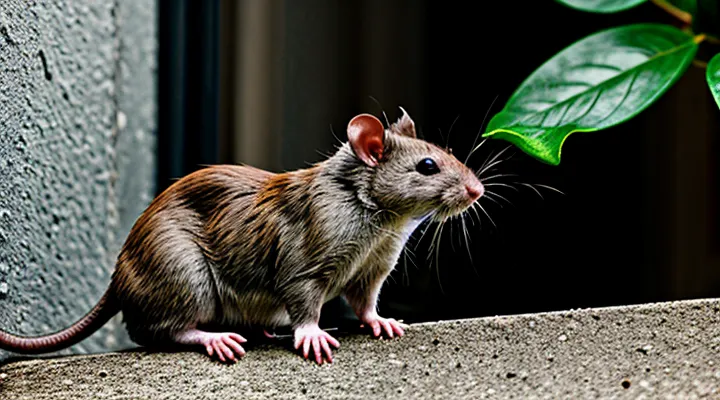
Understanding Rat Scent Marking
The Biological Basis of Scent Glands
Types of Scent Glands in Rats
Rats rely on several specialized scent glands to convey information through odor cues, a behavior that can extend to humans when rats deposit marks on skin or clothing. The glands differ in anatomical position, chemical output, and social function, allowing rats to encode territorial, reproductive, and individual identity signals.
- Dorsal (flank) gland – located on each side of the torso, secretes a lipid‑rich fluid that adheres to surfaces. The compound mixture includes fatty acids and volatile terpenes, providing a durable marker for territory and individual presence.
- Preputial gland – found near the genital papilla in males, produces a milky secretion rich in steroids and pheromonal proteins. This gland signals sexual status and dominance, influencing interactions with conspecifics and occasionally prompting marking on humans during close contact.
- Anal (perianal) gland – positioned adjacent to the anus, releases a watery secretion containing short‑chain fatty acids and sulfur compounds. The odor contributes to group cohesion and hierarchy assessment, and may be transferred to human skin when rats groom or nest nearby.
- Urinary scent – although not a gland, the bladder stores urine that contains a complex array of metabolites and pheromones. Urine marking is a rapid method for territory proclamation, and rats often splash urine on surfaces, including human limbs, during exploratory behavior.
Each gland supplies a distinct chemical signature that, when combined, creates a multilayered odor profile. The profile enables rats to communicate status, reproductive readiness, and individual identity, which explains why they sometimes extend marking behavior to humans that they perceive as part of their environment.
Chemical Composition of Rat Scents
Rats use a complex blend of volatile and non‑volatile chemicals to leave scent marks on humans. The primary constituents include:
- Aliphatic fatty acids such as hexanoic, octanoic, and decanoic acids, which generate a sharp, irritating odor.
- Ketones like acetophenone and 2‑nonanone, contributing to the characteristic musky note.
- Amines (e.g., trimethylamine) that signal the presence of a potential threat or territory.
- Sulfur‑containing compounds such as dimethyl sulfide, responsible for the pungent, rancid aspect.
- Protein‑derived peptides that provide individual identity cues and persist longer on the skin.
These molecules are secreted from the rat’s flank glands, urine, and saliva during grooming or aggressive encounters. Their volatility ensures rapid detection by both conspecifics and humans, while the less volatile components remain on clothing or skin, reinforcing the mark over time. The chemical profile thus serves dual functions: immediate alarm signaling and long‑term territorial advertisement, explaining why rats frequently target human hosts when establishing dominance or deterring competition.
Functions of Scent Marking in the Wild
Territorial Marking and Boundaries
Rats employ scent marking to delineate personal space, a strategy that extends to interactions with humans. When a rat deposits urine, glandular secretions, or cheek rubs on a person, it signals a boundary that the animal intends to protect or monitor.
The marking serves several functions:
- Territory reinforcement – scent conveys ownership of a defined area, discouraging intruders and reducing the need for direct confrontation.
- Risk assessment – chemical cues allow rats to evaluate the presence, health, and hierarchy of nearby organisms, including humans.
- Social communication – marks convey information about the individual’s reproductive status, stress level, and recent activity, influencing how the rat and its conspecifics respond to the human host.
By transferring these cues onto a human, rats integrate people into their spatial map. The animal treats the marked individual as a temporary component of its environment, either as a potential threat to be avoided or as a resource that warrants monitoring. Consequently, the behavior reflects an adaptive mechanism for maintaining stable boundaries within complex, shared habitats.
Communication within Colonies
Rats use chemical signals to coordinate activities across the colony, and marking humans fits within this communication system. When a rat deposits urine or glandular secretions, the scent conveys information about the emitter’s identity, reproductive status, and position in the social hierarchy. Receiving individuals decode these cues to adjust their behavior, maintain order, and allocate resources.
Scent marks placed on objects, surfaces, or living beings serve three primary functions. First, they delineate territory, warning conspecifics and potential intruders of occupied space. Second, they reinforce dominance hierarchies by allowing dominant individuals to broadcast their status. Third, they act as alarm signals, alerting the group to predators or disturbances.
Humans become part of the marking network when rats perceive a person as an extension of the environment they control. A rat may scent a caretaker’s clothing, a researcher's gloves, or a household object to extend its territorial boundary beyond the nest. The human carrier then transports the chemical cue to other colony members, effectively broadcasting the marker’s presence throughout the group.
Key mechanisms of intra‑colony communication related to human marking include:
- Urine deposition on footwear or clothing, creating a mobile scent trail.
- Secretion from the flank glands applied to surfaces that humans frequently touch.
- Cheek rubbing on human skin, transferring facial pheromones that convey individual identity.
These processes allow rats to integrate humans into their established signaling framework, ensuring that the colony remains coordinated even when external agents interact with its members.
Mating and Reproductive Signaling
Rats deposit scent marks on humans primarily to convey reproductive status and attract potential mates. Urine and glandular secretions contain pheromones that signal sexual maturity, estrus cycles, and hormonal condition. When a rat encounters a human whose clothing or skin retains these odors, it interprets the scent as a potential mate cue and reinforces its own signaling through additional marking.
Key aspects of mating‑related marking include:
- Pheromonal composition: Volatile compounds such as major urinary proteins (MUPs) and estrus‑specific steroids encode information about age, fertility, and genetic compatibility.
- Territorial reinforcement: By marking a human, a rat extends its territory into a familiar substrate, increasing the likelihood that conspecifics will encounter its reproductive signals.
- Social hierarchy communication: Dominant individuals increase marking frequency, broadcasting status and suppressing rival breeding attempts.
The behavior intensifies during breeding seasons when hormone levels peak. Elevated testosterone in males and estradiol in females trigger heightened scent production, prompting rats to exploit any available surface—including human skin—to maximize signal dissemination. Consequently, human contact provides an opportunistic medium for rats to broadcast reproductive cues, influencing conspecific interactions and mating dynamics.
Rats Marking Humans: Specific Behavioral Reasons
Extending Social Communication
Recognizing Familiar Individuals
Rats frequently deposit scent marks on humans they encounter. This behavior serves to encode information about the individual’s identity, health status, and social rank. By recognizing familiar people, rats can allocate resources and adjust their interactions accordingly.
Olfactory receptors detect skin secretions, sweat, and volatile compounds unique to each person. Whisker contact provides tactile feedback that reinforces the olfactory profile. Auditory cues such as voice pitch and speech patterns contribute additional identifiers. Integration of these signals occurs in the olfactory bulb and limbic system, producing a composite representation of the human.
When a rat identifies a person as familiar, it modifies its marking strategy. Marking intensity decreases for known, non‑threatening individuals, conserving energy and reducing the risk of antagonistic responses. Conversely, unfamiliar or previously aggressive humans receive more extensive marking, signaling territorial claim and warning.
Key behavioral reasons linked to individual recognition:
- Energy optimization: reduced marking on trusted humans lowers metabolic cost.
- Social stability: consistent scent patterns reinforce established relationships.
- Risk mitigation: heightened marking on strangers deters potential threats.
- Information transfer: repeated marks on a familiar person reinforce the rat’s perception of safety and resource availability.
Affiliation and Group Cohesion
Rats mark humans primarily to reinforce social bonds within their colony. By depositing scent on a person, an individual transfers familiar olfactory cues to the group, signaling that the human is accepted as a shared resource. This chemical imprint aligns the rat’s perception of the human with that of its conspecifics, reducing uncertainty about the external environment.
The marking process supports group cohesion in several ways:
- Shared reference point: The scent acts as a common marker that all members can recognize, facilitating coordinated movement toward the human for food or shelter.
- Status reinforcement: Dominant rats often initiate marking, confirming their leadership role and encouraging subordinates to follow the same pattern.
- Conflict mitigation: Uniform scent cues decrease aggression by providing a clear, mutually acknowledged signal that the human is part of the colony’s domain.
These mechanisms illustrate how olfactory communication extends beyond individual needs, serving as a tool for maintaining collective stability and coordinated activity among rats.
Expressing Dominance or Subordination
Asserting Presence
Rats leave scent marks on humans to broadcast their existence. The act signals that a rat occupies a shared space, deterring rival individuals and establishing a recognizable footprint within the environment.
Key functions of this presence‑assertion behavior include:
- Territory reinforcement – scent on a person extends the rat’s domain beyond nests and burrows, creating a buffer zone that discourages intruders.
- Social hierarchy communication – marks convey the rat’s rank, allowing conspecifics to assess dominance without direct confrontation.
- Resource claim – depositing odor on a human who handles food or waste indicates control over that resource, prompting other rats to avoid competition.
By imprinting their chemical signature on humans, rats efficiently maintain spatial order, reinforce social structure, and protect access to vital supplies.
Submitting to a Higher-Ranking Individual
Rats often deposit scent marks on humans when they perceive the person as a dominant figure within their environment. This behavior serves several adaptive functions related to submission:
- The mark conveys acknowledgement of the human’s higher status, reducing the likelihood of aggression from the rat toward the individual.
- By signaling deference, the rat signals to other conspecifics that the human occupies a superior position, which can stabilize the social hierarchy and limit conflict.
- The odor left on the human acts as a reminder of the rat’s subordinate role, reinforcing the rat’s own acceptance of the established rank and discouraging attempts to challenge the human’s authority.
- The act of marking may also function as a stress‑relief mechanism, allowing the rat to externalize tension associated with interacting with a more powerful being.
Collectively, these mechanisms explain why rats use marking as a form of submission toward higher‑ranking humans, aligning their behavior with broader patterns of hierarchical communication observed in rodent societies.
Stress, Anxiety, and Displacement Behaviors
Responding to New Environments
Rats mark humans primarily as an adaptive response to unfamiliar surroundings. When a rat encounters a new environment, it evaluates potential threats, resources, and social cues through scent deposition. This behavior reduces uncertainty by creating a chemical map that signals the rat’s presence and territorial claims.
Marking serves several functional purposes in novel settings:
- Establishes a familiar olfactory reference point, aiding navigation and reducing stress.
- Communicates dominance or submission to conspecifics that may later enter the same space.
- Deters predators or competitors by signaling the rat’s occupancy and vigilance.
The process begins with rapid assessment of environmental variables such as temperature, lighting, and the presence of foreign odors. If the rat perceives elevated risk, it increases urination or glandular secretion on nearby surfaces, including human skin or clothing. The resulting scent trail provides continuous feedback, allowing the animal to monitor changes and adjust its behavior without direct confrontation.
In experimental observations, rats introduced to a clean laboratory chamber displayed a surge in marking activity within the first ten minutes, followed by a gradual decline as the scent markers accumulated. This pattern demonstrates that marking is a short‑term strategy to compensate for the lack of established cues, reinforcing the animal’s sense of control while the environment remains unpredictable.
Coping Mechanisms for Stress
Rats often mark humans as a response to perceived threat or uncertainty, a behavior that triggers physiological stress in both species. Elevated cortisol levels in rats correlate with increased scent‑marking, indicating that the act serves as a coping strategy to manage anxiety and reinforce territorial boundaries.
Effective coping mechanisms for stress associated with this behavior include:
- Environmental enrichment: Providing complex habitats, nesting materials, and varied stimuli reduces fear‑driven marking by lowering baseline arousal.
- Predictable routines: Consistent handling schedules and stable lighting cycles diminish anticipatory stress, limiting scent‑release events.
- Social buffering: Cohabitation with familiar conspecifics offers reassurance, decreasing individual marking frequency.
- Pharmacological modulation: Administration of anxiolytic agents targeting GABAergic pathways can suppress excessive marking without impairing normal exploratory behavior.
Implementing these strategies stabilizes hormonal profiles, curtails unnecessary marking, and promotes adaptive interaction between rats and human caretakers.
Exploring and Familiarizing New Objects
Scent as a Form of Information Gathering
Rats frequently deposit scent marks on human skin, clothing, or objects they encounter. The act serves as a deliberate method of collecting and transmitting chemical information that the animal can later interpret.
When a rat contacts a human, specialized glands release volatile compounds that mix with the person’s own odor profile. The resulting blend contains data about the host’s age, health status, stress level, and recent exposure to food or pathogens. Rats detect these cues through a highly developed olfactory system, allowing rapid assessment of potential threats or resources.
Key information extracted from human scent includes:
- Presence of dietary residues that may indicate food availability.
- Hormonal markers that reveal stress or illness, signaling a weakened host.
- Microbial signatures that can guide avoidance of disease‑laden individuals.
- Age‑related pheromonal patterns that help rats gauge the likelihood of future interaction.
By recording this composite odor, rats create a reference point for future encounters. Subsequent sniffing of the same mark enables them to compare current conditions with the original reading, informing decisions such as whether to approach, avoid, or defend a territory.
Understanding scent‑based marking clarifies why rats target humans despite the lack of direct benefit. The behavior functions as an adaptive information‑gathering strategy, enhancing survival in environments where human activity shapes resource distribution and risk.
Establishing a Sense of Safety
Rats deposit scent marks on human skin or clothing to create a predictable chemical environment. The familiar odor signals that the surrounding area has been examined and accepted, reducing the likelihood of sudden threats. By repeatedly marking the same individual, rats reinforce a stable olfactory cue that the host is non‑aggressive, allowing the animal to allocate energy to foraging rather than heightened vigilance.
Key functions of this marking behavior include:
- Recognition of a safe carrier: Consistent scent exposure trains the rat to identify the human as a reliable transport medium, minimizing stress during movement.
- Reduction of exploratory anxiety: Familiar odors suppress the rat’s innate alarm response, facilitating smoother navigation in crowded or noisy settings.
- Strengthening of social hierarchy: Marking the human establishes a subtle bond that places the rat in a subordinate yet protected position, decreasing the need for defensive aggression.
Accidental or Incidental Marking
Grooming-Related Scent Transfer
Rats frequently transfer their own scent to humans during grooming episodes. When a rat grooms a person—by nibbling, licking, or rubbing its fur against skin—it deposits secretions from the dorsal and ventral glands onto the host’s surface. These secretions contain pheromones and microbial metabolites that convey the rat’s identity and physiological state.
The scent transfer serves several behavioral functions:
- Territorial reinforcement – the rat marks the human as part of its immediate environment, extending its scent boundary beyond the nest.
- Social cohesion – shared odor cues promote recognition and reduce aggression when the rat later interacts with the same individual.
- Stress mitigation – exposure to familiar scent lowers the rat’s cortisol levels, stabilizing its emotional state during close contact.
The process relies on the rat’s natural grooming mechanics. Mastication of hair releases glandular fluids; the tongue’s papillae spread the material across the host’s epidermis. The resulting odor profile persists for hours, providing a continuous olfactory signal that influences the rat’s subsequent behavior toward the marked human.
Unintentional Dropping of Scent Gland Secretions
Rats possess flank and anal glands that continuously secrete volatile compounds. These secretions coat the animal’s fur and skin surface, creating a baseline odor that can be transferred to external objects during routine activities.
- Contact with human skin or clothing while the rat climbs, explores, or seeks warmth releases microscopic droplets of glandular fluid.
- Grooming motions directed at the head or body may dislodge secretions, which then fall onto nearby surfaces, including a person’s hand or arm.
- Sudden movements or pressure on the rat’s torso can force a small amount of fluid from the flank glands onto the handler without the animal’s awareness.
When a human detects the characteristic musky scent, the perception is often interpreted as intentional marking, even though the transfer results from ordinary physical interaction. The inadvertent deposition of these compounds contributes to the overall pattern of rat‑human scent exchange, reinforcing the animal’s territorial communication system without deliberate intent.