
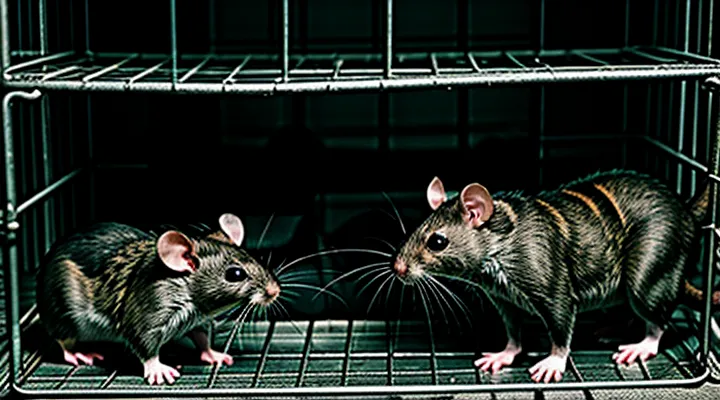
Factors Contributing to Rat Conflict
Environmental Stressors
Rats housed together often display aggression when the environment imposes stress. Overcrowding reduces personal space, limits escape routes, and forces repeated encounters with the same individuals, which escalates territorial disputes. Insufficient nesting material or lack of shelters removes opportunities for retreat, leaving animals exposed to continual confrontation.
Resource competition intensifies fighting. Unequal distribution of food, water, or chewable objects creates a hierarchy where dominant individuals monopolize supplies, prompting subordinates to challenge access. Inconsistent feeding schedules or brief interruptions in water availability amplify the urgency of resource guarding.
Physical conditions also trigger hostility. Temperatures outside the thermoneutral zone (approximately 20–26 °C) cause discomfort; heat stress leads to irritability, while cold stress increases metabolic demand and competition for warm spots. Bright, flickering lights or sudden changes in illumination disrupt circadian rhythms, producing agitation. Excessive noise from ventilation fans or external sources elevates cortisol levels, fostering aggression.
Environmental enrichment can mitigate these pressures. Providing multiple nesting sites, chewable objects, and tunnels distributes activity zones, reducing direct confrontations. Proper cage size, stable temperature, consistent lighting, and quiet surroundings form a baseline that lowers stress‑induced fighting among co‑habiting rats.
Overcrowding and Space Limitations
Overcrowding compresses the natural territorial system of rats, forcing multiple individuals to share a confined area that cannot accommodate each animal’s preferred personal space. When the available floor space falls below the threshold required for a stable hierarchy, dominant individuals encounter constant proximity to subordinates, triggering repeated challenges to maintain status. This persistent intrusion amplifies stress hormones, reduces the latency before aggressive bouts, and eliminates the natural intervals of retreat that normally defuse conflicts.
Limited space also restricts access to essential resources such as food, water, and nesting material. Competition for these items intensifies when multiple rats must reach for the same point simultaneously, creating a predictable pattern of confrontations. The resulting escalation follows a clear sequence:
- Immediate displacement attempts by dominant rats.
- Counter‑aggression from subordinates attempting to reclaim position.
- Repeated cycles of biting, chasing, and vocalizations until one animal secures priority.
The combined effect of cramped conditions and constrained resources eliminates the buffering zones that allow peaceful coexistence, making aggressive interactions the default response to spatial pressure.
Resource Scarcity
Rats confined together often display aggression when essential resources become limited. Competition for food, water, nesting material, and preferred locations triggers confrontations that quickly escalate into fights.
- Food: Unequal access to pellets or crumbs produces immediate disputes; dominant individuals seize the supply, forcing subordinates to defend their share.
- Water: Restricted drinking points attract repeated challenges, especially when the bottle is small or the flow is intermittent.
- Nesting material: Limited strips of paper or cloth create territorial claims; removal of a rival’s nest triggers aggressive lunges.
- Space: Overcrowding reduces personal zones; any intrusion into a perceived safe area provokes defensive attacks.
The underlying mechanism is a cost‑benefit assessment performed by each rat. When the perceived benefit of acquiring a scarce resource outweighs the risk of injury, the animal initiates aggressive behavior. Repeated exposure to scarcity reinforces this pattern, leading to a stable hierarchy where fights serve to allocate limited assets.
Social Dynamics and Hierarchy
Establishing Dominance
Rats confined together quickly form a social hierarchy. The most dominant individual asserts control through physical displays and aggressive encounters, forcing subordinate animals to yield resources such as food, nesting material, and preferred cage locations. This hierarchy reduces long‑term tension by establishing clear roles, but the initial establishment phase generates frequent bouts of fighting.
Dominance is communicated by:
- Rapid lunges and bites aimed at the opponent’s neck or flank.
- Upright posturing with raised fur and extended whiskers.
- Chasing around the cage perimeter, often ending in a forced retreat of the loser.
- Vocalizations, including high‑frequency squeaks, that intensify during confrontations.
When a rat consistently wins these interactions, it gains priority access to the cage’s most secure shelter and the best feeding spot. Subordinate rats adjust their behavior, avoiding direct challenges and displaying submissive postures such as crouching and reduced movement. This behavioral shift limits further aggression and stabilizes the group’s structure.
If the hierarchy remains unsettled—due to equal size, similar age, or repeated introductions—conflicts persist. Continuous monitoring of dominance indicators allows caretakers to intervene, for example by providing multiple feeding stations or enlarging the enclosure, thereby decreasing the necessity for violent contests.
Inter-Group vs. Intra-Group Aggression
Rats placed together in a confined space frequently exhibit aggressive encounters. The aggression can be divided into two categories: conflict between separate groups and conflict within a single group.
Inter‑group aggression arises when individuals from distinct colonies are introduced into the same cage. Typical triggers include competition for limited resources, defense of established territories, and recognition of unfamiliar scent cues. This form of aggression often escalates rapidly, leading to severe injuries or fatal outcomes, because each group perceives the other as an external threat.
Intra‑group aggression occurs among members that share a common origin. The primary function is the establishment and maintenance of a social hierarchy. Dominant individuals assert control through brief chases, bites, and posturing, while subordinate rats display avoidance or submission. Stress levels rise during periods of hierarchy restructuring, resulting in increased frequency of low‑intensity skirmishes.
Key distinctions:
- Origin of participants: external colonies vs. same colony
- Motivation: territorial defense and resource competition vs. dominance hierarchy
- Intensity: often higher in inter‑group encounters, potentially lethal; generally lower in intra‑group, aimed at status negotiation
- Temporal pattern: spikes shortly after mixed‑group introduction; persists intermittently during hierarchy shifts within a group
Understanding these differences guides cage management. Providing ample space, multiple feeding stations, and environmental enrichment reduces both inter‑ and intra‑group conflicts. When experimental protocols require mixed groups, gradual acclimation and visual barriers can mitigate severe aggression.
Introduction of New Individuals
Introducing unfamiliar rats into an established cage frequently triggers aggressive encounters. Resident animals perceive newcomers as threats to limited resources such as food, nesting material, and territory. The sudden presence of an outsider disrupts the social hierarchy, prompting dominant individuals to reassert control and subordinate rats to defend their position.
Key factors that intensify conflict during introductions include:
- Territorial disruption – established rats defend the area they have claimed.
- Resource competition – limited access to food and shelter heightens tension.
- Hierarchical uncertainty – unclear rank ordering encourages challenges.
- Stress‑induced arousal – novel social cues elevate cortisol levels, increasing aggression.
Mitigation strategies rely on gradual exposure, scent exchange, and temporary partitioning. By allowing visual and olfactory familiarity before direct contact, the cage‑dwelling group can adjust its social structure with reduced fighting.
Biological and Behavioral Aspects
Hormonal Influences
Hormonal systems drive aggression when rats share a confined enclosure. Elevated testosterone correlates with increased mounting and biting, especially in dominant males. Estradiol modulates aggression in females, amplifying territorial displays during estrus. Corticosterone rises in response to crowding and limited resources, lowering the threshold for hostile encounters. Vasopressin enhances male-male aggression by acting on the lateral septum, while oxytocin generally suppresses conflict but may promote selective aggression toward unfamiliar intruders.
- Testosterone: stimulates dominance behaviors, intensifies fight frequency.
- Estradiol: augments female territoriality, interacts with estrogen receptors in the amygdala.
- Corticosterone: reflects chronic stress, reduces inhibition of aggressive circuits.
- Vasopressin: activates V1a receptors, heightens male rivalry.
- Oxytocin: binds to central receptors, dampens general aggression, yet can increase selective hostility.
Stress hormones alter hypothalamic–pituitary–adrenal axis activity, reshaping neural pathways that govern fight-or-flight decisions. When space is restricted, the balance shifts toward catecholamine release, reinforcing fight responses. Social hierarchy solidifies through repeated hormonal feedback: dominant individuals maintain high testosterone, subordinates experience sustained corticosterone, perpetuating a cycle of confrontations.
Understanding these endocrine mechanisms informs laboratory animal management and experimental design. Monitoring hormonal profiles enables prediction of conflict peaks, allowing adjustments in cage density, enrichment, and lighting to mitigate aggression without compromising scientific objectives.
Genetic Predisposition
Rats housed together frequently display aggressive encounters that stem from inherited behavioral tendencies. Research on laboratory and wild populations shows that certain alleles correlate strongly with heightened territoriality and dominance displays, producing predictable patterns of conflict in confined spaces.
Key genetic components identified in aggressive phenotypes include:
- Variants of the monoamine oxidase A (MAOA) gene that reduce enzyme activity, leading to elevated monoamine levels and increased irritability.
- Polymorphisms in the serotonin transporter gene (SLC6A4) that diminish serotonin reuptake, lowering stress tolerance.
- Mutations affecting the dopamine D4 receptor (DRD4), which amplify reward‑seeking and competitive behavior.
- Allelic differences in the vasopressin receptor 1a (AVPR1A) that enhance social dominance signaling.
These loci interact with environmental stressors such as limited space, resource scarcity, and social hierarchy disruption. Even when external conditions are standardized, rats possessing high‑risk genotypes exhibit more frequent bouts of biting, chasing, and mounting, demonstrating that genetic predisposition sets a baseline propensity for aggression.
Practical outcomes for laboratory management include selecting low‑aggression strains for group housing, monitoring genotype frequencies in breeding colonies, and adjusting cage enrichment to mitigate genetically driven conflict. Implementing genotype‑aware protocols reduces injury rates and improves overall welfare without compromising experimental validity.
Learned Behaviors
Rats raised together develop a repertoire of learned behaviors that shape their interactions when confined. Early social experiences teach individuals how to assert dominance, establish territories, and respond to threats. Repeated exposure to specific cues—such as scent marks, vocalizations, and physical gestures—creates predictable patterns that govern conflict escalation.
Key learned behaviors influencing aggression include:
- Territorial marking: Rats deposit urine and glandular secretions to delineate personal space; intrusion triggers defensive attacks.
- Dominance displays: Posturing, upright standing, and rapid grooming serve as signals of rank; lower‑ranking individuals may respond with overt fighting to challenge status.
- Retaliatory biting: Prior encounters that end in a bite condition rats to associate certain opponents with pain, leading to preemptive strikes in future encounters.
- Resource guarding: Competition for limited food or nesting material fosters learned strategies for monopolizing assets, often resulting in violent disputes.
When a cage restricts escape routes and concentrates these learned cues, the probability of confrontations rises sharply. The established behavioral scripts, reinforced by past outcomes, drive rats to resolve disputes through physical aggression rather than avoidance.
Consequences of Caged Aggression
Injuries and Health Issues
Aggressive encounters among laboratory rats frequently result in physical trauma that directly compromises animal welfare and experimental validity. Bite wounds appear within minutes of a fight, producing puncture lesions on the skin, fur, and underlying muscle. Lacerations often accompany rapid clawing, exposing subcutaneous tissue and increasing the risk of hemorrhage. Fractures occur when rats clash with sufficient force to break small bones, particularly in the limbs and skull. Tail injuries, ranging from bruising to amputation, are common when opponents target the vulnerable appendage during pursuit.
These injuries create pathways for pathogens, leading to secondary health complications. Open wounds may become colonized by opportunistic bacteria such as Staphylococcus aureus or Pseudomonas spp., resulting in cellulitis, abscess formation, or septicemia. Persistent pain and tissue damage trigger chronic stress responses, elevating corticosterone levels and suppressing immune function. Immunosuppression predisposes rats to respiratory infections, gastrointestinal dysbiosis, and delayed wound healing. Additional health concerns include:
- Weight loss caused by reduced food intake due to oral injuries or stress‑induced anorexia.
- Anemia from ongoing blood loss in severe bite wounds.
- Orthopedic deformities following untreated fractures or joint dislocations.
- Behavioral changes such as heightened aggression, withdrawal, or hypervigilance, which can interfere with experimental outcomes.
Monitoring for these physical and physiological signs enables timely veterinary intervention, reduces confounding variables, and upholds the integrity of research involving rodent subjects.
Stress and Welfare Impact
Aggressive encounters among laboratory rats confined to a single cage arise primarily from elevated stress levels. Overcrowding, limited resources, and unpredictable handling each trigger the hypothalamic‑pituitary‑adrenal axis, producing measurable increases in corticosterone and heart rate. These physiological responses reduce tolerance thresholds and promote territorial or dominance behaviors that manifest as fighting.
Key stressors include:
- High animal density relative to cage size
- Inadequate enrichment (absence of nesting material, tunnels, or chew objects)
- Irregular feeding schedules or competition for food and water
- Frequent disturbances such as cleaning, cage changes, or experimental manipulation
The welfare impact of persistent aggression is evident in several outcomes. Injuries range from superficial wounds to severe tissue damage, compromising health and experimental validity. Chronic stress suppresses immune function, alters metabolic rates, and can skew behavioral test results. Moreover, repeated fighting elevates anxiety-like behavior, reducing the reliability of data derived from cognitive or emotional assays.
Mitigation strategies focus on reducing stressors and enhancing environmental quality. Recommendations are:
- Maintain a maximum of two adult rats per standard cage, adjusting size to meet floor‑space guidelines.
- Provide species‑appropriate enrichment items (nesting material, shelters, chew blocks) renewed regularly.
- Implement consistent feeding times and ensure multiple access points to food and water to minimize competition.
- Limit cage disturbance to essential procedures, employing gentle handling techniques.
By controlling these variables, researchers can lower stress‑induced aggression, improve animal welfare, and increase the reproducibility of experimental findings.
Impact on Research Outcomes
Aggressive interactions among laboratory rats housed together introduce physiological and behavioral disturbances that directly alter experimental measurements. Elevated cortisol and catecholamine levels modify metabolic rates, immune responses, and pain thresholds, leading to data that no longer reflect baseline conditions. Consequently, control groups may display heightened variability, reducing statistical power and increasing the likelihood of Type II errors.
- Unpredictable injury rates cause uneven mortality, skewing survival analyses.
- Social stress disrupts learning and memory tasks, inflating error margins in cognitive studies.
- Altered feeding patterns affect body weight trajectories, compromising nutrition‑related endpoints.
- Hormonal fluctuations interfere with endocrine assays, producing inconsistent hormone profiles.
These effects propagate through study design, data interpretation, and translational relevance. Researchers must account for aggression‑induced variance by implementing monitoring protocols, separating dominant individuals, or employing single‑housing when appropriate. Failure to mitigate conflict compromises reproducibility, inflates sample size requirements, and may lead to erroneous conclusions about treatment efficacy or disease mechanisms.
Strategies for Mitigating Conflict
Environmental Enrichment
Aggressive encounters among laboratory rats often stem from insufficient stimulation and competition for limited resources within a confined space. When the environment lacks complexity, individuals direct excess energy toward dominance behaviors, resulting in frequent fights.
Environmental enrichment refers to the systematic addition of structural, sensory, and social elements that promote naturalistic activities. It includes nesting material, tunnels, chewable objects, and opportunities for foraging. These components satisfy innate drives, disperse attention, and decrease the perceived scarcity that typically triggers confrontations.
Enrichment mitigates aggression by providing alternative outlets for exploration, reducing monotony, and allowing spatial partitioning. Access to multiple zones lowers the frequency of direct encounters, while manipulable objects occupy forepaws and jaws, diverting attention from conspecifics. Enhanced sensory input also moderates stress hormones, further diminishing hostile responses.
Effective enrichment items:
- Wooden or plastic tunnels arranged in a grid pattern
- Nesting bundles of shredded paper or cotton
- Chew blocks made of safe hardwood or mineral composite
- Foraging tubes filled with seeds or pellets
- Elevated platforms or climbing ladders
Implementation should follow a schedule that rotates objects to prevent habituation. Monitoring includes recording bite wounds, latency to first aggression, and overall activity levels. Adjustments are made when data indicate persistent conflicts, ensuring the environment continuously meets the rats’ behavioral requirements.
Cage Design and Configuration
Cage design directly influences the frequency and intensity of fights among laboratory rats. Spatial constraints, resource distribution, and environmental complexity determine whether individuals can establish territories without constant conflict.
- Size and shape – Minimum floor area of 0.1 m² per adult rat reduces crowding; rectangular cages with multiple corners allow separate zones for nesting and feeding.
- Vertical space – Inclusion of platforms or multi‑level structures provides additional refuge areas, decreasing competition for ground space.
- Barrier placement – Transparent partitions or partial dividers create visual separation while preserving airflow, limiting direct confrontations.
- Resource allocation – Multiple feeding stations, water bottles, and nesting materials prevent monopolization; identical items placed at opposite ends distribute access evenly.
- Enrichment – Objects such as tunnels, chew sticks, and hideouts encourage exploratory behavior and distract from aggressive encounters.
Improper configuration—overcrowded floor space, single feeding point, or lack of hiding places—forces rats into constant proximity, triggering dominance hierarchies that manifest as fights. Adjusting cage dimensions, adding vertical elements, and dispersing essential resources create a balanced environment where territorial disputes are minimized, thereby improving welfare and experimental reliability.
Group Management Techniques
Aggressive encounters among captive rats often stem from competition for limited resources, territorial disputes, and social hierarchy instability. When individuals share a constrained enclosure, dominance hierarchies may shift rapidly, prompting repeated confrontations that compromise welfare and experimental reliability.
Environmental enrichment, spatial organization, and controlled social composition mitigate these conflicts. Adjusting cage dimensions, providing multiple nesting sites, and introducing objects that encourage exploration reduce territorial pressure. Gradual introduction of unfamiliar rats, paired with observation of submissive signals, prevents abrupt hierarchy disruptions.
- Rotate group members in small, predictable batches to allow steady hierarchy formation.
- Supply at least two identical shelters per animal to diminish competition for hiding places.
- Install chewable materials that satisfy oral stereotypies, diverting attention from peers.
- Maintain consistent lighting and temperature to avoid stress‑induced aggression.
- Record interaction patterns daily; intervene when repeated biting or chasing exceeds a predefined threshold.
Implementing these strategies yields measurable declines in injury rates and stabilizes social structures. Continuous monitoring ensures early detection of emerging dominance disputes, allowing timely adjustment of group composition or enrichment provisions.