
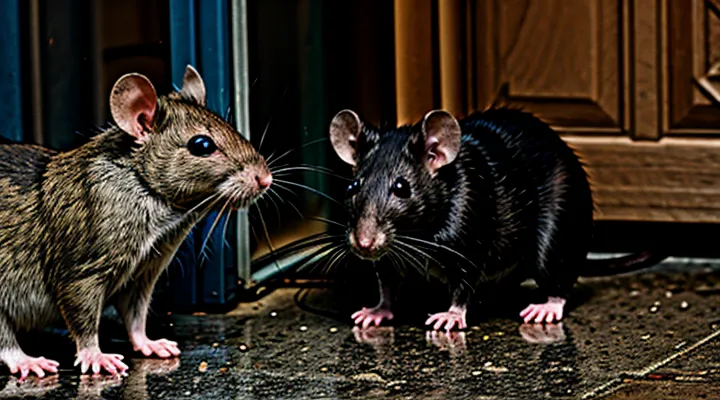
Understanding Rat Behavior and Fear
The Instinctive Nature of Fear in Prey Animals
Evolutionary Pressures on Rats
Rats have evolved under constant threat from larger predators, including humans. Natural selection favored individuals that recognized and avoided potential attackers, ensuring higher reproductive success.
Key selective forces include:
- Direct mortality caused by human traps, poisons, and habitat destruction.
- Indirect pressure from domestic animals that humans keep, such as cats and dogs, which also prey on rodents.
- Competition for limited food resources, prompting rats to adopt cautious foraging strategies near human activity.
These pressures shaped sensory and behavioral adaptations. Vision and whisker sensitivity allow rapid detection of approaching silhouettes, while heightened auditory acuity alerts to footsteps. Once a threat is identified, the typical response involves immediate flight, reduced activity, and avoidance of areas associated with human scent.
Genetic studies reveal that populations exposed to intensive human control exhibit increased stress‑responsive hormone levels and faster learning of avoidance cues. Over generations, such traits become entrenched, reinforcing the species’ wariness of people.
Survival Mechanisms and Their Role
Rats survive by constantly evaluating threats, and human presence triggers several innate responses. Their sensory systems detect movement, scent, and sound at levels far beyond those of most mammals, allowing rapid classification of potential danger.
- Visual acuity attuned to sudden motion prompts immediate flight.
- Olfactory receptors identify human-associated chemicals, such as sweat and skin oils, as unfamiliar and risky.
- Auditory sensitivity registers high‑frequency noises generated by footsteps, prompting heightened alertness.
- Stress hormones, chiefly corticosterone, surge when threat cues appear, accelerating heart rate and muscle readiness for escape.
- Social learning transmits fear responses across generations; offspring observe adult avoidance of humans and adopt similar behavior.
These mechanisms collectively shape a behavioral pattern that minimizes exposure to predators, including people. The resulting wariness reduces the likelihood of capture, injury, or death, thereby enhancing reproductive success and population stability.
Factors Contributing to Rat Fear of Humans
Historical Interactions and Conditioning
Human Predation and Pest Control
Rats exhibit a strong aversion to people because they have evolved to recognize humans as predators and sources of lethal control measures. This perception is reinforced by direct experiences of capture, poisoning, and habitat disruption.
Human predation and pest management employ several mechanisms that condition rat behavior:
- Physical traps – snap, live‑catch, and electronic devices deliver immediate injury or confinement, creating a lasting association between human presence and danger.
- Chemical baits – anticoagulant rodenticides cause internal bleeding after ingestion, producing delayed but fatal outcomes that rats learn to avoid after witnessing conspecific deaths.
- Environmental modification – sealing entry points, removing food caches, and maintaining sanitation reduce shelter and resources, forcing rats into exposed areas where human detection is more likely.
- Biological agents – introduction of predators such as feral cats or trained detection dogs heightens the perceived threat level, prompting heightened wariness and avoidance of human‑occupied zones.
These strategies generate a feedback loop: successful control actions reinforce the instinctual fear, leading surviving rats to adopt more cautious foraging patterns, increased nocturnality, and heightened sensitivity to vibrations and scents linked to human activity. Consequently, the collective impact of predation and pest control solidifies the innate wariness rats display toward humans.
Learned Aversion through Generations
Rats develop a persistent wariness of humans through mechanisms that transmit fear across generations. The process begins with direct encounters in which a rat experiences pain, confinement, or predation risk. Neural pathways associated with the threat become reinforced, creating a learned aversion that the individual later exhibits whenever it detects human cues such as scent, voice, or visual movement.
The aversion does not remain confined to the original subject. Evidence from laboratory and field studies shows three primary routes of intergenerational transmission:
- Maternal conditioning – pregnant females exposed to human stressors produce offspring with heightened cortisol responses and increased avoidance behavior, even when the pups have never met a person.
- Social learning – juvenile rats observe the defensive reactions of conspecifics and adopt similar escape strategies, copying the timing and intensity of flight responses.
- Epigenetic modification – exposure to human-related threats alters DNA methylation patterns in genes regulating stress hormones; these epigenetic marks are inherited and predispose descendants to react more strongly to human stimuli.
These pathways combine to embed a collective apprehension within rat populations, ensuring that fear of humans persists long after the initial adverse event. The cumulative effect explains why rat colonies in urban environments exhibit rapid, coordinated flight at the mere presence of a person, despite many individuals lacking personal experience of danger.
Sensory Perception and Threat Assessment
Olfactory Cues and Human Scent
Rats rely on a highly developed olfactory system to assess potential threats, and human odor provides a reliable indicator of danger. When a rat encounters volatile compounds emitted by a person, it detects a specific blend of skin secretions, sweat metabolites, and microbial by‑products. These substances include lactic acid, ammonia, fatty acids, and pheromone‑like molecules that differ markedly from the scents of conspecifics or typical food sources. The presence of such chemicals triggers neural pathways in the olfactory bulb linked to avoidance behavior, prompting rapid retreat or heightened vigilance.
Key olfactory cues associated with human scent:
- Lactic acid: abundant in sweat, activates receptors that signal unfamiliar, potentially hostile odor.
- Ammonia and urea derivatives: by‑products of protein metabolism, interpreted as markers of large mammals.
- Fatty acid esters: produced by skin microbiota, create a distinctive profile absent in rodent environments.
- Human-specific pheromonal analogues: compounds such as androstenone and androstenol, which rodents recognize as foreign.
Laboratory studies show that rats exposed to synthetic mixtures replicating human odor exhibit increased freezing, reduced exploratory activity, and accelerated escape responses compared to exposure to neutral or rodent‑derived scents. Electrophysiological recordings confirm that olfactory receptor neurons tuned to these human‑associated molecules fire at higher rates, reinforcing the association between human presence and threat.
Consequently, the detection of human odor constitutes a primary sensory cue that drives avoidance. The specificity of the chemical signature allows rats to differentiate humans from other animals, ensuring that the fear response is directed toward a predator capable of causing injury. This olfactory mechanism operates independently of visual or auditory signals, providing a rapid, reliable means of recognizing danger in diverse environments.
Auditory Signals and Human Presence
Rats exhibit marked avoidance of people, and auditory cues constitute the most immediate trigger for this behavior.
Footsteps generate low‑frequency vibrations that fall within the 250–500 Hz range, a band to which rats are highly sensitive. Sudden, irregular sounds—such as the rustle of clothing or the clatter of objects—produce broadband spectral peaks that rats interpret as potential predators. Human vocalizations, even at moderate volumes, contain harmonic structures that overlap with alarm calls used by conspecifics, reinforcing the perception of danger.
Human presence is conveyed not only by movement‑related sounds but also by subtle auditory signatures: breathing at 12–20 breaths per minute creates a rhythmic low‑frequency envelope; speech introduces rapid amplitude modulations that differ from natural rodent communication. These patterns are detected by the rat’s cochlear and middle‑ear apparatus, relayed to the inferior colliculus, and integrated with the amygdala to initiate defensive responses.
The resulting behavior includes immediate freezing, rapid escape toward concealed routes, and heightened alertness that persists for several minutes after the sound ceases.
Typical auditory triggers:
- Footstep impacts on hard surfaces
- Clothing rustle or fabric friction
- Human speech and laughter
- Breathing or soft exhalations
- Dropped objects producing sharp impacts
Collectively, these auditory signals provide rats with reliable information about human proximity, prompting avoidance actions that reduce the likelihood of direct encounters.
Visual Cues and Body Language
Rats evaluate human presence primarily through sight, interpreting specific visual patterns as indicators of danger. Sharp eye contact, especially when the observer’s gaze is fixed on the animal, signals intent and triggers a rapid flight response. Sudden, unpredictable motions generate a looming effect that the rodent’s visual system associates with predator attacks. Large, dark silhouettes that expand across the rat’s field of vision heighten perceived threat because they mimic the shape of aerial or terrestrial predators.
- Direct stare from a close distance
- Rapid hand or arm movement toward the animal
- Abrupt changes in lighting or shadows cast on the floor
- High-contrast, broad shapes moving overhead or across the cage
Body posture further modulates the rat’s reaction. An upright stance with extended arms creates a larger visual profile, reinforcing the impression of a dominant aggressor. Conversely, a lowered, angled posture reduces the animal’s visual field of the observer and can diminish the perceived risk. Slow, deliberate movements allow the rat to track the human’s trajectory, providing time for assessment and potentially reducing panic.
Habituation occurs when visual cues become predictable; repeated exposure to non-threatening gestures lowers the rat’s stress levels, as evidenced by reduced freezing and quicker resumption of normal activity. Nonetheless, any deviation from established patterns—such as an unexpected reach or a sudden shift in lighting—reinstates the innate fear response.
In summary, rats rely on precise visual information—eye contact, motion speed, silhouette size, and observer posture—to gauge human threat. Consistency in these cues can mitigate fear, while abrupt or dominant visual signals perpetuate avoidance behavior.
The Impact of Human Environment
Urban vs. Rural Settings
Rats in densely populated areas encounter humans far more frequently than those in sparsely inhabited regions. Constant exposure conditions urban rodents to a pattern of unpredictable movement, sudden noises, and frequent handling, reinforcing a heightened wariness. In contrast, rural rats experience intermittent human contact, often limited to occasional farm work or occasional waste collection, allowing for a lower baseline of fear.
Key environmental contrasts shape this behavior:
- Human density: Urban zones present a high concentration of people, increasing the probability of startling encounters. Rural locales feature fewer individuals, reducing exposure frequency.
- Food sources: City refuse provides abundant, irregularly accessible nutrition, encouraging nocturnal foraging and rapid retreat when disturbed. Rural environments rely on predictable agricultural stores, fostering more stable foraging routes.
- Predation pressure: Urban predators such as cats and feral dogs intensify threat perception, whereas rural predators are often larger mammals that do not directly associate with human activity, altering the risk assessment of rats.
- Habituation opportunities: Continuous interaction with humans in cities can lead to selective habituation among bold individuals, yet the overall population remains cautious due to high mortality for the timid. Rural populations, facing fewer encounters, maintain a more uniform response.
These factors explain why the aversion of rats to people manifests more intensely in city settings than in countryside habitats. The combination of frequent disturbance, variable food access, and predator dynamics creates a persistent state of alertness among urban rodents, while rural rats retain a comparatively subdued fear response.
Human Activity and Rat Adaptations
Rats exhibit avoidance of people because human actions create environments that threaten their survival. Urban development concentrates food waste, alters shelter availability, and introduces chemicals that rats must navigate. Waste disposal practices concentrate refuse, drawing rats into close proximity with humans, while routine pest‑control measures impose direct mortality risk. Noise, artificial lighting, and frequent human movement generate sensory cues that rats associate with danger.
In response, rats modify their behavior, physiology, and population structure. Adaptations include:
- Nocturnal foraging to exploit reduced human activity.
- Preference for concealed burrows and wall voids that limit exposure.
- Rapid reproductive cycles that offset losses from extermination efforts.
- Enhanced olfactory discrimination to locate low‑risk food sources.
- Altered stress hormone regulation, improving tolerance to intermittent disturbances.
These adjustments enable rats to persist in human‑dominated habitats despite persistent threats. Continuous human pressure selects for individuals that can detect, avoid, and recover from encounters, reinforcing the cycle of fear and adaptation.
Manifestations of Fear in Rats
Behavioral Responses to Human Presence
Flight, Freeze, and Fight Responses
Rats display three primary defensive strategies when confronted by humans: rapid escape, immobility, and aggression. These behaviors arise from conserved neural circuits that evaluate threat intensity and select the most adaptive response.
The escape reaction, often called the flight response, involves immediate locomotion away from the source of danger. Sensory input from whiskers and visual cues activates the periaqueductal gray and downstream motor pathways, producing high‑speed running, elevated heart rate, and increased corticosterone levels. Escape is favored when the perceived threat is distant but clearly identifiable.
The immobility reaction, known as the freeze response, occurs when movement could attract attention. Rats adopt a still posture, suppress vocalizations, and reduce respiration rate. This state is mediated by the amygdala’s output to the nucleus raphe magnus, which inhibits motor neurons while maintaining heightened sensory vigilance. Freeze is selected when the threat is close enough to be detected but not yet imminent.
The aggression reaction, termed the fight response, emerges when escape is impossible or the rat perceives an opportunity to neutralize the danger. Rats may bite, rear, and emit ultrasonic vocalizations. Activation of the hypothalamic attack circuitry and the ventral tegmental area drives muscular tension and rapid lung ventilation, preparing the animal for combat.
Key distinctions among the three responses:
- Flight: swift locomotion, increased cardiovascular activity, triggered by distant threat cues.
- Freeze: prolonged stillness, lowered respiration, driven by proximal but non‑contact threat.
- Fight: heightened muscular tone, aggressive actions, initiated when escape is blocked.
Understanding these patterns clarifies why rats exhibit strong aversion to human presence and informs experimental designs that aim to assess stress and welfare in laboratory settings.
Hiding and Avoidance Strategies
Rats exhibit a range of behaviors designed to reduce contact with people, reflecting their innate wariness of large mammals that may pose a threat. Their survival depends on quickly locating shelter, minimizing exposure, and retreating at the first sign of disturbance.
Typical hiding and avoidance tactics include:
- Seeking refuge in concealed spaces such as wall voids, under debris, or within dense vegetation where visual detection is limited.
- Maintaining a network of multiple nests to allow rapid relocation if a site becomes compromised.
- Using tactile cues to assess surface vibrations; sudden movements trigger immediate flight to the nearest cover.
- Employing nocturnal activity patterns, restricting foraging to low‑light periods when human presence is reduced.
- Emitting ultrasonic vocalizations that alert conspecifics to danger, prompting coordinated retreat.
These strategies collectively enable rats to persist in environments heavily populated by humans while limiting direct encounters that could result in injury or mortality.
Physiological Responses to Stress
Hormonal Changes
Rats exhibit strong aversion to people because encounters with humans activate their hypothalamic‑pituitary‑adrenal (HPA) axis. The immediate hormonal response includes a surge of corticosterone, the principal glucocorticoid in rodents, which amplifies alertness and promotes rapid escape. Simultaneously, the sympathetic nervous system releases adrenaline and noradrenaline, increasing heart rate and sharpening sensory processing, thereby reinforcing avoidance.
Repeated exposure to humans produces chronic elevations of corticosterone. Persistent high levels down‑regulate glucocorticoid receptors in the hippocampus and amygdala, impairing feedback inhibition and sustaining a heightened fear state. This neuroendocrine adaptation results in:
- Elevated baseline corticosterone, even in the absence of direct threat.
- Reduced efficacy of stress‑recovery mechanisms, prolonging anxiety‑like behavior.
- Altered expression of mineralocorticoid receptors, affecting memory of human presence.
Oxytocin, a hormone linked to social bonding, declines during acute stress. Lower oxytocin concentrations diminish the incentive to approach conspecifics and, by extension, reduce willingness to tolerate human proximity. Vasopressin, another stress‑related peptide, often rises in tandem with corticosterone, further enhancing defensive aggression.
The combined effect of acute catecholamine release, sustained glucocorticoid elevation, and modulation of oxytocin/vasopressin balances creates a hormonal milieu that predisposes rats to perceive humans as persistent threats, leading to consistent avoidance behavior.
Increased Heart Rate and Respiration
Rats exposed to human presence exhibit a rapid increase in heart rate and breathing frequency. This autonomic response originates from activation of the sympathetic nervous system, which prepares the animal for escape. Elevated cardiac output supplies muscles with oxygen, while accelerated respiration maximizes gas exchange to support heightened metabolic demand.
Key physiological indicators of this stress reaction include:
- Heart rate rise of 30–50 % above baseline within seconds of detection.
- Breath rate escalation from 80–120 breaths min⁻¹ to 150–200 breaths min⁻¹.
- Blood pressure surge accompanying cardiac acceleration.
- Release of catecholamines (adrenaline, noradrenaline) that sustain the tachycardic and tachypneic state.
These changes reflect a conserved survival mechanism that underlies rats’ avoidance of humans, demonstrating that the fear response is measurable through cardiovascular and respiratory parameters.
The Implications of Rat Fear for Coexistence
Human-Wildlife Conflict and Management
Humane Deterrents
Rats instinctively avoid humans because they associate people with danger, unpredictable movements, and potential predators. This natural wariness can be enhanced with humane deterrent methods that discourage entry without causing pain or injury.
- Ultrasonic emitters that broadcast frequencies above 20 kHz, disrupting rodent communication and prompting relocation.
- Peppermint oil or other strong aromatic compounds applied to entry points, creating an unpleasant scent barrier.
- Predator‑derived scents, such as fox urine or synthetic ferret odor, triggering innate fear responses.
- Physical barriers, including metal mesh, sealed conduit caps, and steel wool, preventing access to walls and gaps.
- Motion‑activated lights or alarms that startle rodents when they approach, reinforcing avoidance.
- Secure food storage in airtight containers, eliminating attractants that draw rats toward human habitats.
Implementing these strategies together maximizes effectiveness, leveraging rats’ sensitivity to sound, smell, and disturbance while respecting animal welfare. Continuous monitoring and maintenance ensure long‑term reduction of rodent presence without resorting to lethal measures.
Understanding Rat Psychology for Effective Solutions
Rats perceive humans as predators, triggering innate defensive responses. Their sensory systems detect rapid movements, unfamiliar scents, and low-frequency vibrations, which the brain interprets as threats. This perception activates the amygdala, releasing stress hormones that heighten vigilance and promote flight behavior.
Effective control measures rely on manipulating these psychological triggers. Strategies include:
- Reducing human‑related cues: minimize sudden motions, use low‑noise equipment, and limit strong artificial odors near infestation sites.
- Introducing habituation protocols: gradual exposure to neutral human presence can desensitize rats, lowering fear responses over time.
- Employing scent masking: dispersing rodent‑friendly pheromones or natural repellents diminishes the alarm signal associated with human scent.
- Implementing environmental enrichment: providing hiding places and nesting materials redirects exploratory behavior away from human activity.
Understanding the neural and sensory basis of rat fear enables targeted interventions that avoid lethal methods while achieving sustained population management.
Conservation and Ethical Considerations
Balancing Human Needs with Animal Welfare
Rats display a strong aversion to people, a behavior that influences how societies manage pest populations, protect food supplies, and conduct biomedical research. Human priorities—public health, economic stability, scientific advancement—often require reducing rat numbers, yet ethical standards demand humane treatment and consideration of animal welfare.
Balancing these objectives involves three core actions:
- Implementing integrated pest management that combines environmental modification, exclusion techniques, and targeted, low‑impact control measures.
- Applying strict protocols for humane killing, including rapid, painless methods approved by veterinary and animal‑care authorities.
- Conducting regular welfare assessments to ensure that any intervention minimizes stress, pain, and long‑term suffering for surviving individuals.
Policy frameworks should require documentation of each control operation, justification of methods, and monitoring of outcomes. Transparency enables stakeholders to verify that human benefits are achieved without unnecessary cruelty, thereby aligning public safety with responsible stewardship of sentient wildlife.