
The Evolutionary Need for Gnawing
Rodent Dentition
Incisors: The Ever-Growing Tools
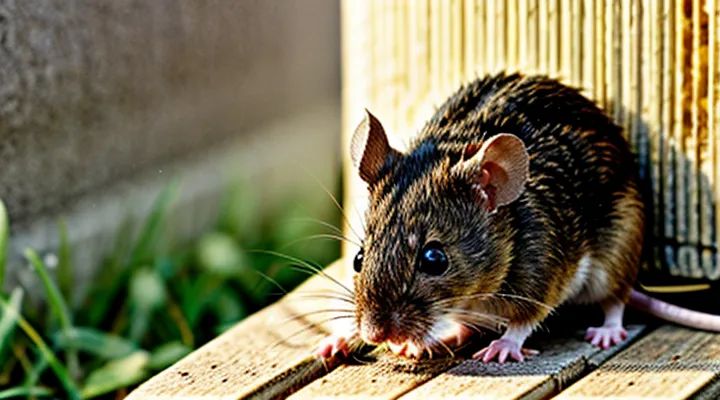
Mice gnaw grain because their incisors are adapted for constant abrasion. Each incisor consists of a hard enamel crown overlaying a softer dentin core. Enamel wears faster than dentin, creating a self-sharpening edge that remains effective during repeated chewing.
The growth of these teeth is continuous. Stem cells in the dental papilla add dentin at the root, while the alveolar socket releases space for elongation. Without regular gnawing, incisors overgrow, impede mouth closure, and can lead to fatal complications.
Key properties of mouse incisors:
- Ever‑growing length compensates for material loss.
- Asymmetric enamel‑dentin composition produces a beveled cutting surface.
- Rooted in a flexible socket that permits slight rotation during bite forces.
- Highly innervated, allowing precise pressure modulation.
When a mouse bites a grain kernel, the self‑sharpening edge slices the outer husk, exposing the nutrient‑rich interior. The process simultaneously trims the teeth, preserving optimal length and functionality.
Molar Structure and Function
Mice consume cereal grains because their molars are specialized for processing hard, dry seeds. The crown of each molar consists of multiple cusps arranged in a flat, occlusal surface that creates a grinding platform. Enamel covers the cusps, providing resistance to abrasion while the underlying dentin allows slight flexion, distributing forces across the tooth during mastication.
Key structural elements that enable efficient grain gnawing include:
- Broad, low‑relief cusps that increase contact area with seed coats.
- Interlocking ridges that slice and crush endosperm while the surrounding husk is broken down.
- Continuous eruption that compensates for wear, maintaining functional occlusion throughout the mouse’s life.
Functionally, the molar’s occlusal pattern produces shear forces that separate the outer hull from the nutritious interior, allowing rapid extraction of carbohydrates. This mechanical adaptation directly supports the animal’s dietary preference for grain and explains the observed gnawing behavior.
Dietary Requirements
Energy Source
Mice gnaw grain primarily to meet immediate caloric demands. Grain supplies high‑density carbohydrates, which are rapidly converted to glucose, the preferred fuel for muscular activity and thermoregulation. The digestive system of rodents efficiently extracts energy from starches, allowing quick replenishment of glycogen stores after foraging bouts.
Key metabolic advantages of grain consumption include:
- Rapid glucose absorption supports burst locomotion required for predator evasion.
- Elevated blood‑sugar levels sustain basal metabolic rate during periods of low ambient temperature.
- Starch‑rich seeds provide a stable source of energy when alternative foods are scarce.
Laboratory observations confirm that mice offered grain exhibit higher locomotor speed and longer endurance compared with those fed protein‑dominant diets. Field studies report increased grain gnawing activity in autumn, coinciding with rising energetic costs of hibernation preparation. Consequently, grain functions as a readily accessible energy reservoir that directly influences survival and reproductive success.
Nutrient Acquisition
Mice select grain primarily to satisfy specific nutritional requirements that cannot be met by other available foods. Grain supplies a dense source of carbohydrates, delivering rapid energy essential for thermoregulation and locomotion. The high starch content also supports glycogen storage, which buffers against periods of food scarcity.
Protein present in grain complements the amino acid profile of insects and plant matter, providing essential building blocks for tissue growth and enzymatic functions. B‑complex vitamins, especially thiamine and niacin, facilitate carbohydrate metabolism, while minerals such as phosphorus, magnesium, and zinc contribute to bone development and neural activity.
- Carbohydrates: immediate energy, glycogen replenishment
- Protein: amino acids for growth and repair
- B‑vitamins: co‑factors in metabolic pathways
- Minerals: structural and regulatory functions
Gnawing behavior enables mice to breach the hard outer layers of kernels, exposing the nutrient‑rich endosperm. This mechanical action increases digestibility and allows efficient extraction of soluble sugars and proteins. Seasonal fluctuations in grain availability trigger intensified gnawing, aligning intake with heightened reproductive and growth demands.
Mechanical and Behavioral Aspects of Gnawing
Maintaining Dental Health
Preventing Overgrowth
Mice gnaw grain primarily because abundant, soft kernels provide easy nutrition and a favorable environment for reproduction. When grain stores become overly dense, they create ideal conditions for infestation, making control efforts more difficult. Managing grain density reduces the attractiveness of storage sites and limits mouse population growth.
- Maintain optimal moisture levels (12‑14 %) to prevent grain clumping that encourages nesting.
- Implement regular aeration to keep kernels separated and discourage compact masses.
- Rotate stock weekly, moving older grain to the front of the bin and removing surplus before it reaches critical mass.
- Use calibrated dispensing equipment to release only the quantity needed for immediate consumption.
- Apply biological deterrents, such as predatory beetles, to disrupt mouse foraging behavior without chemical residues.
- Conduct quarterly inspections, documenting grain volume and signs of rodent activity to trigger timely interventions.
By enforcing these measures, grain stores remain within manageable limits, decreasing the likelihood that mice will find the environment conducive to gnawing and breeding.
Sharpening the Teeth
Mice continuously grow incisors; without regular wear the teeth become overlong, impairing bite efficiency and risking self‑injury. Grain offers a hard, fibrous substrate that forces incisors to contact opposing surfaces, producing the necessary abrasion to maintain a sharp edge.
The gnawing process serves several functional purposes:
- Eliminates excess tooth length, preserving proper occlusion.
- Shapes the cutting edge, enhancing the ability to slice seeds and other food items.
- Stimulates dental pulp circulation, supporting tooth health.
When mice encounter grain, the combination of hardness and particle size creates sufficient resistance to grind the enamel. This mechanical action removes enamel layers incrementally, ensuring the incisors remain within optimal length parameters. Consequently, the behavior directly supports feeding efficiency and overall survival.
Accessing Food Sources
Breaking Down Hard Shells
Mice encounter grains protected by rigid husks that block direct access to the edible interior. To obtain the carbohydrate-rich endosperm, they must first overcome this physical barrier.
The primary tool for breaching hard shells is the mouse’s incisors. These teeth possess continuously growing enamel, self-sharpening edges, and a high bite force generated by powerful masseter muscles. The enamel‑dentin junction creates a cutting edge capable of fracturing fibrous layers, while the relentless growth prevents wear from repeated use. Jaw articulation allows rapid, repetitive motions that concentrate stress at the point of contact, producing micro‑fractures that propagate through the shell.
Behaviorally, mice employ a systematic gnawing pattern: they bite the shell at a shallow angle, rotate the grain, and repeat the motion until the husk splits. This method maximizes efficiency and minimizes energy expenditure. The ability to process hard shells influences storage practices, as intact husks deter infestation, while compromised grains become rapidly consumed.
Key physiological traits that facilitate shell breakdown:
- Continuously erupting incisors with self‑maintaining sharpness
- High‑density enamel resistant to abrasion
- Robust masseter and temporalis muscles for sustained bite force
- Precise mandibular hinge allowing controlled rotational gnawing
These adaptations enable mice to extract nutritional value from grains that would otherwise remain inaccessible due to protective outer layers.
Processing Grains and Seeds
The handling of cereals and legumes follows a defined sequence.
- Cleaning removes dust, straw, and foreign material.
- Drying reduces moisture to levels that inhibit fungal growth.
- Milling separates the hull, bran, and endosperm to produce flour, meal, or grits.
- Packaging encloses the product in airtight containers or sealed bags.
- Storage maintains low humidity and stable temperature to preserve quality.
Each stage creates residues and by‑products that alter the substrate’s physical and chemical properties. Moisture that remains after drying, fine particles left on equipment, and fragments generated during milling increase the availability of palatable material. These elements draw rodents because they provide easy access to nutrients and require minimal effort to ingest.
Factors that encourage mice to gnaw grain include:
- Elevated moisture content that softens kernels.
- Presence of broken or powdered grain that can be chewed without extensive mastication.
- Residual oil or protein exposed on processing surfaces.
- Gaps in packaging or compromised seals that allow entry.
By minimizing residual moisture, promptly removing spillage, and ensuring airtight storage, the incentive for rodents to target processed cereals is reduced. Effective control therefore depends on strict adherence to each processing step and vigilant monitoring of storage integrity.
Ecological and Agricultural Implications
Impact on Food Storage
Contamination and Spoilage
Mice are attracted to stored grain because it offers a reliable source of nutrients and moisture. Their constant gnawing creates openings that permit external agents to enter the bulk, initiating contamination and subsequent spoilage.
- Urine and feces deposit pathogenic bacteria, fungi, and parasites directly onto kernels.
- Saliva introduces enzymes that begin hydrolyzing starches, altering texture and flavor.
- Hair and skin fragments provide additional organic material for microbial growth.
Moisture ingress through gnawed holes accelerates biochemical deterioration. Elevated water activity encourages proliferation of molds such as Aspergillus and Penicillium, which produce mycotoxins harmful to humans and livestock. Simultaneously, aerobic bacteria convert sugars into acids, lowering pH and causing rancidity. Enzymatic activity from both rodent secretions and contaminating microorganisms breaks down proteins and lipids, resulting in off‑odors and discoloration.
The combined effect reduces grain quality, diminishes market value, and increases disposal costs. Effective control measures include sealing storage containers, employing rodent‑proof barriers, and implementing regular inspection protocols to detect early signs of infestation and contamination.
Economic Losses
Mice feeding on grain causes measurable financial damage to agricultural operations.
- Reduced harvest weight: grain eaten before harvest lowers total output and diminishes marketable volume.
- Quality degradation: gnawed kernels develop cracks, increasing moisture absorption and fostering mold growth, which triggers rejection by buyers.
- Contamination: rodent saliva and excreta introduce pathogens, requiring additional cleaning and testing procedures.
Beyond immediate loss, secondary costs amplify the impact. Storage facilities must employ stronger sealing, ventilation, and monitoring systems, raising capital expenditures. Pest‑control programs—chemical applications, bait stations, and professional services—add recurring operational expenses. Market prices may decline when supply shortages are attributed to rodent damage, affecting revenue projections for entire regions.
Mitigation investments further affect profitability. Upgrading infrastructure with rodent‑proof containers, installing electronic detection devices, and training staff in preventive practices require upfront funding. These expenditures, while essential for protecting grain reserves, reduce net margins and influence long‑term financial planning.
Disease Transmission
Pathogen Carriers
Mice regularly invade stored grain because they serve as carriers of microorganisms that degrade the product and create conditions favorable for feeding. When bacterial, fungal, or viral agents colonize kernels, the resulting chemical changes—such as increased moisture, altered odor, or softened texture—trigger the rodents’ gnawing response, which also facilitates further spread of the pathogens.
Pathogen transmission occurs through several pathways:
- Saliva and urine deposit viable microbes onto grain surfaces.
- Fur and footpads transport spores and cysts from contaminated environments to storage bins.
- Gastrointestinal tracts harbor bacteria and parasites that are released in feces, contaminating nearby kernels.
Common agents carried by mice that influence grain integrity include:
- Salmonella spp. – cause rapid spoilage and produce off‑flavors.
- Bacillus cereus – forms heat‑resistant spores that survive processing.
- Aspergillus spp. – generate mycotoxins that weaken kernel structure.
- Hantavirus – does not affect grain directly but increases rodent activity in storage areas.
- Trichinella larvae – embed in muscle tissue, prompting rodents to seek protein‑rich grain.
The presence of these carriers explains the observed pattern of rodent gnawing: mice exploit compromised grain as an easy food source while simultaneously acting as vectors that perpetuate microbial contamination.
Public Health Concerns
Rodents that chew on stored grain introduce multiple hazards to public health. Their activity contaminates food supplies with saliva, urine, and feces, creating pathways for bacterial, viral, and parasitic infections. Direct ingestion of contaminated grain can cause gastroenteritis, salmonellosis, and hantavirus exposure. Indirect effects arise when pathogens spread to kitchen surfaces, utensils, and other foods through cross‑contamination.
Key health risks associated with grain‑gnawing rodents include:
- Bacterial contamination: Salmonella, E. coli, and Listeria thrive on rodent excreta, leading to foodborne outbreaks.
- Viral transmission: Hantavirus and lymphocytic choriomeningitis virus are carried in rodent saliva and urine, posing severe respiratory and neurological threats.
- Parasitic infestations: Tapeworms and protozoa can be transferred to humans via contaminated grain, resulting in gastrointestinal disorders.
- Allergic reactions: Rodent dander and urine proteins become airborne during grain handling, triggering asthma and allergic rhinitis in susceptible individuals.
- Chemical hazards: Rodents gnaw packaging, exposing grain to dust and potential pesticide residues applied for pest control.
Mitigation measures require strict sanitation, sealed storage containers, and regular rodent monitoring. Prompt removal of infested grain prevents amplification of microbial loads and reduces the likelihood of community‑wide outbreaks.