
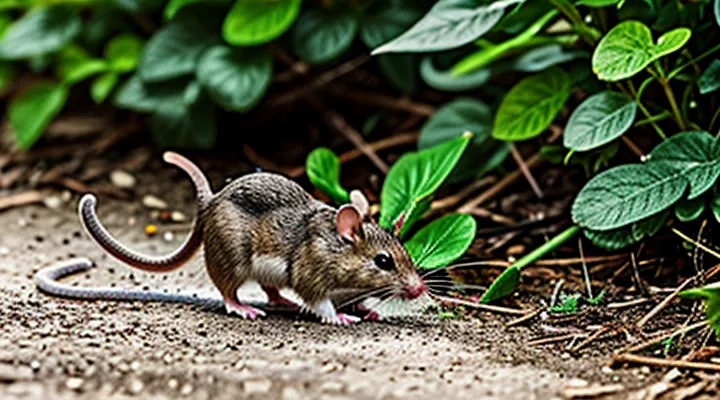
The Role of Mice as Primary Consumers
Herbivorous Diets and Energy Transfer
Seed Dispersal and Plant Propagation
Mice consume a wide range of seeds and fruits, often ingesting them whole. Their digestive tracts affect seed coats, weakening physical barriers while leaving embryo viability intact. After passage, seeds are expelled in feces, frequently far from the parent plant, enhancing spatial distribution and reducing competition.
The dispersal process benefits plant populations in several ways:
- Extended range: Mice transport seeds across heterogeneous microhabitats, linking isolated patches.
- Germination boost: Mechanical scarification in the gut and deposition of nutrient‑rich feces improve germination rates.
- Predator avoidance: Seeds hidden in burrow caches escape predation by larger herbivores.
Burrowing activity creates microsites with altered soil structure, moisture, and organic matter. These conditions favor seedling establishment, especially for species requiring loose, aerated substrates. Mice also retrieve cached seeds, but a proportion remains unrecovered, contributing to a persistent seed bank that supports regeneration after disturbances such as fire or drought.
Overall, murine seed handling and movement constitute a critical vector for plant propagation, sustaining vegetation diversity and resilience within terrestrial ecosystems.
Impact on Plant Communities
Mice influence plant communities through several direct and indirect mechanisms that shape vegetation structure and composition. Their activities affect seed fate, soil properties, and plant‑herbivore interactions, thereby altering patterns of plant recruitment and diversity.
- Seed predation and dispersal – Mice consume seeds, reducing the seed bank of dominant species while transporting viable seeds to new microsites. This selective pressure favors plants with traits that deter mouse consumption or promote accidental carriage, influencing species turnover.
- Soil disturbance – Burrowing and foraging create micro‑pits and channels that increase aeration, water infiltration, and organic matter mixing. These modifications enhance germination conditions for some seedlings and suppress others that require undisturbed soil.
- Herbivory pressure – By feeding on seedlings and tender shoots, mice limit the growth of fast‑colonizing species, allowing slower‑growing, shade‑tolerant plants to establish. This grazing pressure contributes to a more balanced competitive hierarchy.
- Nutrient cycling – Excreta enrich the upper soil layers with nitrogen and phosphorus, creating nutrient hotspots that support localized plant growth and affect species distribution.
- Pathogen transmission – Mice can carry fungal spores and bacterial agents that infect certain plants, reducing the vigor of susceptible species and indirectly promoting resistant ones.
Collectively, these processes generate feedback loops that sustain heterogeneous plant assemblages. The presence of mice thus maintains dynamic equilibrium within ecosystems, preventing dominance by a single plant type and supporting overall biodiversity.
Mice as a Crucial Food Source
Predators Relying on Mice
Avian Predators: Owls and Hawks
Mice constitute a primary food source for many raptor species, notably owls and hawks. These birds depend on the abundance and health of mouse populations to sustain breeding success and maintain stable numbers. When mouse densities rise, raptor reproductive output typically increases, leading to higher chick survival rates and larger fledgling cohorts. Conversely, declines in mouse availability often precede reductions in raptor nesting attempts and adult body condition.
Owls, primarily nocturnal hunters, exploit mouse activity during crepuscular hours. Their keen auditory localization and silent flight enable efficient capture of hidden prey. Hawk species, such as the red-tailed hawk, hunt primarily during daylight, using sharp vision to spot mouse movement in open fields and along edge habitats. Both groups regulate mouse populations through predation pressure, preventing excessive herbivory and seed predation that could alter plant community composition.
Key ecological functions of these avian predators include:
- Controlling mouse numbers, reducing the risk of disease transmission to other wildlife and humans.
- Influencing trophic cascades by limiting herbivore pressure on vegetation, thereby supporting biodiversity.
- Providing a food link for higher-level scavengers and carrion specialists when raptor prey are abandoned.
The presence of owls and hawks also serves as an indicator of ecosystem integrity. Stable raptor populations reflect sufficient prey availability, suitable nesting sites, and minimal habitat fragmentation. Monitoring raptor activity therefore offers a practical method for assessing the health of mouse-dependent food webs.
Mammalian Predators: Foxes and Weasels
Mice constitute a principal food source for several small mammalian carnivores, linking prey availability directly to predator dynamics. Foxes (Vulpes spp.) and weasels (Mustela spp.) depend on mouse populations to sustain reproductive output, maintain territorial stability, and regulate community structure.
Foxes capture mice opportunistically while hunting larger rodents, ground‑nesting birds, and invertebrates. Consumption of mice supplies essential protein that supports litter size and pup survival. By removing excess individuals, foxes limit rodent overpopulation, which reduces vegetation overgrazing and curtails the spread of mouse‑borne pathogens.
Weasels specialize in rapid, high‑frequency predation on mice. Their slender bodies enable pursuit through dense cover, allowing them to exploit mouse burrows and nests. Frequent weasel attacks suppress mouse density, thereby influencing seed predation rates and altering plant regeneration patterns. Additionally, weasel predation exerts selective pressure on mouse behavior, promoting vigilance and habitat use that affect ecosystem processes.
Key contributions of these predators include:
- Direct control of mouse numbers, preventing population spikes.
- Indirect protection of plant communities through reduced herbivory.
- Limitation of disease vectors carried by rodents.
- Promotion of behavioral adaptations in mouse populations that shape foraging and nesting habits.
The interaction between mice and their mammalian predators forms a feedback loop that stabilizes trophic relationships and sustains ecological resilience.
Reptilian Predators: Snakes
Mice constitute a primary food source for many snake species, linking rodent populations directly to reptilian predator dynamics.
Snakes that specialize in rodent consumption include:
- Eastern garter snake (Thamnophis sirtalis)
- Western rattlesnake (Crotalus oreganus)
- Common king snake (Lampropeltis getula)
- Northern water snake (Nerodia sipedon)
These predators regulate mouse numbers through regular predation, limiting the potential for exponential growth that can arise from high reproductive rates.
Predation pressure reduces the incidence of mouse-borne diseases, curtails seed and grain loss, and prevents habitat degradation caused by overgrazing.
When snake populations decline, mouse densities often surge, leading to measurable impacts on agricultural yields, increased parasite transmission, and altered competitive relationships among small mammals.
Thus, snake predation maintains balance within the trophic structure, ensuring that mouse populations remain within levels that support overall ecosystem stability.
Maintaining Predator Populations
Mice constitute a primary prey item for a wide range of carnivorous mammals, birds, and reptiles. Their abundance directly influences predator reproductive success, as sufficient food intake enables higher litter sizes, earlier breeding onset, and increased juvenile survival rates.
- Small mammalian predators (e.g., foxes, weasels) rely on mouse populations to meet daily energetic demands, sustaining body condition during winter scarcity.
- Avian raptors (e.g., owls, hawks) depend on mice for nestling development; fluctuations in mouse density correlate with fledgling output.
- Reptilian hunters (e.g., snakes, monitor lizards) obtain protein and moisture from mice, supporting growth and molting cycles.
When mouse numbers decline, predator territories expand, intra‑specific competition intensifies, and mortality rises. Conversely, stable mouse populations buffer predators against environmental perturbations, maintaining trophic balance and preventing cascade effects that could alter vegetation composition and soil health.
Ecosystem Engineers: Burrowing and Soil Aeration
Soil Health and Nutrient Cycling
Mice affect soil health and nutrient cycling through several direct mechanisms.
- Burrowing aerates the substrate, creating channels that improve water infiltration and gas exchange.
- Excavated soil is redistributed, exposing deeper mineral layers to surface microbial activity.
- Waste products introduce organic nitrogen, phosphorus, and trace elements that become available to plants after microbial decomposition.
- Seed transport and caching increase plant diversity, enhancing root exudates that stimulate microbial communities.
- Predation on soil invertebrates regulates populations of detritivores, balancing decomposition rates and preventing excessive nutrient loss.
These processes collectively maintain soil structure, promote efficient nutrient turnover, and support plant productivity, illustrating the ecological relevance of small rodents in terrestrial ecosystems.
Habitat Creation for Other Species
Mice modify the physical environment by constructing extensive burrow systems that serve as microhabitats for a range of organisms. The tunnels maintain stable temperature and humidity, protect against predators, and create refuge spaces that are unavailable on the surface.
- Small arthropods (beetles, springtails) inhabit burrow walls and chambers, exploiting the shelter and organic debris.
- Reptiles such as juvenile snakes and lizards use abandoned tunnels for hunting grounds and protection.
- Ground‑nesting birds (e.g., meadowlarks) locate burrow entrances to hide eggs or fledglings from aerial predators.
- Amphibians (newts, salamanders) seek the damp conditions within mouse burrows during dry periods.
Mice also influence habitat structure through soil disturbance. Their digging activity aerates compacted layers, enhances water infiltration, and mixes organic matter, which promotes plant root development. The resulting vegetation heterogeneity supports herbivores and their predators, expanding the trophic network.
By generating and maintaining these niche spaces, mice enable species diversity that would otherwise be limited by the scarcity of suitable shelters. Their engineering effect sustains a cascade of ecological interactions, reinforcing ecosystem resilience.
Disease Vectors and Their Ecological Implications
Pathogen Transmission Dynamics
Mice serve as primary reservoirs for a wide range of pathogens, maintaining infection cycles that would otherwise collapse in the absence of suitable hosts. Their high reproductive rate and extensive distribution enable persistent presence of viral, bacterial, and parasitic agents across diverse habitats.
- Direct contact: aggressive encounters, mating, and maternal care transmit pathogens through saliva, skin lesions, and uterine fluids.
- Fecal‑oral route: ingestion of contaminated food, water, or nesting material spreads agents such as Salmonella spp. and Yersinia spp.
- Ectoparasite vectors: fleas, ticks, and mites acquire microbes while feeding on mice and subsequently inoculate other mammals, including predators and humans.
- Environmental contamination: urine and droppings deposit viral particles (e.g., hantavirus) and spores that persist in soil and dust, facilitating aerosol exposure.
These transmission pathways influence community health by regulating host population dynamics, shaping predator‑prey relationships, and modulating disease prevalence in sympatric species. For instance, predator consumption of infected mice can introduce pathogens into higher trophic levels, while mortality spikes among mouse populations can relieve pressure on plant seeds and invertebrate prey.
Understanding mouse‑driven pathogen flow informs surveillance programs, guides habitat management, and supports predictive modeling of outbreak risk. Targeted control measures—such as habitat modification, ectoparasite treatment, and population monitoring—reduce spillover potential without disrupting the ecological functions that mice provide.
Impact on Wildlife Health
Mice serve as primary prey for a wide range of predators, including owls, foxes, snakes, and raptors. Their abundance directly influences predator population stability; fluctuations in mouse numbers translate into measurable changes in predator reproductive success and survival rates.
As carriers of pathogens, mice affect the health of other wildlife. They host hantaviruses, leptospirosis bacteria, and various ectoparasites that can spill over to mammals, birds, and reptiles. Monitoring mouse-borne disease prevalence provides early warnings of emerging health threats within ecosystems.
Mice contribute to seed predation and dispersal, shaping plant community composition. By consuming seeds and subsequently caching or excreting them, they alter seedling recruitment patterns, which in turn affect the food resources available to herbivores and the shelter for nesting species.
Key impacts on wildlife health:
- Food‑web dynamics: Sustains predator body condition and breeding output.
- Disease ecology: Acts as reservoir and vector for zoonotic and wildlife‑specific pathogens.
- Vegetation structure: Modifies seed survival and plant diversity, influencing habitat quality.
- Nutrient cycling: Generates organic waste that enriches soil, supporting microbial communities essential for plant health.
Overall, mouse populations function as a measurable indicator of ecosystem health. Shifts in their density or disease load signal broader ecological changes that can affect the vitality of multiple wildlife taxa.
Population Dynamics and Ecological Indicators
Fluctuations and Their Causes
Mice populations exhibit regular and irregular fluctuations that directly influence trophic dynamics, seed dispersal, and soil processes. Seasonal breeding cycles generate predictable peaks in abundance during spring and early summer, followed by declines as mortality rises and resources diminish. These cycles alter predator‑prey interactions, causing corresponding oscillations in the numbers of owls, snakes, and carnivorous mammals that depend on mice for sustenance.
Primary drivers of population variability include:
- Resource availability – seed and insect abundance rise with plant productivity, supporting higher reproductive output; scarcity triggers reduced litter sizes and increased mortality.
- Predation pressure – fluctuations in predator density, driven by their own prey cycles or habitat changes, cause corresponding mouse mortality spikes.
- Disease outbreaks – hantavirus, ectoparasite infestations, and bacterial infections can rapidly reduce local cohorts.
- Weather extremes – drought, heavy snowfall, and temperature anomalies affect shelter, foraging efficiency, and reproductive timing.
- Habitat alteration – land‑use conversion, fire, and invasive plant species modify cover and food resources, leading to abrupt population shifts.
Secondary factors such as interspecific competition with other small rodents and anthropogenic influences (pesticide exposure, urbanization) modulate these primary drivers, creating complex, site‑specific patterns. Understanding the mechanisms behind mouse population fluctuations is essential for predicting ecosystem responses to environmental change.
Role in Ecosystem Health Assessment
Mice provide measurable data that reflect changes in habitat quality, predator‑prey dynamics, and resource availability. Their population density, reproductive rates, and foraging behavior respond quickly to alterations in vegetation cover, soil composition, and contaminant levels, allowing researchers to detect subtle shifts before they become evident in larger fauna.
Monitoring programs routinely record:
- Capture‑recapture figures to estimate local abundance and survival trends.
- Age structure and litter size to gauge reproductive success under varying environmental pressures.
- Dietary analysis through stomach content or stable isotope examination, revealing trophic connections and energy flow.
- Parasite load and disease prevalence, indicating ecosystem stressors and potential spillover risks.
These metrics integrate into composite indices that rank ecosystem health across spatial scales. By comparing mouse-derived data with parallel observations of insects, birds, and plant communities, scientists validate the reliability of mice as bioindicators and refine management strategies aimed at preserving biodiversity and functional resilience.