
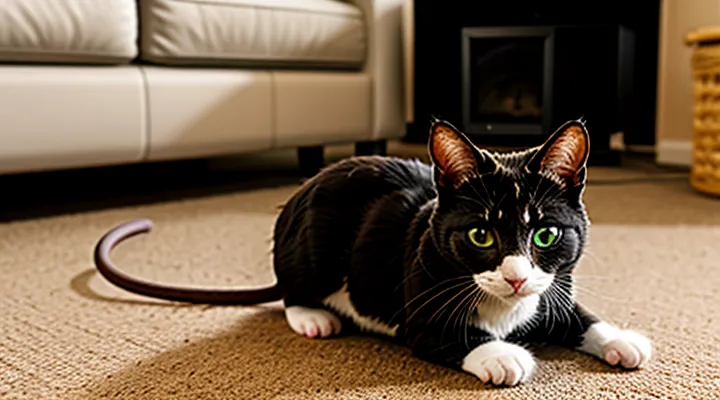
The Instinctual Connection
The Predator-Prey Dynamic
Innate Hunting Drive
Cats possess an innate hunting drive that compels them to chase any stimulus resembling prey. This drive originates from neural circuits that evolved to detect rapid, unpredictable movement and to initiate predatory sequences without conscious deliberation.
Digital games that display a moving cursor emulate the erratic locomotion of small animals. The cursor’s speed, direction changes, and occasional pauses match the visual profile of rodents, thereby activating the same sensory pathways that respond to live targets.
Key physiological mechanisms involved are:
- High‑density retinal ganglion cells specialized for motion detection, providing immediate awareness of swift trajectories.
- Superior peripheral vision that registers motion across a wide field, prompting reflexive orienting.
- Motor pathways that translate visual cues into coordinated fore‑paw strikes and lunges.
When a cat encounters a running cursor, observable responses include focused stare, low‑frequency tail flicks, and rapid paw swipes. Engagement typically persists until the stimulus ceases or the cat loses interest, reflecting the drive’s short‑term reinforcement loop.
For developers aiming to sustain feline attention, effective design elements consist of:
- Irregular speed patterns that prevent habituation.
- Sudden direction reversals mimicking escape behavior.
- Textural cues resembling fur or whisker movement to reinforce the prey illusion.
Understanding the innate hunting drive clarifies why interactive simulations featuring a scurrying pointer reliably capture feline interest and maintain prolonged interaction.
Simulating Real-World Scenarios
Interactive cursor‑chasing games engage felines by reproducing the dynamics of small‑prey movement. The digital pointer serves as a surrogate for a mouse, delivering visual cues that trigger the cat’s hunting reflexes.
Simulating real‑world scenarios in these games relies on three technical principles:
- Unpredictable trajectories – random changes in direction prevent habituation and maintain attention.
- Variable speed profiles – acceleration and deceleration emulate the erratic bursts of a living target.
- Intermittent pauses – brief stillness mirrors the stalking phase of predation, prompting the cat to initiate a pounce.
The resulting experience delivers mental stimulation and refines motor coordination without exposing the animal to external hazards. Safe indoor enrichment follows from the controlled environment, reducing the risk of injury while satisfying instinctual drive.
Effective implementation demands low latency to preserve the illusion of immediacy, high‑contrast graphics for clear visibility, and physics that respect realistic momentum. Hardware considerations include sturdy screens and protective coverings to endure feline interaction.
The Appeal of Movement
Irregular and Unpredictable Patterns
Games that involve a constantly moving cursor capture feline attention because cats respond strongly to irregular and unpredictable visual sequences. The erratic motion mimics the erratic paths of prey, triggering innate hunting instincts. When the cursor darts, pauses, and changes direction without a clear pattern, a cat’s visual system registers the stimulus as a potential target, prompting a focused chase response.
Key factors that make such patterns effective:
- Sudden acceleration and deceleration create surprise elements that prevent habituation.
- Non‑linear trajectories avoid predictable arcs, sustaining the cat’s interest over longer periods.
- Variable amplitude in movement size produces a range of visual cues, from subtle flicks to bold sweeps, appealing to different visual acuity levels among cats.
Neuroscientific studies indicate that unpredictable stimuli activate the cat’s amygdala and motor cortex more intensely than steady, linear motion. This activation translates into heightened alertness and increased willingness to interact with the on‑screen element.
Designers seeking to maximize feline engagement should incorporate randomness algorithms that adjust speed, direction, and pause intervals in real time. By doing so, the game maintains a dynamic visual environment that continuously challenges the cat’s predatory reflexes, ensuring sustained interest without the need for additional auditory or tactile cues.
The Chase and Capture Reflex
Games that present a rapidly moving mouse trigger feline chase and capture reflexes. Cats possess a visual system tuned to detect small, fast‑moving objects, which activates the predatory sequence: orient, stalk, pounce, and seize. The stimulus of a virtual mouse replicates the motion cues of real prey, prompting the same neural pathways that govern hunting behavior.
- Motion detection: high‑contrast, erratic trajectories stimulate the retina’s magnocellular pathway, generating immediate attention.
- Motor preparation: the brain’s premotor cortex translates visual input into coordinated limb movements, even when the cat interacts with a controller or touchscreen.
- Reward expectation: successful capture in the game delivers auditory or visual reinforcement, strengthening the link between the chase and positive outcome.
These mechanisms explain why interactive simulations featuring a fleeing mouse sustain cat engagement and can be employed in enrichment programs, behavioral research, and product design aimed at feline audiences.
Sensory Stimulation and Engagement
Visual Cues
The Flickering Illusion
The flickering illusion is a visual effect produced when rapid, intermittent changes in brightness create the perception of motion or depth where none exists. In interactive software, the illusion arises from alternating frames that toggle the cursor’s visibility or color at frequencies between 5 Hz and 30 Hz. When the mouse moves across the screen, these toggles generate a stroboscopic pattern that the visual system interprets as a series of discrete steps rather than a smooth trajectory.
Cats, whose visual processing is highly sensitive to motion cues, respond to the flickering pattern as if it were a small, erratically moving prey. The illusion amplifies the saliency of the cursor, converting a simple pointer into a stimulus that triggers predatory attention. This response is observable in games that place a continuously moving cursor within a virtual environment; the flicker enhances the cat’s tracking behavior, leading to more frequent and accurate pounce attempts.
Key mechanisms underlying the effect include:
- Temporal contrast: alternating luminance creates high‑frequency edges that dominate feline visual pathways.
- Spatial segmentation: the cursor’s intermittent appearance isolates it from background textures, simplifying target recognition.
- Motion extrapolation: cats extrapolate the cursor’s position based on discrete visual samples, resulting in anticipatory movement.
Designers can manipulate the flickering parameters to adjust cat engagement levels. Increasing toggle frequency beyond the cat’s optimal detection range reduces responsiveness, while lowering it below 10 Hz maximizes attraction. Adjusting color contrast further refines the illusion, as felines are more responsive to high‑contrast, short‑wavelength stimuli.
In summary, the flickering illusion converts a moving cursor into a potent visual lure for cats by exploiting temporal and spatial aspects of feline perception. Proper calibration of flicker rate and contrast directly influences the frequency and precision of cat interactions within the game environment.
Contrast and Visibility
Games that feature a constantly moving cursor can capture feline attention by exploiting visual contrast and visibility. High contrast between the cursor and surrounding elements makes the pointer stand out to a cat’s keen eyesight. Bright, saturated colors or sharp edges against a muted background increase the likelihood that a cat will track the movement.
Visibility factors such as cursor size, speed, and motion pattern also influence feline response. Larger pointers are more easily detected, while rapid, unpredictable trajectories mimic prey behavior and sustain interest. Adjusting opacity or adding a subtle glow can further enhance detectability without disrupting gameplay.
Key considerations for developers:
- Choose cursor colors that differ markedly from the game’s dominant palette.
- Ensure the pointer remains within the cat‑visible portion of the screen, avoiding overly dark or cluttered zones.
- Implement motion that combines smooth sweeps with occasional jitter to simulate natural prey cues.
- Provide options to modify cursor size and contrast for different lighting environments.
By optimizing contrast and visibility, designers can create engaging experiences that naturally draw cats to the on‑screen action.
Auditory Stimulation
Subtle Whirring and Clicking Sounds
Cats respond to the faint whirring and clicking generated by mouse‑driven games because these sounds align with their auditory strengths and predatory instincts. The feline ear detects frequencies up to 64 kHz, far beyond human range, and registers minute acoustic variations that indicate movement. Subtle mechanical noises—such as the low‑amplitude whir of a virtual cursor and the crisp click of an action—produce rapid, intermittent cues similar to the rustle of small prey. This acoustic pattern triggers the cat’s orienting reflex, prompting attention and, often, investigative behavior.
Key auditory factors that make these sounds effective:
- Frequency range: Whirring tones typically fall between 2 kHz and 12 kHz, a band where cats exhibit peak sensitivity.
- Temporal structure: Irregular, short bursts of clicking create a staccato rhythm that mimics the erratic movements of insects.
- Amplitude: Low‑volume output avoids startling the animal while remaining audible at close proximity, maintaining engagement without stress.
- Spectral texture: The combination of a continuous low‑frequency hum and discrete high‑frequency clicks provides a layered soundscape that mirrors natural hunting environments.
By reproducing these acoustic signatures, games with active mouse input inadvertently supply stimuli that activate feline auditory pathways, sustaining interest and prompting repeated observation.
Mimicking Prey Sounds
Mimicking the acoustic signatures of small prey activates the feline auditory system in a manner comparable to visual motion cues. High‑frequency rustles, intermittent squeaks, and rapid pitch fluctuations correspond to the sounds produced by rodents and insects during escape. These frequencies align with the peak sensitivity range of a cat’s cochlea, prompting reflexive orienting and predatory focus.
Game developers translate these auditory patterns into interactive experiences that feature a moving cursor resembling a fleeing mouse. The sound engine delivers layered effects:
- brief, irregular chirps that simulate a mouse’s distress call
- soft scurrying noises that vary with cursor speed
- occasional, low‑amplitude thuds mimicking footfalls on different surfaces
Each element synchronizes with cursor velocity, reinforcing the perception of a living target. The temporal alignment between visual motion and sound creates a multimodal stimulus that sustains attention longer than visual cues alone.
The result is a measurable increase in cat interaction time, engagement frequency, and voluntary return to the game interface. By reproducing authentic prey acoustics, designers exploit innate hunting instincts, thereby enhancing the appeal of cursor‑chasing simulations for domestic felines.
Mental Stimulation
Problem-Solving and Strategy
Games that feature a moving mouse and capture feline attention rely heavily on problem‑solving mechanics and strategic design. Players must anticipate a cat’s unpredictable reactions, adjust the mouse’s speed, and position interactive elements to maintain engagement. Success depends on balancing challenge and reward, ensuring the cat remains motivated without frustration.
Key strategic components include:
- Variable mouse trajectories that require real‑time decision making.
- Adjustable difficulty levels that modify reaction time thresholds.
- Reward systems that trigger when the cat successfully follows or intercepts the mouse.
Effective problem‑solving in these games emerges from iterative testing of stimulus patterns, analysis of feline response data, and refinement of feedback loops. Designers who apply systematic observation, quantitative metrics, and adaptive algorithms create experiences that consistently stimulate curiosity and sharpen the cat’s hunting instincts.
Preventing Boredom and Enhancing Well-being
Games that display a constantly moving cursor capture feline visual attention. The motion triggers a predatory response, prompting cats to follow, swipe, or pounce on the on‑screen target.
The interaction supplies mental stimulation that counters monotony. Continuous visual tracking engages neural pathways associated with hunting behavior, preventing the repetitive patterns that lead to boredom. Physical engagement, such as pawing at the moving element, provides light exercise without requiring space or equipment.
Enhanced well‑being follows from sustained engagement:
- Reduced stress levels in cats, evidenced by lower cortisol measurements after short play sessions.
- Improved mood in owners, who observe active play and experience increased satisfaction.
- Strengthened human‑cat bond, as shared interactive moments reinforce positive association.
Regular short sessions, lasting five to ten minutes, maintain interest without causing fatigue. The simple setup—any device capable of displaying a moving cursor—offers an accessible tool for enriching feline environments and supporting overall health.
Reinforcement and Reward
The Satisfaction of the «Catch»
Psychological Fulfillment
Interactive cat games that feature a moving cursor provide a specific type of psychological fulfillment. The moving target engages the animal’s innate predatory drive, creating a sense of achievement when the cat successfully tracks or “captures” the stimulus on the screen.
The fulfillment derives from several neuro‑behavioral processes. Visual motion activates the cat’s optic tectum, while the anticipation of a catch triggers dopamine release. Successful interaction reinforces the behavior through positive feedback, establishing a short‑term reward loop that mirrors hunting success in the wild.
Design elements that intensify this effect include:
- Variable speed and direction to prevent habituation.
- Sudden pauses or accelerations that mimic erratic prey movement.
- Subtle sound cues synchronized with motion to enhance multisensory stimulation.
- Clear visual contrast between background and cursor to focus attention.
These components sustain engagement, reduce boredom, and lower stress markers as measured by cortisol levels. Regular sessions also encourage physical activity, improving muscle tone and coordination. Additionally, shared playtime strengthens the bond between owner and pet, reinforcing social attachment through mutual enjoyment.
Positive Feedback Loop
Games that incorporate a continuously moving cursor create a positive feedback loop that captures feline attention. The loop begins with the cursor’s motion, which mimics the erratic movement of prey. Cats instinctively track the visual stimulus, directing their gaze and pawing at the screen. Each successful interaction—such as a click or swipe—produces an immediate audiovisual cue (sound, flash, or animation). The cue reinforces the cat’s engagement, prompting further pursuit of the cursor.
The reinforcing cycle can be broken down as follows:
- Cursor motion → visual trigger for hunting instinct.
- Cat’s paw contact → input event recognized by the game.
- Game response (sound/visual effect) → sensory reward for the cat.
- Reward → increased focus on cursor, accelerating its movement.
When the game amplifies the cursor’s speed or adds richer feedback after each interaction, the loop intensifies, leading to longer play sessions. Designers can manipulate loop parameters—response latency, reward magnitude, and motion patterns—to maximize feline involvement without causing overstimulation.
Understanding this mechanism informs the development of pet‑friendly interactive software. By calibrating feedback intensity and ensuring safe input handling, creators deliver engaging experiences that sustain a cat’s interest while preserving hardware integrity.
Play as a Form of Exercise
Physical Activity and Coordination
Physical activity embedded in interactive mouse‑movement games provides the kinetic stimulus that aligns with a cat’s predatory instincts. Rapid cursor shifts create visual trajectories resembling prey, prompting the feline’s instinctual chase response and engaging its muscular system.
Coordination demands arise because successful interaction requires the player to synchronize hand movements with visual cues. This synchronization translates into a dynamic display of speed, direction changes, and timing that mirrors the motor patterns cats use when stalking and pouncing. The resulting visual rhythm triggers the cat’s sensorimotor pathways, encouraging attentive observation and occasional pawing.
Key effects on cats include:
- Increased alertness and focus on the screen.
- Activation of forelimb muscles during paw attempts.
- Enhancement of visual tracking accuracy.
The combination of vigorous cursor motion and precise timing creates an environment where a cat’s natural hunting behavior is exercised without physical exertion from the animal, satisfying both its need for stimulation and the owner’s desire for low‑impact entertainment.
Outlet for Energy
Games that feature a constantly moving cursor provide a practical outlet for feline energy. The visual stimulus triggers a predatory response, prompting cats to chase, pounce, and swat at the screen. This activity converts surplus stamina into controlled motor actions, reducing restlessness and preventing destructive behavior elsewhere in the home.
Key benefits of this energy channel include:
- Immediate engagement of the cat’s natural hunting instincts.
- Physical exertion that burns calories without requiring external toys.
- Mental focus that diminishes boredom‑related vocalization.
The interaction also offers owners a low‑maintenance method to monitor a cat’s activity level. By observing the frequency and intensity of the cat’s responses, owners can adjust playtime duration to match the animal’s physiological needs, ensuring balanced energy expenditure throughout the day.
Bonding and Interaction
Shared Play Experiences
Games that simulate a cat chasing a moving cursor create natural opportunities for shared play. The visual cue of a swift, unpredictable mouse mirrors a real feline hunt, prompting participants to coordinate reactions and strategies.
When multiple players observe or control the chase, they experience:
- Simultaneous anticipation of the mouse’s path
- Collaborative timing of clicks or gestures to influence movement
- Real‑time feedback on each participant’s input, visible to all observers
These dynamics foster a collective focus. Players develop a shared vocabulary—terms for speed, direction changes, and successful catches—that streamlines communication. The immediacy of the visual feedback reinforces group cohesion, as each successful interception validates the team’s coordination.
Moreover, the simple mechanics reduce barriers to entry. Minimal instruction allows newcomers to join instantly, while seasoned players can explore nuanced tactics, such as feinting movements or synchronizing bursts of activity. This balance sustains engagement across skill levels and encourages repeated joint sessions.
In environments where the game is streamed or displayed on a large screen, the communal aspect intensifies. Spectators witness the collective effort, reinforcing a sense of belonging and encouraging participation. The shared experience thus transforms a solitary chase into a socially resonant activity, leveraging the innate appeal of predator‑prey interaction to bind participants together.
Understanding Feline Behavior
Cats react to rapid, erratic motion because their predatory circuitry prioritizes moving targets. Visual neurons tuned to speed and direction trigger a chase response the moment a small object darts across the field of view.
The feline visual system emphasizes peripheral detection; a swiftly moving silhouette registers before central focus. Auditory receptors amplify the sound of a scurrying mouse, reinforcing the perception of prey. Combined, these cues generate a physiological surge of adrenaline that prepares the cat for pursuit.
Play serves as a rehearsal of hunting techniques. Simulated mouse games provide a safe outlet for stalking, pouncing, and catching, allowing the cat to refine motor coordination, timing, and bite precision without expending energy on actual prey.
Practical guidelines for developers of interactive cat games:
- Use unpredictable trajectories that change speed and direction at irregular intervals.
- Incorporate brief pauses followed by sudden bursts to mimic natural mouse behavior.
- Emit high‑frequency rustling sounds synchronized with movement.
- Design visual elements with high contrast against the background to enhance detection.
- Ensure the object remains within the cat’s peripheral vision for most of its path.
Understanding these behavioral drivers enables the creation of digital toys that sustain feline engagement and support the species’ innate hunting instincts.