
Understanding Rodent Vocalizations
The Nature of Rat Sounds
Hissing as a Defensive Mechanism
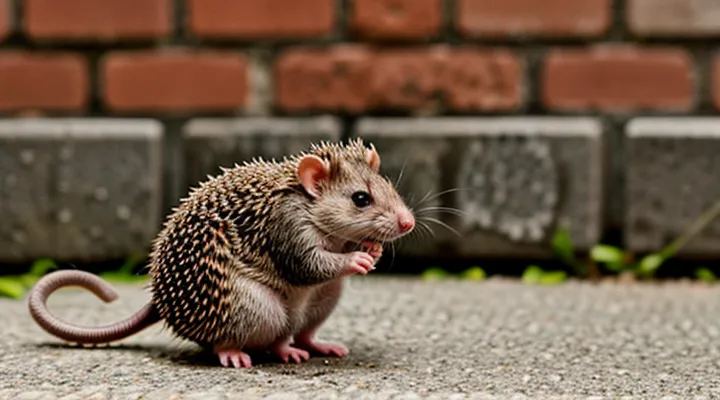
Rats emit a sharp, prolonged hiss when confronted with danger, using the same acoustic signal that hedgehogs employ to discourage predators. The sound originates from forced air passing through the glottis, creating a high‑frequency vibration that can be produced without vocal cord vibration. This mechanism allows rapid activation without the need for complex vocalization.
Typical stimuli that provoke hissing include:
- Sudden visual or auditory threats
- Direct contact with a potential predator
- Confinement in an unfamiliar environment
- Handling by an unfamiliar person
The hiss functions as a warning display. The abrupt noise alerts the aggressor to the animal’s readiness to defend itself, often causing hesitation or retreat. In addition, the sound is accompanied by visual cues such as raised fur or a defensive posture, amplifying the perceived threat. Empirical observations show that predators frequently abandon attacks after a sustained hiss, confirming the signal’s deterrent value.
Physiological costs of hissing are minimal. The respiratory effort required is brief, and the behavior can be repeated multiple times during a single encounter. Consequently, hissing remains a reliable, low‑energy strategy for both rats and hedgehogs when evading predation.
Other Common Rat Noises
Rats communicate through a range of vocalizations that differ in pitch, duration, and context. Understanding these sounds clarifies behavior and aids in proper care.
- High‑frequency squeaks – brief, sharp tones emitted when a rat feels threatened or is startled. The frequency often exceeds human hearing, but audible squeals indicate acute stress.
- Chattering – rapid, repetitive clicks produced by the incisors. Common during exploration or when a rat encounters unfamiliar objects, signaling curiosity or mild agitation.
- Ultrasonic chirps – tonal calls above 20 kHz, usually heard during mating rituals or social bonding. Humans cannot detect them without specialized equipment.
- Teeth grinding (bruxing) – low, rhythmic grinding sounds associated with contentment or relaxation, frequently observed when a rat is settled in a safe environment.
- Purring – soft, continuous vibrations generated by the throat, often accompanying grooming or close contact with a companion, indicating comfort.
- Foot thumps – audible taps on hard surfaces, used to warn conspecifics of danger or to establish dominance within a hierarchy.
- Whine or whimper – low, drawn‑out tones expressed during prolonged isolation, illness, or pain, serving as a distress signal.
Each vocalization conveys specific information about the rat’s emotional state, social standing, or physiological condition. Recognizing these patterns enables more accurate interpretation of rat behavior and improves welfare management.
Comparing Rat and Hedgehog Sounds
Similarities in Hissing Behavior
Evolutionary Convergence in Defensive Displays
Rats emit a rapid, high‑frequency hiss when threatened, a sound that closely resembles the defensive vocalization of hedgehogs. Both species use the hiss to startle predators, create an impression of larger or more dangerous organisms, and buy time for escape or other defensive actions. This similarity illustrates evolutionary convergence: unrelated lineages develop comparable traits because they face analogous selective pressures.
Key factors driving convergence in this context include:
- Predator perception: visual and auditory cues that signal aggression or toxicity provoke avoidance behavior.
- Energy efficiency: a brief, loud hiss requires minimal metabolic investment while delivering a strong deterrent effect.
- Habitat overlap: urban and rural environments where rats and hedgehogs coexist expose both to similar predator assemblages, such as birds of prey and carnivorous mammals.
Morphological constraints shape the signal. Rats possess a well‑developed larynx capable of rapid airflow, while hedgehogs have a specialized vocal apparatus that produces a raspy, sustained hiss. Despite different anatomical structures, the acoustic output fulfills the same functional role.
Neurobiological mechanisms reinforce the behavior. Stress‑induced activation of the amygdala triggers a reflexive hissing response in both taxa, linking threat detection directly to vocal production without requiring higher‑order decision making.
The convergence demonstrates that defensive displays can evolve independently when the ecological context demands rapid, unmistakable warnings. Consequently, the rat’s hiss is not a vestigial trait inherited from a common ancestor but a parallel adaptation that mirrors the hedgehog’s defensive strategy.
Contexts for Hissing in Both Species
Rats and hedgehogs emit hissing sounds primarily as a response to perceived threats, but the specific situations that trigger the behavior differ between the two mammals.
Rats hiss when:
- A predator or unfamiliar animal approaches.
- They are restrained or handled roughly.
- Their nest or food source is disturbed.
- They encounter another rat that displays aggressive cues.
Hedgehogs hiss under similar defensive motives, yet additional contexts include:
- Contact with a potential predator that has not yet prompted a full defensive curl.
- Interaction with conspecifics during territorial disputes.
- Handling by humans when the animal feels insecure or is being examined.
- Exposure to sudden, loud noises that startle the animal.
Both species use hissing as an audible warning that precedes more extreme defensive actions, such as biting in rats or rolling into a spiny ball in hedgehogs. The sound serves to deter aggressors before physical confrontation becomes necessary.
Differences in Overall Sound Repertoire
Unique Hedgehog Vocalizations
Hedgehogs produce a limited but distinctive range of sounds that differ markedly from the vocal repertoire of most rodents. Their vocalizations include short, sharp hisses emitted when threatened, low-frequency growls during territorial disputes, and soft chirps or clicks used in mother‑offspring communication. Acoustic analyses show hissing frequencies between 2 and 5 kHz, with rapid amplitude modulation that creates a rattling quality similar to the hiss observed in certain rat species when confronted with predators or unfamiliar conspecifics.
The uniqueness of hedgehog sounds lies in three measurable traits:
- Frequency stability – hedgehog hisses maintain a narrow spectral band, unlike the broader, more variable rat hiss.
- Temporal pattern – each hiss consists of a single, uninterrupted burst lasting 0.1–0.3 seconds, whereas rats often produce series of short pulses.
- Context specificity – hedgehogs reserve hissing for defensive encounters, while their low‑frequency growls accompany aggressive interactions; rats display hissing across a wider range of stressors.
Understanding these characteristics clarifies why some rats mimic hedgehog hissing. When faced with similar threats, rats adopt a comparable acoustic strategy, generating high‑pitch, brief hisses that approximate the hedgehog’s defensive signal. This convergence suggests that both species exploit a shared auditory cue to deter predators, despite divergent evolutionary lineages.
Distinctive Rat Communication Signals
Rats rely on a repertoire of acoustic, olfactory, and tactile signals to convey threat, social status, and reproductive intent. The hissing sound frequently observed during encounters with predators or unfamiliar conspecifics mirrors the defensive hiss of hedgehogs, yet it constitutes only one element of a broader communicative system.
Acoustic signals include:
- High‑frequency squeaks emitted during playful or exploratory behavior.
- Low‑frequency hisses produced when an individual feels cornered or perceives danger.
- Ultrasonic vocalizations that convey distress to nearby peers, undetectable to human ears.
Chemical cues function through scent marking with urine, glandular secretions, and fecal deposits. These markers establish territory boundaries, signal reproductive readiness, and provide information about individual identity and health status.
Tactile communication occurs via whisker contact, grooming, and body posturing. A raised dorsal hair coat, a flattened posture, or a rapid tail flick can intensify the auditory warning, reinforcing the hiss and deterring aggression.
Together, these modalities create a multilayered signaling network that enables rats to respond swiftly to threats, coordinate group movements, and maintain hierarchical structures. The hiss, while reminiscent of hedgehog defense, is integrated with other distinct signals to produce a comprehensive defensive strategy.