
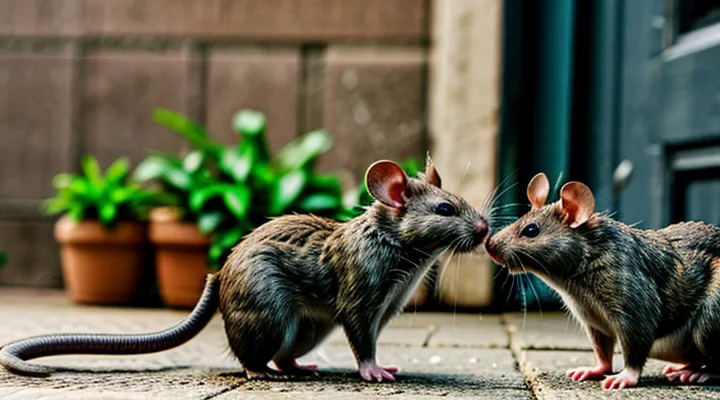
The Nature of Rat Squeaks
Auditory Range and Perception
Rats emit high‑frequency squeaks during social encounters to convey information about aggression, submission, and territorial boundaries. These vocalizations fall within a narrow acoustic window that matches the species’ most sensitive hearing range.
The auditory system of the Norway rat (Rattus norvegicus) detects sounds from roughly 200 Hz up to 80 kHz, with peak sensitivity between 10 and 30 kHz. Auditory hair cells in the cochlea are tuned to this band, allowing precise discrimination of frequency, amplitude, and temporal patterns. The middle‑ear muscles contract reflexively to protect the inner ear from sudden loud noises, preserving the ability to perceive subtle squeaks.
Perception of conspecific squeaks relies on neural circuits that map acoustic features onto behavioral responses. The auditory cortex processes frequency modulations and pulse intervals, linking them to emotional states. Faster, higher‑pitch squeaks trigger avoidance or defensive actions, whereas lower‑frequency, longer‑duration calls elicit approach or submissive behavior.
- 10‑15 kHz: typical distress calls, provoke rapid escape responses.
- 20‑25 kHz: dominance or threat signals, induce freezing or retreat.
- 30‑40 kHz: affiliative chirps, promote grooming and social cohesion.
The alignment of vocal output with the rat’s most acute hearing band ensures that each squeak reaches its intended recipient with minimal attenuation. Consequently, auditory range and perception directly shape the function of squeaking as a primary mode of intra‑species communication.
Types of Squeaks
Rats employ a limited repertoire of high‑frequency vocalizations when interacting with conspecifics. Each acoustic pattern conveys a specific message, allowing rapid assessment of social context without visual cues.
- Alarm squeak – brief, sharp burst lasting 0.02–0.05 s, frequency peak around 30 kHz; emitted when a threat is detected, prompting immediate retreat or freezing in nearby individuals.
- Distress squeak – longer, modulated series of pulses (0.1–0.3 s) with variable pitch; produced during capture or injury, signaling vulnerability and eliciting assistance or avoidance.
- Mating squeak – rhythmic chirps of 0.05–0.1 s, repeated at a rate of 5–8 Hz, frequency 25–35 kHz; accompanied by mounting behavior, indicating sexual readiness.
- Territorial squeak – low‑amplitude, repetitive trill lasting 0.1 s, frequency slightly lower (20–25 kHz); used to assert dominance over a defined area, often preceding aggressive posturing.
- Contact squeak – soft, short notes (0.02 s) with a steady frequency around 28 kHz; exchanged during grooming or nest building to maintain group cohesion.
Acoustic analysis shows that temporal length, pulse repetition rate, and peak frequency reliably differentiate these categories. Playback experiments confirm that listeners respond behaviorally in accordance with the identified type, demonstrating the functional specificity of each squeak.
Reasons Behind Rat Squeaking
Communication within Colonies
Rats emit high‑frequency vocalizations when interacting with conspecifics; these sounds convey precise information that regulates colony dynamics.
- Brief, high‑pitched squeaks – emitted during aggressive encounters, signal threat and prompt retreat or submission.
- Longer, lower‑frequency chirps – produced while grooming or during affiliative contact, reinforce social bonds.
- Rapid, ultrasonic bursts – released when a predator is detected, function as alarm calls that alert nearby members.
These vocal patterns synchronize group movement, delineate hierarchical status, and coordinate cooperative tasks such as nest construction and food sharing. Aggressive squeaks trigger immediate behavioral adjustments, reducing the duration of confrontations and preserving colony stability. affiliative chirps increase tolerance among individuals, facilitating cooperative breeding and collective foraging. Alarm bursts propagate through the colony faster than visual cues, prompting evasive actions that enhance survival.
Rats possess acute auditory receptors tuned to the frequency range of these calls, allowing discrimination of subtle variations in pitch, duration, and repetition rate. Neural circuits in the auditory cortex and amygdala process these acoustic signals, linking them to appropriate motor responses.
Understanding rat vocal communication informs both laboratory research on social behavior and practical strategies for managing wild populations, where disruption of specific call types can alter colony cohesion and reduce pest impact.
Distress and Pain Signals
Rats emit high‑frequency vocalizations when they experience injury, confinement, or social threat. These sounds serve as immediate alerts to conspecifics, prompting avoidance or assistance behaviors that increase the individual’s chance of survival.
The acoustic structure of distress calls differs from ordinary communication. Frequency peaks between 20 and 30 kHz, duration ranges from 30 ms to 300 ms, and amplitude rises sharply at onset. Such parameters reliably indicate nociceptive activation and trigger reflexive responses in nearby rats, including freezing, fleeing, or grooming of the injured individual.
Key functions of these pain‑related squeaks include:
- Rapid transmission of threat level to the group, enabling coordinated defensive actions.
- Activation of the auditory cortex and amygdala in listeners, producing heightened vigilance and stress hormone release.
- Facilitation of social buffering; exposure to a distressed call can reduce the caller’s physiological stress by prompting affiliative contact.
Experimental observations show that surgical incision or tail pinch elicits a burst of ultrasonic squeaks within seconds, whereas mild handling produces none. Pharmacological blockade of peripheral nociceptors suppresses both the physical injury and the accompanying vocalizations, confirming the direct link between tissue damage and the emitted signal.
In summary, rats’ squeaking behavior constitutes a specialized distress and pain signaling system. The acoustic characteristics convey precise information about the severity and source of harm, thereby mobilizing appropriate social and defensive reactions among peers.
Warning and Alarm Calls
Rats produce short, high‑frequency squeaks when they perceive danger, and these vocalizations function as warning and alarm calls directed at conspecifics. The calls differ from ultrasonic vocalizations used in mating; they are audible to human ears and are emitted at frequencies between 4 and 10 kHz, lasting 30–150 ms.
During a predator encounter, a rat emits a series of rapid squeaks that trigger immediate behavioral responses in nearby individuals. The calls also arise when a rat detects an intruding conspecific that threatens its territory or resources. In both scenarios, the acoustic signal conveys urgency and prompts recipients to adopt defensive actions.
Typical responses to the alarm call include:
- Freezing or cessation of movement
- Rapid escape toward a shelter
- Aggressive posture toward the perceived threat
Neural processing of these calls involves the auditory cortex, the amygdala, and the periaqueductal gray, regions that integrate sound detection with fear and motor output. The auditory threshold for alarm calls is lower than for other vocalizations, ensuring that even faint sounds can be detected in noisy environments.
Experimental evidence shows that silencing the auditory pathway or pharmacologically blocking amygdalar activity abolishes the typical escape response, confirming the call’s role as a direct trigger of defensive behavior. Understanding this communication system informs pest‑control strategies and provides a model for studying the evolution of alarm signaling in mammals.
Mating and Reproductive Behaviors
Rats emit high‑frequency squeaks during courtship and copulation, a behavior tightly linked to their reproductive strategy. Females produce brief, ultrasonic chirps when entering estrus, signaling readiness to mate and prompting males to approach. Males respond with longer, patterned squeals that convey dominance and fitness, allowing rivals to assess competitive ability without physical confrontation.
- Female estrus vocalizations: brief, high‑pitch, trigger male investigation.
- Male courtship calls: sustained, modulated, advertise size and health.
- Post‑copulatory squeaks: indicate successful intromission, reduce female receptivity to additional mates.
These vocal exchanges synchronize mating timing, enhance pair bonding, and reduce the likelihood of aggressive encounters. Neuroendocrine mechanisms, particularly fluctuations in testosterone and estrogen, modulate the production and perception of these sounds. The auditory cortex and olfactory pathways integrate squeaks with pheromonal cues, creating a multimodal signal that guides mate selection.
Experimental observations show that disrupting squeak production—through deafening or pharmacological blockade—lowers mating success rates, confirming the acoustic component as a critical element of reproductive communication.
Social Interactions and Dominance Hierarchies
Rats emit high‑frequency squeaks during direct encounters to convey social status and intent. These vocalizations are produced by the larynx and travel efficiently through the dense burrow environment, allowing immediate assessment of an opponent’s position in the hierarchy.
When two individuals meet, the following patterns emerge:
- Submissive squeaks: short, low‑amplitude bursts that signal retreat and reduce the likelihood of aggression.
- Aggressive squeaks: longer, louder calls that accompany raised fur, bared teeth, and forward lunges, indicating a challenge to dominant rank.
- Contact calls: brief, rhythmic sounds exchanged while grooming or huddling, reinforcing affiliative bonds and stabilizing group cohesion.
Dominance hierarchies in rodent colonies are fluid; repeated squeaking interactions enable rapid reordering. An individual that consistently produces aggressive calls and wins subsequent confrontations ascends the rank, while frequent submissive calls correlate with lower placement. Neurochemical studies link elevated dopamine in the ventral tegmental area to aggressive vocal output, whereas increased corticosterone aligns with submissive squeaking.
The acoustic feedback loop functions as a self‑regulating mechanism. Successful dominance displays suppress further challenges, reducing overall conflict frequency. Conversely, ambiguous signals trigger additional squeaks, prolonging the assessment phase until a clear hierarchy emerges. This system optimizes resource allocation, minimizes injuries, and maintains colony stability.
Play and Exploration
Rats emit high‑frequency squeaks during social encounters that involve play and environmental investigation. These vocalizations serve as immediate feedback, signalling excitement, submission, or the need to pause activity. When a juvenile rat initiates a chase, a brief squeak often follows the capture, indicating that the interaction remains within a playful framework rather than escalating to aggression.
During exploratory bouts, rats produce a series of short, ultrasonic calls while navigating novel objects or tunnels. The calls coordinate movement, allowing individuals to maintain group cohesion and avoid collisions. Researchers have recorded a consistent pattern: a burst of calls precedes the first contact with a new stimulus, and the frequency diminishes as the rat becomes familiar with the object.
Key observations linking squeaks to play and exploration:
- Rapid, high‑pitched squeaks appear when rats tumble, wrestle, or engage in mock fighting.
- Calls increase in number when a rat encounters an unfamiliar maze segment.
- Silence or low‑intensity vocalizations accompany retreat or cessation of activity.
The overall function of these sounds is to regulate social dynamics, ensuring that playful interactions remain non‑threatening and that exploratory behavior proceeds efficiently within a group.
Factors Influencing Squeaking
Age and Development
Rats emit high‑frequency vocalizations during social encounters, and the frequency, intensity, and purpose of these sounds change as individuals mature. Neonates produce brief, ultrasonic squeaks that serve to solicit maternal care; the calls are simple, lack modulation, and occur primarily during periods of separation. Juvenile rats begin to incorporate longer, patterned squeaks that accompany play and establish dominance hierarchies, reflecting the development of neural circuits governing auditory perception and vocal motor control.
Adulthood brings a diversification of squeak types. Mature males often generate low‑frequency, broadband squeaks during aggressive contests, while females produce softer, repetitive chirps during mating approaches. The acoustic structure of adult squeaks correlates with hormone levels, particularly testosterone, which modulates the brain regions responsible for vocal production. Age‑related decline in vocal flexibility appears in senior rats, whose squeaks become less varied and lower in amplitude, indicating reduced neuromuscular precision.
Key developmental milestones influencing squeak behavior:
- Birth to 2 weeks: ultrasonic distress calls, triggered by maternal separation.
- 3 weeks to 6 weeks: emergence of patterned play vocalizations, linked to social learning.
- 7 weeks onward: sex‑specific aggressive and courtship squeaks, governed by hormonal maturation.
- 12 months and beyond: decreased vocal diversity, associated with age‑related neural attenuation.
Environmental Stimuli
Rats emit high‑frequency squeaks when they encounter specific environmental cues that signal threat, competition, or social tension. These cues fall into three primary categories.
- Auditory disturbances: Sudden noises, echoing calls from nearby rats, or unfamiliar frequencies trigger an alarm response. The squeak functions as an immediate alert, prompting rapid escape or defensive behavior.
- Olfactory changes: Introduction of unfamiliar scents, predator urine, or the odor of a dominant individual activates the same vocal pathway. Chemical detection through the vomeronasal organ rapidly translates into a squeak that warns conspecifics.
- Tactile stimuli: Direct physical contact, such as aggressive biting or forced displacement, produces a reflexive squeal. The pressure on whiskers or skin initiates a neural circuit that generates the sound to communicate distress.
Each stimulus type interacts with the rat’s limbic system, particularly the amygdala, which coordinates the vocal output. The resulting squeaks serve both as a personal alarm and as a social signal that mobilizes nearby rats to respond to the perceived danger or rivalry.
Individual Personality
Rats emit high‑frequency vocalizations when interacting with conspecifics, and the acoustic pattern varies with each animal’s behavioral disposition. Studies of laboratory and wild populations show that individuals possess stable traits such as boldness, aggressiveness, and sociability, which influence the frequency, duration, and timing of squeaks during encounters.
Bold individuals tend to produce louder, longer calls when confronting unfamiliar peers, signaling dominance and deterring intrusion. Submissive rats emit brief, low‑intensity squeaks that serve as appeasement signals, reducing the risk of escalation. Highly sociable rats generate a rapid series of short squeaks that facilitate group cohesion and coordinate foraging activities.
Research methodology typically includes:
- Repeated exposure of the same rats to novel partners while recording ultrasonic vocalizations.
- Scoring of personality dimensions through open‑field tests, tube‑test contests, and social interaction assays.
- Correlation analysis between measured traits and vocal parameters such as peak frequency, call rate, and call length.
The convergence of personality assessment and acoustic monitoring demonstrates that individual differences drive the specific patterns of squeaking observed among rats, providing a mechanistic link between behavioral phenotype and communication strategy.
Scientific Research and Observations
Methods of Studying Rat Vocalizations
Studying rat vocalizations provides direct insight into the social communication that underlies the frequent squeaking observed during pairwise interactions. Precise measurement of these sounds allows researchers to link acoustic patterns with specific behavioral contexts, thereby clarifying the functional role of squeaks in aggression, affiliation, and territory defense.
- High‑frequency microphones (20–100 kHz range) capture ultrasonic components invisible to the human ear.
- Sound‑attenuated chambers reduce ambient noise and echo, ensuring signal fidelity.
- Calibration tones verify microphone sensitivity before each recording session.
Recorded waveforms are transformed into spectrograms using software such as Raven, Avisoft SASLab, or MATLAB. Frequency, duration, and amplitude metrics are extracted automatically; statistical comparison across conditions identifies consistent acoustic signatures. Machine‑learning classifiers (e.g., support‑vector machines, convolutional neural networks) further discriminate call types associated with distinct social states.
Experimental manipulation of vocal output involves playback of recorded squeaks through calibrated speakers, observing recipient behavior in controlled arenas. Complementary approaches include:
- Pharmacological agents that modulate neural circuits, revealing physiological pathways governing call production.
- In vivo electrophysiology (single‑unit or LFP recordings) from auditory and limbic structures during vocal exchange.
- Optogenetic activation or inhibition of specific neuronal populations to test causal links between neural activity and acoustic output.
Together, these methods generate a comprehensive dataset that connects the acoustic characteristics of rat squeaks with the underlying motivations driving inter‑individual vocal exchanges.
Key Findings and Discoveries
Recent laboratory observations demonstrate that high‑frequency vocalizations serve as primary signals during rat social encounters. Acoustic recordings reveal three distinct patterns: brief alarm calls emitted during sudden threats, prolonged distress chirps produced when individuals experience pain, and short reciprocal squeaks exchanged in dominant‑subordinate interactions. Each pattern correlates with specific physiological changes, such as elevated cortisol levels during alarm calls and increased heart rate during distress chirps.
Key discoveries include:
- Neural mapping identifies the periaqueductal gray as the central hub generating these vocal outputs; lesions in this area abolish all squeaking behavior.
- Pharmacological blockade of dopamine D2 receptors reduces the frequency of reciprocal squeaks, indicating dopaminergic modulation of dominance communication.
- Genetic analysis shows that rats lacking the Foxp2 transcription factor exhibit attenuated distress chirps, linking vocal complexity to gene expression.
Field studies confirm that squeaking frequency predicts social hierarchy stability; colonies with higher rates of reciprocal squeaks display reduced aggression and faster conflict resolution. These findings collectively clarify the functional roles of rat vocalizations in threat detection, pain expression, and hierarchical negotiation.
Distinguishing Squeaks from Other Sounds
Ultrasonic Vocalizations
Rats emit ultrasonic vocalizations (USVs) that are inaudible to the human ear but detectable with specialized microphones. These calls range from 20 kHz to over 100 kHz and are produced by rapid vibration of the laryngeal membrane. The acoustic structure of USVs varies with emotional state, allowing researchers to infer the animal’s internal condition.
USVs serve several specific social functions:
- Distress signals – high‑frequency bursts released when pups are separated from the dam, prompting retrieval behavior.
- Maternal communication – low‑frequency chirps that facilitate bonding and nursing.
- Aggressive encounters – sharp, broadband calls emitted during confrontations, signaling dominance or threat.
- Mating interactions – complex syllable patterns produced by males to attract females and assess receptivity.
Neurophysiological studies show that USV production depends on the periaqueductal gray and limbic circuitry, with dopamine and oxytocin modulating call frequency and duration. Pharmacological manipulation of these pathways alters vocal output, confirming a direct link between brain state and acoustic emission.
In experimental settings, USVs provide a quantitative metric for assessing anxiety, pain, and social hierarchy. Automated detection algorithms classify call types, enabling high‑throughput screening of genetic models and pharmacological agents. Consequently, ultrasonic vocalizations constitute a reliable proxy for internal affective processes, clarifying why rats exchange audible squeaks during social interactions.
Other Forms of Rat Communication
Rats rely on a multimodal communication system that extends far beyond audible squeaks. Chemical signals, ultrasonic calls, tactile cues, and visual displays transmit information about territory, reproductive status, stress, and social hierarchy.
- Pheromones released from urine, scent glands, and feces.
- Ultrasonic vocalizations above 20 kHz, often inaudible to humans.
- Whisker‑mediated touch, including grooming and nose‑to‑nose contacts.
- Body posture and facial expressions, such as ear position and tail movement.
Pheromones convey identity and reproductive readiness; a dominant male’s scent marks territory and suppresses rival breeding attempts. Ultrasonic calls encode alarm, aggression, and maternal reassurance, with frequency and duration varying by emotional intensity. Tactile interactions synchronize group movements, reinforce bonds, and establish dominance without vocalization. Visual cues, though limited by nocturnal habits, provide rapid signals during close encounters, such as raised ears indicating alertness.
These channels operate concurrently with audible squeaks, creating a layered message system. When a rat emits a high‑frequency squeal, accompanying pheromonal or ultrasonic cues often clarify whether the sound signals threat, distress, or social invitation, ensuring receivers interpret the intent accurately.