
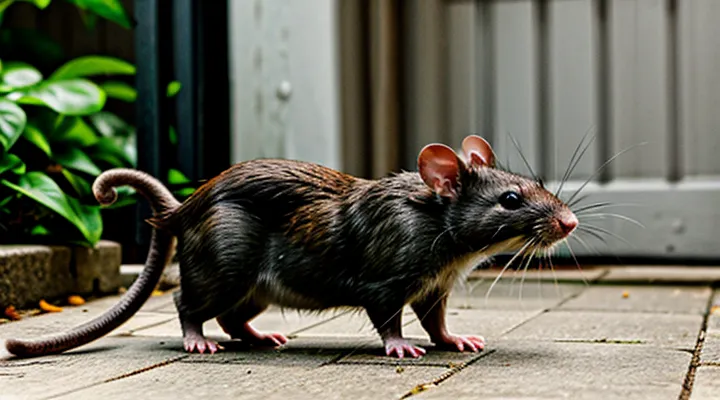
Understanding Rat Vocalizations
The Diverse World of Rodent Communication
Rodents rely on a complex acoustic repertoire to convey status, warnings, and social bonds. Grunting, hissing, squeaking, and ultrasonic vocalizations each serve distinct functions within colonies and during encounters with predators.
- Grunts: Low‑frequency bursts emitted during foraging or mild agitation; signal routine activity and maintain group cohesion.
- Hisses: Sharp, high‑pitch sounds released when a rat feels threatened; act as an immediate deterrent to competitors or potential predators.
- Squeaks: Rapid, high‑energy calls associated with distress or excitement; attract conspecifics for assistance or trigger defensive behavior.
- Ultrasonic calls: Frequencies above human hearing range, used for courtship, maternal communication, and territory advertisement; convey detailed information about reproductive readiness and individual identity.
These vocal signals combine with chemical cues, such as pheromones, and tactile interactions to form a multimodal communication system. Context determines the dominant channel: close‑quarter encounters favor hisses and squeaks, while distant or nocturnal exchanges rely on ultrasonic emissions. The integration of sound types enables rodents to adapt rapidly to environmental pressures, coordinate group activities, and negotiate social hierarchies without visual cues.
Auditory Cues in Rat Behavior
Rats rely on a complex repertoire of vocalizations to convey information about territory, dominance, and threat. Grunts, typically low‑frequency bursts, accompany exploratory locomotion and social grooming, signaling a neutral or mildly affiliative state. Hisses, high‑frequency, sharp emissions, emerge during confrontations or when an individual perceives imminent danger, functioning as an alarm that prompts avoidance or defensive behavior in conspecifics.
Auditory cues influence rat interactions through several mechanisms:
- Frequency modulation distinguishes emotional valence; lower frequencies correlate with calm or investigative contexts, while higher frequencies denote aggression or fear.
- Temporal patterning, such as rapid succession of hisses, intensifies perceived threat and elicits quicker escape responses.
- Contextual coupling with olfactory and tactile signals enhances message reliability, allowing receivers to integrate multimodal data for accurate assessment.
Experimental evidence demonstrates that playback of recorded grunts reduces latency to approach novel objects, whereas hissing playback increases freezing and retreat behaviors. Lesion studies show that disruption of the auditory cortex diminishes discrimination between these sounds, leading to inappropriate social responses and heightened stress markers.
Understanding these vocal signals clarifies how rats coordinate group dynamics, avoid conflict, and maintain hierarchical structures. The precise acoustic features of grunts and hisses provide a reliable channel for transmitting intent, thereby shaping collective behavior without visual cues.
Grunting Sounds in Rats
What Grunting Might Signify
Social Interactions and Dominance
Rats emit grunts and hisses to convey social status and intent during interactions. Grunts are low‑frequency vocalizations produced when individuals engage in close contact, share food, or groom one another. The sound signals tolerance and reinforces affiliative bonds, reducing the likelihood of aggression.
Hisses are high‑frequency, sharp emissions triggered by perceived threats or challenges to hierarchy. The vocalization accompanies raised fur, flattened ears, and forward lunges, warning rivals and establishing dominance. Hissing intensity correlates with the emitter’s rank; dominant rats produce louder, longer calls that deter subordinates.
Key functions of these vocal signals:
- Affiliation: Grunts promote group cohesion, encourage cooperative behaviors, and signal submission during hierarchy negotiations.
- Territorial defense: Hisses deter intruders, mark boundaries, and assert control over resources.
- Conflict resolution: Grunts accompany reconciliation after fights, while hisses precede or accompany escalated aggression.
Research using ultrasonic recording and behavioral analysis confirms that vocal output predicts outcomes in competitive encounters. Rats that consistently produce strong hisses maintain higher rank, whereas frequent grunting indicates stable, low‑conflict social structures.
Comfort and Contentment
Rats emit low‑frequency grunts and sharp hisses as part of their vocal repertoire. When a rat feels secure, relaxed, and satisfied, the acoustic pattern shifts toward soft, rhythmic grunting. This sound correlates with a stable environment, ample nesting material, and consistent access to food and water. The grunt’s amplitude remains low, and the frequency stays within a narrow band, indicating a lack of threat perception.
Conversely, hissing emerges when a rat perceives discomfort or potential danger. The sound is high‑pitched, abrupt, and often accompanied by rapid tail flicks and ear flattening. In a well‑conditioned cage, hissing occurs rarely, typically during brief encounters with unfamiliar objects or sudden lighting changes.
Key indicators of rat comfort and contentment:
- Continuous, gentle grunting while grooming or resting
- Slow, steady breathing and relaxed posture
- Preference for the same nesting spot over multiple days
- Minimal cage exploration when food and water are readily available
Behaviors that disrupt this state:
- Frequent hissing episodes
- Elevated movement speed and erratic pacing
- Frequent changes in nesting location
- Increased aggression toward cage mates
Maintaining stable temperature, providing chewable enrichment, and ensuring a predictable feeding schedule sustain the acoustic environment associated with rat well‑being. Monitoring vocal patterns offers a reliable, non‑invasive method to assess the animal’s internal state.
Distress or Discomfort
Rats emit low‑frequency grunts and sharp hisses when they experience pain, fear, or physical irritation. The sounds serve as immediate alerts to conspecifics and as self‑regulatory feedback, indicating that the animal perceives a threat to its well‑being.
Typical triggers of distress vocalizations include:
- Handling that compresses the body or restricts movement.
- Exposure to sudden bright lights or loud noises.
- Presence of predators, unfamiliar animals, or aggressive cage mates.
- Injury, illness, or dental problems causing chronic discomfort.
These acoustic signals are not social greetings; they convey an urgent need for escape, protection, or medical attention. Observers can use the intensity and frequency of the noises to assess the severity of the underlying condition and respond appropriately.
Factors Influencing Grunting
Rats produce grunting noises as part of their communication repertoire. The intensity, frequency, and occurrence of these sounds depend on several measurable variables.
- Social hierarchy – Dominant individuals emit low‑frequency grunts during confrontations, while subordinate rats produce higher‑pitched grunts when yielding.
- Stress level – Acute stressors such as predator cues or confinement increase grunt rate and amplitude; chronic stress may reduce vocal output.
- Health status – Respiratory infections, dental problems, or pain elevate grunt frequency, serving as an indicator of discomfort.
- Environmental conditions – Ambient temperature and humidity affect vocal cord vibration; cooler, dry air typically yields sharper, shorter grunts.
- Genetic background – Strain‑specific differences influence baseline grunt patterns; some laboratory lines exhibit naturally louder vocalizations.
- Age and sex – Juvenile rats grunt less frequently than adults; males often produce louder grunts during mating displays, whereas females emit softer sounds in nurturing contexts.
- Dietary factors – High‑protein or high‑fat diets can alter metabolic rate, indirectly modifying respiratory effort and grunt characteristics.
- Human handling – Frequent gentle handling reduces grunt occurrence, whereas rough handling provokes immediate, high‑intensity grunts.
These factors interact, creating a complex profile that researchers can quantify to assess welfare, social dynamics, and physiological states in rat populations.
Hissing Sounds in Rats
The Meaning Behind Hissing
Defensive Posturing
Rats emit grunts and hisses primarily when they adopt a defensive stance. The posture signals that the animal perceives a threat and is prepared to protect itself.
When a rat feels threatened, it typically:
- Raises its body off the ground, standing on its hind legs to appear larger.
- Stiffens the fur along the spine, creating a visible “piloerection” that increases apparent size.
- Holds its tail upright or arches it over the back, a clear visual cue of agitation.
- Positions its forepaws forward, ready to strike or bite if the threat persists.
These physical changes accompany acoustic signals. A low, guttural grunt often precedes a hiss, serving as an auditory warning that escalates if the intruder does not retreat. The combination of visual and vocal cues maximizes the rat’s chances of deterring predators or competitors without resorting to physical confrontation.
Warning Signals
Rats emit grunt and hiss vocalizations primarily as warning signals that convey imminent danger to nearby conspecifics. The sounds serve three essential functions: alerting group members, deterring predators, and establishing a defensive hierarchy within the colony.
- Alerting conspecifics – A short, low‑frequency grunt precedes a rapid hiss, indicating the presence of a threat. Nearby rats respond by freezing, fleeing, or adopting a wary posture, reducing the likelihood of surprise attacks.
- Deterring predators – The hiss, characterized by a high‑pitched, abrasive quality, mimics the acoustic profile of larger, more aggressive animals. Predators often interpret the sound as a sign of a hostile or diseased prey, prompting hesitation or abandonment of the hunt.
- Reinforcing social order – Dominant individuals produce louder, more frequent hisses during territorial disputes. Subordinates recognize the acoustic intensity as a cue to withdraw, maintaining stability in the group’s hierarchy.
Acoustic analysis shows that grunt frequencies range from 300 to 600 Hz, while hiss frequencies exceed 2 kHz. The temporal pattern—grunt followed by hiss—optimizes signal clarity: the grunt captures attention, and the hiss delivers the urgent warning. Environmental factors such as cage density, lighting, and the presence of unfamiliar odors intensify the emission rate, confirming that the vocalizations are tightly linked to perceived risk.
In experimental settings, rats exposed to sudden air puffs or predator scents increase hiss production by up to 150 % within seconds, demonstrating the reflexive nature of the warning system. Conversely, habituation to non‑threatening stimuli reduces both grunt and hiss frequencies, indicating adaptive modulation based on threat assessment.
Overall, rat grunt‑hiss sequences function as a compact, efficient alarm system that coordinates group defense, discourages predation, and upholds social structure.
Territorial Displays
Rats produce grunting and hissing noises when they defend the area they occupy. These vocalizations are integral components of territorial displays that combine acoustic, olfactory, and visual signals.
During a territorial encounter a rat will first establish its presence with scent marks left on bedding, walls, and food containers. Following scent deposition, the animal adopts an upright posture, expands its whiskers, and emits a series of short, low‑frequency grunts. The grunts convey the owner’s location and physical condition, prompting nearby conspecifics to assess the risk of intrusion without direct contact.
If an intruder persists, the resident rat escalates to hissing. The hiss is a high‑frequency, broadband sound that signals aggression and readiness to attack. The abrupt shift from grunt to hiss marks a transition from warning to threat, often accompanied by rapid lunges and forepaw strikes.
The coordination of scent, posture, grunt, and hiss creates a layered communication system that reduces the likelihood of physical confrontation. By interpreting these cues, rats can maintain stable home ranges and minimize injury.
Key elements of the territorial display:
- Scent marking: chemical signature left on surfaces.
- Postural changes: upright stance, whisker extension.
- Grunting: low‑frequency calls indicating presence.
- Hissing: high‑frequency threat vocalization.
- Escalation behavior: lunges and bites if the hiss is ignored.
When Hissing Occurs
Rats hiss primarily as an immediate defensive response. The sound signals a perceived threat and warns conspecifics to stay away. Hissing appears when a rat feels cornered, experiences sudden movements, or encounters unfamiliar objects that could cause injury.
Typical situations that provoke hissing include:
- Intrusion of a predator or a larger animal into the rat’s territory.
- Handling by a human that is abrupt, rough, or involves restraint.
- Introduction of an unknown rat or other rodent into an established social group.
- Exposure to sudden loud noises, bright lights, or vibrations.
- Encounter with unfamiliar food, chemicals, or contamination that may be harmful.
During hissing, the rat contracts its abdominal muscles and expels air through the glottis, producing a sharp, audible tone. This behavior reduces the likelihood of physical confrontation by communicating heightened arousal and readiness to defend.
Other Rat Vocalizations
Ultrasonic Communication
Rats produce audible grunts and hisses as part of a broader acoustic repertoire that includes ultrasonic vocalizations (USVs). USVs occupy frequencies above 20 kHz, beyond human hearing, and serve distinct social functions. When rats encounter stress, excitement, or social interaction, they emit short, high‑frequency bursts that convey information about emotional state, hierarchy, and intent. These ultrasonic signals complement low‑frequency sounds, allowing simultaneous transmission of multiple messages without interference.
Key aspects of ultrasonic communication in rats:
- Frequency range: 20 kHz to 100 kHz, varying with age, sex, and context.
- Production mechanism: Laryngeal vibration paired with rapid airflow, modulated by respiratory muscles.
- Behavioral contexts:
- Mating: Male rats emit 50 kHz USVs during courtship, attracting females.
- Distress: Pup isolation triggers 40 kHz calls that prompt maternal retrieval.
- Territorial encounters: Aggressive encounters generate 22 kHz calls, often accompanied by hissing.
- Detection: Conspecifics possess specialized auditory hair cells tuned to ultrasonic frequencies, enabling precise discrimination of call structure.
The coexistence of audible grunts and hisses with ultrasonic calls creates a layered communication system. Grunts typically signal routine activities or low‑level agitation, while hisses and low‑frequency alarm calls warn of immediate threats. Ultrasonic bursts, invisible to predators lacking high‑frequency hearing, allow covert signaling during mating or social bonding. Research using high‑speed microphones and spectrographic analysis confirms that the temporal patterns of USVs correlate with specific behavioral outcomes, reinforcing their role as a primary channel for nuanced rat communication.
Squeaking and Chirping
Rats emit high‑frequency squeaks and chirps by rapidly vibrating the laryngeal membranes, generating tones typically above 20 kHz that may be audible to humans when the frequency falls lower. These sounds differ from low‑frequency grunts, which stem from airflow through the trachea, and from hisses, produced by forced exhalation through partially closed nostrils.
The acoustic structure of a squeak consists of a brief onset, a narrow bandwidth, and a rapid decay, while a chirp shows a series of modulated pulses that can form a rhythmic pattern. Both vocalizations are powered by the same motor neurons that control other rat calls, but they engage distinct muscular configurations that allow finer pitch control.
Squeaks and chirps appear in contexts that require precise, short‑range signaling:
- Exploration of unfamiliar objects or spaces
- Initiation of social contact, especially between juveniles
- Immediate response to sudden stimuli, such as a light touch
- Courtship exchanges during the breeding season
- Indication of mild discomfort or irritation, distinct from the aggressive tone of a hiss
When a rat perceives a threat, it may combine a hiss with a grunt to convey aggression, whereas a squeak or chirp signals curiosity, appeasement, or low‑level alarm. The coexistence of these vocal types expands the animal’s acoustic repertoire, allowing simultaneous transmission of emotional intensity (grunt, hiss) and specific behavioral intent (squeak, chirp).
Interpreting Rat Sounds for Owners
Recognizing Patterns
Rats produce grunts and hisses as part of a structured communication system. Each sound type follows a repeatable temporal and spectral pattern that conveys specific information about the animal’s internal state and external circumstances. Recognizing these patterns enables researchers to infer the context of vocalizations without direct observation of behavior.
The grunt pattern typically exhibits a steady fundamental frequency around 300–500 Hz, lasts 50–150 ms, and repeats at intervals of 200–400 ms during exploratory activities. Consistency in frequency and rhythm signals low‑level agitation or social affiliation. In contrast, the hiss pattern shows a broadband frequency sweep from 1 kHz to 10 kHz, a duration of 30–80 ms, and irregular intervals. The abrupt onset and high‑frequency content indicate heightened threat perception or defensive intent.
Key steps for accurate pattern recognition:
- Record vocalizations with high‑resolution audio equipment.
- Apply spectrographic analysis to extract frequency, duration, and inter‑call intervals.
- Cluster calls using statistical methods (e.g., k‑means, hierarchical clustering) to separate grunt and hiss groups.
- Validate clusters against observed behaviors such as grooming, feeding, or predator exposure.
By systematically mapping acoustic features to behavioral contexts, the underlying communication logic of rats becomes evident, allowing precise interpretation of grunting and hissing without reliance on anecdotal description.
When to Seek Veterinary Advice
Rats emit grunts and hisses as part of normal communication, but certain patterns signal health problems that require professional evaluation.
Persistent, high‑pitched hissing accompanied by rapid breathing, nasal discharge, or blood suggests respiratory infection or obstruction. Sudden increase in grunt frequency, especially when the animal appears lethargic, loses weight, or shows reduced appetite, often indicates pain, dental disease, or gastrointestinal distress.
Visible swelling around the face, eyes, or limbs together with audible distress sounds points to abscesses, injury, or systemic illness. If a rat displays these vocalizations while also exhibiting trembling, seizures, or loss of coordination, immediate veterinary assessment is essential.
When any of the following criteria are met, contact a veterinarian without delay:
- Continuous hissing or grunting for more than 24 hours
- Accompanying signs of respiratory difficulty (open‑mouth breathing, wheezing)
- Noticeable pain indicators (guarding, reluctance to move)
- Unexplained weight loss or failure to thrive
- Discharge from eyes, nose, or ears
- Swelling, abscesses, or wounds that produce vocal distress
- Neurological symptoms (tremors, seizures, unsteady gait)
Early intervention reduces the risk of severe complications and improves recovery prospects for pet rats.
The Science of Rat Acoustics
Research on Rat Vocalizations
Research on rat vocalizations has identified distinct acoustic categories that correspond to specific behavioral states. Grunts are low‑frequency pulses emitted during routine activities such as foraging, grooming, and mild social interaction. Hisses are broadband, high‑amplitude sounds produced when a rat perceives a threat or experiences aggression. Electrophysiological recordings reveal that these vocal types are generated by separate neural circuits within the brainstem, with the periaqueductal gray mediating defensive hissing and the nucleus ambiguus controlling exploratory grunting.
Experimental protocols combine ultrasonic microphones, high‑speed video, and ethological scoring to map vocal output to context. Studies using pharmacological manipulation show that anxiolytic agents reduce hissing frequency without affecting grunt rates, confirming the association of hisses with heightened arousal. Genetic knockout models lacking the Foxp2 gene display altered grunt structure, indicating a role for this transcription factor in fine‑tuning vocal motor patterns.
Key findings from recent literature include:
- Grunts persist across a broad temperature range, suggesting a function in maintaining group cohesion rather than temperature regulation.
- Hissing intensity correlates with cortisol levels measured in blood samples, linking the sound to physiological stress markers.
- Playback of recorded hisses elicits avoidance behavior in conspecifics, confirming its role as an alarm signal.
- Cross‑species comparisons demonstrate that rat hisses share spectral features with alarm calls of other rodents, supporting evolutionary convergence.
The convergence of acoustic analysis, neurobiology, and behavioral testing provides a comprehensive framework for interpreting the communicative purpose of rat sounds. Continued investigation into the genetic and environmental modulators of vocal output promises to refine our understanding of mammalian social communication.
Technological Advances in Study
Researchers examine rat vocalizations to connect acoustic signals with physiological and emotional states. Precise interpretation supports neuroscience, toxicology, and animal‑welfare assessments.
Recent innovations enhance data capture and analysis:
- Miniature high‑frequency microphones record sounds above 20 kHz with minimal distortion.
- Body‑mounted accelerometers detect subtle vibrations accompanying vocal output.
- Deep‑learning classifiers automatically label grunts, hisses, and other calls from raw recordings.
- Real‑time spectrographic software visualizes frequency‑time patterns for immediate review.
- Combined ultrasound and infrared imaging synchronizes visual cues with acoustic events.
- Wireless electrophysiological probes record neural activity concurrent with vocal emissions.
Integration of these tools produces accurate correlations between specific vocal patterns and stress hormones, brain circuitry, and environmental triggers. Large‑scale datasets enable population‑level modeling and predictive diagnostics.
Future directions involve cloud‑based collaborative platforms, AI‑driven hypothesis generation, and closed‑loop systems that adjust experimental conditions in response to detected vocal cues.