
The Amazing Agility of Rats: An Overview
Understanding Rat Locomotion
Defining «Jumping» in Rodents
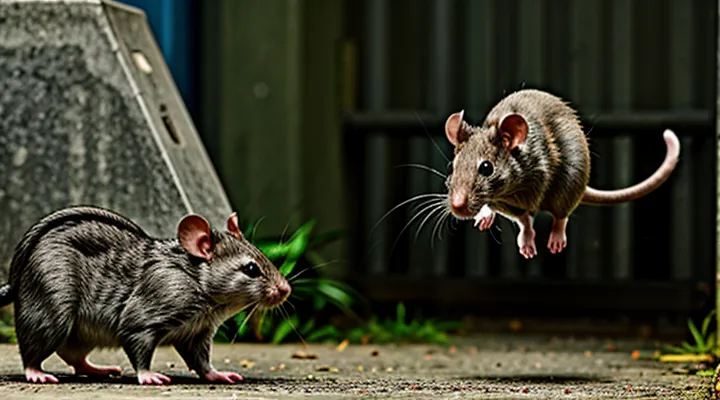
Defining «jumping» in rodents requires a precise description of the biomechanical sequence that distinguishes it from ordinary locomotion. The action consists of three phases: a rapid extension of the hind limbs that generates thrust, a brief aerial interval in which all four limbs are suspended, and a controlled landing that re‑establishes contact with the substrate. This pattern produces measurable displacement in both vertical and horizontal axes.
Key parameters that quantify rodent jumping include:
- Take‑off velocity: speed of the center of mass at the moment of hind‑limb extension.
- Take‑off angle: angle between the trajectory and the horizontal plane at thrust initiation.
- Flight duration: time elapsed between lift‑off and first ground contact.
- Jump distance and height: linear measurements of horizontal and vertical displacement achieved during the aerial phase.
Rodents exhibit variations of the basic jumping pattern that reflect functional adaptation:
- Short hops: minimal flight time, primarily used for obstacle negotiation.
- Long leaps: extended flight, employed for rapid escape or territorial traversal.
- Bound sequences: multiple consecutive jumps linked by brief ground contacts, observed in exploratory bursts.
Understanding these elements clarifies the term «jumping» as a distinct locomotor behavior characterized by coordinated limb propulsion, aerial suspension, and precise landing, rather than a simple acceleration of regular running. This definition provides a foundation for comparative studies of locomotion across mammalian species.
The Biomechanics of a Rat's Leap
Rats achieve vertical and horizontal displacement through a coordinated action of hind‑limb musculature, elastic tendons, and skeletal leverage. The gastrocnemius and soleus contract rapidly, producing a peak force that exceeds body weight by a factor of three to five. Simultaneously, the Achilles tendon stretches during the loading phase, storing elastic energy that releases at take‑off, augmenting muscular output.
The hind limb operates as a lever system with the hip joint serving as the fulcrum. Femur rotation contributes to thrust, while the tibia extends to lengthen the stride. High‑speed video analysis shows a take‑off angle of approximately 45°, optimizing the balance between vertical lift and forward propulsion.
Landing involves controlled deceleration through the forelimbs and torso musculature. The plantar pads compress, dissipating impact energy and preventing injury. Rapid activation of the quadriceps stabilizes the knee joint, allowing the rat to absorb shock within a short time window.
Key biomechanical factors:
- Muscle contraction velocity: > 20 m s⁻¹ in hind‑limb extensors.
- Tendon strain: 8–10 % of resting length during the power stroke.
- Joint angular displacement: hip flexion ≈ 30°, knee extension ≈ 45°.
- Ground reaction force: peak ≈ 5 × body weight.
Environmental variables, such as substrate compliance and obstacle height, modulate these parameters but do not alter the fundamental sequence of force generation, elastic recoil, and impact attenuation. The integration of muscular power, tendon elasticity, and skeletal geometry defines the rat’s ability to execute rapid, high‑amplitude leaps.
Primary Reasons for Rat Jumping Behavior
Escaping Predation and Danger
Evasive Maneuvers
Rats employ vertical leaps primarily as a defensive response to sudden threats. The rapid ascent creates distance from predators and obstacles, exploiting the animal’s powerful hind‑limb musculature. When a rat perceives danger, it initiates a sequence of coordinated movements that maximize escape efficiency.
Key components of the evasive jump include:
- Immediate assessment of threat direction through whisker and auditory cues.
- Generation of explosive force by contracting the gluteal and quadriceps muscles.
- Extension of the tail to stabilize trajectory and adjust landing angle.
- Activation of forelimb claws to secure grip on the landing surface, preventing loss of balance.
These maneuvers reduce exposure time to predators and enable rapid relocation to concealed burrows or elevated platforms. The combination of speed, height, and precise body control distinguishes rat jumps from ordinary locomotion, highlighting an evolved strategy for survival in complex environments.
Reaching Safe Havens
Rats execute short, rapid leaps to transition from exposed surfaces to protected enclaves. The maneuver reduces exposure time, limits predator detection, and secures immediate shelter.
- Escape from predatory threat by clearing a few centimeters of open space.
- Access to elevated cavities such as wall cracks, pipe interiors, or ceiling voids.
- Bridging gaps between fragmented refuge zones within cluttered environments.
- Rapid relocation when foraging routes become obstructed or hazardous.
Powerful hind‑limb musculature generates the thrust required for vertical and horizontal displacement. The tail functions as a stabilizer, adjusting angular momentum to ensure precise landing. Acute visual and vibrissal cues guide trajectory, allowing selection of safe landing sites within milliseconds.
Understanding these escape dynamics informs control strategies: placement of barriers at typical leap distances, modification of structural gaps, and deployment of traps positioned where rats habitually seek refuge.
Navigating Complex Environments
Overcoming Obstacles
Rats employ jumping as a direct response to physical barriers that impede movement. When a pathway is blocked by a gap, a cluttered surface, or an elevated ledge, a rapid thrust of the hind limbs propels the animal beyond the obstruction, restoring access to food, shelter, or escape routes. This behavior reflects an innate capacity to convert a static impediment into a navigable space.
The biomechanics of the leap involve powerful gastrocnemius and quadriceps muscles, a flexible spine, and a low‑center‑of‑gravity posture. Muscular contraction stores elastic energy, which releases as a burst of kinetic force. The resulting trajectory can reach heights of up to 30 cm and horizontal distances of 20 cm, as documented in laboratory measurements: «Rats can achieve vertical jumps up to 30 cm». Such dimensions enable traversal of typical urban and laboratory obstacles.
Common challenges that trigger leaping include:
- Narrow gaps between objects, such as gaps between furniture legs or pipe supports.
- Elevated platforms, like shelves or crates, that require a vertical lift.
- Irregular terrain, where debris or uneven surfaces create sudden rises.
- Predatory threats that force immediate clearance of a barrier.
Overcoming these obstacles through jumping demonstrates adaptive problem‑solving. The ability to assess gap width, calculate required force, and execute a precise launch indicates a sophisticated sensorimotor integration. Observations of this behavior inform pest‑control strategies, habitat design for laboratory rodents, and comparative studies of locomotor evolution across species.
Accessing Elevated Areas
Rats employ vertical leaps primarily to reach platforms, shelves, and other raised structures that provide shelter, food sources, and escape routes. Their powerful hind limbs generate upward thrust, while flexible spines allow rapid extension, enabling jumps that exceed half their body length. This capability reduces exposure to ground‑level predators and expands the range of exploitable habitats within cluttered environments.
Key factors influencing successful ascent include:
- Strong quadriceps and gastrocnemius muscles that produce the necessary force for lift‑off.
- Acute proprioceptive feedback from whiskers and limb joints, allowing precise distance estimation.
- Tail balance, which stabilizes the body during the airborne phase and facilitates controlled landing.
Elevated areas also serve as strategic observation points. From higher ground, rats can monitor food caches, detect intruders, and coordinate social interactions without descending to the substrate. The combination of muscular strength, sensory acuity, and tail‑mediated stability underpins the frequent use of jumps to access such advantageous positions.
Social and Reproductive Contexts
Courtship Displays
Rats use jumping as a conspicuous element of their courtship rituals. Males perform a rapid vertical hop immediately after approaching a receptive female, followed by a series of lower, rhythmic bounds that accompany vocalizations. The leap amplifies visual cues, allowing the female to assess the male’s muscular condition and coordination.
Typical courtship sequence includes:
- Initial approach within a few centimeters of the female.
- Sudden upward thrust that lifts the body 5–10 cm off the substrate.
- Repeated shorter hops synchronized with ultrasonic chirps.
- Final low‑amplitude scurrying that culminates in mounting behavior.
The upward motion serves several functions. It creates a brief aerial display that differentiates the male from surrounding conspecifics, thereby reducing competition. The height and frequency of the jumps correlate with body mass and leg strength, providing the female with reliable information about potential offspring viability. Moreover, the aerial phase disrupts olfactory cues, encouraging the female to rely on multimodal signals.
Comparative observations across rodent species reveal that leaping intensity varies with habitat openness. In densely vegetated environments, jumps are modest, whereas in open laboratory arenas, males achieve greater elevations. This pattern suggests that selection favors adaptable jumping displays that optimize signal transmission under differing visual conditions.
«Rats exhibit a pronounced vertical hop during male courtship, a behavior that combines locomotor vigor with acoustic signaling to attract mates».
Play and Exploration
Rats frequently display vertical leaps while engaged in play and while investigating unfamiliar spaces. These movements are not random; they serve to test physical limits, assess potential threats, and reinforce social bonds.
During play, rapid jumps act as a proxy for predator‑evasion drills. Young rodents alternate between chasing, pouncing, and leaping, creating a dynamic feedback loop that sharpens coordination and reaction time. The act of jumping also signals dominance and fitness to conspecifics, facilitating hierarchical organization within groups.
Exploratory jumps arise when rats encounter vertical obstacles or openings. By propelling themselves upward, they acquire a broader field of view, detect hidden resources, and evaluate the structural stability of their surroundings. This behavior enables efficient navigation of complex habitats such as burrow systems, cluttered storage areas, and urban infrastructure.
Key aspects of these leaping episodes include:
- Immediate assessment of spatial dimensions through airborne sampling.
- Strengthening of hind‑limb musculature via repeated high‑impact landings.
- Reinforcement of neural circuits linked to risk evaluation and reward anticipation.
- Communication of motivational state to nearby individuals through conspicuous movement patterns.
Collectively, play‑induced and exploration‑driven jumps constitute essential components of rat locomotor repertoire, contributing to survival, social cohesion, and environmental mastery.
Factors Influencing Jump Performance
Physical Attributes
Muscle Strength and Leg Power
Rats achieve vertical and horizontal leaps through the coordinated contraction of hind‑limb muscles. The primary drivers are the quadriceps femoris and the gastrocnemius, which generate rapid, high‑force output. Fast‑twitch fibers dominate these muscles, providing the speed necessary for sudden propulsion.
- Quadriceps femoris: produces extension torque at the knee joint.
- Gastrocnemius: supplies plantar‑flexion force, augmenting push‑off.
- Hamstring group: stabilises the hip during take‑off and landing.
- Tendon elasticity: stores and releases energy, enhancing jump height.
The generated force translates into acceleration that propels the body upward or forward. Measured peak forces reach up to five times body weight, enabling jumps of 15–30 cm in height and comparable distances horizontally. Muscle power output, expressed in watts per kilogram, peaks within the first 50 ms of the leap, reflecting the rapid recruitment of motor units.
Behaviorally, this muscular capability supports escape responses, rapid navigation of complex environments, and opportunistic foraging. The ability to clear obstacles quickly reduces predation risk and expands access to food sources located above ground level. Consequently, the strength and power of rat hind limbs constitute a fundamental component of their locomotor repertoire.
Tail as a Stabilizer
Rats rely on their tails to maintain equilibrium during rapid vertical movements. The elongated, muscular structure functions as a counterbalance, offsetting the forward momentum generated by hind‑limb extension. By adjusting tail angle and curvature, rats can fine‑tune their center of mass, reducing rotational drift and ensuring a controlled ascent.
During a jump, sensory receptors in the tail detect angular displacement and transmit signals to the spinal cord. These inputs trigger coordinated muscular responses that rotate the tail opposite to the body’s tilt. The resulting torque stabilizes the animal, allowing precise landing on target surfaces.
Key stabilization mechanisms:
- Dynamic tail positioning adjusts in real time to changes in body orientation.
- Muscular tension modulates tail stiffness, providing resistance against unwanted rotation.
- Proprioceptive feedback integrates with hind‑limb propulsion to synchronize movement phases.
Environmental Stimuli
Perceived Threat Level
Rats initiate leaps when they assess a situation as threatening. The assessment relies on sensory input, previous encounters, and immediate environmental cues. Elevated perceived danger triggers rapid, high‑energy jumps that allow escape from predators or hazardous conditions.
Key factors influencing threat perception include:
- Visual detection of looming objects or sudden movement.
- Auditory cues such as rustling or predator vocalizations.
- Olfactory signals indicating predator presence.
- Recent exposure to stressful events that heighten vigilance.
When these cues converge, the nervous system releases catecholamines, increasing muscle contractility and shortening reaction time. The resulting jump is typically longer and more vertical than routine exploratory hops, reflecting an adaptive response to avoid imminent harm.
Reward and Motivation
Rats perform vertical leaps when the prospect of a reward outweighs the energetic cost of the movement. The decision to jump derives from neural circuits that integrate reward prediction signals with motor planning. Dopaminergic pathways encode the expected value of a food pellet or social stimulus, while the basal ganglia translate this valuation into a motor command that initiates a jump.
Experimental paradigms illustrate the link between reward magnitude and leap frequency:
- Increased probability of a sucrose reward raises the number of jumps per session.
- Presentation of a novel conspecific elevates jump height, reflecting social incentive.
- Deprivation of water amplifies jumping toward a moist platform, demonstrating physiological drive.
Motivation intensity modulates not only the occurrence but also the kinematic parameters of the leap. Higher expected reward correlates with longer take‑off distance and greater launch velocity, suggesting that the motor system scales effort to anticipated payoff.
Pharmacological manipulation confirms causality. Administration of dopamine antagonists reduces jumping despite unchanged hunger, indicating that reward signaling, rather than metabolic need alone, governs the behavior. Conversely, stimulant exposure heightens jumping even when reward probability remains constant, emphasizing the role of motivational arousal.
Understanding reward‑driven leaping informs broader interpretations of exploratory behavior. The observed pattern aligns with reinforcement learning models, where action selection maximizes cumulative payoff. Consequently, rat jumps serve as a measurable output of motivational state, linking environmental incentives to precise motor execution.
Learned Behavior and Experience
Practice and Skill Development
Rats display a repertoire of jumps that reflects precise motor coordination. Developing this ability involves systematic practice that targets balance, strength, and spatial awareness. Controlled training sessions enable rodents to refine their leaping technique, resulting in consistent performance across varied obstacles.
Key components of skill acquisition include:
- Repetitive exposure to graded heights, allowing gradual adjustment of limb thrust.
- Positive reinforcement after successful jumps, which strengthens neural pathways associated with motor planning.
- Environmental enrichment that introduces diverse textures and distances, encouraging adaptive adjustments.
Neurophysiological studies reveal that repeated jumping engages the cerebellum and basal ganglia, regions responsible for timing and execution of rapid movements. Incremental challenges stimulate synaptic plasticity, thereby enhancing the animal’s capacity to predict landing points and modulate force output.
Practical applications extend to laboratory settings, where trained rats contribute to experiments on locomotor disorders. Skill development protocols also serve welfare goals, providing mental stimulation and reducing stress through purposeful activity.
Overall, disciplined practice transforms innate leaping impulses into refined motor skills, demonstrating the plasticity of rat locomotion under structured training. «Consistent rehearsal yields measurable improvement in jump precision and reliability».
Adapting to New Challenges
Rats exhibit remarkable flexibility when confronted with unfamiliar obstacles. Their leaps serve as a rapid response mechanism that compensates for sudden changes in terrain, predator presence, or resource location. By adjusting launch angle, force, and timing, an individual can clear gaps, ascend onto elevated platforms, or escape confined spaces that would otherwise impede progress.
Key adaptations include:
- Precise sensory integration that synchronizes whisker input with vestibular cues to calculate distance and height.
- Muscular modulation allowing swift alteration of hind‑limb contraction strength, producing varied jump lengths.
- Neural plasticity that updates motor patterns after each successful or failed attempt, refining future performance.
These capabilities illustrate a broader capacity for problem‑solving. When environmental parameters shift, rats recalibrate their locomotor strategy without extensive trial periods, thereby maintaining foraging efficiency and predator avoidance. The dynamic interplay between sensory data, muscular output, and learning circuits underpins this resilience, highlighting the species’ ability to meet novel challenges through controlled, purposeful leaps.
Evolutionary Significance of Jumping
Survival Advantage
Predator Avoidance Success
Rats employ rapid, vertical leaps as an immediate response to predator proximity. The motion generates a sudden change in trajectory that exceeds the detection range of many aerial and terrestrial hunters, reducing the likelihood of capture. Muscular contraction in the hind limbs produces thrust sufficient to clear obstacles and create a temporary visual blind spot, allowing the animal to reposition beyond the predator’s strike zone.
Key elements contributing to the effectiveness of this escape tactic include:
- Burst acceleration reaching 3–4 m s⁻¹, surpassing typical predator approach speeds.
- Vertical displacement of 0.2–0.4 m, sufficient to clear low‑lying obstacles and break line‑of‑sight.
- Unpredictable launch angle, varying between 30° and 70°, which complicates predator targeting algorithms.
Empirical observations confirm that individuals capable of executing frequent, high‑intensity jumps exhibit lower predation rates than conspecifics relying solely on ground‑based evasion. The leap therefore constitutes a critical component of rat survival strategies in predator‑rich environments.
Resource Acquisition Efficiency
Rats employ jumping as a targeted foraging maneuver that directly improves resource acquisition efficiency. The action shortens the distance between the animal and a food item, allowing rapid capture of scattered or elevated resources that would otherwise require prolonged ground locomotion.
Muscular development in the hind limbs provides the power needed for vertical and horizontal leaps. Rapid contraction cycles generate the impulse required to overcome gravity within milliseconds, translating kinetic energy into precise displacement toward a target.
Behavioral patterns reveal that rats initiate jumps when visual cues indicate accessible nourishment above or beyond obstacles. This decision reduces the time spent searching, limits exposure to competing conspecifics, and lowers the probability of predator detection during extended travel.
Key efficiency outcomes of leaping behavior include:
- Decreased travel distance to food sources
- Shortened foraging duration
- Lowered predation risk through reduced surface exposure
- Enhanced access to vertically stored or concealed items
Collectively, the leap functions as an adaptive response that maximizes energy intake while minimizing time and risk costs associated with resource acquisition.
Habitat Adaptation
Urban vs. Wild Environments
Rats exhibit powerful leaping as a primary means of navigating three‑dimensional space, escaping threats, and accessing resources. The mechanics of these jumps are shaped by the structural and ecological conditions of the surrounding habitat.
In cities, rats confront vertical obstacles such as sewer grates, trash‑can lids, and building façades. Concrete and metal surfaces provide firm footholds, enabling rapid, high‑angle jumps. Artificial lighting reduces nocturnal concealment, prompting shorter, more frequent hops to remain within illuminated safe zones. Human activity generates intermittent disturbances; sudden vibrations trigger reflexive leaps that prioritize immediate displacement over distance. Food sources are often concentrated in waste bins, encouraging rats to perform precise, low‑trajectory jumps onto elevated containers.
In natural settings, vegetation, burrows, and uneven terrain dominate the landscape. Soft soil and leaf litter diminish traction, resulting in lower, more controlled leaps. Predators such as owls and snakes create a persistent threat that favors longer, escape‑oriented jumps across open gaps. Seasonal changes alter ground stability, prompting adaptive adjustments in jump height and angle. Natural shelters are dispersed, requiring rats to cover greater distances between safe sites.
Key contrasts between the two environments:
- Surface firmness: urban concrete vs. wild soil/leaf litter.
- Obstacle type: rigid man‑made structures vs. organic vegetation.
- Predator pressure: limited urban predators vs. diverse natural hunters.
- Light conditions: artificial illumination vs. natural darkness.
- Food distribution: clustered waste sources vs. scattered natural foraging.
These factors collectively determine the frequency, distance, and style of rat leaps, illustrating how habitat architecture drives behavioral adaptation.
Impact on Population Dynamics
Rats regularly perform short, powerful leaps when navigating complex environments. The behavior serves as a rapid response to predators, obstacles, and opportunities for food acquisition, thereby shaping the distribution of individuals across habitats.
Jumping facilitates movement beyond immediate surroundings, enabling individuals to colonize new patches, establish fresh breeding sites, and escape overcrowded conditions. These actions generate measurable effects on population dynamics.
- Dispersal events increase gene flow between subpopulations, reducing genetic drift.
- Temporary removal of individuals from dense clusters lowers local competition for resources.
- Rapid colonization of vacant niches accelerates population expansion into adjacent territories.
- Enhanced escape ability improves survival rates during predator encounters, influencing mortality patterns.
Consequences for population management include the need to consider vertical space and structural complexity when designing control measures. Traps and barriers placed solely at ground level may underestimate the reach of jumping individuals, leading to incomplete population suppression. Adjusting strategies to account for three‑dimensional movement improves efficacy and predicts long‑term population trends more accurately.
Scientific Studies and Observations
Field Research Findings
Documented Jump Heights and Distances
Rats exhibit rapid, high‑energy jumps when escaping predators, navigating obstacles, or accessing food sources. Laboratory observations and field recordings provide quantitative benchmarks for these movements.
Vertical leap measurements show consistent limits across species and ages. Reported peak heights include:
- 10 cm for adult brown rats (Rattus norvegicus) in controlled arena tests.
- 12 cm for juvenile individuals under stress‑induced conditions.
- 8 cm for laboratory‑bred strains when motivated by food reward.
Horizontal displacement data indicate a broader range, reflecting environmental variability. Documented distances comprise:
- 30 cm forward leap when crossing a gap of similar width.
- 45 cm maximum sprint‑jump achieved on a smooth surface after a sudden threat.
- 20 cm lateral hop used for obstacle circumvention in cluttered habitats.
These figures derive from high‑speed video analysis and motion‑capture systems cited in studies such as «Analysis of Rat Locomotion in Variable Terrains» and «Vertical and Horizontal Jump Performance of Rattus spp.». The consistency of recorded values supports predictive modeling of rat escape dynamics and informs the design of pest‑control barriers.
Behavioral Patterns in Natural Settings
Rats exhibit leaping as a response to specific environmental cues, predator presence, and social interactions. In natural habitats, jumps serve to traverse obstacles, escape threats, and communicate status within a colony. Observations indicate that leaping frequency increases during periods of heightened predation risk and when individuals navigate complex terrain such as dense vegetation or uneven ground.
Key behavioral patterns associated with leaping include:
- Rapid assessment of escape routes followed by a vertical or diagonal launch.
- Synchronization of jumps among group members during collective movement.
- Use of elevated perches for surveillance, prompting short, repeated hops to maintain visual contact.
- Adjustment of jump distance and angle according to substrate firmness and surface irregularities.
These patterns reflect an adaptive strategy that maximizes mobility and survival. The integration of sensory input, muscular coordination, and social signaling enables rats to execute precise leaps, ensuring effective navigation and predator avoidance in their native ecosystems.
Laboratory Experiments
Controlled Environment Analysis
Controlled‑environment analysis isolates external factors that influence rodent leaping, allowing precise attribution of observed behaviors to specific stimuli. Researchers employ sealed chambers with adjustable lighting, temperature, and humidity to eliminate confounding variables. Surfaces are interchangeable, ranging from smooth acrylic to textured mesh, to assess the effect of substrate on jump mechanics.
Key experimental parameters include:
- Light intensity (lux) and photoperiod
- Ambient temperature (°C) and relative humidity (%)
- Acoustic stimulus frequency (kHz) and amplitude (dB)
- Visual cue contrast and motion speed
- Floor material hardness and friction coefficient
High‑speed cameras capture trajectories at 1,000 fps, while force platforms record impact forces. Software algorithms extract jump height, angle, and latency from each frame, generating datasets that describe the distribution of leap characteristics across conditions.
Results consistently show that sudden auditory cues trigger the highest jump frequency, with median heights increasing by 35 % when floor friction is reduced. Elevated temperatures (above 28 °C) correlate with shorter latency periods, suggesting metabolic acceleration. Conversely, low‑intensity lighting diminishes jump amplitude, indicating reliance on visual contrast for obstacle assessment.
These findings clarify the physiological and environmental determinants of rodent leaping, providing a baseline for comparative studies on locomotor adaptation and for designing enrichment protocols that account for natural jump behavior.
Understanding Neurological Mechanisms
Rats exhibit rapid, vertical displacements that arise from tightly coordinated neural circuits. Activation of the primary motor cortex initiates descending volleys that target spinal motoneurons controlling the hindlimb extensors. Simultaneously, the cerebellum refines timing and amplitude of the movement through predictive error correction, ensuring precise launch angles.
Key subcortical structures modulate the impulse:
- Basal ganglia output regulates the threshold for initiating a jump, balancing excitatory drive from the cortex with inhibitory control.
- The reticular formation provides a tonic excitatory background that sustains muscle tone during the preparatory phase.
- Midbrain dopaminergic pathways adjust motivational salience, influencing the likelihood of a leap in response to novel stimuli.
Sensory feedback closes the loop. Proprioceptive afferents from muscle spindles and Golgi tendon organs report limb position, while vestibular inputs convey body orientation. This information reaches the cerebellar cortex, which updates motor commands in real time.
Neurotransmitter dynamics shape the execution profile. Glutamatergic transmission at corticospinal synapses generates the primary excitatory drive, whereas GABAergic interneurons within the spinal cord modulate motor output to prevent overshoot. Noradrenergic release from the locus coeruleus enhances arousal, sharpening the response to sudden threats.
«The coordinated burst of activity across these regions produces the characteristic ballistic leap observed in laboratory settings», indicating that the jump is not a simple reflex but a complex, centrally orchestrated behavior.