
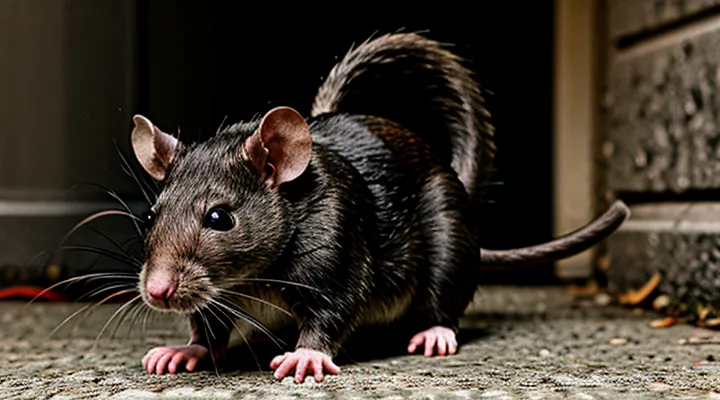
The Anatomy of Rat Testicles
Size Relative to Body Mass
Rats exhibit testes that constitute a markedly higher proportion of total body weight than most mammals. In adult male laboratory rats (Rattus norvegicus), testes weigh approximately 1.5 % of the animal’s mass, whereas in humans the same organ represents roughly 0.03 % of body weight. Comparable rodents, such as mice (Mus musculus), display testes around 2 % of body mass, while larger mammals, including dogs and primates, remain below 0.1 %.
- Rat (≈300 g): testes ≈4.5 g (1.5 %)
- Mouse (≈25 g): testes ≈0.5 g (2 %)
- Human (≈70 kg): testes ≈20 g (0.03 %)
- Dog (≈20 kg): testes ≈30 g (0.15 %)
The elevated mass allocation supports a rapid spermatogenic cycle. Testicular tissue in rats produces up to 200 million sperm per day, far exceeding the output of species with proportionally smaller testes. This high production rate aligns with the species’ short gestation (≈21 days), large litters, and frequent breeding opportunities.
Evolutionary pressure favors such a ratio. In polygynous environments where multiple males may inseminate a single female, selection rewards males that generate abundant sperm quickly, increasing the probability of fertilization. Consequently, natural selection has driven an anatomical investment that maximizes reproductive output relative to overall body size.
Internal Structure
Spermatogenesis and Epididymis
Rats possess testes that can exceed 10 % of body mass, a proportion far greater than in most mammals. This enlargement reflects the need to generate millions of sperm each day, supporting frequent mating and intense sperm competition.
Spermatogenesis proceeds continuously within the seminiferous tubules. The cycle includes:
- Mitotic proliferation of spermatogonia
- Meiotic division of primary spermatocytes to produce haploid spermatids
- Morphological transformation of spermatids into motile spermatozoa (spermiogenesis)
- Release of mature sperm into the tubular lumen (spermiation)
Sertoli cells orchestrate each stage, supplying nutrients, signaling molecules, and structural support. The high density of germ cells and the rapid turnover rate demand extensive tubular surface, which drives testicular enlargement.
The epididymis extends the length of the reproductive tract, forming a coiled tube that stores and matures sperm. Within its distinct regions (caput, corpus, cauda), sperm acquire motility and fertilization capacity through exposure to epididymal secretions, ion gradients, and membrane remodeling. The cauda segment functions as a reservoir, maintaining viable sperm until ejaculation.
Large testes and an elongated epididymis together enable rats to sustain a prolific output of functional sperm, ensuring reproductive success despite short gestation periods and high male‑female encounter rates.
Evolutionary Drivers of Testicle Size
Sperm Competition Hypothesis
Mating Systems and Promiscuity
Rats practice a promiscuous mating system in which several males commonly encounter the same receptive female. This social structure creates intense sperm competition, because each male’s reproductive success depends on outnumbering rival sperm within the female’s reproductive tract.
Selection therefore favors males that can generate larger ejaculates. Enlarged testes provide the anatomical capacity to produce a high volume of sperm quickly, increasing the probability that a male’s sperm will fertilize ova before competitors’ sperm.
Empirical observations support this relationship. Laboratory studies report that male rats possess testes weighing approximately 2–3 % of body mass, a proportion markedly greater than in species with monogamous or polygynous systems. Correspondingly, a single ejaculate can contain several hundred million sperm cells, sufficient to dominate the sperm pool in a polyandrous mating event.
Key outcomes of the promiscuous system include:
- Rapid testicular growth during puberty, driven by hormonal cues linked to mating opportunities.
- Frequent ejaculation cycles, enabled by the high sperm production capacity.
- Reduced reliance on male–female courtship behaviors, as reproductive success is measured primarily by sperm quantity rather than mate guarding.
Thus, the large testes of rats are an adaptive response to a mating environment where multiple males simultaneously vie for fertilization, ensuring that each male maximizes his contribution to the next generation.
Reproductive Success and Paternity Assurance
Large testes in rats directly increase sperm output, which enhances the probability of fertilizing multiple females in a single breeding season. High sperm numbers compensate for intense male–male competition and reduce the likelihood that rival sperm will displace a male’s contribution after copulation. This strategy maximizes reproductive success by allowing a single male to sire offspring across several litters.
Key mechanisms linking testicular size to paternity assurance:
- Elevated ejaculate volume dilutes rival sperm, decreasing the chance of sperm competition success.
- Continuous sperm production maintains a ready supply for frequent mating opportunities.
- Greater sperm reserves enable a male to mate repeatedly without depletion, ensuring coverage of multiple receptive females.
By allocating resources to enlarged testes, rats prioritize quantity of sperm over other traits, a trade‑off that directly supports high reproductive output and reliable transmission of their genes.
Genetic Diversity and Population Dynamics
Rats possess disproportionately large testes relative to body size, a trait that directly influences genetic variation within populations. Elevated sperm production expands the number of viable gametes per mating event, thereby increasing the effective population size (Ne). A higher Ne reduces the impact of random genetic drift, allowing a broader spectrum of alleles to persist across generations.
Intense sperm competition drives selection for greater testes mass. In densely populated environments where multiple males may inseminate a single female, males with larger testes generate more sperm, outcompeting rivals and securing higher fertilization success. This selective pressure promotes alleles associated with enhanced spermatogenesis, further diversifying the gene pool.
Testis size also affects demographic parameters. Populations with high reproductive output recover more rapidly from mortality spikes, stabilizing population density and limiting bottleneck events that could purge genetic diversity. Conversely, species with smaller testes experience lower sperm counts, heightened susceptibility to stochastic fluctuations, and reduced adaptive potential.
Key connections between testes enlargement, genetic diversity, and population dynamics include:
- Increased sperm quantity → greater male reproductive success in polyandrous settings.
- Elevated male reproductive variance → reinforcement of alleles favoring high spermatogenic capacity.
- Expanded effective population size → mitigation of drift, preservation of rare variants.
- Accelerated population recovery → diminished risk of genetic bottlenecks.
Collectively, these mechanisms explain why rats have evolved sizable testes: the trait maximizes reproductive efficiency, sustains genetic heterogeneity, and stabilizes demographic trajectories.
Physiological Mechanisms and Hormonal Regulation
Testosterone Production and Function
Testosterone in male rats is synthesized primarily by Leydig cells within the testes. The biosynthetic pathway begins with cholesterol, which is converted to pregnenolone and subsequently to testosterone through a series of enzymatic reactions involving 17β‑hydroxysteroid dehydrogenase and other key enzymes. High Leydig cell density, a characteristic of the enlarged rat testes, permits a rapid and abundant production of the hormone.
The hormone exerts several physiological effects that support the species’ reproductive strategy. Its actions include:
- Stimulation of spermatogenesis by promoting Sertoli cell function and germ cell maturation.
- Enhancement of libido and mating frequency, driving the high reproductive output observed in laboratory and wild populations.
- Regulation of secondary sexual traits such as increased muscle mass, aggressive behavior, and the development of the characteristic male scent profile.
Elevated testosterone levels also modulate metabolic processes, influencing lipid utilization and insulin sensitivity. The combination of abundant hormone synthesis and its broad systemic impact explains why rats maintain comparatively large testes, ensuring sufficient testosterone to sustain the intense reproductive demands of the species.
Follicle-Stimulating Hormone (FSH) and Luteinizing Hormone (LH)
Follicle‑stimulating hormone (FSH) and luteinizing hormone (LH) are the primary gonadotropins regulating spermatogenesis and androgen production in male mammals. In rats, elevated secretion of these hormones drives the rapid proliferation of Sertoli cells during puberty, which expands the supportive capacity of the seminiferous epithelium. The enlarged Sertoli cell population permits a higher number of developing germ cells, directly contributing to the increased testicular mass observed in this species.
LH stimulates Leydig cells to synthesize testosterone. The heightened testosterone levels maintain the activity of Sertoli cells and promote the final stages of sperm maturation. Continuous LH signaling ensures that Leydig cells retain a high output, sustaining the hormonal environment required for maximal testicular growth.
Key physiological effects of FSH and LH in rats:
-
FSH:
• Induces Sertoli cell mitosis and growth.
• Enhances production of inhibin and other paracrine factors that modulate spermatogenic efficiency. -
LH:
• Triggers steroidogenic enzyme expression in Leydig cells.
• Maintains elevated circulating testosterone, supporting both Sertoli cell function and accessory gland development.
The combined action of FSH‑driven Sertoli cell expansion and LH‑driven testosterone production creates a feedback loop that maximizes spermatogenic output. This hormonal synergy explains the disproportionate testicular size of rats compared with other rodents, aligning reproductive capacity with the species’ high fecundity and rapid life cycle.
Nutritional Factors Affecting Testicle Size
Rats exhibit unusually large testes relative to body size, a trait closely linked to dietary composition. Specific nutrients modulate hormone synthesis, spermatogenic efficiency, and tissue growth, thereby shaping testicular dimensions.
- Protein intake directly supplies amino acids required for Leydig‑cell steroidogenesis and Sertoli‑cell support; diets rich in high‑quality protein correlate with increased testis mass.
- Dietary lipids, especially cholesterol and polyunsaturated fatty acids, serve as precursors for testosterone production; elevated cholesterol availability accelerates androgen‑driven enlargement.
- Micronutrients such as zinc, selenium, and vitamin E protect germ cells from oxidative damage and sustain enzymatic pathways involved in spermatogenesis; deficiencies often result in reduced testicular volume.
- Carbohydrate level influences insulin‑like growth factor signaling; moderate carbohydrate consumption sustains IGF‑1 activity, which promotes testicular tissue expansion.
Mechanistically, these nutrients affect the hypothalamic‑pituitary‑gonadal axis. Adequate protein and lipid supplies raise circulating luteinizing hormone, stimulating Leydig cells to secrete more testosterone. Concurrently, antioxidants preserve the integrity of developing spermatozoa, preventing atrophy. Elevated IGF‑1 amplifies cellular proliferation within seminiferous tubules, adding to overall size.
Experimental data from controlled feeding studies demonstrate that rats receiving a balanced mix of high‑quality protein, cholesterol‑rich fats, and essential micronutrients develop testes up to 30 % larger than counterparts on nutrient‑deficient diets. Conversely, diets lacking these components produce markedly smaller organs, despite identical genetic backgrounds.
Thus, nutritional quality constitutes a primary determinant of testicular enlargement in rats, offering a physiological explanation for the species’ pronounced reproductive organ size.
Ecological and Behavioral Implications
Social Structures and Dominance
Rats with disproportionately large testes typically belong to species whose mating systems involve intense male competition. In such systems, females may mate with multiple partners, creating a sperm‑competition environment that selects for increased sperm production capacity.
Within rat colonies, dominant males often secure priority access to receptive females, yet subordinate males remain reproductively viable by contributing sperm in later copulations. Large testes enable subordinate individuals to maintain competitive sperm output despite reduced mating opportunities.
Empirical observations reveal consistent patterns:
- High male turnover or frequent male replacement correlates with enlarged testes across populations.
- Colonies exhibiting stable hierarchies and limited male influx show comparatively smaller testes.
- Experimental removal of dominant males leads to rapid testicular hypertrophy in remaining males, indicating physiological responsiveness to social context.
These findings demonstrate that rat testicular size is a plastic trait shaped by the balance of dominance hierarchies and the necessity to succeed in sperm competition.
Predation Risk and Reproductive Investment
Male rats allocate a substantial portion of their energy budget to gonadal tissue. Large testes produce high sperm counts, which increase the probability of fertilizing females when multiple males compete for the same mates.
Predation pressure shortens the expected lifespan of adult males. When mortality risk is elevated, selection favors rapid reproductive output over long‑term somatic maintenance. Consequently, individuals that invest heavily in sperm production gain a competitive edge before they are removed by predators.
Empirical surveys of rodent populations reveal a positive correlation between predation intensity and relative testis size. Species inhabiting open habitats with abundant raptor activity exhibit testes that are 15–25 % heavier relative to body mass than conspecifics in sheltered environments. Laboratory experiments that simulate increased predator cues trigger an up‑regulation of testicular growth hormones, confirming a plastic response to perceived risk.
Key mechanisms linking predation risk to testicular enlargement:
- Accelerated spermatogenesis to maximize ejaculate size within a truncated reproductive window.
- Hormonal shifts (elevated testosterone, reduced cortisol) that prioritize gonadal development over immune function.
- Behavioral changes, such as increased mate‑seeking frequency, that demand higher sperm reserves.
The convergence of ecological danger and reproductive competition explains why male rats maintain disproportionately large testes relative to their overall size.
Habitat Influence on Reproductive Strategies
Rats that inhabit densely populated, resource‑rich environments experience intense male competition for access to females. In such settings, females often mate with multiple partners, creating a high risk of sperm competition. Larger testes increase daily sperm output, allowing a male to outcompete rivals in the sperm race and improve fertilization odds.
Conversely, rats occupying sparse or seasonal habitats encounter fewer conspecifics and lower mating frequency. Under these conditions, selection favors smaller testes that conserve energy for survival rather than maximal sperm production.
Key habitat variables that shape testicular investment include:
- Population density: higher density → elevated sperm competition → larger testes.
- Resource availability: abundant food supports the metabolic cost of enlarged gonads.
- Seasonal stability: predictable conditions permit consistent reproductive effort; fluctuating environments favor flexible, often reduced, testicular size.
Evolutionary models predict a direct correlation between ecological pressure and reproductive anatomy. Empirical studies of wild and laboratory rat populations confirm that individuals from urban or agricultural locales possess significantly greater testicular mass than those from arid or isolated regions. This pattern demonstrates that habitat characteristics drive the allocation of physiological resources toward reproductive success, explaining the pronounced testicular development observed in certain rat populations.