
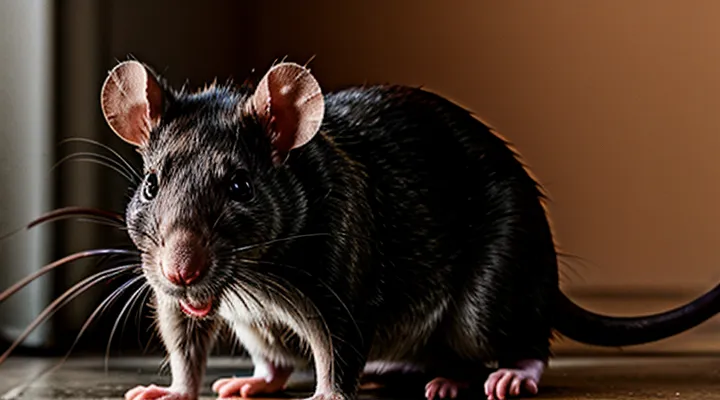
The Unique Anatomy of Rat Teeth
Composition and Structure
Enamel and Dentin
Rats possess continuously growing incisors that appear orange because the outer enamel is thin and semi‑transparent, allowing the underlying dentin to dominate the visible color. Enamel consists primarily of hydroxyapatite crystals organized into highly mineralized prisms. Its hardness protects the tooth surface, but in rodent incisors the enamel layer covers only the labial (outer) face, leaving the lingual (inner) side exposed.
Dentin lies beneath enamel and contains a matrix of collagen fibers interspersed with hydroxyapatite. The dentin’s intrinsic pigment, a combination of iron‑rich compounds and dietary pigments, imparts a yellow‑to‑orange hue. When enamel is insufficiently thick, light passes through it and reflects the dentin’s coloration, producing the characteristic orange shade observed in rat teeth.
Key points:
- Enamel: thin on the outer surface, highly mineralized, provides wear resistance.
- Dentin: thicker, contains pigmented compounds, responsible for the visible orange coloration.
- Optical effect: translucency of enamel allows dentin color to dominate the tooth’s appearance.
Iron Pigmentation
Rats display a vivid orange hue on their incisors because iron deposits accumulate within the enamel matrix during tooth development. Iron ions bind to protein scaffolds, forming stable complexes that resist degradation and persist throughout the animal’s life. This mineralization process differs from the more common hydroxyapatite-dominated composition of mammalian teeth, giving the enamel a distinct chromatic property.
Key aspects of iron pigmentation in rodent incisors:
- Source of iron: Dietary intake supplies ferrous ions, which are transported via the bloodstream to the tooth‑forming zone.
- Incorporation mechanism: Ameloblasts secrete iron‑binding peptides; these peptides chelate iron and embed it into the growing enamel layer.
- Structural effect: Iron‑enriched enamel exhibits increased hardness and resistance to wear, supporting the continuous gnawing behavior of rodents.
- Visual outcome: The high concentration of iron oxides imparts an orange–brown coloration, observable even in low‑light conditions.
Understanding this pigmentation clarifies the functional advantage of iron‑rich enamel and explains the characteristic orange coloration of rat teeth without invoking unrelated physiological factors.
Functional Significance of Orange Teeth
Continuous Growth and Wear
Adaptation for Gnawing
Rats’ incisors grow continuously, demanding relentless gnawing to keep them at functional length. The front surfaces of these teeth are coated with enamel that contains iron‑rich pigments, giving the teeth a distinctive orange hue. This pigmentation is not decorative; it reinforces the enamel, making it harder and more resistant to wear.
The orange coloration results from:
- Deposition of iron oxides within the enamel matrix
- Increased hardness compared to the dentin behind the enamel
- Enhanced resistance to abrasion from hard materials such as wood, plastic, and metal
These properties enable rats to gnaw through diverse substrates without dulling their incisors. The self‑sharpening edge formed by differential wear of enamel and dentin maintains a sharp cutting surface, essential for accessing food, constructing nests, and escaping predators. Consequently, the orange pigmentation directly supports the mechanical demands of continuous gnawing.
Preventing Overgrowth
Rats’ incisors grow continuously; without wear they become excessively long, impairing feeding and causing injury. The orange hue results from iron‑rich plaque that accumulates on the enamel when the teeth are not regularly filed down by gnawing.
Preventing excessive growth requires consistent mechanical wear and nutritional support. Effective measures include:
- Providing chew objects such as wooden blocks, mineral rods, or untreated corncob strips; replace them before they become smooth.
- Supplying a high‑fiber diet containing hard pellets and occasional fresh vegetables that demand biting.
- Maintaining a cage environment with varied textures—paper tubes, cardboard, and untreated twine—to encourage natural gnawing.
- Scheduling quarterly veterinary examinations to monitor tooth length and perform professional trimming when needed.
- Monitoring weight and food intake; rapid weight loss may indicate dental problems that require immediate attention.
Implementing these practices ensures the incisors remain at functional length, reduces plaque buildup, and maintains the characteristic coloration without risking overgrowth.
Hardness and Durability
Role in Diet
Rats’ incisors appear orange because the enamel contains iron‑rich pigments that become visible as the teeth grow. The amount of pigment deposited depends largely on the nutrients rats ingest.
Dietary iron is the primary factor. Foods high in bioavailable iron—such as red meat, fortified cereals, and certain legumes—increase the concentration of iron compounds in the enamel‑forming cells. When iron accumulates, it oxidizes and imparts a reddish‑orange hue to the newly exposed tooth surface.
Calcium and phosphorus support enamel hardness but do not affect coloration. Adequate intake of these minerals ensures that the enamel remains resistant to wear, allowing the pigmented layer to persist without excessive abrasion.
Vitamin C enhances iron absorption. Diets rich in citrus fruits or vitamin‑C‑fortified feeds can amplify iron uptake, indirectly intensifying tooth pigmentation.
A typical laboratory rat diet limits iron to prevent excessive coloration, while wild rats consuming varied natural sources often display more pronounced orange incisors.
Key dietary influences:
- High‑iron protein sources (e.g., meat, fish)
- Iron‑fortified grains and pellets
- Vitamin‑C‑rich supplements that boost iron absorption
- Balanced calcium/phosphorus to maintain enamel integrity
Adjusting these nutritional components directly modifies the intensity of the orange coloration observed in rat incisors.
Survival Advantage
The orange coloration of rat incisors results from iron‑containing pigments deposited during enamel formation. This pigmentation creates a hard, wear‑resistant surface that endures the constant gnawing required for food acquisition and nest construction. The enhanced durability reduces the frequency of tooth breakage, allowing continuous foraging without prolonged periods of vulnerability.
Key survival benefits include:
- Sustained feeding efficiency – hardened teeth maintain sharp edges, ensuring effective processing of fibrous seeds, roots, and hard shells.
- Reduced injury risk – stronger incisors lower the probability of fractures that could lead to infection or impaired nutrition.
- Improved competitive ability – individuals with resilient teeth outperform conspecifics in territorial disputes and resource monopolization.
These advantages translate into higher reproductive success and greater population resilience, especially in environments where food sources are abrasive or scarce. The pigment‑based reinforcement thus represents a direct evolutionary adaptation that enhances rat survival.
Health and Maintenance
Healthy vs. Unhealthy Tooth Color
Indicators of Deficiency
Rats display a characteristic orange hue on their incisors because iron is deposited in the enamel during development. When dietary intake of essential minerals or vitamins is insufficient, the normal pigmentation process is disrupted, producing noticeable changes in tooth coloration and structure.
Observable signs that a rat’s diet lacks the nutrients required for proper enamel formation include:
- Dull or pale incisor surface instead of the typical vivid orange.
- Increased translucency of the enamel, making underlying dentin visible.
- Accelerated wear patterns, especially at the tip of the incisors.
- Cracking or chipping of the enamel edge under normal chewing forces.
- Reduced growth rate of the incisors, leading to shorter tooth length.
These indicators often accompany broader physiological deficits such as:
- Stunted body weight gain.
- Poor bone mineralization evident in skeletal examinations.
- Lowered activity levels and diminished grooming behavior.
Regular monitoring of incisor appearance, combined with assessment of growth metrics and skeletal health, provides a reliable method for detecting nutritional deficiencies in laboratory or pet rats. Prompt dietary correction—supplementing iron, calcium, phosphorus, and vitamin D—restores normal enamel pigmentation and prevents long‑term dental complications.
Veterinary Considerations
Rats exhibit a yellow‑orange hue on their continuously growing incisors when enamel demineralization occurs, often due to dietary imbalances, excessive wear, or underlying disease. Veterinary assessment focuses on diagnosing the etiology, preventing progression, and restoring oral health.
Key veterinary actions include:
- Physical examination of the oral cavity to identify plaque, calculus, or lesions.
- Radiographic imaging to evaluate tooth structure and detect pulp exposure.
- Laboratory analysis of blood chemistry and serum calcium/phosphorus to reveal metabolic disturbances.
- Nutritional review to ensure adequate intake of vitamin D, calcium, and balanced phosphorus.
- Treatment of identified infections with appropriate antibiotics.
- Dental cleaning and polishing to remove accumulated debris and reduce bacterial load.
- Application of protective dental sealants or crowns when enamel loss is extensive.
- Monitoring for systemic conditions such as renal disease or hyperparathyroidism that may manifest as dental discoloration.
Preventive measures emphasize a high‑fiber diet, regular provision of chewable objects to promote even wear, and routine veterinary dental check‑ups at least biannually. Early intervention limits enamel erosion, preserves incisor integrity, and reduces the risk of secondary complications such as malocclusion or oral pain.
Environmental Factors
Diet and Nutrition
Rats display orange‑tinged incisors because the enamel contains iron‑rich pigments that become visible when dietary intake supplies excess iron or pigmented compounds. Continuous growth of the front teeth exposes the enamel surface to the oral environment, allowing dietary pigments to deposit directly onto the tooth structure.
The enamel matrix incorporates iron during mineralization. When rats consume foods high in heme iron, non‑heme iron, or strongly colored plant pigments, the iron complexes bind to the enamel surface, producing a characteristic orange hue. The process occurs without bacterial involvement; the discoloration reflects the chemical composition of the diet rather than disease.
Key dietary contributors include:
- Red meat, organ meats, and blood‑based products (high heme iron).
- Fortified cereals and grain mixes containing iron sulfates.
- Darkly colored fruits and vegetables (e.g., beets, carrots, paprika) rich in betacyanins or carotenoids.
- Commercial rodent feeds formulated with iron supplements for growth promotion.
Conversely, diets low in iron and free of intensely pigmented ingredients reduce enamel staining. Nutrients that support enamel integrity, such as calcium, phosphorus, and vitamin D, help maintain a lighter tooth coloration by promoting proper mineral deposition and reducing surface porosity where pigments could adhere.
To limit orange discoloration, a balanced ration should:
- Limit iron‑rich supplements to levels required for physiological growth.
- Substitute highly pigmented foods with neutral‑colored alternatives (e.g., plain grains, low‑iron vegetables).
- Ensure adequate calcium and phosphorus ratios to reinforce enamel density.
- Provide vitamin D sources to facilitate calcium absorption and enamel mineralization.
Adjusting the nutritional profile in this manner directly influences the visual appearance of rat incisors, preventing the orange coloration associated with excessive dietary iron and pigment exposure.
Chewing Habits
Rats maintain continuously growing incisors, and the coloration of these teeth reflects the mechanical and chemical effects of their gnawing behavior. Frequent chewing on hard, abrasive materials removes the outer enamel layer, exposing the underlying dentin, which possesses a natural orange‑brown hue. The following points illustrate how specific chewing habits influence tooth color:
- Hard‑object gnawing (e.g., wood, plastic, metal) accelerates enamel wear, revealing dentin earlier than softer diets.
- Dietary grit from contaminated food introduces iron particles that embed in the tooth surface, darkening the visible enamel.
- Self‑polishing through constant gnawing creates a smooth, reflective surface that accentuates the dentin’s inherent shade.
- Selective chewing of fibrous plant material promotes uneven wear, producing localized orange patches where enamel is thinned.
These behaviors collectively determine the visible orange appearance of rat incisors, linking chewing patterns directly to tooth coloration.