
Evolutionary Adaptations and Thermoregulation
Dissipating Heat: A Natural Radiator
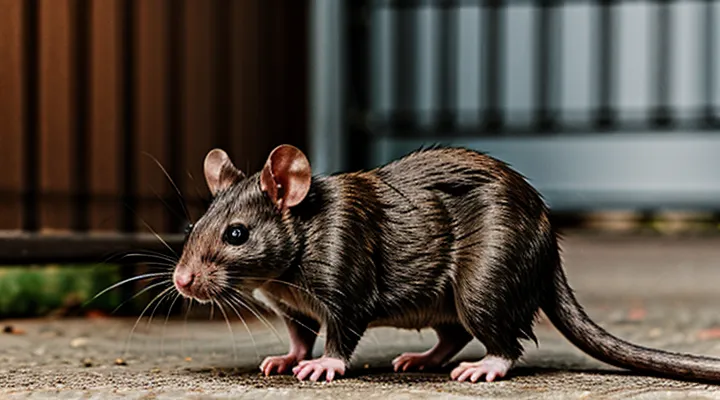
Rats possess hairless tails that function as efficient thermal radiators. The absence of fur eliminates insulating layers, allowing direct contact between ambient air and the dense network of blood vessels beneath the skin. Blood flow through these vessels carries excess body heat to the tail surface, where convection and radiation dissipate it rapidly.
Key physiological traits that enable this heat‑loss system include:
- High capillary density in the tail’s dermal layer.
- Thin epidermal tissue lacking keratinized fur.
- Large surface‑to‑volume ratio relative to body mass.
These characteristics create a low‑resistance pathway for thermal exchange, reducing core temperature during periods of intense activity or elevated environmental heat. Comparative studies show that species inhabiting warmer climates exhibit even greater tail vascularization, confirming the adaptation’s selective advantage.
The thermoregulatory function of the naked tail also influences behavior. Rats commonly position their tails against cool surfaces or expose them to airflow when seeking to lower body temperature. This passive cooling mechanism operates without metabolic cost, supporting sustained locomotion and foraging in diverse habitats.
Surface Area and Capillary Networks
Rats possess a hairless tail that functions as an efficient thermoregulatory organ. The absence of fur exposes a large surface directly to the environment, allowing rapid heat exchange. This design maximizes the ratio of surface area to volume, which is essential for small mammals that must dissipate excess body heat without resorting to panting or sweating.
Heat regulation relies heavily on a dense capillary network embedded within the tail’s thin dermal layers. Blood flow through these vessels can be increased to transfer internal heat to the skin surface, where it is released to the surrounding air. Conversely, vasoconstriction reduces blood flow, conserving heat when ambient temperatures drop.
Key physiological features supporting this system include:
- High capillary density delivering blood close to the skin surface.
- Thin epidermal layer minimizing thermal resistance.
- Absence of insulating fur, eliminating a barrier to heat loss.
- Ability to modulate peripheral blood flow in response to temperature changes.
Together, the expansive surface area and specialized vascular architecture enable the rat tail to act as a controllable heat radiator, crucial for maintaining stable core temperature.
Comparison with Other Rodents
Rats possess a tail largely devoid of fur, a condition that distinguishes them from most other rodents. In contrast, common mice exhibit a dense covering of hair along the entire tail, while hamsters display a short, sparsely haired tail. Squirrels retain a fully furred tail that serves both as insulation and a balancing surface. Beavers feature a broad, thickly furred tail used for swimming propulsion and thermoregulation.
The disparity in tail integument reflects divergent ecological pressures. Hairless tails in rats enhance heat dissipation through a network of superficial blood vessels, allowing rapid temperature regulation during active foraging. Fully furred tails in other species retain warmth in colder habitats and provide tactile feedback during arboreal locomotion.
Key comparative points:
- Hair coverage: rats – minimal; mice, hamsters, squirrels, beavers – extensive.
- Vascularization: rats – highly superficial; furred‑tail rodents – less pronounced.
- Functional emphasis: rats – thermoregulation; other rodents – insulation, balance, propulsion.
- Tail length relative to body: rats – proportionally long; hamsters – short; squirrels – long and bushy.
These contrasts illustrate how tail morphology adapts to specific survival strategies, with the rat’s «hairless tail» representing a specialization for efficient heat exchange absent in most rodent relatives.
The Tail's Multifaceted Functions
Balance and Agility in Movement
Rats rely on their naked tails as dynamic stabilizers during rapid locomotion. The tail’s lack of fur reduces mass and eliminates surface friction, allowing swift adjustments of angular momentum without hindering movement.
The elongated, flexible rod functions as a counter‑balance. When a rat changes direction, the tail pivots opposite to the body’s rotation, maintaining the center of gravity within a narrow corridor. This mechanism minimizes lateral sway and prevents loss of equilibrium on narrow surfaces such as wires or tree branches.
Agility emerges from the tail’s ability to generate corrective forces. Muscular contractions along the vertebral column transmit tension to the distal end, producing rapid lateral or vertical thrusts that compensate for sudden slips. The resulting feedback loop between vestibular sensors and tail motion enables precise foot placement during climbing and evasive maneuvers.
Key aspects of this adaptation:
- Minimal drag due to hairlessness enhances responsiveness.
- High tactile sensitivity at the tail tip provides immediate surface feedback.
- Continuous muscular control permits fine‑tuned torque adjustments.
Collectively, these features allow rats to navigate complex environments with exceptional balance and agility, explaining the evolutionary advantage of a hairless tail.
Grip and Support in Climbing
Rats possess tails that lack fur, a trait directly linked to their climbing performance. The smooth skin of the tail provides a continuous surface that maximizes contact with substrates, reducing the likelihood of slippage. Absence of hair allows the underlying epidermis to conform to irregularities, creating micro‑level friction that supports vertical and inverted locomotion.
The tail’s musculature is reinforced by a high density of collagen fibers, granting it the strength to bear the animal’s weight while navigating narrow ledges. Extensive vascular networks supply rapid sensory feedback, enabling precise adjustments of grip pressure during ascent. The combination of tactile sensitivity and structural rigidity equips the tail with dual functions: a stabilizing brace and a responsive probe.
Comparative observations reveal that mammals with furred tails typically rely on limbs for support, whereas the hairless tail of the rat serves as an auxiliary limb. This adaptation expands the animal’s climbing repertoire, allowing it to exploit surfaces that would be inaccessible to species lacking such a feature.
Key functional aspects:
- Smooth, hair‑free surface enhances friction on diverse textures.
- Muscular and connective tissue architecture supplies load‑bearing capacity.
- Rich innervation delivers immediate proprioceptive signals for grip modulation.
- Vascularization supports rapid sensory processing and tissue resilience.
«The rat tail functions as a tactile organ that simultaneously provides structural support during climbing.»
Communication and Social Cues
Rats’ hairless tails function as multimodal communication devices, transmitting information through touch, temperature, and visual exposure. The exposed skin permits rapid heat exchange, allowing conspecifics to detect changes in body temperature that signal stress, excitement, or illness.
Tactile interactions rely on direct tail contact during grooming, aggression, and mating. Grooming of the tail skin conveys affiliative intent, while sudden tail strikes convey warning or dominance. The lack of fur enhances sensitivity to pressure, enabling precise detection of subtle movements.
Visual cues arise from tail posture and movement. Elevated, fully extended tails signal alertness or territorial display, whereas lowered tails indicate submission or fear. The contrast between the dark, hairless surface and surrounding fur accentuates these postural signals for nearby rats.
Key social cues communicated via the tail include:
- Thermal status – rapid cooling or warming detectable by close contact.
- Affiliative grooming – gentle tail strokes during social bonding.
- Aggressive signaling – swift tail flicks or strikes during confrontations.
- Submission posture – lowered tail orientation during hierarchical interactions.
- Reproductive readiness – tail movements accompanying courtship displays.
Debunking Common Misconceptions
Not a Sign of Disease or Infestation
Rats possess a tail that lacks fur as a natural anatomical feature. The absence of hair does not indicate illness, parasitic infestation, or any underlying health problem. The skin on the tail contains a dense network of blood vessels that regulate body temperature, and the exposed surface facilitates heat exchange.
Key points confirming normalcy:
- The tail’s skin is thin, allowing rapid dissipation of excess heat.
- Sensory receptors within the tail detect environmental changes, aiding navigation and balance.
- Veterinary examinations routinely record hairless tails in healthy specimens, with no correlation to disease markers.
Observations from rodent research consistently describe hairless tails as a species‑specific adaptation, not a diagnostic symptom. «The lack of fur on the tail is a physiological trait rather than a pathological sign», notes a recent zoological study.
Absence of Hair vs. Skin Condition
Rats possess tails that are virtually devoid of fur, a condition that distinguishes them from the pelage‑covered bodies of most rodents. The absence of hair results from a specialized skin architecture in which the epidermis is exceptionally thin and the dermal layer contains a markedly reduced density of hair follicles. Instead, the surface is covered by keratinized scales that protect the tail while permitting flexibility.
Key characteristics of the tail skin:
- Epidermal thickness: approximately one‑third that of the dorsal body skin.
- Hair follicle count: less than 5 % of the density found on the trunk.
- Presence of cornified plates: arranged in overlapping rows, providing a smooth, waterproof barrier.
These structural adaptations serve multiple physiological purposes. The reduced insulation facilitates rapid heat dissipation, allowing the animal to regulate core temperature during intense activity. The exposed, scale‑covered surface enhances tactile sensitivity, as mechanoreceptors are positioned close to the external environment without the dampening effect of fur. Additionally, the flexible, hairless tail acts as a balancing organ, aiding in locomotion across narrow or unstable substrates.
Overall, the hairless condition of the rat tail reflects an evolutionary trade‑off in which skin morphology optimizes thermoregulation, sensory feedback, and maneuverability, rather than providing the protective fur typical of other body regions.
Misconceptions in Popular Culture
Rats possess tails that appear almost devoid of hair, a feature frequently misrepresented in movies, cartoons, and internet memes. Visual media often depict the tail as completely bald, implying that the animal lacks any integumentary covering on this extremity.
In reality, the tail’s surface is covered by a thin layer of fine, sparse hairs. These hairs are shorter and less dense than those on the body, rendering the tail visually smooth. The skin is thin, highly vascularized, and contains numerous sensory receptors.
Popular misconceptions include:
- The belief that a hairless tail indicates a lack of fur on the entire animal.
- The notion that the tail’s smoothness serves solely aesthetic purposes in storytelling.
- The assumption that the tail’s appearance proves rats are a distinct species from other rodents.
Scientific explanation clarifies that the reduced hair density facilitates heat dissipation. Blood vessels close to the skin release excess body heat, while the minimal hair reduces insulation. Additionally, the tail functions as a balance organ and a tactile sensor; the thin skin enhances sensitivity to environmental cues.
Correcting these myths improves public understanding of rodent physiology and prevents the spread of inaccurate visual stereotypes.
The Anatomy of a Rat Tail
Bone Structure and Musculature
The rat’s tail consists of a series of caudal vertebrae that are markedly elongated and cylindrical. Each vertebra is separated by intervertebral discs that permit flexible bending while maintaining structural integrity. The vertebral column lacks the robust transverse processes seen in limbs, reflecting reduced mechanical load and the absence of weight‑bearing functions.
Musculature attached to the caudal vertebrae is limited to the longus caudae and caudofemoralis muscles, which generate modest propulsion and balance during locomotion. These muscles originate from the vertebral bodies and insert on the tail’s skin, providing movement without contributing to integumentary structures.
Hair follicles develop in regions where dermal papillae interact with underlying mesenchyme during embryogenesis. In the rat tail, the mesenchymal signals associated with the vertebral column do not induce follicle formation, resulting in a smooth, hairless surface. The lack of cutaneous glands and associated nerves further supports the tail’s specialized role in thermoregulation and tactile sensing.
Key anatomical factors underlying the hairless condition:
- Vertically aligned, slender caudal vertebrae lacking expansive transverse processes.
- Minimal muscular attachments confined to locomotor control rather than integumentary support.
- Absence of embryonic dermal papilla‑mesenchyme interaction, preventing follicle development.
These structural and muscular characteristics collectively explain why the rat tail remains devoid of fur while serving as an efficient, flexible appendage.
Nerve Endings and Sensitivity
Rats possess a bare tail that functions as a highly sensitive sensory organ. The skin covering the tail lacks fur, exposing a dense network of mechanoreceptors, thermoreceptors, and nociceptors. These nerve endings detect minute changes in pressure, temperature, and pain, providing rapid feedback essential for balance, navigation, and predator avoidance.
The primary types of sensory receptors in the tail include:
- Merkel cells and Meissner’s corpuscles, which respond to light touch and texture.
- Ruffini endings, which register skin stretch and joint movement.
- Free nerve endings, which convey temperature variations and nociceptive signals.
The concentration of these receptors exceeds that of most other body regions, compensating for the absence of protective hair. Direct contact with the environment allows the tail to sample surfaces, locate gaps, and assess heat sources without delay. This heightened tactile acuity supports climbing, burrowing, and precise locomotor adjustments.
Physiological studies demonstrate that stimulation of tail receptors triggers swift spinal reflexes, adjusting limb positioning within milliseconds. The integration of peripheral input with central processing ensures coordinated motor responses, reducing the risk of injury when the tail contacts hazardous objects.
Overall, the hairless nature of the rat tail enhances the effectiveness of its sensory apparatus, enabling the animal to exploit its environment with refined perceptual accuracy.
Skin Composition and Keratinization
Rats possess a tail that lacks pelage because the integumentary system of the tail differs markedly from that of the body. The epidermis of the tail is composed of a thin stratum corneum, a reduced stratum spinosum, and an absent or minimal stratum granulosum. This configuration limits the production of keratinized cells required for hair shaft formation. Consequently, hair follicles are scarce or completely absent on the distal portion of the tail.
Keratinization in the tail proceeds primarily to reinforce the epidermal barrier rather than to support filament growth. The keratin proteins expressed are predominantly high‑molecular‑weight, hard‑type keratins that confer mechanical resilience. These keratins polymerize into tightly packed filaments, creating a tough, water‑impermeable surface suited for thermoregulation and locomotion.
Key structural features contributing to the hairless condition include:
- Reduced dermal papillae – insufficient signaling for follicle initiation.
- Limited sebaceous gland activity – no lipid supply for hair shaft nourishment.
- Enhanced epidermal cornification – emphasis on protective keratin layers over follicular development.
The tail’s skin also exhibits a dense network of collagen fibers within the dermis, providing tensile strength without reliance on hair. This adaptation supports the tail’s role in balance, heat dissipation, and sensory perception while maintaining a smooth, hair‑free exterior.