
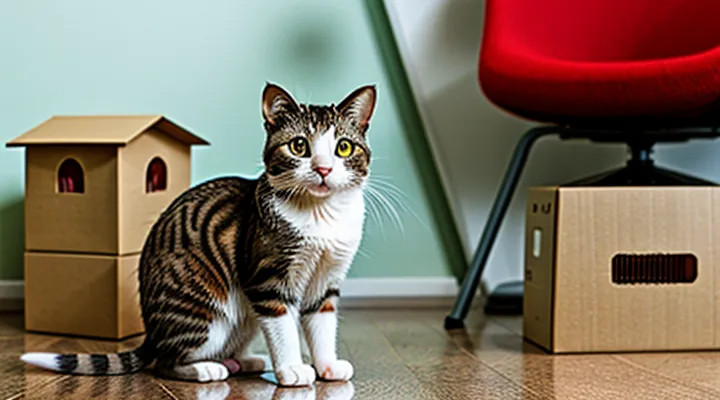
The Instinctual Hunter
Prey Drive in Domesticated Cats
Domestic cats retain a strong predatory instinct inherited from their wild ancestors. This instinct, known as prey drive, compels them to stalk, capture, and immobilize small animals such as rodents. The drive consists of three overlapping phases: detection, pursuit, and seizure. Detection relies on acute vision and hearing; pursuit is triggered by rapid movements; seizure involves a precise bite to the neck, which quickly disables the prey.
When a cat secures a mouse, the animal is often carried back to the home environment. This behavior serves several functions rooted in the prey drive:
- Resource redistribution – the cat transports the catch to a safe location where food can be consumed or stored without competition from outdoor threats.
- Teaching signal – by presenting the prey to humans, the cat may communicate hunting success, reinforcing its role within the household hierarchy.
- Instinctual completion – the act of returning the prey satisfies the final stage of the predatory sequence, which includes a post‑capture assessment before consumption.
Neutered and indoor‑only cats still exhibit this pattern, indicating that the drive operates independently of nutritional need. Hormonal influences, particularly testosterone, amplify the intensity of the response, but even low‑level hormonal activity can trigger the sequence in well‑socialized pets.
Understanding prey drive clarifies why cats routinely bring captured rodents into the home. The behavior reflects an innate, multi‑stage hunting program that persists despite domestication and altered feeding routines.
The Role of Mother Cats in Teaching Hunting
Mother cats instinctively introduce kittens to hunting by providing live prey. The adult captures a mouse, often in the nest area, and leaves it within reach of the young. This exposure allows kittens to observe the mechanics of capture, including the use of claws, bite placement, and the timing of a swift kill.
The teaching process follows several observable steps:
- Observation: Kittens watch the mother’s approach, stalking, and pounce, forming a visual template of successful predation.
- Interaction: The mother may allow the kitten to touch or bite the immobilized mouse, granting tactile feedback while the adult remains nearby to intervene if necessary.
- Practice: After initial contact, the mother gradually reduces assistance, encouraging the kitten to chase and subdue the prey independently.
- Reinforcement: Successful attempts are followed by the mother’s acceptance of the kill, reinforcing the behavior through positive social acknowledgment.
These behaviors ensure the offspring acquire essential hunting skills before leaving the den. The transfer of technique occurs without formal instruction; it relies on repetitive exposure and the mother’s controlled presentation of prey. Consequently, the practice of bringing captured rodents into the home serves both as a food source for the mother and a practical training session for the next generation.
Theories Behind Bringing Prey Home
«Gifts» for Their Owners
Cats that deliver captured rodents to the household are acting on an instinctive drive to provide resources to members of their social group. The prey functions as a tangible offering, signaling the feline’s competence as a provider and reinforcing the bond with the human caretaker. This exchange mirrors the reciprocal relationships observed in wild felid colonies, where individuals share food to strengthen alliances and secure future support.
Key aspects of the “gift‑giving” behavior include:
- Demonstration of hunting skill. Presenting a mouse confirms the cat’s ability to secure food, which can enhance the owner’s perception of the animal’s value.
- Social reinforcement. The act triggers positive feedback from the human, such as attention or treats, encouraging the cat to repeat the behavior.
- Territorial signaling. By bringing prey into the domestic space, the cat marks its domain and asserts dominance over the environment shared with the owner.
- Maternal instinct transfer. Female cats, especially those with offspring, extend nurturing impulses toward humans, treating them as surrogate kittens.
Evolutionary research indicates that felids historically exchanged captured prey with group members to distribute risk and ensure collective survival. Domestic cats retain this pattern, adapting it to the human‑cat relationship. When owners respond with praise or rewards, they reinforce the underlying neural pathways that associate prey delivery with positive outcomes, solidifying the practice as a regular component of feline behavior.
Seeking a Safe Place to Eat
Cats often transport captured rodents to a location separate from the hunting site. This behavior reflects an instinct to secure a place where the prey can be consumed without interruption.
- A safe spot limits the chance that other predators or scavengers will steal the catch.
- It allows the cat to eat in a controlled environment, reducing stress and exposure to danger.
- It preserves the nutritional value of the prey by preventing premature decay caused by external factors.
- It provides a stable surface for the cat to manipulate and dismember the mouse efficiently.
The drive to find a protected area originates from the feline predatory sequence: stalk, capture, secure, and consume. Selecting a hidden or familiar space satisfies the “secure” phase, ensuring that the cat can focus on feeding rather than defending the meal.
Indoor or secluded outdoor locations meet these criteria. Shelters, under furniture, or within a den offer temperature regulation, limited access for competitors, and privacy, all of which align with the cat’s need to eat safely.
In summary, the transport of prey to a safe place serves to safeguard the food source, minimize competition, and create optimal conditions for consumption.
A Desire to Teach Their Humans
Cats often present their prey to owners as a form of instruction. By delivering a captured mouse, a cat demonstrates hunting competence and signals that the skill can be shared. This behavior reflects an instinct to convey survival techniques to members of their social group, which in domestic settings includes humans.
The instructional motive manifests in several observable patterns:
- Repeated deliveries of the same type of prey, indicating reinforcement of a learned skill.
- Placement of the catch near the owner’s feet or in a location the cat knows will attract attention.
- Accompanying vocalizations or body language that solicit interaction, such as pawing or nudging.
From an evolutionary perspective, wild cats teach kittens to hunt by offering live or dead prey. Domestic cats transfer this teaching template to their human companions, expecting reciprocal care or acknowledgment. The act therefore serves both as a demonstration of proficiency and as a request for validation.
Consequently, the presence of a mouse on the floor is not merely a trophy; it is an explicit communication that the cat wishes the human to recognize and possibly emulate the hunting behavior. This exchange reinforces the bond between cat and caretaker through a shared understanding of competence and provision.
Practicing Parental Behavior
Cats frequently transport captured rodents into the domestic environment. The act is not random; it mirrors a reproductive strategy rooted in the species’ ancestry. Female wildcats routinely deliver prey to their young, allowing kittens to observe, practice, and eventually master hunting techniques. This delivery system functions as an early training program, reinforcing motor skills and prey recognition before the offspring venture beyond the den.
When a domestic cat repeats the behavior, the underlying neural circuitry remains active despite the absence of dependent kittens. The cat’s brain interprets the presence of a captive animal as an opportunity to exercise the same instructional pattern that once served its own litter. Consequently, the cat exhibits a form of parental rehearsal, preserving a skill set that contributes to the species’ survival.
Key elements of this parental rehearsal include:
- Presentation of prey – the cat places the mouse where offspring can see it, providing a visual model.
- Controlled interaction – the cat may allow limited handling, enabling kittens to develop grip strength and bite coordination.
- Positive reinforcement – successful capture triggers dopamine release, strengthening the urge to repeat the behavior.
- Social bonding – shared feeding experiences foster cohesion within the litter, a factor that persists in solitary households as a residual instinct.
The persistence of this behavior in indoor cats underscores the durability of parental instincts. Even without kittens to train, the cat continues to enact a sequence that historically ensured the next generation’s competence. Recognizing this pattern clarifies why cats often bring caught mice home: they are enacting an ancient parental protocol that remains embedded in their neural architecture.
What to Do When Your Cat Brings Prey
Handling the Situation Calmly
Cats may deliver captured rodents to the household, a scene that can provoke alarm. The most effective response begins with composure; sudden movements or loud commands increase stress for both animal and owner.
First, separate the cat from the prey. Place the cat on a nearby surface, close the door to the room, and speak in a steady voice. This prevents the cat from defending the catch and reduces the chance of injury.
Next, handle the rodent safely. Wear disposable gloves, use a container with a secure lid, and place the mouse inside. If the animal appears alive, release it outdoors at a safe distance from the home. If dead, dispose of it in a sealed bag and discard it in an outdoor trash receptacle.
After removal, clean the area thoroughly. Use a disinfectant suitable for household surfaces, then rinse with water. Remove any remnants of fur or blood to prevent odor attraction.
Finally, redirect the cat’s hunting instinct. Provide interactive toys, scheduled play sessions, and puzzle feeders. Consistent enrichment diminishes the likelihood of future deliveries.
By maintaining calm, securing the prey, sanitizing the environment, and offering alternative outlets, owners manage the incident responsibly and preserve a safe, harmonious home.
Preventing Future Incidents
Cats that hunt outdoors often transport their prey into the house, creating unwanted incidents for owners. Effective prevention requires a combination of environmental control, behavioral management, and health monitoring.
- Secure all entry points: install fine‑mesh screens, seal gaps around doors, and use weather stripping to block rodents from entering the home.
- Reduce attractants: keep food stored in airtight containers, clean up crumbs promptly, and manage garbage bins with tight lids.
- Provide regular meals: feed cats at consistent times with nutritionally complete diets to diminish the drive to hunt for supplemental calories.
- Offer alternatives: supply interactive toys, puzzle feeders, and scheduled play sessions that mimic hunting motions, satisfying predatory instincts without live prey.
- Conduct veterinary checks: ensure cats are up‑to‑date on vaccinations and parasite prevention, as health issues can increase erratic hunting behavior.
- Implement indoor confinement: keep cats inside during peak rodent activity periods (dawn and dusk) or use a catio that allows safe outdoor exposure without direct contact with wildlife.
By applying these measures, owners can significantly lower the likelihood of their feline companions bringing captured rodents into the living space. Continuous assessment of the home environment and cat behavior ensures long‑term effectiveness.
Appreciating Their Efforts
Cats frequently carry captured rodents back to the house. The act stems from a predatory instinct refined over millennia and serves multiple functional purposes.
Key motivations include:
- Territorial reinforcement: the presence of prey signals control over a defined area.
- Offspring instruction: adult cats present live or dead catches to kittens, demonstrating hunting techniques.
- Resource allocation: the animal distributes food within the social unit, even when humans are present.
- Communication of proficiency: delivering a catch signals competence to peers and owners.
Recognizing these motives allows owners to value the gesture appropriately. Effective responses are:
- Acknowledge the offering: a calm verbal cue or gentle petting confirms the cat’s effort.
- Maintain adequate nutrition: a balanced diet reduces frustration without suppressing natural behavior.
- Provide safe hunting outlets: indoor enrichment toys mimic prey, satisfying instinctual drives.
- Avoid punitive reactions: negative feedback can disrupt the cat’s confidence and increase stress.
By interpreting the delivery of mice as a purposeful, instinct-driven action, caretakers reinforce trust and respect the animal’s evolutionary heritage.
Debunking Common Myths
Not a Sign of Disrespect
Cats frequently transport captured rodents to the household, a habit many owners interpret as a slight. The act originates from innate hunting patterns, not from a desire to offend.
In wild ancestors, adult felines delivered prey to the den for several practical purposes. The behavior persisted after domestication because the underlying motivations remain advantageous.
Key motivations include:
- Provisioning: bringing food to a secure location ensures access during periods without fresh kills.
- Teaching: younger cats observe the capture and handling of prey, learning essential skills.
- Social bonding: shared resources reinforce hierarchical relationships within the group.
Consequently, the presence of a mouse on the floor reflects a cat’s instinct to provide, instruct, and maintain group cohesion, rather than an expression of disrespect toward its human companion.
Not an Act of Cruelty
Cats transport captured rodents to the home not out of malice but because the act fulfills innate biological functions. The behavior aligns with predatory instinct, resource management, and social training, all of which are observed across felid species.
- Predatory drive: Hunting triggers a release of dopamine; the cat secures the prey to prevent loss and to consume it later when hunger dictates.
- Safety: Carrying the mouse away from the hunting site reduces exposure to competing predators and scavengers, increasing the chance of successful consumption.
- Maternal provisioning: Female cats often deliver prey to their kittens, teaching them how to handle food and providing essential nutrition during early development.
- Territorial sharing: In multi‑cat households, a cat may bring a catch to a communal area, allowing other members to benefit from the resource without exposing the prey to external threats.
These motives illustrate that the act is a manifestation of survival strategy rather than deliberate cruelty. The cat’s behavior reflects an instinctual response honed by evolution, intended to maximize the utility of captured prey for itself and its immediate social group.