
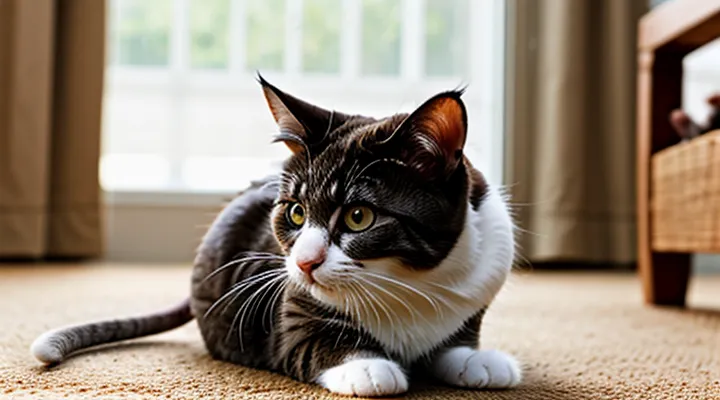
The Enigma of Feline Behavior
Understanding Predatory Instincts
The Evolutionary Drive
Cats often bat, chase, and toss small rodents before killing them. This pattern reflects an evolutionary program that optimizes hunting efficiency and survival. The drive originates from ancestral predators that needed to assess prey vitality, practice motor skills, and reduce injury risk. By manipulating prey, a cat tests the animal’s escape potential, ensuring the target is incapacitated before a fatal bite. This reduces the chance of a struggling victim delivering a defensive wound.
Key evolutionary functions of this behavior include:
- Skill refinement – Repeated handling sharpens forelimb coordination and timing, traits inherited from solitary hunters that relied on precise strikes.
- Energy management – Disabling prey through play conserves energy; a dead or exhausted mouse requires less effort to subdue and consume.
- Risk mitigation – Engaging with a live rodent allows the cat to locate vulnerable points (neck, spine) and avoid bites that could transmit parasites or cause injury.
- Learning reinforcement – Early encounters with prey provide feedback that shapes future hunting strategies, reinforcing successful techniques across generations.
The observed pre‑consumption activity thus serves as a biologically encoded mechanism that enhances predatory success, preserves health, and transmits effective hunting patterns within felid lineages.
Innate Hunting Skills
Cats frequently manipulate small prey such as mice before delivering the fatal bite. This pattern reflects the expression of instinctive hunting abilities that have evolved over thousands of years.
Innate hunting skills comprise a fixed action sequence triggered by motion, sound, and scent. Visual detection initiates a stalk, followed by a rapid pounce that relies on precise timing and muscular coordination. The cat’s retractable claws and sharp teeth are engaged in a controlled strike designed to immobilize the target while minimizing risk of injury.
The “play” phase serves several functional purposes:
- Assessment of prey condition: Repeated bites and tosses reveal whether the mouse is alive, ensuring the effort expended results in a viable meal.
- Motor rehearsal: Repetitive handling sharpens the cat’s bite angle and grip, reinforcing neural pathways that govern precision.
- Safety mechanism: Disabling the prey’s escape responses before the lethal bite reduces the chance of a counter‑strike that could harm the cat.
- Stimulus reinforcement: The tactile feedback from the prey’s movements sustains the cat’s predatory drive, maintaining focus throughout the hunt.
These behaviors arise from genetically encoded neural circuits rather than learned experience, explaining why even minimally socialized kittens display the same sequence of stalking, batting, and final consumption.
Unraveling the «Play» Phenomenon
The Role of Practice and Skill Development
Refining Hunting Techniques
Cats engage in mock combat with rodents as a method of honing predatory skills. The interaction provides a controlled environment where the cat can practice critical components of the hunt without the immediate risk of injury or loss of prey.
- Stalk refinement – repeated pursuit of a moving mouse sharpens visual tracking and timing of the final sprint.
- Pounce calibration – repeated leaping onto a struggling target adjusts force, angle, and foot placement for optimal capture.
- Bite precision – playing allows the cat to locate the neck vertebrae, ensuring a swift, lethal bite when the moment arrives.
- Sensory feedback – tactile and auditory cues from the mouse’s movements train the cat’s whisker and ear responses to subtle prey signals.
These behaviors also serve to conserve energy. By exhausting a mouse through play, the cat reduces the likelihood of a sudden escape, making the final kill less demanding. Additionally, the repetitive nature of the activity reinforces neural pathways associated with hunting, resulting in faster decision‑making and more efficient motor execution in future encounters.
Overall, the playful engagement with rodents functions as a low‑risk training ground that refines the cat’s hunting repertoire, ensuring higher success rates and more effective prey handling when genuine feeding situations occur.
Assessing Prey Vulnerability
Cats evaluate a mouse’s susceptibility before committing to a kill. The assessment occurs during the brief chase and intermittent pawing that observers label as “play.” This behavior provides real‑time data on the prey’s condition and likelihood of escape.
Key indicators of vulnerability include:
- Auditory and olfactory signals: Weak or stressed mice emit irregular breathing and heightened scent, suggesting reduced stamina.
- Motor coordination: Erratic or slowed movements reveal compromised neuromuscular control.
- Size and mass: Undersized individuals present lower handling difficulty; oversized rodents increase risk of injury.
- Escape response latency: Delayed fleeing after initial contact signals diminished alertness.
During the interaction, the cat delivers light bites, swats, and releases the mouse repeatedly. Each contact tests the mouse’s reaction, allowing the predator to gauge whether a swift, lethal bite will succeed or whether prolonged struggle is likely. The cat’s decision to transition from play‑like engagement to a killing bite depends on the cumulative assessment of the factors listed above.
Successful predation correlates with rapid identification of these vulnerabilities. Cats that efficiently discriminate between high‑risk and low‑risk prey conserve energy and reduce injury probability. Consequently, the seemingly frivolous activity serves a functional purpose: a low‑cost diagnostic phase that informs the final feeding decision.
Instinctual Motivation and Stimulation
The Thrill of the Chase
Cats often bat, toss, and chase a mouse before delivering the final bite. This behavior reflects the innate predatory sequence that evolved to maximize hunting efficiency.
The chase provides intense sensory stimulation. Rapid movements trigger visual tracking, auditory cues, and whisker feedback, producing a surge of adrenaline that sharpens reflexes. The resulting dopamine release reinforces the activity, encouraging repeated execution of the pattern.
Practicing the pursuit hones motor skills. Repeated attempts allow the cat to:
- gauge the mouse’s speed and escape routes,
- adjust bite angle for a swift, lethal grip,
- refine timing of the final strike.
The ritualized play also serves a risk‑management function. By exhausting the prey, the cat reduces the chance of injury from a frantic struggle. The temporary immobilization achieved through repeated batting ensures a controlled kill.
In sum, the thrill of the chase satisfies instinctual drives, sharpens hunting competence, and secures a reliable food source.
Mental and Physical Engagement
Cats often bat, chase, and toss small rodents before killing and ingesting them. This pattern reflects a combination of cognitive processing and bodily activity that enhances hunting efficiency.
The mental component involves instinctual problem‑solving. The cat assesses the prey’s escape routes, predicts movements, and refines timing of the strike. Repetitive manipulation allows the animal to verify that the mouse is incapacitated, reducing the risk of injury from a struggling victim. The activity also reinforces neural pathways associated with predation, ensuring rapid decision‑making in future encounters.
Physical engagement serves several functions. Coordinated paw movements test grip strength and dexterity, while the rapid shifts in direction sharpen reflexes. The tactile feedback from the prey’s fur and movements calibrates the cat’s bite force, preventing premature consumption of a still‑alive target that could bite back. Muscular exertion during play also maintains tone and stamina required for sustained hunting.
Key aspects of this behavior:
- Cognitive appraisal of prey vulnerability
- Sensory verification of prey status
- Development of motor precision and timing
- Reinforcement of bite control and energy expenditure
Together, mental evaluation and physical interaction create a reliable strategy that maximizes success and safety when the cat finally consumes the mouse.
Beyond Simple Hunger
Energy Conservation and Efficiency
Managing the Hunt
Cats often seize a mouse, toss it, and bite repeatedly before swallowing. This sequence serves as a controlled process that maximizes the probability of a successful kill and reduces the risk of injury.
The first contact allows the predator to gauge the prey’s size, vigor, and defensive capabilities. Whisker contact and brief bites provide tactile feedback that informs the cat whether the mouse can be subdued without excessive struggle.
Subsequent tossing and batting keep the mouse from anchoring itself or delivering a bite. By maintaining motion, the cat prevents the prey from using its claws or teeth effectively, while also tiring the animal.
The final bite delivers a precise, lethal strike to the neck or spinal cord. This targeted attack ensures rapid incapacitation, after which the cat proceeds to eat.
Typical management steps include:
- Immobilize: Secure the mouse with forepaws to limit escape.
- Disarm: Use rapid paw movements to prevent claw deployment.
- Test: Deliver light bites to assess resistance.
- Terminate: Apply a decisive bite to the throat or vertebrae.
- Consume: Swallow the incapacitated prey.
Each phase reflects an adaptive strategy that balances energy expenditure with safety, explaining why felines engage in apparent “play” before feeding.
Optimizing Food Intake
Cats engage in a brief pursuit of live rodents before killing and consuming them. This behavior serves as a diagnostic phase, allowing the predator to assess the prey’s size, vigor, and potential injury risk. By testing the mouse’s movements, the cat gathers data on muscular strength and escape capability, which informs the decision to invest energy in a kill.
The diagnostic phase contributes to optimizing food intake in several ways:
- Energy budgeting – the cat estimates the caloric return against the effort required to subdue the prey.
- Injury avoidance – identifying defensive traits reduces the likelihood of bites or scratches that could impair future hunting efficiency.
- Nutrient quality assessment – observing the prey’s vigor correlates with health and protein content, guiding selection of higher‑value meals.
Following the assessment, the cat proceeds to a swift, controlled kill, minimizing struggle duration and preserving the prey’s edible tissue. The result is a higher net energy gain per hunting episode, aligning with the predator’s need to meet metabolic demands while conserving resources for future hunts.
In environments where prey are abundant, cats may reduce the diagnostic play, reflecting an adaptive shift toward maximized intake speed. Conversely, when prey are scarce or larger, the play phase lengthens, emphasizing risk assessment to ensure successful consumption. This flexible strategy demonstrates an innate optimization algorithm that balances energy expenditure, safety, and nutritional return.
The Sensory Experience
Engaging Multiple Senses
Cats often manipulate live rodents before killing them. This practice relies on the simultaneous activation of several sensory channels, allowing the predator to verify prey condition, refine motor patterns, and minimize the chance of injury.
Visual input supplies information about movement speed, body orientation, and escape routes. Cats track rapid limb motions with high‑resolution retinal cells, adjusting their strike angle in real time. Auditory cues complement sight; the faint rustle of fur or the squeak of a struggling mouse registers through the cat’s sensitive inner ear, confirming that the animal is still alive and providing a timing reference for the bite.
Tactile feedback arrives via whiskers, paw pads, and claws. Whiskers detect minute changes in airflow and surface texture, while pads register pressure and resistance as the mouse is tossed. This information guides grip strength and prevents excessive force that could damage the cat’s teeth.
Olfactory signals reveal the mouse’s health status and stress level. The scent of cortisol‑related compounds alerts the cat to potential disease, while the presence of fresh prey odor confirms the animal’s vitality.
- Vision – motion tracking and depth perception
- Hearing – detection of subtle sounds indicating activity
- Touch – whisker and paw feedback on texture and resistance
- Smell – assessment of health and freshness
The integration of these modalities creates a rapid, cross‑checked appraisal of the prey. By confirming that the mouse is alive, agile, and safe to handle, the cat reduces the risk of being bitten or scratched and optimizes the timing of the lethal bite. This multi‑sensory strategy underlies the characteristic “play” behavior observed before consumption.
The Predator-Prey Dynamic
Cats often seize small rodents and manipulate them before killing. This behavior reflects a predator‑prey interaction shaped by evolutionary pressures. The act of batting, tossing, and biting serves multiple functions that enhance hunting efficiency.
- Skill refinement: Repeated handling of live prey sharpens coordination, timing, and bite precision, reducing the likelihood of injury from a struggling victim.
- Sensory feedback: Tactile and auditory cues generated during the chase confirm the prey’s vitality, ensuring the cat expends energy only on viable targets.
- Energy assessment: Prolonged play allows the predator to gauge the amount of usable tissue, preventing premature consumption of a potentially insufficient meal.
The dynamic also influences the prey’s survival strategies. Rodents that exhibit rapid escape responses increase the difficulty of capture, prompting predators to develop more sophisticated tactics. This reciprocal pressure drives an arms race, where each species continuously adapts to the other’s capabilities.
Ultimately, the observed pre‑consumption antics represent a calibrated response to the demands of a predator‑prey relationship, optimizing the cat’s hunting success while shaping the evolutionary trajectory of its quarry.
Debunking Common Misconceptions
Not Cruelty, but Instinct
Biological Imperatives
Cats often manipulate live prey before consumption. This pattern reflects several innate biological drives that shape hunting behavior.
- Predatory sequence – Evolutionary programs trigger a chase, capture, and immobilization phase, each coordinated by neural circuits that ensure successful killing.
- Motor rehearsal – Repetitive biting and tossing sharpen forelimb coordination, reinforcing the motor patterns required for future hunts.
- Sensory assessment – Tactile and auditory feedback from a struggling mouse confirms vital signs, allowing the predator to gauge the prey’s health and minimize injury risk.
- Energy regulation – Delayed killing reduces the chance of sudden escape, preserving the predator’s caloric investment by ensuring the prey remains within reach until the cat is ready to ingest.
- Learning reinforcement – Interaction with live prey provides immediate reinforcement signals, strengthening the neural pathways that drive future hunting efficiency.
These imperatives collectively explain why felines engage in apparent “play” with captured rodents before eating them, aligning instinctual circuitry with survival optimization.
Survival Mechanisms
Cats often engage in a series of actions before killing a mouse that serve distinct survival functions. The initial chase activates the cat’s visual and auditory tracking systems, sharpening reflexes that are essential for hunting success in varied environments. By maintaining a distance while observing the prey, the cat evaluates the mouse’s speed and escape routes, gathering data that informs the most efficient capture strategy.
Once within striking range, the cat may bat, toss, or bite the mouse repeatedly. This behavior fulfills several mechanisms:
- Motor skill reinforcement: Repetitive manipulation refines the cat’s bite force control and paw coordination, reducing the risk of injury from struggling prey.
- Sensory confirmation: Tactile feedback confirms the mouse’s vitality, ensuring that the target is still alive and thus a viable source of nutrients.
- Risk mitigation: By immobilizing the mouse through play, the cat reduces the chance of sudden counter‑attacks that could cause scratches or disease transmission.
The final kill typically follows a precise bite to the neck or spine, a technique that minimizes suffering and maximizes nutrient extraction. This sequence—chase, manipulation, immobilization, and precise kill—constitutes an adaptive suite of behaviors that have evolved to enhance hunting efficiency, preserve the predator’s health, and secure energy intake from small mammals.
The Human Perspective vs. Feline Reality
Anthropomorphizing Animal Behavior
Cats often exhibit a sequence of actions that appears playful before they kill small prey. Observers frequently describe this pattern using human emotions, attributing cruelty or amusement to the animal. Such projections constitute anthropomorphism, the tendency to assign human motives, feelings, or intentions to non‑human organisms.
Anthropomorphic descriptions obscure the biological drivers of the behavior. When a cat bats a mouse, the animal is not mocking its victim; it is executing a complex predatory routine that maximizes hunting success. The interpretation shifts from an instinctual process to a moral narrative, leading to misconceptions about feline cognition and ethics.
Scientific explanations for the observed sequence include:
- Stimulation of sensory receptors – tactile contact with moving prey activates mechanoreceptors that refine bite placement.
- Motor‑skill rehearsal – repeated striking improves coordination and timing, essential for subduing agile insects.
- Energy assessment – the cat gauges the prey’s resistance to determine the effort required for a lethal strike.
- Release of predatory arousal – intermittent engagement allows the cat to modulate excitement, preventing premature exhaustion.
Recognizing these mechanisms eliminates the need for human‑centric storytelling. A factual perspective attributes the pre‑consumption activity to evolutionary adaptations rather than imagined cruelty, providing a clearer understanding of feline predatory strategy.
Interpreting Instincts
Cats frequently seize, bat, and temporarily manipulate captured rodents before delivering a lethal bite and ingesting the carcass. This sequence reflects a conserved predatory pattern inherited from wild ancestors.
The pattern originates from a multi‑stage hunting algorithm. Initial contact triggers a chase, followed by a capture phase that activates tactile receptors on the forepaws. The subsequent “play” phase supplies proprioceptive feedback, allowing the animal to assess the prey’s resistance and refine bite placement.
Interpreting this behavior as an instinctual process reveals three functional objectives:
- Sensory verification – repeated pawing confirms the prey’s vitality, preventing premature consumption of a potentially hazardous or diseased animal.
- Motor calibration – rapid, intermittent movements sharpen coordination of claws and jaws, preserving hunting efficiency for future encounters.
- Risk mitigation – by exhausting the mouse’s defensive reflexes, the cat reduces the chance of injury from bites or scratches.
Research in feline ethology demonstrates that these instinct‑driven actions are not random play but a calibrated assessment tool embedded in the predator’s neural circuitry. Recognizing the underlying drives clarifies why cats exhibit this seemingly paradoxical behavior before feeding.
The Broader Context of Feline Hunting
Wild Ancestors and Domesticated Cats
Shared Predatory Traits
Cats exhibit a set of predatory behaviors that are common across many carnivorous species. These behaviors manifest during the sequence of stalking, capturing, and handling prey, and they explain the observed pattern of feline interaction with rodents before consumption.
- Stalk: low‑profile movement, reliance on visual and auditory cues, and precise timing of the final approach.
- Pounce: rapid acceleration, use of hind‑leg power, and targeting of the prey’s vulnerable point.
- Bite and immobilize: application of a precise bite to the neck or spine, followed by a brief period of restraint.
- Play‑like manipulation: repeated tossing, batting, and biting of the prey without immediate killing.
The play‑like manipulation serves multiple functions. It allows the cat to assess the prey’s size, strength, and escape routes, providing real‑time data for an effective kill. Repetitive tossing sharpens motor coordination and reinforces the neural pathways involved in hunting. The activity also triggers the release of dopamine, which reinforces successful predatory sequences and encourages future hunting attempts. Finally, the brief delay between capture and consumption reduces the risk of injury from a struggling prey animal, a strategy shared by other predators such as foxes and raptors.
Behavioral Continuity
Felines exhibit a predictable sequence when confronting small prey: detection, stalking, brief manipulation, and finally consumption. This progression reflects behavioral continuity, a pattern that persists from juvenile hunting drills to adult feeding tactics. The continuity arises because each phase reinforces the motor skills, sensory feedback, and neural pathways required for efficient predation.
The manipulation stage serves several functions that align with the continuous nature of the behavior:
- Motor refinement – rapid paw strikes and bites sharpen coordination needed for lethal attacks.
- Sensory calibration – tactile feedback from the prey’s movements adjusts bite force and jaw positioning.
- Energy assessment – brief play tests the prey’s vigor, allowing the cat to gauge the effort required for a successful kill.
Neurobiological studies show that the same cortical and brain‑stem circuits activated during kitten play persist into adulthood. When a cat bats at a mouse, those circuits trigger a cascade of motor patterns that have been reinforced through repeated exposure. The animal does not switch to a separate “feeding” program; instead, it extends the existing predatory script until the prey is subdued.
Consequently, the observed pre‑consumption antics are not anomalous but a direct manifestation of an uninterrupted behavioral chain. The continuity ensures that the predator’s technique remains adaptable, precise, and energetically efficient across the animal’s lifespan.
Implications for Cat Owners
Providing Enrichment
Domestic cats frequently bat, toss, and briefly toy with small prey before delivering the final bite. The pattern reflects innate hunting sequences: detection, stalk, capture, manipulation, and assessment of edible value. When a cat cannot complete the sequence in a natural setting, the residual drive manifests as prolonged play with the captured animal.
Providing enrichment channels the same neural circuits that govern hunting. Structured stimuli replace the missing opportunities to practice capture techniques, reduce frustration, and align the cat’s behavior with safe, controlled outlets.
- Interactive feeders that dispense kibble after a series of motions replicate the chase‑and‑capture loop.
- Feather wands, laser pointers, and motorized prey replicas stimulate visual tracking and pouncing.
- Puzzle boxes with hidden compartments require manipulation, encouraging the cat to explore prey‑handling motions.
- Rotating a variety of textured toys prevents habituation and maintains high levels of engagement.
Implementing these tools involves regular rotation, gradual increase in difficulty, and observation of the cat’s response. Successful enrichment diminishes excessive prey‑play, promotes physical activity, and supports mental health, thereby aligning the animal’s natural instincts with a domestic environment.
Understanding Natural Behaviors
Cats often chase, bite, and toss small prey before killing it. This sequence reflects a set of instinctual actions that have evolved to increase hunting efficiency. First, rapid movement tests the prey’s escape capacity, allowing the predator to gauge speed and direction. Second, repeated bites disable muscular control, reducing the chance of injury from a struggling animal. Third, the tactile stimulation of the prey’s fur activates sensory receptors in the cat’s paws, sharpening motor coordination for future captures.
Key aspects of this behavior include:
- Sensory feedback – tactile and auditory cues from the prey sharpen the cat’s detection abilities.
- Motor learning – repeated handling refines bite force, grip strength, and timing.
- Risk mitigation – immobilizing the prey before consumption lowers the likelihood of defensive bites or scratches.
Evolutionary pressure favors individuals that perfect this pre‑consumption routine. Cats that fail to assess prey correctly may expend unnecessary energy or sustain injuries, reducing reproductive success. Over generations, the pattern became hardwired, observable even in domestic kittens that practice with toys mimicking live rodents.
Understanding these natural actions clarifies why felines appear to “play” with captured mice. The activity is not frivolous; it serves functional purposes tied to survival, skill acquisition, and safety. Recognizing this framework informs humane handling practices and enriches veterinary guidance on predatory behavior.