
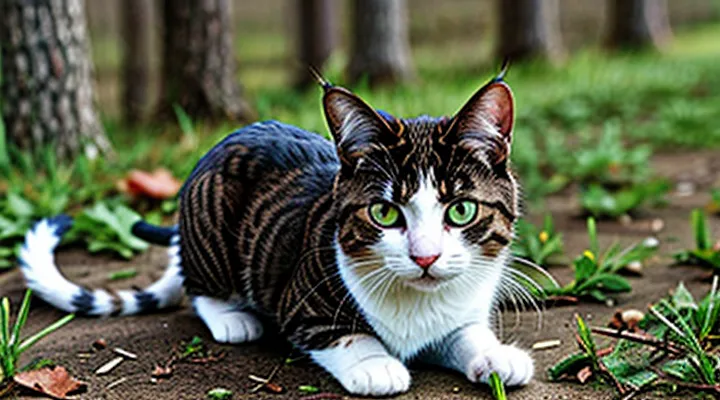
The Instinctual Drive
Genetic Predisposition and Ancestry
Wild Cat Origins
Wild cats originated from small, carnivorous mammals that diverged from other mammals during the Oligocene epoch, roughly 30 million years ago. Fossil evidence from Europe and Asia shows early felids possessed retractable claws, elongated bodies, and acute night vision—traits that enhanced their ability to capture agile prey such as rodents.
Key evolutionary developments include:
- Development of a flexible spine allowing rapid acceleration and sudden directional changes.
- Refinement of auditory structures for detecting high‑frequency sounds emitted by small mammals.
- Evolution of a dentition pattern featuring sharp, shearing carnassial teeth optimized for slicing flesh.
- Emergence of a highly sensitive vibrissae system that discerns minute air currents generated by moving prey.
These adaptations persisted as felids spread into diverse habitats, from savannas to forests. Genetic studies trace modern domestic cats to Near Eastern wildcats (Felis lybica), whose predatory repertoire remains focused on small vertebrates. The inherited hunting drive manifests in contemporary cats through instinctual stalking, pouncing, and capture of mice, reflecting the deep‑rooted evolutionary pressures that shaped the wild cat lineage.
Evolutionary Advantages
Cats’ instinctive pursuit of rodents confers measurable evolutionary benefits. The behavior sustains physiological development, enhances reproductive success, and reinforces ecological balance.
- Acute sensory refinement: tracking prey sharpens auditory, visual, and tactile acuity, traits that persist across generations.
- Muscular conditioning: repeated chases develop coordination, strength, and stamina, reducing vulnerability to injury and disease.
- Energy acquisition: small mammals supply high‑protein calories, supporting growth and offspring rearing without requiring large prey.
- Genetic selection: individuals that efficiently capture mice demonstrate higher survival rates, increasing the frequency of advantageous alleles.
- Social transmission: litters observe adult hunting, accelerating skill acquisition and ensuring continuity of predatory competence.
These advantages explain the persistence of mouse‑hunting behavior in domestic and wild felids, linking a simple predatory act to long‑term species fitness.
Behavioral Roots
Play as Practice
Cats develop hunting competence through repetitive, structured play that mirrors the sequence of a real chase. Young felines engage in mock attacks on moving objects, refining motor coordination, timing, and bite precision. This rehearsal builds the neural pathways required for successful predation, ensuring that when a live mouse appears, the cat can execute the necessary movements without hesitation.
Key elements of play that serve as practice include:
- Stalking simulation – low‑profile movement across the floor teaches stealth and distance judgment.
- Pounce rehearsal – sudden leaps develop explosive power and accurate targeting of prey’s vulnerable points.
- Capture handling – gripping and immobilizing toys replicates the grip needed to subdue a mouse’s torso.
- Release and chase cycles – repeated pursuit and retreat sharpen endurance and strategic decision‑making.
The correlation between play intensity and hunting proficiency is observable in domestic environments. Cats that receive diverse, interactive toys show higher success rates when encountering actual rodents, demonstrating that play directly translates into functional predatory skill. Consequently, play functions as a calibrated training regimen, converting innate curiosity into effective hunting behavior.
The Thrill of the Chase
Cats experience a surge of adrenaline when a mouse scuttles across the floor. The sudden movement triggers the visual cortex, which processes rapid, erratic trajectories more efficiently than static objects. This neural activation prepares the muscular system for swift, precise strikes.
The chase engages several physiological mechanisms:
- Release of catecholamines increases heart rate and sharpens focus.
- Muscles receive heightened blood flow, enabling bursts of speed.
- The vestibular system synchronizes balance with rapid directional changes.
These responses are hard‑wired in felines. Evolutionary pressure favored individuals that could detect, pursue, and capture small prey, reinforcing neural pathways associated with excitement and reward. When a cat catches a mouse, dopamine spikes, reinforcing the behavior and cementing the association between the act of hunting and pleasure.
Sensory input amplifies the experience. Whisker vibrations convey proximity, while the ears isolate high‑frequency rustles that signal a mouse’s presence. The combination of tactile, auditory, and visual cues creates a multimodal stimulus that sustains the cat’s engagement throughout the pursuit.
The thrill of the chase thus represents a convergence of instinctual drive, acute sensory processing, and biochemical reward, explaining why felines repeatedly engage in this behavior despite abundant alternative food sources.
Sensory Perception and Predatory Skills
Superior Senses
Acute Hearing
Cats possess a hearing range extending to 64 kHz, far beyond human capability. This high‑frequency sensitivity matches the ultrasonic squeaks produced by mice during locomotion and distress calls. The auditory cortex processes these sounds with millisecond precision, enabling rapid orientation toward the source.
The structure of a cat’s ear enhances detection:
- Mobile pinnae rotate up to 180°, aligning the external ear canal with the sound direction.
- An enlarged cochlear organ of Corti contains densely packed hair cells, each tuned to specific frequency bands.
- A well‑developed auditory brainstem circuit filters background noise, amplifying faint rodent emissions.
When a mouse scurries across a floor, its footfalls generate vibrations in the 10–30 kHz range. Cats capture these vibrations through the tympanic membrane, convert them into neural impulses, and execute a swift head turn. The combined effect of frequency coverage, ear mobility, and neural timing grants felines the ability to locate prey hidden under debris or within narrow spaces, driving their predatory success.
Exceptional Night Vision
Cats possess a retinal architecture that maximizes photon capture in low‑light environments. The tapetum lucidum, a reflective layer behind the retina, redirects unabsorbed light back through photoreceptors, effectively doubling the available signal. This adaptation enables detection of minute movements of rodents even at near‑darkness.
Rodent prey exhibit rapid, erratic motions that generate brief flashes of contrast. Cats’ rods outnumber cones by a ratio exceeding 10:1, granting heightened sensitivity to such transient cues. Additionally, the vertical slit pupils expand dramatically when ambient light diminishes, allowing a larger aperture for light entry without sacrificing depth of field.
Key physiological factors supporting nocturnal predation:
- High rod density for maximal luminance detection.
- Tapetum lucidum reflecting stray photons.
- Pupillary dilation via vertical slits, increasing retinal illumination.
- Superior motion‑sensing pathways in the visual cortex.
These mechanisms collectively grant felines the ability to locate and intercept mice during the night, directly influencing their hunting efficiency.
Keen Sense of Smell
Cats rely on olfaction to locate prey hidden in confined spaces. The nasal epithelium contains a high density of receptors attuned to volatile compounds released by rodents, such as pheromones and metabolic by‑products. These chemicals disperse rapidly in tight burrows, allowing a cat to detect a mouse's presence before visual cues become available.
The olfactory system enhances hunting efficiency through several mechanisms:
- Rapid identification of mouse scent trails, enabling precise pursuit.
- Discrimination between species, reducing time spent investigating non‑target odors.
- Activation of neural pathways that trigger predatory instincts, coordinating movement and focus.
By integrating scent information with auditory and tactile inputs, cats achieve a multi‑modal detection strategy that maximizes success in capturing mice.
Hunting Techniques
Stalking and Ambush
Cats are hard‑wired to pursue small, fast prey. The sequence of stalking and ambush provides the sensory and motor feedback that satisfies this predatory program, making rodent capture especially rewarding.
When a cat detects a mouse, it initiates a stalking phase. The animal lowers its body, aligns its head with the target, and freezes to minimize motion. Visual acuity sharpens; whiskers gauge distance. Muscles contract subtly, allowing the cat to glide forward in short, silent bursts while maintaining a fixed gaze. Each step reduces the gap without alerting the mouse.
The ambush phase follows the final approach. The cat crouches, stores kinetic energy in the hind limbs, and releases it in a rapid, downward thrust. Claws extend, bite force peaks, and the mouse is seized before it can react. The entire maneuver completes within fractions of a second, delivering a decisive capture.
Key components of the stalking‑ambush sequence:
- Low posture and body alignment for stealth
- Fixed visual focus on the prey’s movement
- Incremental, noiseless advances
- Energy storage in hind limbs during the crouch
- Explosive pounce with coordinated claw and bite action
These behaviors exploit the cat’s muscular architecture, sensory precision, and instinctual timing, explaining the strong attraction felines have to hunting mice.
The Killing Bite
The killing bite is a rapid, precise clamp that a cat applies to a mouse’s neck or skull, delivering sufficient force to sever the spinal cord or crush the brain stem. This action eliminates prey within fractions of a second, preventing prolonged struggle and reducing the risk of injury to the predator.
Cats achieve the bite through a combination of muscular contraction and dental morphology. The canines, positioned for deep penetration, engage the vertebral column while the jaw muscles contract at maximum tension. The bite pressure can exceed 150 psi, enough to fracture delicate rodent bones instantly.
Evolutionary pressure favored this technique because it maximizes energy gain while minimizing exposure to disease and counter‑attacks. By delivering a decisive, fatal bite, cats secure the nutritional value of the mouse without the need for extended consumption.
Key characteristics of the killing bite:
- Targeted to the cervical vertebrae or occipital region.
- Executed with a single, high‑velocity closure.
- Utilizes a bite force calibrated to the size of the prey.
- Followed by immediate consumption or cache placement.
Pouncing Mechanics
Cats pursue rodents with a precise sequence of muscular and sensory actions that transform a visual cue into a rapid, high‑force strike. The sequence begins with the detection of a moving target, which triggers the optic tectum to transmit a signal to the motor cortex. This signal activates the hind‑limb extensor muscles, storing elastic energy in the tendons of the gastrocnemius and quadriceps. Simultaneously, the forelimbs flex, positioning the claws for immediate contact.
When the cat reaches the optimal distance—approximately one to two body lengths—the stored energy releases, propelling the animal forward in a ballistic motion. The timing of limb extension, torso rotation, and claw deployment is coordinated within 100–150 ms, allowing the cat to close the gap before the prey can react.
Key elements of the pounce include:
- Visual tracking: high‑frequency retinal cells detect minute movements.
- Muscle pre‑loading: tendons stretch to amplify force.
- Rapid contraction: motor neurons fire in a synchronized burst.
- Claw engagement: forepaws extend at the moment of impact to secure the target.
These mechanics provide the speed, accuracy, and grip necessary for a cat to capture a mouse, reinforcing the species’ evolutionary preference for this hunting behavior.
The Nutritional Aspect
Dietary Needs
Obligate Carnivores
Obligate carnivores are mammals that require animal tissue to meet essential nutritional needs. Their metabolism depends on high‑quality protein, specific amino acids such as taurine, and fatty acids that cannot be synthesized from plant sources. Consequently, their digestive enzymes, intestinal absorption mechanisms, and renal function are optimized for processing meat.
These physiological constraints generate a strong drive to capture prey. The act of hunting provides not only the required nutrients but also stimulates hormonal pathways linked to satiety and muscle maintenance. Small vertebrates, especially rodents, deliver a balanced profile of protein, fat, and micronutrients that matches the dietary template of obligate carnivores.
Cats exhibit this drive through:
- Acute visual acuity for motion detection in low light.
- Sensitive whisker receptors that map three‑dimensional space.
- Muscular forelimbs capable of rapid acceleration and precise bite force.
- Olfactory and auditory cues that locate concealed targets.
The combination of metabolic necessity and specialized sensory‑motor systems explains why felines routinely pursue and kill mice. The prey satisfies the species’ strict dietary requirements while reinforcing innate predatory circuits.
The Role of Prey in Natural Diet
Cats obtain the majority of their dietary requirements from the animals they capture. Small rodents supply high‑quality protein, essential amino acids such as taurine, and a balanced profile of fats that domestic felines cannot synthesize in sufficient amounts. The skeletal muscle and organ tissues of prey also deliver micronutrients—vitamin A, B‑complex vitamins, and minerals like iron and zinc—directly in a bioavailable form.
Beyond nutrition, consuming live prey stimulates sensory systems that remain underdeveloped when cats rely solely on processed food. The chase activates visual acuity, auditory precision, and tactile feedback from whisker contact, reinforcing neural pathways linked to predation. This stimulation preserves motor coordination and reflex speed, traits inherited from ancestors that depended on hunting for survival.
Energy expenditure during the pursuit offsets caloric intake, creating a natural balance that regulates body weight. The intermittent nature of successful captures introduces periods of fasting, which trigger metabolic adaptations such as enhanced insulin sensitivity and efficient fat utilization. These physiological responses align with the cat’s obligate carnivore status.
Reproductive success correlates with access to prey‑derived nutrients. Female cats receiving diets rich in rodent protein exhibit higher litter sizes and improved kitten viability, reflecting the direct link between prey consumption and offspring health. Consequently, prey remains a pivotal component in the overall fitness of felines, influencing growth, maintenance, and reproductive outcomes.
Energy Expenditure and Reward
Calorie Burn vs. Gain
Cats pursue mice because the activity offers a direct caloric payoff. A typical house mouse provides roughly 30 kcal of edible protein and fat. The effort required to chase, pounce, and subdue the prey consumes an estimated 5–8 kcal, depending on the cat’s size and the length of the pursuit. The resulting net gain of 22–25 kcal represents a substantial energy surplus for a small predator that must maintain body temperature and muscle mass.
The caloric equation governing this behavior can be expressed as:
- Energy intake – calories obtained from the captured mouse.
- Energy expenditure – calories burned during detection, stalking, sprinting, and handling.
When the intake exceeds expenditure, the cat stores the surplus as adipose tissue, supporting periods of food scarcity. Conversely, if a cat expends more calories than it consumes—such as during prolonged play or unsuccessful hunts—it must draw on stored reserves, prompting increased hunting motivation.
Physiological mechanisms reinforce the pattern. Elevated blood glucose after a successful kill triggers insulin release, promoting nutrient absorption. Simultaneously, catecholamine spikes during the chase stimulate lipolysis, preparing the body to mobilize stored fats if the hunt fails. This dual response ensures that each encounter optimizes energy balance.
In summary, the pursuit of rodents satisfies a clear metabolic equation: the modest caloric cost of hunting is outweighed by the generous caloric return from the prey, reinforcing the predator’s instinctual drive.
Survival Implications
Cats’ instinct to chase and kill mice directly affects their physiological health. Capturing prey supplies protein, taurine, and essential fatty acids that support muscle development, vision, and immune function. Regular ingestion of live rodents also stimulates digestive enzymes, enhancing nutrient absorption and reducing the risk of gastrointestinal disorders.
The hunting behavior reinforces neural pathways linked to predatory coordination. Repetitive stalking, pouncing, and catching sharpen motor skills, reaction time, and spatial awareness. These capabilities improve a cat’s ability to evade threats, navigate complex environments, and respond to sudden changes in surroundings.
Survival benefits extend to population dynamics:
- Successful predation lowers parasite load because wild mice often carry ticks, fleas, and intestinal worms.
- Energy expenditure during short bursts of chase is offset by the caloric gain from consumed prey, creating a positive energy balance.
- Exposure to variable prey sizes trains bite force regulation, preventing dental injuries and preserving oral health.
From an evolutionary perspective, cats that retain effective hunting strategies achieve higher reproductive success. Access to nutrient‑rich food sources translates into larger litters, improved kitten growth rates, and greater offspring survival during early development.
In domestic settings, allowing controlled hunting opportunities maintains these adaptive advantages. Structured play that mimics mouse capture preserves the physiological and neurological benefits without exposing cats to excessive disease risk.
Psychological and Emotional Rewards
The Dopamine Rush
Brain Chemistry of the Hunt
Cats’ predatory drive originates from a tightly regulated neurochemical cascade that activates during visual detection of a moving rodent, intensifies throughout the chase, and peaks at capture. The cascade involves several neurotransmitters and neuromodulators that together produce heightened arousal, focused attention, and a powerful reward signal.
- Dopamine – released from the ventral tegmental area into the nucleus accumbens; encodes the expectation of a successful hunt and reinforces the behavior after capture.
- Norepinephrine – originates in the locus coeruleus; increases alertness, sharpens visual processing, and sustains motor output during pursuit.
- Endorphins – generated in the periaqueductal gray; provide analgesia that allows sustained physical effort and generate a pleasant sensation after the kill.
- Serotonin – modulates impulsivity; balanced levels prevent premature disengagement while avoiding excessive aggression.
- Oxytocin – rises after feeding; promotes social bonding with the owner and reduces post‑hunt stress.
The hypothalamus and amygdala integrate sensory input with these chemical signals, shaping the instinctive pattern of stalking, pouncing, and biting. Successful capture triggers a positive feedback loop: dopamine surge strengthens neural pathways that encode the hunt, making future attempts more likely and more efficient. Conversely, failed attempts produce a modest decline in dopamine, prompting the cat to adjust tactics without extinguishing the drive.
Overall, the brain chemistry of the hunt converts a simple visual cue into a cascade of arousal, motor coordination, and reward, explaining the persistent fascination cats display toward catching mice.
Satisfaction and Well-being
Hunting rodents satisfies a cat’s innate predatory instincts, delivering a measurable boost to physiological equilibrium. The act triggers a cascade of neurochemical responses—dopamine release, endorphin surge, and cortisol reduction—each contributing to heightened contentment and stress mitigation.
Physical exertion during pursuit improves cardiovascular function and muscle tone, while the successful capture reinforces motor coordination. These outcomes collectively enhance overall health metrics and prolong vitality.
Key aspects of satisfaction and well‑being derived from the behavior include:
- Neurochemical reward: Immediate pleasure signals reinforce the activity, encouraging repeat engagement.
- Stress alleviation: Elevated endorphins counteract anxiety, fostering a calmer disposition.
- Mental stimulation: Problem‑solving during chase maintains cognitive sharpness and prevents behavioral stagnation.
- Social confidence: Mastery of hunting boosts self‑esteem, reducing signs of depressive lethargy.
Long‑term observation shows that cats with regular hunting opportunities exhibit fewer health complaints, maintain optimal body condition, and display more adaptive social interactions. The intrinsic pleasure of capturing prey thus operates as a central mechanism supporting both emotional balance and physical robustness.
Stress Reduction
Outlet for Pent-Up Energy
Cats channel stored physical energy through rapid, precise movements required to capture small rodents. The chase engages skeletal muscles, accelerates heart rate, and triggers adrenaline release, converting idle tension into kinetic output. Once the prey is seized, the cat experiences a brief, intense burst of activity that dissipates accumulated energy.
The hunting sequence provides a structured outlet that satisfies several physiological demands:
- Sprinting and pouncing activate fast‑twitch muscle fibers, preventing atrophy.
- Repetitive lunges and swipes stimulate proprioceptive feedback, maintaining coordination.
- Successful capture yields a dopamine surge, reinforcing the behavior and reducing stress hormones.
In domestic environments, opportunities for such exertion are limited. Providing toys that mimic mouse movement, interactive play sessions, or safe outdoor access replicates the natural energy‑release pathway. These interventions preserve the cat’s instinctual drive while preventing the buildup of restless behavior.
Overall, the act of pursuing and subduing rodents functions as a essential mechanism for cats to expend surplus energy, supporting muscular health, neurological balance, and emotional stability.
Instinctual Fulfillment
Cats chase mice because the act satisfies a deep‑rooted predatory instinct. This instinct, encoded in the nervous system, drives behavior that mirrors ancestral hunting patterns. When a mouse appears, sensory input—visual motion, auditory rustle, vibrissae vibration—activates neural circuits that trigger a coordinated sequence of stalking, pouncing, and capture. The successful execution of these movements releases neurotransmitters associated with reward, reinforcing the behavior.
Key aspects of instinctual fulfillment include:
- Sensory stimulation – rapid detection of prey movement engages the visual and auditory cortices, sharpening focus.
- Motor coordination – spinal and cerebellar pathways synchronize limb muscles for precise strikes.
- Neurochemical reward – dopamine surge follows a capture, strengthening the predatory response.
- Evolutionary reinforcement – ancestors that effectively eliminated small rodents secured food, passing the trait to descendants.
The result is a self‑sustaining loop: detection prompts action, action yields reward, reward heightens the drive for future hunts. This loop explains the persistent enthusiasm cats display toward rodent pursuit, independent of hunger or external training.
Learned Behavior and Socialization
Mother-Kitten Interaction
Learning from the Dam
The dam exemplifies controlled force, strategic positioning, and efficient resource use. These characteristics provide a practical framework for understanding feline predation on rodents.
- Strategic placement: Dams are built at points where water naturally converges, maximizing impact with minimal effort. Cats similarly select hunting spots—near walls, under furniture, or along mouse pathways—where prey movement is predictable.
- Patience and timing: A dam holds back water until pressure reaches a threshold, then releases it deliberately. Cats observe mouse activity, wait for the optimal moment, and execute a swift strike, conserving energy until success is probable.
- Energy conservation: By channeling water through a narrowed passage, a dam reduces turbulence and loss. Cats exploit confined spaces, such as narrow gaps, to limit a mouse’s escape routes, reducing the physical exertion required for capture.
- Feedback loops: Dams adjust flow based on upstream conditions, maintaining stability. Cats modify their approach after each hunt, refining tactics based on mouse behavior, ensuring consistent effectiveness.
Applying these dam-derived principles clarifies why felines pursue mice with such consistency: they adopt a system that leverages environmental constraints, balances effort with reward, and continuously refines technique.
Early Play Experiences
Kittens develop predatory competence through spontaneous interactions with moving objects during their first weeks of life. When a littermate or a toy mimics the erratic motion of a rodent, the kitten’s visual and auditory systems coordinate to track, pounce, and capture. These actions reinforce neural pathways that later enable precise timing, depth perception, and bite control—skills directly applicable to hunting small mammals.
Early bouts of play serve as a rehearsal for real‑world pursuits. The repetitive cycle of stalking, leaping, and clawing creates muscle memory and sharpens motor coordination. As the kitten matures, the learned sequence transitions from toy to live prey, allowing the animal to exploit the same behavioral template without additional instruction.
Key elements of the developmental phase include:
- Rapid alternation between chase and retreat, fostering adaptability.
- Use of forepaws to manipulate objects, establishing grip strength.
- Auditory cue discrimination, enhancing detection of rustling sounds typical of rodents.
- Incremental increase in latency between stimulus and response, improving patience and timing.
Environmental Factors
Availability of Prey
Cats' predatory instinct is directly linked to how often suitable prey appear in their surroundings. When rodents are plentiful, felines allocate more time to stalking and capturing, reinforcing the behavior that underlies their interest in hunting small mammals.
Several environmental variables control the presence of potential prey:
- Seasonal breeding cycles of mice and rats increase population density during spring and autumn.
- Urban waste and grain storage create localized food sources that sustain larger rodent colonies.
- Habitat fragmentation reduces natural predators, allowing rodent numbers to rise in suburban gardens.
- Climate conditions that favor rapid reproduction, such as mild winters, extend periods of high availability.
Higher prey density leads to increased hunting attempts, faster skill acquisition in younger cats, and greater success rates. Conversely, scarcity forces cats to shift focus toward alternative food sources, including scavenging or human-provided diets, which can diminish hunting frequency.
Understanding the relationship between prey abundance and feline predation informs wildlife management and responsible pet ownership. Strategies that limit rodent populations in residential areas, such as secure waste containers and regular pest control, can reduce the opportunities that drive cats to hunt, thereby decreasing unwanted wildlife mortality.
Human Influence on Hunting Behavior
Human activity reshapes feline predation of rodents through several mechanisms. Domestic cats receive regular meals, reducing the nutritional drive to capture prey, yet many retain an innate chase response that manifests as play or opportunistic killing.
Urban environments alter hunting opportunities. Gardens, basements, and waste sites host rodents, while indoor living spaces limit exposure. The presence or absence of these microhabitats directly influences how often cats encounter potential prey.
Selective breeding and owner training further modify behavior. Breeds emphasized for agility or independence often display higher pursuit rates, whereas companion‑focused lines may be less inclined to stalk. Owners who reward capture with attention or treats reinforce the act, while those who discourage it can suppress it over time.
Key factors of human influence include:
- Consistent food provision
- Habitat design (indoor vs. outdoor access)
- Breeding objectives and genetic selection
- Behavioral reinforcement or deterrence by caretakers
These elements collectively determine the frequency and intensity of a cat’s mouse‑hunting activities, shaping the balance between instinctual drive and anthropogenic control.