
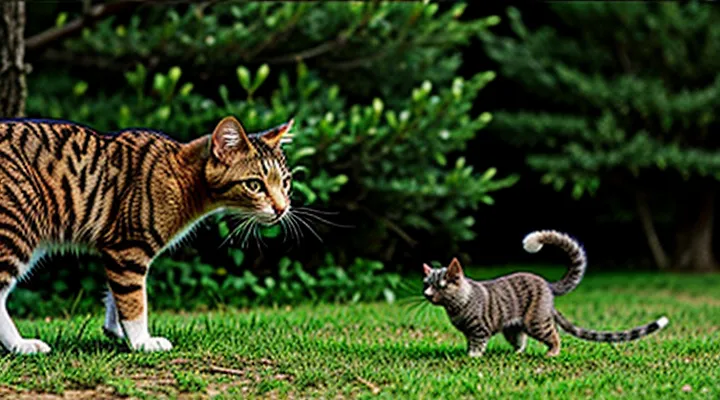
The Ancient Hunt: A Feline Legacy
Evolutionary Roots of Predation
Ancestral Carnivores and Survival
Cats belong to a lineage of obligate carnivores that evolved from small, agile predators hunting vertebrate prey. Early feliform ancestors possessed acute vision, rapid reflexes, and retractable claws, traits that optimized capture of fast-moving organisms. These anatomical features persisted through millennia, providing a physiological framework for contemporary domestic cats.
Survival advantages of ancestral hunting behavior include:
- Efficient energy acquisition from high‑protein prey, supporting rapid growth and reproductive success.
- Development of motor coordination and neural pathways that reinforce predatory sequences.
- Maintenance of territorial boundaries through resource control, reducing competition.
The persistence of these instincts manifests in modern felines’ propensity to stalk and kill mice. Even when food is readily supplied, the neural circuitry governing chase, pounce, and bite remains active, reflecting an evolutionary imprint that prioritizes opportunistic predation as a means of ensuring physiological resilience.
Domestication and Instinct Preservation
Domestication of the house cat began millennia ago, yet the species retains the predatory circuitry that evolved for hunting small rodents. This preservation results from minimal selective pressure to eliminate hunting behavior, because early human societies benefited from rodent control and did not breed cats for reduced predation.
Key factors that maintain the hunting instinct include:
- Early human‑cat symbiosis, where cats provided pest management without needing to alter their natural drive.
- Genetic continuity with wild ancestors, limiting the introduction of mutations that suppress predatory circuits.
- Neural pathways centered in the hypothalamus and amygdala that trigger chase and capture responses regardless of environment.
Neurobiological studies show that stimulation of the medial preoptic area elicits stalking and pouncing actions, identical to those observed in wild felids. The presence of muscarinic receptors in the motor cortex further reinforces rapid, coordinated movements essential for catching agile prey.
Domestic cats frequently display mouse‑hunting episodes even in indoor settings. Observations reveal a sequence of behaviors: detection of movement, silent approach, low‑frequency vocalization, rapid acceleration, and bite at the neck. These actions occur without prior training, indicating an innate template preserved through domestication.
For caretakers, recognizing the instinctual nature of hunting informs enrichment strategies. Providing interactive toys that mimic prey motion, installing safe outdoor enclosures, and allowing occasional supervised hunting opportunities satisfy the drive and reduce stress‑related behaviors.
Instinctive Drives: The Hunter Within
The Prey Drive Explained
Visual Cues and Movement Detection
Cats rely on precise visual information to locate and capture rodents. The feline visual system emphasizes rapid detection of small, moving targets, enabling efficient predation.
High visual acuity centers on the central retina, where densely packed cones provide detailed resolution. Peripheral retina contains a high proportion of rods, granting sensitivity to low‑light movement. This arrangement allows a cat to notice a mouse’s slightest shift even in dim conditions.
Key visual cues that trigger the hunting response include:
- Contrast between the prey and background, highlighting edges.
- Small, elongated shape consistent with typical rodent silhouettes.
- Rapid, erratic motion patterns that differ from ambient environmental movement.
- Subtle changes in speed or direction, signaling vulnerability.
Neural pathways process these cues through specialized retinal ganglion cells that transmit motion‑related signals to the superior colliculus and visual cortex. Rapid integration of contrast, shape, and trajectory information produces a focused attentional burst, prompting the cat to orient, stalk, and pounce.
The detection of these visual elements directly initiates the predatory sequence. Once motion is registered, motor circuits engage, producing the characteristic crouch, silent approach, and explosive leap that characterize feline hunting of mice.
Auditory Signals and Echolocation Sensitivity
Cats rely on highly tuned auditory perception to detect the subtle movements of small rodents. The ear canal of a domestic cat amplifies frequencies between 45 kHz and 64 kHz, a range far beyond human hearing. This sensitivity allows detection of the faint rustle of mouse fur and the ultrasonic squeaks produced during rapid locomotion.
Auditory cues combine with a primitive form of echolocation. When a cat flicks its whiskers, the resulting air turbulence generates brief sound bursts that reflect off nearby objects. The cat’s auditory cortex processes these echoes, constructing a three‑dimensional map of the immediate environment. This mechanism enhances spatial awareness in low‑light conditions where visual cues are limited.
Key aspects of auditory and echo‑based hunting include:
- Frequency range extending into ultrasonic territory, enabling discrimination of mouse vocalizations from ambient noise.
- Rapid temporal resolution, allowing identification of the precise moment a prey changes direction.
- Integration of echo information with whisker feedback, producing a coherent perception of distance and obstacle location.
- Neural pathways that prioritize prey‑related sounds, suppressing irrelevant auditory input.
These auditory adaptations support the instinctive predatory drive of felines, ensuring efficient capture of mice even in cluttered or dimly lit settings.
The Role of Play in Hunting Development
Kittenhood Exploration and Practice
Kittenhood represents the formative stage in which felines acquire the sensory and motor skills essential for predation. During the first months of life, visual acuity sharpens, auditory discrimination expands, and vibrissae become calibrated to detect minute movements of potential prey. These physiological changes create a foundation for the instinctive drive to capture rodents.
Play functions as deliberate practice. Kittens engage in repetitive bouts of stalking, pouncing, and biting, each episode reinforcing neural pathways that govern timing, force, and precision. Core components of this rehearsal include:
- Silent approach toward moving objects, often a feather or lightweight toy.
- Sudden acceleration followed by a calculated leap, emphasizing coordination.
- Controlled bite and release, developing jaw strength and restraint.
Observational learning further refines technique. Juveniles watch the dam manipulate live prey, noting grip placement, kill method, and handling of struggling victims. This modeling accelerates the transition from simulated to authentic hunting.
By the end of the exploratory phase, kittens integrate sensory feedback with motor patterns, enabling efficient capture of mice. The practiced behaviors observed in early play translate directly into successful predatory outcomes, confirming that kittenhood exploration serves as essential preparation for the innate hunting impulse.
Simulation of Hunting Scenarios
Simulation provides a controlled framework for examining feline predatory responses toward rodents. Virtual environments replicate indoor and outdoor settings, allowing precise manipulation of visual, auditory, and olfactory stimuli that trigger hunting behavior.
Core elements include a three‑dimensional arena, programmable prey agents, and sensor models that emulate a cat’s whisker and ear sensitivity. Prey agents display adjustable speed, evasive maneuvers, and concealment tactics, creating realistic challenges for the predator model.
Typical scenarios encompass:
- Ambush from a concealed position, with prey entering a limited field of view.
- Pursuit across open terrain, emphasizing stamina and acceleration patterns.
- Constrained chase within a cluttered space, highlighting obstacle navigation and tactile feedback.
Data generated from these simulations reveal latency to attack, strike accuracy, and success rates under varying cue intensities. Quantitative output supports hypothesis testing on instinctual drive versus learned strategy, while eliminating ethical concerns associated with live‑animal experiments.
Behavioral Psychology Behind the Chase
Dopamine and the Reward System
The Thrill of the Stalk
The pursuit of a mouse engages a cat’s neural circuitry designed for rapid assessment and decisive action. Visual detection of movement triggers the optic tectum, which channels signals to the motor cortex, preparing the body for a sudden burst of acceleration. This cascade creates a heightened state of arousal that sharpens focus and suppresses peripheral distractions.
During the approach, tactile receptors in the whiskers map the prey’s position, allowing minute adjustments to trajectory. The cat’s muscles contract in a coordinated pattern, storing elastic energy in the hind limbs. Release of this tension produces a swift, silent leap that maximizes the probability of capture while minimizing effort.
The reward system reinforces the behavior through dopamine release upon successful contact. Anticipation of this neurochemical payoff drives repetition of the stalking sequence, embedding it as a core component of feline predatory instinct. The cycle comprises:
- Sensory detection and rapid processing
- Motor preparation and energy storage
- Execution of a silent, precise strike
- Immediate reward feedback
These elements together generate the compelling excitement that defines the stalk, ensuring that each hunt remains both a test of skill and a source of intrinsic satisfaction.
The Satisfaction of the Catch
Cats experience a distinct physiological reward when a mouse is seized. The rapid contraction of jaw muscles and the tactile feedback from the prey stimulate sensory nerves, triggering a surge of dopamine that reinforces the predatory act. This neurochemical response confirms successful hunting and encourages repetition.
The capture also satisfies innate predatory sequences embedded in feline brain circuitry. Once the prey is immobilized, the cat’s instinctive sequence—bite, hold, kill—completes, providing closure to the behavioral pattern. Completion of the sequence reduces the uncertainty associated with an unfinished chase, thereby stabilizing stress levels.
Key aspects of the satisfaction include:
- Immediate tactile confirmation of prey’s resistance, confirming the cat’s competence.
- Neurochemical reward that enhances motivation for future hunts.
- Reinforcement of motor patterns essential for effective predation.
- Reduction of arousal after a successful kill, contributing to emotional equilibrium.
Overall, the pleasure derived from a catch integrates sensory, hormonal, and behavioral components, ensuring that the hunting drive remains both effective and self‑sustaining.
Maternal Influence on Hunting Behavior
Learning Through Observation
Cats acquire hunting proficiency by watching experienced adults, a process that supplements innate predatory drives. Visual exposure to a mother’s pursuit of rodents provides a template for motor patterns, timing, and sensory cues. The observed behavior is stored in neural circuits that later guide independent attacks.
During early development, kittens focus on specific actions: stalk, pounce, and capture. Repeated observation reinforces synaptic pathways associated with prey detection and limb coordination. This form of social learning reduces trial‑and‑error periods, allowing rapid mastery of complex sequences.
Key results of observational acquisition include:
- Enhanced strike accuracy, measured by successful captures per attempt.
- Optimized approach speed, aligning body posture with prey movement.
- Refined concealment techniques, such as low‑profile movement and silent footfall.
The integration of visual modeling with genetic predisposition illustrates how feline predation reflects both instinct and learned refinement. Understanding this dual influence informs broader theories of animal cognition and adaptive behavior.
Practical Demonstrations by Queens
Queens, as mature female felines, provide clear, observable examples of predatory behavior that illustrate the psychological drivers and innate instincts underlying mouse hunting. Their actions reveal the integration of sensory acuity, motor coordination, and reward anticipation that motivate pursuit and capture.
Practical demonstrations by queens include:
- Precise stalk: low‑frequency vibrations from a mouse trigger whisker‑mediated detection, prompting a calculated pause and forward crouch.
- Rapid pounce: explosive hind‑limb extension generates a forceful launch, aligning the body’s center of mass with the prey’s trajectory.
- Controlled bite: mandibular pressure focuses on the neck, delivering a swift, lethal grip that minimizes struggle.
- Post‑kill handling: the queen drags the carcass to a secluded area, reducing scent exposure and protecting offspring from potential threats.
These observable steps serve as empirical evidence of the innate hunting sequence, reinforcing the role of instinctual programming in feline predation. The demonstrations also function as teaching moments for kittens, who acquire essential hunting skills through observation and practice.
Nutritional Needs vs. Instinctive Impulse
The Debate: Hunger or Hardwired Behavior
Energy Expenditure and Caloric Intake
Felines initiate a chase to balance the energy spent with the calories obtained from prey. Each sprint, leap, and pounce consumes muscular work that raises metabolic rate above resting levels. The caloric deficit created by a single pursuit can be offset only if the captured mouse provides sufficient nutrients.
Typical energy cost of a short hunt ranges from 15 to 30 kilocalories, depending on distance covered and intensity of effort. A small mouse delivers approximately 5 to 10 kilocalories of usable energy. Consequently, successful capture of multiple rodents becomes necessary for a net positive balance.
Key points:
- Average metabolic increase during chase: 1.5–2.0 × resting rate.
- Energy expenditure per minute of active hunting: 3–5 kcal.
- Caloric yield of a 20‑gram mouse: 6–8 kcal.
- Net gain achieved after 2–3 captures in a typical session.
When prey is abundant, the energetic return reinforces the hunting instinct, ensuring that the behavior remains a viable strategy for meeting daily nutritional requirements. «Energy efficiency drives predatory patterns, shaping both psychological motivation and instinctual response».
The "Kill for Fun" Misconception
The belief that domestic felines kill mice solely for entertainment persists despite scientific evidence indicating otherwise. Observations of hunting behavior reveal a complex interplay of innate drives and learned skills rather than purposeless cruelty.
Feline predation originates from evolutionary pressures that shaped the species as obligate hunters. Even well‑fed cats retain neural circuits that trigger pursuit, stalk, and capture responses when a small, moving target appears. These circuits function independently of hunger, ensuring proficiency that would have been essential for survival in the wild.
Key factors influencing the act of killing include:
- innate predatory reflexes activated by motion and size cues;
- practice of motor patterns that maintain hunting efficiency;
- reinforcement of sensory feedback from successful captures;
- occasional nutritional supplementation when prey provides protein.
The notion «Kill for Fun» conflates observed play‑like elements of the chase with malicious intent. Play behavior serves to refine techniques, not to express sadistic pleasure. Consequently, the misconception overlooks the adaptive purpose of predatory actions and the role of instinctual programming in feline conduct.
Symbolic Hunting and Modern Cats
Indoor Cats and Toy Prey
Indoor cats lack access to live prey, so artificial targets become the primary outlet for predatory behavior. Toy prey reproduces the visual, auditory, and tactile cues of rodents, allowing the hunting sequence to unfold within a confined environment.
The predatory drive engages a neural circuit that releases dopamine during the chase and capture phases, thereby lowering cortisol levels and mitigating stress. Repeated activation of this circuit reinforces natural problem‑solving skills and maintains muscle tone.
Typical categories of artificial prey include:
- Feather‑tipped wands that simulate erratic flight patterns
- Battery‑powered mice that dart unpredictably across the floor
- Laser beams that generate rapid, linear motion
- Plush mice infused with catnip, providing scent stimulation
Effective play sessions follow several principles: brief intervals (5–10 minutes) preserve enthusiasm; rotating toys prevents habituation; movement should imitate prey erraticism, with sudden pauses and directional changes; and the cat should be allowed to deliver a final "kill" to the toy, completing the predatory sequence.
Consistent engagement with toy prey improves cardiovascular health, reduces the incidence of obesity, and diminishes the emergence of destructive behaviors such as furniture scratching. The practice aligns indoor feline activity with innate hunting instincts, supporting overall well‑being.
Redirected Hunting Behaviors
Cats often encounter situations where the intended prey escapes, such as a mouse fleeing under furniture or out of sight. In these moments the predatory drive does not subside; instead it transfers to the nearest moving stimulus. This phenomenon, known as redirected hunting, reflects the cat’s instinctual need to complete a chase sequence.
Typical triggers for redirected hunting include:
- Sudden motion of household objects (e.g., rolling socks, toys) when the original target becomes inaccessible.
- Vocalizations or movements of other pets that draw attention away from the original prey.
- Human gestures, such as waving a hand, that mimic prey-like speed.
The underlying mechanism relies on the brain’s prey‑capture circuitry, which prioritizes motion over target identity. When the primary target disappears, the circuitry remains activated, seeking an alternative stimulus that satisfies the same visual and motor criteria.
Consequences of redirected hunting range from harmless play to unintended injury. Understanding the pattern enables owners to provide appropriate outlets, such as interactive toys that mimic prey motion, thereby reducing the likelihood of aggressive redirection toward humans or other animals.
The Human-Cat Bond and Hunting
Management of Hunting Behaviors in Domestic Settings
Environmental Enrichment
Environmental enrichment supplies stimuli that activate the predatory circuitry inherent in felines. By presenting varied textures, scents, and movement, enrichment mirrors the complexity of natural hunting environments and sustains the mental engagement required for successful pursuit of prey.
Psychological impact includes heightened focus, reduced stress, and the redirection of hunting impulses toward appropriate objects. When a cat encounters novel challenges, dopamine pathways associated with reward become active, reinforcing problem‑solving behavior and preventing the buildup of frustration that can manifest as indiscriminate killing.
Practical enrichment strategies:
- Rotate puzzle feeders that dispense kibble only after manipulation.
- Install hanging toys that mimic erratic flight patterns.
- Provide tunnels and platforms that simulate burrows and perches.
- Scatter safe, movable objects (e.g., crumpled paper, feather wands) to encourage stalking and pouncing.
- Introduce scent trails using herb‑infused fabrics to trigger tracking instincts.
Consistent application of these measures aligns the cat’s innate drive with controlled outlets, thereby channeling the urge to hunt mice into structured play. The result is a balanced expression of instinctual behavior, improved welfare, and diminished risk of unintended predation on non‑target species.
Training and Behavioral Modification
Training feline predatory behavior requires systematic application of behavioral science principles. Effective programs combine environmental enrichment, controlled exposure, and reinforcement strategies to reduce unwanted hunting of small rodents.
• Enrichment devices such as puzzle feeders and interactive toys divert attention from live prey, satisfying the cat’s instinctual need for stalking and pouncing.
• Controlled exposure involves presenting harmless mouse replicas while rewarding calm responses with food treats, gradually weakening the chase impulse.
• Positive reinforcement delivers immediate, high‑value rewards when the cat refrains from attacking, establishing an alternative behavior pattern.
• Deterrent methods, including scent‑based repellents and auditory cues, create mild aversion to areas where rodents are present, encouraging avoidance.
Consistency across all caregivers ensures the cat associates the desired response with predictable outcomes. Gradual escalation of difficulty—starting with static models and progressing to moving replicas—maintains engagement without overwhelming the animal. Monitoring progress through objective metrics, such as the frequency of successful deterrence episodes, allows timely adjustment of the training plan.
Long‑term success depends on maintaining enriched environments that fulfill the cat’s hunting drive in a safe, controlled manner. Regular rotation of toys and periodic re‑training sessions reinforce learned inhibition, reducing the likelihood of spontaneous pursuit of live mice.
Understanding and Appreciating Feline Nature
Coexisting with a Predator
Cats possess an innate predatory drive that directs attention toward small rodents. This drive operates independently of hunger, manifesting as a reflexive sequence of stalking, pouncing, and capture. When domestic cats share a household with rodents, understanding this instinct is essential for peaceful coexistence.
Effective coexistence relies on three practical measures:
- Provide structured play sessions that replicate hunting motions, using wand toys, laser pointers, or feathered implements. Regular stimulation reduces the impulse to target live prey.
- Schedule feeding times to align with natural crepuscular activity, ensuring nutritional needs are met while leaving room for instinctual expression through simulated hunts.
- Install physical barriers such as sealed pantry doors and mouse‑proof containers. These prevent accidental encounters without restricting the cat’s movement.
Additional considerations include:
- Offering safe outlets, such as puzzle feeders, that engage problem‑solving abilities while delivering food rewards.
- Monitoring the cat’s behavior for signs of frustration or overstimulation; excessive aggression may indicate insufficient enrichment.
- Maintaining a clean environment to limit rodent attraction, thereby decreasing opportunities for predatory incidents.
By integrating enrichment, controlled feeding, and environmental safeguards, owners can respect feline instincts while minimizing conflict with rodent populations. «A well‑balanced approach preserves the cat’s natural behavior without compromising the safety of other household inhabitants».
Responsible Pet Ownership
Responsible pet ownership requires recognizing a cat’s innate predatory drive and managing it to protect both the animal and local wildlife.
Owners must provide environmental enrichment that satisfies hunting instincts without exposing prey. Essential practices include:
- Regular play sessions with interactive toys that mimic prey movements.
- Structured feeding schedule delivering balanced nutrition, reducing the urge to hunt for food.
- Controlled outdoor access through enclosed patios, leash training, or supervised excursions.
Unrestricted roaming allows cats to capture rodents, which can disrupt ecological balances and transmit diseases to pets. Mitigation strategies involve fitting lightweight bell collars, monitoring outdoor time, and ensuring prompt veterinary care to detect injuries from hunting encounters.
Adhering to these measures aligns feline welfare with community health, demonstrating stewardship that respects natural instincts while safeguarding the environment.